
Filed under: agents, Books, Intentionally Hilarious, publishing, Rant, Rejection, Writers, publishing fantasies, rejection, wannabe authors, writers and rejection

11/30/2010 • 4:10 PM 1
Filed under: agents, Books, Intentionally Hilarious, publishing, Rant, Rejection, Writers, publishing fantasies, rejection, wannabe authors, writers and rejection
10/27/2010 • 8:50 PM 0
Here’s some useful links for you. I’m still under the weather. Looking forward to getting out from under gray skies. In the meantime, enjoy some publishing wisdom from these useful sites:
The Millions : The Sorry State of the Rejection Letter
Rachelle Gardner, Literary Agent: Utterly Original
How to Sell Books : Tips and Tricks: Creating a Book Marketing Plan Budget
10 Writers that WILL probably Haunt You « The Curse of the Drinking Class
Filed under: agents, Books, publishing, Rejection, writing tips, publishing advice links
10/27/2010 • 3:12 PM 0
Go check out this great video!
Filed under: agents, movies, Rejection, scriptwriting, web reviews
10/06/2010 • 7:34 PM 2

Image via Wikipedia
1. We are hooked up to the Internet. (Did you know they have porn and wrestling kittens–or both!) on the web? Why would you make your dreams come true when there are distractions like that?
2. We don’t outline and we got fifty pages in before we hit a dead-end. Now what? Back up and go again? What if I hit another roadblock?
3. Coffeemaker broke and can’t afford Starbucks. We could afford one Starbucks flavored coffee…if we get that barista job.
4. We chose the wrong point of view from the start. We did not realize this until we hit the climax on page 326.
5. Kids, job, sleep…minor, dispensable obstacles en route to glory.
6. Best friend got published. Instead of writing, it is necessary to run in circles around the house cursing god, fate, Random House…not necessarily in that order.
7. Writer’s Block. Urk! It is now necessary for us to attempt a bank robbery for new content. Could also solve #3 if our getaway works out.
8. Depression. Cold, paralyzing depression. “Why haven’t I won a Giller by now? Or at least published?”
9. False starts. Your agent tried a few publishers and dumped you. The acquiring editor took you on with glee (and then immediately switched over to educational publishing.) The journal that was going to feature you went under. Close calls are part of the writing deal.
10. Laziness. Yeah, I said it. Laziness.
Filed under: getting it done, publishing, Rant, Rejection, publishing, Writers Resources, writing
10/05/2010 • 7:08 PM 0
Adventures in Agentland: the pitch session from the agent’s side of the table.
The Pitch is a Bitch (but don’t fear the query)
And agent Rachelle Gardner asks, are you into writing for the long haul?
Filed under: agents, publishing, Rejection, writing tips, pitching, query, querying, writing career
09/06/2010 • 8:08 AM 0

Image via Wikipedia
Last weekend we took the kids to the Ontario Science Centre to learn some science and, of course, see the Harry Potter exhibit. It was fun to see the artifacts from JK Rowling‘s world as imagined through the movies. There are a number of lessons to be learned from the Harry Potter phenomenon. Here’s what I take from it:
1. Write a great book and it will find its way to the marketplace, no matter the naysayers.
2. A book that’s categorized as Young Adult (YA) can be enjoyed by many age groups. People who read Harry Potter are of varying ages. Some people, like the agents and editors who turned down the opportunity to publish the series, thought that was a problem. (Ha! Ha! Ha!) The Twilight series is proving books don’t have to be so shelf-specific, too. It’s an obstacle by way of rule of thumb that all cross-genre books face. Scott Sigler had a hard time getting his books published until he provedthe publishing industry was acting in a way so narrow-minded they might have bowling alleys for brains.
3. A good book, or a good bunch of books, is only helped by controversy. Censors have never learned that the more they worry about young minds being corrupted–and complain about it in the media–the more books they will sell for the author.
4. When you have a great success, haters will emerge. Worse, someone may even come out from under a rock to try to sue you for copyright infringement. Wipe the tears away with fifty dollar bills.
5. JK Rowling’s success is an inspiration to all of us who toil alone at keyboards (as yet unheralded.) When the last Harry Potter book sold, I was at the midnight sale at my local Chapters. I didn’t come to buy that night, though it was fun to see all the wizard and witches dressing up for the event. I came to sit at a table at Starbucks, sip a coffee and watch and feel the genuine excitement over the release of a book.
We don’t often get excited about books and I know there are many distractions. But that–okay, I’ll say it–that magical night was a reminder that there are still plenty of us who love the written word. We love it so much. We really do.
Filed under: Books, publishing, Rejection, Writers, Harry Potter, Harry Potter exhibit, jk rowling, Literature
09/02/2010 • 8:19 AM 3

Image via Wikipedia
Some say rejection is part of “paying your dues” in the writing business. That’s over-analysis. Rejection is just someone saying no. When your query is rejected, do not read too much into it.
Rejection is not useful on its own. It doesn’t thicken your skin for when you become a “real” writer. After you are published, you will get angry with critical reviews just as you are angry with rejections now. And why not? Your book is your child and an extension of you. If you are bent toward getting pissed off, you still will be. Rejection is not part of your training. Writing is your training. Learning your craft is a different proposition from receiving a form rejection slip.
Rejection can be useful if you get specific feedback on why your story was rejected. Standard reply forms that say “not for us” tell you nothing except you must resubmit elsewhere. A manuscript evaluation (whether done by an editor you pay–ahem, like me) or by the people you submit to, can be useful. However, even then, it may be a question of taste in some regard. Agents and editors do sometimes take the time to tell you what they found wrong with a near miss. (Even if you disagree with their feedback, send a thank you note.)
1. An agent or editor may give you a critique, but after you “fix” it, they are under no obligation to accept the manuscript. Many writers report great frustration over doing what they were told (perhaps even compromising their vision for the faint hope of publication) and still find themselves on the wrong side of the gate. No with details is still no. Doing everything you are told without running it through the filter of your own sensibility is no guarantee you’re on the right track. It also leaves you spineless and soulless.
2. Publishers, editors and agents are extremely busy people. (Sometimes they wear that like a badge that they feel makes them special. However, I don’t know anybody who is at all cool who isn’t extremely busy, do you?) The point is, no one owes you a critique unless you paid them for said critique (ahem–like me.) Agents and editors typically say yes or no (mostly no.) They aren’t in the business of teaching you the craft. If they do send you a personal rejection and not a form rejection, it does mean you’re making progress. Handwritten notes of encouragement can make your day even though it’s a rejection doused with a little sweet perfume.
3. If you send out a bunch of manuscripts and you receive no personal rejections, it means you have to tweak your manuscript or revisit your target selection process or both. Only you can decide how many rejections you suffer before you undertake further revision. Some say don’t tweak after you’re dome with revisions because by the time you’re finsally finsihed with revisions, you should be a little sick of it and ready to send your baby off to college. Fresh enthusiasm is what the new baby is for. Even as you edit the last book, your fickle nature should be pulling you toward the next book’s greatness.
4. The rejection might not be about you. There are many variables that go into editorial decisions. Maybe the subject matter or execution is too foreign to the publisher or too much like one of the books they already have which failed. Maybe the editor loved it but it got shot down for budgetary reasons. Don’t get hung up on each rejection. Resubmit and move on to people who get you as quickly as possible.
5. Don’t worry about rejection. It will occur. Expect it. It’s more important to do the writing and trust that good things are coming. Optimists are the only ones who succeed in this business. Pessimists, realists and the meek have the good sense not to try. They never succeed at much, but they’re cozy. Writers aren’t cozy with their place in the world. If they were, they wouldn’t be writers.
6. Once you are published, you’ll realize the journey was more important than the destination. It’s the writing that matters, which is good because you’ll spend much more time writing than you will receiving prizes and getting drunk on fancy publicity junkets.
When I was a kid, seeing my name in the paper was a big deal. By the time I was seventeen I had a regular byline in my local newspaper. By the time I was twenty, there was still a small thrill to see my byline on the front page of a provincial and city newspaper. My back page column in a magazine tickles. Recognition is still cool, but it’s not the same thrill and if a byline is all you write for, that’s not enough gas for the trip.
The thrill is in the writing. The fun was finding just the right turn of phrase. It was always really about the writing. It always should be.
Filed under: agents, Editors, manuscript evaluation, Rant, Rejection, writing tips, editing, learning from rejection, Manuscript, publication, publishing, rejection, writer, Writers Resources
08/31/2010 • 8:09 AM 0

Image via Wikipedia
When a book is a great success, the rumors eventually emerge. JK Rowling was rejected six times. Meyer of Twilight fame? Fifteen times. All authors have stories of deals that almost went through. Many tell stories of cruel writing groups, insensitive english professors or critics that were hypercritical. When one writer triumphs and rises above these obstacles, all us of share a little of that. In German, it’s called Schadenfreude. In English it’s called “Nyaa-nyaa, nya-nya-naaaaaah!”
Editors who reject books that go on to great success interest me. First question: Do they still have their jobs? Answer: Yes, of course they do.
In Hollywood, you fail up. (Getting any movie made is such an accomplishment, you can have a string of failures and be a working director like M. Night Shyamalan.) If the rumoured stats are trues (85%-95% of books not earning their advances) publishing surely has the highest tolerance for failure of any industry. There is no product research. “Product research is the first print run,” as they say. (Due to technology and Seth Godin forces, that’s changing. That’s another post.)
Agents who pass up gold and editors who turn their noses up at diamonds answer predictably: “It’s a subjective business.” Yes. It is.
Second Question: “But if these people are the experts who are supposed to know better, why do so many of their books tank?” Should we put so much stock in the opinion of people who are so often wrong? Dick Cheney doesn’t get to make credible predictions on foreign policy anymore. Why are we held in such thrall by agents and editors who have similar track records?
The other common reply is, “I can’t represent it if I don’t love it.”
I call bullshit. I’ve slogged through the slush pile. I worked as a sales rep for several publishing companies. I represented, and sold, many books I never even got to read. (There were too many–especially when I worked at Cannon Books which listed hundreds and hundreds of books each year.) I even sold some books I actively loathed.
The key question is not, “Do I love it?”
The key questions are, “Can I sell it? Will lots of other people love it?”
The idea that you can’t represent something unless you “love” it can set a ridiculously high bar for manuscript acceptance. You’ve read lots of books you liked and were glad to have read. How many were so good you really “loved” them? No wonder it’s so hard to get an agent if love is the accepted standard. (Love is not a standard criterion in business practice. You may think art is exempt from standard business practice. That’s one of the reasons this industry is in so much trouble. Artists worry their art is compromised, but without the business side? No art.)
CORE ISSUE:
Writers, particularly those yet-to-be published, are expected to have a thick skin.
That is useful, though any really successful author will tell you the harsh critics hurt just as much as ever. They feel the pain, but aren’t supposed to complain.
Some editors and agents
(PLEASE NOTE: NOT ALL EDITORS AND AGENTS!)
act as if their mistakes aren’t mistakes.
Therefore, their mistakes will be repeated.
When ego gets in a writer’s way, he or she can’t learn and improve. That same principle should apply to gatekeepers. However, when gatekeepers make mistakes, some seem to say, “Not my fault. That’s just the way it is. I didn’t love it enough.” I say, “The new economy is making million-dollar companies, often out of billion-dollar companies. The coffee’s brewing and it’s a quarter past Massive Industry Fail. Wake up! And open up!”
When you see an agent blog wherein the agent rips new queries, keep in mind that of all the many queries they analyse, they may accept only a handful (some perhaps two a year…or less.) Also, don’t work with snarky people because mean people suck and eventually they’ll be mean to you.
This post was critical, not snarky. If I were snarky, I would have named names.
Filed under: agents, Editors, manuscript evaluation, publishing, Rant, Rejection, Writers, agents, book, editors, future of publishing, J. K. Rowling, publishing, rant, rejection, self-publishing, seth godin, writer
07/21/2010 • 1:21 PM 0
Les Edgerton’s latest post gives you a glimpse of how common query rejection is in the real world. And it’s not necessarily you. It’s them. Write it. Submit. Resubmit until it’s accepted. Don’t drive yourself nuts worrying about things you can’t control.
Filed under: agents, publishing, Rejection, publishing, rejection
07/18/2010 • 4:09 PM 0
Courtesy of one of my favorite haunts, Literary Rejections on Display, Writer Rejected shows that even Edgar Rice Burroughs got rejected. Tarzan was huge in the end, but in 1913, it was just another unknown writer’s tiny idea. Somebody eventually shared the author’s vision.
Don’t feel bad about your latest book or short story rejection. Instead, resubmit immediately and keep going.
Filed under: Rejection, Unintentionally hilarious, Writers, rejection
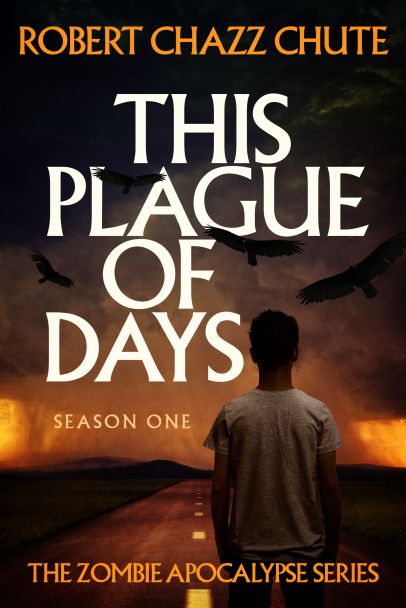





Winner of Writer's Digest's 2014 Honorable Mention in Self-published Ebook Awards in Genre


The first 81 lessons to get your Buffy on

More lessons to help you survive Armageddon

"You will laugh your ass off!" ~ Maxwell Cynn, author of Cybergrrl



Fast-paced terror, new threats, more twists.

An autistic boy versus our world in free fall

Suspense to melt your face and play with your brain.

Action like a Guy Ritchie film. Funny like Woody Allen when he was funny.

Jesus: Sexier and even more addicted to love.
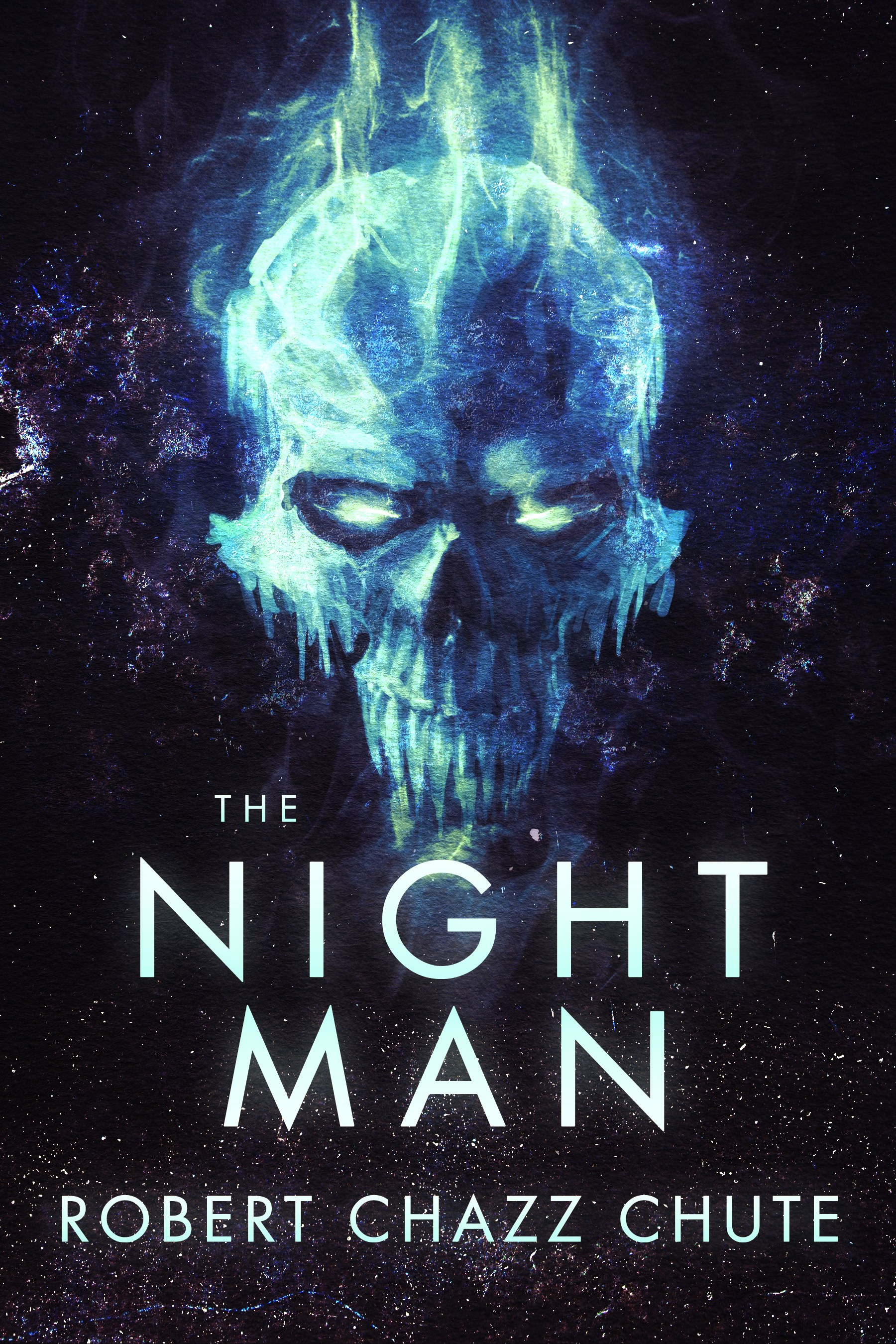
You can pick this ebook up for free today at this link: http://bit.ly/TheNightMan


See my books, blogs, links and podcasts.

 C h a z z W r i t e s . c o m