C h a z z W r i t e s . c o m

See all my books at AllThatChazz.com.

VIDEO: When an agent asks for revisions

Related Articles

Filed under: agents, authors, Books, publishing, queries, Rejection, , , , , , , ,

Friday VIDEO Reward: Aspiring Writer Meets Writing Advisor

Filed under: Intentionally Hilarious, Media, movies, publishing, Rant, Rejection, Unintentionally hilarious, , , , , ,

Writers: The Secret to Writing a Bestseller

bestseller_logo

Image via Wikipedia

The only thing you can do to ensure

you come at all close to writing a bestseller is:

Write your book!

After that? I hate to disappoint you, but there is no secret.

There is information you should consider, however, like acting on the things you can affect (factors) and refraining from making yourself crazy trying to change things that have a negative effect on you (variables.) 

Don’t focus on variables.

Focus on factors you can control:

1. Write the best book you can.

2. Build your audience (Teach, review, tweet, blog, network, learn, connect etc.,…)

3. Get your book to market (trad or indie publishing—that’s a different post.)

4. Do it again.

You’re going to want to come back to and act on 1 – 4 again and again.

The rest is explication.

I can already hear howls of protest about the title of this post. However, if you get an email from someone claiming they have insider secrets to making your book an instant bestseller, you can safely move on. There are some wacky claims out there, so let’s unpack and debunk.

First off, there are far too many variables that are out of your hands for any one person to direct you to bestsellerdom. In the publishing process there are a lot of variables. All of them have to fall into place for your book to be sold, but even if that were to happen, there are no guarantees your book will climb the charts…even if it’s good.

There are a lot of good books. Sadly, that doesn’t mean we’ve heard of them.

Consider Chuck Palahniuk‘s Fight Club and Choke. They both became movies, but just before it was announced Brad Pitt was going to do the Fight Club movie, I saw it in the remainder bin. They got whipped out of there when his book got the movie deal and the newest hire had to peel off all those stickers that read: Marked Down. The author wrote a great book in Fight Club, but he was headed back to anonymity before the lucky break. (He’s proved his worth since over and over, too; he’s prolific and, weirdly, I even saw a major review that didn’t even mention Fight Club.)

His case is a perfect example of something falling into place that was totally out of the author’s control. If Antonio Sabato Junior had played the role instead of Tyler Durden and Lindsay Lohan had played Marla instead of Helena Bonham-Carter, you would never have heard of Palahniuk’s books (because that’s a lot of stink to overcome.) Antonio was good in the few minutes he was in The Big Hit, but generally, if you see a movie poster with Lindsay and Antonio, you don’t think,  “Ooh, gotta see that!”

The most important reason you can’t just follow set rules and write a bestseller is that what William Goldman said about Hollywood also applies to publishing. “Nobody knows anything.”

That’s why there are sleeper hits. I wandered into Fargo and Highlander, didn’t know what to expect, and was blown away. Margaret Atwood snuck up and surprised me with The Year of the Flood—okay, maybe other people expected great things from Atwood every time, but that’s the book that turned me around on that author. (Can’t wait for the third in the series!)

When manuscripts go up for auction to big publishing houses, acquiring editors bid because they want a hit. Even when books go for big money, that’s no guarantee of great success. In fact, if the author doesn’t earn out that big advance, it’s a very public failure. That blemish on their record hurts authors when they try to sell their next book.

It’s a subjective business. If agents and acquiring editors really knew much beyond their own taste, then every book they bought would sell very well. Look at the bestseller lists. There are only so many spots in the top ten lists. Then look at the book store shelves packed with midlist titles. That’s a lot of books, and those are just the books the stores stock. There are many more books published than ever make it to bookshelves, yet somebody thought each book would earn out its advance.

Nobody’s betting on losers on purpose. The bestsellers are the frontlist. The books that aren’t expected to do as well are the midlist. Midlist authors are still generally expected to earn out their advance, however. Remember: it’s business, not charity.

Hm. Somebody’s going to object that there are exceptions (and, of course, there always are. Can we say much at all without some generalizing?) So I must admit I did know a publisher who bet on losers pretty much exclusively. Maybe he was noble and doing it only for the art (and government grants) or maybe his judgement was just galactically poor. He’s out of business now so no more art. (Last parenthetical, I promise: And if you publish poetry, nothing is frontlist or midlist because no one pubishes poetry expecting to make money.)

Back to the book store: See all those dogs in the remainder bin? Somewhere, someone bet a lot that each one of those books would sell really well.

Some books aren’t a surprise when they do well, but for those books, that’s not the game anymore. When a publisher buys a Sarah Palin book, they aren’t so concerned whether it will sell. Their concern with a book like that is, how much and how fast will it meet higher expectations and sell more? When a book succeeds, the publisher has to time the next printing right and gauge how much promotional money should go into the publicity campaign to push it as far as it can profitably burn.

Publishers concentrate their limited resources on the few books they think will have a shot at bestsellerdom because they will take a loss on most of their catalogue. Some don’t believe it and authors lament it, but publishing is a business. And it’s a business with very small margins.  

Even when publishers get books on the shelf, it’s not even over then. The sell-through is what’s important. Unlike any other business, publishing’s tradition—blame Simon & Schuster—is that books that don’t sell may be returned for credit. It’s a tradition that may eventually be dropped, especially when there are fewer book stores around.

I’m dying here! Give me some good news, Chazz!

Okay. The good news is that when you get rejected, you can take comfort in the knowledge that nobody knows anything. Maybe the guy who rejected you also rejected JK Rowling, so what do they really know anyway? Maybe you are destined to be a sleeper hit.

Do better than that, Chazz! I said I’m dying!

Sorry. How about this? Contests, bestseller lists, critics and reviews might help an unknown author, but it’s really word of mouth that makes a book popular. (Or a big movie deal.) The antidote to your angst is to keep writing and pitching. Find your audience and put yourself out there to be found.

How?

Go back to Factors 1 -4 at the top of this post.

Better? Now go write.

Filed under: authors, Books, Editors, getting it done, links, Poetry, publishing, Rant, Rejection, rules of writing, Writers, writing tips, , , , ,

Writers: On sending your stuff

J. K. Rowling, after receiving an honorary deg...

Image via Wikipedia


To the right is a picture of JK Rowling. Notice that she is not me. As with Highlander, “There can be only one!” I’m sorry this has become necessary to point out.

One of the posts here is a neat spreadsheet that shows how JK Rowling plotted out Harry Potter. Recently I got an email with several errors addressing me as JK Rowling that asked me to email the writer so I could read some of her work. Billionaire authors don’t do that much. In fact, as presented, I wouldn’t do it, either.

I’d feel bad about pointing out this error so publicly, but it’s apparent the writer is not someone who reads this blog. Please read the blog (and also www.chazzwrites.vpweb.ca). When someone jumps from my bio page to ask about my bio, it just feels like spam and carelessness. Writers are detail-oriented and email, no matter how casual you want to appear, should reflect that. (In fact, I’ve sometimes gone through several drafts on queries to make them appear breezy and casual.) Whether you’re sending a manuscript, a query or a short email, you must pay attention to the details.

I know what you’re thinking. You already know this. Okay, but obviously many people still don’t. One writer told me she had already written several books. That’s a good sign. However, in one short paragraph, she made seven errors. That went into my evaluation of how much I could help her right away. I decided editing her book would be time and cost-prohibitive for me and for her.

When I take on a project, I have to take into account how much time I will have to invest in the book. From that short paragraph, I had to conclude that, were I to take her on, the job would be rewriting, not editing and proofing. When it starts out that bad, it doesn’t make me confident about larger issues like attention to detail, story arcs, characterizations and narrative logic and consistency. I have ghosted a couple texts. Writing and rewriting are not out of the question, but I have to know the scale of what the job requires going in (or I may as well be working behind a counter wearing a paper hat and slinging fries.)

Does your project have to be perfect for me to work on it? Of course not. If it were perfect you wouldn’t need anyone (and you’d be god.) I’m not being nitpicky or cranky. It’s just that when I get a query, I’m looking for signs the author is serious. If you’re asking me to take your work more seriously than you do, that’s a bad sign.

Queries and sample chapters give you an idea of how I work and they tell me how much time your book will take up. That’s one of the main variables in determining my rate, so please, don’t shoot off an email—to me or any other editor—before reading what you wrote at least once.

I’m trying to end on a positive note, so I’ll add that I just took on an editing project that excites me. The author’s serious, nice and I can’t wait to dig into her book and take it from great to fantastic. In fact, the antidote to amateurish folks is waiting on my desk. I’m off to work on the manuscript.

Filed under: authors, blogs & blogging, Editing, Editors, getting it done, links, Rant, Rejection, What about Chazz?, Writers, writing tips, , , , , , , , , ,

Writers: Why your worst ideas ever might be your best

Andy Warhol: Campbell's Soup Cans (MoMA - New ...

Image via Wikipedia

Three words: Andy Warhol. Soup.

Warhol made his name by making art out of the everyday. Campbell’s soup cans became transcendent when we saw them again through Warhol’s eyes. But don’t you think he encountered a lot of resistance along the way? Lots of people have.

When you look at creative endeavours, it can be very difficult to tell a good idea from a terrible one. In fact, some of the best ideas, appear to be the worst ideas ever at first glance. 

Ghandi said, “First they ignore you, then they laugh at you, then they fight you, then you win.”

Publishing. Film. Art. It can all be like that.

Books have been written about rejection (and a lot of them were probably rejected quite a bit before finally getting published.) They are pretty funny when you look back on them now. Keats was told he couldn’t use language. The first guy who looked at Everybody Comes to Rick’s wrote that he gave the writer ten pages to grab him and he didn’t. Everybody Comes to Rick’s became Casablanca. Neil Gaiman‘s The Graveyard Book is a more recent example. It’s a great book about a baby whose family is murdered. The baby wanders down to the local boneyard to be raised by the ghosties there.

Yeah, I know! And yet. And yet.

Feel bad about getting rejected? Remember this: “Norton, this idea of yours is so crazy, it might just work!”

Great ideas often come in disguise. From the outside, they look just terrible. when you finally succeed (or go indie and make it happen on your own sans gatekeepers) you can wipe your tears away with a fifty.  (Okay, a five-spot. You’re a writer, after all.)

Filed under: publishing, Rant, Rejection, Writers, writing tips, , , , , , , , ,

Old ideas about publishing, Twitter and your worldview

The M2 tidal constituent. Amplitude is indicat...

Image via Wikipedia

Sometimes it feels like we’re fighting the tide.

The world as it was is the tide.

1. There’s the tide of institution, wherein the established people put down those who aren’t established because they aren’t established…or just because they’re different. I wear a black fedora and a long black coat with a red scarf. I look like a bad immortal from Highlander. Some people look at me funny. And what fearful mortals must they be.

2. There’s generational inertia, where old ideas get enshrined and people don’t want to change.  I made the mistake of trying to have a conversation about theoretical physics with someone who thought the field of physics had stopped developing in 1964 (coincidentally the year of his graduation from university.)

3. There’s the know-it-alls who can give you lots of reasons why you’re wrong and shouldn’t attempt anything new. Just. Like. Them. Doing something creative and new and different takes are certain amount of unreasonableness. We’re nice. But we have crazy ideas that just might work. “Put away your market analysis and focus groups and look what I made!”

4. There are envious people who feel safe in their rut if you get down in that rut with them.

5. There are people who are afraid and don’t know the way out is to act brave, especially when you don’t feel brave.

6. There are people who have their opinions and those opinions were true a short time ago. Those outdated opinions were dead on, but things changed and now they are dead. I’m hearing people worry about the death of newspapers who haven’t ever given a single thought to the end of home milk delivery.

7.  Some opinions were snarky and funny for a short time, like Twitter being all about what you had for lunch. This is usually from people who haven’t tried Twitter…yet. Are these people still going around saying, “You are the weakest link!” How about, “Where’s the beef?” Move on, please. And spring for dial-up, will you? You’re Internet connection is nearly unusable.

8. There are know-it-alls, but many more know-nothings. Don’t cast your pearls before swine.

9. Then there are people who have a vested interest in keeping things as they’ve been. (Publishers holding back on e-books to squeeze a little more out of trees and authors comes to mind. Outmoded contracts are bad. Trying to retrofit old contracts to new markets is criminal conspiracy.)

10. And sometimes we’re wrong to fight. Sometimes we’re on even ground and don’t know it.

Story time: When I graduated from the Banff Publishing Workshop, one of the faculty said, “Welcome to publishing. Come to create, not to destroy us.” It hit a rather defensive note. They had put us through the wringer, so maybe they had some reason to expect us to be a little pissed.

I stood up and said, “We aren’t coming to destroy…but we value our opinions just as much as you value your own and this is a subjective business. Nobody has to feel bad about that. No one knows what’s going to be a bestseller, so let’s not pretend we know. There is no secret to selecting the right book to publish. That’s the secret.”

And yet, we were expected to feel bad, even in areas we had experience if not expertise. I often felt too young to have an opinion, year after year. With every one of my birthdays, the establishment got a year older, too. Screw that. I’m old enough to see the pattern now. Or am I too old to have these opinions?

Below is a link to an interesting article about how Twitter is changing.

It starts a bit slow and the lead is buried, but once you get to the charts, you get the real chocolate flavour.

As Dennis Miller used to say—way back when he was good and relevant “Of course, that’s just my opinion. I could be wrong.”

How Twitter is Changing: A new study reveals Twitter’s new direction


Filed under: publishing, Rant, Rejection, Unintentionally hilarious, Useful writing links, What about Chazz?, Writers, writing tips, , , , , , , , ,

Writers : How “hands-on” do you want your agent to be?

A diagram of cognitive dissonance theory

Image via Wikipedia

I ran across an interview with an agent here. She sounds very nice. But the first couple of questions got me to wondering…

The agent mentions that she’s been lucky to never have to work on a book she didn’t “love.”

Okay. That’s great. Or is this a red flag? It’s a common sentiment among agents across the board. They want to be “delighted.” They have to love it to sell it. Hm. As a former sales rep of hundreds (thousands?) of books, I can tell you I sold many books I hadn’t even read. I’m not recommending that. I am saying that’s real. I fail to understand why agents have to love books to sell them. Shouldn’t the question be, would others want to read this? Do I know an editor who would like this?

You’ve bought a lot of books. You’ve read quite a few of that number, even to the end. How many books have you read that you really and truly “love”?

Then the agent discusses being very “hands-on.” There’s kind of a cognitive dissonance here, isn’t there? I’m not picking on this one agent. Again, she’s saying stuff that a lot of agents say. But on the one hand, the agent has to love the manuscript. On the other, there’s apparently lots of work ahead before it’s presentable for submission to an editor. Uh…whut? Shouldn’t it be one or the other?

Here’s a take on this from an author who sees the agent-author relationship a different way, and by that I mean upside-down from the way it’s usually portrayed. Dean Wesley Smith sees the agent as his employee and is not interested in jumping through their hoops. He doesn’t want to be slowed down by the agent’s process (though he has used agents.) He’s not interested in any employee slowing his process, production or sales. I recommend you read all his posts on Killing the Sacred Cows of Publishing. It’s refreshing.

So here are my questions:

Do you want your agent to love your book or is liking it good enough for you?

Do you want your agent to edit your manuscript to make it better up front?

Do you prefer that your agent be more hands-off and just get it to market?

Addendum: The agent adds, “Basically, build yourself as big of a social media platform as you can before your book ever comes out.” Good advice for both the indie published and the traditionally published. But, if you can get your social media platform big enough, do you need a traditional publisher at all?

My new BFF Jason Alexander Greenwood asked himself these questions and came up with an indie answer. If you missed my link to his post on Sunday, read Shoot the Gatekeepers here.

Filed under: agents, authors, Editors, getting it done, links, manuscript evaluation, publishing, Rant, Rejection, , , , , ,

Making VIDEO go viral: It’s all been done

Filed under: Intentionally Hilarious, Rant, Rejection, , , , , , ,

Writers: DIY vs traditional publishing

Figure 1:Conceptual Model of Philosophical Com...

Image via Wikipedia

Last month I posted a piece in appreciation of director Kevin Smith after attending one of his Q&As.

Today I ran across Alex Greenwood’s guest post, Shoot the Gatekeepers on Shelly Kramer’s blog. It reminded me again of that indie spirit I love to see.

I’m not telling anyone to go independent exactly. Going rogue is not for everyone because not everyone has the entrepreneurial spirit.

You can find the knowledge and tech support you need to make it happen, but if you don’t want to do all that in the first place, it’s not for you. I guess that’s why I straddle the line here between traditional publishing and going indie. I talk about how to get an agent and a publisher. I also talk a lot about maintaining control of your work, DIY, and marketing yourself to the world. Authors from both sides of the coin need many of the same skill sets, anyway. For instance, even if you’re a traditionally published author, you’re crazy to depend on your publisher to promote and publicize you much at all and none of those efforts are sustained.

It’s frustrating when one entrenched camp mocks the other for their choices. It’s especially bad when those opinions are not so much informed as they are outmoded dogma. For instance, once again today I ran across writers and editors who fail to make a distinction between vanity publishing and independent publishing. I gritted my teeth. Then I found the link above, took a few deep breaths and smelled the roses of someone who gets it. Thanks for a solid post, Mr. Greenwood. I love the indie spirit.

Here’s the shameless plug: If going alone is for you, I’m an editor so I can help. However, if you’re going the traditional route, I’ve been on the inside, so I appreciate what you’re going through and can help with that, too. (At my business site you’ll find more information on getting editing help for your manuscript or web content.)

Here’s the crux: I love books, no matter how they’re produced. It’s about story! Love of story is at the heart. Contrary to what you’ve heard, the medium is not the message. I care much less about a book’s process to publication than I do its narrative. Sometimes I think people who fetishize paper over electronic books love stories much less than they think they do. They’re worrying too much about how the story go to their brains. Dump that worry. Just get your art out there!

Write your story. Make it the best you can. Send it to agents, publishers or directly to fans. Whatever. Just commit to art and the value of your creativity.

Filed under: DIY, getting it done, Publicity & Promotion, publishing, Rejection, self-publishing, , , , , , , , , ,

Book Information Centre Blues

The blue copyright symbol drawn in SVG. Svg ve...

Image via Wikipedia

Occasionally, you will run into someone who either expects you to know the unknowable or dismisses what you do know. When I worked at The Canadian Book Information Centre, it happened all the time.

Case #1: One fellow, so very arch and British one might think he was sent over from Central Casting, asked what Canada’s top cookbooks were.

You might be able to google such information now, but back then we were expected to somehow pull the numbers and titles from the ether. Or from our asses.

I told him I didn’t have those numbers.

“I would have thought that would be general industry knowledge,” he replied.

“No,” I said. “The publishers don’t supply us with those numbers. Only their accountants know the truth. You could go back through old Globe & Mail newspapers and find the top cookbooks by going through top ten lists, I suppose.”

“You can’t do that for me?”

“Uh, no. Head to your local library.” Where people are actually paid to help you find the data for your book proposal, I thought.

He hung up in a huff before I could explain that I worked for publishers as an editor and publicist. My title was Project Manager, not Phone Monkey for Anyone Who Owns a Telephone. (Did you know they’ll give just about anyone a phone? I know! Exactly!)

Case #2: Another aspiring author asked me about copyright. He was desperately worried some evil editor would steal his idea.

This is a common concern, but it’s a nearly invalid one since it happens so rarely. As it happens, I knew a lot about copyright. And so:

No, you can’t copyright an idea alone. If you could, the guy who got to Good versus Evil and Boy Gets Girl first would be rich, rich, rich.

No, you don’t have to send your manuscript to some office in Ottawa or Washington. You wrote it. Your name is on it. It’s yours worldwide (except for parts of Asia.)

No, putting the copyright symbol on a manuscript is considered unnecessary, amateurish and insulting to the editor or agent who receives it.

No, you don’t have to mail your manuscript to yourself. The idea is to get the post office’s official stamp on the sealed envelope containing your treasure (as if that couldn’t be faked.) You can if you want to, but the trick is having something worth stealing. Besides, to my knowledge, any plagiarism case that’s ever made it to court doesn’t hinge on whether you’ve got a stamp on a sealed envelope.

“Well, I assure you my manuscript is worth stealing and I will mail it to myself!” Click!

Me to fellow harried Project Manager: “If he had already made up his mind what he was going to do anyway, why call us?”

The misunderstanding of our role wasn’t the callers’ fault. We were named The Canadian Book Information Centre. However, we worked for publishers to promote their books to media.

We cut the wayward calls in half the following year by getting our listing out of the Yellow Pages.

Filed under: Books, Editors, getting it done, publishing, Rant, Rejection, Unintentionally hilarious, writing tips, , , , , , , , ,

Bestseller with over 1,000 reviews!
Winner of the North Street Book Prize, Reader's Favorite, the
Literary Titan Award, the Hollywood Book Festival, and the
New York Book Festival.

http://mybook.to/OurZombieHours
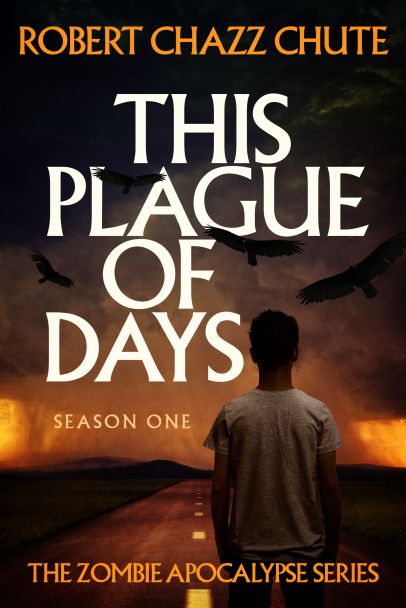
A NEW ZOMBIE ANTHOLOGY

Winner of Writer's Digest's 2014 Honorable Mention in Self-published Ebook Awards in Genre

The first 81 lessons to get your Buffy on

More lessons to help you survive Armageddon

"You will laugh your ass off!" ~ Maxwell Cynn, author of Cybergrrl

Available now!

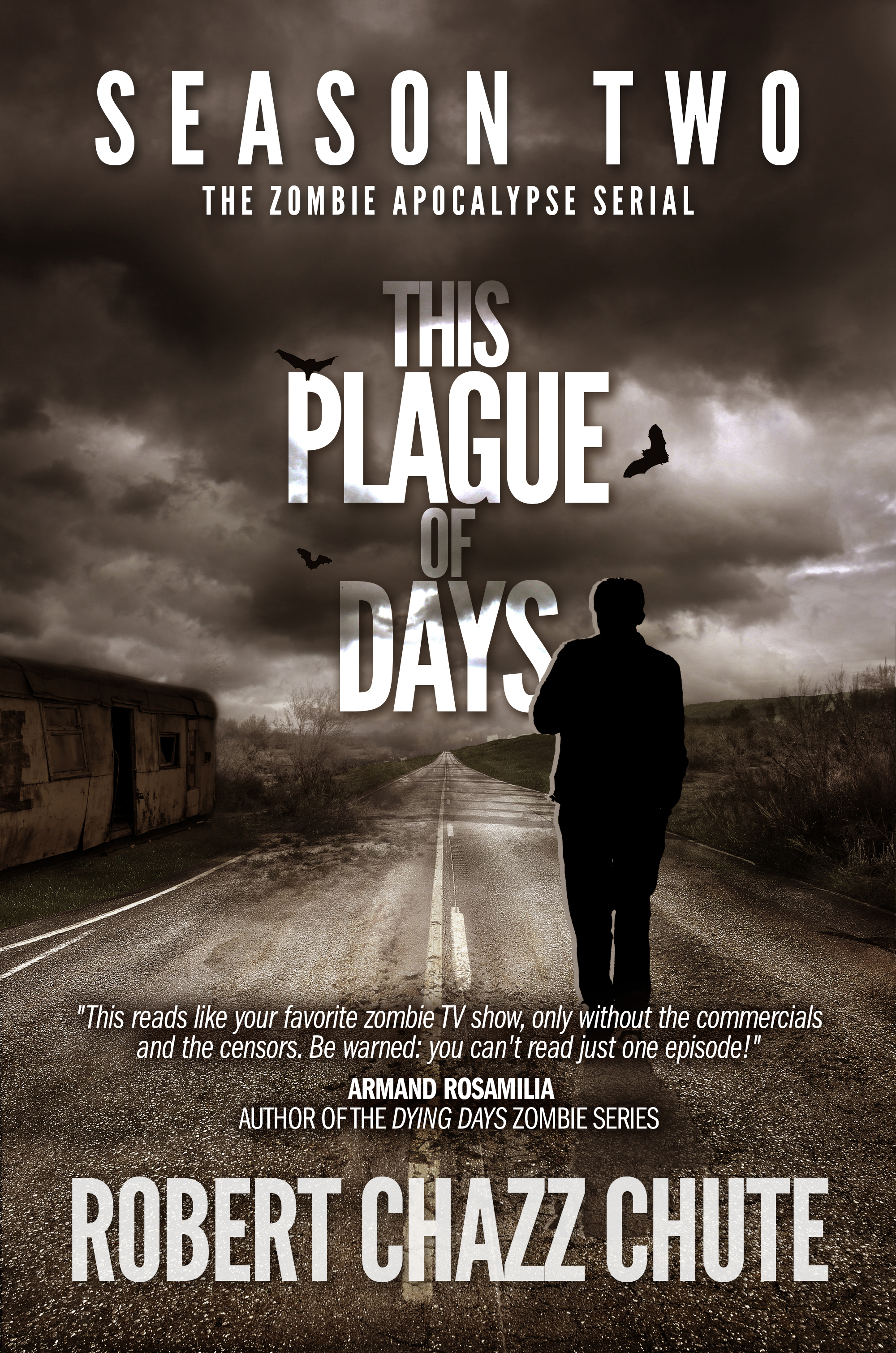
Fast-paced terror, new threats, more twists.

An autistic boy versus our world in free fall

Suspense to melt your face and play with your brain.

Action like a Guy Ritchie film. Funny like Woody Allen when he was funny.

Jesus: Sexier and even more addicted to love.

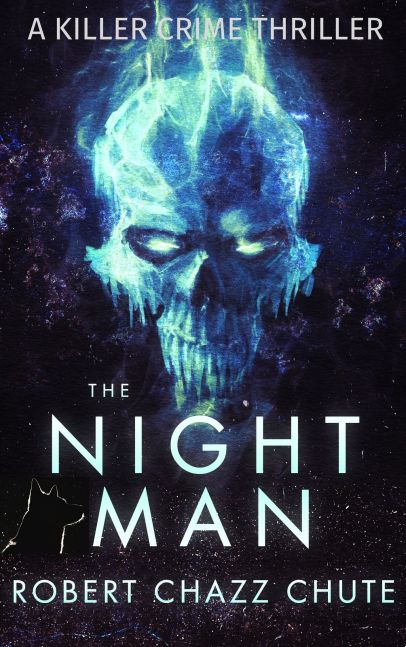
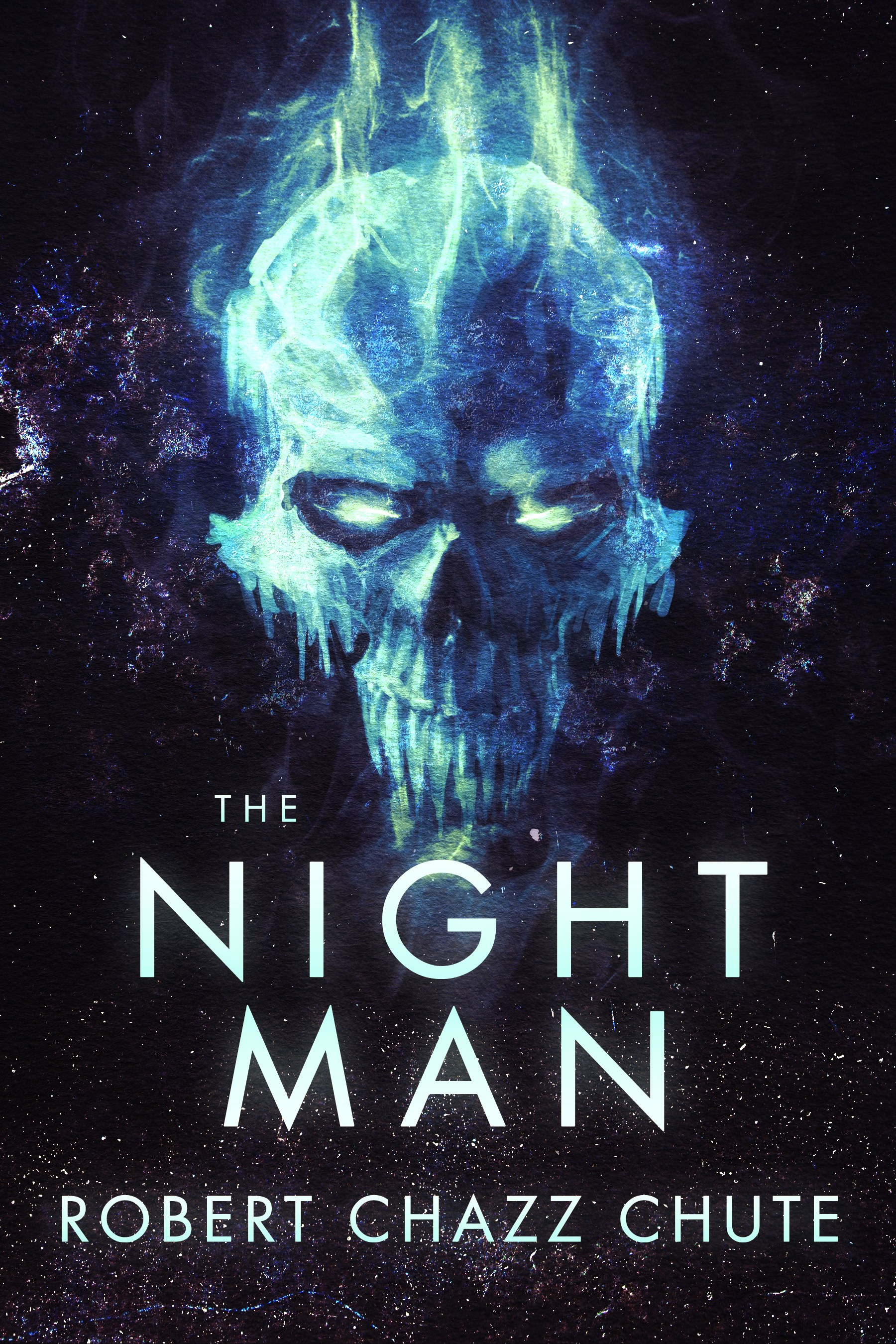
You can pick this ebook up for free today at this link: http://bit.ly/TheNightMan

Join my inner circle at AllThatChazz.com

See my books, blogs, links and podcasts.

Enter your email address to follow this blog and receive notifications of new posts by email.

Join 2,063 other subscribers