C h a z z W r i t e s . c o m

See all my books at AllThatChazz.com.

Writers : How “hands-on” do you want your agent to be?

A diagram of cognitive dissonance theory

Image via Wikipedia

I ran across an interview with an agent here. She sounds very nice. But the first couple of questions got me to wondering…

The agent mentions that she’s been lucky to never have to work on a book she didn’t “love.”

Okay. That’s great. Or is this a red flag? It’s a common sentiment among agents across the board. They want to be “delighted.” They have to love it to sell it. Hm. As a former sales rep of hundreds (thousands?) of books, I can tell you I sold many books I hadn’t even read. I’m not recommending that. I am saying that’s real. I fail to understand why agents have to love books to sell them. Shouldn’t the question be, would others want to read this? Do I know an editor who would like this?

You’ve bought a lot of books. You’ve read quite a few of that number, even to the end. How many books have you read that you really and truly “love”?

Then the agent discusses being very “hands-on.” There’s kind of a cognitive dissonance here, isn’t there? I’m not picking on this one agent. Again, she’s saying stuff that a lot of agents say. But on the one hand, the agent has to love the manuscript. On the other, there’s apparently lots of work ahead before it’s presentable for submission to an editor. Uh…whut? Shouldn’t it be one or the other?

Here’s a take on this from an author who sees the agent-author relationship a different way, and by that I mean upside-down from the way it’s usually portrayed. Dean Wesley Smith sees the agent as his employee and is not interested in jumping through their hoops. He doesn’t want to be slowed down by the agent’s process (though he has used agents.) He’s not interested in any employee slowing his process, production or sales. I recommend you read all his posts on Killing the Sacred Cows of Publishing. It’s refreshing.

So here are my questions:

Do you want your agent to love your book or is liking it good enough for you?

Do you want your agent to edit your manuscript to make it better up front?

Do you prefer that your agent be more hands-off and just get it to market?

Addendum: The agent adds, “Basically, build yourself as big of a social media platform as you can before your book ever comes out.” Good advice for both the indie published and the traditionally published. But, if you can get your social media platform big enough, do you need a traditional publisher at all?

My new BFF Jason Alexander Greenwood asked himself these questions and came up with an indie answer. If you missed my link to his post on Sunday, read Shoot the Gatekeepers here.

Filed under: agents, authors, Editors, getting it done, links, manuscript evaluation, publishing, Rant, Rejection, , , , , ,

Making VIDEO go viral: It’s all been done

Filed under: Intentionally Hilarious, Rant, Rejection, , , , , , ,

Writers: What really happens in book marketing meetings (Plus: What sells books)

Books in the Douglasville, Georgia Borders store.

Image via Wikipedia

It’s interesting to see the profession of book sales rep disappear. I was a journalist first and that’s evaporated. Later I was a book rep and that’s on the way out, too.  Book sales was somewhat romanticized. From the inside of the industry, book marketing isn’t romantic at all. Occasionally I hung out with authors and going to book fairs and sales meeting in nice places was fun. Yes, there were a few cocktail parties. Most of the year, however, you’re hauling so many samples around in your car, the shocks go. You spend a lot of time trying to get to the next appointment on time and worry about finding a good place to park.

I met some really nice booksellers. I also met many awful book retailers. The crux of that problem was that the young booksellers were doing it as a joe job and the older booksellers got into the job for idealistic reasons. No one tells aspiring bookstore owners that, not only are the big chains going to force them out of business, they won’t spend near as much time reading as they planned. Instead, they’ll spend an inordinate amount of time calculating the GST, paying the GST and trying to assist book buyers who aren’t informed book readers. (e.g. “I want to buy a book for my daughter I heard about on the CBC last month. You know. That one…? It’s by that guy? With the thing…? Surely you know that one!”)

So I dealt with the bored and disillusioned. Not exclusively! It’s just that those negative people are the sales experiences I remember best. That miserable bookseller in Owen Sound was an impatient sort who, when I dared to use the word comedy, corrected me and told me the book was “humour.” I’m surprised she was familiar with either facet of the concept. Then there was the condescending one north of Toronto who thought I was stupid since I was still enthusiastic. She beat that out of me quick. “Okay,” I said. “For the remainder of this meeting, I’ll power through the list and act just as pissed off as you appear to be. Happy? Am I smarter now?”

It wasn’t all bad. The owner of the now-defunct Frog Hollow Books in Halifax has a special place in my heart. She was a sweetie, had a great store and she bought a lot of merchandise from me gladly, even in the press of the Christmas rush. I wish that bookstore was still around.

What I find interesting in other people’s reports of marketing meetings is they say sales rep opinions  are valued. I hear of book reps getting input into the list, commenting on the marketing challenges and the dubious appeal of certain covers and so forth. Book reps on some planet get to turn something down and require changes in order to make a book sell. I repped sixteen publishers of various sizes and I can tell you, my input didn’t carry any weight. It wasn’t asked for, either. I was their traveling salesman. If the book didn’t sell, they figured it was my fault.

At a sales conference, the editorial team is selling their enthusiasm for the list they built. In my experience, if we dared to mutter about a lousy cover, we did so among ourselves. Voicing any reservations would be met with derision. We weren’t graphic artists, so maybe the cover proved to be lousy and many booksellers would tell us so as we made our rounds. However, in the context of the sales conference,we were getting flown out to someplace nice for one reason. We were supposed to sit there, take notes, and listen. The graphic artist and the editor got to have opinions on anything creative. Our job was to sell their old ugly dogs with the same conviction as the cute puppies. If we didn’t believe the dogs with mange and pushed-in snouts would sell, obviously we were idiots or traitors to the cause.

It sure didn’t feel like the powerful position some portray. Lots of articles on the publishing process mention the input of the sales team on titles. Not so in my experience. I watched editors and their minions show covers, talk about the books and maybe pass out review copies. True, we’d worry over price points. We’d look at the page count and comment that the heft of the book was light for the expense. (“People buy books by weight,” was a common bit of wisdom. “Green covers don’t sell it’s a golf book,” was the other bit. That was true, I think.) However, the publisher and their editors had already committed their resources to the books by the time we came into the picture. By then, they would understandably be reluctant to make major changes in their plans for two reasons: expense and ego. We weren’t going to change a done deal.

In the hierarchy of the book industry, the editors and publicists put themselves above the salespeople, especially if anyone referred to books as “product.” (Only a few did that.) Sales reps weren’t creative. We just did the grotty part with the filthy lucre that allowed the creativity to continue.

Many editors idolized some authors. Privately though, many put the authors at the bottom of the hierarchy. Yes, writers are the engine of the industry who provide the art to sell and a reason for editor’s existence. Perhaps it’s envy or resentment. Maybe it’s because acquisition editors see themselves as gatekeepers so they feel they made the authors.

In a less complex analysis, everyone’s the star of his or her own movie and authors come and go like background extras.

And some, being arty and human, are a pain in the ass. For instance, I sold Matt Cohen‘s books. For some he was an icon as well as a somewhat famous Canadian author. However, there was a bookseller nearby who didn’t care for his books and refused to stock them. When the publisher took the author out for lunch, naturally they stopped in to see how his books were selling. I soon got a angry memo. “What’s going on?!”

What was going on was not every bookseller is obliged to carry every book and the publisher’s embarrassment wasn’t a factor in the decision. The bookstore owner simply didn’t like Matt Cohen’s books. The proximity of our house to the store didn’t convince the owner. I despised that bookstore owner (a notorious and cadaverous blowhard.) I agreed with his right to stock whatever he pleased, however. Personally, I found Cohen’s books neurotic, but not in a good way.

At first my territory was Toronto (and in the summer, Cottage Country, too.) Later on, I worked for a book distributor so I sold books wholesale across the country as well as in downtown Toronto, Ottawa and all points north and east. I can’t say I ever felt like more than a minion. It wasn’t that the editorial staff was particularly unkind. It was simply that we had no creative input. That’s why I wonder about these reports I’ve read about the publishing process. When in-house editors tell authors, “Marketing didn’t like this or that,” are they really hiding behind the closed doors of those marketing meetings? Is it just a ploy to bring down the author’s expectations from the sky-high hopes, dreams and promises that originated in the editorial department?

Blah, blah, blah. You’re an author. You want to know what sells books. I’ll tell you.

I sold hundreds of books at a time. Some I read, but there wasn’t enough time to read them all. Instead I recited the catalogue copy and gave my impressions for each book’s appeal. If there was any kind of marketing campaign, I’d talk about that. It’s a gift to a book’s potential (and the haggard sales rep reciting the same spiel for the 100th time) to be able to say, “We think this one has a shot at the Giller,” or, “We’re putting a lot of work into getting this one on that particular CBC show you like etc.,…”

What sells books is word of mouth for a book with good writing that tells a compelling story. It takes a lot of incompetence on the publishing team’s part to overcome that. The other thing that sells books is the human connection between the book sold and the person who wrote it. What helped me sell the most books was meeting the author. Booksellers are on the frontlines of retail, far from the cocktail party action. They want to hear a sales rep’s funny story about meeting That Author.
One of the better people on the planet? One the sweetest people you could ever meet? Amy Tan. I sold her books. I sold a ton of her books. Utterly charming and genuine. When I met with booksellers, I didn’t talk much about her book. I sold her to them instead. We push the people we like harder.

When you get invited to a sales conference (if you ever do) or go on a book signing (arrange your own if your publisher won’t), remember to treat the minions well. Be nice. Be fun and memorable. The sales reps will remember you. The booksellers will hand sell you book.

Extra tip:

That’s why it doesn’t matter so much if a lot of people don’t come to your bookstore signing.

The customers may come or not, but the bookstore staff are always there.

Make a good impression and they’ll hand sell your book.

And the next.

And the next.

What really sells your books?

You do, through the force of your creativity, the shimmer of your personality and audience you cultivate.

Filed under: Books, Editors, getting it done, links, Publicity & Promotion, publishing, Rant, Useful writing links, writing tips, , , , , , , , ,

Book Information Centre Blues

The blue copyright symbol drawn in SVG. Svg ve...

Image via Wikipedia

Occasionally, you will run into someone who either expects you to know the unknowable or dismisses what you do know. When I worked at The Canadian Book Information Centre, it happened all the time.

Case #1: One fellow, so very arch and British one might think he was sent over from Central Casting, asked what Canada’s top cookbooks were.

You might be able to google such information now, but back then we were expected to somehow pull the numbers and titles from the ether. Or from our asses.

I told him I didn’t have those numbers.

“I would have thought that would be general industry knowledge,” he replied.

“No,” I said. “The publishers don’t supply us with those numbers. Only their accountants know the truth. You could go back through old Globe & Mail newspapers and find the top cookbooks by going through top ten lists, I suppose.”

“You can’t do that for me?”

“Uh, no. Head to your local library.” Where people are actually paid to help you find the data for your book proposal, I thought.

He hung up in a huff before I could explain that I worked for publishers as an editor and publicist. My title was Project Manager, not Phone Monkey for Anyone Who Owns a Telephone. (Did you know they’ll give just about anyone a phone? I know! Exactly!)

Case #2: Another aspiring author asked me about copyright. He was desperately worried some evil editor would steal his idea.

This is a common concern, but it’s a nearly invalid one since it happens so rarely. As it happens, I knew a lot about copyright. And so:

No, you can’t copyright an idea alone. If you could, the guy who got to Good versus Evil and Boy Gets Girl first would be rich, rich, rich.

No, you don’t have to send your manuscript to some office in Ottawa or Washington. You wrote it. Your name is on it. It’s yours worldwide (except for parts of Asia.)

No, putting the copyright symbol on a manuscript is considered unnecessary, amateurish and insulting to the editor or agent who receives it.

No, you don’t have to mail your manuscript to yourself. The idea is to get the post office’s official stamp on the sealed envelope containing your treasure (as if that couldn’t be faked.) You can if you want to, but the trick is having something worth stealing. Besides, to my knowledge, any plagiarism case that’s ever made it to court doesn’t hinge on whether you’ve got a stamp on a sealed envelope.

“Well, I assure you my manuscript is worth stealing and I will mail it to myself!” Click!

Me to fellow harried Project Manager: “If he had already made up his mind what he was going to do anyway, why call us?”

The misunderstanding of our role wasn’t the callers’ fault. We were named The Canadian Book Information Centre. However, we worked for publishers to promote their books to media.

We cut the wayward calls in half the following year by getting our listing out of the Yellow Pages.

Filed under: Books, Editors, getting it done, publishing, Rant, Rejection, Unintentionally hilarious, writing tips, , , , , , , , ,

Bookstores are disappearing. Time to sell my book collection.

Malcolm Ingram, Canadian independent film dire...

Image via Wikipedia

I came to two realizations about books today:

1. We aren’t being brave enough.

and

2. It’s time to sell my book collection.

Two film directors (Kevin Smith and the guy behind Donny Darko) talked on a podcast about cross-promotion with their movies and how five years from now there will be no bookstores. Though they are both authors as well, their main focus is film so they could be dispassionate about our sick industry. Contrary to what you may have heard, that’s a reason to take their assessment of bookstore extinction more seriously, not less. People inside the publishing industry often have their judgment clouded.

When confronted with such dim prospects for bookstores, many inside the book industry answer:

1. Nonsense! Horrors! Unthinkable!

or

2. It won’t happen that fast. We still have lots of time to bleed the old paradigm dry.

But five bookstores a day are closing across the United States. E-book sales are growing faster than most publishers anticipated. It won’t be long before even your Grammy is buying her books in an electronic format. At first she’ll hold back on buying in, but when the variety of large print books diminishes—they always were a marginal asset—those electronic readers that allow her to easily bump up the text size will push her over the edge. The rise in e-book reading tells me we’re already past the time when digital book consumption is only about the early adopters. That goes double once Christmas morning hits.

Sure, there will still be specialty bookstores, or rather, premium collectibles bookstores. You’ll come for the books, but it’s the coffee they sell which will make the serious money.

I write this without glee. I love bookstores. They are my last retreat. Where else besides my office, will I go willingly? Bookstores and libraries are to me what graveyards and remote girls’ schools with lax curfews are to vampires.

I hope many bookstores find a way to survive. A bunch of them may do it, but those will be digital books on the shelves, mocked up to look like tree books. Yes, grandfather, there will still be tree books, but you’ll pay substantially more for them. Big print runs keep the unit price low by producing large volumes. Those print runs are about to be cut (further) so that paper book you’re so attached to will be a specialty item. (Have you noticed the rise in the prices of buggy whips lately? It’s crazy.)

Then I listened to another podcast. Blowhard’s Malcolm Ingram was speaking with a porn actor/director. Ingram observed that the skills are transferable to mainstream film. (Insert your own joke here.) But he was talking about technical skills. Then he mentioned that it’s never been easier to make a film. It’s true. The cameras come fancier and cheaper than ever. YouTube is a young filmmaker’s playground (search Nigahiga and you’ll see what I mean.)  Technology has democratized filmmaking. “I’ve directed two documentaries,” Ingram said, “and I’m borderline retarded.”

That, ladies and germs, is indie spirit.It’s brave. It’s what we’re lacking.

What’s true for film is also true for publishing. Becoming an independent publisher has never been easier and the technology to make a book and market it is only getting better. People have done it. A bunch of industry experts with their own agendas are holding with opinions which were once valid. They get less valid each day (and another five more bookstores go extinct.) They have their reasons to mistrust self-publishing, but if they’re still confusing self-publishing with vanity publishing…frankly, now those people are boring me.

We’ve already hit the iceberg so stop wringing your hands about whether we’ll make it to New York harbor. Honestly, your obstinacy is titanic.

Oh. That other dire conclusion? Paper books are on the way out. I have thousands of them.

It’s time for me to sell them while someone’s still interested in buying them.


Filed under: Books, DIY, ebooks, getting it done, Media, movies, publishing, Rant, self-publishing, , , , , , , , , , ,

Writers Top Ten: Why blogging about publishing is important

Publishing

Image via Wikipedia


My father does not understand me.

This was a given when I was a teenager.

Time passed.

Nothing changed.

When the subject of my online work came up, my father said, in a tone that could only be termed condescending, “Why would you bother with that?” He means well, which is never soothing though for some reason it’s supposed to ease the pain of casual negation. Think of that. Have you ever not taken offense when anyone starts out with, “No offence, but…”

But to the question, why do I bother with Chazz Writes? Well, lots of reasons (beyond the simple enjoyment of bagging on my 84-year-old father.)

1. I write because I can do naught else. He really should get that by now.

2. I write to learn what I think about things.  Don’t you find your thoughts are better articulated and organized when they go through your keyboard first?

3. I write to educate and, in so doing, I become better educated about writing and the publishing industry. I research a hippo’links before I shoot them your way. Curation is a large part of what I do on the blog.

4. I write for recognition. As detailed in my previous post (immediately below), I’ve decided it’s important to become a fame whore and not just the regular sort we all are (i.e. for money.)

5. I write so clients can find me. That happy pic up there? It takes you to my business site where there’s a free trial for editing manuscripts. I also edit websites for a flat rate. I write and I edit and this, all of this, is an ad. And yet, I am unashamed.

6. I write to build a following. When I kick my fiction out into the world, I want an audience to be ready. Eager even!

7. I write for myself. It’s not just for business. Without the business side, I’d do it anyway. (I wrote a couple of blogs before this one.) In short, it’s fun.

8. I write as a distraction from my “real” writing. When one of my book chapters fails to get written or edited as quickly as I’d like, my blog post can succeed where other ambitions may (temporarily) fall short.

9. I write the blog for the energy and feedback my readers give me through their comments, their attention and the chakra vortex I have hooked up which funnels your etheric power through your tilde key, through the interwebs and into my root chakra. So, thanks readers!

10. I write for the pure enjoyment of gentle vengeance upon family members who don’t get what I do. That’s right. I said it. Vengeance. Chazz does not take condescension well! Condescension makes Chazz write of himself in the third person! It’s that serious.

Here’s a spot-on and more serious link about why you should familiarize yourself

with what’s going on in the publishing industry:

Ten Reasons to Get to Know and Get Involved in the Publishing Industry

from Pens with Cojones.

(I love that name, don’t you? Just don’t think through to the disturbing visual… D’oh!)

Filed under: links, My fiction, publishing, Rant, Top Ten, Useful writing links, What about Chazz?, Writers, , , , , , , , , , , , , ,

We tell our stories. It’s not supposed to be about fame. Or is it?

Illustration depicting thought.

Image via Wikipedia

You’re at your computer. You’re in a coffee shop. You’re in your bed. You’re at your desk. You’re thinking of me reaching out to you through these words.

I’m here at my keyboard, typing these words, thinking of you and how isolated we are from each other.

I’m thinking about how isolation allows things to happen that shouldn’t. For instance, last week one of my pages was attacked in a creepy cyber way (and it still isn’t fixed completely. Costly tech support arrives today on a white horse, carrying new modems.) If the hacker knew me, he probably wouldn’t have done what he did. We’d kick back and have coffee instead. Our mutual isolation makes me a number. To him, I’m just another IP address, not a human being.

And yet, there is such potential for the electronic web that stretches out among us to pull into a tighter weave.

The Internet has such power and possibility if we can only figure out how to harness it.

For instance, this week on Kevin Smith’s podcast Plus One, Smith and his wife talked about how Mitch Albom hit him up for some help with a charity to feed a village of starving children. Albom needed $80,000 a year. Kevin generously got the charity ball rolling. Sure, if you’re rich, you can give. But if you’re rich and famous, you can give and alert others to the opportunity to give.

The Tiny Science of Your Fragile Humanity

Yes, a chance to donate is an opportunity. It’s your chance to provide aid. It feels good to give if you have something to give. It feels good because we are wired to be sympathetic. Our brains have mirror neurons that allow us to empathize so much we cry when we see an actor in emotional pain on a movie screen, even though we know it’s fiction.

Mirror neurons are that bit of biological microscopy and brain chemistry that make us human instead of irredeemable monsters bent only on survival by domination and murder. Boot camp, by the way, doesn’t turn off your mirror neurons, by the way. The discipline and brutality uses tribalism so your sympathy and courage is directed only to the benefit of your fellow soldiers.

That’s how you make good people do awful things.

To be creative and find an audience for your creativity is not just about making money. In fact, many artists would work for free (and many do) just for the love of art. Expression is often an inexplicable compulsion. If money comes, it is a side benefit. You hope to be paid for the fruits of your imagination, but wealth is something to be hoped for, not expected.

Seeing how privileged people use their influence to make the planet a better place, I see that I was wrong about fame. I undervalued it. I thought it had the potential to be a big pain in the ass, but that’s not fame’s only aspect. Now I see how it can be used beyond art. Fame can be a tool to help starving kids, for instance.

So many artists of all genres and stripes are poor. I wish you success (and much of the content here is aimed at helping you achieve it.) Success is important, but not just for you. Famous artists have bigger audiences. Famous artists make enough money so they can help others. There’s no nobility in a starving artist’s hovel. When you’re hungry, it’s very difficult to produce art.

 Getting paid is good. 

If you want to help the poor:

Don’t be one of them.

Recently, on The Biggest Loser, one of the contestants, Frado, found a way to use his good fortune to “pay it forward.” He had a clever idea. Frado won a session with chef Curtis Stone. Instead of just getting the expected tutorial for his family alone, Frado asked Stone to hook his name to a charity event. Stone cooked up some healthy food and Frado hosted five charities to raise more than $25,000. The hit and run tutorial would have come and gone. Frado found a way to use his newfound fame, and the celebrity’s chef’s notoriety, to make an impact on people’s lives.

It made me wonder, how can we harness social media, our fans and our followers, to help people in need? I think of the clients I know who have breast cancer or have had breast cancer. I think of my cousin and my neighbour, both hit with prostate cancer. My mother died of lung cancer though she never once smoked. These causes need research dollars. There are so many causes that need voices raised for them. There are so many everyday injustices and our silence is taken for complacency. I suppose, to my shame, that is what it is. 

I have undervalued fame. I didn’t think I should value it because that would make me shallow. Then I saw how fortunate people are using their fame in constructive ways. Now I have a larger goal beyond simple publication, teaching and the petty propagation of my little entertainments. I’m working on my books.  One day they will sell and I may achieve a little bit of recognition in some circles.

If we can get flash mobs together, how about flash protests and flash fundraisers? We try to make book trailers go viral. How about YouTube videos that show the needs that must be met. How about using our narrative powers to activate those mirror neurons so people are moved to help each other?

What then?

Better: What now?

Everyone dreams about what they’ll do if money comes their way.

What dreams can we light, as one flame fires another, with bright fame?  

What can I do in the meantime, in these mean times?

What can we achieve, working together?

We have the most power tools of connection and interactivity

that have ever existed. Now.

Please let me know your ideas.

There are too many hungry. There are too many sick. We will all be sick.

There are too few who are reaching out to draw the whole together.

We have to find the way. We can start small, but we must start.

You and I could make the change that others will not.

Let’s become WE. 


Filed under: DIY, grammar, Horror, Publicity & Promotion, publishing, Rant, Social Media, , , , , , , ,

#Funny VIDEO: Wannabe author meets published author

Filed under: agents, Books, Intentionally Hilarious, publishing, Rant, Rejection, Writers, , , ,

#Writers: How much should you tweet?

Emergency "Twitter was down so I wrote my...

Image via Wikipedia

This article in the Globe and Mail advises you drop tweeting from your schedule. The main point is, writers waste time tweeting when they don’t have something to sell.

Well, yeah, but…

I’m not sure why anyone thinks a writer’s e-marketing time should be all or nothing. It’s probably useful to market to your audience, present or future. Your marketing time should not cut into your writing time. If it does, you either aren’t writing enough or not prioritizing. Blogging and tweeting to your market (present or future) should be a fun thing for you to do. If you don’t like it, then don’t do it.

I tweet, but always during time that would otherwise be dead time (e.g. waiting for something, while suffering insomnia or during commercials when I forgot to PVR something.) I enjoy blogging about writing and I make time for it. As a result, I watch a lot less TV than I used to do.

But writing time has to come first. The real question is, must you blog or make a book trailer or tweet to your followers? Can’t you just leave that to someone else when the time comes? (Answer: No. Selling anything means selling yourself.)

The Globe article suggests that it is often contests that curate bestsellers (especially in Canada.) Mm, yes, but what if you don’t write the sort of fiction that’s likely to even be considered by the Giller Prize panel? You can’t leave your book’s promotion to the whim of a handful of people, not when the power of the Internet is right in front of you.

It’s worth noting that publishers expect authors to shoulder most of the responsibility for promoting their books. Your publisher and agent will want you to have a blog as a home base that all your marketing efforts feed. If you’re into self-publishing, it’s all you, though that’s arguably not much different from what it ever was. (I’ve been a publicist and I’ve worked with publicists. What they’re doing is not rocket science. You can do it and if you won’t do that, at least control it.)

Do people follow you on Twitter and then buy your books based on those interactions? I bought a Scott Sigler book after he shot me a kind tweet. If Margaret Atwood alerted to her Twitter followers that she was holding a book signing at a particular bookstore, not only would they all get her message, that’s free targeted marketing to a group very likely to show up if they can.

Is social media marketing the norm for book marketing? Answers: Yes, no and not yet. Yes, because it’s the cheapest way to go. No, because the are many authors and publishers out there who haven’t embraced the full power of social media’s potential. Lots of people still think Twitter is about letting people know about that spicy burger from lunch backing up on you. They don’t get that Twitter can push information you want to you (sometimes information you didn’t even know you needed.) And finally, not yet, because I wouldn’t count on that “no” remaining stable.

Yes, there have been authors who did not promote themselves. JD Salinger became a recluse and never tweeted. However, that’s a lousy example for two reasons:

1. He was JD Salinger and we aren’t.

2. The world (and the world of publishing) has changed drastically, even among those who are reluctant to embrace new models.

For instance, the number of book sales reps has plummeted. Interactions through Twitter and Amazon Reviews and Blogs and search engines: All that technology has turned up the volume on the marketing environment so it’s hard to hear the tiny books by unknown authors who aren’t stepping up to speak for themselves.

Yes, I know you have lots of books on your shelves and most of your buying decisions were not influenced by anything you saw on Twitter. You’re right. But as e-books flood the market from self-publishers, you won’t be right about that for long.

Build your following now so when you do have something to sell, you’ll have lots of people to spread the word. If you don’t begin to market yourself until you have a book to sell, you’re already late.

First I have to buy in to you. Then I consider your product. Twas always thus, but now more than ever.

Filed under: blogs & blogging, book reviews, Books, links, Media, publishing, Rant, self-publishing, Twitter, Useful writing links, web reviews, , , , , , , , , , ,

How to be a Bad Editor

The phrase that pays.

Image by pirateyjoe via Flickr

Most editors are pretty good to great. Then there are the others. Here’s how to be one of those bad editors:

1. Edit without being asked. A copy editor I knew came up with a detailed critique of small advertisement I had for one of my businesses. I hadn’t asked and his manner was that he had caught me out at something. He hadn’t, actually. He didn’t like the paragraph’s wording but everyone else was okay with it. At best, his editorial suggestion was a lateral move. Worse, when I gently brushed him off, he didn’t have the grace to shut up. Then I had to brush him off with force.

2. Treat catches like a moral victory. A newspaper editor descended on me because, on my first day, I wrote Sidney instead of Sydney, Nova Scotia. I thanked her for catching my error. “This is not a minor error!” she said. “I said thanks,” I replied. “Were you looking for? Blood? I’m fresh out.” Mistakes happen. It was her job to catch my errors. I owed her my gratitude, not an apology.

3. Be very sure, and pissy about it, even when you’re wrong. A teacher, who was presumably responsible for helping generations of students, circled a word in a business document. She used her red pen as if I were one of her unfortunate, young charges (though I was about 30 at the time.) “You got this wrong!” she said with delight. (See #2) By that time I’d already edited and/or proofread hundreds of books. I knew what I was talking about and here’s the rule: You affect the effect. This is a common mistake. She stayed sure I was wrong. It was just too delightful to think she was right, I guess. That’s another common mistake.

4. Treat your writers like crap. (And refer to them as “your” writers, as if we’re owned.) Working in a big daily’s newsroom was an intense environment, sometimes unnecessarily so. For some reason, the air was also very dry. You’d think all those tears would be humidifying. Anyway, I had a nosebleed and some assignment editor (who was all of a year or two my senior) walked up and dropped an assignment on the keyboard upon which I was trying not to bleed. He didn’t say a word about my hemorrhage and went on about his work. A year later I was working in publishing with someone who had worked at the Toronto Star and she told me she’d experienced the exact same story with a person who was just as uncaring about her welfare. Weird.

5. Be a strict grammarian. Insist on obsolete rules. Insist the legendary “to boldly go where no one has gone before” was a mistake in two Star Trek series, a crime worthy of beheading. And never allow anyone to start a sentence with “And.” Also, grow visibly nauseous when anyone dares to end a sentence with a preposition. That’s something up with which you will not put.

6. Insist that new word usage is the cause of all our economic, political and moral woes. Insist we should freeze the language at some arbitrary point that makes you comfortable. Verbing nouns particularly irks you. Exclaim your objections and try not to faint with the vapours when someone says, “I’ll google that.” Civilization began to end when we started using “impact” as a verb and texting abbreviations are not analogous to a new language. Texting is a sign of End Times.

7. Be a tyrant. Change your mind. A lot. This is particularly fun for assignment editors. Expect writers to read your mind about how you want the story to go. Don’t tell them what you want. That would ruin your fun. Instead, get angry when they guess wrong. For extra bonus douche points, decree that you loathe simultaneous submissions and take forever to answer queries (or don’t answer them at all.) Pay a pittance on publication. Better, pay in bird-cage liners and tell seasoned writers they should be grateful you’re allowing them to “pay their dues.”

8. Be cruel in your rejections. When work you’ve turned down succeeds elsewhere, never doubt your judgment. Sniff at the plebian tastes of the masses instead. Better, put up examples of queries you find execrable and hilarious on your website. Mock it mercilessly. Sure, you’re a ball breaker and a soul crusher, but if you call what you do helping, it’s okay.

9. When you edit, don’t focus on making the text better. Focus on making yourself feel better. It’s that kind of prioritizing that can make you a famous infamous editor. Be sure to crow to everyone how x,y, and z author owes everything to you because you gave them their big break. Act as if you did them a favour (instead of the business decision it really was.) When your fledgling authors come to their senses and flee to work with someone sane, declare them a bunch of ingrates and try to have them banned from ever making a living or even having lunch in your town again. (Yes, these legends aren’t just in New York. I’ve met a couple of these demons in Toronto’s publishing houses,too. They’re people who never figured out that it’s not how you treat your superiors and your supposed equals that defines you. How people see you is determined by how you treat your assistant and those lowly writers.)

10. Be a frustrated writer. I once knew an editor who worked in educational publishing. She was a nice person, or at least I thought so until I saw an example of her work. While it’s true, particularly of educational publishing, that there is a style to follow, her changes to copy were gratuitous. She wanted to write, not edit. It showed. 

Follow these ten examples and you will soon be recognized as an editor to fear, loathe and avoid. Congratulations!

Filed under: Editing, Editors, grammar, Horror, publishing, Rant, Top Ten, , , , , , ,

Bestseller with over 1,000 reviews!
Winner of the North Street Book Prize, Reader's Favorite, the
Literary Titan Award, the Hollywood Book Festival, and the
New York Book Festival.

http://mybook.to/OurZombieHours
A NEW ZOMBIE ANTHOLOGY

Winner of Writer's Digest's 2014 Honorable Mention in Self-published Ebook Awards in Genre

The first 81 lessons to get your Buffy on

More lessons to help you survive Armageddon

"You will laugh your ass off!" ~ Maxwell Cynn, author of Cybergrrl

Available now!

Fast-paced terror, new threats, more twists.

An autistic boy versus our world in free fall

Suspense to melt your face and play with your brain.

Action like a Guy Ritchie film. Funny like Woody Allen when he was funny.

Jesus: Sexier and even more addicted to love.

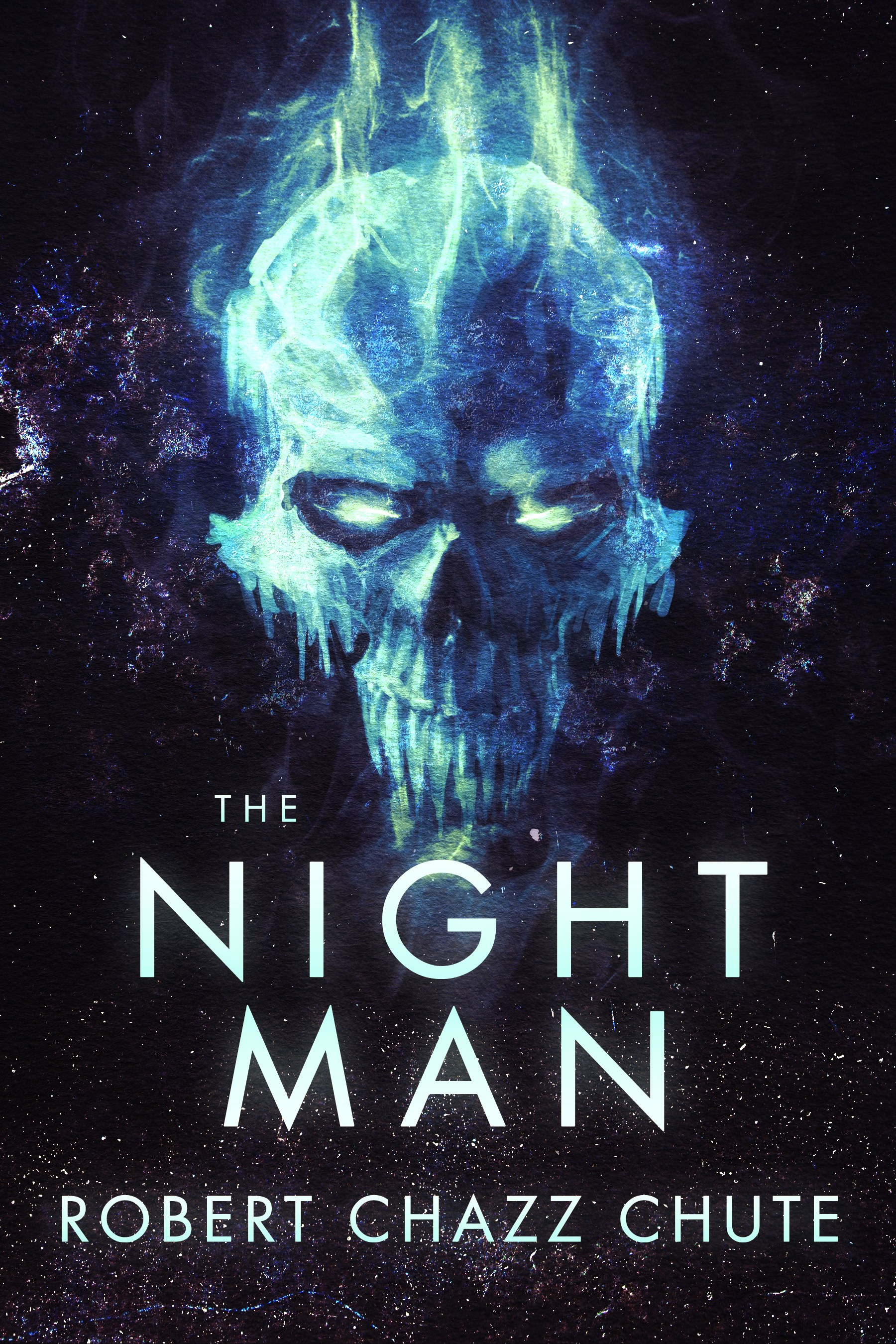
You can pick this ebook up for free today at this link: http://bit.ly/TheNightMan

Join my inner circle at AllThatChazz.com

See my books, blogs, links and podcasts.

Enter your email address to follow this blog and receive notifications of new posts by email.

Join 2,063 other subscribers