C h a z z W r i t e s . c o m

See all my books at AllThatChazz.com.

#Writers: How much should you tweet?

Emergency "Twitter was down so I wrote my...

Image via Wikipedia

This article in the Globe and Mail advises you drop tweeting from your schedule. The main point is, writers waste time tweeting when they don’t have something to sell.

Well, yeah, but…

I’m not sure why anyone thinks a writer’s e-marketing time should be all or nothing. It’s probably useful to market to your audience, present or future. Your marketing time should not cut into your writing time. If it does, you either aren’t writing enough or not prioritizing. Blogging and tweeting to your market (present or future) should be a fun thing for you to do. If you don’t like it, then don’t do it.

I tweet, but always during time that would otherwise be dead time (e.g. waiting for something, while suffering insomnia or during commercials when I forgot to PVR something.) I enjoy blogging about writing and I make time for it. As a result, I watch a lot less TV than I used to do.

But writing time has to come first. The real question is, must you blog or make a book trailer or tweet to your followers? Can’t you just leave that to someone else when the time comes? (Answer: No. Selling anything means selling yourself.)

The Globe article suggests that it is often contests that curate bestsellers (especially in Canada.) Mm, yes, but what if you don’t write the sort of fiction that’s likely to even be considered by the Giller Prize panel? You can’t leave your book’s promotion to the whim of a handful of people, not when the power of the Internet is right in front of you.

It’s worth noting that publishers expect authors to shoulder most of the responsibility for promoting their books. Your publisher and agent will want you to have a blog as a home base that all your marketing efforts feed. If you’re into self-publishing, it’s all you, though that’s arguably not much different from what it ever was. (I’ve been a publicist and I’ve worked with publicists. What they’re doing is not rocket science. You can do it and if you won’t do that, at least control it.)

Do people follow you on Twitter and then buy your books based on those interactions? I bought a Scott Sigler book after he shot me a kind tweet. If Margaret Atwood alerted to her Twitter followers that she was holding a book signing at a particular bookstore, not only would they all get her message, that’s free targeted marketing to a group very likely to show up if they can.
Is social media marketing the norm for book marketing? Answers: Yes, no and not yet. Yes, because it’s the cheapest way to go. No, because the are many authors and publishers out there who haven’t embraced the full power of social media’s potential. Lots of people still think Twitter is about letting people know about that spicy burger from lunch backing up on you. They don’t get that Twitter can push information you want to you (sometimes information you didn’t even know you needed.) And finally, not yet, because I wouldn’t count on that “no” remaining stable.

Yes, there have been authors who did not promote themselves. JD Salinger became a recluse and never tweeted. However, that’s a lousy example for two reasons:

1. He was JD Salinger and we aren’t.

2. The world (and the world of publishing) has changed drastically, even among those who are reluctant to embrace new models.

For instance, the number of book sales reps has plummeted. Interactions through Twitter and Amazon Reviews and Blogs and search engines: All that technology has turned up the volume on the marketing environment so it’s hard to hear the tiny books by unknown authors who aren’t stepping up to speak for themselves.

Yes, I know you have lots of books on your shelves and most of your buying decisions were not influenced by anything you saw on Twitter. You’re right. But as e-books flood the market from self-publishers, you won’t be right about that for long.

Build your following now so when you do have something to sell, you’ll have lots of people to spread the word. If you don’t begin to market yourself until you have a book to sell, you’re already late.

First I have to buy in to you. Then I consider your product. Twas always thus, but now more than ever.

Filed under: blogs & blogging, book reviews, Books, links, Media, publishing, Rant, self-publishing, Twitter, Useful writing links, web reviews, , , , , , , , , , ,

How to be a Bad Editor

The phrase that pays.

Image by pirateyjoe via Flickr

Most editors are pretty good to great. Then there are the others. Here’s how to be one of those bad editors:

1. Edit without being asked. A copy editor I knew came up with a detailed critique of small advertisement I had for one of my businesses. I hadn’t asked and his manner was that he had caught me out at something. He hadn’t, actually. He didn’t like the paragraph’s wording but everyone else was okay with it. At best, his editorial suggestion was a lateral move. Worse, when I gently brushed him off, he didn’t have the grace to shut up. Then I had to brush him off with force.

2. Treat catches like a moral victory. A newspaper editor descended on me because, on my first day, I wrote Sidney instead of Sydney, Nova Scotia. I thanked her for catching my error. “This is not a minor error!” she said. “I said thanks,” I replied. “Were you looking for? Blood? I’m fresh out.” Mistakes happen. It was her job to catch my errors. I owed her my gratitude, not an apology.

3. Be very sure, and pissy about it, even when you’re wrong. A teacher, who was presumably responsible for helping generations of students, circled a word in a business document. She used her red pen as if I were one of her unfortunate, young charges (though I was about 30 at the time.) “You got this wrong!” she said with delight. (See #2) By that time I’d already edited and/or proofread hundreds of books. I knew what I was talking about and here’s the rule: You affect the effect. This is a common mistake. She stayed sure I was wrong. It was just too delightful to think she was right, I guess. That’s another common mistake.

4. Treat your writers like crap. (And refer to them as “your” writers, as if we’re owned.) Working in a big daily’s newsroom was an intense environment, sometimes unnecessarily so. For some reason, the air was also very dry. You’d think all those tears would be humidifying. Anyway, I had a nosebleed and some assignment editor (who was all of a year or two my senior) walked up and dropped an assignment on the keyboard upon which I was trying not to bleed. He didn’t say a word about my hemorrhage and went on about his work. A year later I was working in publishing with someone who had worked at the Toronto Star and she told me she’d experienced the exact same story with a person who was just as uncaring about her welfare. Weird.

5. Be a strict grammarian. Insist on obsolete rules. Insist the legendary “to boldly go where no one has gone before” was a mistake in two Star Trek series, a crime worthy of beheading. And never allow anyone to start a sentence with “And.” Also, grow visibly nauseous when anyone dares to end a sentence with a preposition. That’s something up with which you will not put.

6. Insist that new word usage is the cause of all our economic, political and moral woes. Insist we should freeze the language at some arbitrary point that makes you comfortable. Verbing nouns particularly irks you. Exclaim your objections and try not to faint with the vapours when someone says, “I’ll google that.” Civilization began to end when we started using “impact” as a verb and texting abbreviations are not analogous to a new language. Texting is a sign of End Times.

7. Be a tyrant. Change your mind. A lot. This is particularly fun for assignment editors. Expect writers to read your mind about how you want the story to go. Don’t tell them what you want. That would ruin your fun. Instead, get angry when they guess wrong. For extra bonus douche points, decree that you loathe simultaneous submissions and take forever to answer queries (or don’t answer them at all.) Pay a pittance on publication. Better, pay in bird-cage liners and tell seasoned writers they should be grateful you’re allowing them to “pay their dues.”

8. Be cruel in your rejections. When work you’ve turned down succeeds elsewhere, never doubt your judgment. Sniff at the plebian tastes of the masses instead. Better, put up examples of queries you find execrable and hilarious on your website. Mock it mercilessly. Sure, you’re a ball breaker and a soul crusher, but if you call what you do helping, it’s okay.

9. When you edit, don’t focus on making the text better. Focus on making yourself feel better. It’s that kind of prioritizing that can make you a famous infamous editor. Be sure to crow to everyone how x,y, and z author owes everything to you because you gave them their big break. Act as if you did them a favour (instead of the business decision it really was.) When your fledgling authors come to their senses and flee to work with someone sane, declare them a bunch of ingrates and try to have them banned from ever making a living or even having lunch in your town again. (Yes, these legends aren’t just in New York. I’ve met a couple of these demons in Toronto’s publishing houses,too. They’re people who never figured out that it’s not how you treat your superiors and your supposed equals that defines you. How people see you is determined by how you treat your assistant and those lowly writers.)

10. Be a frustrated writer. I once knew an editor who worked in educational publishing. She was a nice person, or at least I thought so until I saw an example of her work. While it’s true, particularly of educational publishing, that there is a style to follow, her changes to copy were gratuitous. She wanted to write, not edit. It showed. 

Follow these ten examples and you will soon be recognized as an editor to fear, loathe and avoid. Congratulations!

Filed under: Editing, Editors, grammar, Horror, publishing, Rant, Top Ten, , , , , , ,

Introductions: Sending your manuscript the right way. Meeting editors and agents.

Fragment of M. Lomonosov's manuscript "Ph...

Image via Wikipedia

Do you have a manuscript you want to submit? Here’s your check list. Do not try to stand out by breaking these industry conventions.

Now suppose you’ve sent off your manuscripts but you haven’t had any luck yet (and yes, luck is part of the process.)

You decide to head off to a writers’ conference and actually meet agents and editors personally. If you can meet them in person, you reason, you can turn them on to your work. Slow down on that plan. The Kill Zone gives you tips so you’re ready to meet those industry professional as equals.

The power differential in the agent/editor/author relationship drives writers crazy. There’s much more drama around meeting editors and agents than there needs to be.

You are an equal. You’re a human being, neither above nor below. Don’t go hat in hand.

It’s a friendly business meeting. Think of it that way.

Filed under: agents, Editing, manuscript evaluation, publishing, queries, Writing Conferences, writing tips, , , , , , , ,

The High Concept Book Becomes the High Concept Movie

The zombie rage rages on and Pride and Prejudice and Zombies caught the vampire-backlash-zombie-wave at just the right time.

It’s interesting to me how, when first introduced, a terrible idea and a brilliant one are often indistinguishable. Finding just the right editor or agent to recognize an opportunity wrapped in an unsolicited manuscript at just the right time? It can be an amazingly long and difficult process.

As I think back on many of the publishers I’ve worked for, I can guarantee that many of them would have looked at the manuscript for Pride and Prejudice and Zombies and cringed. I can hear them say, “You’re not going to believe this! Look at the kind of tripe we get in the slush pile!”

Of course, it’s a subjective business, but it is a business. Someone spotted opportunity in this book and now they’re making a boatload of money off of it. If you’ve a bit snooty, you may still look askance at books like this, but reading is a wide spectrum. There’s lots to read and fortunately, you get to choose.

Slush Pile Short Story

I once knew a publisher who, on our first meeting, wanted to impress upon me that his publishing house only printed “important” books. And he did. There were some literary gems on the list.

But the publisher had a narrow spectrum of books he was interested in. I asked several times if it would kill him to publish a popular cookbook and make some real money. I learned instead that he wanted to publish one kind of book. It had to be Canadian literature (and all that reputation entails) so he would have a list that wouldn’t make him blush at his next cocktail party in Rosedale. 

High standards are laudable, but decreeing what the market should read while remaining deaf to what people do read is a formula for failure.

The moral of the story is this:

Gov. Sarah Palin has breakfast and visits with...

That hockey book that bores you, the vapid Sarah Palin book you loathe and that gardening book that’s a staple for three generations? Those sell. Slush pile submissions that publisher sneered at would have financed all those “important” books he’s not publishing anymore. He’s long since out of the business and many important books have gone unpublished for that sad loss.

I love important books. But, like most people, I like varied tastes to entertain my palate. 

Filed under: Books, publishing, Useful writing links, , , , , , ,

Are you closer to publishing your own books yet?

A section of the Egyptian Book of the Dead, wh...

Image via Wikipedia

Ex-agent Nathan Bransford wrote a nice piece on his blog entitled Why I’m Still Optimistic about the Future of Books. That headline caught my attention because, viscerally, my reaction was, “Still?!” His post goes deeper than that, but what I noticed first was my own urge to chuckle.

No, I’m not predicting the death of books. My view is more nuanced than that. I think paper books will be published 100 years from now (assuming we aren’t all killed by nukes, bioweapons, supergerms, climate catastrophe or armies of the undead) but in small numbers and as a premium item. 

Early this summer I attended a writers’ conference in which I saw the e-book future laid out. Many of the publishers and writers I met at the Canadian Authors Association conference in Victoria were already on board the train to the future. I met my first person there who doesn’t buy paper books anymore, for instance. Her bookshelves grow no heavier because her reading is now exclusively electronic. 

When I came back, I shared that worldview with everyone I knew. I encountered resistance, incredulity and resignation. Personally, I’m excited about the DIY opportunities ahead of us. We still need writers and those writers still need editors. Publishers and agents are becoming optional. For some authors—especially if they already have an audience—publishers are in their rearview mirrors.

Where are you on this issue now? Has your opinion changed in the last year? Do you see e-books as another expression of rage and frustration by the talentless hacks rightly trapped in the slush pile? Or are e-books a way for independent authors to steer their own course to larger percentages and greater control of their books?

If you’re an independent writer, here’s a link to a comparison of self-publishing services you definitely need to consider:

Self-Publishing Company Comparison: Amazon CreateSpace, Lulu or Lightning Source? : Blogthority‏

If you’re a traditional publisher or are monogamous about the Gutenberg press, here’s an article about how e-books might be integrated tree book marketing:

E-books need print books, IPG hears | theBookseller.com‏

 Please let me know your thoughts.

I’m staring at my comment box,

quivering in anticipation.

Filed under: Books, publishing, self-publishing, Useful writing links, web reviews, , , , , , , ,

Gender bias against female writers

Description unavailable

Image by pennstatelive via Flickr

Author Tawni O’Dell has written a great piece about the bias against female writers. She writes convincingly that women aren’t taken seriously in an industry that is still (still!) very patriarchal. This is an example of WGL, or Worldview Generational Lag. The publishing industry is filled with women. Women read more books than men. Women write tons and edit tons of books every year. And yet. And yet.

I’m enlightened, so ladies, when the revolution comes, don’t forget who was on your side. That’s right. I’m a sex traitor.

…Hm, that doesn’t sound right.

Okay, I’m a traitor to my sex…except that…come to think of it…all my favorite writers…OH-MY-GOD! They’re all men!

Sorry. I was one of them and I didn’t even know it! Are you one of them or us?

Wait. Now I’m confused.

Filed under: book reviews, Books, publishing, Useful writing links, web reviews, , , , , , ,

The Harry Potter Spreadsheet

J. K. Rowling, after receiving an honorary deg...

Image via Wikipedia

This is very cool. Check out

 J.K. Rowling’s Plot Spreadsheet‏

at mental floss.

When you think about it, it was a heck of a lot to keep track of.

Filed under: publishing, Useful writing links, Writers, , , , , ,

Work with an agent or go directly to the publisher?

Books Exhibition from the Publisher Global Pub...

Image via Wikipedia

Jennifer Represents… asks Do You Even NEED an Agent?

She lays out the conditions for when you should deal directly with a publisher.

My take is, if you’re going to deal with a publisher, you usually need an agent on your side.

If they’re good, agents pay for themselves. They get authors more money (and preferably the right editor, too.)

Do you need an agent? Maybe. Only you can answer and the Jennifer Represents… post can help. 

Next question: do you even need a publisher?

Filed under: agents, publishing, , ,

And Then There were Three: The James Frey Summary & Contract

Internets = srs.biz. Parody motivator.

Image via Wikipedia

First it was the Cooks Source editor devaluing writers and promoting plagiarism for profit. 

Then it was Gaspereau Press’s cavalier reaction to their Giller prizewinner’s lack of stock.

And then there was James Frey (again.)

What’s interesting about these stories is that the Internet isn’t letting them get away with it.

I should point out that I thought Mr. Frey got a raw deal from his publisher and from Oprah on the A Million Little Pieces controversy. Now that he’s devaluing writers’ work with crazy contracts? He’s trying my patience.

Here’s my summary of James Frey links:

Inside Full Fathom Five, James Frey’s Young-Adult-Novel Assembly Line — New York Magazine‏

Read the Brutal Contract from James Frey’s Fiction Factory — Daily Intel‏

 Related Articles

Filed under: blogs & blogging, Media, publishing, web reviews, , , , , ,

#Giller Prizewinner gets screwed: UPDATED

Scotiabank Giller Prize

Image via Wikipedia

Here’s the story from The Globe & Mail.

UPDATE: Gaspereau worked out a deal with one of my old publishers, Douglas & McIntyre.

And here’s my furious take:

Johanna Skibsrud won the Giller Prize and her publisher is holding her back. People pay attention to book prizes and make Christmas gift decisions based on that information. For any publisher and author, the Giller is an opportunity to sell more books and make more money for the author and for the publisher. Obvious stuff.

So, in the name of integrity, a small press that can’t handle a larger production run, isn’t working to put out more books to meet the demand. Are they trying to create more demand and get more publicity by enforcing scarcity? Maybe, although if that’s true, it won’t work.

First, it sends a message to your author and any future authors that they are expendable.

Second, if people can’t get the winning book, they won’t wait. They’ll just buy something else. There are plenty of books on the shelf.

Third, there’s Bobby Mcferrin. When Don’t Worry, Be Happy hit it big, it was a huge surprise and the record company only had 5,000 records out there. They worked furiously to get the record into store while it was still hot. Bobby did okay in the long ruin because that song went huge, but he still lost a truckload of money because of the long logistical lag in production. 

The publisher is “mulling.” And losing time and sales. Authors are paid pennies an hour as it is! How galling it must be to Skibsrud that her publisher isn’t capitalizing on the opportunity The Sentimentalists won. (And will this small press be her publisher next time? Doubtful.)

So far two large publishers have stepped up to help out the small Nova Scotian press. Instead, Gaspereau Press is worrying about the look of their medium. How quaint. And how utterly stodgy and old world in its thinking. No, the medium is not the message. The book is words on the page or words on a screen.

If they want to be a successful press that survives, they need to get the product out there before the market fades away. Successful books fund a list of less successful books (and the outright dogs, too.) Gaspereau prides itself on the look and feel of their books. Okay. If they want to be around long enough to make more precious books—birthing and blessing each one individually apparently—they need to step up for their author and for their own future. The story has it right. They have to decide whether they are printers or publishers.

If you’re thinking of submitting a manuscript to a small press, go ahead. They aren’t all this obtuse. After reading the Globe story, would you submit your baby to Gaspereau Press?

Related Articles

Filed under: Publicity & Promotion, publishing, Rant, , , ,

Bestseller with over 1,000 reviews!
Winner of the North Street Book Prize, Reader's Favorite, the
Literary Titan Award, the Hollywood Book Festival, and the
New York Book Festival.

http://mybook.to/OurZombieHours
A NEW ZOMBIE ANTHOLOGY

Winner of Writer's Digest's 2014 Honorable Mention in Self-published Ebook Awards in Genre

The first 81 lessons to get your Buffy on

More lessons to help you survive Armageddon

"You will laugh your ass off!" ~ Maxwell Cynn, author of Cybergrrl

Available now!

Fast-paced terror, new threats, more twists.

An autistic boy versus our world in free fall

Suspense to melt your face and play with your brain.

Action like a Guy Ritchie film. Funny like Woody Allen when he was funny.

Jesus: Sexier and even more addicted to love.

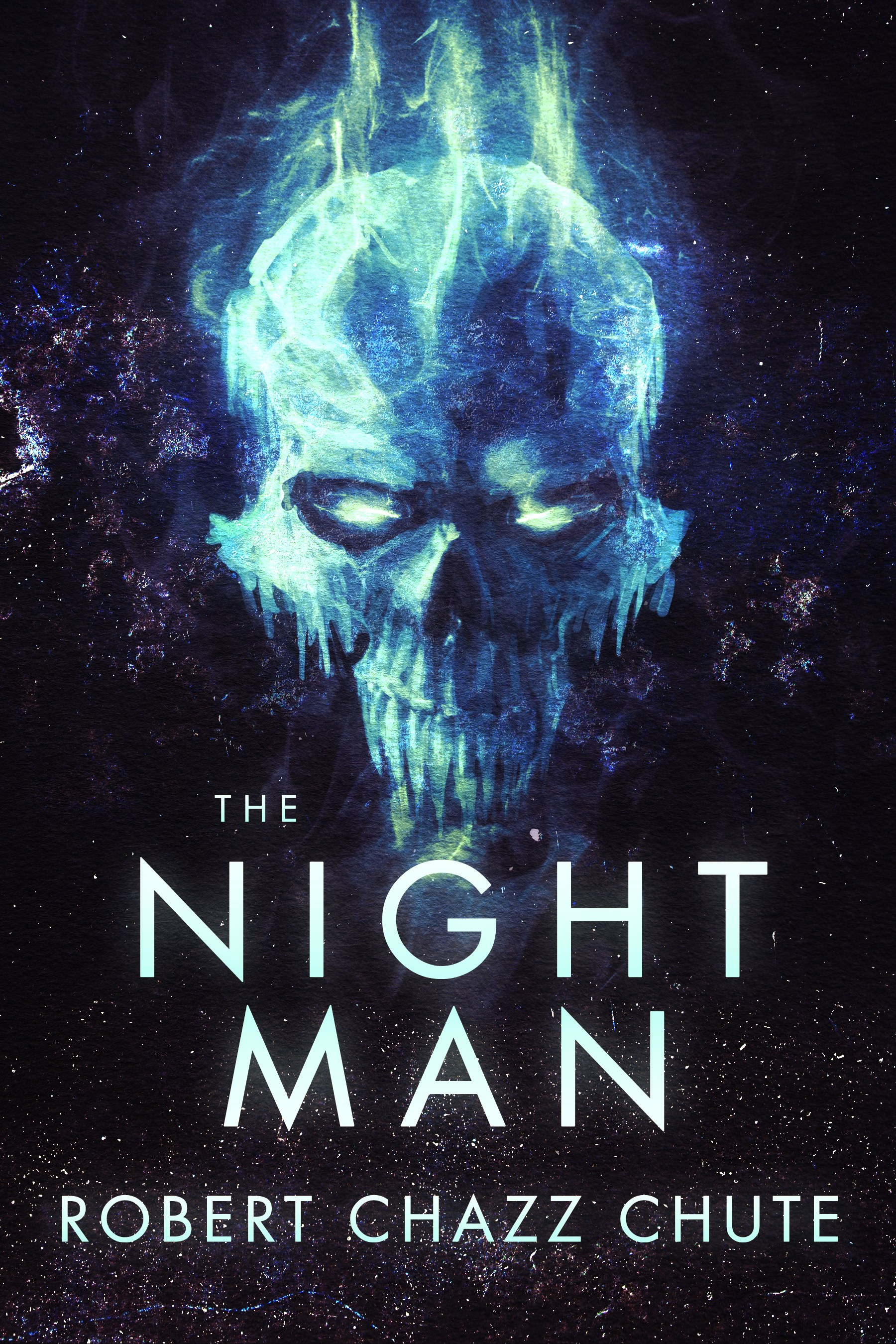
You can pick this ebook up for free today at this link: http://bit.ly/TheNightMan

Join my inner circle at AllThatChazz.com

See my books, blogs, links and podcasts.

Enter your email address to follow this blog and receive notifications of new posts by email.

Join 2,063 other subscribers