C h a z z W r i t e s . c o m

See all my books at AllThatChazz.com.

Writers: TOP 10 Objections to Self-Publishing

Amazon Kindle e-book reader being held by my g...

Image via Wikipedia

As I read the growing number of success stories about self-published authors, I’ve seen some of the same worries and objections pop up again and again. Let’s deal with some.

Objection 1: As self-publishing grows, who will be the gatekeepers to keep out all the self-published books that are gonna suck?

My answer: Who keeps all the awful books off your bookshelf now? You do. The people you trust help you curate your book collection. This is really a question of taste and quantity. Your taste is still yours. The variable is going to be quantity as we’re crushed under the weight of so much bad prose. Sure, as an indie author, it will be hard to be heard above the promotional din. It’s hard to stand out anyway. However, through social media, word about good books spreads faster. Readers curate. Sounds more democratic than a small faceless editorial and sales cabal determining your destiny from an office you’ll never see, doesn’t it?

Objection 2: Without traditional publishers, authors will have to promote their own books.

My answer: Most of them do that themselves now. In fact, Margaret Atwood recently suggested that, since authors are their own publicity department, they should get a cut. For instance, one solution would be: If you, the author, spends $10,000 on promotion, you don’t have to earn that $10,000 again before you start getting royalties. (Many savvy authors—if they can afford it—plow their advance right back into promotion.)

Objection 3: E-readers are selling much faster in the United States than they are in Canada. Can Canadian authors make any money from e-books?

My answer: When you upload to Amazon, or any other platform, there aren’t any flags on your book that say “This one’s from Canada and this one’s from Tunisia so ignore this shit.” The web makes us citizens of the world so you can sell to the vast US market. The British and Australian markets are pretty big, too. We live in an Age of Wonders. Borders? We don’t need no stinkin’ borders!

There’s a deeper and much more serious answer to Objection 3, but I’ll save that for tomorrow’s post because it will sound unpatriotic.

Objection 4: But self-publishing is expensive.
My answer: It used to be but that’s old data. You can start selling e-books for just about nothing down. And many e-publishers are now looking at the paper version of their product as a nice add-on, not a necessity. Also, beware of companies that call themselves indie, but they’re really working on the vanity press business model and are out to bleed you dry.

Objection 5: Self-publishing sucks because it’s not professionally edited.

My answer: That one’s mostly true (though you could argue a lot of traditionally published books also suffer this malady as agents edit more and big houses edit less.)

I’ll take the middle road: Unedited work gets savaged in the marketplace. Few people will buy, word will get around and even fewer will buy the next book. It’s such a losing strategy that it won’t survive. A lack of editing is really the main complaint I hear about self-publishing. I think people who are serious about it will get it. I’m optimistic that as we hammer away at that complaint, writers will see they need some professional objective input.

(And yes, I’m an editor, too, so take that into consideration as you weigh the validity of my uncharacteristic optimism on this point.)

Objection 6: You can only be a financial success with the Big  Six behind you.

My answer: Anyone, even if they have a steady-paying job, dreams of winning the lottery. (Me, too!) But getting recognized by an editor or agent and getting the full JK Rowling billion-dollar deal is like winning the lottery, but with lousier odds.

If you’re good at math, you see through this objection quickly. Most books—indie or trad—don’t sell. Most authors don’t live off their writing income. There are people who are making good passive income from selling books, short stories and novellas. They aren’t in the billionaire’s club though Amanda Hocking’s now a millionaire.

As a self-published author, you’re selling your books for prices which are the equivalent of couch cushion change, but you do get a much larger percentage of each sale. JA Konrath has done the math and proved you can hold on to your rights, work for yourself and make much more money than a traditionally published author. With time, the fallacy of this objection will sink into the consciousness.

Just like my daddy said, “You don’t get rich working for somebody else.” Just like my ma said, “The Man is out to get you. The only way to control your life is to seize the means of production.” Good old Black Panther Marxist Ma.

Objection 7: Self-publishing is for losers who wouldn’t get published traditionally.

My answer: Has been true. Less true as time passes. As more traditionally published authors jump to e-books (already happening) this impression will fade. (This ties into the curation worry in #1.) It also has to do with ego. As someone with a huge ego, I’ve struggled with this, too.

Objection 8: If I self-publish and wear all the hats, when will I have time to write?

My answer: When you find or make time, I guess. My rule is, I don’t indulge in social media when it interferes with writing time. Twitter is for winding down, breaks and commercials and when I feel like it. It’s not an obligation that cuts into otherwise productive time. I’m not unsympathetic to the problem, but it’s not a new one. As I said, most traditionally published authors are hustling their books on their own anyway, without assistance or input from their publishing house.
At least we have more leisure time than we’ve ever had in all of human history. You probably don’t have to chop wood, skin your own cow and make your own clothes and rope in addition to feeding yourself.

Maybe you need to stop making excuses and sit down to write. If you missed Tuesday’s kick-ass,  light-your-hair-on-fire, no-excuses, take-no-prisoners, no-apologies self-evaluation rant, you better read it here. You don’t like me now? Ha! You are going to hate me when you read that!

Objection 9: If  I go out into the world without an agent, who will plan my career?

My answer: Okay, I’ve phrased that objection facetiously and unfairly. A lot of agents do talk about planning their authors’ careers, though. Aside from encouraging you to write more books faster and write the best books you can, I’m dubious about advice that comes after those no-surprise generalities. (For more on that lunacy, read Dean Wesley Smith’s take on agents here.)

So what will you do when you’re looking for support? You’ll talk with your friends. You’ll reach out to your network of mentors and followers. You’ll get feedback from your beta readers. You’ll learn many of the things you need to know from fellow travelers, Google and YouTube.

Objection 10: But I hate reading on an e-reader!

My answer: You aren’t alone. Not everything is for everyone. But young consumers will take it for granted. That’s one of the reasons Young Adult e-reading is exploding. YA is also extremely popular because it’s the one genre where traditional publishing is open to cross-genre books; lots of adults read YA, too. Older people were the surprise e-reader buyers early on. As the price drops, more kids getting e-readers and the age ratio is shifting.

There is resistance to change. It’s not all bad and it’s not all good. Consider that, if you’re older, you remember someone who hated mandatory seat belts. Not an objection you hear much anymore. The New Normal is a dangerous concept, though I don’t think all the paranoia applies in this case.

Also, let’s get real: Many people who hate e-readers haven’t actually tried them yet. As I was reading mine, my 11-year-old stopped and touched the screen. “Oh!” she said. “I thought that was paper at first. I thought you had a piece of paper on top of your e-reader screen! Wow, that looks so real!”

Yup. I smiled.

These are my answers to objections to self-publishing.

Do you have some, too?

Filed under: authors, Books, DIY, Editing, publishing, Top Ten, Useful writing links, Writers, writing tips, , ,

Writers and Readers: Heads up! Exciting changes ahead!

I have some really cool changes coming in the near future. I really don’t want to lose anybody as the changes take effect so, against my nature and all that’s holy, brace yourself for a brief commercial:

I’m putting it out there.

Please subscribe to my blog

and please ask your friends and followers to do the same.

What changed? I’ve been making lots of moves in the last year or so, but there’s a lot more to do.

(Here’s what gave me the big push this week. If you need a push, you’ll get one. Hard.)

Since last May, I’ve been posting to Chazz Writes five times a week.

That will soon change to three rocking posts each week:

Monday, Wednesday and Friday.

When is “soon” with the new schedule? Probably after next week.

Nothing but the schedule will change immediately.

  • I’m still putting great information and links out there.
  • I’m still looking for authors to profile.
  • I’m still available for guest blogging opportunities and giving guest blogging opportunities.
  • I’m still editing just as much as ever.
  • Also still looking for (affordable) web developers to help me migrate to a new hosted platform that will become more interactive.

What exactly is coming, Chazz?

Aside from my regular editing duties, I’m editing my novel and its companion e-book.The details are top secret until I’m ready to launch. Subscribers will be in on the ground floor for extras when the books drop like valkyries from the sky attacking to a Wagner soundtrack.

Stay tuned. And seriously, please subscribe so you’ll be in the know.


Filed under: publishing, What about Chazz?, , , , , , , , , , , ,

This is my Posterous test.

If this weren’t a test, we’d all be running and screaming.

Portrait_1297455811734

Filed under: publishing

George Carlin VIDEOS (plus Kick-ass Wake-up Call Questions for Writers on Getting It Done)

Giving up things that hurt you. Hm.

Pause for thought.

What are you keeping, as a writer, that’s hurting you? Are you addicted to distractions (Farmville, mindless surfing, TV, Sheen gossip, vegetating etc.,…)? Are you getting on with what you don’t want to do so you can accomplish what you do want? Are there people in your life who stand in the way of your dreams? I’ve been thinking about what to give up on. When I talk to that agent, is that really my ego and insecurity asking for validation? Do I need to be traditionally published anymore? Should I give up the magazine work  and focus on books exclusively? What am I willing to give and give up to get what I want?

If you don’t have time to write, are you making time to write?

But you know it goes deeper than simple time management issues.

To get to edit your manuscript, you have to edit your life.

There are always things or people who stand in the way of you getting where you want to be. Do you surround yourself with cool people who support you and your writing efforts? Are there people in your life you can do without? Are there energy and time vampires who drain you? The uncool people subtract from your time with the cool ones. And too much distraction is leaking time away from your productivity. Are you your last priority?

Are you calling your martyrdom selflessness or are you just being lazy in the You department? If you allowed yourself to look a little more selfish, could you be the person your loved ones would love and respect more? If your friends don’t like you if you say no, are they your friends? If you take care of everyone else first, who takes care of you? If you became the person you want to be, the one who gets the big things done, couldn’t you take care of others better? Can’t the laundry wait? Can’t you teach the kids to do it?

If you say, “But everyone needs me all the time!” your martyrdom is empty narcissism. If they can’t do without you long enough for you to write, you aren’t letting them grow up. You’re hurting their potential for independence by insisting you’re so important. You’re not being imaginative enough in the How to Deal Department. You’re injecting yourself into the center of their lives, living through them instead of living your life. You aren’t just the sun of your roles. When you became Mommy, Daddy, Wife or Husband, you didn’t give away the right to be you. If someone else is always your focus, you’re dressing up your procrastination in noble rags. And that’s pathetic and needy. You’re a person, not a role. You’re a human, not a god or a robot.

You’re drowning in busywork and busy-ness, not your business. Writing was supposed to be your business. Remember?

What are you doing to yourself? Do you really need more information? Is more research really required or is that procrastination masquerading as productivity? They say time is money. Time is much more important than that. Time is life. But time is spent like money and once it’s gone, it’s gone.

But it’s not too late if you ask yourself the right questions and listen for the real answer.

Not the reflexive answer. I mean the real answer you don’t want to hear.

Is it really encouragement and more education you need? Or is a kick in the ass needed? A wake-up call? A reminder that you are acting like you are immortal? You’re not. A reminder that not only do actions have consequences, inaction has dire consequences, too. (The kind you regret most when you’re lying on coarse white sheets watching another faceless nurse change your IV bag through a fog.)

What did you want to do with your life? Why isn’t it done by now? What can you change today to move you in the right direction? Are you even pointed in the right direction? Is the day ahead going to be filled with joy and potential and stimulation and writing? Is it just another Tuesday on a treadmill to nowhere?

Are you taking care of yourself and pushing your goals forward?

If not, why not?

When did you decide to settle for less?

What made you think that was okay?

What will you do now that you’ve read this?

Your mind can be a sharp tool. Use it now, because your heart is a bomb.

The clock is ticking.

EXERCISE:

READ THE RANT AGAIN. THIS TIME MAKE IT PERSONAL. WHERE YOU SEE YOU, READ I.

EXAMPLE: IF I DON’T HAVE TIME TO WRITE, AM I MAKING TIME TO WRITE?

NOW READ IT ALOUD. AGAIN. YOU’LL GET YOUR ANSWERS.

YOU WON’T LIKE ALL OF THEM.

THE ANSWERS YOU LIKE LEAST ARE MOST TRUE.

Filed under: authors, Books, DIY, ebooks, getting it done, links, publishing, Rant, Writers, writing tips, , , , , , , , ,

Stephen King: On Writing Under the Dome

It helps to be a fast typist. It helps to write fast and edit fast.

The reason is, you have to keep it all in your head. Maybe you’ve written out a plan or maybe you’re writing a day at a time without knowing how the story will twist to its end. Even if you don’t feel you have to know everything ahead of you, you still have to keep the details clear in what’s happening behind you. It’s a lot to track.

If you’re writing your first book, aim for the low end of the acceptable word count. If your first attempt is a vast sprawl of a trilogy, there’s an excellent chance it will suck. Finishing a book at all is an amazing accomplishment. Don’t try to write too long too quickly.

JK Rowling wrote a sprawling series with Harry Potter, but the first book is relatively short compared to the big bricks that came later.

Filed under: Author profiles, authors, getting it done, publishing, Writers, writing tips, , , , , ,

Editing Part V: The Dead Grammar Rules Freedom Manifesto

William Shatner photographed by Jerry Avenaim

Image via Wikipedia

Certain grammar guidelines have changed. The classic one everyone knows is the death of the split infinitive rule. When I was a kid, some teachers were still strict grammarians on this point. I call that generational inertia (wherein one espouses the rules of the previous generation even though old rules no longer apply. Generational inertia shows up everywhere but has been particularly egregious in the publishing industry on the subject of digital books. (Chazz now dismounts from the usual hobby-horse and goes on with dead grammar rules. Ahem.)

William Shatner singlehandedly killed the split infinitive rule in the late 60s. At the opening of the original Star Trek, it was he who spoke the immortal split infinitive: “To boldly go where no man has gone before!” Patrick Stewart updated the phrase over the opening credits of Star Trek: The Next Generation with “To boldly go where no one has gone before!” The captains of the Enterprise changed things up from the proper, traditional (and stiff): “To go boldly.” After Star Trek, everyone eased up and some grammarians will still tell you that was an early sign of the decline of civilization.

Heavy-handed grammarians amuse me. Sometimes it seems like they fetishize the rules without respecting the point: effective communication. Usually traditional rules serve us well. However, rules shouldn’t get in the way of creativity just as expression shouldn’t get in the way of communication.

When expression doesn’t respect the reader’s right to clarity, it better be doing so intentionally for a particular effect. For instance, Michael Ondaatje or Maya Angelou write in complex skeins that require double espresso and a very quiet room to appreciate. Chuck Palahniuk wrote Pygmy in a distinctly ungrammatical style so you see America through the odd mind of a tiny immigrant assassin who speaks English as a second language. (That worked great for me though, usually, if something isn’t clear it’s probably because it sucks.)

I once heard an ancient grammarian with a very plummy British accent (it was as if  Central Casting sent over The Stereotypical English Professor) complain about how fast and loose modern teenagers were with language. (He brought to mind Socrates whining about “these rotten kids today!”) Plummy Accent Guy spoke as if he wanted to freeze the language at about 1901. But languages are organic.  (Look! I just started a sentence with a conjunction! My eighth-grade teacher would rap my knuckles with a ruler right about now.) Conventions change and grow and a mid-eighteenth century grammarian would be appalled at Plummy Accent Guy’s use of language. (They’d also cringe at my overuse of the parenthetical in this paragraph but to make a stale subject even vaguely entertaining, I think it works. So there.)

Just last summer I watched an author wring his hands over texting. “Text abbreviations dumb kids down,” he said. Yeah? I don’t think there’s any real scientific support for that view and he came off sounding stuffy and quaint. Kids are reading more than they ever did, they’re just doing so on screens. It’s not that they are losing the English language. It’s that they are learning another text-based language.

True, our literacy rates are awful. But that doesn’t mean drumming old grammatical rules into kids is the cure. Things change. School programs used to spend a lot of time teaching beautiful handwriting. If you’ve ever seen letters from before mid-last century, much of the handwriting looks so precise in its swoops and curls you’d be forgiven for thinking it was produced by a machine. However, elegant calligraphy is out. I loved it and my calligraphic pens made note-taking on intolerable subjects more interesting but it’s gone with the art of letter writing. Even simple handwriting isn’t a high priority in the educational system, either. The way the world has gone, teachers want to move on quickly to teaching kids how to type and cursive writing is a low priority. Your kids will be able to write with a pen but they’ll probably write by hand in block letters.

Lots of old assumptions are out. In fact, studies show that, despite what your momma told you, spelling isn’t all that important. Try this: Can you raed tihs snetnce? You can probalbly raed tihs amlst as fsat as you wold nromally raed. Studeis sohw taht as lnog as teh fisrt letr and teh lsat letr are corect, yuo wll unerdstnd my maening prefctly.

And people mistype ‘teh’ for ‘the’ so often,

it’s been suggested ‘teh’ should be an accepted alternative to ‘the.’

Remember, for a very long time there was no universal standard for spelling so Old English spelling was all over the map. There were no dictionaries so our greatest philosophers spelled idiosyncratically and phonetically. I’m not proposing we spell poorly. I’m saying ease up on rules whose basis is somewhat arbitrary.

The key for grammar rules now is: Respect the writer’s voice and the reader’s mind. And time. That’s right. Time. Serial commas are out (unless you need to keep them in particular sentences for clarity.) Serial commas often introduce pauses and separation where none are needed. If I write “apples, oranges, and plums,” I’m not letting the conjunction ‘and’ do its work. The reader doesn’t need the comma before the ‘and’ because the reader gets it.

Same with the conjunction ‘but’: “He chose the oranges and apples, but not the plums,” contains a pause after apples that you don’t need. You can do it if you want, but that’s a different point I’ll slap down five paragraphs hence. (Also, unless you’re trying to strike a particularly arch tone, stop using hence, boon and behooves. Old words die and new ones are born every day. Stop keeping outmoded words on life support as if they’re a regular part of the lexicon. It annoys your reader if it’s apparent you’re using a thesaurus or if you expect them to run to a dictionary every few paragraphs.)

Stop throwing fits over verbed nouns. I’ve heard stick-up-the-butt English majors grouse about ‘Google’ as a verb (still! Really!) And some still haven’t gotten over impact as a verb. Let this impact you: Nouns become verbs because books shouldn’t use humans. It’s supposed to be the other way around as long as we’re at the top of the food chain and until our robot overlords rise to sentience.

Also, lose the double space after the period. That’s a holdover from typing class when people used typewriters. There are far fewer typing teachers now. Instead computer programs like Mavis Beacon Teaches Typing do that job. (And now they call it keyboarding class, by the way, presumably because it’s not just about the letter and number keys anymore. It’s about keyboarding shortcuts and formatting.) From a design perspective, the double space after the period leads to what are called rivers in the text, distracting routes of white space that  pull the eye down instead of across the text. (Okay, Elmore Leonard still uses a typewriter. If you’re Elmore Leonard, do what you want. If you’re Elmore Leonard, you can strangle a hobo on live TV and just about everyone would forgive you.)

Design questions sometimes factor into grammatical decisions. For instance, at Five Rivers — the publishing company for whom I’m Editor-at-large — we put spaces around em dashes (like I just did.) Lorina Stephens, the publisher, likes that look. It gives an airy look to the text on the page. For ’emphasis’ of a word, single quotes are used where I might otherwise switch to italic. As long as it’s consistent, makes sense and makes Lorina and her authors happy, it’s right. Internal consistency rules.

Have you read a book without quotation marks yet? I read Suckerpunch last year (a mostly excellent YA novel, nothing to do with the coming movie.) No quotation marks. I didn’t miss them a bit.

With the wave of more self-published books, you’re going to see more rules loosened. Grammar is supposed to be the servant, not the master. As the self-published author, you’ll set the rules you prefer for your book (hopefully with respect for the reader’s mind and time.) The Chicago Manual of Style is an excellent standard to fall back upon, as is AP Style. For language quirks and questions, you can’t go wrong with Eats, Shoots and Leaves and the Grammar Girl book and podcast.

Just remember that grammar rules are made by humans. They can and will change.

As long as your preferences are logical and consistent, you can get creative with your book in ways that would outrage strict grammarians.

BONUS:

Please don’t ask me to edit your book if all the dialogue is dialect. This is my personal preference and it has been done effectively, of course. However, it’s such a slow read, I have to say it just annoys the shit out of me and I am not up to that task!

Please do write a book in the second person. I loved Bright Lights, Big City and, with that notable exception (from the 80s!), traditional publishers have pretty much bricked ‘You’ away behind their arrogant Wall of Acceptability. If you’re indie, you can do it without asking for a gatekeeper’s permission.

Please do put your novellas and short stories up for sale. E-books are a perfect venue to do what paper can’t: bring back the power of short form fiction!

Take a risk. I recently edited a novel coming out from Five Rivers that combined a novel with a screenplay format. It works.

Suck on that, Mrs. Wilson!

And don’t be comin’ round heah wid no ruler or

Ah’ll rap y’knuckles so hard y’eyes’ll bleed.

Filed under: authors, Books, DIY, ebooks, Editing, Editors, getting it done, grammar, publishing, Rant, rules of writing, Writers, writing tips, , , , , , , , , ,

Editing Part IV: Wording to avoid, uh, Words to avoid

This is a game of Snatch in progress. Snatch i...

Image via Wikipedia

I’ve talked about editing out words to watch out for. Here are some more:

Use says or said for dialogue tags. Don’t use claim unless you want to cast doubt on what the speaker is saying.

Watch out for too qualifiers. They have their place, but when around, about, a bit, somewhat, sort of, and kind of crop too much, you’re hedging. and the Your reader will pick up on your Readers notice waffling.

Avoid tautology: actual facts, adequate enough, stand up, sit down, mix together, gather together. One right word is better than two words that repeat the same an idea.

That got meta.


Filed under: Editing, Editors, getting it done, publishing, rules of writing, writing tips, , , , , ,

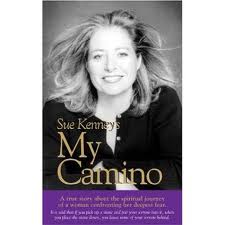
Check out Sue Kenney’s My Camino

In case you missed this morning’s nice comment from the post below, here it is again! Woo-hoo, Sue! That sure made me feel good.Sue_Kenney
Chazz. Glad you got your very own copy of My Camino. Hiring you to do an edit/polish, I felt confident and relieved to have another chance to clean up the grammar, tenses and spelling mistakes before the next printing. Your expertise and attitude made this editing process exciting for me. My Camino came out in 2004 with a small publishing house and I was told it had ‘long legs’ (just like me) and might survive 3 years on the shelf . Who would have thought that 7 years later the book is a national best seller, there is a feature film adaptation in development (I co-wrote the script with Bruce Pirrie) and in the next couple of weeks it will be available on Podiobooks as an audio book. What a journey and now you are a part of it. Thank you so much. It was truly an honour to work with you. See you at the movie première in 2013! (fingers crossed)
Sue

Go to her website here: Sue Kenney

Filed under: Author profiles, authors, Books, Editing, Editors, publishing, Useful writing links, , , , , , ,

Editing Part III: The joy of editing

The Chicago Manual of Style, 16th edition, 3rd...

I just received the gift of a book in the mail. I had already read this book but I was very pleased to receive it. In fact, I’d gone through this particular book in meticulous detail. The author signed the title page for me and graciously thanked me for my advice. The book in hand was a bonus for editing the work.

Editing is such picky work. I zip into and out of the on-line Chicago Manual of Style a lot. I tweak here and economize there. No matter the level of the edit, the key to good editing is asking the right questions.

Here’s a sample of the sorts of questions that run through my mind as I work:

Should that be 18th Century or Eighteenth century? Should I leave a quirky passage alone to keep the author’s voice or is the joke too much of a reach? Should I suggest new elements? Does the material make more sense if it is reorganized? Does this follow logically from that? Is that assertion a fact? Is that translation correct? What design elements could I suggest to make the book pop? What elements could I suggest that would convert a browser into a buyer? Is there an opportunity missed here? What marketing strategy could I suggest to make this a book with real long-tail potential? What’s missing? (That last one can take the work to a new level.)

In short, a good editor or proofreader will question everything.

An experienced editor will pick up on what’s on the page and what’s not there that’s hurting the book.

In the end, I let it go back to the author to decide which of my suggestions to act upon. When it’s done, the author’s name is on the front cover. I always say some variation of: “She’s still your baby. She’s healthy and you’ll recognize her. She wasn’t sick but she’s feeling even better now.” The reader will never know how much or how little I did. The job is to make the author look good. (And sell more books.)

And you know what? It’s fun. I’m not gleeful about it in the way I know some editors are. When I was in journalism school and when I worked for a daily newspaper, I ran into editors who were looking for stuff so they could catch you out. It was a game for them and they acted like it was the only way they could find to feel good about themselves. When they caught something—anything—writers got snarky remarks and not just a little passive aggressive indignation. Editors like that are sad and make me tired.

I find editing fun because it’s an intellectual challenge and the collaborative process makes the book better than it otherwise would have been. Higher quality editorial work translates to more authority to the author, more sales for the current book and more sales for the author’s next book. A helpful edit can morph an experiment that didn’t quite come together into a legacy book that will delight, distract, elevate, educate, provoke, redeem and earn for years to come.

A good edit will pay for itself.

And generally? No, an unedited book doesn’t stand a chance.

Filed under: authors, Books, ebooks, Editing, Editors, grammar, publishing, self-publishing, Writers, writing tips, , , , , , , , , , , , , ,

Editing Part II: Writerly idiosyncrasies

40 killer phrases

Image via Wikipedia

There are words you can lose without losing meaning. For example, writers who repeatedly precede statements with “I think” generate in their readers a suspicion of insecurity or uncertainty. Make your assertions, state your arguments, declare your narrative.

Writers have idiosyncrasies. Repeated phrases crop up. As you revise your manuscript, look for them and make a note.

Take the example “my own.” That can — and should — be shortened to “my.” That’s my own business. See? You lose nothing by losing “own.” What you gain is economy with this small edit and your reader will appreciate it (though they won’t know why.) I’m an editor. It’s my own business to know.

When you identify your own idiosycrasies, use the search and replace feature and you’ll find the number of instances of the phrase. You may not want to replace them all. Idiosyncratic phrases can be fine in dialogue.

I think that’s right.

No.

That’s right.

Filed under: Editing, Editors, publishing, Writers, writing tips, , , , , , , , ,

Bestseller with over 1,000 reviews!
Winner of the North Street Book Prize, Reader's Favorite, the
Literary Titan Award, the Hollywood Book Festival, and the
New York Book Festival.

http://mybook.to/OurZombieHours
A NEW ZOMBIE ANTHOLOGY

Winner of Writer's Digest's 2014 Honorable Mention in Self-published Ebook Awards in Genre

The first 81 lessons to get your Buffy on

More lessons to help you survive Armageddon

"You will laugh your ass off!" ~ Maxwell Cynn, author of Cybergrrl

Available now!

Fast-paced terror, new threats, more twists.

An autistic boy versus our world in free fall

Suspense to melt your face and play with your brain.

Action like a Guy Ritchie film. Funny like Woody Allen when he was funny.

Jesus: Sexier and even more addicted to love.

You can pick this ebook up for free today at this link: http://bit.ly/TheNightMan

Join my inner circle at AllThatChazz.com

See my books, blogs, links and podcasts.

Enter your email address to follow this blog and receive notifications of new posts by email.

Join 2,063 other subscribers