C h a z z W r i t e s . c o m

See all my books at AllThatChazz.com.

TOP TEN: The divide between the published and the self-published

At a recent writers’ conference, I was in grand company. I met a lot of cool people. Almost all of them were traditionally published authors. I watched them ask questions of panels of publishers, agents and editors.

Here’s what I noticed:

1. They don’t want to change along with the rest of the publishing landscape.
Inertia is powerful, even in broken systems. And why should they want to change? Things haven’t actually been good, but they didn’t have to worry about things they have to worry about now with the DIY route. It used to be that they were expected to write, mostly to the exclusion of all else. That was job #1 and everything else was supposed to be, in theory, someone else’s job. However, many authors have already felt this pressure change because more and more book promotion and publicity duties have been unloaded on them by publishers.

2. Some of them are excited to self-publish. Either they had bad experiences with agents and traditional publishers or they simply want more control of their books. Their out-of-print books and their unpublished books may have new life as self-published works. The digital revolution, to these authors, is an opportunity. (Also, some DIY authors see self-publishing as their way into legacy publishing.)

3. Some are still wringing their hands, aggressively…as if that will turn back time. Like the music industry, Blockbuster, milk men, buggy whips and enjoyable air travel, there was a lot of nostalgia in that room. But nostalgia isn’t an argument against the proliferation of ebooks. It’s sadness at loss and change. They mourn the loss of some of the perks. Though many authors complained about the six city book tour and hanging out in bookstores ignored and unnoticed, admit it: all those bookstore signings had cachet. Book signings were part of the dream of being published and it was nice to rely on the publisher to pay for the trip.

4. Some traditionally published authors denigrate indie authors.
That’s understandable. I admit, many self-published books are, at the very least, utter crap. Not just to my taste! Crap! If careless authors call themselves authors, their old world club is no longer quite as special in the new world. However, blanket condemnations are pretty silly. Writers on either side of the divide are amorphous and as unified as a herd of cats. That’s part of our charm.

5. I found many authors I listened to weren’t angry at indies. They weren’t pointing fingers with nonsense “pay your dues like I did” rhetoric. Instead, they were worried that they themselves couldn’t adapt. Look at the demands on the self-published: write, revise, edit, review, format, upload, distribute, promote, market, repeat, improve and next time so it all faster. So much for self-publishing being the lazy way to get published. The mantra is, “When will I have time to write in this environment?” Indies worry about this, too. Though more books will be published digitally, somewhat fewer may be produced per author. As my self-published author friend Jeff Bennington observed recently, half of his time is spent writing and the other half is spent marketing. Somewhere in there, Jeff mixes in a job and probably eats and sleeps a little, too. There’s simply so much authors have to do to have a chance at getting noticed (and perhaps even getting their books bought.)

6. Some view digital publishing as part of the decline of literature. Hm. That’s an interesting one. The digital revolution propagates more books conveniently therefore there are many more books out there. If you are very concerned about the difference between low brow fiction and vaunted literature (say “literature” with a royal British accent), then go write some literature, you big baby. If it can’t be found amid the din, that doesn’t mean it’s not available. It’s means you can’t sell it. If the argument is that you don’t like the taste of the hoi polloi, that’s not digital publishing’s fault. That’s your fault. Or maybe it’s the educational system’s fault. Or the human brain isn’t as good as you’d like. You can blame readers, I suppose, but that’s a rather unprofessional stance. Most people who claim their stuff is good but out of step with their fellow humans are really just writing stuff that can’t connect. On the other hand, lots of people (well…English majors) will love you high-lit writers after you’re dead. So there’s that.

7. Some traditional authors are very concerned about the change in gatekeepers.
It’s not a small group of editors anymore. The market is the gatekeeper. Democracy can be scary because the group may go where you don’t want it to go. There’s still a very strong market for vampire books and bodice-ripper romances and yes, even the Jersey Shore, for instance. If actual readers don’t want your fiction, there might still be a market for it with traditional publishing (which, by the way, isn’t disappearing completely) but traditional publishing is less adventurous the bigger the press. You’ll have better luck with a small press or DIY. It’s as if the kids who ran the chess club suddenly had to contend with a bunch of dumb jocks getting a voting membership…and the lunkheads want a kegger.

8. Authors want reassurance that bookstores will survive. What am I? A freaking miracle worker? You want a combination of Harry Potter and Merlin to fix it so more bookstores won’t die? Magicians are on film, TV and in books. Hey! I love bookstores, too! But that’s more nostalgia. (See point #3.)

9. Many authors will carry on with their traditional publishers. They got in early and they got in good and they’re going to ride that train right to the end of the line and hope the fuel doesn’t run out. Yes, they wonder about the pittance publishers are throwing them with regards to ebook royalties (or wonder how well those sales are recorded.) Yes, they’ve had spats with their agents. But a broken system isn’t a dead system and there is…eh, has been…much to recommend it.

10. Indies and the traditionally published agree: its about the writing.
We all love good books. We may be dubious about how it’s delivered, but the core product is no less valued on either side of the divide. The concerns about the delivery and quality may vary, but we’re all writers and readers.

It used to take a powerful store of hope to be a self-published author. Now more faith is demanded of my traditionally published friends.

Filed under: authors, DIY, e-reader, ebooks, Publicity & Promotion, publishing, Rant, self-publishing, Top Ten, Writing Conferences, , , , , ,

Book Promoters: Will Google Plus kill Facebook, similar to how I slowly strangled Grandma?

For a full breakdown of the advantages of Google+, check out Gizmodo’s video summary.

It may be premature to say Facebook is in decline. Perhaps it’s more accurate to say its mercurial rise is flattening and it’s too early to declare its demise. Everything grows or dies, whether we’re talking about your business, your fan base, or your favorite social media.* Entropy rules and things change. Facebook is feeling entropy’s effect, so maybe they’ll adapt and improve and grow again (but that’s not the way to bet.)

I’ve got my problems with Facebook, but they’re mostly the same problems everyone else has: privacy issues; King Nerd arrogance; I don’t have enough Facebook friends; and, one day, I’ll suffer artificial limits on the number of friends I can have.

Note that though I love Twitter, I’m still chafing at the restrictions on the number of people I can follow there.

Please solve that problem and follow me @rchazzchute goddamnit!

Google+ (I’ve titled this post with Google Plus to emphasize the difference) is coming, and it might solve a whack of those problems if Google gets it right. One of the things I like is that you can make circles of friends, so you can choose who gets your message. Haven’t we all suffered the social stigma and financial pain of announcing on Facebook how much we’re looking forward to Grandma’s funeral, only to find Grandma’s still checking her account from her hospital bed and she’s cut you from the will? Petty old bitch.

Keep an eye out for the Google+ launch. They’re still working out the kinks with the beta version so right now the only way to join is by invitation. I’m pretty excited about the social and business possibilities Google+ offers. If it lives up to its promise, I will enthusiastically migrate away from Facebook to set up shop at Google+.

*MySpace is in a coma waiting for us to be merciful and finally pull the plug, for instance. If you still have a MySpace account, please, get your affairs in order. It’s almost as dead as Grandma.

UPDATE: This just in! MySpace has been sold. Details here. They’re starting with a workforce reduction and somehow Justin Timberlake is involved, so…nah, MySpace is still dead in the water. Like Grandma!

Filed under: Publicity & Promotion, Social Media, , , , , ,

The “But At What Cost?” Miscalculation

John Locke has written a book: How I Sold 1 Million Ebooks in Five Months.* (I recommend it) How_I_sold_1_million_ebooks_in_5_months

LA Times writer Carolyn Kellogg wrote a piece that asks, “At What Cost?” Here’s that nonsense argument and my bit of nonsense follows.

The upshot is, Ms. Kellogg thinks Mr. Locke undersold himself. He sold a million ebooks, but charged 0.99 for many of them. She says he could have made a million of with higher pricing instead of making do in the $300,000 range. (A figure that would make many authors swoon.) There are many interesting observations in the comments section of the LA Times article that pick apart Ms. Kellogg’s worries very well.

Here’s my take away: I had never heard of John Locke until now. He used 0.99 loss leaders to sell a shit-ton of books. Yes, he “only” made 0.30 on the 0.99 ebooks, but  low or no pricing allowed wary readers to try him out. And now many more people know  about him. And I bought his non-fiction ebook which details his success so far. And I bought it for $4.99.

Kellogg is saying Locke was an idiot for leaving money on the table, assuming he could have moved so much and so quickly with a middle man trad publisher involved. Why would she assume that, I wonder? There’s no basis for it. The new world is not the old world and hers is classic old world thinking.

Now you know, if you didn’t, who John Locke is. And now you’re thinking, maybe I should buy one of his books and give it a try. Maybe more than one, huh?

*Thanks to Joanna Penn for her post on Mr. Locke. I love Joanna’s blog and podcast, The Creative Penn. Subscribe if you haven’t!  

Filed under: authors, DIY, ebooks, getting it done, links, Media, Publicity & Promotion, publishing, self-publishing, Writers, , , , , , , ,

VIDEO: Moso, the free Mac app for vlogging

Did I mention that this app is free, free, free?  Also, it’s free.

(There’s the power of the written word over video right there. I forgot to mention the app is free, but it was easy to add the detail of the price using this ancient keyboard thingy.)

More details: You don’t edit Moso, you just do retakes. It’s easy to upload to Twitter, Facebook and YouTube, though. I’d say if there’s a social medium that’s underused for authors promoting their books, it must be YouTube. Moso will help you with that.

 Podcasts can be helpful, though access and difficulty of execution/time involved increases the variables in that argument. I don’t think Facebook is as effective for promotion as it could be. Twitter can be effective if used well (but that’s another post.)

Filed under: authors, blogs & blogging, Books, podcasts, Publicity & Promotion, self-publishing, What about Chazz?, , , , , , ,

Book promotion for self-publishers

As a self-publisher, you probably can’t afford to splash a big ad across the back page of the New York Times (and that’s of limited use anyway.) What is useful is connecting with people. Be genuine and you can share and spread useful information that brings good karma down the line. In this video I talk about Jeff Bennington’s Reunion blog tour. I won a Kindle, but I would have promoted his novel anyway. Here’s why:

Filed under: authors, Books, Publicity & Promotion, self-publishing, , , ,

6 Effective Ways to Promote Your Book

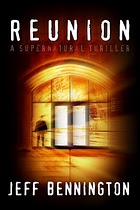
ReunionToday’s guest post is from the author of Reunion, Jeff Bennington! I forget how I ran across Jeff, though it could have been a lot of places since Jeff is a powerful experimenter in the realm of book promotion. His site is The Writing Bomb. He’s also blogged here before on CreateSpace versus Lightning Source–a very popular post, and for good reason: Jeff’s generous with what he learns. Here’s what he picked up from his book campaigns:

In the world of publishing, authors have found many ways to promote their work ranging from book signings with a 3-piece orchestra to dressing up like their characters. After publishing two novels, I’ve tried some of those crazy stunts, but from my experience, there are a few affordable and effective ways to promote your book online that won’t leave you looking like Barney the dinosaur. In fact, online marketing has been touted, and likely is, the best way for an author to promote his or her work.

However, authors have to approach marketing differently based on their genre and subject matter. And let’s be clear, when you promote your book, you can’t always expect immediate gratification and you’re not guaranteed sales. Your premise will drive readers to read a sample and the excerpt will determine your sales. And so, the quality of your writing is ultimately the best sales pitch.

The best promotion for me has come from the following:

#1 Goodreads.com: Goodreads “giveaways” are an incredible tool to publicize your book. I recently posted Reunion in a giveaway and had 787 bites in 5 days, beating out bestsellers that have been on the list for months.

HINT: Don’t post more than one book to give away and do it in one-week spurts. You’ll have to trust me on this.

I also like what my ad on Goodreads is doing. The thing with Goodreads is not how many clicks or sales you get, but how many folks “add” your book to their “to be read” list. When they do that, they are more or less planning on buying your book when they get to it, and they will, because most readers on Goodreads are avid readers and love talking about what they read, so they will also rate and review your book, which is another benefit of that site.

Another secret here is that if you spend X amount of dollars on an ad, you will likely get a lot more “adds” than clicks, which is good because it is a pay-per-click system. But if folks add your book without clicking on the ad then you have effectively extended the life of your ad immeasurably.

#2 Blog: If you don’t have a blog or you’re afraid of starting one or you think it’s too much

Jeff_Bennington

Jeff Bennington

work, then plan on writing your book solely for your mother to enjoy because blogging is only the beginning of what it takes to market your book…and it’s the easiest. It’ll only get harder and more expensive from there.

#3 Kindlenation.com: This is a very good site but you’ll have to plan months in advance to run an ad. It will definitely make your money back and more because they have a lot of readers who buy what they advertise. Programs run from $119 to $349. Kindle Nation reaches from 7,500 to 15,000+ opt-in readers. I paid $99 for an ad that ran in mid May and sold over 200 copies that day. So if you make $2 or $3 a book and spend $119…do the math.

#4 Twitter, Facebook, email lists: These are the most obvious and basic starting points. I’ll put it this way, I got all four of my book blurbs through Twitter connections, two of which are bestselling authors. If you can get that elsewhere, go for it. Basically, you have to tell your social marketing pals about your book.

And, this is important, you have to share their work too.

If you blast your friends and followers with your personal spam, they will retweet and share less and less the more you do it. Share what they are doing and chat with them and you’ll notice a marked difference in how receptive they are to spreading the word about your book. I’ve experimented with this and I can tell you without a shadow of doubt that cross promotion helps.

Strict self-promotion hurts.

However, I have found that tweeting short blurbs, such as “A Riveting and Incredibly Powerful Story of Pain and Triumph!” grabs reader’s attention more than, “Check out my new book, REUNION”. Try both methods and see which works better. Be sure to include a “tiny url” to allow room for your #tags.

HINT: Use the twitter share button on the right side of your Amazon sales page. It has the shortest “tiny url” I’ve seen yet.

#5 Ereadernewstoday.com: I’m on the schedule, so I don’t know for sure, but I’ve heard that Ereadernewstoday.com is a good site to advertise on. This program is $25 a day. Emails will reach about 10,000 book readers through opted-in email blasts.

#6 Blog Tour: Plan for a lot of work. It can be nearly free, but will be the most time consuming. However, if your book sucks, I think a blog tour can backfire. I’m just sayin’.

If you go this route, you better get your book professionally edited and proofed and have a great cover and good formatting because that’s what book bloggers and reviewers expect.

Basically, when it comes to promoting your book. You better make sure it is a damn good book or you’ll have a 7-digit Amazon ranking within a month. I know. I’ve seen it. But don’t get overwhelmed. I’m a newer author and I’m not breaking any records, but I believe these six methods of promotion will help you tremendously, especially if you are in the process of building your platform as I am.

Thanks for reading. What methods have you used to promote your book? How did it turn out? Let me know.

Jeff Bennington, author of REUNION & other thrillers

CLICK THE COVER TO BUY REUNION NOW:

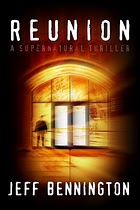
Reunion

And here are more of Jeff’s links:

The Rumblin’ 

Killing the Giants

The Writing Bomb 

www.jeffbennington.com

Filed under: Books, Guest blog post, Publicity & Promotion, Writers, , , , , , , , , , ,

Life & book marketing update shouted from a speeding car

Happy Sunday. Things are moving somewhat quickly as I start making transitions to writing full-time. I have a marketing plan: It’s important to be prolific. I believe in being available across as many e-platforms as possible (and zero DRM). Having just one ebook up won’t cut it. Being prolific allows cross-promotion (e.g. You like this? Then you might like to buy that, too!)

Over the coming months I’ll be offering individual short stories (at 0.99 each), a collection of short stories ($1.99 or 2.99, haven’t decided yet), a novella ($1.99) and another collection of short stories with a quirky hook I can market effectively ($2.99). At some point I’ll package the aforementioned individual stories—there are six—in another book (conveniently priced at $2.99 probably.)

There are several full-length novels that are written and need revision before they’re ready to be swallowed by the masses, but most of them are for next year.

A few things about the slingshot launches:

1. I’m doing a soft launch until I have a bunch of ebooks available. Then I’ll be carpet bombing (more details to come in another post on what that means.)

2. I will be launching another website in addition to this one. Chazz Writes is all about writing craft and publishing and I intend to continue. However, I have broader plans for the new website that will expand my mandate and goals. I’ll be talking about a lot of different things on the new site.

3. And I do mean talking. I’ll be incorporating video and podcasts. Fancy plans with pants to match. More on that closer to the new website launch.

4. I want to do  a hard launch of the first novel in my line, but I’m not sure if I can pull it together for Christmas. There are more than the usual variables. For instance, I need to get permissions to use the names of a major Hollywood star and a major porn star. (Yes, I’m familiar with the rules of fair use—and both characters as they appear in the novel are adored by the hero. However, this isn’t a fair use issue. It’s a Smashwords rule issue.)

5. I’m not in the least interested this year in printing books with which to assail bookstores. It’s a lot of work for less reward. It’s an exciting venture I do not, at present, have time to pursue. (And yes, I’ve looked at the numbers.)

6. However, I will need printed Advance Reading Copies (ARCs) for promotional purposes when the hard launch takes off. I’ll be using CreateSpace to print a few sample copies since there is no punishing fee for each revision. For bigger print runs, once the formatting is solidified, I’ll switch to Lightning Source.

If you’re wondering how I’ll get it all done, sometimes I wonder, too. Then I remember that I’m severely underemployed. (Except for the soul-crushing poverty, it’s a fantastic advantage and a real time saver.)

There’s more to the book marketing and promotion plan and I’ll share it with you as soon as I can. In the meantime, back to my editing suite in the batcave beneath the bunker under the Chuck E. Cheese.

Thanks to my buddies Jeff Bennington, author of Reunion, and author Rebecca Senese (look her up, she’s a fountain of short stories), for clarifying my strategy on the issues in #6. Both these lovely people have guest blogged here. You’ll remember Rebecca did a great job summarizing the workings of Smashwords and Jeff compared CreateSpace with Lightning Source. (If you don’t remember their posts, search this site in the search box top right. Sorry! I’d link it for you but I’m in a huge hurry just this minute. I bet you can guess why when you see this tiny portion of my to-do list.)

Jeff tells me he will do me the honour of another guest blog soon. I think the discussion will be about book promotion and what he found effective for his massive push for Reunion

Filed under: authors, blogs & blogging, Books, DIY, e-reader, ebooks, getting it done, Publicity & Promotion, publishing, What about Chazz?, Writers, , , , , , , , , ,

Book promotion: I was wrong

I used to be a book publicist and, as a book sales rep, have worked with book publicists. Gotta say: not impressed with the breed. Most have a shiny coat, bark loudly, no teeth. I expected a lot of them. I don’t think I was wrong then, but now that the tech and culture have changed, I realize I’ve expected too much from publishers and their publicists.

In the old days, publicists organized events, book tours, mailed out advanced reading copies (ARCs) and hoped for reviews. The publicists I knew were pretty smug and full of themselves, especially considering how frequently they were unsuccessful.

The other wrinkle in the mix from an author’s point of view is, if you’re with a trad publisher, the publicity department has little time to get attention to any one book or author. The other continual complaint is, besides the small media/promotion window, most of the promotion budget always goes to the author who seems to need it least. That’s the publisher trying to maximize profits (rather than pimping a mid-list author.)

The world has changed and authors need to shift expectations: Publishers don’t publicize your book much and mostly download marketing duties to the author. That annoyed me. Now I think that’s the way it should be.

My reasoning is that the author/reader relationship has changed. Readers don’t want to interact with your publisher. They want to interact with you. Who cares about publishers. With the exception of Harlequin—the one company where you always know what you’re going to get—publishers don’t have brands. Authors have brands.

Old model:

Send stuff out (press releases, ARCs, bookmarks, catalogs, book tours) hoping media will bite.

New model:

Engage readers directly with Twitter conversations, blogger reviews and blog tours and hoping they will bite.

Yes, there’s still room for old model tactics, but they are either limited, outmoded, less effective or costly.

So nevermind that your publisher’s publicists aren’t returning your calls two weeks out from your book launch. Chances are they’re busy with another book and have expended your promotional budget. You can do better for yourself over the long run, anyway. (Or you can hire your very own publicist and do it up right for a longer time.)

Publishers unloaded marketing responsibilities to authors for budgetary reasons. Authors should shoulder that responsibility for a better reason:

Your readers want to talk to you, not them. 

Filed under: authors, Publicity & Promotion, publishing, Rant, , , , , , , ,

Top 20 Facebook Apps for Book Lovers – GalleyCat

Top 20 Facebook Apps for Book Lovers – GalleyCat.

Got a book you want to review, find, sell or promote? Your publicity list starts with this link. Supremely useful collection of apps for the author, publicist and book lover.

Filed under: authors, blogs & blogging, book reviews, Books, Publicity & Promotion, self-publishing, , , , , , , , ,

Ahoy, matey! Neil Gaiman VIDEO on why book piracy can be good

I’ve spoken with several publishers on this topic. They knew they shouldn’t do what the music industry did (i.e. sue their own customers) but that’s typically where the thought process ended. At a writing conference I recently attended, there were a lot of worried writers. They worried that someone would steal their stuff.

Don’t worry about it.

It’s either:

1. pretty rare (maybe it’s not good enough to bother stealing—uh-oh!),

OR

2. the people who steal it are power users and curators who are going to read more of your stuff and pay for it and the related products and services you sell  (so be prolific and imaginative),

OR

3. the pirates are scum who never pay for anything anyway so the sale isn’t really  lost. If they weren’t stealing your stuff, they’d be stealing someone else’s stuff instead. (Don’t waste time or base your business model on the lowest common denominator douche.)

Maybe that’s counter-intuitive, but I’d rather concern myself with factors I can control rather than worry about things I cannot control.

Free not only can work, giving to get often does work. You can hide your light under a bushel or put it out there so more people can find it. Scott Sigler built a bestselling franchise, for instance. So did Cory Doctorow, and the list of authors who embrace free and easy access is growing.

Repurpose what you write so more people can find you (and find you interesting.) The churning of information raises sales.

There are some instances of publishers stealing work, but it’s a rare anecdote, especially in an era where, with Google, stolen material is so easy to find. I’ve found a few things stolen from my features and columns in magazines. Usually it’s a case of someone on the other end who is clueless rather than malicious. We just ask that they attribute the material so I get credit and make sure a link back to the source is included. That’s the basis of the Creative Commons model. It’s not really a big deal.

What people forget is, though e-books and web bits are easy to snatch, so is a regular old paper book. When I worked at Harlequin, foreign knockoffs happened often in the  Chinese and French romance markets.)  The text was stolen and lousy covers were slapped on the books. All they needed was a photocopier. Easy, peasy, lemon squeezy.

Consider this: put some or all of your book up on your website (using whatever model you choose: a taste, weekly podcast-a-chapter meal or the whole feast at once) and you’ve got proof of ownership in every time stamp.


Filed under: authors, Books, Publicity & Promotion, publishing, Writers, , , , , , , , ,

Bestseller with over 1,000 reviews!
Winner of the North Street Book Prize, Reader's Favorite, the
Literary Titan Award, the Hollywood Book Festival, and the
New York Book Festival.

http://mybook.to/OurZombieHours
A NEW ZOMBIE ANTHOLOGY

Winner of Writer's Digest's 2014 Honorable Mention in Self-published Ebook Awards in Genre

The first 81 lessons to get your Buffy on

More lessons to help you survive Armageddon

"You will laugh your ass off!" ~ Maxwell Cynn, author of Cybergrrl

Available now!

Fast-paced terror, new threats, more twists.

An autistic boy versus our world in free fall

Suspense to melt your face and play with your brain.

Action like a Guy Ritchie film. Funny like Woody Allen when he was funny.

Jesus: Sexier and even more addicted to love.

You can pick this ebook up for free today at this link: http://bit.ly/TheNightMan

Join my inner circle at AllThatChazz.com

See my books, blogs, links and podcasts.

Enter your email address to follow this blog and receive notifications of new posts by email.

Join 2,063 other subscribers