C h a z z W r i t e s . c o m

See all my books at AllThatChazz.com.

Plots and Plans: The great ebook giveaway & other book marketing thoughts

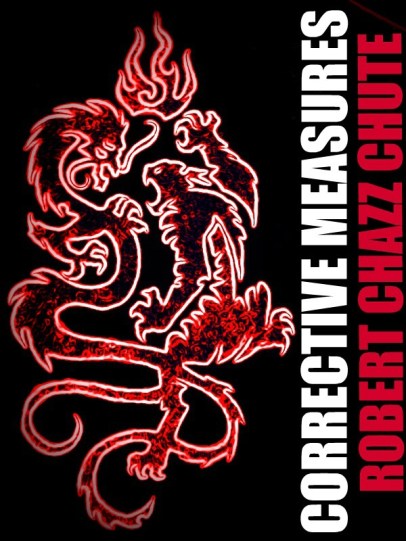
I promised a follow-up report on the Corrective Measures giveaway. After two weeks, 113 people downloaded the free short story about the serial killer who wants to kill someone over a parking space dispute. I received a

CLICK HERE TO CHECK IT OUT

couple of nice reviews immediately and I’m hoping for more when people get around to it soon. The upshot of the gift giving is, I don’t know how well it did yet. People kindly took me up on the offer, but who knows how long it will take them to get around to reading and reviewing it? The toughest thing has got to be getting reviews. Several people have told me how happy they were with my work and that they intend to write reviews. However, they have lives, too, and I can only hope they’ll get to it. Soonish.

So what’s the next step? Patience and see what happens with Corrective Measures. It’s now for sale at the same price as all the other short stories (a colossal 99 cents!)

But that’s just one thing. I’ve got lots of egg baskets. Tomorrow, another brick in the marketing campaign for Self-help for Stoners hits and next week I’ll be running an ad on Smodcast Internet Radio that ties in with said brick. I’m also planning for another  ad (on a different podcast)  for Sex, Death & Mind Control (for fun and profit). My podcast is up every week, as well, reaching people I wouldn’t ordinarily meet. Yesterday I fired off a pdf of The Dangerous Kind for a book blogger to review.

I think there is one area I need to focus upon: Send out more review copies to book reviewers.

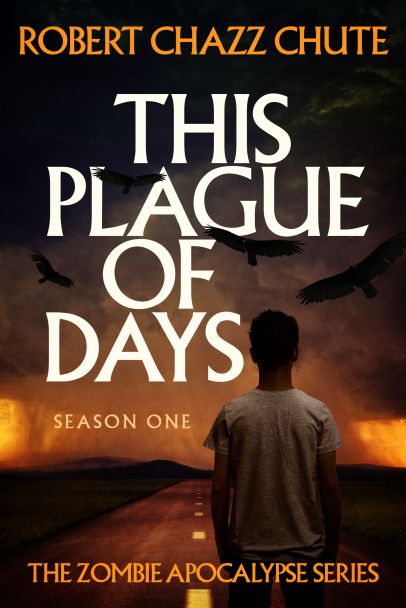
Most important? Get on with the next book. I’m aiming for April 20 for the release of my novel; think Incredible Journey meets autistic boy’s family in the post-apocalypse. It’s called This Plague of Days and it is a very ambitious story. Stay tuned.

FOR MORE SCARY THOUGHTS ON FREEBIE BOOK PROMOTION,

READ THE VANDAL HERE.

And now…back to work.

~ I am Robert Chazz Chute, author of Self-help for Stoners, the bathroom book of suspense, packed with points and punches. It’s not what you think it is: you don’t have to be a stoner to love it. (Check a sample here.) Sex, Death & Mind Control is a dark short story collection that includes a couple of award winners; try the magical realism express. The Dangerous Kind is a suspenseful novella packed with edgy family dynamics and small-town claustrophobia. I write from experience. My home town fit me like a fat kid fits in a sandpaper leotard. (Came up with that simile in a writers’  forum this morning. Weird images make me chuckle.)

Filed under: podcasts, Publicity & Promotion, publishing, reviews, self-publishing, What about Chazz?, What about you?, , , , , , , , , , ,

VIDEO: Neil Gaiman on how piracy can good

Filed under: Publicity & Promotion, , , , ,

The ebook marketing experiment

Last week I announced that my short story, Corrective Measures, is free to anyone who wants one at Smashwords.com for the rest of January. It’s a look inside Jack’s mind. He’s a serial killer who has a complex

Click here for your free story!

relationship with God, his psychotherapist and the woman he wants to kill for an argument over a parking space. It’s quirky and dark and there’s even a subtle Sarah Palin joke in there.

But that wasn’t why I chose to make this ebook free. As discussed in Part I, I haven’t been happy with my sales so far. I have eight works for sale and I needed to harness the power of cross-pollination.

As I’ve often said, publishing is easy now. Being found is hard. I chose to make this ebook free because Jack and Dr. Circe Papua show up in my other stories. At the end of Corrective Measures, I discuss where these characters show up in my other work and basically advertise my podcast and what else they might like to buy. I’m hoping, of course, that if they like Corrective Measures, they might like my other stuff. That’s why I think every self-published author absolutely must be prolific. The worst circumstance is to have readers eager for more of your work and not having anything for them to buy. We’re all in a hurry. That’s why my goal for 2012 is to finish writing and revising three novels. (Two are in the revision stage. The other WIP is in the first draft stage.)

So what happened with the free ebook giveaway?

Sorry. Buried the lead. I promoted the ebook like this:

1. Twittered over three twitter accounts cool quotes from Corrective Measures. (“Your hair looks very…flammable.” Still makes me chuckle.)

2. Google+’d the post from this blog and also posted it on my author blog allthatchazz.com.

3. Announced in my Facebook timeline and my Ex Parte Press Facebook page.

4. Promoted Corrective Measures in my podcast that was released Friday across Stitcher and iTunes. Some people download the Self-help for Stoners podcast straight from allthatchazz.com, as well.

5. Made a couple of videos with iMovie that appear on my G+ profile, my author blog and on my Facebook timeline. (I also revamped my author blog with a new header—thanks again to my buddy Kit Foster of KitFosterDesign.com—and added fresh content.)

6. Asked for help spreading the word from my friends on Facebook.

What worked?

I have an answer, but before I tell you that, I should add that as I write this, the experiment is only three days old. Many of the people who took me up on the free ebook offer now have the story on their device, but they haven’t gotten around to reading it yet. Some of them may never get to it. It’s too early to evaluate the worth of the experiment to e-publishers yet. But I do know what’s been most effective.

Okay, but no, really. What worked?

Contacting friends and family on Facebook by messaging them individually and asking them to spread the word through their Facebook helped.

How do you know it helped?

On Smashwords, the nearest maximum download count was 19 downloads on stories that have been up for over a month. Over the weekend, as of Sunday afternoon, 53 people have downloaded Corrective Measures and I have a fresh and fabulous review. I’m hoping for more reviews to help spread the word. I am encouraged that several people who liked it and sent me feedback are not my immediate friends and family. They are friends of friends, out there in the social media ripple effect, enjoying the fiction and enhancing my credibility with their participation and kind words.

How has this helped sales, though?

So far, there is one (lonely) new sale over the weekend of Vengeance is #1. That’s a short story, too, on sale for $1.99, that features the psychotherapist from Corrective Measures. (Whoever you are, may Thor bless you!)

One sale? Really? Do you call that a success?

Nope. I call that a start. I believe in my work. I’ve got seven writing awards and years of experience that suggest I have an inking of what I’m doing. My readership will find me. I’ll let you know how the experiment works out. I’m pretty relaxed about this process. I’ve started businesses before and I know what it’s like to wait for people to find me. When they do find me, we’ll both be happy. And like I said, it’s three days into the free ebook experiment. Bread needs time to bake. This is what it’s like before you get to the place on the path where you look back and wonder where the time went. Besides, I’ve got big plans for my novels and big plans for promotion that could go huge. I’m not worried. I’m excited. The key word to keep in mind while hunting down dreams is YET.

What can self-publishers learn from this?

I’m three steps into the race. Still, I’m sure of this much:

1. Put out a general call and it’s just an announcement in a world full of announcements. If you don’t ask individuals, everyone will assume that someone else will rise to the occasion. One to one is how messages get passed.

2. Give a lot to get anything. I’m giving away an ebook and free entertainment and a free podcast every week, but big deal. There’s lots of free entertainment available. I could get sucked into watching babies laugh on YouTube for an hour. I’m not talking about the free ebook as the “give a lot.” I mean try to be giving and kind all the time. I dared to impose on my friends because they are my friends. I’ve had interactions with them that were generally pleasant. I’ve promoted several authors on the blog over the last couple of years, but I don’t feel like anyone owes me anything. I approached the people I approached based on rapport and where I felt their interest might lie. I’m wary of bothering anyone with my requests for reviews and downloads so I won’t be repeating a similar experiment like this for a very long time. I also left some people alone because, even though they are friends and family, I do not presume that they are interested in my flavor of fiction. I didn’t ask anything of anyone who I thought wouldn’t be eager to help me out by spreading the word. I’d do the same for them. That’s what friends are for. As Patrick Swayze says in Roadhouse, “It’s nice to be nice.” That little syllogism is the basis of all relationships.
3. Build an email list. This is one thing I have not pursued and I have to get on it. When people express an interest or appreciation or leave a review, that’s an audience who will be interested in the next thing I write. I should be able to email them directly to say, “Hey, here’s more of that thing you liked! Yay!”

4. Get back to writing. This ties in with my resolution to have three more novels for sale by Christmas. You might have noticed that all this social media stuff takes a lot of time and effort. Well…yeah. It does. I’m not complaining. Actually, I enjoyed saying hello to Facebook friends and playing with iMovie was a blast. I love doing the podcast and these are now essential skills in this environment. For instance, this week I’ll record a commercial for a major podcast (hint: not mine). What would have intimidated me a couple of months ago is now something I look forward to doing. I know the tech now so the prospect does not leave me at all flummoxed. However, since November 1, my focus has been getting Ex Parte Press up on its hind legs. It’s been a lot of editing and promotion and learning administrivia and technical details. This is also fun, but it’s not writing new content. It’s not getting the novels done. In a previous post, I called this period The Worst of the First. I’ve burst through that stage now and the full-length novels will be easier to market (for a plethora of reasons to be discussed in a future post.)

I’m writing now more than I’m doing anything else.

My eyes are on the prize.

The prize is your mind. You’re curled up on a couch with the aroma of fresh coffee fading in the air. You’re reading my stories and, when it gets scary, you pull up the blanket to keep warm because the body and mind do not distinguish between the imagined and the real. Your mug cools, unnoticed. Your coffee grows cold and you still haven’t touched it because you’ve pulled my fiction over your head and you’re in my world. You recognize characters you’ve never met. This world feels familiar, but is slightly skewed. You chuckle in surprise. You believe. Fiction is a participatory magic trick. You are invested in one question, “What happens next?” Time stands still and you only come up for air when you realize it’s getting dark and harder to read. The quiet winter afternoon has crept by you. You twist the knob on the lamp beside you and the room floods with a weak yellow light. You should get dinner started. You’ve got things to do. You spare a regretful glance at the full mug of cold coffee.

You pick up the book again. You keep reading.

Just a little more. 

And once more, you are swallowed.

Filed under: My fiction, Publicity & Promotion, self-publishing, short stories, , , , , , , , , , , ,

The ebook pricing and gifting experiment

Click here for your free story!

Self-published authors have found success in serialization.

Cross-pollination is the cousin to serialization that no one talks about. 

I have some big promotional events coming up, but January can be the doldrums for sales. Many of us, me included, are sifting through our new reading from Christmas and looking forlornly at our VISA bills. Publishing is so easy now, but obscurity is hard. I thought it was time to do something to spark the imagination of readers. It’s time to build my readership and, I hope, new readers will review my books and spread the word.

That’s why, until the end of January, I’m giving away a very special story for free.

I have ebooks selling at various price points: 99 cents, $1.99 and $2.99 and one in paperback for $13.99. When the big promotional event hits, I expect there will be a run on the paperback and ebook of Self-help for Stoners. The Self-help for Stoners podcast is also going well with over 300 downloads already.

But why free and why now?

Honestly, my sales kind of suck so far and I’m trying to light a fire to signal rescue planes.

My gamble is that once I’m picked up, readers won’t want to stop the ride at just one story.

Book sales need momentum. Fortunately, I had just the right story in my holster to fit this pricing/gifting experiment. The story, Corrective Measures, stands on its own. However, two characters from this story appear in several of my other stories in two other books. I won an award for End of the Line, a short about Dr. Circe Papua. Hounded by an unscrupulous bill collector, she uses magical powers of persuasion to get him off her back. That story appears in Sex, Death & Mind Control (for fun and profit). Dr. Papua shows up in different incarnations in several stories in that book, but also appears in Vengeance is #1, an ebook on sale for $1.99.

My main character from Corrective Measures is Jack, a serial killer and Dr. Papua’s patient. He tries not to kill anybody unless Dr. Papua says it’s okay, but after a minor argument over a parking space, Jack wants to murder a woman simply for pissing him off. (By the way, The Parking Lot Incident, happened to me. And no, there are no warrants out for my arrest.)

Here’s where the cross-pollination comes in:

Jack appeared in another award-winning story, The Clawed Bathtub, which is the last story in Sex, Death & Mind Control. I love it when stories nest beside each other. In Corrective Measures, there is a reference to events in The Clawed Bathtub that answers a question that was left a mystery in that story. Read one and you won’t notice the seams. Readers who buy them all will get a bigger picture and enjoy the inside jokes. I didn’t write the stories with this strategy in mind. That arose organically. I only write stories I need to write. However, these characters I know so well keep popping up. In The Fortune Teller, Papua is an old seer at a fair. In another story from Sex, Death & Mind Control (The Express) Dr. Papua is the same psychotherapist from Corrective Measures, but she’s dealing with an older version of Paul, the man who is abusive to women in The Fortune Teller.

You don’t need a flow chart or to keep score. It’s just that as I wrote about these characters, I found they had more to say than could be shoehorned into one story. There’s no timeline to follow. It’s about characters who are so compelling, I had to revisit them and explore them further. Each story explores extraordinary people in ordinary circumstances and makes it funny, suspenseful and scary. I found that as I wrote these stories, I pulled back on the gore because, frankly, the battery acid scenes would shock some readers out of the story. The results are tighter, more clever stories that make you think, make you laugh and make you a little more wary of strangers.

Please accept my invitation to go grab Corrective Measures now while it’s still free.

I hope you will be inspired to spread the happy word to your friends and through reviews.

I’ll let you know how this pricing/gifting experiment works out.

Filed under: All That Chazz, book reviews, DIY, ebooks, getting it done, podcasts, Publicity & Promotion, publishing, readers, reviews, self-publishing, short stories

How to sell cross-genre books in The Land of The Easy No

Picture this:

You walk into a store and can’t find what you’re looking for. You ask the clerk behind the counter, “Have you got moldy bat wing party favors hiding somewhere in the back of the loading dock?”

Far too quickly, without looking up from his coffee, he says, “Nope! We’re out of the entire line of moldy bat wing party favors.”

You walk out empty-handed, but you’re thinking, “I bet there might be some left in the back if the clerk had just bothered to take the time to check.”

 You’ve still got your moldy bat wing party favor deficit, but as soon as the clerk said no, their problem was over.

It’s easier to say no than to say yes. “Yes” means more work.

This is the downfall of living in The Land of The Easy No.

Which brings us to the business of selling books… As a sales rep for numerous publishers, I had a lot of catalogues to get through. Appointments could take two or even three hours, depending on how much hemming and hawing the bookseller went through to complete an order. I had to power through those catalogues, talking fast, to fit three appointments into a day. Traveling between bookstores took time away from selling, so efficiency was not a trivial issue.

Each book received a few seconds of attention and — surprise!— not all books get equal attention. A “credibility book” is a book from the backlist that a sales rep steers a bookseller away from. “You don’t have to worry about that one,” is code for, “If you buy that book you’ll be returning it as quick as you can and you won’t believe a word I say when I tell you to go heavy with your order on another title.” When you have seconds to sell a title, you go with the high points. Selling an author who has sold well before is the easiest thing to do. When I sat down with booksellers, there was a shorthand with popular authors. Other pitches focused on publisher support or celebrity. Getting them excited over a story was usually (but not always) the last choice in the hierarchy of what made a sale quick and easy.

Easy sell: “How about you double the order on that romance author you’ve already sold a ton of? It’s the same unchallenging book her fans want over and over, and sure, the quality has slipped, but it’s about branding and a following.”

Fast and easy sell: “How many of the new Stephen King do you want?” (Note the “how many?” not whether and if.) Whenever you can talk about big name authors instead of covers, content or media coverage, the easier the sale.

Difficult sell: “Here’s a new author you’ve never heard of but it’s a great story.”

Better: “Here’s a new author you’ve never heard of, but it’s a great story, and she’s getting major media and we’re really pushing it and it’s so much like Lee Child and we’ve got great advance reviews and Bill Clinton will provide a cover quote and Bill O’Reilly will write the introduction.”

Much better: And did I mention this Lee Child-toned story is about a sexy woman who commits grisly sex murders who escapes from jail and the sexy female FBI agent who brings her to justice? Did I mention it’s based on a true story and it will be a major motion picture just in time for your Christmas season…and did I mention Brad Pitt will play the roles of both sexy women and he makes out with himself? Think Fight Club, but with more lingerie and slow panning shots of Brad Pitt’s legs in ripped nylons.”

Tough sell: “Let me tell you about this quirky one with a niche hook that’s going to be a slow build but a cult hit over time.” 

META ANALYSIS: That, I think, is a great description of Self-help for Stoners, Stuff to Read When You’re High (though I am biased.) The trouble with this pitch: It’s a short story collection (ouch!) that’s a self-help (Oh! Good and hopeful!) in fictional form (huh? Like parables? Like in the Bible?) and no, you don’t have to be a stoner to enjoy it. (Slow down. I think I have to be high to get all of that at once!)

Note the language: quirky, niche, slow build, cult hit, time. That’s too many caveats and double backs for a quick and easy sale because it sits across genres, squatting there in its damnable uniqueness.

Short shorthand sale: When I sell my post-apocalyptic and suspense novels, the sales pitch will be much quicker: Think Stephen King. Done.

CHECK OUT ALL THE BOOKS HERE

Publishers’ sales forces have diminished immensely since I was driving around with a car so heavy with books it ran low on the axles. Times have changed. When publishers talk about authors giving authors a big push now, what they really mean is the author is tech savvy and not shy. The author will do most of the publicity work, though that’s been true since the birth of the Internet, anyway.

Where have the big publicity opportunities gone? They went away when Oprah went away. She was the the book industry’s angel. Now the big angel is Jon Stewart, but that won’t help you if you sell fiction. The Daily Show is only for non-fiction. (The last fiction author on The Daily Show was Kurt Vonnegut, shortly before his death, and he talked mostly about his non-fiction book Man Without a Country.)

Forget big publicity.

Look for small publicity opportunities.

Radio is still a good publicity opportunity and you don’t have to travel anywhere. Contact radio show producers and pitch them, but remember fiction is still tough so to succeed, you’ll need an angle. (The easiest? I lost my job and now I’m a hometown start-up business and my book is set in this town and I kill hobos for sport…The Most Dangerous Game!) Morning radio is topical and lends itself to non-fiction books. Consider going after shows that are not radio prime time  (i.e. the drive time slots.) Book a show that is a book show. You’ll find it easier to get on air with a university radio station.

The “push” comes from authors now. It’s up to you. Authors don’t just write anymore. We sell ourselves. I’ve got three blogs, a podcast and three twitter accounts. And that’s not nearly all the publicity I do or plan to do. I’ll be expanding in social media and beyond social media in the new year (TBA). And I really have to start chasing down reviewers for my books. (If you’re a book blogger or book reviewer and like suspense, let me know at expartepress@gmail.com.) All that social media is a lot to maintain while I’m getting a new novel written and revising the already-written novels. That’s three eight-hour shifts by my reckoning. Set up that intravenous by my desk! And make my new desk chair a toilet!

Can you pay for media coverage to increase sales? Ads are expensive and often ineffective, though I’ll give you some strategies to consider. You’ve already got an author page on Goodreads and you’re doing a book giveaway or a contest or guest blogging. You’ve considered paying for a Goodreads  promotion, Amazon ads, the exclusive-to-Amazon offer and advertising with banners on websites. Those are all digital strategies that are already covered elsewhere ubiquitously, so let’s think about some retro, analog approaches for a change. We don’t think old school much, but it can be less expensive than some of the usual options if we’re creative.

Start thinking local, like the tiniest newspaper in town, not the big one. Contact the columnist who does the odd interview. Send a press release. Send a copy. Give him a hook. Maybe the story isn’t your book. Maybe the story is that you have three jobs and are near homeless but you’re still writing the Great American Novel. Or you were published in paper and switched to ebooks. The great ebook versus traditional publishing debate is pasted across the web, but it might be new to the columnist. (We forget what we’ve been soaking in for two or three years is outside the awareness of non-publishing civilians.) Maybe you make your own glue and paper to create your own books to sell from your website. Maybe your book promotion is tied in with a charity. Maybe you didn’t read until you were twenty-six and now you’re an author. Find a hook and be interesting. There’s often a way in if you’re clever.

Then think smaller. Instead of radio, start thinking about podcasts (either producing one yourself as a companion to the book like I did — Self-help for Stoners is on iTunes weekly and will soon be on Stitcher, as well — or sponsor a podcast.) Podcasts are cheaper and usually more targeted or more personal than regular radio.

Now think even smaller. What could be smaller? A newsletter. Just today an opportunity landed in my lap. A friend has a busy business and a newsletter to go with it. He offered me free space in his newsletter. It will go out to 2,000 of his clients with his personal recommendation. That sort of help is precious to me. Who do you know who has a newsletter? How can you expand your sphere of influence by thinking small? Even if you have to pay for the privilege, newsletter ad rates are cheaper than newspaper or magazines ads and are often better read.

Traditional wisdom is that cross-genre books have been a challenge to market to bookstores. But remember? A tough sell is not an impossible sell. Remember the store clerk in The Land of The Easy No? He is the enemy of innovation, profit and expanding minds and experiences. As small publishers, we can invest the time to convince others to try books that aren’t easy to sell. I have just three books on sale. I don’t have the constraints of a huge list where each book has mere seconds to hit or miss. I can take the time to connect with people and tell them more about the book and build enthusiasm.

In the big picture, I have more time and long tail sales opportunities. Now that my books are up for sale on the web, they’ll be up  forever. I don’t have to worry about the bookstore packing them up and sending them back for credit six weeks from now. I don’t have a short sales window. I have a sales vista that stretches out, positively prairie-like. I have the time to find readers and for my readers to find my books. We can make quick decisions and invest time rather than cash.

Small companies have flexibility and enthusiasm that big companies do not. Big publishers have a distribution system (which diminishes steadily) and bigger budgets…but in many ways their promotion isn’t that much different from mine with most of their books. I’m selling my books so I care about each precious baby so much more.

How does a small publisher survive in The Land of the Easy No? Flexibility. Enthusiasm. Creative thinking. Innovation. And not falling for saying no too easily.

A difficult sale is not an impossible sale, and sometimes when a difficult book catches on, it catches fire. Too often a sales force mistakes a difficult sell in the short-term for an impossible sell. That’s why the first Harry Potter book was so hard for JK Rowling’s agent to sell to publishers. Rowling didn’t want it to even be a children’s book per se. From the beginning, she saw it as a cross-genre book for adults and children. That’s what it soon turned out to be despite all those editors and sales reps saying, “I can’t sell this.” Maybe what they really meant was, “Selling this will take more than a few seconds, so forget it. Make my job easier by giving me a book to sell that’s an easy yes.” A “Yes” means more work. A “No” means the problem is easily solved by missing a huge opportunity.

Big publishers depend heavily on the opinions of non-editorial staff. Salespeople I worked with thought of books as “products” and “brands” rather than “experiences”, “journeys” and “ideas.” They decided which products were quick, easy packages to sell. That’s why they miss out on opportunities to sell cross-genre books. It’s the same facile mistake as passing up selling Vivaldi for the latest boy band. The Vivaldi will sell more, for a longer time. Short-term thinking left a lot of publishers cutting the same sales force that so influenced their sales.

They lost out because they lived in The Land of The Easy No.

~ Robert Chazz Chute is the author of Self-help for Stoners, Stuff to Read When You’re High, Sex, Death & Mind Control (for fun and profit) and The Dangerous Kind. Download to your smartphone or e-reader. For more information on the book or the podcast, go to AllThatChazz.com.

Filed under: Publicity & Promotion, publishing, What about Chazz?, , , , , , , , , , , ,

Book Marketing: What I didn’t know about resistance to ebooks

I’ve been thinking about how to promote my books quite a bit. There was a lot I wasn’t sure about as I embarked on getting the word out. In the beginning, I didn’t know for sure if I even wanted hard copies of my book. I do want a printed book for Self-help for Stoners now (for various promotional experiments to be announced.) I didn’t know how hard it would be to ask friends to help spread the word. I didn’t know how difficult it would be to get friends to take the time to read and review the books and listen to my podcast. Even the people who care about me don’t necessarily care about my tales of suspense, comedy and magic realism.

I underestimated how loyal people are to the media they are used to. For instance, I know several people who want to support my work, but for one it has to be print only (I’m sure he’s not alone) and for another, she’ll have nothing to do with Amazon. She’s waiting for the Kobo version (so she’ll be waiting a long time unless she orders the print version straight from me.) I was getting a little down about that, but then Andrew, another kind fellow, said that though he’d prefer paper, failing that, he’d be ordering the ebooks anyway. Change happens, but not on my schedule.

And then there is traditional publishing’s inertia. It’s slowing, like a big ship that’s lost power but still has momentum in the Zeitgeist Sea. This afternoon I listened to the annual book recommendation show on CBC’s Cross Country Checkup. Dozens of callers recommended which books to buy for Christmas. Not a single ebook was in the mix. The CBC demographic either skews toward a generation that hasn’t bought its Kindles or iPads yet, or the resistance to the ebook revolution is so entrenched that we won’t see the CBC recommendations change until a cataclysmic shift, like Chapters closing its brick and mortar outlets. (For reasons I’ve already covered on this blog, that’s in the works, but it’s a process and won’t happen overnight. The change is as easy to predict as the contraction of HMV and the fall of Blockbuster, however.)

Another prejudice for us to overcome is the giggle factor. “Self-published?” (I covered that subject a week ago so I’ll not delve further into that.) But I face another giggle factor: my title is Self-help for Stoners, Stuff to Read When You’re High. An acquaintance saw my business card and said, “Stoner? You?” I replied that I had indulged. I also told him that many of my stories of suspense have elements of violence and murder. “The research for that…” I grinned, “well, let’s just say you’re worrying about the wrong thing, pal.”

I added that you didn’t have to be a stoner to enjoy my stories (though my standard joke is that anyone who is high is automatically a better audience…for anything.) Still, no sale there. He walked away worrying about my immortal soul and questioning what he thought he knew about me. (Answer: I’m complex. Like Batman. Okay?!)

In part, I chose Self-help for Stoners for cold and calculated strategic marketing reasons. It wasn’t just that it fit the book. Many titles might have fit the book. However, I had a short fiction collection (a difficult sell) that was a weird hybrid. I knew going in this would be a self-help book in the form of fiction. The fact that the book was inspired by two celebrity stoners to whom I dedicated the book also played a major role in my choice. For that collection I reached back to a non-MFA approved format: Amid the short stories and brain tickles, it’s kind of preachy. On purpose, it’s fiction that packs a point as well as a gut punch. Kind of like Vonnegut, it’s plot driven and yet there are forays into stories that invite the reader to introspection. It’s preachy in the same way The War of Art* is preachy: consciously and on purpose and without apology.

To the surprise of some, the book has nuance in that I do not advocate throughout for marijuana use for everyone. It’s not for everyone, but free speech and free thought and control over one’s own consciousness are things I do advocate throughout the book. This is a book that will have to find its audience or its audience will find it. However, I don’t regret the title. Collections of short fiction, and the weird hybrid this is, are a tough sell no matter how wonderful I think short stories are. They’re so tough, in fact, that I’m done with short fiction for a long time. The next books will all be novels. However, since stoners are a reading, identifiable market, I tailored many of the stories from Self-help for their enjoyment. (Yes, stoners are readers and are often an intellectual bunch. Don’t believe the hyped stereotype of a bunch of dumbasses blitzed on a beach. That’s alcohol.) My people will find me, either through my friends, my networks, social media or through my podcast of the same name. For any book to be successful, ultimately it will have to found through good reviews, excited readers and Google.

Here’s what I’ve learned so far:

1. Choose your title carefully. In the long term, targeting an identifiable niche will help me. In the short term, it’s uphill slogging.

2. Get a good cover. We’re told we’re not supposed to judge books by their covers, but of course we do. I did my cover for a novelette (The Dangerous Kind). I liked the cover well enough because it was for a 10,000 word story I’d sell as a loss leader for 99 cents. In retrospect, I’d ask Kit Foster, my graphic designer, to do that cover now. I recognize the elements that go into a great cover but I can’t create one. I have no idea how Kit does his magic. I just know that I get a lot of compliments about how good the covers are for Self-help for Stoners and Sex, Death & Mind Control.

3. Have a strategy. I named the book strategically, but perhaps more important, I named the podcast strategically, too: It has the same name. In the long run, I’ll probably find more people through the Self-help for Stoners podcast (delivered free and weekly through iTunes) than any other strategy I plan to use (except one.)

4. Don’t be a jerk, but don’t be too shy, either. Keep asking for help spreading the word. Just be sure you give lots of positive content beside the occasional request for reviews, shares and assistance. It’s not begging when you’re giving more than you’re receiving. It’s quid pro quo, the basis of all civilization.

5. You noticed the end of point three and you wondered, “What’s that about?” What’s the ‘except one?’ The best strategy is to keep on writing the next book and the next and the next. Revise and edit the hell out of them. After about book five, you have a better shot at getting noticed.

It’s a process. It doesn’t tend to happen quickly until a critical mass of forays— failing, learning and winning— are traveled through. I’m on my journey and these are exciting times at Ex Parte Press. Last week, I finally got the print formatting done for Self-help for Stoners by calling in the cavalry (thanks to Jeff Bennington). This weekend my graphic designer (the inimitable Kit of KitFosterDesign.com) and I finalized the cover for the paper book. Kit even put a new logo together for me (pictured above right). Some things are coming together, but a lot more is not. It’s a learning experience. Some day I’ll look back and say these scary times were the most exciting.


*And by Thor and all that’s holy, if you’re a writer and you haven’t read The War of Art yet, do!

Filed under: Books, ebooks, Publicity & Promotion, Rejection, What about Chazz?, What about you?, Writers, writing tips, , , , , , , ,

How to deal with the stigma of self-publishing

In the last week, the self-publishing stigma has reared up for me twice. An e-newsletter publicized one of my books (hurray!), but there was something in the text I hadn’t expected. The guy behind the newsletter added “(self-published)” to the news that my book was out. As grateful as I am for any publicity, I stared at that for some time and I wondered what the term meant to him. I suspect  that either he, or his readers, will jump to conclusions about my books based on that little parenthetical. It struck me as odd that Newsletter Guy added that detail. Was that a conscious wink and a nod to his readers? A warning? Or am I being overly sensitive and paranoid? Possibly, but then I ran into someone at a party whose first question about my book—his only question, come to think of it—was whether I’d self-published. In that case, the guy was in front of me. I can read body language just fine so I know his estimation of my books went down with the news that my books are not traditionally published.

I didn’t get into all the great reasons to be a self-publisher. I just moved on. I’m not begging anyone to read my books, especially when I sense I’ve already been dismissed. That way madness lies. Always move on quickly to the people who get what you’re doing. The 80/20 rule is crucial to your sanity as well as your success in whatever you do.

But the term “self-publishing” makes it sound like I do it all on my own, without checks and balances. It’s not like I’m a fresh-faced noob at this. I’ve worked for several publishers in various positions. I trained in traditional publishing, worked in it and have written and edited profitably for years. I hired a graphic artist, a formatter and proofreaders. I have beta-readers. Yes, I’ve found two minor typos since the publication of one of my books. But I can probably find typos in most any traditionally published book you throw my way. If a couple of typos cranks you up that much, don’t read anything. I don’t begrudge traditional publishers a few mistakes. They can extend me the same grace (especially since their books are much more expensive) and I’ll put my ebooks’ quality up against anything similar sold in any bookstore. That’s not knocking the traditionally published, by the way. I read and love many authors, indie and non. I’m just saying traditional publishers don’t have a magic potion to achieve good books. Their special (and rapidly diminishing) value is in a legacy of distribution, not a monopoly on quality.

It irritates me when people make judgments about my books (my babies!) sight unseen. Publishers generally don’t have brands. One of my previous employers, Harlequin, is a noted exception. With them, you know what you get every time across all their lines. They are incredibly consistent in their offerings to a devoted fan base. However, most publishers’ lists, even within genres, are unique. People don’t buy books based on which publisher put out the books. No one goes into a bookstore and says, “I want a book by Harper Collins.” They do ask for specific authors.

But I’ve been here before. I know what to do. It’s time to gird my loins and get tough and ignore any jibes or perceived jibes. Occasional rudeness shouldn’t be tolerated but, if you live in this world, you can pretty much expect it occasionally. When I started in massage therapy, I heard a lot of inappropriate jokes that pissed me off. An uneducated public made assumptions about me and what I did as a therapist that offended  me. In my first year or so working as a massage therapist, I often thought about quitting because I pictured an entire career of defending my reputation against every idiotic stranger ready with a quick and uninformed opinion.

While naysayers and doubters questioned my work, I started reaching my public. I began to help people with serious injuries and diseases. I rehabilitated difficult health problems that had stymied other practitioners, sometimes with even miraculous results. With time, I found I rarely had to defend myself against remarks by ignorant people. I grew my fan base and those became the people with whom I spent my time. (There’s that useful 80/20 rule again.) I went on to work as a therapist for almost twenty years.

I’ve battled prejudice before.

I’ll do it again.

Just watch me.

I’m coming.

Self-publishers need confidence bordering on arrogance to do what we do. The decision to believe in our art will carry us through the work ahead. We don’t have time for negativity. We’re too busy making our dreams happen. Maybe one day we won’t call ourselves self-publishers at all. Maybe “independent publisher” is a better term (just as I and my fellow therapists once debated whether we should abandon the word “massage” because of its past negative connotations.) Self-publishing has a bad rep for a reason, but I’m not part of the problem. Eventually, the market, not gatekeepers in New York, will vindicate me. With time and patience, word about my words will spread. The people who like my work will share the good news with others.

If you’ve already helped me by buying my books, telling a friend, writing a review or retweeting my tiny presence on the literary scene, thank you very much!

I’m focussed on you, the believers.

Filed under: Books, getting it done, grammar, My fiction, Publicity & Promotion, What about Chazz?, writing tips

Check out these authors and enter a contest for Amazon gift cards

UPDATE:

This contest is closed. But you can still buy the books! Keep the love going for these enterprising authors.

(NEW POST FORM ME COMING LATER TODAY.)

Not only can you help out these authors, you might win a gift card, too. This is also a great case study in book promotion. Consider that these four authors banded together for this very effective promotion. They contacted bloggers and simply asked for some help to promote awareness and sales of their books for the next couple of days. An amazing number of bloggers (me included) were happy to help. Sometimes all you have to do is ask and add a little bonus for readers (like the contest). It’s a win-win-win: Bloggers provide an opportunity for readers, value is added for blog readers and readers hear about books they otherwise might have missed out on. Check out the books and enjoy a good read. Or four!

Support Four Debut Authors and Snag $125!

Four books

Two Days

Great Prizes

With this contest, there is something for everyone and it’s SO simple to be in on the winning!

On November 28 and/or 29, purchase 1 or all 4 of the debut author’s books listed here. Then forward proof of purchase (the receipt Amazon sends you will do just fine) to : motionsrider@yahoo.ca and get up to 4 entries into a draw for a $100 Amazon gift card!

It’s that easy, no reviews, no hoops to jump through. Just a great .99 book or two. Or three or four. AND, if the person who wins the $100 Amazon Gift Card has purchased all 4 books, an additional $25 Amazon Gift Card will be awarded to the winner!

On top of that, 2 random commenter’s picked from 2 of our participating blogs will receive $5 gift Amazon gift cards . So, be sure to leave a comment and let us know what you think of the promo, the books, or the authors.

Winners will be chosen randomly, one entry per person, per book.

All winners will be announced on December 7th on Wringing Out Words (http://shannonmayer.blogspot.com)

“Between” by Cyndi Tefft

It just figures that the love of Lindsey Water’s life isn’t alive at all, but the grim reaper, complete with a dimpled smile, and Scottish accent.

After transporting souls to heaven for the last 300 years, Aiden MacRae has all but given up on finding the one whose love will redeem him and allow him entry through the pearly gates.

Torn between her growing attraction to Aiden and heaven’s siren song, Lindsey must learn the hard way whether love really can transcend all boundaries.

Link: http://www.amazon.com/Between-ebook/dp/B004XZUMBA/ref=sr_1_1?s=digital-text&ie=UTF8&qid=1322190792&sr=1-1

“Until Dawn: Last Light” by Jennifer Simas

When darkness falls, whose side will you be on?

For the past six years, Zoë has been anything but “normal.” Struggling to accept her immortality and thrown into a war that’s been waging in the shadows for over a thousand years, Zoë must now become who she was meant to be, joining the other Chosen to save what’s left of humanity. When the endless night falls over the Earth, will she be able to save the one man who reminds her of what it is to be human, or will it be too late?

Until Dawn: Last Light is a story of death and despair, love and longing, hope and hopelessness, and the ability to survive and keep going even when it seems impossible – when you want nothing more than to give up.

Link- http://www.amazon.com/Until-Dawn-Last-Light-ebook/dp/B005QUIXJY/ref=sr_1_1?s=digital-text&ie=UTF8&qid=1322190717&sr=1-1

“The Kayson Cycle” by Jonathan D. Allen

A stranger enters a dying town and makes a desperate plea…

The Kayson Cycle introduces the Kayson Brothers, a pair of faith healers who once wowed crowds in a traveling show but went their separate ways after a night in which a healing took a dark turn. Jeffrey Kayson disappeared into the wilderness and William Kayson, wracked by guilt, moved to the failing mining town of Calico Hills to build a nice, quiet life – one that has lasted for over ten years.

His quiet, predictable life crumbles when a mysterious stranger walks into his tavern bearing a proposal to find his long-lost brother and do the one thing that William has sworn to never do again – have his brother heal a woman. William soon learns that he can’t escape his family – or his destiny.

Includes an exclusive sample chapter of The Corridors of the Dead. Please note that this is a Kindle Single, and around 6,000 words in length.

Link: http://www.amazon.com/The-Kayson-Cycle-ebook/dp/B0061FDUA0/ref=sr_1_1?s=digital-text&ie=UTF8&qid=1322190892&sr=1-1

“Sundered” by Shannon Mayer

A miracle drug, Nevermore, spreads like wildfire throughout the world allowing people to eat what they want, and still lose weight. It is everything the human population has ever dreamed of and Mara is no different. Only a simple twist of fate stops her from taking Nevermore.

As the weeks roll by, it becomes apparent that Nevermore is not the miracle it claimed. A true to life nightmare, the drug steals the very essence that makes up humanity and unleashes a new and deadly species on the world that is bent on filling its belly. Locked down within their small farm home, Mara and her husband Sebastian struggle against increasingly bad odds, fighting off marauders and monsters alike.

But Sebastian carries a dark secret, one that more than threatens to tear them apart, it threatens to destroy them both and the love they have for each other.

Now Mara must make the ultimate choice. Will she live for love, or will she live to survive?

Link: http://www.amazon.com/Sundered-Nevermore-Trilogy-ebook/dp/B005KOIVH0/ref=sr_1_3?ie=UTF8&qid=1315021535&sr=8-3

Filed under: authors, Publicity & Promotion, , , , ,

Why Your Publishing Dreams Don’t Matter: Jabs & Counterpunches

A comedian once said, “You know who cares about your problems more than you do? Nobody.”

I’ve opened and closed two alternative medicine practices. The first time I shut it down because I moved far away. The second time was November 1, to write and publish full-time (and here we are!) With each experience I learned this: It is stupefying how unimportant I am. When a business is over, it’s over. People with whom I’d developed long relationships moved on, disappeared and, for them, I no longer exist. They came for a service and they have no interest in checking out what I’m doing now. For most, you have one role that fulfills their needs and just because you’re interested in something new means nothing. I’m not bitter. (Really!) But I was…inexplicably…surprised. On my last day of work, there were no fireworks. Just a little second-guessing: What have I done?! And rum. I toasted my wall certificates and twenty years of service now behind me.

I had a similar surprise with the birth of our first child. I thought the universe should stop, leave us alone and just send in the checks, thank you very much. And shouldn’t every child born in a hospital receive a plaque that stays up forever? (True story: as I stood by She Who Must Be Obeyed while she was in scary labour, a client walked into my office and complained to my secretary that I wasn’t available. And she was really angry about it. As an accomplished massage therapist, even I couldn’t pull said client’s head out of an ass that deep.)

Diagnosis?

Silly Narcissism and Advanced Entitlement Syndrome.

The disease is a pandemic, a silent killer of your hopes and dreams of literary legacy.

And so we come to your dreams in publishing. I have dreams, too. And they don’t matter, either. No one owes us a chance. The only way to develop an audience is to give people a reason to pay for your book with your unique voice, your twisted plot, your different take, your soaring prose, your quirky charm and wit. Or at least have a sexy cover and write a book blurb that makes them suspect you might be capable of these talents. People pay for books because they read your amazing blurb or someone they trust recommended it or you got a good review or a great intro from a celebrity or won a major contest or they received a free excerpt and (this is critical) you entranced and engaged them. 

Jab:

Your friends and family? They’re already tired of you going on about your book.

(Don’t feel bad. It happens to everyone. I’ve already exhausted my friends, too. And I have so few.)

Counterpunch:

Extend your reach somehow.

Get into Goodreads, do a podcast, hold a contest, do a give away, do press, make an event.

In short, do something that engages strangers with your work. That’s right. Scary strangers who may hate you. Your mom can only buy so many copies.

There’s a parallel in stand up comedy. It’s really hard to get a start in stand up. First, you have to be funny and you need to write a lot. The hard part is the on the job training where you get onstage at open mics and start impressing people or humiliating yourself horribly in ways you never really forget and hardly ever live down without therapy.

Some comedians start out with “Bringers.” A Bringer is where a club manager will let you on his stage to do your act as long as you bring a bunch of friends to fill seats and pay for the two-drink minimum on a Monday night at 11:30 PM. It’s scuzzy. You perform (a bad act) for free, the club gets paid on an otherwise off night and, you hope, your friends laugh. They’re your buddies so they probably will laugh. And that’s the problem. It’s safe and you won’t know what’s really working and worse? You probably paid for half their drinks and their tickets. Instead, perform in front of dangerous strangers.

Artists must write and paint and dance and sculpt and perform for strangers. It’s not really working unless people—who could hate your work—love your work.* Your publishing dream is a nightmare until people you don’t know start a buzz about your books.

This is not to say that friends can’t help you in your publishing journey. I am saying friends can’t carry you all the way around the track. You must somehow figure out how to expand your network beyond the people you know and the immediate few contacts of the people you know. We must all write for strangers. After they decide they like what you write, maybe you could be Facebook friends.

Don’t give up on your dreams. Do wake up to make them happen. 

Yes, that sounds like the platitude pasted under a sunset in one of those inspirational posters people routinely ignore.

*”It’s not really working unless people—who could hate your work—love your work.” Please note: Many of your critics make no distinction between you and your work and you certainly won’t, either. I was being coy. Art, especially now, is a business of personality. This business couldn’t be more personal. Those strangers who hate your work will actually hate you and they all want to cut you with rusty spoons.**

**This point is only mildly overstated for full effect. Have a nice, productive day.

Filed under: ebooks, getting it done, Publicity & Promotion, self-publishing, writing tips, , , , , , , , , , , ,

Self-publishers: Why I went multimedia (and why you should, too)

Movie of an precessing gyroscope. Generated by...

Image via Wikipedia

Boy, did I have an eye-opener this morning that left me spinning! I shouldn’t have been surprised, but when you write and publish and do your thing, you naturally assume everybody gets your message at the same speed and time. Well, I naturally assumed that.

And I was wrong. Again.

Last night I posted a little promotional trailer for my books. It wasn’t anything fancy nor was it specific to one book. I was just playing around with iMovie. I had never messed with it before and I didn’t even look at a tutorial or read a help topic. I wasn’t feeling great, so I thought I’d use an otherwise unproductive Sunday afternoon to do something fun. I’ve blogged about book trailers before and generally I take a dim view of them. Let’s be honest: most book trailers suck. In fact, I might argue that the little movie I made kind of sucks, but first, a review of my problems with book trailers:

A book trailer is a commercial. People don’t like long commercials and most book trailers go on way too long. Nobody watches a commercial and wishes it was longer except for the old Old Spice commercials (that showed wit) and the commercials for the beer favoured by The Most Interesting Man in the World. From my research, I found what most authors have found: book trailers don’t sell books. John Locke points out that little movies about your books appeal to the author’s vanity but don’t do much for most readers and do nothing to increase sales. Some say that if you’re going to make a book trailer, make it funny or forget it. Or spend some real money on it, go big or stay home.

Despite all that, I did make that trailer for my books. (It’s in the post directly below this one if you’re curious.) Given all that I’ve said, why bother with a trailer at all? I made it for a very specific reason. It’s posted on YouTube, but really, I’m sure that’s not going to do anything. I posted it on Google+ and Facebook, but that’s probably nothing more than an idle curiosity or for people who, I’m almost sure, already know what I’m up to for the most part. For me, the trailer had to be of specific use for Goodreads.

I put the trailer on my Goodreads author profile. There are many authors on Goodreads and it’s a great forum for book lovers. If you want to read reviews and find books you might not otherwise find, it’s the place to be. I was slow to adopt Goodreads, but now I love it. However, it’s not a good place to promote yourself as an author and when you do much of anything outside of your own profile, you have to be very careful not to appear spammy. Sure, you’re filled with joy at the latest review or publishing milestone, but venture out into the forums with that same joy and someone will call you out pretty quick for subverting the mission of Goodreads. It’s for readers, not for writers. (If, as an author, you want to advertise on Goodreads, there’s a proper route for that and it requires payment and mucho dinero.)

I was shocked and embarrassed to find that I’d already violated Goodreads’ etiquette. I got a really great review for one of my books and I thought it only polite to thank the reviewer with a note on the post. The Powers That Be don’t want authors to thank reviewers. I can see, in the big picture, why they don’t want authors to do that. Maybe reviewers would be less honest if they were self-conscious or trying for thank you notes from authors. Worse, authors might also fall into responding to bad reviews, which we should never, ever do. Mmmm…almost never ever.

So how does one distinguish oneself on Goodreads without running afoul of the Goodreads sheriff and the good townspeople? Be nice. (I hope that’s not an act, Dexter Morgan.) Engage. Act like a reader and be passive about your self-promotion. Keep the self-promotion to a minimum and keep it on your page, no one else’s. No spam mail and nothing that could appear to a reasonable person as a personal agenda. Crank the helpfulness and interest up to maximum and just be you. (Unless you’re a serial killer.)

Goodreads devotes a lot of instructional text to authors so we can learn the proper rules of comportment and etiquette on the site. If you don’t adhere, they might kick you out or at least make you feel bad. Most author pages look pretty much the same, so I made a trailer to put on my page (not to send out to The People of Earth, awaiting applause.) Some people are more willing to watch a little movie than read through your witty little bio and personal mind map of the dreamscape you intend to self-actualize. I hoped to distinguish myself by having a little movie where many authors do not.

(Yes, at the end of this post, I’ll tell you the shocker I got, but first…)

So I have books on Kindles and smartphones and e-readers thither and yon. And now I have video (be it ever so humble.) I also went with audio. Here’s where things get really interesting. Podcasts are the new radio. I hardly ever listen to old radio unless I’m trapped in a car in a snow bank in a snowstorm with two broken legs and cannibalizing a Lutheran in a coma. It still astonishes me when I say the word “podcast” and get a blank look. I listen to podcasts constantly. The wonder of internet radio allows me to get through all the mundane tasks, like washing dishes, doing laundry and spaying the neighbour’s cat with lawn darts. Blindfolded. (Me, not the cat. Where’s the sport, otherwise?)

Writing and producing and performing a podcast seemed to me the natural companion strategy to writing books. I wrote Self-help for Stoners, Stuff to Read When You’re High. Why not cross-promote with a weekly comedy podcast that features excerpts from the book? I called the podcast Self-help for Stoners and naturally the tagline is Stuff to Listen to When You’re High. It’s up on iTunes. The combination is an easy fit. I had a little background in radio. I’m not at ease on the mic at all, but I’m relearning those skills, like how to sound natural again.

The book is a weird hybrid I could easily draw from for a weekly comedy podcast. It’s mostly fiction with suspenseful elements, but there are funny stories, parables, exhortations, weird facts and brain tickles. When it’s preachy, it’s preachy on purpose and, I think, entertainingly so. There’s even a sci-fi story in the mix! It’s a collection that most publishers wouldn’t touch, but from my background in traditional publishing, I decided that those reasons were bad reasons. I had a book with a hook. (And no, you don’t have to be a stoner to enjoy the fun. Many people are surprised when they find some stories challenge the idea that being a stoner is even a good idea.)

If that sounds like a lot of work that has nothing to do with writing books, you’re right…sort of. I write full-time. This all I do, so I have more time than most. Yes, I know how lucky I am and I can’t tell you how grateful I am for my family’s support. I tell them every day. As She Who Must Be Obeyed ventures out into the real world each morning, I say, “Win that bread and bring home that bacon, Ward!” She says, “Have a good day, June.” And then I skip (no, not metaphorically) back into the house and to my desk, into unreal worlds. The book feeds the podcast, but the podcast can inform the rest of my writing and, most important, touch an audience I would not otherwise reach. I podcast so the books I write may be read.

But what about you, you, you? Podcasts are everywhere on any topic you can dream up. It’s cheap promotion. It’s fun (mostly). You might make new friends and find a new readership. If you aren’t already podcasting, you should consider it. Or think about advertising on a podcast. That’s also inexpensive compared to traditional avenues. Podcast the same way you blog: talk about those things that ignite your passion, stimulate your skull box or tickle you silly. Get a friend to co-host and you’ve got a conversation. (I have no friends so I’m doing it solo. “But someday…” he said wistfully.)

But that’s not all. There’s Facebook, of course, though that’s generally more for tight amigos than business. Facebook has its problems as a business outlet (but this post is already too long and overuses the delightful parenthetical so let’s move on briskly.) Aside from blogging for writers and the self-published here, I also post on my Goodreads blog and on allthatchazz.com, the site for my readers. (If I ever say “fans,” drag me out into the street and reinvent the guillotine.)

Whenever I have down time (among the many tasks of formatting for ebooks, formatting for print, administrivia and…oh yeah, actually writing my books) I maintain three Twitter accounts. You probably know me from @RChazzChute on Twitter and such industrial films as “Whose Thumb is in the Fry-o-later?” @RChazzChute is where I meet most of my writing friends and fellow self-publishers. I got frustrated with Twitter’s whacky algorithm that slows me from following more people, so I went for more Twitter accounts.

@Expartepress (from my company name) is geared to readers and for activism. My pets are free speech, Occupy Everywhere and sovereign choices wherever no one else gets hurt, like eating Lutherans, for instance.

To promote the podcast, I let loose on @THECHAZZSAYS. I do an explicit comedy podcast, so when I have something edgy to say, it’s probably there (though some of you are already pissed off at me for the cat spaying joke. Most everyone who isn’t a Lutheran is okay with the cannibalism joke, however.)

So my target audiences are: Writers, Readers and the People of Earth With a Sense of Humour and an Interest in Fiction. It’s a small target but I can hit it.

What and how much is right for you?: Yes, multimedia promotion is a lot of work but don’t whine about the workload if you choose it for yourself.  Whining is unattractive.

I only do as much as I enjoy and the core writing always comes first. I wrote 11 pages of my new novel this morning, thank you very much.

Wait, wait! What about your terrible mistake? You said you’d tell us why you’re a complete idiot, Chazz! Oh. Right. Ahem. I’ve written this blog for some time. I’ve talked about my books and I’ve blogged about the craft of writing and editing extensively. I figured regular readers already knew what I was up to. However, this morning a fellow writer commented that the book trailer was cute. And…wait for it…up until she saw the trailer, she thought my books were all non-fiction. 

Ack!

Gulp!

Well, that’s humbling. I thought I’d already reached my immediate circle with my promise of suspense, fun, literature and frivolity. I failed to do that with someone who has guest blogged here and comments often. That’s not her fault. She’s a peach. The fault is mine. Maybe I didn’t talk long enough. Maybe I wasn’t short and pithy. Maybe the titles were misleading. For whatever reason I am not at this moment discerning through my haze of tears for fears, it took the book trailer for her to hear, “Hi, I’m Robert Chazz Chute and I think you’ll enjoy my fiction.”

If I can’t promote general awareness of my books, actual sales are farther off than I thought.

Her confusion is a signal to me. If it’s true for one, it’s often true for many.

Clearly, I have more promotional work to do. Much more.

You probably do, too.

Filed under: book trailer, Books, getting it done, Publicity & Promotion, readers, self-publishing, Social Media, What about Chazz?, , , , , , , , , , ,

Bestseller with over 1,000 reviews!
Winner of the North Street Book Prize, Reader's Favorite, the
Literary Titan Award, the Hollywood Book Festival, and the
New York Book Festival.

http://mybook.to/OurZombieHours
A NEW ZOMBIE ANTHOLOGY

Winner of Writer's Digest's 2014 Honorable Mention in Self-published Ebook Awards in Genre

The first 81 lessons to get your Buffy on

More lessons to help you survive Armageddon

"You will laugh your ass off!" ~ Maxwell Cynn, author of Cybergrrl

Available now!

Fast-paced terror, new threats, more twists.

An autistic boy versus our world in free fall

Suspense to melt your face and play with your brain.

Action like a Guy Ritchie film. Funny like Woody Allen when he was funny.

Jesus: Sexier and even more addicted to love.

You can pick this ebook up for free today at this link: http://bit.ly/TheNightMan

Join my inner circle at AllThatChazz.com

See my books, blogs, links and podcasts.

Enter your email address to follow this blog and receive notifications of new posts by email.

Join 2,063 other subscribers