C h a z z W r i t e s . c o m

See all my books at AllThatChazz.com.

The Writer Rejection Scam

Stephen King signature.

Image via Wikipedia

Sometimes I hear writers take pride in the number of rejections in their file cabinets. The idea is that they compete with writer friends to pile up the rejection slips. The person with the most number of rejections by a certain date…er…”wins.” Riiiight. I don’t know how this myth got started but it’s a popular one.

It’s not that this is a totally useless strategy (and I’ll review the advantages in a moment) but first, let’s burst the rejection scam bubble:

If you are writing fast without second drafts or third or umpteenth drafts in order to pump up your submission rate, you’re losing. More rejection slips? That’s no measure of how close you are to publication. If that were true, the worst writers in the world submitting the most illiterate crap across the planet are all just on the cusp of bestsellerdom.

If you get a lot of rejection slips that don’t actually include personal notes on how the writing didn’t work for the reviewer, you’re losing.

It’s also very hard to get any personal notes on your work, by the way. Many agents and editors don’t believe in detailing the reasons for rejection. There are so many variables to evaluate writing that are idiosyncratic and peculiar to the editor, it doesn’t profit you to hear they rejected you for subjective reasons.

Neither does it profit them to take the time to give you a heads up that you were a near miss. Many editors have so many submissions on their desk that they really don’t want to encourage more people to resubmit. The mailbox will be full tomorrow regardless and your persistence is expected without free coaching and hand holding. (And just because you submitted a manuscript, no editor owes you free manuscript evaluations, feedback or reasons for rejection.)

If you’re clearing an alley of bad guys, use the twelve gauge with the .00 load. With manuscript submission, however, scatter shot is less effective than picking and aiming at your targets.

Submit everywhere without careful thought on how to target your market? Then you’re losing. It’s time you’re losing primarily, though the loss of confidence and self-esteem can’t be glossed over. It takes a lot of ego to put yourself out there, so choose carefully how you put yourself out there. Artists need all the narcissistic hope and unreasonable aspirations of a lottery player.

If you’re submitting everywhere in the slim hope that an agent or editor will take the time to take you under their wing, build you a nest and show you where you went wrong with your flightless novel, you’re losing. When dealing with mass submissions, editors and agents get impatient with bad writing, or even writing that isn’t bad but doesn’t suit them. I’ve seen it personally. Behind closed doors there’s even a lot of laughter at published writers’ work that’s bound for publication. (Oh, yeah, that’s right! I said it! I’ve seen it and endured it!)

If it’s feedback you’re after, alpha readers, beta readers, hired editors, writing and critique groups will get you more feedback than can be fit on a tiny rejection slip. Plus, you’ll be getting much more careful evaluation.

People going through a slush pile aren’t there to help the writer. They are there to evaluate whether your manuscript is a good bet for a business deal that suits their purposes and interests.

Much is made of Stephen King‘s pile of rejection slips. I think too much has been made of the rejection slips impaled on that spike in King’s attic. It’s not that some magic kicks in once you hit a special number of slips. It is, instead, what the rejection slips symbolize: sweat equity and time invested in improving craft. I’m not suggesting you submit fewer manuscripts per se. I’m saying, offer your work wisely.

A higher number of rejection slips is not an achievement to be celebrated any more than failing to complete every race you enter makes you a better runner. It might make you a noble aspirant. Or maybe you’re too bull-headed to train properly and learn. Either possibility has validity.

It was all the writing and reading King did while the slips piled up that mattered

It was the feedback he got from a newspaper editor that mattered

That editor sat down with King and went over a story about a high school basketball game. He showed King how to tighten his writing. A little mark up, some rearranging and red pen work et voilà!: The magic of editing improved the writer’s craft. (If you haven’t read Stephen King’s On Writing yet…well, just go do that and thank me later.) 

What are the advantages of piling up rejection slips? If you need to compete with a friend to get you to write, I don’t see anything wrong with that. Everybody needs some gentle  motivation (or a kick in the bum) sometimes. (Okay, maybe you don’t ever need a writing crutch, but that makes you an inhuman freak, Trollope!)

If you get personal feedback and encouragement from editors and agents, that’s a good sign you’re on the right track. If you just get a note or two though, that doesn’t constitute a trend you should necessarily heed. Editors and agents have their own agendas that may reflect very little on your writing and you’ll never know what’s in their minds.

Don’t rush to produce writing at the expense of quality. As Truman Capote said of Jack Kerouac‘s On the Road, “That’s not writing. That’s typing!”  (Granted, Capote could be a bitch and lots of people like On the Road.)

Still, getting a big pile of rejection slips is not the end game. Writing extensively (and well), reading broadly (and well) and getting righteous feedback will get you where you want to go.

Yes, I know: Rejection is part of the process. But neither should rejection be fetishized and assumed useful. Some lucky few writers are a hit right out of the gate. Are they still bad writers because they haven’t “paid their dues” and “jumped through hoops”?

That thick skin some say you’re supposed to develop through rejection would be used more effectively if you  got a manuscript evaluation or joined a critique group. (And thick skin is another thing that’s overrated and fetishized. Thick skin helps you take writing advice, yes. But when the reviews come in and someone writes something nasty in a comment about your book —your baby!—on Amazon, veteran author or newbie, you’ll be just as pissed.

Now, how do you target your submissions to likely editors and agents? 

Well, that’s a post for another day. Another day that will come soon.

Stay tuned. 

Filed under: Books, manuscript evaluation, publishing, Writers, writing tips, , , , , , , , , , , , , ,

TOP 10: Get your writing motivation back & finish your book

Pie chart of Wikipedia content by subject as o...

Image via Wikipedia

Sometimes you lose the thread. You burn through the first 40 or 50 pages and then…now what?  Augusten Burroughs doesn’t believe in writer’s block. He says that if you think you have writer’s block, write about the block and you’ll find your way out. Frankly, that hasn’t worked for me. This is what I do to churn the letter butter and make it thick:

1. Reread the last ten pages before you got stuck. There’s probably something there to riff from.

2. Reread the first ten pages and get back to where you were headed to begin with so you can find the trail you lost.

3. If you’ve got an outline, go write an easy scene. If the book is a ball small enough that you can hold it in one hand–and you make it small by using an outline–you can skip forward to a scene you are sure of.

4. When you’re stuck, go back to the characters. What’s the special need and want of the character (often not the same thing in a layered, complex text)? Find the truth of that character. What does the character do next?

5. Search for the emotional truth between and among your characters. Write that.

6. Search the conflict between and among your characters. Maybe you’re stuck because your characters are too agreeable.

7. Change the setting. Too many characters stand around in living rooms talking at each other instead of engaging the world. It’s not a stage play. A novel has as large a canvas as you can imagine. Get your characters up and out in the world where things happen.

8. Think visually. What would the movie of your book look like? What are people doing? Do they have special skills? Draw on your own experience or do a little research to get you through a scene. (Do as little research as possible on the front end, though. I wrote a story in which a character got pulled into a saw at a lumber mill. First I wrote the scene. Then I consulted an expert who said it shouldn’t be a saw but a machine called an edger.)

9. Still stuck? My trick is to get out a book (usually a dictionary) and choose three words at random. Work those words into your next chapter. (Clicking random in Wikipedia works great for this strategy, too.) This will take you places you wouldn’t have found otherwise.

10. Take a break. Change your setting. Trying to tough it out so you produce typing but no worthwhile writing is not working smart. Do something totally different. Go get chased by a bear, move, run, go watch people, have an espresso or nap. Refresh your writing mind by demanding nothing of it. The world will have to wait until you’re back where you need to be.

Filed under: Writers, Writing exercise, writing tips, , , , ,

Publishing is sick. You should quit. Take up knitting.

I attended a lovely writing conference. The best value of these get-togethers is often not in the classes, but in the networking, either by finding an agent, getting  useful feedback or networking with writer allies who can hook you up with what you need (e.g. a graphic designer, beta readers, a photographer, an inexpensive website developer, software you didn’t know existed etc.,…)

A couple of instructors at this conference gave me some really great technical information. Much of the discussion was about stuff you’ll find on this very blog (Shameless plug. Subscribe and send love.) Much of the talk was yet another rehash of commonly known information (e.g. get yourself an editor for your self-published work). A bunch of it was stuff you see spread across the internet endlessly for free (e.g. a rehash of the Amanda Hocking/Barry Eisler unfoldment).

(Heh.Unfoldment. I like that.) 

There was also some bad advice. But today, let’s focus on the health of the publishing industry: It’s sick. Really sick. Especially for the ones upon whose brains and bones rest the cracked foundation: writers.

Of course, it has been thus for a long time. Even when it was healthy, publishers operated on thin margins and predicted imminent doom. Many of those publishing companies anticipating the end were right; I worked for several that are long closed. (I didn’t kill ’em, but I helped hold ’em down. Good times.)

We all know the common complaints today: fewer editors, the corporate profit-push squeezing the midlist, the crash of the bookstore (ask your parents, they’ll tell you what they were), the discount tyranny of the chains and the crush of all that self-publishing pressure and the ennui that sets in when you realize you’re a rusty cog in an old machine that needs a lot of parts replaced.

I’d like to  suggest a new measure of the health of the industry:

How many jobs do the major players have?

A short, relevant aside: I am currently a part-time massage therapist, columnist, feature writer, writer-writer, blogger and editor. Also, I’m a house husband and stay-at-home dad. That’s plenty of hats. Okay, I’m a freak, but not as much as I used to be it seems. And I’m cutting down my number of roles soon (Hint: keeping the sexy wife, brilliant kids and the horror writing that chills my victims’ readers’ blood.) 

Aside over. To business: 

Now watch what happens when we look at instructors at writing conferences:

People at the top of their game aren’t making their living from writing.

Of all the people I encountered at the writing conference, two were at it full-time. Andrew Pyper wrote a book I loved called The Killing Circle and gave a funny, charming and wise speech. Wayson Choi spoke briefly and he’s also plenty charming. (Just read Not Yet, liked it.)

Mr. Choi gave the same encouragement he did last year: You aren’t alone in this. We are all together in this. (As if writing and actually getting published is equal to a struggle with a terrible disease and all caregivers and support for the afflicted must be rallied.) As if the diagnosis is in and it’s not good. The doc is giving you that look that says you might make it, but the treatment is so horrible and there is so much pain to endure, refusing to undergo medical torture is a worthy consideration. Getting better (or published) is sort of like winning the lottery.

(Trivia bonus: Wayson Choi is not only published but once won $100,000 in a lottery. He also survived terrible lung and cardiac problems so he might be the sweetest, luckiest sumbitch you’ve ever heard of. Sure, lots of people win big prizes and survive heart attacks, but to be published? That’s rare!)

But are writing conferences really about getting published? There’s a lot of amateur desperation in that big hall. Nice people, but not all writers. Dilettantes and the terminally confused are also a large component from what I could tell.

I don’t count delusion against people, by the way. To be a writer at all, you must be deluded…well, for fiction writers,  it’s a job requirement.

Are writing conferences helping these people get published, or are they just  another income stream or promotional avenue for poverty-stricken writers? Several presenters used their seminar teaching position to flog their books and editorial services pretty hard (though I didn’t mind the guy who had the grace to be funny about being spammy.) The rest were so fed-up, sad or desperate they were perspiring audibly.

When the “stars” in an industry have to spend a lot of time doing non-writing activity to eat, that’s another indicator of an industry on life support.

If any other industry had this much necessary moonlighting (go ahead, name any one you like), you wouldn’t want your kid on that career path. Imagine if all the civil engineers also had to work as mail carriers and mimes to avoid starvation. Suppose all the doctors were also telemarketers/poets/screenwriters/dog walkers/financial advisors/supply teachers, just so they could cobble together one living income from all their part-time jobs. There’s nothing wrong with any of these jobs but…

But if you have to do it all…well, my point is, sorry…you should quit. 

If you think you can quit, then good. You’re free to move on to something that could give you the security of three squares, dignity, hope for the future and some level of satisfaction.

If you can’t quit, either….

Maybe my writing as a disease analogy wasn’t so inept after all. 

 Related Articles

Filed under: publishing, Rant, Rejection, Useful writing links, Writers, writing tips, , , , , , , ,

Writing Exercise: Idea Generation


Last Saturday I attended a great workshop on Editing and Revising with editor extraordinaire Brian Henry.

I’m deep into doing revisions on my own work and that of others, so a refreshing blast of continuing education was a nice change of pace. Brian is on the road every weekend to teach a workshop. He’s a genuinely nice guy and a skilled editor with tons of experience.

(Click here to find out more about his teaching or to receive his newsletter.)

The odd thing is, I did some freelance work for Brian when I worked at Harlequin in 1988/89. I was working in production, proofreading romance and after romance with a few military books mixed in so I wouldn’t grow breasts. (I proofread a lot of the Mack Bolan series back then.)

To pick up a little more cash, I waded into the slush pile for Brian, who was an editorial assistant at the time, to evaluate spec manuscripts. After taking several of his workshops over the last few years, he finally remembers who I am when I see him now. (I think.)

I’ve written a short story in two of his workshops now. I’m not usually a great fan of writing prompts from other people. I’ve got lots of ideas on my own. However, at Brian’s workshops I’ve leaped into the breach and come up with a couple of short pieces, written on the spot, with which I am quite pleased.

On Saturday, here’s what got the ball rolling; Brian called it his Chinese Fortune Cookie Exercise: We wrote a short fortune, say six words. Each participant came up with two fortunes to share. The fortunes preferably had a verb, included two people (implied was fine, not named) and there had to be an element of “tension or strangeness.”

Also, it’s okay if the fortune sucks. It’s just a prompt, not a plan. We exchanged fortunes with people at our table so everyone had something fresh. Then we started writing furiously.

The fortune I focused on was this:

“A relative will vex you.”

What I came up with was short and surprisingly soulful with a murderous sucker punch. My fellow participants were enthused. It is very affirming for any writer to come up with something quick on the spot that works so nicely. Now I have yet another short piece to add to my short story collection (available through Smashwords this summer!)

If you write, go read Quick Brown Fox, too. 

Filed under: ebooks, links, manuscript evaluation, publishing, self-publishing, short stories, Writing Conferences, writing tips, , , , , ,

How do you increase blog traffic?

Traffic control in Rome, Italy. This traffic c...

Image via Wikipedia

Today, I’m listening. For a change, I’m going to ask that you tell me something.

There are lots of sites that strategize about increasing blog readership. Beside providing interesting content—because that’s a given and a subjective variable—what’s the most effective thing you’ve done that has increased your blog traffic?

Please tell me, what works for you?

Email me at chazz@chazzwrites.vpweb.ca or share with the class in the comments below.

Thanks!


Filed under: blogs & blogging, ,

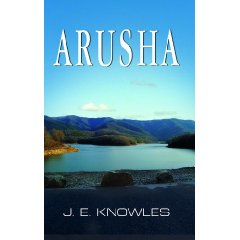
Author Profile: JE Knowles on her book Arusha

Arusha by JE Knowles

Author J. E. Knowles grew up in East Tennessee, began her writing career in Canada and now lives in London, England. Her first novel, Arusha, is the story of a gay marriage—between one man and one woman.

From the book cover: Edith Rignaldi clearly understands that she and husband Joe remain together for the sake of their children. It is why they married in the first place. But she never foresaw the lifeless emotional landscape they both now occupy after eighteen years together.

Teachers in a small, God-fearing Tennessee town, they cannot insulate themselves entirely from the cultural encroachment of the late ’80s: the inexorable march of the feminist and gay rights movements, the spread of the AIDS epidemic. When the faithful, steadfast Joe is finally overwhelmed by his desire for men, the lives of all four Rignaldis explode.

CW: When did you first know you wanted to be an author?

JEK: Probably as soon as I knew what an author was. I remember being nine years old and finding out that there was already an author in the Guinness Book of World Records younger than nine. I was very disappointed!

CW: Tell us about your book. How did you get the idea for your book?

JEK: Arusha is the story of a family—a woman, her husband and their children—and of the parents’ love. First, their love for each other, which brought the family together, and later their love for themselves and others and how that pulls the family apart. I’ve had the characters in mind since I was about fourteen but I didn’t know what their story was. I’d been living with the characters so long that the story just seemed to grow out of them.

CW: What research was involved in your book’s development?

JEK: The climax takes place in Arusha, Tanzania and I visited Tanzania before I knew that I would eventually write this book. It was the trip of a lifetime. East Africa, with its wild animals and incredible landscapes, has such a place in Westerners’ imagination. At the same time, journeying to someplace so far away brought home for me how different are the life experiences of people in various parts of the world. None of this really felt like “research”—the book developed out of where I’d been and what I’d thought about.

CW: What is your writing process? Do you have any formal training in writing?

JEK: I was already publishing articles and a few poems and stories when I went to the Humber School for Writers. That was my only formal training in writing, but what I really learned there was how to self-edit, how to make my work professional enough to be published. I met some wonderful fellow writers with whom I still exchange work. My writing process is the same as it was in elementary school: I get paper and a pencil and scribble down whatever comes to mind.

CW: How long did it take you to write the book and find an agent and publisher?

JEK: It took me about two years to write the manuscript, then another two years to find a publisher—about four years in total.

CW: What’s the most surprising thing you discovered in writing this book?

JEK: That the story wasn’t going to be principally about the daughter, Dana, but about the mother, Edith. I’ve never been a mother or married a man, so writing Edith’s (and even more, her husband’s) story took all of my imagination.

CW: Do you have any stories of rejection or inspiration to share with writers climbing up the mountain?

I have a story of rejection and inspiration, and it is the same: I received more than 100 “No”s to this novel before I got to one “Yes.” Many rejections were from agents or editors, just form letters saying don’t send the manuscript at all. Some requested part of the novel to read, but ultimately said no. A few read the whole novel, then decided it wasn’t for them. But I only needed one yes!

CW: What was the hardest part of the publishing process? What did you most enjoy?

JEK: It took about as long to place Arusha with a publisher as it did to write the novel and that was very discouraging. I found it hard to see so many books that, to me, were published with less time and care, while I was still struggling to sell a book in which I truly believed.

What I most enjoyed was holding the published book in my hands, seeing people buy it and ask for my signature. The book launch was the party of my life at that time—nine years in Toronto came together there.

CW: What advice would you give unpublished writers?

JEK: Write. This isn’t original advice, but it’s more important than ever now, when anyone can e-publish to a certain extent. Publishing is a separate business from writing, and if you start by focusing on getting published, you’ll never give the writing the time and energy it truly needs. Write an excellent, excellent story. Then you’ll have the faith in your writing that you’ll need to persevere through all the rejections and the business side of things.

CW: Have changes in the book industry forced you to change how you published or marketed your work?

JEK: Not really “forced.” More and more people are reading e-books, so I’m glad that my book was simultaneously published in that format, for readers who choose to purchase it that way. Certainly, the Internet has made it easier to find out exactly what publishers want in terms of a query or submission (just visit the publisher’s Web site), and if they’ll accept a letter or submission by e-mail, that saves time and money as well. I don’t think there are any shortcuts, however. The fact that I can instantly post or “blog” about what I’m writing doesn’t mean readers want to read something thrown together slapdash. I try to write minimal marketing copy, because the more time I spend on that, the less time I have to perfect the writing itself.

CW: What’s your next book project and what can you tell us about it?

JEK: I’ve just finished my second novel, with the working title of The Trees in the Field. It’s about a United States Senator from Tennessee, a Republican woman, whose ambition is to be president…until she runs into inconvenient obstacles from her past and future and begins to question what patriotism really means.

CW: How important do you feel contests and awards are in getting published or getting attention for your book? Do contests curate?

JEK: I like this question, although it’s not an easy one. I looked up curate to get its precise meaning, and it seems to have been back-formed from curator, with its origins meaning to take care of. So, do contests guide readers and tell us what we should be reading? I actually don’t think they do. There are so many awards out there now—anyone can put their favorite books in X or Y category on a Web site, or start a poll and suddenly you’re the Grey City Journal Irish-American of the month (a real, albeit tongue-in-cheek, example).

I’m happy to have been a finalist for a Lambda Literary Award because of the Lambdas’ history and the many writers I admire who have won them. But I admired the writers’ work before they won. At their best, awards confirm quality we already know about.

To read more from J. E. Knowles or join her mailing list for information on new work, please visit jeknowles.com.

Related Articles

Filed under: Author profiles, author Q&A, authors, publishing, writing tips, , , , , ,

Writers and Readers: Heads up! Exciting changes ahead!

I have some really cool changes coming in the near future. I really don’t want to lose anybody as the changes take effect so, against my nature and all that’s holy, brace yourself for a brief commercial:

I’m putting it out there.

Please subscribe to my blog

and please ask your friends and followers to do the same.

What changed? I’ve been making lots of moves in the last year or so, but there’s a lot more to do.

(Here’s what gave me the big push this week. If you need a push, you’ll get one. Hard.)

Since last May, I’ve been posting to Chazz Writes five times a week.

That will soon change to three rocking posts each week:

Monday, Wednesday and Friday.

When is “soon” with the new schedule? Probably after next week.

Nothing but the schedule will change immediately.

  • I’m still putting great information and links out there.
  • I’m still looking for authors to profile.
  • I’m still available for guest blogging opportunities and giving guest blogging opportunities.
  • I’m still editing just as much as ever.
  • Also still looking for (affordable) web developers to help me migrate to a new hosted platform that will become more interactive.

What exactly is coming, Chazz?

Aside from my regular editing duties, I’m editing my novel and its companion e-book.The details are top secret until I’m ready to launch. Subscribers will be in on the ground floor for extras when the books drop like valkyries from the sky attacking to a Wagner soundtrack.

Stay tuned. And seriously, please subscribe so you’ll be in the know.


Filed under: publishing, What about Chazz?, , , , , , , , , , , ,

Writing Conferences: What we need

Grand Bend, Ontario. The beach seen from the p...

Image via Wikipedia

Writing conferences are great opportunities to learn and be inspired. Though self-publishing is growing, by far most topics tend to be very oriented to traditional publishing. The experts are agents and editors. What these conferences will need in the future are workshops for the indie author.

I’m not denying we still need to hear from traditional publishing. But there are people I want to speak with, like experts in web development,  DIY e-book uploading and publicity. (Watch for some savvy writing and publishing conference organizers to court Amanda Hocking as their next keynote speaker.)

I’ve already posted about the possibility of a writer’s union for the self-published. Maybe soon we’ll see new kinds of workshops from writing conference organizers, workshops that acknowledge the new reality doesn’t match the old reality.

Are you planning to attend a writing conference this year?

Here are some to consider:

Ontario Writers’ Conference, Ajax, Ontario, April 30

Canwrite, Grand Bend, Ontario, May 2 – 8

Surrey International Writers’ Conference, Surrey BC, Oct. 21 – 23

Related Articles

Filed under: DIY, self-publishing, Writing Conferences, , , , , , , ,

Stephen King: On Writing Under the Dome

It helps to be a fast typist. It helps to write fast and edit fast.

The reason is, you have to keep it all in your head. Maybe you’ve written out a plan or maybe you’re writing a day at a time without knowing how the story will twist to its end. Even if you don’t feel you have to know everything ahead of you, you still have to keep the details clear in what’s happening behind you. It’s a lot to track.

If you’re writing your first book, aim for the low end of the acceptable word count. If your first attempt is a vast sprawl of a trilogy, there’s an excellent chance it will suck. Finishing a book at all is an amazing accomplishment. Don’t try to write too long too quickly.

JK Rowling wrote a sprawling series with Harry Potter, but the first book is relatively short compared to the big bricks that came later.

Filed under: Author profiles, authors, getting it done, publishing, Writers, writing tips, , , , , ,

Writers: Two mavericks to follow (plus a surprising original)

Monkeys Blogging

Image via Wikipedia

Are you indie? Are you non-indie but want to increase your awareness of what goes on behind the scenes in the publishing industry? Here are two blogs to follow:

Dean Wesley Smith takes the publishing industry’s engine apart, looks through all the pipes and valves and gives you the goods on what you need to know.

And you need to know what Kristine Kathryn Rusch has to say about making your way as a writer.

BONUS:

There is a guy who got into blogging early. You know him. You’ve seen him. He’s cooler than you thought. And he’s showing others they can self-publish, too.

Click here to find out who I’m talking about.

Filed under: authors, blogs & blogging, Books, DIY, ebooks, links, publishing, Rant, rules of writing, self-publishing, Useful writing links, web reviews, Writers, writing tips, , , , , , , ,

Bestseller with over 1,000 reviews!
Winner of the North Street Book Prize, Reader's Favorite, the
Literary Titan Award, the Hollywood Book Festival, and the
New York Book Festival.

http://mybook.to/OurZombieHours
A NEW ZOMBIE ANTHOLOGY

Winner of Writer's Digest's 2014 Honorable Mention in Self-published Ebook Awards in Genre

The first 81 lessons to get your Buffy on

More lessons to help you survive Armageddon

"You will laugh your ass off!" ~ Maxwell Cynn, author of Cybergrrl

Available now!

Fast-paced terror, new threats, more twists.

An autistic boy versus our world in free fall

Suspense to melt your face and play with your brain.

Action like a Guy Ritchie film. Funny like Woody Allen when he was funny.

Jesus: Sexier and even more addicted to love.

You can pick this ebook up for free today at this link: http://bit.ly/TheNightMan

Join my inner circle at AllThatChazz.com

See my books, blogs, links and podcasts.

Enter your email address to follow this blog and receive notifications of new posts by email.

Join 2,063 other subscribers