
C h a z z W r i t e s . c o m

See all my books at AllThatChazz.com.

Writers: Check out the Pay It Forward Contest

Cover of "Pay it Forward"

Cover of Pay it Forward

This post is a little  about a writing contest.

It’s mostly about being a better, happier and richer person.

Over at Market My Words, there’s a great contest for writers. The author will pluck the right query and sample from the entries and push the winner’s name to her agent. It’s a chance to get out of the slush pile. If your manuscript is worthy, this contest could save you an awful lot of time and energy.

What pulled my attention was that she called it the Pay It Forward Contest. Do you remember the movie? (SPOILER ALERT) It wasn’t cynical. It was inspiring. It might have caught on even larger if the ending hadn’t been such a downer. Still, it was a reminder we must all use our time well.

And it made me think of how I’ve been paid forward. I have a very successful friend. By the force of his mind and personality, he’s achieved a lot and continues to achieve a lot. People are always glad to see him coming. He’s gone out of his way to help me on several occasions. That spirit defines him and, precisely because he is so generous with his advice, time and money, his success is multiplied however you choose to measure it.

Too often we associate business success with a dog-eat-dog mentality. To succeed, we’re often told, others must fail. Instead, my friend looks for opportunities to reach out to people. He helps them and in turn, he is helped. He’s genuinely interested in other people’s problems and tries to help them.

It takes very little effort to slip into the human network to, with kindness, grease the wheels of interaction and eliminate friction. S.R. Johannes, the author of the Pay It Forward Contest is doing it. Though I must decline to specify how I’m doing the same, I can tell you I’m already on it (promise!)

You know what’s great about paying it forward?

It feels fantastic!

Key question:

Somebody’s helped you at some point.

How are you paying it forward?

Filed under: agents, authors, Contest announcement, DIY, movies, writing contests, , , ,

Writers: Is writing therapy for you?

Reverend Billy from The Church of Life After S...

Image via Wikipedia


Writing can be therapeutic. You can get some etheric vengeance, exorcise your demons and find peaceful transcendence.

But I don’t think your therapy should show. If you stray into telling the reader how to feel, your writing experience intrudes into their reading experience.

Don’t do that, please.

What writing teachers don’t say is, “Not getting preachy is really hard.” For instance, in my WIP, I touch on issues around censorship. In fact, I’ve noticed my penchant for not just touching on the issue, but hammering on it.

How do you know you’re hammering your personal issue too hard? Overexplaining irritates readers. Making two characters argue and leaving the opposing side too weak is another sign. Look for when the action stops and restart it. For instance, when your protagonist slips into a monologue that goes on uninterrupted, he’s at the pulpit and you’re losing readers.

You can still have a point of view, of course. Just lay out facts. Let your readers decide. Slip the facts amongst the action of the story. Don’t lay it all out at once. Instead of pontificating, let arguments percolate through the story.

Orwell’s 1984, for instance, shows the horror of the all-controlling state. Orwell doesn’t tell you it’s awful and list why. He shows cages full of rats. Chuck Palahniuk‘s style is another good example. He doesn’t tell the reader how to feel. Non-judgmental writing yields effective results.

Don’t write from your therapist’s couch. The benefits you get from writing may be every bit as personal and profound as a therapy session from In Treatment, but if you’re writing for an audience, please let your readers find their own therapy.  In Finding Forrester, Sean Connery says, “You write the first draft with your heart and the next with your head.” 

Filed under: Books, manuscript evaluation, publishing, Rant, Rejection, Useful writing links, Writers, writing tips, , , , , , , , , , , ,

Editing: How to take advice

qestion mark and exclamation mark

Image via Wikipedia

Mostly people follow the advice that appeals to them. If five people give them the same uncomfortable advice, they’ll keep asking until lucky advisor number 15 tell them what they were hoping to hear. That’s not the way to progress.

Blogging about writing and publishing can be a quixotic adventure. For instance, I went through an entire short story one time and showed the writer precisely how he could improve his writing. These were very straight-forward craft issues that got in the way of readability. The next piece he sent me had the same problems.

Not everyone has to write like I do. However, since he was so enthusiastic about my original suggestions, I wondered if it was a question of the writer needing more time to absorb the information and practice.

In a writing critique group, you can spot the defensive people quickly. They write Stet! beside each suggestion (including that tell-tale exclamation point.) Defensive writers spend a lot of time talking when their critique group colleagues ask questions or are confused. Instead, they should be listening. Any writer is free to disregard suggestions, but not during the explanation of the concern.

Is advice all for naught? Sometimes. But professional writers take advice most of the time. They aren’t so attached to their writing that they expect it will be 100% perfect on the first draft. That’s crazy-talk. Professional writers respect writing too much to make that assumption.

Just remember: an editor’s focus is the text. They’re trying to help you.

However, if you sense an editor is looking at it as a game where they’re tracking points, zeroing in on every error as if it’s a moral victory…well. Delete them.

Also, I have to mention that sometimes the advice is just bad:

At Psychology Today I found a great post called 11 Types of Bad Writing Advice.

Filed under: Editing, Editors, getting it done, manuscript evaluation, publishing, Rejection, rules of writing, Writers, , , , , , ,

Writers: Get your book done! Hack your life and crush your enemies.

Screenshot from Linux software KTouch. An imag...

Image via Wikipedia

Zip over here as quick as you can to check your keyboarding velocity.

You can write.

Are you also a fast typist?

Next question:

Does it matter?

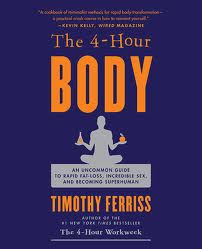
I’m currently sucking down a great book: Timothy Ferriss‘s 4-Hour Body.* In it, he mentions how short-term goals, tiny achievable targets, can help you get huge projects done. Don’t have time to write a weighty tome? That’s okay. How about committing to a page a day? Half a page? A few sentences?

4_Hour_BodyIf you can do that much, you can get your book written this year. You know why?

Because most days you won’t just write a few sentences. Once you’re over that intimidating hump of “WRITING A WHOLE BOOK” (DUH-duh-DUUUUH!) you’ll sit down. You type a few sentences. Then you’ll already be over the worst of the procrastination speed bump. Chances are, you’ll get to writing much more most of the time.

And you’ll be on your way.

How fast you type won’t matter all that much really.

What matters is that you consistently write.

Consistency is what crushes. 

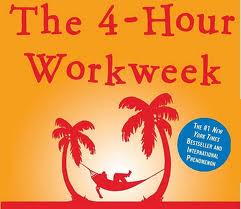
 4-Hour_Work_Week

*Once you have your body in shape with Timothy Ferriss’s health hacks, read The 4-Hour Work Week. It is doubly awesome in giving you strategies to make your work life rule (without ruling you.) Read 4-Hour Body and you’ll live longer. Do 4-Hour Work Week and you’ll live so much better.

 Related Articles

Filed under: book reviews, Books, getting it done, publishing, Writers, Writing exercise, writing tips, , , , , , , , ,

Author Profile: Nairne Holtz

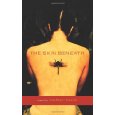
The Skin Beneath

Nairne_Holtz
Nairne Holtz

Nairne Holtz was described by the Globe and Mail as a “writer to watch.” She is the author of This One’s Going to Last Forever (Insomniac, 2009), which was a finalist for a Lambda Literary Award, and The Skin Beneath (Insomniac, 2007), which won the Alice B. Award for Debut Lesbian Fiction and was shortlisted for Quebec’s McAuslan First Book Prize. She lives in Toronto with her lover and miniature dogs.

This One’s Going to Last Forever is about relationships that are, for the most part, destined to fail. From campus lovers to a middle-aged man who performs drive-through weddings dressed as Elvis, the characters in these darkly comic stories search for love in all the wrong places. They also find love in the most unexpected places. 

In The Skin Beneath, Sam O’Connor is a “yuffie,” a young urban failure who is covered in tattoos and preoccupied by picking up girls she quickly discards. But there’s one woman she can’t forget—her dead sister, Chloe, a conspiracy freak who may not have killed herself. Tracing Chloe’s final days in this noir coming-of-age tale of swapped, hidden, and altered identities, Sam discovers everyone has another layer and secrets they hide from themselves—including herself. 
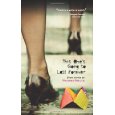
This One's Going to Last Forever

 CW: When did you first know you wanted to be a writer?

NH: One of my fourth grade teachers assigned creative writing exercises for homework and that sparked my interest in writing. I decided I wanted to be a writer, a spy or a private detective. I’ve wound up working as a librarian and being an author. I can’t talk about the spy stuff. 

CW: How did you develop your book idea?

NH: My ideas come from my imagination, reality, and skewed reality. The reality isn’t necessarily mine. Sometimes I draw on the lives of friends or complete strangers. I’m always reluctant to say what is real and what isn’t in a specific story or book, but I will say I was amused when a reviewer of my first novel, The Skin Beneath, described the only character in the book inspired by a real person as “unlikely.”

CW: And what research was involved?

NH: Research involved trips to various libraries and searching the web. Being a librarian helped.  

CW: What’s your personal approach to the writing process?

NH: My writing process for longer work involves outlines, revised outlines, and endless drafts. The process is often tedious as is discussing it in my opinion. As to training, I have a graduate degree in English from McGill University. I also completed the Humber College creative writing program, where you are paired with a writer who edits chunks of your work for eight months.  

CW: How long did it take you to write your first book and find an agent?

NH: It took me a little over two years to write my first novel, but I was lucky at that time not to be doing much paid work. Humber College has an agent, and I sent my stuff to her when I finished the program, and she took me on. That process took about a year and a half.

CW: What were the surprises and challenges on your route to publication?

NH: My first attempts at publication were in Canadian literary journals. I received one acceptance and fifty rejections, which was quite discouraging. My girlfriend kept saying, “There is always more than one way,” and indeed, my stories eventually found print in American lgbt literary journals and anthologies. While my books have received glowing reviews in the mainstream, basically my audience is lesbian.    

The hardest part of the publishing process was realizing the extent to which manuscripts languish in slush piles. The mainstream presses look at books represented by agents whom they know and the indie presses tend to publish their friends and aren’t necessarily impressed by agents. What I enjoyed about the process was how much I learned about both writing and marketing. Also, of course, it was such a thrill the first time I walked into Chapters and saw my book on the shelf.

CW: What advice would you give unpublished writers?

NH: You have to decide what you want and make peace with it. If you want to write novels, this will likely mean periods of not working fulltime at a paid job, which has obvious economic consequences. If you tell a story with non-mainstream characters or you have an experimental style or you write poetry, you will likely limit your audience. You have to decide whether it is more important to have a wider audience or to tell your story in exactly the way you want.

CW: Have changes in the book industry forced you to change how you published or marketed your work?

The closing of so many gay and lesbian and women’s bookstores has meant fewer places to sell my books, but the web has offered more opportunities in terms of publicity. I think Amazon, not to mention all the second-hand booksellers online, will mean a longer life for my books, and I was quite happy to add my first book to Google’s free electronic library. For my second book, I focused more on the web in terms of publicity. For instance, I had my publicist give my book to a few bloggers and some places where I did readings used Facebook as their main publicity tool.

CW: What’s next?

NH: I’m working on a new novel set in Nova Scotia in the ’70s and ’80s about a Quaker hippie family.

For more information, Nairne’s website is www.nairneholtz.com.

Related Articles

Filed under: Author profiles, author Q&A, authors, Books, publishing, , , , , , , ,

Writers: Time for some controversy

Book-shelf complete

Image by Medusa's Lover via Flickr

Since I’m still recovering from a Toronto weekend conference, Green Hornet and Black Swan, here are a couple of recent links you may have missed:

Dean Wesley Smith blows agents’ future aspirations out of the water (make sure you read through the pithy comment section, too!) and Anis Shivani tells you to forget everything you thought you knew about writing and publishing.

Much of it appeals to me because neither believes in sucking up and allowing yourself to be put down or kept down by The Man.

What do you think? 

Is Shivani’s rant satire or for real?

Will you dare to take this advice?

Filed under: agents, authors, DIY, ebooks, Editing, getting it done, Rant, self-publishing, Useful writing links, writing tips, , , , , , ,

Writers: Why self-publishing sucks (and what you can do about it)

Vanity

Image via Wikipedia

A couple of years ago I put together a chapbook of poetry. A few seconds after I handed a copy to a beta-reader he found a mistake. It was a glaring mistake on the first page he turned to. Alas. Embarrassment is an emotion that can run through you, both hot and cold.

Typos, grammatical errors, consistency problems and a host of other plagues suck the credibility and professionalism from your manuscript. At least for me it was a beta-reader and, contrary to first impressions, the rest of the manuscript emerged clean.

Some writers see self-publishing as a shortcut. When writers treat the medium as the quick and easy path to becoming an author, that’s still vanity publishing.

When you approach it seriously and make sure your manuscript has been combed for problems, that’s publishing (nevermind the “self” part.) When you choose to self-publish, publish. Form a company. Be a publisher. Hire editors (yes, I’m aware of the conflict of interest, but if you are, too—yes, I edit—we’re covered.) Get proofreaders lined up.

Take it seriously and you will be taken seriously.

Filed under: authors, ebooks, Editing, Editors, getting it done, grammar, publishing, Rant, self-publishing, writing tips, , , , , , ,

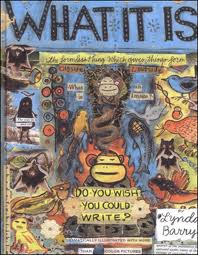
Lynda Barry tells What It Is

This is a book about writing like you’ve never seen:

What_It_Is

If you know Lynda Barry‘s work, you  know hers is an inimitable style. But I grok her. I had some reservations as I plucked the book from the shelf, but when somebody bares their soul in their art, you either look away embarrassed and confused or you look deeper, identify and get swallowed up, too.

Her ideas on writing prompts could get you going. Letting go to get going appeals to me. Most of all? I understand what she means by escaping into writing and getting “that floaty feeling.” If you write, you know what she means, too. If you don’t, buy What It Is, do the exercises and find your way into The Float. 

The immediate rewards of writing (slipping through “the escape hatch” as Stephen King puts it) are right now. Even as I write this, I feel a tickle in my brain. Some happy dopamine is spreading somewhere through my skull as I type this. I’m a junkie.

You may or not get published, but there’s more to it than that, isn’t there?

Some people don’t get that, so I ask them this: “Did you ever play tennis or run or swim? Did you keep doing it even though you knew you weren’t going to end up at Wimbledon, the Boston Marathon or the Olympics?”

Filed under: authors, book reviews, Books, publishing, Writers, Writing exercise, writing tips, , , , , ,

Writers and Readers: Just wanted to let you know…

Television icons
Image via Wikipedia

Happy New Year!

 May 2011 be the year you

make your dreams come true,

publish your work

and vanquish your enemies!

I went to a party tonight. People asked me what I was doing. I asked what they were doing. Many in the family are an artsy crowd so we talked about the movies we’d seen and the TV we loved. (Yay The OG Buffy! Boo revamped coming-soon-Joss-Wheedonless Buffy!)

And I felt grateful to travel in circles concerned about arts of all kinds. Although I only started up this project in May, I’ve made new friends through attending writing conferences and blogging about writing and publishing. I’ve picked up more editorial work I love. I’ve edited website copy and helped people on their way to publication. I’ve provided (gentle) writing critiques and writers have been really receptive to my efforts.

The research I do here serves my writing and I’ve had the opportunity to promote books and publicize authors to my growing readership. (In part, the love bump I got from one of my heroes, director Kevin Smith, helped me grow and aspire for more.)

And you keep coming back for more. Most of all, I’m thankful for you. When I see my stats climb, I know I’m reaching, teaching and helping more people create art or make their art better.

For me, Chazz Writes is not just about getting gigs. It’s about building something good.

I write.

I edit.

I publish.

More to come.

Much more.

Thanks for reading!

Filed under: My fiction, publishing, self-publishing, Useful writing links, What about Chazz?, Writers, , , , , , , ,

Chazz Writes: The Top Post of 2010 was…

An Evening with Kevin Smith 2: Evening Harder

Image via Wikipedia


The most popular post of 2010, and my favorite, was about the evening I spent with Kevin Smith in Kitchener, Ontario. If you missed it, here’s that link one more time: 

https://chazzwrites.wordpress.com/2010/11/04/thatkevinsmith-10-lessons-received-from-an-evening-with-kevin-smith/

I attended two publishing conferences in 2010 (loved them!) but An Evening with Kevin Smith kicked up my energy and changed how I felt about me, art and writing. (Are you sick of my man crush on Kevin Smith? Too bad. Suck up the goodness.)

Do you need some New Year’s resolution energy and inspiration to overcome that stale 2010 inertia? Here are some more Kevin Smith posts to put some heavy horsepower into your creative life:

My Top Three (Living) Writing Heroes. Who are Yours?

Writers: DIY vs traditional publishing

Are You a Consumer or a Creator?

Kevin Smith on Writing

We tell our stories. It’s not supposed to be about fame. Or is it?

Kevin Smith loved the blog post! The aftermath…

https://chazzwrites.wordpress.com/2010/11/15/thatkevinsmith-feelgood-story-of-the-day-week-year/

Now go make 2011 your year. I’m going to make it mine!

HAPPY NEW YEAR!

Filed under: authors, DIY, getting it done, Media, My fiction, publishing, Rant, Useful writing links, What about Chazz?, writing tips, , , , , , , , , , , , , ,

Bestseller with over 1,000 reviews!
Winner of the North Street Book Prize, Reader's Favorite, the
Literary Titan Award, the Hollywood Book Festival, and the
New York Book Festival.

http://mybook.to/OurZombieHours
A NEW ZOMBIE ANTHOLOGY

Winner of Writer's Digest's 2014 Honorable Mention in Self-published Ebook Awards in Genre

The first 81 lessons to get your Buffy on

More lessons to help you survive Armageddon

"You will laugh your ass off!" ~ Maxwell Cynn, author of Cybergrrl

Available now!

Fast-paced terror, new threats, more twists.

An autistic boy versus our world in free fall

Suspense to melt your face and play with your brain.

Action like a Guy Ritchie film. Funny like Woody Allen when he was funny.

Jesus: Sexier and even more addicted to love.

You can pick this ebook up for free today at this link: http://bit.ly/TheNightMan

Join my inner circle at AllThatChazz.com

See my books, blogs, links and podcasts.

Enter your email address to follow this blog and receive notifications of new posts by email.

Join 2,063 other subscribers