C h a z z W r i t e s . c o m

See all my books at AllThatChazz.com.

Writers: Craft your pitch carefully.

DSC03939

Image by Nitin Parmar via Flickr

It’s very difficult to summarize your novel. When we pitch a story, we talk about broad strokes and the rest is about theme. The reason is that when we summarize in depth, the story often sounds dumb.

Let’s try it with a popular movie and you’ll see what I mean:

In the mostly great and totally watchable  A Few Good Men, a Gitmo soldier is killed and two Marines are charged with his killing. So far, so good.

The base commander goes to great lengths (all behind the scenes) to cover up his part in the crime. The rest is about how a young lawyer who has never stepped inside a courtroom goes against the military establishment to get the commanding officer to admit in court that it was he who ordered the Marines to attack the soldier as a training exercise. The commanding officer will admit his guilt proudly and then be surprised he’s under arrest. The two Marines don’t go to prison but do get discharged dishonorably. The young lawyer feels good about himself in the end. And no, he doesn’t get to sleep with Demi Moore.

Were you to pitch it like that (and if you aren’t actually Aaron Sorkin) it’s very hit-and-miss…uh, no, actually it’s all miss. The context and detail is necessarily missing in a summary. The person you’re pitching won’t know about the nuance that the young lawyer will try to live up to his father’s courtroom legend. The clever sarcasm won’t be much on display to sell the idea of the script.

You would pitch about visiting the base and the sinister base commander. However, the subplot about the deputy-commander who can disappear because he’s former Special Ops (and turns suicidal) stretches credibility. It’s a spot where you could easily lose your audience. The pitch won’t get into the nitty-gritty of the interplay among the defense team. Kevin Pollak is the glue, but his role’s power would be difficult to flesh out in a short meeting and could derail you. 

When you pitch a movie, play or book, the odds are stacked against you in a huge way. It is statistically very unlikely someone will invest in your art. Put a lot of time perfecting your query letter (or your pitch) so you cram in your art and style.

The inherent difficulties of the pitch reduce your work so you want to look for ways to show your competence and still stay within the parameters of the pitch (e.g. format, brevity and economy of communication must be balanced by characters whose motivations are compelling and narrative arcs that make people want to hear more.)

If you don’t pitch it well, they won’t get it. If you have no track record, the only evidence that they have that you can articulate and execute an idea is confined within the straitjacket of a pitch meeting or query letter.

That’s why so many unknown writers, directors and artists of all sorts stay unknown.*

*Or, as we’ve frequently discussed, you could reject the premise of The Man’s hierarchical paradigm and find a way to DIY. (See yesterday’s post for further thoughts on that.)

UPDATE: Here’s a great survey on the things that drive agents away from you.

Filed under: authors, DIY, Editors, manuscript evaluation, movies, queries, writing tips, , , , , , , , , ,

Writers: Time for some controversy

Book-shelf complete

Image by Medusa's Lover via Flickr

Since I’m still recovering from a Toronto weekend conference, Green Hornet and Black Swan, here are a couple of recent links you may have missed:

Dean Wesley Smith blows agents’ future aspirations out of the water (make sure you read through the pithy comment section, too!) and Anis Shivani tells you to forget everything you thought you knew about writing and publishing.
Much of it appeals to me because neither believes in sucking up and allowing yourself to be put down or kept down by The Man.

What do you think? 

Is Shivani’s rant satire or for real?

Will you dare to take this advice?

Filed under: agents, authors, DIY, ebooks, Editing, getting it done, Rant, self-publishing, Useful writing links, writing tips, , , , , , ,

Writers: The self-publishing/Massage Therapist Correlation

Massage in Tarifa, Spain taken on May, 6 2007 ...

Image via Wikipedia

I haven’t had what my father would call a real job since 1991. The factors that make that so are all tied up in being a writer and editor.

Years after training as a journalist, working in newspapers and working in the publishing industry, I went back to school again to become a massage therapist, too. The reasons why were varied, but the most important factor was that I wanted to work for myself. I have an independent streak and I hated working for The Man. I still hate working for The Man. Writing, editing, therapeutic massage: it’s all independent work. There is no hierarchy. The Chazz does not do hierarchy.

But a lot of people do. Most people have a boss. The fact is, I don’t understand how they stand it. I pull at authority’s leash so hard I have sometimes hurt myself in tiny acts of rebellion.

Despite the rebel yell, the truth is I have many bosses. Everyone I encounter in my practices as an editor, writer and massage therapist is my boss. I have chosen many bosses instead of one. I have chosen one-to-one interaction instead of dealing with a group. I deal with people for an hour at a time or for short projects, always with an eye to where the next project will come from. There’s no security in this. My income goes up and down unpredictably.

On the other hand, with all that I do, there is the security of knowing they can’t all fire me at one time. If you have one boss who wants to lose you on a whim, they can do that. That’s the smug solace of the lone wolf. 

But lots of people accept authority as the way of the world. That’s becoming less true as massive unemployment forces some to seek out their own solutions and form their own businesses. Entrepreneurship used to seem like it was for the few who chose the harder way. Now, when so many can’t find work, starting up a sole proprietorship and going for it is forced upon them.

Here’s what I notice: People are just wired one way and not the other. Most massage therapists and writers I know have an independent streak. We have to grit our teeth a bit to do something that is in many ways outside money’s eco-system.

But there are a bunch of therapists who do, in fact, want to work for somebody. They want someone else to take care of the laundry, the advertising, the tax paperwork and anything else that doesn’t directly relate to physically doing the work. They love that they can come into the office, do their thing and leave without another thought to the running of the business. I wouldn’t call it freedom, but they do.

In the past, the publishing industry has been built on the hierarchical model. Someone else will publish your book. Someone else will take care of the editing and (some) of the promoting and it will all be part of one complete package. Thanks to technology, authors are discovering they have more options than history has provided.

For authors deciding when to make the leap to independent publishing, there is a lot to consider: market factors, price points and leveraging your platform to sell enough books to make the enterprise profitable.

Beyond the practical and esoteric (which must be figured out, too) you have to start with the personal: you. Which way are you bent? Do you want someone else to take care of things (and give them a deeper cut of the profits and losses)? Are you up for the nitty-gritty of doing the work of many on your own? Can you hire an editor, find a publicist, do the research and build your audience? It won’t be easy. You’ll have to talk with a lot of people and the greater your network the more chance you’ll get your feelings hurt. When the mesh of your network tightens to a closer knit, there will be friction.

Only you can decide if you have enough of the anti-authoritarian, do-it-my-way, I’m-a-control-freak, entrepreneurial-bent. Once you’ve figured that out, here’s a great article that explores the location of the tipping point between traditional publishing and going indie.

No matter which way you are wired, if you’re a writer you’ve got a muse.

Next stop on the Reality Train:

Introspection Station.

Self-publishing has developed to a point where it is neither good nor bad. Depending on your temperament, it could be a solid choice or a horrible one.

Filed under: authors, Books, DIY, ebooks, Editing, getting it done, publishing, self-publishing, , , , , , , , , ,

Writers: Five editing tricks and tips (plus editing marks)


1. Editing onscreen is more difficult and less accurate than printing out your manuscript and attacking it with a pencil. Unless you’re well-practiced at editing pixels, print it out.

2. As you read your manuscript, read aloud. You will pick up more problems that way and if you run out of breath, it’s probably a run-on sentence.

3. Some experts tell you to read your manuscript backwards, one word at a time, to catch more typos. Though it is true this technique works, you must have a form of OCD to act on it. This is advice editors give, but never do themselves. If you don’t believe me, try it with any book-sized manuscript. (Wait! First make sure there are no sharp objects or firearms nearby!)

4. As you edit, read slowly. Your brain is wired to skip over mistakes when you read quickly.

5. Farm it out. You need someone else’s fresh eyes on your manuscript to see the thing you are missing. Hire editors. (Here’s one!)

Filed under: authors, Books, Editing, Editors, getting it done, publishing, rules of writing, Writers, writing tips, , , , , , , , , , , ,

Writers: How to tell when your manuscript is ready

Freytag's Pyramid, which illustrates dramatic ...

Image via Wikipedia

Writing takes time and is often the most fun part of the journey. Then you rewrite and revise and revise again. Before you send your manuscript to an editor, make sure you’ve done as much as you can to clean it up.

Be aware of:

Formatting, hooking the reader, character development, story arcs, consistency of narrative, consistency of voice, differentiation of characters’ voices, typos, grammatical errors, plot logic, plot holes, pacing, three-act structure, rising action, scene length, passive voice, telling instead of showing

(gasp!)

…the list goes on and on, but you get the idea.

Make it as good as you are capable.

Once you’ve gone through however many revisions  you must endure (maybe two, maybe dozens) to write your story, go through one more time.

How will you know when you’re ready to send it off to an editor for new input?

You’ll be sick of your manuscript. (And if you have been holding on to a manuscript too long, let go of your perfectionism and the manuscript. It’s a torturous form of self-hatred.)

A manuscript is never truly finished. You could polish forever. However, when your editing goes sideways, meaning it’s not better but merely different, it’s time to send it off.


Filed under: Editing, Editors, getting it done, publishing, Writers, writing tips, , , , , , ,

Writers: On sending your stuff

J. K. Rowling, after receiving an honorary deg...

Image via Wikipedia


To the right is a picture of JK Rowling. Notice that she is not me. As with Highlander, “There can be only one!” I’m sorry this has become necessary to point out.

One of the posts here is a neat spreadsheet that shows how JK Rowling plotted out Harry Potter. Recently I got an email with several errors addressing me as JK Rowling that asked me to email the writer so I could read some of her work. Billionaire authors don’t do that much. In fact, as presented, I wouldn’t do it, either.

I’d feel bad about pointing out this error so publicly, but it’s apparent the writer is not someone who reads this blog. Please read the blog (and also www.chazzwrites.vpweb.ca). When someone jumps from my bio page to ask about my bio, it just feels like spam and carelessness. Writers are detail-oriented and email, no matter how casual you want to appear, should reflect that. (In fact, I’ve sometimes gone through several drafts on queries to make them appear breezy and casual.) Whether you’re sending a manuscript, a query or a short email, you must pay attention to the details.

I know what you’re thinking. You already know this. Okay, but obviously many people still don’t. One writer told me she had already written several books. That’s a good sign. However, in one short paragraph, she made seven errors. That went into my evaluation of how much I could help her right away. I decided editing her book would be time and cost-prohibitive for me and for her.

When I take on a project, I have to take into account how much time I will have to invest in the book. From that short paragraph, I had to conclude that, were I to take her on, the job would be rewriting, not editing and proofing. When it starts out that bad, it doesn’t make me confident about larger issues like attention to detail, story arcs, characterizations and narrative logic and consistency. I have ghosted a couple texts. Writing and rewriting are not out of the question, but I have to know the scale of what the job requires going in (or I may as well be working behind a counter wearing a paper hat and slinging fries.)

Does your project have to be perfect for me to work on it? Of course not. If it were perfect you wouldn’t need anyone (and you’d be god.) I’m not being nitpicky or cranky. It’s just that when I get a query, I’m looking for signs the author is serious. If you’re asking me to take your work more seriously than you do, that’s a bad sign.

Queries and sample chapters give you an idea of how I work and they tell me how much time your book will take up. That’s one of the main variables in determining my rate, so please, don’t shoot off an email—to me or any other editor—before reading what you wrote at least once.

I’m trying to end on a positive note, so I’ll add that I just took on an editing project that excites me. The author’s serious, nice and I can’t wait to dig into her book and take it from great to fantastic. In fact, the antidote to amateurish folks is waiting on my desk. I’m off to work on the manuscript.

Filed under: authors, blogs & blogging, Editing, Editors, getting it done, links, Rant, Rejection, What about Chazz?, Writers, writing tips, , , , , , , , , ,

Writers and Readers: Just wanted to let you know…

Television icons
Image via Wikipedia

Happy New Year!

 May 2011 be the year you

make your dreams come true,

publish your work

and vanquish your enemies!

I went to a party tonight. People asked me what I was doing. I asked what they were doing. Many in the family are an artsy crowd so we talked about the movies we’d seen and the TV we loved. (Yay The OG Buffy! Boo revamped coming-soon-Joss-Wheedonless Buffy!)

And I felt grateful to travel in circles concerned about arts of all kinds. Although I only started up this project in May, I’ve made new friends through attending writing conferences and blogging about writing and publishing. I’ve picked up more editorial work I love. I’ve edited website copy and helped people on their way to publication. I’ve provided (gentle) writing critiques and writers have been really receptive to my efforts.

The research I do here serves my writing and I’ve had the opportunity to promote books and publicize authors to my growing readership. (In part, the love bump I got from one of my heroes, director Kevin Smith, helped me grow and aspire for more.)

And you keep coming back for more. Most of all, I’m thankful for you. When I see my stats climb, I know I’m reaching, teaching and helping more people create art or make their art better.

For me, Chazz Writes is not just about getting gigs. It’s about building something good.

I write.

I edit.

I publish.

More to come.

Much more.

Thanks for reading!

Filed under: My fiction, publishing, self-publishing, Useful writing links, What about Chazz?, Writers, , , , , , , ,

Chazz Writes: The Top Post of 2010 was…

An Evening with Kevin Smith 2: Evening Harder

Image via Wikipedia


The most popular post of 2010, and my favorite, was about the evening I spent with Kevin Smith in Kitchener, Ontario. If you missed it, here’s that link one more time: 

https://chazzwrites.wordpress.com/2010/11/04/thatkevinsmith-10-lessons-received-from-an-evening-with-kevin-smith/

I attended two publishing conferences in 2010 (loved them!) but An Evening with Kevin Smith kicked up my energy and changed how I felt about me, art and writing. (Are you sick of my man crush on Kevin Smith? Too bad. Suck up the goodness.)

Do you need some New Year’s resolution energy and inspiration to overcome that stale 2010 inertia? Here are some more Kevin Smith posts to put some heavy horsepower into your creative life:

My Top Three (Living) Writing Heroes. Who are Yours?

Writers: DIY vs traditional publishing

Are You a Consumer or a Creator?

Kevin Smith on Writing

We tell our stories. It’s not supposed to be about fame. Or is it?

Kevin Smith loved the blog post! The aftermath…

https://chazzwrites.wordpress.com/2010/11/15/thatkevinsmith-feelgood-story-of-the-day-week-year/

Now go make 2011 your year. I’m going to make it mine!

HAPPY NEW YEAR!

Filed under: authors, DIY, getting it done, Media, My fiction, publishing, Rant, Useful writing links, What about Chazz?, writing tips, , , , , , , , , , , , , ,

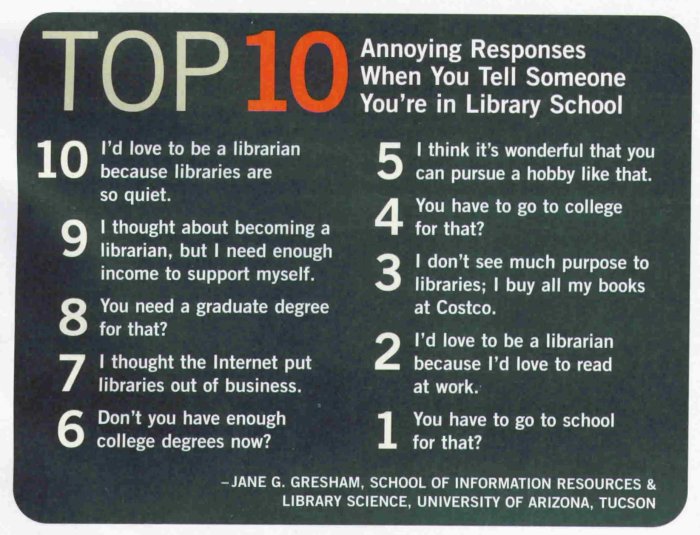
Writers: Top 10 of the 2010 Top 10 Chazz Writes posts

Top10

Early last year I considered going back to school to become a librarian. (I dumped that idea before I saw this graphic, but it does make me feel better about my choice.)

After some career counselling, I decided to refocus my efforts on my writing and editing. I needed (and need!) to bring art to the front burner. I began this blog as part of reorganizing my life to that end. Since last May I’ve posted 402 times and gained lots of readers, friends and even some clients (hurrah!) Things progress.

 For lucky #403, this is a look back through the Top 10 lists of 2010:

1. Authors! Part II: Top Ten Lessons from the Networking Master

2. Top 10 Ways Writers Waste Time

3. Writers & Editors: Top 10 Editorial Considerations

4. (Top 10 Things +1) Writers Love

5. Top 10 Reasons We Write Sci-fi

6. Top 10 (plus one) Publishing Conference Lessons

7. Top 10 Things Writers Fear

8. Top 10 Reasons We Write Horror

9. Top 10 Reasons We Write Romance

10. Writers Top Ten: Why blogging about publishing is important

Filed under: authors, Books, ebooks, Editing, Editors, getting it done, Horror, Publicity & Promotion, publishing, Rant, Top Ten, Useful writing links, Writers, writing tips, , , , , , , , , , , , ,

Writers: The mire of conflicting advice & unfair criticism

The hierarchical structure of the autobiograph...

Image via Wikipedia

When I got into the business, there was a criticism meant to shut writers down.

“Too autobiographical” was the kiss of death.

That’s ironic for several reasons:

Biographies and autobiographies are moneymaking books. Sarah Palin‘s ghosts have already published more books than you and possibly more books than she’s read. Okay, that was a cheap shot, but somewhat funny and it has the added bonus of being an Irish fact—that is, something that is a lie, but should be true.

I digress.

Back to the issue of unfair criticisms and misguided advice:

 The mind boggles at Augusten Burroughs work. How much childhood trauma can one man recycle into his fiction and non-fiction? He has enough monsters, addictions and insanity in his past that he’s set for several more books at least.

“Too autobiographical” is now a stale criticism when you consider the movement of the market toward tell-alls, whistleblowing and confessionals. There’s a lot of popular fiction that’s thinly veiled life story, too. In fact, if you’ve been a lion tamer-stripper-celebrity-prostitute, you’re a much easier sale than if you’re just another writer working away at your desk making stuff up.

Diablo Cody is a talented writer, but she had a lot more heat going into the fray because of her tattooed image and history as a stripper. I’m not saying she wouldn’t have sold the brilliant Juno script anyway, but really, how many celebrity screenwriters can you name besides her, McKee and William Goldman? If you came up with a few names, it’s probably because they are famous writer-directors, not just writers.

(And notice that irksome phrase “just writers.” I use it advisedly, as a synonym for “merely,” since that’s the stature writers generally have in film, television and publishing.)

“Too autobiographical” was once a stinging barb. It marked a talent that was undeveloped. It suggested teenage angst worthy of a diary, not of publishable quality.

The worm has turned. Now your tortured history as a brawler helps; Chuck Palahniuk brawled a bit and escorted sick people to support groups long before Fight Club. Your time in seedy bars lends authenticity to your writing and manuscript evaluators may well take you more seriously because of the stuff you don’t want your mom to know. A work can still be too autobiographical, but that criticism doesn’t carry the weight it once did.

Evaluators can be off the mark in what they think qualifies as authentic, anyway. One writer, for instance, was told that her dialogue didn’t ring true for how contemporary teenagers speak. She was advised to hang out with some kids to catch the flavor of the real thing. What the manuscript reader didn’t know was the writer was 17 at the time.

We’re a culture that worships celebrity, so “too autobiographical” isn’t a criticism that comes up as much (unless your life story is deadly dull.)

The true irony is that the same editors who would say “too autobiographical” would also routinely tell aspiring writers to “Write what you know.”

That’s bad, even egregious advice. Don’t write what you know. If you only write what you knew, there wouldn’t be much fantasy, science fiction…or much literature at all, come to think of it.

Instead, write what you care about.

 Your research and the knowledge

flows from caring, anyway.

Filed under: authors, book reviews, Books, Editors, links, manuscript evaluation, Rant, scriptwriting, Useful writing links, writing tips, , , , , , , , , , , , ,

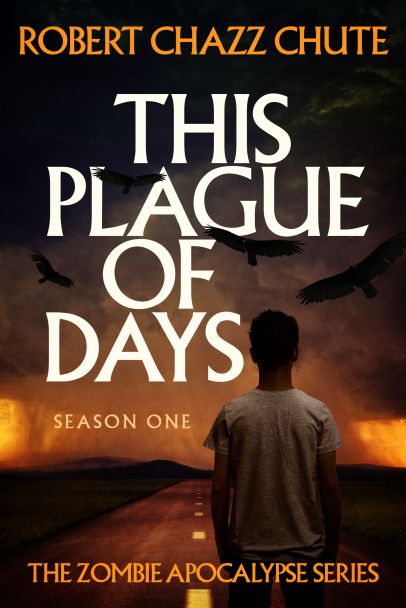
Bestseller with over 1,000 reviews!
Winner of the North Street Book Prize, Reader's Favorite, the
Literary Titan Award, the Hollywood Book Festival, and the
New York Book Festival.

http://mybook.to/OurZombieHours
A NEW ZOMBIE ANTHOLOGY

Winner of Writer's Digest's 2014 Honorable Mention in Self-published Ebook Awards in Genre

The first 81 lessons to get your Buffy on

More lessons to help you survive Armageddon

"You will laugh your ass off!" ~ Maxwell Cynn, author of Cybergrrl

Available now!

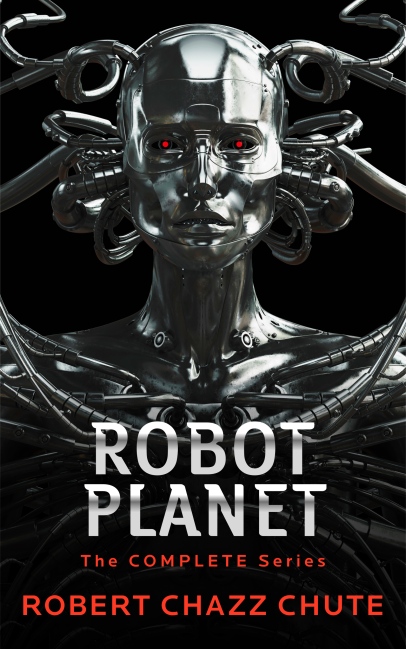
Fast-paced terror, new threats, more twists.

An autistic boy versus our world in free fall

Suspense to melt your face and play with your brain.

Action like a Guy Ritchie film. Funny like Woody Allen when he was funny.

Jesus: Sexier and even more addicted to love.

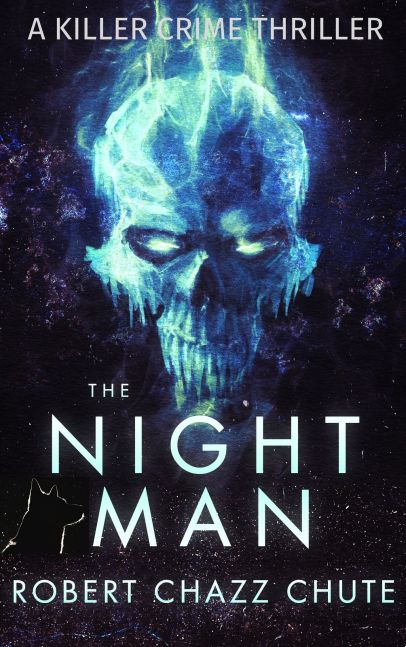
You can pick this ebook up for free today at this link: http://bit.ly/TheNightMan

Join my inner circle at AllThatChazz.com

See my books, blogs, links and podcasts.

Enter your email address to follow this blog and receive notifications of new posts by email.

Join 2,063 other subscribers