C h a z z W r i t e s . c o m

See all my books at AllThatChazz.com.

Is your fiction “just made up”?

Recently I heard an author complain about a poet because she hadn’t done any research. The poetry was about prostitutes, their struggles and how they reacted to being raped. No interviews! No research! Worse, the poet had made the (hyper)critical error of not actually being a raped prostitute herself. The poet simply made up a story for her poem based on her own imagination. No, I haven’t read the poems, but I don’t think I need to know the details of particular human tragedy to extrapolate the feelings of violation that must entail. I’ve read a lot of fiction that was clearly “just made up”, but the writers I love still strike a common chord of humanity that spur me to cry, get angry and get engaged.

The writer was disgusted with the poet because she “just made up” her fictive poetry.

“Beyond the pale!” she said.

I’m skeptical of proponents of research, especially if it falls into the category of “exhaustive.” It’s not that knowing your stuff is a bad thing. It’s that knowing your stuff can often lead to recording instead of creation. (Sometimes military thrillers beat you over the head with the research so hard, you’d think the serial numbers on the missile casing is more important than the nuclear warhead exploding over Miami.) For me, the authenticity of the enjoyment of the writing — the feelings stirred — trump the details of the particular brand of cigarette available in certain cities at certain times. Which is a fancy way of saying I don’t give a shit as long as the story is plausible within its own world. For instance, do all prostitutes read Proust? It’s probably not required reading, but you could easily convince me one prostitute reads Proust if you can write a convincing context.

Is it necessarily better fiction because it springs directly from the real world? Kevin Bacon went back to high school for a day before filming Footloose, for instance. Do you think that was crucial to performing what was already in the script? And if the writer of the script hadn’t grown up in a repressed town that outlawed dancing, would Footloose be any less awesome? (I refer here, of course, to the original Footloose. There’s a remake, but I decree it shall not be discussed and anyone associated with that abomination can go shoot themselves in the face…I digress.)

There is a dangerous trend in fiction that many writers think is required. It goes like this: If you’re going to have anything to write about, you have to go have a lot of experiences, many of them bad. That’s the dry, sterilized version. In practice, it’s more like this: You can’t write about rehab unless you’re an alcoholic or a junkie first. Terrible life choices make for great writing, assuming you don’t kill yourself in stage one of the writing process in which you’re actively pursuing bar brawls each night. Unless you’ve experienced what you’re writing about, it’s not authentic enough.

And I call bullshit. It’s fiction. Make it up but make it seem real enough that I can suspend my disbelief. We all have human experiences and we can imagine pain and transfer it to the page. You’re experience doesn’t have to be exactly what you’re writing about. Otherwise, you’re not even writing fiction. That’s memoir.

About fictive memoir (since this case inevitably springs to mind): Some people bought into the overhyped nonsense around A Million Little Pieces because James Frey fictionalized some of his “memoir” of addiction (after first shopping it around as a novel.) Nobody gives David Sedaris a hard time for doing the same thing to very humorous effect. Also, a lot of people also said that A Million Little Pieces helped them kick their addictions, even though some of it wasn’t real. Placebos often work on people, even when they know it’s a placebo, so what’s the harm in a book that’s 80% correct to the facts of one junkie’s life and 100% true to the feelings of thousands?

I have censored myself when my fiction didn’t pass my personal standard for believability. I admit I have recently dumped two short stories involving military personnel because, though I grew up around the military, I’ve never been in the military. I just wasn’t confident enough that I had the details quite right. I was writing about people, but I didn’t think the environment they swam in was there to deftly suspend disbelief. However, I have written stories from the perspective of old Asian men, a little girl, an autistic boy, adult women and a gay dinosaur.

For the record, I have never been a gay dinosaur

(not that there’s anything wrong with that.)

A few years ago a group within PEN Canada insisted no one could write about the minority female experience except minority female authors. I think that idea kind of fizzled because of the unrealistic limits (and ghettoization) such a policy could lead to. First, it was censorship, which most writers are against and (Thank Zeus!) there wasn’t a way to enforce the decree, anyway. Second, its logical conclusion was that black women could never write about white men. We would all have to conform to our stereotypes and human beings are way more variable than our stereotypes. After a short hullabaloo, the idea lost traction. Shakespeare, after all, was not Italian and never saw Verona.

We’re often told “write what you know.” That would leave a lot of sci-fi and fantasy out of our lives. Instead, I suggest you write what you care about. Write what you can make me believe. If someone doesn’t think you did a good job of recreating their real experience, they can go ahead and write their memoir so the heroine smokes the authentic brand of cigarette (good for Writer 1, but I’m fairly certain I still won’t give a shit.)

Fiction is a work of the imagination.

It’s our job as writers to make it believable.

It’s our job as readers to get into the spirit of the art instead of looking for things to bitch about.

Filed under: authors, censors, censorship, movies, Poetry, publishing, Rant, Rejection, writing tips, , , , , , , , ,

Self-publishers and the traditionally published (not versus)

I spotted it again today and frankly, I’m kind of tired of the narrative

that all self-publishers are a bunch of talentless hacks.

I can think of quite a few traditionally published authors who fit that category.

This is not to shit on the traditionally published.

This is simply to suggest that everybody ease up on the “everybody sucks but ___ ” rhetoric and the gatekeeper drama.

There’s room for everybody without getting too emo about it. You might even end up trying both routes.

Discuss.

Filed under: publishing, self-publishing, Writers, , , , , ,

Writers: Not everyone will love us. I’m okay with that.

AllgemeineGesichts-Hals massage

Image via Wikipedia

I’m a couple of months away from writing and publishing full-time now. After 18 years as a massage therapist, I’m seeing an unflattering commonality between professions. Writers and massage therapists both seem to want respect desperately. And that’s the problem.

As I move into writing full-time, I see some of the same mistakes among the self-published that I witnessed in my (soon-to-be-former) occupation. Massage therapists want respect so badly they often give up their power to other health care practitioners and bureaucrats . That’s not how to gain respect. They should get respect by doing great things rather than trying to regulate to the lowest common denominator. (But that’s another rant about having a shred of dignity for another time and place.)

As writers seeking respect, we must give respect, but not require it of others artificially. Instead of respect, I suggest we seek out a readership.Respect must arise organically from circumstance and accomplishment. We have to do what we do well. That is all that’s needed. There’s a lot to that process, of course. Writing well, editing well, proofing well, formatting well, publishing with as few mistakes as possible…makes the head spin, doesn’t it? Most of all, tell a good story that keeps readers engaged. Sell a lot of books. Ultimately, sales will really get the attention of naysayers (and then they’ll really get cranky with you!)

Until then, self-published authors are called wannabes, amateurs, pretenders, unvetted, unproven, and unserious hobbyists.

Don’t worry about that.

You can mount a number of logical, fiscally sound arguments worthy of Joe Konrath, but until you deliver on the numbers, you’re just another “one of those.”

Sales figures aren’t subjective.

In my crotchety opinion, the best thing self-published authors can do is stay the course and ignore naysayers. Don’t even try to convince them. Let your success with readers be your argument. You know why, right? Because some publishers and critics and traditionally published authors don’t want to concede anything. They don’t want to give what you’re doing any respect. They fear change. They don’t want to like you. Maybe that will come later. (I’m not saying all critics and legacy authors want to dislike you, of course. However, the naysayers are loud and already get too much attention. They can hurt your feelings and sap your motivation if you give them your energy.)

You know who does want to like what you do? People who like stories. Readers. Readers and writers are not the same group. Readers differ from writers in number, grammar fetish, decibels, expertise, enjoyment and predisposition. Readers want to like your story and they want to like you. Cater to the right audience and maybe someday the naysayers will come around. If they don’t, either you didn’t do a good job or they are very determined snobs. If it’s the former, improve and carry on. If it’s the latter, screw ’em. Not everybody has to love you.

Wanting love without needing it from just any bonehead?

That’s the beginning of self-respect.

Filed under: DIY, ebooks, getting it done, self-publishing, Writers, writing tips, , , , , , , ,

Truman Syndrome & the writerly mindset

While sipping the best coffee ever at Coffee Culture, I saw a handsome, young black man standing across the street. Beside him sat an elderly white woman in a wheelchair.

I swear this is true: I watched him light a very fat joint, take a hit and pass it to the old woman. Without looking at him, she took a hit and passed it back. This wasn’t merely unexpected. It was surreal. As he rolled her out of sight I thought there was a story there but I wasn’t sure yet what it would be.

As I headed home, I had a Truman Syndrome moment. Everything looked slightly fake, like I was on a movie set made just for me. An old man with a nose like The Penguin’s beak and horrible posture scrabbled across the sidewalk as if pulled along by his cartoonish nose. At the same time, a woman ran the other way in a gait that looked…contrived. She wore a pastel green blouse that matched her socks and she ran like she was holding back a terrible case of diarrhea and trying to hop in time to an urgent nursery rhyme.

If I were to see each person individually, it would just seem odd. However, the juxtaposition of all of them made them not real people, but characters. As I scanned the sidewalk, everyone looked like an extra in an early 90s low-budget movie. I could picture the AD whispering instructions to concealed earpieces for each passerby. “Keep moving! Don’t look at the camera. Don’t look at the actor! Don’t look at Chazz! He still has no idea!”

The sense that everything is slightly off, somewhat “presented”, and utterly skewed? That feeling hasn’t left me all day.

I’m either in a writerly mood or this is a narcissistic psychosis.

Not that those conditions are mutually exclusive.

Filed under: What about Chazz?, Writers, Writing exercise, , , , , ,

TOP TEN: What used to be cool

I used to think people don’t change, but we do, around the edges.

Here’s my list of what used to impress me…overly.

1. Movie memory: My wife remembers where we were on vacations. She recalls the restaurants, the sights and the good times. I can’t remember any of that. My memory box is stuffed with movie dialogue. In fact, that’s my super power. My parents owned a video store and I watched at least two movies a day for years. If you’re watching a movie with me and I feel the urge to show off —a sad, dependable occurrence — I’ll jump in and tell you the next line before the  actor can deliver it. It doesn’t have to be a great movie like The Karate Kid. It could even be The Karate Kid 3.

I’m briefly, ridiculously, proud when this happens and She Who Must Be Obeyed smiles tolerantly. But it’s not a super power that saves babies from house fires. I can’t monetize it. Any memory that’s at all useful, and much that isn’t, can be found on the web. Every time I hear a podcast where the host and guest speculate about what happened, which movie was what and who was Miss October 1993, I think: Look it up! We don’t need our pitiful brains anymore for trivia!We’ve got Wikipedia and the hive mind! Google it!

If our experience makes us what we are and all I’ve got is movie dialogue?

I. Am. Screwed.

2. Unguarded moment memory: Yesterday I chatted with a college buddy on Facebook. We have a strange friendship because: on the political spectrum, I’m Lefty Lefterson, he’s to the right; he loves debate and I love people who agree with me too easily; and we weren’t that tight in college. We even came close to getting into fisticuffs once. And what’s more? He doesn’t remember it. I have joked with him, somewhat passive aggressively, that I remember all his unguarded moments. We spent very little time together at school, but for some reason, as soon as I was around him, my brain box was wired in to his every utterance as if he were on film. (See #1)

One incident in particular became a source of hilarity: In the journalism school newsroom, he looked at me and then he ogled my girlfriend (who years later became my wife.) “How could a guy like you get a girl like that?” he asked, genuinely dumbfounded. I was a tad sandpapered by that at the time. Now, as I write this, I’m suppressing a giggle. He’s a supportive, funny guy who manages to think and smile, often at the same time. I don’t have that capacity and I admire it. But my wife’s still hot.

When I bring up unguarded moments from the past, my buddy has a certain lopsided smile of chagrin. I confessed to him yesterday that I have an eidetic memory for everything he said or did in college whenever I was within ten feet of him. (No, Marvel Studios won’t be making a superhero movie about this mutant power, either.) I told him that if I were him, I’d kill me.

But we’ve found transcendence. We laugh a lot. And I’d rather laugh than remember #2 sandpaper moments from the dead past.

(I’m an asshole for carnivoring yesterday’s conversation and bringing this up at all, so this was the last time.)

3. Domination: I used to watch Bruce Lee, Chuck Norris, Jackie Chan and a host of Hong Kong martial arts movies obsessively. The idea that one man could dominate others with precise kicking skills was attractive. Now it strikes me as silly, simplistic and repetitive. Back then, I aspired to — this is really embarrassing — a whole whack of macho bullshit. As I edit my books, the theme that macho doesn’t mean mucho comes up a lot. Many of my stories explore how men relate to men, how men relate to women and how to be a man without devolving into a bully or a pussy.

I’ve figured out that my need for domination wasn’t rooted in strength.

That bullshit was all about fear.

4. Being a loner: I grew up in the ’70s and ’80s, so I wasn’t brought up by parents, but by movies. And what do all cool movie gods have in common? They’re alone.

Dirty Harry didn’t have to pick up the kids from daycare. Except for Casablanca, even bulldog-faced Bogey got the girl. The movie was about the getting, never about enjoying the having. Bachelors are available and open to romantic and adventurous opportunity. They don’t have to arrange a babysitter before they go on safari or take up a mission. Martin Sheen wasn’t on screen debating about who left a ring in the tub after the crazy caper to tunnel into the bank vault in Loophole. Heroes were alone and liked it until they chose, at the end of the story, to start a new, more mundane, domestic story. The few female heroes of that era were largely  indistinguishable from men. The glamorous life was not a life that included children. All movie heroes (who aren’t superheroes) were, and are, marvellously egocentric.

Since I’m not-so-marvellously egocentric, emulating The Loner with a Mysterious Past or The Last Honest Man seemed a good thing. I need space and a buffer zone and time to myself, too! I’m a writer. Of course being a loner was the key to happiness!

But I was confusing fiction and reality. 

Being a loner in real life isn’t glamorous. It’s lonely. 

5. My library: I’ve been getting rid of a lot of books, but I still have a lot of books. My collection not only conveys to visitors that I’m bookish. It says, I’ve found an alternative way to further insulate my home. Look at all those books! See? I must be smart. Please love me! Respect me even though I prefer books to interacting with people!

SAT question:

A doughy guy in a midlife crisis is to an expensive red sports car

as you are to…?

Choose one:

A. The hypotenuse of the square

B. John Adams

C. the Bill of Rights

or D. books.

Yes, D was the correct answer.

As my e-readers fill up, the walls of books look less like a personal statement of integrity and more like (Krom forgive me) clutter.

My new policy with paper books is to sell them or give them away once I’m done with them.

If all that macho bullshit was about fear,

my hoarding is about low self-esteem.

6. Anger: I mistake self-righteousness for being right. Often.

I always loved that line from Dr. Bruce Banner just before he turned into the Hulk: “Don’t make me angry. You wouldn’t like me when I’m angry.”

You know what I’ve figured out about readership with all the blogging I do?

People don’t like me when I’m angry.

People like me when I’m honest and authentic.

Well…most people. Fuck those trolls.

(See what I mean?)

7. Heroes: My daughter asked me who my heroes are. Her first guess was, “Kevin Smith, right?” A few glib, funny answers sprang to mind, but she had that earnest look on her face, so I went serious and gave her the true, complicated answer.

I like Kevin Smith a lot for his independent spirit, wit and smarts. We agree on a lot. He’s definitely Top 10 material, though I get the feeling he’s also a mercurial god who can be moody. Maybe that’s why I relate to him. But I’m lucky because I know my top heroes personally. They aren’t nationally known, but they should be.

My heroes are celebrities in small circles who lead by example:

Anne is the bravest woman I’ve ever known. She suffered greatly from a terrible disease, nearly died several times, and overcame it all to rise again from her electric wheelchair and walk again. She remade her life long after most of us would have given up.

The late, great Reverend Johnny T. Collins was the single best Christian I’ve ever known. My love and respect for him hasn’t changed a bit though I became an atheist after his death. It would grieve him enormously to discover that I became an atheist largely because of his death.

One of my best friends (I’ve mentioned several times in this blog) is Peter. He has a super power that’s much more useful than mine: Peter makes friends easily and unselfconsciously. Few people have so deep a capacity for joie de vivre. He’s forever the Big Man on Campus no one can hate. (As opposed to the other Big Man on Campus, the smug bastard who led the football team and everyone secretly hoped would get leprosy.) Everyone is richer who has Pete in their lives.

And number one? I’m a very lucky man because my wife is hero number one. She’s the single most kind and generous person I know. (Also, as previously, pervilly mentioned, hot. Really can’t go without mentioning that.) It makes sense that the woman I’m married to must be a paragon of patience.

The heroes I know as individuals are beyond cool. But heroes as a class of people to look up to? No. Heroes as a group are overrated. Kevin Smith, for instance, idolized Brice Willis until he worked with him. I’ll never forget Kevin’s look of regret and disappointment when he stared at the floor and said, “Never meet your heroes, man.”

My heroes are stellar people who are my friends and family. They are people I can rise to be among and still belong. Any hero worth the title empowers you, assuring you that you can be a hero, too.

Don’t just watch heroes. Be one. 


8. Greatness: Perfectionism is self-hatred or, as writer Mur Lafferty says, “It’s okay to suck.” I write books. I’ll begin making them available to the universe this fall. The universe may or may not notice. That’s okay because this is what I do now, whether it goes big or stays small. Of course I want all my books to be made into movies and checks in the mail, but that sort of all-or-nothing thinking will hurt and hold me back. Last night I was up until two finishing a draft of my third book. I had stamina because I was excited about what I was creating. I wasn’t living in the future, thinking about accolades from strangers from whom I desperately want love, respect and money. I do want those things. But writing is about how to make the story more clever, more funny and more surprising. I get brain tickles from the dopamine kick of doing my thing.

Enjoying the journey is the only way to get to the destination.

BONUS:

We learned in The Matrix “There is no spoon.” There’s also no destination. It’s all a journey.

CHAZZ PARADOX:

Knowing there is no destination allows you the chance to get to the destination

(Yup, I have a minor in philosophy, studied Zen and yes, that was annoying!)

9. Ego: When I started out as a therapist, I put on my ID badge and my shoulders went up and my chest went out, much the same way Erik Estrada always substituted posing for acting on CHIPS. I walked into my clinic, “The Expert.” I didn’t know it at the time, but this was self-aggrandizing bullshit I used to meet challenges I wasn’t sure I equal to.

Ego can make you do stupid things. Longer. Everybody needs self-esteem, but too much ego pushes people away and makes you a prick. As a prick in rehab, I know.

Ego leads to stupid shit, like planking. All over the web you can see pictures of people doing the latest thing: Somebody had the balls to stand up and call it planking. Or, as we used to call it, “Lying down.”

Too much ego betrays the truth about ourselves:

NOT. ENOUGH. SUBSTANCE.

10. Certainty: I used to want to know exactly how things will turn out. That’s part of the whole, living-in-the-future disease. I thought that if I could just get this one thing right, everything else would fall into place and success would be mine. Certainty is poison, though. Success comes from doing a lot of little things right along the way, not from sweeping mission statements (like this.) A need for certainty can lead you to avoid tackling those little things.

For instance, I don’t know how to format my manuscripts for ebook formats. Yet. If I had to know it all before I could start, I’d never get it done. Instead I’m learning as I go and nibbling away at it. I’ll never know it all and get it “perfect”, but eventually I’ll be able to digest enough to get my ebooks done and out there.

Recently I listened to a podcast about how to podcast. There is a staggering amount of trivia to know about podcasting. But you don’t have to know it all to begin. You just have to begin. A need for certainty can give you paralysis by analysis (a confident, oft-spouted aphorisms which must be true because it rhymes.)

George Bush elevated certainty as a virtue over intelligence. (Obama doesn’t convey any certainty, so the culture may have over-corrected on that one. Oops.)

Certainty is a conceptual synonym to dangerous things like patriotism and zero tolerance. When someone comes at me with too much certainty, my bullshit detector rings an alarm. Absolute certainty tells me there’s a loss of nuance, somebody’s a quart low on compassion and probably suffering a dearth of thinking.

And I’m sure of that.

Filed under: Books, ebooks, self-publishing, What about Chazz?, , , , , , , , , , , , ,

Book Review Circle: Growing ideas (& an announcement about great things to come)

Salient points:

1. You won’t review the same author who reviewed you. That’s why we need a big circle. That’s one way to getting solid reviews, too.

2. This is a give-to-get situation where you will only review one or two books a year. Once it’s posted on this site, you can repost your review elsewhere.

3. Check the post below for details on the information you need to send. This helps me match you up with a genre that interests you.

4. Send said information to: expartepress@gmail.com 

Ah, and here’s another grand pronoucement:

I’ll be posting the book circle reviews on the new website (coming this fall.)

This blog will continue, but Chazz Writes is primarily a place for writers interested in indie publishing.

The new site will run concurrently, like sentences for both stealing fireworks and accidentally lighting your school on fire with those fireworks.

The new site will be a place  for readers.

Book Reviews: A Very Decent Proposal (chazzwrites.wordpress.com)

Filed under: authors, book reviews, Books, DIY, ebooks, getting it done, web reviews, What about Chazz?, Writers, , , , , ,

Book Reviews: A Very Decent Proposal

The magnificent Kim Nayyer sent me a very interesting idea

that the self-published among you might just love.

“Magnificent?” you say, skeptically.

Me? I don’t say anything. Instead I whap you on the nose with Kim’s rolled up bio: Peter Parker and Marian the librarian’s love child. Selects and edits creative non-fiction submissions to Victoria’s Island Writer magazine. Writes book reviews, mainly of children’s literature and adult legal texts, to the extent those genres are distinct. News and information junkie. Proved her good citizenship by writing a blog for Canada’s public broadcaster during the recent Canadian federal election. Her website is http://www.kimnayyer.com.

Here’s the email Kim sent:

What a coincidence that I spotted your video book review today (nice!). Coincidence because a couple of days ago I was going to suggest to you a book review corner on your site, a corner restricted to reviews of self-published or e-only or e-first books, something along those lines to give a platform to the non-traditional market.

Recently a twitter contact  asked me whether I was able to review his book. I checked with a couple of my outlets. One only does Canadian books (and the guy’s in Portland) and the other only does pre-release publishing house books (and he’s self-published and the book came out earlier this year).I thought of you and your forthcoming books, and I thought of a couple of local self-published authors I know and how hard one of them works to sell her book.

My idea is not that you do all the reviews yourself (unless you want to, say in videos), but that you get a roster of a handful of decent writers/vloggers, perhaps other self-published authors, to do them as guest posts or to commit to doing one or two a year each, or perhaps in exchange for reviews of their books. The authors of course would send you or the reviewer free review copies of their books.  

Think it’s workable?

I love that idea! How about it, self-published party people?

If you’re a self-published author and want:

1. Your book to be reviewed, and

2. to review a couple of books a year

then, 3. Email Chazz at expartepress@gmail.com with:

your name, book title, genre, book length and what genres interest you for writing book reviews. I shall attempt to match up the compatible submissions and we’ll take it from there. Also, if you have suggestions, let me know. I do love the idea. I just haven’t thought much about what the protocol should be.

The self-published can support each other. As it stands, The System and The Man wants to keep you down. Let’s subvert The System, kick The Man in the crotch and spread the word about our books.

Yes, Kim the Magnificent. I think it’s workable!

GO INDIE! 

Filed under: authors, reviews, self-publishing, web reviews, Writers, , , , , , , , ,

The Author Selects the Agent Scam

Writers’ magazines occasionally run stories on “how to select an agent” or some such nonsense. Sure, you can check Preditors and Editors and ask around about particular agents, but the power differential between authors and agents is, well…the word “egregious” comes to mind. (In fact, that’s the same word that came to mind for Kristine Kathryn Rusch. See below for that most excellent link.)

When you submit work to an agent (note you’re already in submission and they are in dominance from the get go) it’s kind of like applying for a job. You send out a resume (your manuscript proposal) and agents say no. And more agents say no. Repeat until doubt and self-loathing kicks in.

When you do finally get the call, you’ll say yes to anybody.

Pick your metaphor: 

1. It’s the end of the world and don’t you want to experience the act of physical love just once before you die?

2. You’re a serial killer/diabetic and the warden says they’re fixing the electric chair and would you like your first and only chocolate éclair before they electrocute your ass?

3. The vampires have risen and this is the last sunset before Dracula’s armies of the undead close in on you, the last human survivor on the roof of The Mall of America. Suddenly Carrie Moss shows up piloting a helicopter. Do you jump on the rope ladder to safety? Or do you negotiate so she wears an even tighter leather outfit like the one from The Matrix?

Answers:

1. Of course, devirginize!

2. Eat that éclair. The sugar won’t have time to migrate to your rotten pancreas.

3. Board that helicopter and maybe you’ll live long enough for the sequel!

If you’ve run the long gauntlet of trying to find an agent, or just heard a few horror stories to that effect, you sign that contract as fast as you can. You’re closer to publication than you were, so an agent calling must be good, right?

“Must” is a strong word. In fact, read The Passive Voice  and you’ll be running to publish yourself after all. It’s about enslavement via contractual obligations that go on forever. This is scarier than anything Stephen King could possibly dream up. 

Passive Voice also links to Kristine Kathryn Rusch, which you should also read before you do anything. Don’t even poop before reading this.  

Before you put on that electric collar and tie the leash around your genitals, read your contract carefully. Make informed choices. Show contracts to a lawyer. Negotiate the egregious. Take responsibility so you hire the agent, not the other way around. And always be willing to walk away from any deal. Walking away may be the only way to get a decent deal.

Related articles

Filed under: agents, authors, DIY, publishing, queries, Rant, Rejection, Writers, writing tips, , , , , , , , , , ,

Publishing: Ownership

Ever see the follow-up to Get Shorty? It was Be Cool with Uma Thurman and John Travolta. While generally entertaining, there was a sour note and just didn’t feel at all right. It’s a problem with a lot of artistic gestation.

Uma’s character confesses her life’s ambition. She wants to turn on the radio and hear one of her songs. She says, “A song I produced.”  But she’s not talking about a song she wrote or sang or drummed or strummed. She’s talking about the bureaucracy that brings the art out and to the masses.

Producers talk about “their” films, “their” writers, “their” stable of talent. Like they own that talent, or at least rent it. When I hear an editor or agent refer to “their” writers, entitlement and ownership creeps into their tone. “I tell my writers…” “My books….”

But they aren’t your books, films and music, are they? Bureaucrats, like the rest of us, are each the star of their own movie. Money and access has been the root of that uneven power relationship.

Key words: Has been. Now agents and publishers are struggling harder to justify their roles. Why do you need an agent for access to digital publishing when you can DIY? Why should an author only get 25% for ebooks? (Or Harlequin’s egregious offer of 8%!) Meanwhile, some agents are morphing into writing coach services, expanding their offerings to stay in the role of taking care of authors. Some authors want to be taken care of. That’s fine, as long as they know their options.

The writer has been the last to get the cash. The writer has written on spec and often been a “speck” in the way they’re treated. It’s upside down. Writers are content providers. We make up things from nothing.

If you still feel powerless before the system, a small cog in a great machine, a serf among lords, a peon The Man pees on—now you’re just doing it to yourself. Take ownership of your ambitions and destiny.

Don’t blame them.

If you want power, don’t ask permission.

Just go take it.

I did. I’m now president and chief bottle washer, turd polisher and executive in charge of toilet paper replacement and Creative Arts at Ex Parte Press. Boo-ya!

Filed under: agents, authors, Books, DIY, ebooks, Editors, getting it done, Useful writing links, Writers, writing tips, , , , , , , , ,

Four Traits of Successful Writers (Besides, You Know, Writing Ability)

Guest post by Marjorie McAtee

Skill and talent go a long way towards making a successful writer. But being a writer takes more than just skill and talent – it takes a strong character, as well.

People always ask me, “What qualifications do you need to be a writer?” And I answer, “None, really.” To be fair, if you’re trying to break into a specialized niche, like journalism, a degree in the field is usually necessary. But, if you paid attention in high school, you already know all about grammar, composition and style. With study and practice, anyone can learn to write well. But becoming a success as a writer, creative or otherwise, requires traits and qualities that can’t be learned in school.

1) A Successful Writer Holds Herself Accountable

If you want to be successful – in writing, or in life – you need to play by the rules. Do your own work. Respect the work of others. Treat your clients fairly; do the best job you can, and don’t cut corners. Be honest and upfront; if you don’t have the skills to take on a particular project, or if you need a deadline extension, say so. Remember the Golden Rule; if you have a problem with a client or colleague, respect, tact and courtesy are your greatest assets.

2) A Successful Writer Loves to Write – And I Mean Really, Really Loves to Write

I’m sure few people would disagree that it’s crucial to love what you do. As a former job-hater myself, I can vouch that it’s hard to feel fulfilled when you’re not fulfilled in your work.

I can’t even tell you how many times I’ve heard, “You’re so lucky to be able to do what you love.”

That’s right. I am. I went pro because I love writing more than anything else. It doesn’t even matter what I’m writing about. I’ve been writing professionally for a couple of years and in that time I’ve written on at least a dozen topics. Even the most interesting projects can become mind-numbingly dull when you’ve worked on them for a few hundred hours. Some are just mind-numbingly dull to begin with.

But, two years on I seem to know something about everything (my friends call me “Google.” That’s how bad it is). And I still love the writing. No matter the subject, the mere act of researching, organizing and writing an article or blog post or page of web copy gives me pleasure. It makes me happy. It takes me out of my head and away from my problems. After a long day of writing for my clients, all I want to do is write some more. I always have a story, an essay or a poem in the works.

Some say it takes discipline to be a successful writer and I’m not saying they’re wrong. If you have a day job, it takes discipline to get up early and stay up late to do the writing. If you have a rich spouse or your grandma left you ten million dollars – it still takes discipline. Even if you don’t have any of those things and you rely solely on your writing work for income, it’s all too easy to just go back to sleep or take off early and go out with your friends. No one will to tell you to get to work; you have to tell yourself.

And where does that sense of discipline come from? Not from a need for money, approval or success. It comes from love. If I didn’t love this, I’d quit yesterday.

3) A Successful Writer Never Gives Up

I have plenty of writer friends — some career writers, some doing it for pocket money. Others keep their stories, essays and articles confined to Facebook, personal blogs, or, worst of all, a notebook in a drawer. These are the friends who say, “Gee, I’d really like to be a writer, but I just don’t know.” They want to be a writer the way some people want to travel Europe. They’ll talk about it for the rest of their lives but they’ll probably never do it. Maybe they tried once, didn’t succeed, and gave up.

And I can’t blame them. You hear these stories from famous authors who say they could paper the walls of their home, inside and out, with rejection slips. Those stories are true.

Publishing is a hard industry. It may be the hardest. Great manuscripts go into the trash unread every day because they arrived unsolicited, or the editor didn’t like the first sentence or it was a day that ended in Y. If you’re writing content, most people won’t even pay you minimum wage. Writing is the most under-valued skill in the world.

It’s not enough to want to be a writer in an idle sort of way. You have to want it more than you want anything else. You have to want it more than you want food, or sleep, or friendship, or approval, or vacations or sick days. You may have to give up all of those things to get it. You’ll try and you’ll fail. You’ll try harder and you’ll fail harder. You’ll try harder than that and you’ll fail harder than that. You’ll try even harder still — and guess what? You’ll still fail.

Sit down, cry, wail, moan, complain, tear your hair out for the unjust world. When you’re done, try again.

4) A Successful Writer Believes in Herself – Because No One Else Will

I’ve wanted to be a writer since I wanted to be anything. I wrote my first short story when I was four. I didn’t know the alphabet yet so I made one up. When I tried to show the story to my mother, she said, “Not now, honey, I’m busy.”

Okay, so obviously I wasn’t doing myself any favors by writing in what looked like a prototype of WingDings. Maybe some people have more supportive families or more considerate friends. I’d be lying if I said I’ve had no support at all.

But, for every one person who’s supported and encouraged me, there have been ten who’ve told me I’d fail. My mother insisted I train as a teacher so I’d have “something to fall back on” when the writing thing didn’t work out. When I start to talk about my current creative project, eyes glaze over and the subject changes. When I tell a new acquaintance what I do for a living, the response is often, “Yeah, but what do you really do?” Or  sometimes they just laugh. Even if they pretend to take me seriously at first, eventually they’re bound to ask, “So…do you um, ever, um, sell any of your articles?”

When I complain about not having enough work, I’m told to “get a proper job like the rest of us.” If I brag about having a lot of work, I’m praised like a puppy learning to widdle outside.

Everyone else is “pursuing a goal.” I am “chasing a dream.” Writing is a hobby, not a profession. Few will take your writing goals as seriously as you do. People will laugh and point, and laugh some more, even after you’ve proven yourself time and time again.
Let me tell you a secret about these people: they’re idiots. Ignore them.

They don’t know you like I do.

Marjorie McAtee has been writing since she was old enough to clutch a baby pencil in her chubby little fist and she will be writing till you pry that pencil out of her cold, dead hand. She writes SEO content and copy to make ends meet. Her work appears in print journals including The Blotter and Center: A Journal of Literary Fiction, and online at Amarillo Bay and Flashquake. She blogs about stuff and things at Don’t Call Me Marge. You can follow her on Twitter @marjoriemcatee or find her on Facebook.

Filed under: Guest blog post, Writers, writing tips, , ,

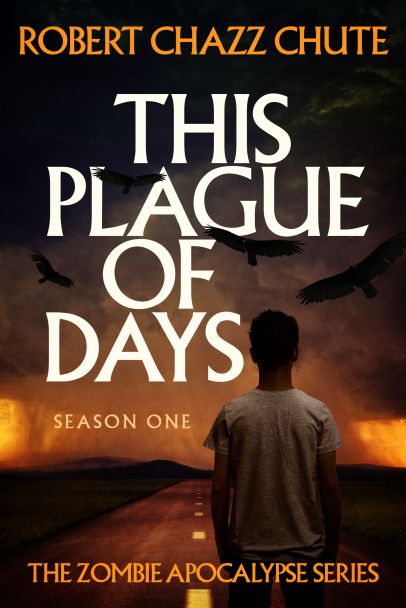
Bestseller with over 1,000 reviews!
Winner of the North Street Book Prize, Reader's Favorite, the
Literary Titan Award, the Hollywood Book Festival, and the
New York Book Festival.

http://mybook.to/OurZombieHours
A NEW ZOMBIE ANTHOLOGY

Winner of Writer's Digest's 2014 Honorable Mention in Self-published Ebook Awards in Genre

The first 81 lessons to get your Buffy on

More lessons to help you survive Armageddon

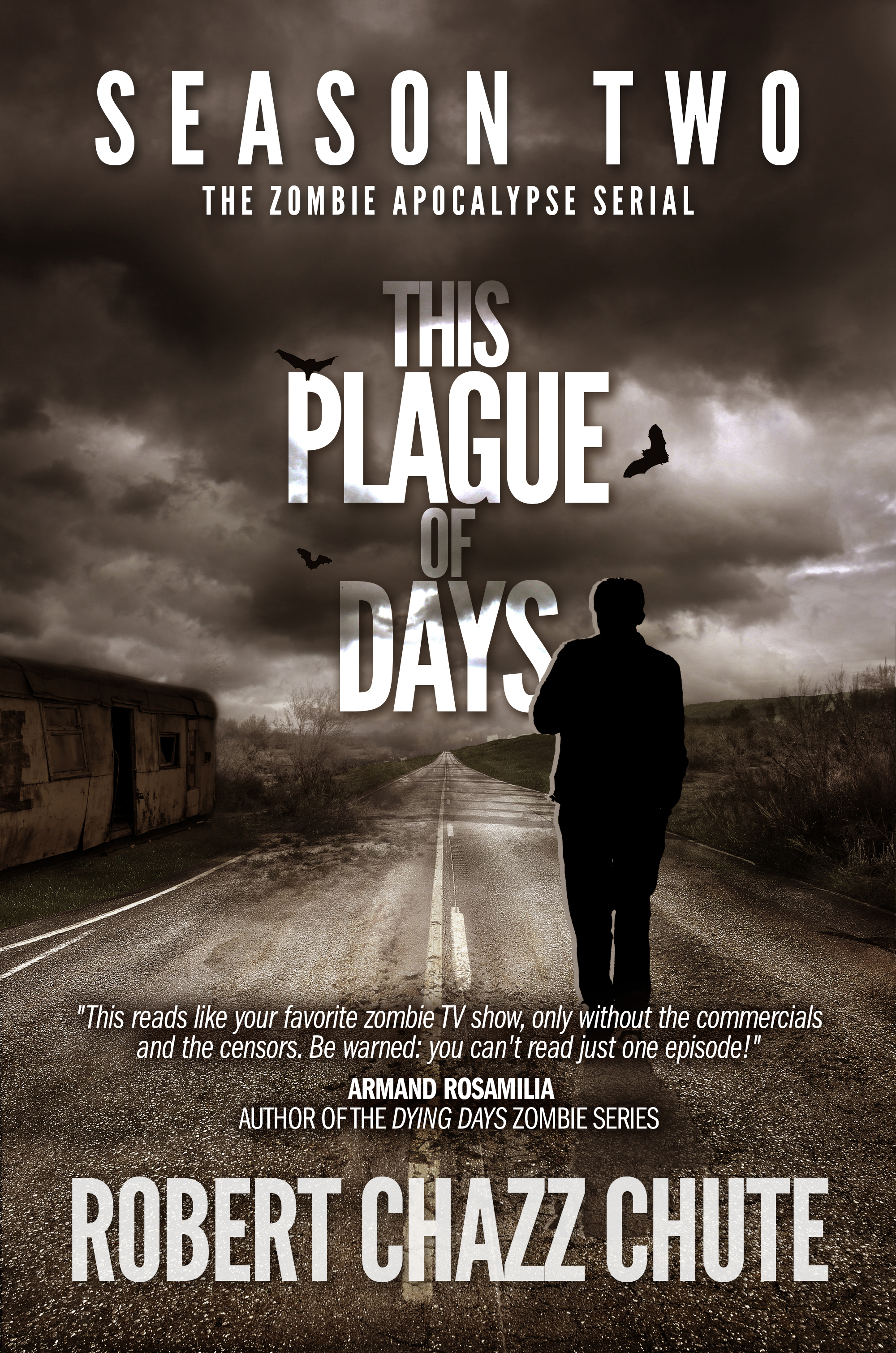
"You will laugh your ass off!" ~ Maxwell Cynn, author of Cybergrrl

Available now!

Fast-paced terror, new threats, more twists.

An autistic boy versus our world in free fall

Suspense to melt your face and play with your brain.

Action like a Guy Ritchie film. Funny like Woody Allen when he was funny.

Jesus: Sexier and even more addicted to love.

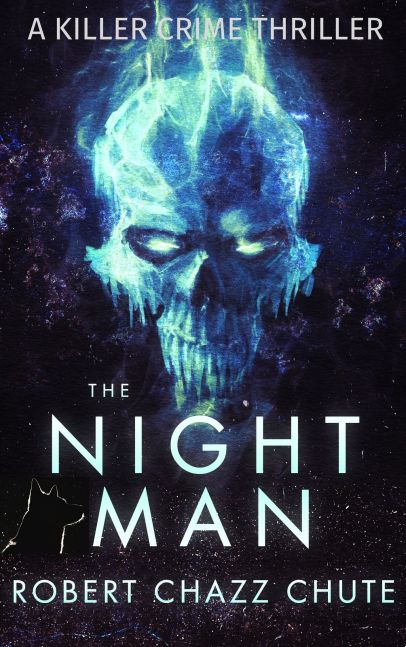
You can pick this ebook up for free today at this link: http://bit.ly/TheNightMan

Join my inner circle at AllThatChazz.com

See my books, blogs, links and podcasts.

Enter your email address to follow this blog and receive notifications of new posts by email.

Join 2,063 other subscribers