C h a z z W r i t e s . c o m

See all my books at AllThatChazz.com.

Editing Part III: The joy of editing

The Chicago Manual of Style, 16th edition, 3rd...

I just received the gift of a book in the mail. I had already read this book but I was very pleased to receive it. In fact, I’d gone through this particular book in meticulous detail. The author signed the title page for me and graciously thanked me for my advice. The book in hand was a bonus for editing the work.

Editing is such picky work. I zip into and out of the on-line Chicago Manual of Style a lot. I tweak here and economize there. No matter the level of the edit, the key to good editing is asking the right questions.

Here’s a sample of the sorts of questions that run through my mind as I work:

Should that be 18th Century or Eighteenth century? Should I leave a quirky passage alone to keep the author’s voice or is the joke too much of a reach? Should I suggest new elements? Does the material make more sense if it is reorganized? Does this follow logically from that? Is that assertion a fact? Is that translation correct? What design elements could I suggest to make the book pop? What elements could I suggest that would convert a browser into a buyer? Is there an opportunity missed here? What marketing strategy could I suggest to make this a book with real long-tail potential? What’s missing? (That last one can take the work to a new level.)

In short, a good editor or proofreader will question everything.

An experienced editor will pick up on what’s on the page and what’s not there that’s hurting the book.

In the end, I let it go back to the author to decide which of my suggestions to act upon. When it’s done, the author’s name is on the front cover. I always say some variation of: “She’s still your baby. She’s healthy and you’ll recognize her. She wasn’t sick but she’s feeling even better now.” The reader will never know how much or how little I did. The job is to make the author look good. (And sell more books.)

And you know what? It’s fun. I’m not gleeful about it in the way I know some editors are. When I was in journalism school and when I worked for a daily newspaper, I ran into editors who were looking for stuff so they could catch you out. It was a game for them and they acted like it was the only way they could find to feel good about themselves. When they caught something—anything—writers got snarky remarks and not just a little passive aggressive indignation. Editors like that are sad and make me tired.

I find editing fun because it’s an intellectual challenge and the collaborative process makes the book better than it otherwise would have been. Higher quality editorial work translates to more authority to the author, more sales for the current book and more sales for the author’s next book. A helpful edit can morph an experiment that didn’t quite come together into a legacy book that will delight, distract, elevate, educate, provoke, redeem and earn for years to come.

A good edit will pay for itself.

And generally? No, an unedited book doesn’t stand a chance.

Filed under: authors, Books, ebooks, Editing, Editors, grammar, publishing, self-publishing, Writers, writing tips, , , , , , , , , , , , , ,

Bookstores: How sick are they?

Cover of "Glass Houses"

Cover of Glass Houses

Recently I’ve seen what I call “backlash” articles* about the health of bookstores. You’ve probably seen them, too. In the wake of the Borders chain closings, some media are hitting back with counter-programming (either out of nostalgia or as a way to stand out.)

Their message is simple:

“We love bookstores and they aren’t all dying. Look at this tiny independent where the defiant owners are making a brave stand.”

I love brave stands. I’m also fond of truth and this is an obvious case where the part is not the whole. It reminds me of all the people who object to the digital revolution with, “Look at all those e-books with all their different platforms. It’s a mess so it won’t survive.” I dislike stupid stands.

Perhaps the problem is confirmation bias. They’re looking for reasons why what will happen, is happening, won’t happen. Whatever bump in the road they find they take gleefully to be an insurmountable obstacle. Actually, multiple platforms for e-books are a sign of health (assuming competition is good in that it keeps prices down and choices up) and of growth (as in growing pains due to rapid, unexpected expansion.) The technology to make us all publishers is developing.

“Developing” implies transition from stupid to primitive to flawed to workable to better to a higher state (and eventually to a new tech.) Instant/indie publishing is not going to be perfect all at once. Nothing is, though not long ago I heard a Luddite say he wasn’t going to buy a computer until the tech wasn’t “perfected.” Hahahaha! He was calling from the corner of Unreasonable Expectations Boulevard and Are You High? Avenue.)

There is  a reductionist view with a subtext that categorizes anyone who predicts the demise of bookstores as a gloating goblin. I’m not gloating. I love bookstores. As (I’ve often pointed out, having milk delivered to the house was convenient, too.)

But I’m not saying bookstores will disappear completely. You’ll just pay more if you want the premium paper product. Heck, you already do that, but the price of old media will rise more. You can still buy turntables, for instance, but if you want to hear the scratches on Billy Joel‘s Glass Houses, you’re paying a very high price for a new needle to make that old pig spin.

Paper books are going to co-exist with e-books for some time…at least until consumers really get kicked in the teeth by manufacturing costs. Books get cheaper when produced in volume, but as digital sourcing rises, e-books don’t have to replace all paper books to make paper book production go from unattractive to cost-prohibitive.

There are too many variables and my brain is too small to say precisely when it will happen. I’m simply confident it will occur and one day, maybe even you will say, “Oh, look, darling! A bookstore! There isn’t a bookstore within 2 days’ drive of our house! Let’s go in and buy coffee and look at their tiny collection. How quaint!”

Yes, Virginia, 100 years from now there will still be paper books.

But you’ll be sewing and gluing the binding yourself.

*Chazz definition: A backlash article is an article written to assure the reader that the writer is the sane voice of wisdom when in fact they’re really just knee-jerk contrarians railing against all evidence. Like how the writers at Slate work from the premise, “We’ll hate on what everyone loves and make snide remarks at what everyone thought unassailable because we’re the sophisticated cool kids! Anything goes as long as it doesn’t agree with Salon.”

Filed under: Books, DIY, ebooks, Media, publishing, Rant, self-publishing, , , , , , , , , , ,

Ahoy, matey! Neil Gaiman VIDEO on why book piracy can be good

I’ve spoken with several publishers on this topic. They knew they shouldn’t do what the music industry did (i.e. sue their own customers) but that’s typically where the thought process ended. At a writing conference I recently attended, there were a lot of worried writers. They worried that someone would steal their stuff.

Don’t worry about it.

It’s either:

1. pretty rare (maybe it’s not good enough to bother stealing—uh-oh!),

OR

2. the people who steal it are power users and curators who are going to read more of your stuff and pay for it and the related products and services you sell  (so be prolific and imaginative),

OR

3. the pirates are scum who never pay for anything anyway so the sale isn’t really  lost. If they weren’t stealing your stuff, they’d be stealing someone else’s stuff instead. (Don’t waste time or base your business model on the lowest common denominator douche.)

Maybe that’s counter-intuitive, but I’d rather concern myself with factors I can control rather than worry about things I cannot control.

Free not only can work, giving to get often does work. You can hide your light under a bushel or put it out there so more people can find it. Scott Sigler built a bestselling franchise, for instance. So did Cory Doctorow, and the list of authors who embrace free and easy access is growing.

Repurpose what you write so more people can find you (and find you interesting.) The churning of information raises sales.

There are some instances of publishers stealing work, but it’s a rare anecdote, especially in an era where, with Google, stolen material is so easy to find. I’ve found a few things stolen from my features and columns in magazines. Usually it’s a case of someone on the other end who is clueless rather than malicious. We just ask that they attribute the material so I get credit and make sure a link back to the source is included. That’s the basis of the Creative Commons model. It’s not really a big deal.

What people forget is, though e-books and web bits are easy to snatch, so is a regular old paper book. When I worked at Harlequin, foreign knockoffs happened often in the  Chinese and French romance markets.)  The text was stolen and lousy covers were slapped on the books. All they needed was a photocopier. Easy, peasy, lemon squeezy.

Consider this: put some or all of your book up on your website (using whatever model you choose: a taste, weekly podcast-a-chapter meal or the whole feast at once) and you’ve got proof of ownership in every time stamp.


Filed under: authors, Books, Publicity & Promotion, publishing, Writers, , , , , , , , ,

Writers: The short form is roaring back

Ernest Hemingway's Grave

Image by gharness via Flickr

I met The Fab Rebecca Senese (I think of her as TFRS at all times) at the Writers’ Union symposium. We went to Tims and went through that excited decompression phase. You know the one. It’s where you are packed with new information to mesh and meld with your old data and you talk fast to get it all out and solidify new, useful neuropathways.

She made an observation that really got my attention:

Amid the hubbub, TFRS said that e-books were a sure opportunity for the short form to make a strong comeback. Got a short flight or need a distraction over lunch? Read a short story or two. If you just want to gulp down a tale but don’t have time for a whole book, enjoy a novella after work.

Makes sense to me. I love short fiction. For instance, it’s a mystery to me why people say they love Ernest Hemingway‘s books, but I do like some of his short stories very much.

Short stories have been relegated to the back of the bus (read: unread literary journals.)

Until recently people have been buying books by weight, so publishers laughed at their puniness and demanded big doorstops they could sell. Length is an issue with paper, constrained as it is by the strictures of the printing press and bookstore manager’s expectations.

Novellas are ignored by many professional critics who often don’t take it seriously because they think the short punch packs less heft behind it. As if we all feel that way all the time.

A good short story takes talent to write and in some ways is a different skill set from the novel. (These critics must be those same twits who scoff at Twitter just because they can’t put together one clever coherent thought in less than 140 characters.)

Now with e-books, the answers to those objections are: Who needs publishers for that? What’s a professional critic and what is this “newspaper” thing you’re babbling about? And lit journals? What’s that? Is all this stuff available online?

Click this link to see  Rebecca Senese’s short fiction.

Please do take a look.

Filed under: authors, blogs & blogging, Books, ebooks, self-publishing, short stories, Twitter, Writers, , , , , , , , , , , , , ,

Writers: Self-publishing resources

Yesterday I wrote about a scenario that appealed to many people. After an encounter with her agent that doesn’t go well, a writer achieves the critical mass necessary for her to go indie.

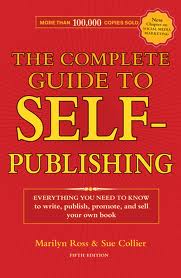
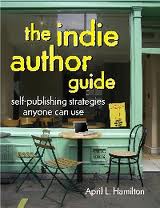
Whether that route is for you depends on many variables. Self-publishing is definitely not for everyone. If you’re wondering if self-publishing is for you, here are a few books to get you started so you know what you’re getting into:

self-publishing_manual

the_complete_guide_to_self-publishing

 the_indie_author_guide

Filed under: authors, Books, self-publishing, Writers, writing tips, , , , , , , , , , , , ,

Writers: The Power of Small (and why press releases don’t work)

A picture of author Carolyn See

Image via Wikipedia

When I worked in a city newsroom, one of my jobs was to go through press releases to find gems. There weren’t many of those clichéd diamonds in the rough. Reporters see so many press releases, they begin to look upon them with suspicion and even resentment.

What’s an author to do? You want an interview. You want your book reviewed. How do you make it happen? The traditional approach was to send out lots of press releases and books. It wasn’t very effective. In fact, sending out a lot of review copies is expensive.

There’s an alternative:

Go small. Go low-tech. Write a note.

This isn’t a practical approach for in-house publicists working for major publishers (but they usually work in short bursts for particular authors, anyway.) The low-tech, patient strategy is for indie authors looking for ways into the media. Unfortunately, publishers focus on very small windows of opportunity. They are looking to move a lot of books quickly (before the book stores send them all back for credit.) Marketing in book publishing has been long periods of silence interspersed with short frenzies. As an indie author selling e-books, you’re opting out of big, expensive and short-term strategies. This isn’t so much for Wiley (publishers since 1807!) authors. This is especially for wily indie authors.

As an independent author and publisher, you can play the long game instead. You can write a note or two a day. One author/guru Carolyn See made it her practice to write a “charming note” every day to an editor or publisher or agent.* Why not to reporters, too?

But there’s a trick to making it effective. You know how I’m always saying that if you want to hit up an agent, don’t look for the big, established names? Agents fresh from the factory who are up and coming in established agencies are better bets. They are still hungry and not as jaded. They don’t hate all queries yet. They still have hope and the scales have not yet developed over their eyes.

The same is true for reporters. The book editor of a large magazine already has lots of books lined up. The independent author has lots of indie-spirit, but most book editors still look down on them. So screw them.

Work on getting into smaller newspapers. Send a charming note to a general reporter who would love to do a cushy author interview instead of chasing some city council member who doesn’t want to speak to them. I’d rather talk to an author than cover a house fire any day.

You know why it will work?

It will work because you will be charming (“Loved that piece you wrote on the local scaled railroad hobbyists so I thought…”)

It will work because general reporters think entertainment reporters have a cushier job (and they’re right.)

It will work because all journalists also want to write a book some day.

And while we’re talking small, send off a friendly email to book bloggers. That counts as a charming note, too.

Ask to guest blog. Bloggers love a break and crave hits, connection, track backs, links and love.

Ask for an author profile. I profile an author on Chazz Writes almost every week. It’s not the New York Times Review of Books, but since they aren’t calling, how about alerting like-minded people to your creations? If you can’t go huge, you can still be ubiquitous.

Instead of just showing up at a bookstore and asking to see the manager, send a charming note ahead of you to break the ice and soften her up for a reading. Better, be even more charming and offer to organize readings for your local bookstore. (Later this year I’ll profile an author who did just that. Not only did he help many other authors, his own career got a boost from building community among colleagues.) 

Your book needs attention. I’m sure you’re already working on developing and maintaining your audience. Don’t forget that etching away at it a day at a time over the long haul can reap big rewards. With patience, you can build your empire. Don’t underestimate the power of a low-tech, targeted, personal and charming note.

These days, the mail is mostly for bills. This approach is more powerful than it ever was because you hate what’s in your mail box. But when you get a letter, you’re excited. It will work because it has worked.

*Read Carolyn See’s Making a Literary Life for details. Or, don’t fool around and head straight to Amazon to buy her book.

 Related Articles

Filed under: Author profiles, authors, book reviews, Books, DIY, getting it done, links, Publicity & Promotion, publishing, self-publishing, writing tips, , , , , , , ,

Writers: Mickey Spillane’s Rule for Selling Books

本の構造

Image via Wikipedia

Mickey Spillane sold a lot of books. Here’s how:

“The first page sells the book,” he said. “The last page sells the next book.”

I was reminded of Spillane’s axiom as I finished the last page of Mr. Monster by Dan Wells. I’m not going to spoil it for you. You’re just going to have to go read it. That book, and his first in the series, I Am Not a Serial Killer, are sometimes harrowing reads. These are books where the author takes risks. John Cleaver is a protagonist you won’t like, but you feel for him, too.

Dan Wells has turned his protagonist, a young sociopath with a dangerous mind, into somebody I’ll follow. I’ll follow the series. Dan Wells is going to sell a lot of books off a character who will make you very uncomfortable.

It was the last line that got me. The really good ones stick with you. The end of Fight Club is a great scene with a neat twist. And William Goldman? He’s the master of the last line that stick a knife between your ribs and gives the blade a half-twist. Goldman’s trick is to make readers comfortable, letting them think they know what will happen next, and then sucker punching them. At the end of Goldman’s The Color of Light I actually threw the book across the room because just when I thought I was safely in the dénouement, he hit me again. 

Lots of writing advice is about baiting the hook on the first page. On the last page, make sure you get the barbs in deep for the next one, too.

Filed under: authors, book reviews, Horror, publishing, Writers, writing tips, , , , , , , , ,

Writers’ Resolutions: Want to see the reason I live?

This is my blessing.

This is my curse.

This is my manuscript!

This is my resolution.

(This didn’t post correctly, so this is the secret link for a glimpse behind the curtain.)

Filed under: Books, What about Chazz?, Writers, , , ,

Writers: The Edge of 2011 Happy New Year Top 10

big bang theory new season

Image by Heavybm via Flickr

Hey Cool People of the Planet! I woke in a sweat very early this morning tormented with thoughts about the annual holiday VISA bill slopped over an undercurrent of vague worries about what would happen if I forgot all my passwords at once. Let’s be honest. Worldwide, this past decade sucked. However, things are looking up in some ways. Time to focus on the positive.

My mind tends to go to the dark side, but let’s focus on today, here, now.

Top 10 reasons today is a great day: 

1. After the arid desert that is Christmas music, suddenly the radio doesn’t suck here at the oasis. For the next two days I’m listening to a marathon of hits from the last decade and rocking out hard.

2. I’m riding high from a marathon of Big Bang Theory (Season One). Despite that neurotic touch of insomnia, I then slept until 1 PM. I win!

3. I’m a columnist for Massage & Bodywork Magazine and I love working with them. My relationship with my editor can best be described as a mutual admiration society of two and this morning a Fed Ex package arrived with all sorts of goodies (corn bread, chili, soup mixes.) It was from the magazine, just to say thanks. That’s rare and wonderful.

4. I just confirmed I have a new editing gig. I’m editing an e-book for a client. I’ve edited books I’m not so interested in but I’m really looking forward to reading this book. Plus, the author is super nice.

5. My own manuscript is awaiting revision. Someone asked me how my book was. “Coming,” I said. “Does that mean you’re still writing it?” “Nope. It’s written. Now I’m editing.” It feels great to say that. I’m focussed.

6. I’ve lost 40 pounds so far and in the next few months will achieve my goal. The holidays were tough, but I’m energized about getting to sexy. At my college reunion, I expect to be the guy no one knows.

7. Just now I found out my article on what I learned from Joe Rogan about book marketing was picked up b Literary Agents & Publishers News. Nice. I’m feeling appreciated today!

8. Tomorrow I’m hanging out with friends and relaxing. The blog’s already prepared and I’m feeling loose in the shoulders. There’s so much to look forward to this year. I’m planning to attend two publishing conferences and I’ll take my manuscript to market.

9.  This is a pregnant moment. There is potential energy coiling in our resolutions as we set out to correct our courses and get our lives on the track we want. It can be done. We know that because it has been done. (Ten Lessons Received from an Evening with Kevin Smith.)

10. I’m happy to be here. I’m happy you’re here. Got any doubts we’ll make it big? Just watch me. Follow me or run beside me. We’re going to make it huge, sweetheart. Bet on it.

Filed under: getting it done, My fiction, publishing, Rant, Top Ten, What about Chazz?, Writers, , , , , , , , ,

Book Marketing: What I learned from Joe Rogan

Joe Rogan

Image by Jordan Larrigan via Flickr

Joe Rogan has one of the most interesting podcasts on the net. You might know him as the Fear Factor Guy, or the ultimate fighting commentator or as Joe Guerrelli, the electrician on News Radio who made his own duct tape. (News Radio is still one of the best sitcoms ever, by the way.) There’s a lot more to him than that, though. He’s a walking, talking brain-stimulant. Plus, he makes me laugh my ass off.

I caught his podcast, The Joe Rogan Experience,  in which he was talking about the challenges of marketing. It was kind of a throw-away comment about the crazy world of stand-up comedy, but I got a lot out of it that applies to books and writers, too.

As a young comic, Joe left the marketing to someone else. He didn’t see his marketing as his job. He was doing stand-up. He didn’t feel he should have to be hysterically funny, crass and thought-provoking and sell the tickets, too.

When he saw how badly people were selling him—or that no one was selling him at all—he took up that responsibility. Now he tweets his shows and promotes himself through podcasting, YouTube, web presence and appearances on radio, other podcasts, etc.,… Rogan’s got a cult. Rogan has staked out his land. He has followers and fans. Joe Rogan is not melting into the background of the culture’s collage.

Many writers still hope someone else will take care of marketing their books. The truth is, unless you were already huge, in most cases your publisher didn’t do a great job marketing your book. They didn’t send out that many review copies. They didn’t publicize you enough. They probably didn’t have the budget for it and if they did have a budget for your book, it was built on short-term thinking. If your book didn’t take off right away, they were off to some other author quickly to try to capitalize on short-term heat and newness. That kind of thinking is going out the window with technology.

Be fair. Publishers have many authors on their list. You’re just one and so their efforts must be scattered. Who can focus on your book the most? You can. Who can spend money on a book launch? You. (That’s what that piddling advance you got is really for.) Writers have long memories and enjoy nostalgia, so some of us are still in love with the idea of writing our books in isolation and never having to interact with a fan, a hater, or the indifferent. It’s time for all of us to get past that ideal and put on our big-boy underwear and big-girl panties. Whether you’re going indie or are with a traditional publisher, the self-promotion side of the business really has been an indie-spirit proposition for a very long time. Don’t feel bad about it, it’s a common misconception. Instead, embrace the energy of the challenge.

Who is thinking about each book on a long-term sales basis? That would be you because publisher’s talk about “their” list, but that book isn’t theirs. It’s yours. Your name is on it so you care about it more than anyone, right? That means you have to take the responsibility it promote it and help your audience find your story amid a sea of books. Daunting yes, but that’s what building your platform is all about.

Who cares more about your book than anyone else?

No one.

Overcome your fear factor. Get out there.

For starters…got that Twitter account set up yet?


Filed under: authors, DIY, Intentionally Hilarious, Publicity & Promotion, publishing, Rant, Writers, writing tips, , , , , , , , , ,

Bestseller with over 1,000 reviews!
Winner of the North Street Book Prize, Reader's Favorite, the
Literary Titan Award, the Hollywood Book Festival, and the
New York Book Festival.

http://mybook.to/OurZombieHours
A NEW ZOMBIE ANTHOLOGY

Winner of Writer's Digest's 2014 Honorable Mention in Self-published Ebook Awards in Genre

The first 81 lessons to get your Buffy on

More lessons to help you survive Armageddon

"You will laugh your ass off!" ~ Maxwell Cynn, author of Cybergrrl

Available now!

Fast-paced terror, new threats, more twists.

An autistic boy versus our world in free fall

Suspense to melt your face and play with your brain.

Action like a Guy Ritchie film. Funny like Woody Allen when he was funny.

Jesus: Sexier and even more addicted to love.

You can pick this ebook up for free today at this link: http://bit.ly/TheNightMan

Join my inner circle at AllThatChazz.com

See my books, blogs, links and podcasts.

Enter your email address to follow this blog and receive notifications of new posts by email.

Join 2,063 other subscribers