C h a z z W r i t e s . c o m

See all my books at AllThatChazz.com.

Opportunity knocks? Self-published writers could unionize (plus association links for writers)

A map of Canada exhibiting its ten provinces a...

Image via Wikipedia

We started off The Writer’s Union of Canada symposium with the presenter announcing,Self-publishing is mainstream!” Dead on and right on, brother! Come to Jesus! Most of the day was dedicated to authors taking hold of their careers, navigating through the logistics of self-publishing and going indie. As I’ve mentioned in several posts since, it was a great event filled with exciting information that went deep. The kick in the nuts didn’t come until the end of the day.

As we wrapped things up with questions to the presenters, someone asked if she qualified to join The Writers’ Union of Canada. Nope. It looked by the show of hands that about half of the attendees (at least) were not TWUC members, but they couldn’t join to lend their voice to Canadian professional writers.  Publishers decide who is traditionally published and only if you are traditionally published does TWUC recognize you as a candidate for the union. (Yes, there’s an appeals process in which a committee could decide your worthiness on a case-by-case basis, but I didn’t get the feeling that opened a lot of doors for the great unwashed.*)

There are people within the union who want to change this, but there is resistance. Despite all the DIY enthusiasm and knowledge of self-publishing displayed at the symposium, so far it seems the only writers the union recognizes are — and will be for the foreseeable future — the traditionally published. The concern, they say, is about quality. I’ll grant you many self-published books suck. They often are not edited or are not edited well. (In fact, I wrote a blog post not long ago entitled Why self-publishing sucks (and what you can do about it.)

However, the larger point is, you don’t professionalize a group by shutting them out. You raise the standard by bringing them in. Amateurs often become professionals by mentoring and community interaction. Self-publishers can also bring a lot to the table. Many DIY authors will have a lot of information and support to share when many trad authors switch to independent publishing. (Gasp! We talk and share and know things, too! Imagine that!)

Here’s a secret: quality is a myth. You don’t use traditional publishers as gatekeepers. Not anymore. You already refuse to read much of what they publish. You have your unique tastes. You use curators you trust to let you know about a great book to read. Anyone reading this post could name several books traditionally published that, according to their lights, do not constitute “quality.” It’s all, trad or indie, subjective. Do I have to remind anyone that The Best Laid Plans by Terry Fallis was rejected by trad publishing? That book  only saw the light of day  (and won the Stephen Leacock Award and CBC’s Canada Reads contest) because Fallis self-published first.

The presenters were not necessarily against letting self-published writers in. They seemed to say that it was the system that was slow on the uptake. “It’s an evolution,” said one.

Yeah? Since we spent the day talking about the publishing revolution, maybe we should splice some DNA and catch up!

“Apply anyway,” another presenter advised. “If they (meaning the admissions committee) get enough applications, maybe they’ll be moved.”

Bewildered, one participant asked, “Why wouldn’t you be proactive and lead” by going ahead and accepting self-published authors? Good question. I asked him if he wanted to be president of a new self-published writers union. He grinned and said, “Sure!” The presenter looked at me with…was that disdain?

Opening up the TWUC membership means a larger, more powerful and better-financed union. Look at the Romance Writers of America. If you’re interested and actively pursuing a writing career, you’re in. That is a big tent that’s open to anyone interested in romance books. They’re big enough they could stand up to their biggest sponsor (Harlequin) when necessary.

A powerful union filled with fresh blood and entrepreneurial, proactive people makes a small union into a big (and relevant) union.

But why should you care? What’s the alternative? Well…I’m not trying to start anything here, but since TWUC isn’t being especially proactive, there is a huge opportunity to start up a union for self-published writers. If you’re DIY, you could join, hold events, help with disputes, etc.,… Oh, and get some fucking respect.

I’m not saying we should. I’m saying we could if TWUC continues at a glacial pace while the old media models implode around them. The crazy part is there are forces within TWUC that agree. Apparently there aren’t enough of those like-minded individuals on the admissions committee. We could unionize. Should we? There are benefits, though if TWUC loosens up we wouldn’t have to invent that wheel.

Maybe they better move before you take the idea of a Self-published Writers of Canada and run with it. (SWOC? Nah, that’s the Steel Workers.) Shutting out the self-published is a major tactical error considering the self-published are a determined group of people who don’t take kindly asking permission to do things. We are all about git ‘er done, DIY ASAP.

Brain food, comrade. If they aren’t as forward-thinking as their own symposium, they could go from The Writers’ Union of Canada to A Writers’ Union of Canada.

*Alternatives? Where you live, there’s some kind of association of varying applicability to your writing career, amiability and varying strength.

Here’s a list of links which is by no means comprehensive: The Canadian Authors Association, the Editors Association of Canada and the Periodical Writers Association of Canada, the Horror Writers Association, the Science Fiction & Fantasy Writers of America, SF Canada, Crime Writers Association (UK), Crime Writers of Canada, Mystery Writers of America and the aforementioned Romance Writers of America . Check each association’s membership criteria and see if their goals match your own. Another aspect to consider is how active each organization is in your area.

Tomorrow’s posts: If you’re up early, a style ruling on when to use “each other” instead of “one another” (well, never ‘use’ another human being) and at 11:45 EST, one of the good things The Writers’ Union of Canada is trying to do. You know me, I’m all about the yin/yang balance of the universe.

Filed under: authors, Books, DIY, ebooks, getting it done, publishing, Rant, Rejection, self-publishing, Writers, Writing Conferences, , , , , , , , , ,

Writers: Your Thursday afternoon reward

Photo of Greg Proops.

Image via Wikipedia

This week is so busy, it already feels like Friday. Tomorrow guest blogger Rebecca Senese will show you how to use Smashwords to publish your e-books. I can’t top that, so this afternoon, it’s time for an early reward post.

People ask what I listen to for fun and illumination and to escape the aching hell that is the mundane. (I can’t do laundry or go to the grocery store if I’m not armed with my iPod.)

I’m a podcast junkie. Hop over to iTunes and check out my top ten podcasts:

1. Hollywood Babble-on with Ralph Garmin and Kevin Smith: Filthy, funny pop culture.

2. Best of the Left Podcast: A political theme-based podcast that’s a survey course on what’s wrong with Republicans. It’s stimulating, irksome and often funny.

3. I Should Be Writing with Mur Lafferty: Solid writing advice.

4. The Joe Rogan Experience: Explicit, funny and philosophy on weed. If you only know Joe as “The Fear Factor Guy”, you don’t know Joe. He often hosts excellent guests who are either hugely funny stand-ups and or the uber-intelligent. Or both.

5. Slate Spoiler Specials: This is movie reviewing after the fact. The reviewers assume you’ve already seen it so they aren’t coy about spoilers and discussing everything about the move in-depth.

6. Writing Excuses: Each 15-minute episode tackles a theme about writing to help you improve your craft.

7. Irreverent Muse: I just discovered Mike Plested’s podcast this week and now I have 49 more episodes to catch up on. Oodles of publishing advice.

8. The Smartest Man in the World: Greg Proops freestyles his unique brand of comedy. You’ll feel a giddy, hallucinogenic effect listening to him bounce effortlessly from topic to topic.

9.  Smodcast: This is the Kevin Smith/Scott Mosier podcast that started the Smodcast network of podcasts. Funny stuff that’s just bent. Lots of personal stuff and then strange digressions that involve Hitler and the judicious use of time machine technology. If you’re looking for a funny Kevin Smith podcast that’s a bit more grounded, try Plus One, the podcast Kevin does with his wife Jennifer. When they talk about their kid growing up I think of my own kids and get misty right along with them.

10. Slate Political Gabfest: It goes up each Friday afternoon. I find the gabfesters are often a snooty bunch but the topics are often interesting. (I find American politics riveting, unlike just about any aspect of Canadian politics.)

Related Articles

Filed under: Intentionally Hilarious, Media, podcasts, Top Ten, web reviews, writing tips, , , , , , , , , , , , , , ,

The Charles Bukowski Quote

Charles Bukowski

Image via Wikipedia

From the novel, Hollywood:

The screenplay went well. Writing was never work for me. It had been the same for as long as I could remember: turn on the radio to a classical music station, light a cigarette or a cigar, open the bottle. The typer did the rest. All I had to do was be there. The whole process allowed me to continue when life itself offered very little, when life itself was a horror show. There was always the typer to soothe me, to talk to me, to entertain me, to save my ass. Basically, that’s why I wrote: to save my ass, to save my ass from the madhouse, from the streets, from myself.

~Charles Bukowski, Hollywood, p. 88, 1989, HarperCollins

He’s an ordinary guy who transcends ordinary. His poetry inspired me to write poems (that he would hate.) His prose reminded me how easy writing should feel, even if I don’t share his ease at the keyboard all the time. He was a bewildered, unapologetic drunk. He didn’t write from his brain or his heart. Bukowski wrote from his balls. If you’re unfamiliar with his work, I recommend it (whether or not you enjoy the image of writing that seems to originate from the genitalia.)

Hollywood takes a delicious stab at Jack Kerouac for whom Bukowski obviously had no respect. It’ a fun read, especially when Norman Mailer shows up in a disguise so thin you can imagine Bukowski giving you a funny little wink.

Bukowski is the uncle you’re supposed to hate, but you can’t bring yourself to think he’s unredeemable. There is an innocence there, like a child unaware of social norms that define good behavior.

Related Articles

Filed under: authors, Books, Poetry, Writers, , , , , ,

Writers: The short form is roaring back

Ernest Hemingway's Grave

Image by gharness via Flickr

I met The Fab Rebecca Senese (I think of her as TFRS at all times) at the Writers’ Union symposium. We went to Tims and went through that excited decompression phase. You know the one. It’s where you are packed with new information to mesh and meld with your old data and you talk fast to get it all out and solidify new, useful neuropathways.

She made an observation that really got my attention:

Amid the hubbub, TFRS said that e-books were a sure opportunity for the short form to make a strong comeback. Got a short flight or need a distraction over lunch? Read a short story or two. If you just want to gulp down a tale but don’t have time for a whole book, enjoy a novella after work.

Makes sense to me. I love short fiction. For instance, it’s a mystery to me why people say they love Ernest Hemingway‘s books, but I do like some of his short stories very much.

Short stories have been relegated to the back of the bus (read: unread literary journals.)

Until recently people have been buying books by weight, so publishers laughed at their puniness and demanded big doorstops they could sell. Length is an issue with paper, constrained as it is by the strictures of the printing press and bookstore manager’s expectations.

Novellas are ignored by many professional critics who often don’t take it seriously because they think the short punch packs less heft behind it. As if we all feel that way all the time.

A good short story takes talent to write and in some ways is a different skill set from the novel. (These critics must be those same twits who scoff at Twitter just because they can’t put together one clever coherent thought in less than 140 characters.)

Now with e-books, the answers to those objections are: Who needs publishers for that? What’s a professional critic and what is this “newspaper” thing you’re babbling about? And lit journals? What’s that? Is all this stuff available online?

Click this link to see  Rebecca Senese’s short fiction.

Please do take a look.

Filed under: authors, blogs & blogging, Books, ebooks, self-publishing, short stories, Twitter, Writers, , , , , , , , , , , , , ,

Writers: Check out the Pay It Forward Contest

Cover of "Pay it Forward"

Cover of Pay it Forward

This post is a little  about a writing contest.

It’s mostly about being a better, happier and richer person.

Over at Market My Words, there’s a great contest for writers. The author will pluck the right query and sample from the entries and push the winner’s name to her agent. It’s a chance to get out of the slush pile. If your manuscript is worthy, this contest could save you an awful lot of time and energy.

What pulled my attention was that she called it the Pay It Forward Contest. Do you remember the movie? (SPOILER ALERT) It wasn’t cynical. It was inspiring. It might have caught on even larger if the ending hadn’t been such a downer. Still, it was a reminder we must all use our time well.

And it made me think of how I’ve been paid forward. I have a very successful friend. By the force of his mind and personality, he’s achieved a lot and continues to achieve a lot. People are always glad to see him coming. He’s gone out of his way to help me on several occasions. That spirit defines him and, precisely because he is so generous with his advice, time and money, his success is multiplied however you choose to measure it.

Too often we associate business success with a dog-eat-dog mentality. To succeed, we’re often told, others must fail. Instead, my friend looks for opportunities to reach out to people. He helps them and in turn, he is helped. He’s genuinely interested in other people’s problems and tries to help them.

It takes very little effort to slip into the human network to, with kindness, grease the wheels of interaction and eliminate friction. S.R. Johannes, the author of the Pay It Forward Contest is doing it. Though I must decline to specify how I’m doing the same, I can tell you I’m already on it (promise!)

You know what’s great about paying it forward?

It feels fantastic!

Key question:

Somebody’s helped you at some point.

How are you paying it forward?

Filed under: agents, authors, Contest announcement, DIY, movies, writing contests, , , ,

Since You Asked: Writing Symposium Link

Place Mairie 18e Paris- café Nord Sud

The Writer’s Union of Canada e-mail follows. (They requested we spread the word. It just occurred to me I should do just that. You know…here…obviously. Silly of me not to do so earlier. Apologies.) 


SPREAD THE WORD!

The Writers’ Union of Canada (TWUC) is offering the Professional Development Symposium “Secure Footing in a Changing Literary Landscape” in Toronto, St. John’s, Montreal, Ottawa, Regina, Calgary, Vancouver and Victoria, in February and March of 2011. The symposiums take place from 9:30 am to 4:30 pm.

Even if you have attended a Writers’ Union of Canada workshop in the past, you won’t want to miss this exciting new day-long exploration of the changing literary landscape.
Authors Betsy Warland and Ross Laird will illuminate the new landscape of digital literature and publishing and discuss its impact on traditional modes of creation. Kelly Duffin, the Union’s executive director, will discuss authors’ contracts in the digital age.

This full-day event is designed to address the creative and financial questions that arise as writers navigate print-based and digital literary landscapes. The symposium also explores the importance of community and the need for writers to develop their own writing community.

 Most workshops of this calibre charge hundreds of dollars. The price of this symposium is $75.00 and covers costs, including lunch. For registration information on the city and date closest to you please go to www.writersunion.ca/registration.pdf.  Please circulate this information to writers you think might be interested in coming to this event. Space is limited so register today.

Related Articles

Filed under: authors, publishing, self-publishing, Writers, Writing Conferences, , , , , , ,

News Flash: Allan Stratton’s sales are about to go way up (even more)

Cover of "Chanda's Secrets"

Cover of Chanda's Secrets

This e-mail just in from my friend Peter:

The film Life Above All based on the lovely book Chanda’s Secrets by the
lovely Allan Stratton is on the Oscar nom short list. Fingers crossed!

Go see the movie and better yet go buy the book and see if you don’t blat before you finish!

I’ve met Allan Stratton and can confirm that he is indeed lovely. We had dinner at Garlic’s and then went to the Grand to see one of his plays. Lots of lovely all around. Yes, indeed, read the book! See the film!

For more information, follow the link from the press nugget below:

LIFE ABOVE ALL (CHANDA’S SECRETS) has made it into the Oscar finalist
pool of nine films from which the five nominees will be selected for
Best Foreign Film. Nominees announced tomorrow.
http://www.allanstratton.com
http://allanstratton.blogspot.com

Filed under: authors, links, Media, movies, Publicity & Promotion, publishing, Writers, , , , , , ,

Writers: Craft your pitch carefully.

DSC03939

Image by Nitin Parmar via Flickr

It’s very difficult to summarize your novel. When we pitch a story, we talk about broad strokes and the rest is about theme. The reason is that when we summarize in depth, the story often sounds dumb.

Let’s try it with a popular movie and you’ll see what I mean:

In the mostly great and totally watchable  A Few Good Men, a Gitmo soldier is killed and two Marines are charged with his killing. So far, so good.

The base commander goes to great lengths (all behind the scenes) to cover up his part in the crime. The rest is about how a young lawyer who has never stepped inside a courtroom goes against the military establishment to get the commanding officer to admit in court that it was he who ordered the Marines to attack the soldier as a training exercise. The commanding officer will admit his guilt proudly and then be surprised he’s under arrest. The two Marines don’t go to prison but do get discharged dishonorably. The young lawyer feels good about himself in the end. And no, he doesn’t get to sleep with Demi Moore.

Were you to pitch it like that (and if you aren’t actually Aaron Sorkin) it’s very hit-and-miss…uh, no, actually it’s all miss. The context and detail is necessarily missing in a summary. The person you’re pitching won’t know about the nuance that the young lawyer will try to live up to his father’s courtroom legend. The clever sarcasm won’t be much on display to sell the idea of the script.

You would pitch about visiting the base and the sinister base commander. However, the subplot about the deputy-commander who can disappear because he’s former Special Ops (and turns suicidal) stretches credibility. It’s a spot where you could easily lose your audience. The pitch won’t get into the nitty-gritty of the interplay among the defense team. Kevin Pollak is the glue, but his role’s power would be difficult to flesh out in a short meeting and could derail you. 

When you pitch a movie, play or book, the odds are stacked against you in a huge way. It is statistically very unlikely someone will invest in your art. Put a lot of time perfecting your query letter (or your pitch) so you cram in your art and style.

The inherent difficulties of the pitch reduce your work so you want to look for ways to show your competence and still stay within the parameters of the pitch (e.g. format, brevity and economy of communication must be balanced by characters whose motivations are compelling and narrative arcs that make people want to hear more.)

If you don’t pitch it well, they won’t get it. If you have no track record, the only evidence that they have that you can articulate and execute an idea is confined within the straitjacket of a pitch meeting or query letter.

That’s why so many unknown writers, directors and artists of all sorts stay unknown.*

*Or, as we’ve frequently discussed, you could reject the premise of The Man’s hierarchical paradigm and find a way to DIY. (See yesterday’s post for further thoughts on that.)

UPDATE: Here’s a great survey on the things that drive agents away from you.

Filed under: authors, DIY, Editors, manuscript evaluation, movies, queries, writing tips, , , , , , , , , ,

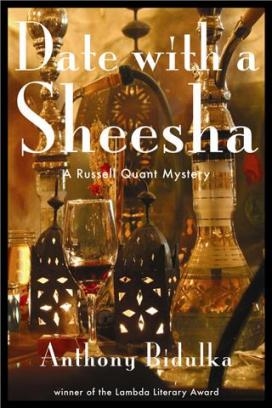
Author Profile: Anthony Bidulka’s Date with a Sheesha

Anthony_BidulkaAnthony Bidulka’s mystery series tells the story of a world-travelling, wine-swilling, wise-cracking, gay Canadian PI living a big life in a small city. The Russell Quant series is a multi-award nominee including for the CWC Arthur Ellis Award, and was awarded the Lambda Literary Award for Best Men’s Mystery. Anthony Bidulka has enjoyed time well-spent and misspent in the worlds of academia, accounting, footwear, food services, and farming. In 1999, Anthony Bidulka, BA, BEd, BComm, CA, left a decade-long career as a chartered accountant to pursue writing.

The Russell Quant books are: Amuse Bouche (2003), Flight of Aquavit (2004), Tapas on the Ramblas (2005), Stain of the Berry (2006), Sundowner Ubuntu (2007), Aloha, Candy Hearts (2009), Date With a Sheesha (2010.)

CW: When did you first know you wanted to be an author?

AB: Pretty much as soon as I could put pen to paper. As a youngster I was completely entranced by the power of storytelling and my greatest wish was to be someone who could do that. Instead of spending my allowance on candy or toys, I’d buy books and comics. As a teenager, I began writing and illustrating stories for my nieces and nephews. In truth, those were the first books I authored.

CW: Tell us a little about your books.

AB: I write a mystery series, which is not exactly what I set out to do. My first serious attempt at a book—as an adult—was a thriller. While I was waiting for the offers to pour in, I thought it might be a good idea to spend time on something just for the pure love and fun of writing. I created the world of Russell Quant, the first and only half-Ukrainian, half-Irish, wine-swilling, world-travelling, wise-cracking, ex-cop, ex-farm boy, gay, prairie-dwelling, Canadian private eye being written about today anywhere by anyone! (I dare anyone to contradict me.) That was ten years ago. Russell Quant has been my literary companion ever since.

The current release, Date With a Sheesha, deals with a young Canadian researcher travelling to the Middle East to buy antique carpets. Unfortunately, he’s found dead in a Dubai souk wrapped in a carpet. Russell is hired by the young man’s father to discover whether this was a simple tourist mugging gone bad as the authorities insist. (Of course, it is anything but). What follows is a magic carpet ride of an adventure from Saskatchewan to the frankincense fields of Oman and scorching sand dunes of Saudi Arabia.

CW: What research was involved in your book’s development?

AB: In each of the Russell Quant books, although much of the action takes place in Saskatchewan, Russell always finds himself embroiled in some sort of shenanigans in foreign locales. He’s been to the south of France, New York, Africa, Hawaii, and now, the Middle East. Each of the locations is chosen because of time I have spent there snooping about and wondering if this is a good place for murder and/or mayhem.

CW: What’s your writing process?

AB: I am very much an outliner. I like having at least a basic structure on which to build. I like knowing where I’m going. That said, I also think the most exciting—and sometimes nail biting aspect of writing fiction is the unknown. Although I create outlines, they are only the bare bones. The flesh is all the rest of the good stuff that comes out as you write the story, develop characters, create a world that only you control. Heady stuff, it is.

Once I have a first draft, I’ll go through a number of revisions until the piece gets to the point where I think it is the best it can be. Then I send it to my editor and she tells me why it isn’t.

CW: What’s the most surprising thing you discovered writing this book?

AB: I’ve sometimes wondered if writing a series would get boring or formulaic but I don’t findDate_with_a_Sheesha that to be true. I’m writing the eighth and I’ve attempted to give each of the books in the series a slightly different flavour. One is more romantic than the others. One is more of a caper. Another is more of a thriller and one is the scariest of the bunch. It’s a delicate balance because, to maintain the essence of what people liked about the series and characters, you don’t want to change things up too much. My hope is to keep the series fresh, the readers engaged and on their toes. That keeps me interested and excited to write more about Russell.

CW: What’s the hardest part of the publishing process?

AB: Today I think the most difficult part of the publishing process is keeping up with the speed-of-light changes in the industry. How we write, read, publish, and promote the written word is changing into something that was unrecognizable only five, ten years ago.

CW: How has that changed your book marketing?

AB: Extreme change had just begun to show its face as my first book was being published. Oddly enough, this has been a boon to me. I have only known upheaval in this industry. Just looking back over the past eight to nine years, one of the biggest changes is that the majority—the majority!—of small independent bookstores at which I gave readings in Canada and the US are now gone. They were the ones willing to give a new Canadian a chance. 

Oh yes, the world has changed and we must evolve with it. We used to give away electronic copies of the books for free, thinking that people would never read an entire book on screen, but perhaps it would entice them to buy the hard copy. Many of my colleagues now produce trailers for their books that rival those of blockbuster movies.

I have always seen the key to marketing a book as developing an ever-changing toolbox full of tricks. You try ten things and hope two of them work well. And even so, those two things will likely have to be tossed and replaced with something else before you blink. Daunting? Yes. Exciting? Yes. The essence is to be creative, be communicative, never give up trying.

CW: What do you most enjoy about being an author?

AB: There are so many enjoyable parts of the writing life. The firsts are top of the list. Getting that first signed contract. Seeing your book in galley format. Seeing it in a bookstore window. Getting emails from readers (who aren’t related to you!). Having your book reviewed in a major newspaper or magazine. Flying into a city you’ve never been to before and having people actually show up at a reading just to see you. It’s all so wonderful and fun and a truly unique experience.

CW:What advice would you give unpublished writers?

 AB: Get involved in the industry. Join writers groups, go to conferences, meet other writers, volunteer on boards and committees. As I’ve discovered in every part of my life, when you give back, you get back ten times more.

CW:What’s your next book project?

AB: A brand new edition of the first book in the Russell Quant series, Amuse Bouche, is being released soon. I’m currently working on a few different writing projects, one being the eighth Russell Quant mystery, tentatively titled Dos Equus.

CW: Thank you, Anthony! For more information, please visit www.anthonybidulka.com.  


Related Articles

Filed under: Author profiles, authors, , , , , , , , ,

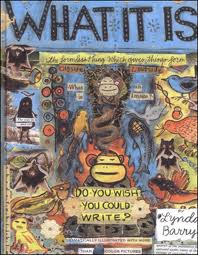
Lynda Barry tells What It Is

This is a book about writing like you’ve never seen:

What_It_Is

If you know Lynda Barry‘s work, you  know hers is an inimitable style. But I grok her. I had some reservations as I plucked the book from the shelf, but when somebody bares their soul in their art, you either look away embarrassed and confused or you look deeper, identify and get swallowed up, too.

Her ideas on writing prompts could get you going. Letting go to get going appeals to me. Most of all? I understand what she means by escaping into writing and getting “that floaty feeling.” If you write, you know what she means, too. If you don’t, buy What It Is, do the exercises and find your way into The Float. 

The immediate rewards of writing (slipping through “the escape hatch” as Stephen King puts it) are right now. Even as I write this, I feel a tickle in my brain. Some happy dopamine is spreading somewhere through my skull as I type this. I’m a junkie.

You may or not get published, but there’s more to it than that, isn’t there?

Some people don’t get that, so I ask them this: “Did you ever play tennis or run or swim? Did you keep doing it even though you knew you weren’t going to end up at Wimbledon, the Boston Marathon or the Olympics?”

Filed under: authors, book reviews, Books, publishing, Writers, Writing exercise, writing tips, , , , , ,

Bestseller with over 1,000 reviews!
Winner of the North Street Book Prize, Reader's Favorite, the
Literary Titan Award, the Hollywood Book Festival, and the
New York Book Festival.

http://mybook.to/OurZombieHours
A NEW ZOMBIE ANTHOLOGY

Winner of Writer's Digest's 2014 Honorable Mention in Self-published Ebook Awards in Genre

The first 81 lessons to get your Buffy on

More lessons to help you survive Armageddon

"You will laugh your ass off!" ~ Maxwell Cynn, author of Cybergrrl

Available now!

Fast-paced terror, new threats, more twists.

An autistic boy versus our world in free fall

Suspense to melt your face and play with your brain.

Action like a Guy Ritchie film. Funny like Woody Allen when he was funny.

Jesus: Sexier and even more addicted to love.

You can pick this ebook up for free today at this link: http://bit.ly/TheNightMan

Join my inner circle at AllThatChazz.com

See my books, blogs, links and podcasts.

Enter your email address to follow this blog and receive notifications of new posts by email.

Join 2,063 other subscribers