C h a z z W r i t e s . c o m

See all my books at AllThatChazz.com.

My Top Three (Living) Writing Heroes. Who are Yours?

 1. William Goldman: Author of Adventures in the Screen Trade and The Princess Bride. He wrote All the President’s Men, Butch Cassidy and the Sundance Kid and many others. He also wrote my favorite novel, The Color of Light. What sets him apart is his ability to twist a plot. Just when you think you know what will happen next is when he suckerpunches you with a surprise.

2. Kevin Smith: Director, raconteur, actor, comic book writer, Smodcaster. He wrote and directed Clerks starting with nothing at all. That alone makes him a DIY hero, but there’s more to this cat than 1992. He’s funny and smart, but it’s his facility with dialogue that gets him on my list. If it’s got quotes around it, he writes the shit out of it. Also, we could all learn something from his dedication to his fans and his horizons. He started a podcast, took it on the road and now has a regular home for his shows (Smodcastle.) He’s made a lot out of a little with merchandising and owns two comic book stores to boot. The dude knows how to work a keyboard and a fan base. He is loved.

3. Chuck Pahlaniuk: This author of Fight Club started late (early 30s) but is prolific. He has already equalled the number of books Kurt Vonnegut wrote in his lifetime. His fan base is The Cult and he spread a cultural phenomenon once Fight Club hit the public consciousness. He’s on this list because I share his dark sensibility, but my respect for his work goes deeper than that. He’s a very successful author who is willing to push his envelope with experimental fiction. You either love or hate Pygmy, in which the entire text is related through the broken english of a terrorist infiltrating America. Rant is a weird biography. Snuff details the weirdness of a porn shoot in gruesome detail. He’s not trying to do the same book over and over (Yes, I’m looking at you Bret Easton Ellis.) Is it horror or is it funny? The answer depends on the reader.

That’s the first three who came to mind. These three might strike you as strange choices. For instance, where’s Hemingway? Lists like this usually point to dead writers. It’s what I call “generational inertia.” Our english teachers and professors are still talking about a lot of dead writers because that’s who their english teachers and professors talked about.  Stephen King won’t be on anybody’s else’s immortality list for years yet (such an idea was sacrilege when I was in university and is merely implausible now.) Yes, I love a lot of dead writers, but they are easily found on lots of other lists.

So the question today is:

Who are the living writers you idolize?

Filed under: Books, Writers, , , ,

Cool Word of the Day: Genian

Genian:

of, or pertaining to,

the chin.*

(This is the antidote to the last post which, I know, was way too long!)

Filed under: Cool Word of the Day,

Freelancing doesn’t mean free. Get paid!

Too many writers are working for free, or nearly free.

First, let’s talk about lit journals. My Chapters doesn’t even carry any of them anymore. They have tiny readership. You could dedicate yourself to putting your work up on your own website and you could have more readers in a day than many lit journals have in a year. You could argue that wouldn’t be easy (but anything that’s worth doing isn’t easy.)  In the end, you’d have more exposure through your own site (assuming your work is any good) and your readers would be your readers.

Many lit journals pay in subscription copies AKA bird cage liners. You’re supposed to be so bowled over by the fact that you’re published in a tiny journal that you don’t mind a payment of zero. Prestige is illusory and or fleeting. Publication in a journal that so few people read can make you feel great. It doesn’t make the achievement important to your career. Writing credits are nice, but they aren’t the most important component of a query letter. Like the AMC commercial says, “Story matters here.”)*

Or they’ll say you have to “pay your dues.” No. You don’t. You have to work on your skill, but getting rejected by literary mags doesn’t improve your skill. Writing and editing do that. You learn nothing from rejection letters other than the fact that you’ve been rejected.

Once upon a time, writers could actually make some decent money out of writing for magazines. Kurt Vonnegut did. Stephen King bought beer with his stories in Screw. Back then, writers saw any magazine that would publish (and pay) for fiction as a gateway to the big leagues: writing longer works, like the Great American Novel. Then the world changed and no one was reading Screw for the stories, anymore.

Journals aren’t a gateway to publication in a larger venue anymore. If an agent is trolling the lit journals for talent, you have to wonder why when they should have a stack of queries on their desks to sift through. Agents don’t need lit journals to act as screeners for new talent, so neither do you.

Next target: freelancing does not mean free. When someone asks you to write for free, they’re devaluing your work (and worse, mine!) You can be sure everyone else in the process will be paid. They’ll pay for their computers, the electric company, the printer and everything else. Why not you, who is providing the content? (You know? The reason anyone picks up the publication? You write the stuff in the hole between the ads!)

When you write for someone, it’s a responsibility. Certain requirements must be met. For instance, you can’t libel anyone or plagiarise someone else’s work. You may not be guilty, but that doesn’t necessarily mean no one will complain (or sue.) In other words, writing entails risk, usually just to your ego at the hands of someone writing a letter to the editor to complain about your take on reality. Don’t assume a risk you won’t even be compensated for minimally!

Charging for your work means you value your work and know that others should do so, as well. Failing to charge means they won’t take you seriously. Someone might say they are letting you “try out.” How will that work? You sweat out a piece for them, charge nothing and they’ll maybe pay you next time? How well do you think you’ll be compensated when you’ve already set your base price at zero?

You get the idea. But I hear someone crying out, “What about the exceptions? Am I an exception?” Yes, there are exceptions. If you’ve never written anything and need a clip file, okay. Choose something small and gain some experience. Don’t wallow in that pit too long.

What about gifting? Scott Siglar built his current success on giving away his books on the internet as podcasts. He was smart about it, though. He not only built a fan base, he gave out his fiction a little at a time. A lot of readers became fans of his fiction and proceeded to buy the book because they just couldn’t wait for next week’s installment. (Seth Godin talks a lot about gifting and being smart about it. Read his stuff before you try that path so you can be smart about it, too.)

Insisting on getting paid doesn’t mean you aren’t flexible. Here’s a story from the trenches that happened to me recently. A client wanted me to ghost  an advertorial piece (3,000 words) for a magazine. He hopes to get a lot of people signing up for his courses and the magazine will give him a free full-page advertising page in return for the article. This isn’t an uncommon arrangement. He asked if I would write it for him. I gave him a consult so I knew the parameters of the job. I thought about it and named my price. $850 + HST.

That wasn’t the budget the client had in mind, so he had some sticker shock.

I understand that sometimes a fee can seem like it comes out of the blue, but I gave him my reasons:

1. Ghosting always costs more. His name would be on it. I’d be the invisible guy who did the work. No publication credit bumps up the scale.

2. As with the credit, he’d also retain the rights in perpetuity. He could use my work however he wanted for the rest of his life. (Ad excerpts, emailing, flyers, brochures, web copy etc.,…

3. Part of pricing is to identify what the work is to accomplish. In other words, what’s the client’s ROI (Return on Investment)? I command high fees for a speech for an association because my work will drive up membership numbers for said association. Likewise in this case, it wouldn’t take very many people signing up for the clients’ courses to pay my fee (which is starting to sound paltry, isn’t it?)

4. I checked. The ad page the client is getting in exchange for the 3,000 word story sells for $600. If one page of advertising (where the copy is sparse), shouldn’t my multi-page rate reflect that fact?

So the client balked at the full fee. What to do?

I negotiated. I said, no problem. I’ll cut my fee in half if he writes it and all I have to do is edit it. That will take less of my time, so that’s fair to me and okay with the client.

FUNNY ADDENDUM: The client found that writing the 3,000 word magazine piece is not easy. I talked to him on the phone and sent him a rough outline to structure his thoughts. I’m making sure that the editing job won’t end up taking up too much time that way. This client is a good guy who respects my work. He let me know that he’s going to try to plow ahead, but if I have to take over, he’ll get me my full fee, after all. Either way it shakes out, I will feel good about the project because I gave away a little, but got a lot. And so will the client. 

If you get your cheque and think, “That’s it?!” or you’re grumbling about the time lost while you work, it’s definitely time to take up animal husbandry…or raise your rates. I hope you aren’t raising your rates up from zero!

*BONUS: If they have to pay you in bird cage liners, they are undercapitalized. Most of these journals don’t pay until publication. If they’re that underfunded, there’s an excellent chance they won’t even be around by the time they get to publishing your story. It’s happened before. Lots.

Filed under: agents, publishing, Rant, writing tips, ,

Smash Writer’s Block: Write Hardboiled Fiction

You aren’t going to feel like writing all the time. Set an egg timer and tell yourself you’ll just write for ten minutes. That’s one very hardboiled egg. You can manage ten minutes. Write as fast as you can and don’t pause to think. Don’t pause to look back and edit. Just go!

How this helps:

1. It gets you writing. You don’t need big blocks of time. Lots of writers knock out entire books in short segments. Little bits of stolen time are how stay-at-home moms and dads live. Do it consistently and you’ll build your book.

2. This technique forces you to move forward and not dither over split infinitives. Revise later. Write right now.

3. Once you get started, you will often find you’ll want to keep going. You may not have started off in the zone, but by promising yourself just ten minutes, you will often end up there and decide you want to stay, persevere and write more.

BONUS:

Some will say, “I don’t have even ten minutes.”

(I have heard this.)

Answer:

Sorry to say, these people are whiners. You don’t have ten minutes? Really? 

Reality check:

You aren’t that crucial. You aren’t that important. You’re experiencing resistance. Go work on yourself and find out why you’re manufacturing drama. And ask yourself, do you really want to be a writer?

You don’t always have to be “in the mood” to write. You do have to take responsibility for not writing.

Filed under: getting it done, writing tips, ,

Art is a Call to Action

Yesterday I watched a great movie: The Age of Stupid. It’s about global warming and how we aren’t doing diddly about it. It also puts a human face on the one ideological system that has won over our hearts and minds. It’s not any particular religion precisely. It is consumerism. Consumerism has won.

It got me thinking about the international, social and political landscape. Many things look grim. A friend says we must stay in Afghanistan. On Penn & Teller’s Bullshit, a dying man pleads to die with dignity. The man’s doctor feels his personal ethics preclude him from exercising that act of compassion (or letting anyone else exercise compassion and personal choice.) In my city a police officer will be demoted today for smoking marijuana off-duty (and I wonder how many officers are drinking alcohol on duty today?) There’s a lot of silly stuff going on out there and I think we can’t afford to be silly anymore.

There are a lot of problems in the world. We can’t solve them all. Remember approximately 100 days ago the Gulf of Mexico was poisoned (and shall be for decades)? Everyone was saying, “Plug it! Plug it! Why don’t they just plug it?” My answer? Because it’s a mile under ground and water. Because it’s really hard to do. If it were easy, they would have done it quickly.

News flash! Nobody’s going to Mars, either. It’s too hard. The problems are insurmountable.

This isn’t just an unpopular idea. It’s a new idea. For instance, people who believe that we can squeeze all the oil out of the ground and just when we run out of that, a new energy source will appear to replace it (and act just like it and be just as convenient.) Why do they think that? Because they’ve been seduced by the idea that technology can solve all problems. Strides have been made and things have gotten better in many ways. But we still have all kinds of cancer.

Big problems? We’re not good at big problems. Our record is spotty. Insulin was a big one, but not a cure, and how many decades ago was that? Smallpox vaccine? Great. Millions saved. But what have you done for me lately? Medical development and invention from here on out is baby steps. I’d much rather see the military budget for stealth bombers pump up educational budgets and medical research. (Maybe then we can run again instead of taking baby steps.)

Dismaying nugget: Your chances of being killed by a terrorist are always close to zero. Your chances of dying from cancer or heart disease are excellent. We need to rethink how we allocate out resources.

Naysayers who have swallowed the line they’ve been sold forever (“anything is possible”) will say I’m hooked up to an IV of Can’t Do Spirit. Where would we be blah blah blah? I’m not saying progress hasn’t been made. Progress is made up of a lot of little steps. I’m saying we’re not up to the things we think we are.

Examples: Changing Afghanistan’s culture? Nope. (Thought experiment: Imagine the Taliban coming here and trying to change our culture with the same tools? Would drone aircraft change your mind to Allah?) Curing cancer? Not in my lifetime, or sadly, in my children’s lifetime. (The cure for all diseases is just around the corner, according to fundraisers. Actual research scientists? Not so much.)

It’s not all bad. Science has made life pretty great. For us, anyway.

And I have a solution. We focus on the small things. We change what we can change. We change ourselves and hope to transform the world through small, effective actions instead of costly monumental hopeless projects. Resources are limited. We can’t afford to go to Mars, and why would we want to when people are starving and struggling right here, right now?

We donate goats to African families so those families won’t starve. I can’t solve all of Africa’s problems. (Africa will have to do that.) But I can buy a goat. A friend of mine made a documentary that has convinced me I must do so, in fact. This is the highest form of art—art that moves you emotionally, and to action. The documentary will be coming out soon. It’s called Where’s My Goat?

You have limited resources, but you are a writer. Who will you change today through your art?

Filed under: movies, Rant, Writers, ,

Cool Word of the Day

kee

n. (Prov. Eng.) the plural of cow

Filed under: Cool Word of the Day

Top 10 Ways Writers Waste Time

1. Join a writer’s group. Resent every criticism and ignore all advice.

2. Join a writer’s group. Take every passing suggestion from everyone without regard for your own ear.

3. Join a writing organization. Volunteer for a bunch of committees. Never write a word for yourself again.

4. Wait for inspiration.

5. Indulge writer’s block. Complain to your sympathetic friends. Stay pathetic. Like them.

6. Don’t write to a deadline. Figure it will work out on its own.

7. Send off your first draft as soon as you’ve typed “The End.” Revision is for your lessors.

8. Edit forever. Call yourself a perfectionist instead of a lazy coward.

9. Don’t send simultaneous submissions. (The math says your work has a chance at publication. Posthumously.)

10. Obsess over writing trivia and silly Top 10 lists you spotted cruising Twitter. Instead of writing. Goddamnit.

Filed under: writing tips,

Writing Critique: What’s Reasonable?

The other day I recommended Nathan Bransford’s blog (especially the publishing wrap-up on Fridays.) On Mondays he provides an excellent service in showing how he thinks as he evaluates a manuscript. I often agree with his opinion, but this Monday’s critique post struck me as hypercritical. Check it out and see what you think for yourself.

On this one, I didn’t understand most of his problems with the writing sample. When Mr. Bransford professed that he wasn’t understanding the story, I was thinking, “Why? I get it. Wouldn’t everybody get this? Sounds interesting. Tell me more.” (Dean Koontz wrote a book and there were a couple of TV shows with a similar premise.) As I read I thought, if they don’t get it, they’re probably not readers, anyway.

Larger point? It’s a subjective business. Keep submitting. Writers can’t hear that message often enough. Somebody will get it.

Filed under: agents, manuscript evaluation, queries, , ,

Writing Productivity and Success: What’s in Your Way?

Flat on my back, weak as a weak kitten and sick as a very sick dog, I’ve had some time to think about what may be holding me back in my publishing endeavors. I’ve got a lot going on and somehow I always manage to push through. I tend to write in spasms according to deadlines I set for myself. I could do better and now I think I know why I haven’t accomplished more. My health isn’t what it should be.

One of the things I’ve noticed creeping over me for awhile is a lack of motivation and listlessness. I’ve been easily distracted. I often sleep poorly at night and need to sleep during the day. Last week the headaches were coming frequently and staying longer than my occasional tension headaches. Then I had a bad reaction to eating oatmeal. Then things got pretty bad. I had to cancel appointments. I had a hard time moving at all. I haven’t been diagnosed yet, but I suspect gluten intolerance is the culprit.* The gastrointestinal symptoms fit, but so do the non-abdominal problems.

Mold, chronic illness, excess sugar, decreased fitness, sleep disorders, addictions, poor food choices, ADD, depression… There are all kinds of medical reasons for a cloudy head, inactivity, irritability, loss of energy and mood swings. Maybe your parents were wrong and you really aren’t lazy. (It’s a possibility, and won’t that be a fine thing to throw in their faces at the annual Thanksgiving argument?)

Good news: I’ve been eating a gluten-free diet for several days and I think things are improving. I can tell my system is slowly recovering. Most important to me, I feel like my mental clarity and motivation are returning. Writing is a tough business. I have to diet and exercise to be a part of it. Maybe you don’t, but now I know I do. To succeed in writing, you need to be prolific. Dilettantes won’t make it anymore, no matter the reasons that hold down their creativity, positivity and production.

*If you suspect gluten intolerance—or worse, Celiac disease—see your doctor.

Want a bigger kick in the butt? Read a great Slate article on the “active non-accomplishment” of taking too long to write a novel.

Filed under: getting it done, , ,

Ebooks: The Inevitable Rise of the Machines

Filed under: ebooks, Publicity & Promotion, , ,

Bestseller with over 1,000 reviews!
Winner of the North Street Book Prize, Reader's Favorite, the
Literary Titan Award, the Hollywood Book Festival, and the
New York Book Festival.

http://mybook.to/OurZombieHours
A NEW ZOMBIE ANTHOLOGY

Winner of Writer's Digest's 2014 Honorable Mention in Self-published Ebook Awards in Genre

The first 81 lessons to get your Buffy on

More lessons to help you survive Armageddon

"You will laugh your ass off!" ~ Maxwell Cynn, author of Cybergrrl

Available now!

Fast-paced terror, new threats, more twists.

An autistic boy versus our world in free fall

Suspense to melt your face and play with your brain.

Action like a Guy Ritchie film. Funny like Woody Allen when he was funny.

Jesus: Sexier and even more addicted to love.

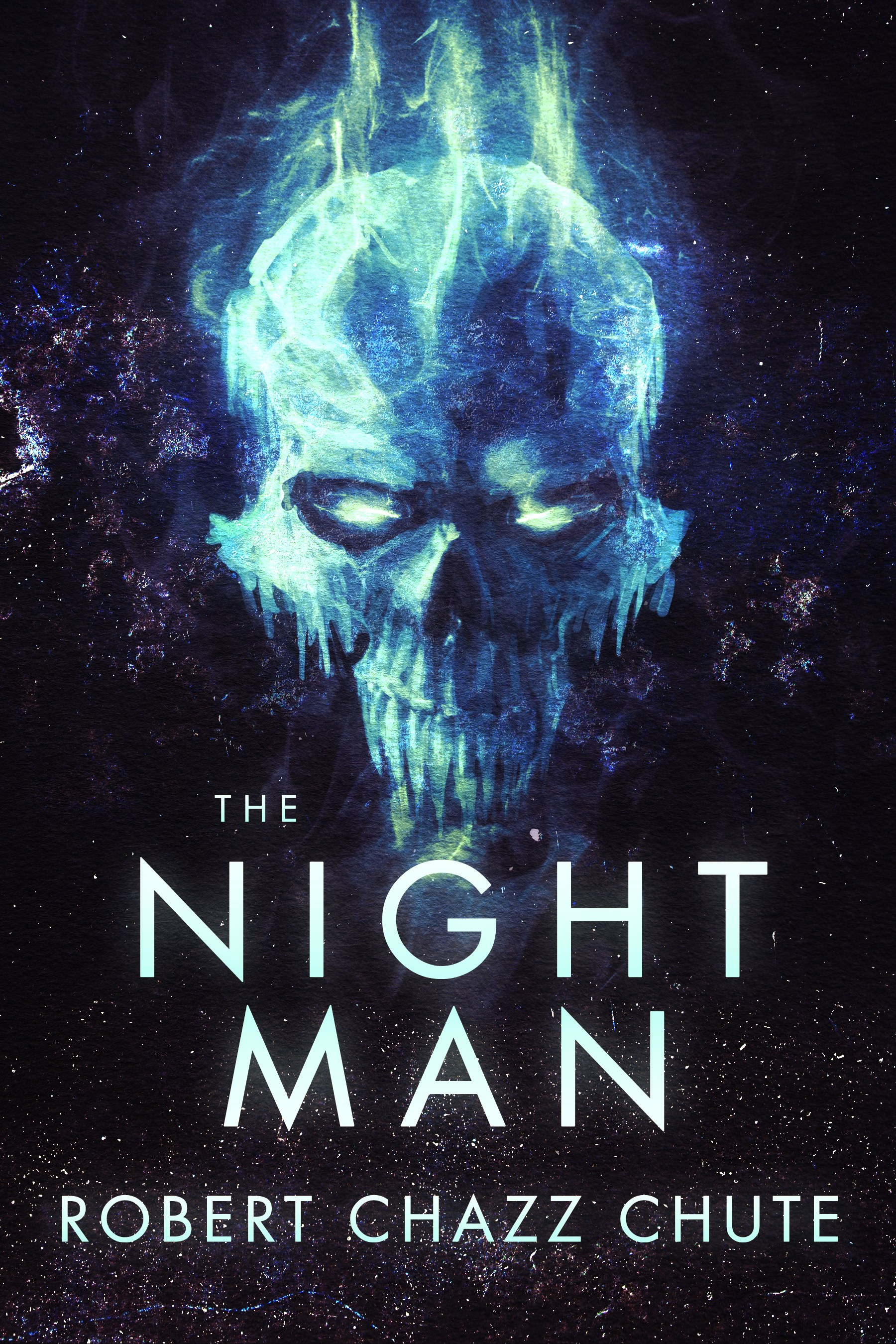
You can pick this ebook up for free today at this link: http://bit.ly/TheNightMan

Join my inner circle at AllThatChazz.com

See my books, blogs, links and podcasts.

Enter your email address to follow this blog and receive notifications of new posts by email.

Join 2,063 other subscribers