C h a z z W r i t e s . c o m

See all my books at AllThatChazz.com.

Writers: Self-publishing resources

Yesterday I wrote about a scenario that appealed to many people. After an encounter with her agent that doesn’t go well, a writer achieves the critical mass necessary for her to go indie.

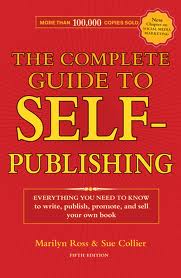
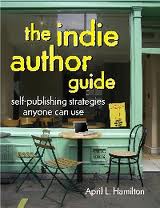
Whether that route is for you depends on many variables. Self-publishing is definitely not for everyone. If you’re wondering if self-publishing is for you, here are a few books to get you started so you know what you’re getting into:

self-publishing_manual

the_complete_guide_to_self-publishing

 the_indie_author_guide

Filed under: authors, Books, self-publishing, Writers, writing tips, , , , , , , , , , , , ,

Writers: Is writing therapy for you?

Reverend Billy from The Church of Life After S...

Image via Wikipedia


Writing can be therapeutic. You can get some etheric vengeance, exorcise your demons and find peaceful transcendence.

But I don’t think your therapy should show. If you stray into telling the reader how to feel, your writing experience intrudes into their reading experience.

Don’t do that, please.

What writing teachers don’t say is, “Not getting preachy is really hard.” For instance, in my WIP, I touch on issues around censorship. In fact, I’ve noticed my penchant for not just touching on the issue, but hammering on it.

How do you know you’re hammering your personal issue too hard? Overexplaining irritates readers. Making two characters argue and leaving the opposing side too weak is another sign. Look for when the action stops and restart it. For instance, when your protagonist slips into a monologue that goes on uninterrupted, he’s at the pulpit and you’re losing readers.

You can still have a point of view, of course. Just lay out facts. Let your readers decide. Slip the facts amongst the action of the story. Don’t lay it all out at once. Instead of pontificating, let arguments percolate through the story.

Orwell’s 1984, for instance, shows the horror of the all-controlling state. Orwell doesn’t tell you it’s awful and list why. He shows cages full of rats. Chuck Palahniuk‘s style is another good example. He doesn’t tell the reader how to feel. Non-judgmental writing yields effective results.

Don’t write from your therapist’s couch. The benefits you get from writing may be every bit as personal and profound as a therapy session from In Treatment, but if you’re writing for an audience, please let your readers find their own therapy.  In Finding Forrester, Sean Connery says, “You write the first draft with your heart and the next with your head.” 

Filed under: Books, manuscript evaluation, publishing, Rant, Rejection, Useful writing links, Writers, writing tips, , , , , , , , , , , ,

Writers: Stop allowing others to define you

Fire Poi at Needham's New Year's Eve celebrati...

Image via Wikipedia

Your life is a story. You define it.

My son wants to take piano lessons. He does gymnastics. He plays soccer. He’s a self-directed little dude. I didn’t take piano at his age. It was instilled in me by people who were older and taller that playing piano wasn’t so manly and therefore to be avoided. Galactically stupid, I know, but there it is.

It seems to me everyone you meet wants to put you in a box. Are you a Canadian writer? A trade writer? Which genre are you in? Lots of people have questions, but they don’t all ask for benign reasons. For instance, it was explained to me as if it wasn’t rude that questions (from some cultures) about how much money you make aren’t meant to be rude. The person asking was just trying  to measure my place in the universe so they could ascertain how much respect to give me. (Quicker answer: Give me all your respect, bitch!) 

Recently someone asked me some questions. Had I been there and read that? Nope. In a douchey style I won’t forget, they lowered their estimation of my intelligence. It took all I had to hold back from explaining to them why their artificial standard was silly, their assumptions were off base and their requirements didn’t apply. In retrospect, I wondered why I was being so polite when they weren’t managing it. Some people think they’re being clever when their passive-aggression is thinly-veiled. Newsflash: lots of people are smarter than you. We see you for what you are, you smug prick.

So, back to you. Are you allowing others to define you or are you defining yourself? On New Year’s Eve, did you make resolutions that have fallen aside? You don’t have to wait till next January 1st to make promises to yourself and rededicate to your personal makeover project. You don’t have to wait till Sunday night to promise that monday morning you’ll really get serious about that diet.

You’re making yourself over every minute. You’re defining who you are now. Who will you be? Your choices determine that. You’re only a procrastinator when you procrastinate consistently. You’re only a loser if you stop trying.

You determine that. Not your parents or the well-meaning friends telling you to get a real job. You determine your worth by what you do. Go do something. Do what you really want to do.

And the constant critics? They define themselves as naysayers who tell you what you’re doing doesn’t count. Ignore them. Every successful novelist, director, musician, artist, architect (anybody!) will tell you that long after you succeed, the critics will still be there saying, “Nah, that doesn’t amount to much.” Or, more maddening, they’ll say, “I always knew you could do it! Your welcome for all my support!”

The people who really get you?

They’re waiting.

GO!

Filed under: authors, getting it done, publishing, Writers, writing tips, , , , , , ,

Writers: Get your book done! Hack your life and crush your enemies.

Screenshot from Linux software KTouch. An imag...

Image via Wikipedia

Zip over here as quick as you can to check your keyboarding velocity.

You can write.

Are you also a fast typist?

Next question:

Does it matter?

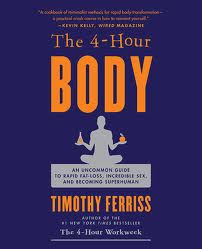
I’m currently sucking down a great book: Timothy Ferriss‘s 4-Hour Body.* In it, he mentions how short-term goals, tiny achievable targets, can help you get huge projects done. Don’t have time to write a weighty tome? That’s okay. How about committing to a page a day? Half a page? A few sentences?

4_Hour_BodyIf you can do that much, you can get your book written this year. You know why?

Because most days you won’t just write a few sentences. Once you’re over that intimidating hump of “WRITING A WHOLE BOOK” (DUH-duh-DUUUUH!) you’ll sit down. You type a few sentences. Then you’ll already be over the worst of the procrastination speed bump. Chances are, you’ll get to writing much more most of the time.

And you’ll be on your way.

How fast you type won’t matter all that much really.

What matters is that you consistently write.

Consistency is what crushes. 

 4-Hour_Work_Week

*Once you have your body in shape with Timothy Ferriss’s health hacks, read The 4-Hour Work Week. It is doubly awesome in giving you strategies to make your work life rule (without ruling you.) Read 4-Hour Body and you’ll live longer. Do 4-Hour Work Week and you’ll live so much better.

 Related Articles

Filed under: book reviews, Books, getting it done, publishing, Writers, Writing exercise, writing tips, , , , , , , , ,

Writers: Craft your pitch carefully.

DSC03939

Image by Nitin Parmar via Flickr

It’s very difficult to summarize your novel. When we pitch a story, we talk about broad strokes and the rest is about theme. The reason is that when we summarize in depth, the story often sounds dumb.

Let’s try it with a popular movie and you’ll see what I mean:

In the mostly great and totally watchable  A Few Good Men, a Gitmo soldier is killed and two Marines are charged with his killing. So far, so good.

The base commander goes to great lengths (all behind the scenes) to cover up his part in the crime. The rest is about how a young lawyer who has never stepped inside a courtroom goes against the military establishment to get the commanding officer to admit in court that it was he who ordered the Marines to attack the soldier as a training exercise. The commanding officer will admit his guilt proudly and then be surprised he’s under arrest. The two Marines don’t go to prison but do get discharged dishonorably. The young lawyer feels good about himself in the end. And no, he doesn’t get to sleep with Demi Moore.

Were you to pitch it like that (and if you aren’t actually Aaron Sorkin) it’s very hit-and-miss…uh, no, actually it’s all miss. The context and detail is necessarily missing in a summary. The person you’re pitching won’t know about the nuance that the young lawyer will try to live up to his father’s courtroom legend. The clever sarcasm won’t be much on display to sell the idea of the script.

You would pitch about visiting the base and the sinister base commander. However, the subplot about the deputy-commander who can disappear because he’s former Special Ops (and turns suicidal) stretches credibility. It’s a spot where you could easily lose your audience. The pitch won’t get into the nitty-gritty of the interplay among the defense team. Kevin Pollak is the glue, but his role’s power would be difficult to flesh out in a short meeting and could derail you. 

When you pitch a movie, play or book, the odds are stacked against you in a huge way. It is statistically very unlikely someone will invest in your art. Put a lot of time perfecting your query letter (or your pitch) so you cram in your art and style.

The inherent difficulties of the pitch reduce your work so you want to look for ways to show your competence and still stay within the parameters of the pitch (e.g. format, brevity and economy of communication must be balanced by characters whose motivations are compelling and narrative arcs that make people want to hear more.)

If you don’t pitch it well, they won’t get it. If you have no track record, the only evidence that they have that you can articulate and execute an idea is confined within the straitjacket of a pitch meeting or query letter.

That’s why so many unknown writers, directors and artists of all sorts stay unknown.*

*Or, as we’ve frequently discussed, you could reject the premise of The Man’s hierarchical paradigm and find a way to DIY. (See yesterday’s post for further thoughts on that.)

UPDATE: Here’s a great survey on the things that drive agents away from you.

Filed under: authors, DIY, Editors, manuscript evaluation, movies, queries, writing tips, , , , , , , , , ,

Writers: Time for some controversy

Book-shelf complete

Image by Medusa's Lover via Flickr

Since I’m still recovering from a Toronto weekend conference, Green Hornet and Black Swan, here are a couple of recent links you may have missed:

Dean Wesley Smith blows agents’ future aspirations out of the water (make sure you read through the pithy comment section, too!) and Anis Shivani tells you to forget everything you thought you knew about writing and publishing.

Much of it appeals to me because neither believes in sucking up and allowing yourself to be put down or kept down by The Man.

What do you think? 

Is Shivani’s rant satire or for real?

Will you dare to take this advice?

Filed under: agents, authors, DIY, ebooks, Editing, getting it done, Rant, self-publishing, Useful writing links, writing tips, , , , , , ,

Writers: The Power of Small (and why press releases don’t work)

A picture of author Carolyn See

Image via Wikipedia

When I worked in a city newsroom, one of my jobs was to go through press releases to find gems. There weren’t many of those clichéd diamonds in the rough. Reporters see so many press releases, they begin to look upon them with suspicion and even resentment.

What’s an author to do? You want an interview. You want your book reviewed. How do you make it happen? The traditional approach was to send out lots of press releases and books. It wasn’t very effective. In fact, sending out a lot of review copies is expensive.

There’s an alternative:

Go small. Go low-tech. Write a note.

This isn’t a practical approach for in-house publicists working for major publishers (but they usually work in short bursts for particular authors, anyway.) The low-tech, patient strategy is for indie authors looking for ways into the media. Unfortunately, publishers focus on very small windows of opportunity. They are looking to move a lot of books quickly (before the book stores send them all back for credit.) Marketing in book publishing has been long periods of silence interspersed with short frenzies. As an indie author selling e-books, you’re opting out of big, expensive and short-term strategies. This isn’t so much for Wiley (publishers since 1807!) authors. This is especially for wily indie authors.

As an independent author and publisher, you can play the long game instead. You can write a note or two a day. One author/guru Carolyn See made it her practice to write a “charming note” every day to an editor or publisher or agent.* Why not to reporters, too?

But there’s a trick to making it effective. You know how I’m always saying that if you want to hit up an agent, don’t look for the big, established names? Agents fresh from the factory who are up and coming in established agencies are better bets. They are still hungry and not as jaded. They don’t hate all queries yet. They still have hope and the scales have not yet developed over their eyes.

The same is true for reporters. The book editor of a large magazine already has lots of books lined up. The independent author has lots of indie-spirit, but most book editors still look down on them. So screw them.

Work on getting into smaller newspapers. Send a charming note to a general reporter who would love to do a cushy author interview instead of chasing some city council member who doesn’t want to speak to them. I’d rather talk to an author than cover a house fire any day.

You know why it will work?

It will work because you will be charming (“Loved that piece you wrote on the local scaled railroad hobbyists so I thought…”)

It will work because general reporters think entertainment reporters have a cushier job (and they’re right.)

It will work because all journalists also want to write a book some day.

And while we’re talking small, send off a friendly email to book bloggers. That counts as a charming note, too.

Ask to guest blog. Bloggers love a break and crave hits, connection, track backs, links and love.

Ask for an author profile. I profile an author on Chazz Writes almost every week. It’s not the New York Times Review of Books, but since they aren’t calling, how about alerting like-minded people to your creations? If you can’t go huge, you can still be ubiquitous.

Instead of just showing up at a bookstore and asking to see the manager, send a charming note ahead of you to break the ice and soften her up for a reading. Better, be even more charming and offer to organize readings for your local bookstore. (Later this year I’ll profile an author who did just that. Not only did he help many other authors, his own career got a boost from building community among colleagues.) 

Your book needs attention. I’m sure you’re already working on developing and maintaining your audience. Don’t forget that etching away at it a day at a time over the long haul can reap big rewards. With patience, you can build your empire. Don’t underestimate the power of a low-tech, targeted, personal and charming note.

These days, the mail is mostly for bills. This approach is more powerful than it ever was because you hate what’s in your mail box. But when you get a letter, you’re excited. It will work because it has worked.

*Read Carolyn See’s Making a Literary Life for details. Or, don’t fool around and head straight to Amazon to buy her book.

 Related Articles

Filed under: Author profiles, authors, book reviews, Books, DIY, getting it done, links, Publicity & Promotion, publishing, self-publishing, writing tips, , , , , , , ,

Writers: Five editing tricks and tips (plus editing marks)


1. Editing onscreen is more difficult and less accurate than printing out your manuscript and attacking it with a pencil. Unless you’re well-practiced at editing pixels, print it out.

2. As you read your manuscript, read aloud. You will pick up more problems that way and if you run out of breath, it’s probably a run-on sentence.

3. Some experts tell you to read your manuscript backwards, one word at a time, to catch more typos. Though it is true this technique works, you must have a form of OCD to act on it. This is advice editors give, but never do themselves. If you don’t believe me, try it with any book-sized manuscript. (Wait! First make sure there are no sharp objects or firearms nearby!)

4. As you edit, read slowly. Your brain is wired to skip over mistakes when you read quickly.

5. Farm it out. You need someone else’s fresh eyes on your manuscript to see the thing you are missing. Hire editors. (Here’s one!)

Filed under: authors, Books, Editing, Editors, getting it done, publishing, rules of writing, Writers, writing tips, , , , , , , , , , , ,

Writers: How to tell when your manuscript is ready

Freytag's Pyramid, which illustrates dramatic ...

Image via Wikipedia

Writing takes time and is often the most fun part of the journey. Then you rewrite and revise and revise again. Before you send your manuscript to an editor, make sure you’ve done as much as you can to clean it up.

Be aware of:

Formatting, hooking the reader, character development, story arcs, consistency of narrative, consistency of voice, differentiation of characters’ voices, typos, grammatical errors, plot logic, plot holes, pacing, three-act structure, rising action, scene length, passive voice, telling instead of showing

(gasp!)

…the list goes on and on, but you get the idea.

Make it as good as you are capable.

Once you’ve gone through however many revisions  you must endure (maybe two, maybe dozens) to write your story, go through one more time.

How will you know when you’re ready to send it off to an editor for new input?

You’ll be sick of your manuscript. (And if you have been holding on to a manuscript too long, let go of your perfectionism and the manuscript. It’s a torturous form of self-hatred.)

A manuscript is never truly finished. You could polish forever. However, when your editing goes sideways, meaning it’s not better but merely different, it’s time to send it off.


Filed under: Editing, Editors, getting it done, publishing, Writers, writing tips, , , , , , ,

Writers: Why self-publishing sucks (and what you can do about it)

Vanity

Image via Wikipedia

A couple of years ago I put together a chapbook of poetry. A few seconds after I handed a copy to a beta-reader he found a mistake. It was a glaring mistake on the first page he turned to. Alas. Embarrassment is an emotion that can run through you, both hot and cold.
Typos, grammatical errors, consistency problems and a host of other plagues suck the credibility and professionalism from your manuscript. At least for me it was a beta-reader and, contrary to first impressions, the rest of the manuscript emerged clean.

Some writers see self-publishing as a shortcut. When writers treat the medium as the quick and easy path to becoming an author, that’s still vanity publishing.

When you approach it seriously and make sure your manuscript has been combed for problems, that’s publishing (nevermind the “self” part.) When you choose to self-publish, publish. Form a company. Be a publisher. Hire editors (yes, I’m aware of the conflict of interest, but if you are, too—yes, I edit—we’re covered.) Get proofreaders lined up.

Take it seriously and you will be taken seriously.

Filed under: authors, ebooks, Editing, Editors, getting it done, grammar, publishing, Rant, self-publishing, writing tips, , , , , , ,

Bestseller with over 1,000 reviews!
Winner of the North Street Book Prize, Reader's Favorite, the
Literary Titan Award, the Hollywood Book Festival, and the
New York Book Festival.

http://mybook.to/OurZombieHours
A NEW ZOMBIE ANTHOLOGY

Winner of Writer's Digest's 2014 Honorable Mention in Self-published Ebook Awards in Genre

The first 81 lessons to get your Buffy on

More lessons to help you survive Armageddon

"You will laugh your ass off!" ~ Maxwell Cynn, author of Cybergrrl

Available now!

Fast-paced terror, new threats, more twists.

An autistic boy versus our world in free fall

Suspense to melt your face and play with your brain.

Action like a Guy Ritchie film. Funny like Woody Allen when he was funny.

Jesus: Sexier and even more addicted to love.

You can pick this ebook up for free today at this link: http://bit.ly/TheNightMan

Join my inner circle at AllThatChazz.com

See my books, blogs, links and podcasts.

Enter your email address to follow this blog and receive notifications of new posts by email.

Join 2,063 other subscribers