C h a z z W r i t e s . c o m

See all my books at AllThatChazz.com.

Editing tools and typo tips

Book cover (Dust jacket) for the 15th edition ...

Image via Wikipedia

Write_your_book
EDIT YOUR BOOK!

When you’re checking your manuscript, use your word processor’s Spellcheck. Some editors turn up their snobby little noses at Spellcheck, but it can flag problems you might otherwise miss. Nobody’s perfect and problems will always appear once you’ve published your book (yes, in both traditional and self-published books). Don’t take every suggestion; Spellcheck isn’t always right. It’s a tool, not a panacea. You can also use Find and Replace to look for problems Spellcheck misses: its, it’s, there, their and so on. Spellcheck doesn’t replace editors and they don’t replace thinking. But you’ll catch more using it.

To the rude editor I met at the conference who said she never used Spellcheck: Yes, I’m saying that was arrogant and, just like the rest of us, you’re not nearly as smart as you think you are. Or funny. And you need to work on your social skills. (Now I’m worried that I’m projecting.)

I don’t edit blog posts obsessively, but when I’m working on a book, I have several websites up on my browser: Chicago Manual of Style, Wikipedia, and dictionary.com. I also use Autocrit for more input.

For me, yesterday was single quote day. I wrote parts of my books with Open Office, so I had to go through the manuscript and make all my single quotes curly…and curly in the right direction. I was cross-eyed and HULK ANGRY by 5 pm.

PentecostSelf-publishing guru and author of Pentecost, Joanna Penn, has a great suggestion to deal with typos: Publish your ebook first. Your readers will let you know (politely or not) about your book’s typos. Corrections to the ebook are easier than correcting your printed book. Corrections to print books are called “second editions.” Great tip! For more information from Joanna, check out this very useful interview. I loved this inspiring interview and it helped me calm down after Curly Quote Day. Well…much later, after the photo below.
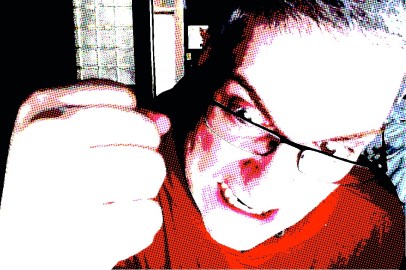
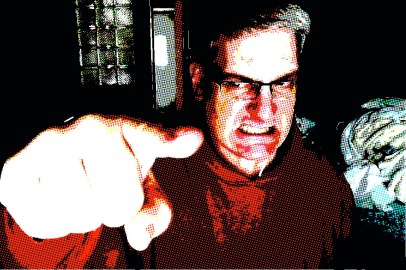
Me after Curly Quote Day

Filed under: Books, DIY, Editing, Editors, getting it done, grammar, writing tips, , , , , , , , , , , , ,

Emma Stone movies & embracing cliches

We’re often told to avoid clichés like the plague.

That’s good advice, except when it’s not. 

I was thinking about clichés after seeing two Emma Stone movies in quick succession: Crazy Stupid Love and Easy A. I have to say, I enjoyed both films and they did one thing the same way: Namely, they called attention to rom-com and John Hughesian clichés and made fun of them. The screenwriter  pointed at them (some call this writing technique “hanging a lantern on it”) to let us know, proudly, we know this is cliché and we aren’t apologizing. It’s not dumb if you know what you’re doing.

In Crazy Stupid Love, Steve Carell gets into an argument that destroys him. As soon as it’s over, he’s left alone to sulk and it begins to rain in buckets. “How cliché,” he says. Wink!

Easy A is a witty story with smart people saying funny things (so it’s the opposite of reality TV.) Stanley Tucci and Emma Stone are father and daughter and, in wordplay, are the same smart, funny person. The jokes are often about clichés that the protagonist recognizes are worn out repetitions, but she longs for them anyway. She wants her life to be like an ’80s high school movie. (Is Emma Stone old enough to get the reference to John Cusack with a boom box outside the dream girl’s window in Say Anything?)

Easy A is fun because of the clichés. I haven’t enjoyed a high school movie this much since Ten Things I Hate About You, so all those hanging lanterns didn’t hurt the movie a bit.

It’s okay to use clichés as long as you do so consciously and cleverly. In a rom-com, the couple are going to get together in the end. You know it. I know it. Everybody knows it. A few self-deprecating nods to the demands of the form (mixed in with original surprises and charming characters we care about) can make a rom-com much less cloying than it might otherwise be.

When forced to succumb to cliché, you can use the opportunity for wry dialogue and a wink at your audience through the fourth wall. Do so clumsily and your second draft will have a bunch of strokes through the too familiar and the repetitious.

Filed under: movies, writing tips, , , , , , , , , ,

Is your fiction “just made up”?

Recently I heard an author complain about a poet because she hadn’t done any research. The poetry was about prostitutes, their struggles and how they reacted to being raped. No interviews! No research! Worse, the poet had made the (hyper)critical error of not actually being a raped prostitute herself. The poet simply made up a story for her poem based on her own imagination. No, I haven’t read the poems, but I don’t think I need to know the details of particular human tragedy to extrapolate the feelings of violation that must entail. I’ve read a lot of fiction that was clearly “just made up”, but the writers I love still strike a common chord of humanity that spur me to cry, get angry and get engaged.

The writer was disgusted with the poet because she “just made up” her fictive poetry.

“Beyond the pale!” she said.

I’m skeptical of proponents of research, especially if it falls into the category of “exhaustive.” It’s not that knowing your stuff is a bad thing. It’s that knowing your stuff can often lead to recording instead of creation. (Sometimes military thrillers beat you over the head with the research so hard, you’d think the serial numbers on the missile casing is more important than the nuclear warhead exploding over Miami.) For me, the authenticity of the enjoyment of the writing — the feelings stirred — trump the details of the particular brand of cigarette available in certain cities at certain times. Which is a fancy way of saying I don’t give a shit as long as the story is plausible within its own world. For instance, do all prostitutes read Proust? It’s probably not required reading, but you could easily convince me one prostitute reads Proust if you can write a convincing context.

Is it necessarily better fiction because it springs directly from the real world? Kevin Bacon went back to high school for a day before filming Footloose, for instance. Do you think that was crucial to performing what was already in the script? And if the writer of the script hadn’t grown up in a repressed town that outlawed dancing, would Footloose be any less awesome? (I refer here, of course, to the original Footloose. There’s a remake, but I decree it shall not be discussed and anyone associated with that abomination can go shoot themselves in the face…I digress.)

There is a dangerous trend in fiction that many writers think is required. It goes like this: If you’re going to have anything to write about, you have to go have a lot of experiences, many of them bad. That’s the dry, sterilized version. In practice, it’s more like this: You can’t write about rehab unless you’re an alcoholic or a junkie first. Terrible life choices make for great writing, assuming you don’t kill yourself in stage one of the writing process in which you’re actively pursuing bar brawls each night. Unless you’ve experienced what you’re writing about, it’s not authentic enough.

And I call bullshit. It’s fiction. Make it up but make it seem real enough that I can suspend my disbelief. We all have human experiences and we can imagine pain and transfer it to the page. You’re experience doesn’t have to be exactly what you’re writing about. Otherwise, you’re not even writing fiction. That’s memoir.

About fictive memoir (since this case inevitably springs to mind): Some people bought into the overhyped nonsense around A Million Little Pieces because James Frey fictionalized some of his “memoir” of addiction (after first shopping it around as a novel.) Nobody gives David Sedaris a hard time for doing the same thing to very humorous effect. Also, a lot of people also said that A Million Little Pieces helped them kick their addictions, even though some of it wasn’t real. Placebos often work on people, even when they know it’s a placebo, so what’s the harm in a book that’s 80% correct to the facts of one junkie’s life and 100% true to the feelings of thousands?

I have censored myself when my fiction didn’t pass my personal standard for believability. I admit I have recently dumped two short stories involving military personnel because, though I grew up around the military, I’ve never been in the military. I just wasn’t confident enough that I had the details quite right. I was writing about people, but I didn’t think the environment they swam in was there to deftly suspend disbelief. However, I have written stories from the perspective of old Asian men, a little girl, an autistic boy, adult women and a gay dinosaur.

For the record, I have never been a gay dinosaur

(not that there’s anything wrong with that.)

A few years ago a group within PEN Canada insisted no one could write about the minority female experience except minority female authors. I think that idea kind of fizzled because of the unrealistic limits (and ghettoization) such a policy could lead to. First, it was censorship, which most writers are against and (Thank Zeus!) there wasn’t a way to enforce the decree, anyway. Second, its logical conclusion was that black women could never write about white men. We would all have to conform to our stereotypes and human beings are way more variable than our stereotypes. After a short hullabaloo, the idea lost traction. Shakespeare, after all, was not Italian and never saw Verona.

We’re often told “write what you know.” That would leave a lot of sci-fi and fantasy out of our lives. Instead, I suggest you write what you care about. Write what you can make me believe. If someone doesn’t think you did a good job of recreating their real experience, they can go ahead and write their memoir so the heroine smokes the authentic brand of cigarette (good for Writer 1, but I’m fairly certain I still won’t give a shit.)

Fiction is a work of the imagination.

It’s our job as writers to make it believable.

It’s our job as readers to get into the spirit of the art instead of looking for things to bitch about.

Filed under: authors, censors, censorship, movies, Poetry, publishing, Rant, Rejection, writing tips, , , , , , , , ,

We only have one book in us

To increase sales, one winning strategy is to write a series. Readers like to get invested in characters they know and travel along with them to vast reaches. If readers like one of your books, there’s a good chance they will like them all.

The reason for this is that many authors write the same book over and over.

This is not a criticism. It’s a common observation. For instance, Kurt Vonnegut’s books could be one long book of varying characters but of unified theme and voice. Vonnegut searches for humanism and usually fails to find it so instead he settles for acceptance of the gap between human potential and reality. With each book, Hemingway and Mailer tried to define their manhood. Palahniuk can’t hide his fascination with how weird we are, and weird is all we are.

There is nothing wrong with writing the same book again and again as long as each excursion seems fresh. The boat gets redecorated for each trip. The destination is always the same. Not only do readers not mind, real fans prefer sameness. I like Stephen King stories, for instance. Everyman confronts his fears and loses some and wins some in a harsh world. But the Dark Tower series? Not for me. Give me more of what I like, the familiar unfamiliar.

As I edit my own stories I see the same story emerge repeatedly: Escape is required and losses will be incurred and it’s up to the reader to decide if the escape was worth the price of freedom. That’s probably all I’ll ever write, whether the novel takes place in a New York high school today or in tomorrow’s post-apocalyptic North America.

I know where that comes from: I escaped home.

Every turning point in my life has been a narrow escape.

Happily, there’s enough there to fill all the books I could ever write.

Filed under: Books, publishing, Writers, writing tips, , , , , , ,

Write believable characters

I’ve been on Walkabout. After crawling through the seedy underbelly of a big city, I feel dubious about the idea that there are unbelievable characters. There are so many strange people walking around, we shouldn’t be so dubious when they turn up in fiction.

Just this morning I saw:

1. A guy dressed up like a Bollywood character in a flashy musical. Same big goofy smile, too.

2. A handsome man, dressed in a sharp black suit and sporting a $200 haircut, looked like he belonged at the airport picking up cocaine from Columbia.

3. An impossibly sexy woman walked by. It’s Stella, long before she lost her groove! With asthma.

4. A very muscled young athlete strutted by. He’s had a great summer. The pancreatic cancer has already taken root.

5. Homeless people of all ages. They all have that same haunted look around the eyes. Their postures show that boredom is terribly heavy. I did not expect the dirty, skinny Santa to pull out an iPhone 4, however.

The trick, of course, is to provide enough character detail that your fictional actors have a believable context. Strange characters need a lot of reality around them to find the sweet spot on narrative’s balance beam. Let your mob goon have a soft spot for kids. Let the sweet grandmother swear when she doesn’t think anyone can hear. Don’t allow cardboard stand-ups and clichés in lieu of character development. Characters can be weird. Really weird. You can even clump them together since freaks often do gravitate to freaks. I’ve noticed Goth kids with parrot haircuts often do travel together, for instance.

Just avoid making them one-dimensional. For instance, one of my novels has a couple of gay characters. Ever notice how gay characters are often safely relegated to the flamboyant dancer who’s good with make-up or the safe gay neighbour who’s just a stand-in exposition device? In my novel, compared to the protagonist, the gay guys are proactive in how they deal with plot obstacles. By that I mean, they have skull-cracking ability and they are not just sitting around articulating plot details with pie charts. They have their own backstory and you’ll find yourself curious to follow them out the door to see what happens to them after the novel is over. (At least I’m curious.)

I plan a series. In the first book we meet Romeo, a young New Yorker who wants to be a movie star and becomes a murderer’s target. The next in the series will follow Romeo’s estranged mother as she tries to track her son down on his journey to Hollywood. The third book will be Romeo in Hollywood and once again in mortal danger. Things will get strange but will feel real.

Verisimilitude is easy because reality is scary weird. 

Look at the news. 

Filed under: self-publishing, Useful writing links, What about Chazz?, Writers, writing tips, , , , , , , , , , , ,

TOP 10: People (who are not fans)

Old marketing decreed:

Get everybody! Your sales quota must include all sentient species with a credit card in the known universe!

New world marketing responds:

Nope. Establish a base of just a bunch.

But the bunch has to be rabid and slavering for your next masterpiece, book, song, film, poem, service, comic, or sex toy.

In short, you need fans (as in fanatics.)

For self-publishers, everybody in your fan base starts out as a reader, but they won’t all join you on your journey and buy in to your revolution. A lot of people can’t even be bothered to cross the street to spit on you. Something I learned a long time ago was that I am not everyone’s cup of pee. (Note to non-fans: that’s a joke and a point, not a typo.) I learned that to build successful businesses or loving followings, I had to focus on the people who appreciate me and ignore the rest. Oddly, everyone knows the 80-20 Rule, but how many apply it to their lives?

Critics will sap you of time and energy if you pay them too much attention. A fellow writer got one bad review recently. All his reviews were overwhelmingly positive except for that one. That burned like a cigarette in the eye. That’s the key to understanding the dark side of Internet marketing. Yes, you can spread the word faster about a good thing. However, negative reviews can get a lot of attention, too, mostly from the author who serves as the critic’s target. In fact, several authors have observed a bandwagon effect among some reviewers and book bloggers. One bad review can lead to more bad reviews. Ironically, as Reena Jacobs observed recently, it may be worse not to be reviewed at all than to receive negative reviews. If readers love or hate your book, at least you’ve spurred a reaction. If you ignite no fire at all, that may be a bad sign.

Here’s what to keep in mind when you read something negative about your work:

1. People (who are not fans) are nastier on the net than they would ever dare in person. They aren’t talking to you as a person with feelings and aspirations. They’re having a conversation in their heads with the idiot they imagine you are. Cyberspace allows distance, anonymity and depersonalization. Your nice neighbour, that little old lady who gets your mail for you while you’re on vacation and bakes cookies at Christmas? If her favorite author kills off a regular series character, the old dear’s mind can curdle into that of a serial killer when she writes an Amazon review.

2. People (who are not fans) mistake your work for you and judge you along with the work. If one of your books, blog posts, comics etc.,… is not as good as the others (and inevitably that will be so) critics will make assumptions about you and your mental state. Don’t you mistake all of your work for you though. They’ll make it personal, but don’t fall for that trap. Unfortunately, because we wrap up the author’s persona with his or her book to sell it, we foster an absurd inseparability in people’s minds. For instance, when Deepak Chopra was on the road selling a natural health book and had the temerity to drink coffee (OH-MY-STARS-AND-GARTERS!) a reader tried to shame him for it. That little old lady was pissed.

3. People (who are not fans) are more likely to write something negative than positive. Look at all those letters to the editor in the newspaper. Not so many saying, “Good job!” are there? Now think of the five best books you’ve ever read. Go to Amazon. See those negative reviews of the books that changed your life? Are you starting to see the weight you should give negative reviews yet? This is a subjective business. Repeat that until it sinks in. (I’m still repeating it, too.)

4. People (who are not fans) say things for their own reasons that don’t necessarily have anything to do with you. Maybe they made a bad day and want to export it. Maybe junior high was tough and the Internet is where they get even with strangers. Review the beginning of the movie Wanted. Remember the “I’d feel sorry for you if you weren’t such a bitch, Janet” speech? Repeat as necessary. (If you’ve ever worked in a cubicle farm, that scene alone will make you leap off the couch and spill your Cheetos all over the floor.)

5. Maybe you gave the person (who is not a fan) a negative review and it’s payback time. Yes, this happens. Maybe you friended them on Facebook, but you weren’t fast enough about getting that friend confirmation done and they took offence. Who knows? Everyone take everything personally because we are all the stars of our own movies. This has nothing to do with your work, but your work gives an opportunity for nasty people to say something shitty. Some authors don’t read reviews at all because, they argue, “If I believe the good ones, I’d have to believe the bad ones, too.” These are very mature people I can’t relate to. I don’t personally know anyone with that much self-control. I envy their sagacity.

6. Negative reviews are easier to write than positive reviews. Snark is easy. Snark is even funny sometimes, but mean’s no good. And if you’re going to be at all mean, you better be twice as smart as you are mean. For instance, I enjoy listening to Slate’s Culture Gabfest podcast….but sometimes I wonder, “Do these people ever like anything?” People (who are not fans) enjoy being clever at your expense. That does not necessarily equal constructive criticism. Maybe it’s just bitchy. Or stupid or wrong. Or all three. In this part of the equation, it’s not about you or your work. It’s that some people’s only creative outlet is criticism. Some fleas think they are driving the dog.

7. People (who are not fans) hope you’ll fail so they can feel better about their failures…or that they failed to try at all. Doing nothing at all is a great way to avoid criticism. Except for that pesky self-loathing and the long darkness before dawn when the demons come to torture your dreams and stifle your soul’s breath. (Yes, I’m saying that being a loser is like sleep apnea and all the implied dangers of heart disease but without the medical attention and sympathy from friends and family.)

8. People (who are not fans) don’t have enough going on in their lives, but they’ve got lots of time to focus on you. Otherwise, why the hyperbole about how bad your book is? I love books, but it’s just a book review, not the Nuremberg trial. The way some reviewers go on, you’d think trying and failing to entertain or educate or pass the time was a hanging offence. Another friend got a bad review recently. The ebook she gave out was free. The level of criticism did not match the critic’s financial and emotional investment. This author was wise enough to ignore the naysayer because she knew the guy wasn’t in her fan base and never would be. So what? There are plenty of readers out there to be converted to your peculiar brand of evil jocularity.

9. People (who are not fans) may be right. Maybe you do suck. But you can’t think that and succeed. You can only try to do better. Forgive yourself. You are a work in progress. “Books are never finished,” Oscar Wilde said. “they are merely abandoned.” Only listen to the people you trust. There are too many variables in the skulls of strangers who are not your fans. Write to please yourself first and don’t listen to input from writers too much. To write is to do your thing. That’s one reason so many people keep writing despite insufficient recompense, Carpal Tunnel Syndrome and their parents’ bitter disappointment. (On the other hand, if every review is negative except the one from Mom, rethink.)

10. People (who are not fans) can be fickle. Tim Ferris, author of The 4 Hour Body, observed that a fan base has two extremes. At the top are the people who will follow you down the mouth of a cannon. At the bottom are haters who want to fire you out of said cannon. Ferris feels that the people at the extremes can switch places. Do something too different and some former fanatics will resist the new direction and even become haters. Be unexpectedly nice to your enemies and a few may come around to decide you are a worthy human being after all.

Or you could say “Screw ’em!”,

focus on the people who do get you

and move along briskly.

If you read all the way to here and hated the post, why did you read this far? It was too long a post for that nonsense. I will never understand that about haters. Don’t they have shit to do?

If you loved this post and it came at just the right time and you couldn’t have done without it…thank you. I love you for a selfish and stupid reason: You love something I wrote.

Filed under: publishing, Rant, Rejection, reviews, self-publishing, web reviews, Writers, writing tips, , , , , , , , , , , , , , , ,

Writing: 5 signs a short story is failing

“I don’t get that one,” my beta reader said.  

One of the stories in one of my upcoming short story collections, The Divide, did not resonate.

Then I did what I shouldn’t ever do: I explained the point of the story. Like having to explain a joke, that’s a terrible sign, isn’t it?

The beta reader nodded and said, “It’s not a big enough finish. It needs more punch.”

At first I thought all I needed to do was give the story a little tweak and a boost. I added a paragraph, thinking that would do it. Then I thought about it longer. Uh-oh.

I realized that the problem with the story went deeper than adding clarification and a punch.

Here’s why I am deleting The Divide from that collection:

1. In writing that story, I made an intellectual point but hadn’t made it matter to the reader. Intellectual points do not stand well on their own in fiction. Aim for the heart and guts, not the brain. That’s why good fiction is visceral.

2. The story is merely interesting. That’s not enough. (In fact, if someone says your story is “interesting”, bad sign!)

3. The story has a clearly stated moral rather than letting the reader think at all (another bad sign.) Readers like to connect their own dots at the end of a story.

4. The stakes weren’t high enough. Yes, bad things could happen if the protagonist didn’t complete his action undetected, but I never let the reader like the protagonist that much. When bad things happen to people we don’t know well enough, that’s just a newspaper report about a far-flung disaster, not a short story.

5. The story lacked punch because it lacked an emotional connection. This was not a plot problem. It wasn’t about what anyone was doing so much as who the characters were. Worse, this story was about one of my pet peeves. I got preachy about Gitmo. I got angry about Private Bradley Manning‘s imprisonment. I had points to make about both sides of that issue and you know what? So what? The points I made were better suited to another form of writing. Or it could work as fiction, but I didn’t hit the target I aimed for. This wasn’t A Few Good Men. This was just a lousy short story.

I’m shelving the story. (You get this blog post instead.) Maybe I’ll revisit it and sand the rough edges someday, but I doubt it. I’ll probably let that one die. All short stories can’t be gems any more than you can hit a home run every time you’re at the plate.

That’s okay. Just don’t publish fiction that doesn’t please you. That won’t please anyone.

Filed under: My fiction, self-publishing, short stories, writing tips

The power of short blog posts

To see me attacked by a dinosaur, please click the link below: 

Pack a punch with a shorter blog post

Filed under: blogs & blogging, Publicity & Promotion, Writers, writing tips, , ,

Writers: Not everyone will love us. I’m okay with that.

AllgemeineGesichts-Hals massage

Image via Wikipedia

I’m a couple of months away from writing and publishing full-time now. After 18 years as a massage therapist, I’m seeing an unflattering commonality between professions. Writers and massage therapists both seem to want respect desperately. And that’s the problem.

As I move into writing full-time, I see some of the same mistakes among the self-published that I witnessed in my (soon-to-be-former) occupation. Massage therapists want respect so badly they often give up their power to other health care practitioners and bureaucrats . That’s not how to gain respect. They should get respect by doing great things rather than trying to regulate to the lowest common denominator. (But that’s another rant about having a shred of dignity for another time and place.)

As writers seeking respect, we must give respect, but not require it of others artificially. Instead of respect, I suggest we seek out a readership.Respect must arise organically from circumstance and accomplishment. We have to do what we do well. That is all that’s needed. There’s a lot to that process, of course. Writing well, editing well, proofing well, formatting well, publishing with as few mistakes as possible…makes the head spin, doesn’t it? Most of all, tell a good story that keeps readers engaged. Sell a lot of books. Ultimately, sales will really get the attention of naysayers (and then they’ll really get cranky with you!)

Until then, self-published authors are called wannabes, amateurs, pretenders, unvetted, unproven, and unserious hobbyists.

Don’t worry about that.

You can mount a number of logical, fiscally sound arguments worthy of Joe Konrath, but until you deliver on the numbers, you’re just another “one of those.”

Sales figures aren’t subjective.

In my crotchety opinion, the best thing self-published authors can do is stay the course and ignore naysayers. Don’t even try to convince them. Let your success with readers be your argument. You know why, right? Because some publishers and critics and traditionally published authors don’t want to concede anything. They don’t want to give what you’re doing any respect. They fear change. They don’t want to like you. Maybe that will come later. (I’m not saying all critics and legacy authors want to dislike you, of course. However, the naysayers are loud and already get too much attention. They can hurt your feelings and sap your motivation if you give them your energy.)

You know who does want to like what you do? People who like stories. Readers. Readers and writers are not the same group. Readers differ from writers in number, grammar fetish, decibels, expertise, enjoyment and predisposition. Readers want to like your story and they want to like you. Cater to the right audience and maybe someday the naysayers will come around. If they don’t, either you didn’t do a good job or they are very determined snobs. If it’s the former, improve and carry on. If it’s the latter, screw ’em. Not everybody has to love you.

Wanting love without needing it from just any bonehead?

That’s the beginning of self-respect.

Filed under: DIY, ebooks, getting it done, self-publishing, Writers, writing tips, , , , , , , ,

Save Your Darlings

“In writing, you must kill all your darlings.”

~ William Faulkner

There’s lots of writing advice out there. I never worry about giving anyone advice that is incorrect because experience tells me people will only take the advice that appeals to them anyway. That said, save you darlings. Resuscitate them. William Faulkner’s darlings are not your darlings. Maybe that suited him, but that doesn’t mean it suits you and your book.

For instance, I once read Famous Agent’s argument that killing your darlings equates to getting rid of the stuff that is “too clever.” Oh, Jesus, no! We wouldn’t want anything in there that’s too clever! Make it all bland and uniform. Or waitaminute! Why don’t we want it clever again? In fact, wouldn’t it be great if you published a book that only contained your darlings? Wouldn’t it be great to have a book that was so clever that it was the common ideas that stood out for deletion and not the clever ones? I’m not arguing for self-conscious writing that sounds “writerly.” I am arguing for writing that takes a chance, challenges a reader once in a while and becomes distinctive art.

Chuck Palahniuk’s Fight Club is packed with clever ideas, for instance. The interesting thing is, Fight Club was a reaction to the rejection. Palahniuk submitted something else first and got negative comments. His solution? Go even further and stay true to his voice. What I’m saying is, killing your darlings sounds like clever advice until you think about it a moment longer. Killing your darlings could lead to a lot of bland writing. I like intellectual engagement in my reading. I prefer surprises. Give me a ranty sprinkles of philosophy. Ladle in the new and different. I’ll love you for it. You can take a foray into something that doesn’t move the plot forward. If you make it entertaining, it will work. (Stephen King has also urged young authors to kill their darlings, but I don’t believe him. His fiction often goes off into side tracks and detailed forays that don’t necessarily advance the plot.)

Worse? I accuse William Faulkner of fraud. He didn’t kill his darlings. Faulkner is one of the greats precisely because he didn’t kill his darlings. Had he taken his own advice, As I Lay Dying wouldn’t have this:

“My mother is a fish.” 

Mr. Faulkner? J’accuse!

Filed under: authors, Writers, writing tips, , , , , ,

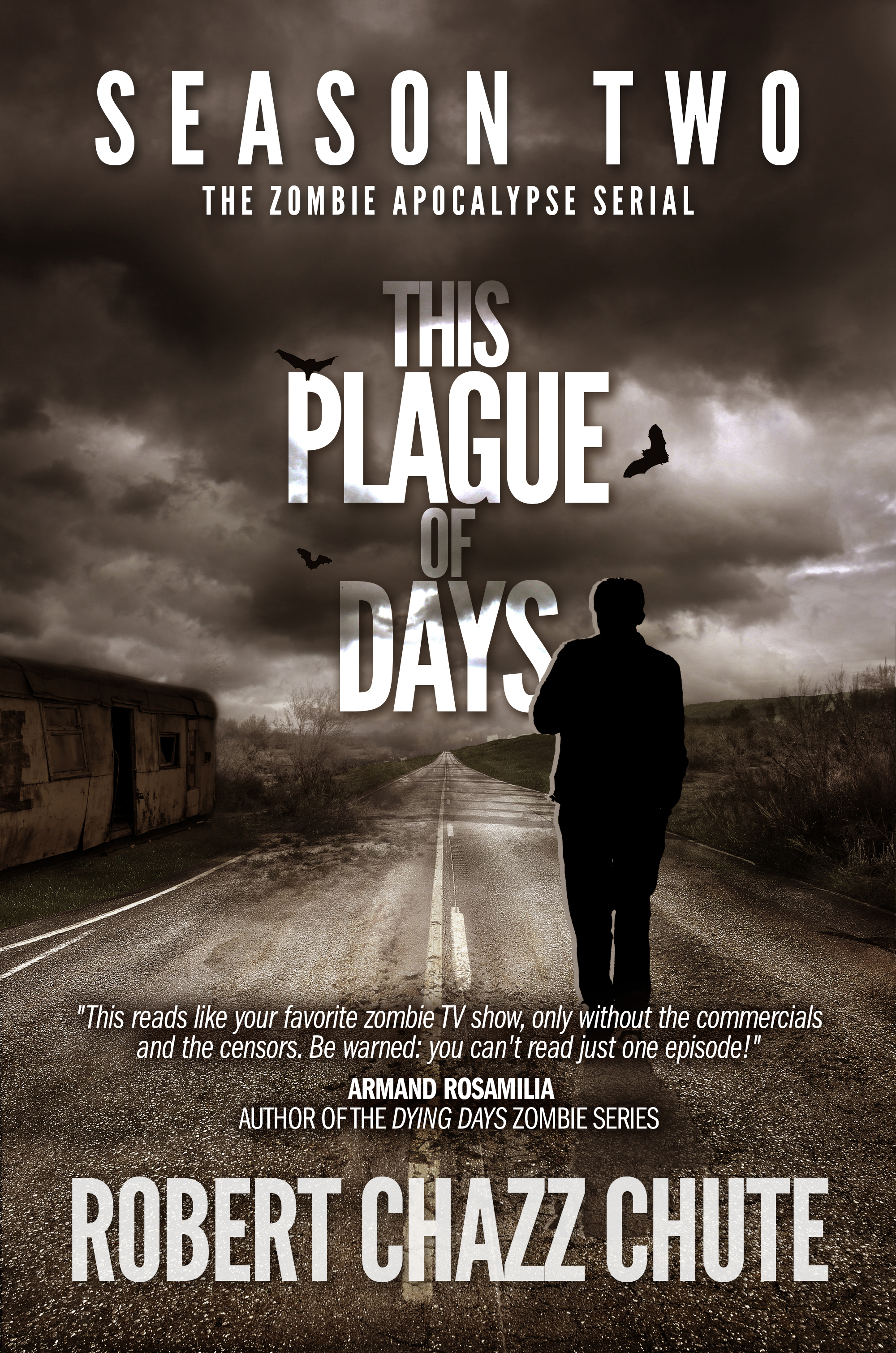
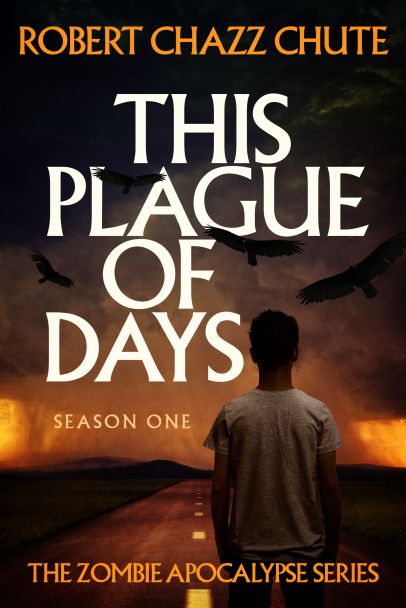
Bestseller with over 1,000 reviews!
Winner of the North Street Book Prize, Reader's Favorite, the
Literary Titan Award, the Hollywood Book Festival, and the
New York Book Festival.

http://mybook.to/OurZombieHours
A NEW ZOMBIE ANTHOLOGY

Winner of Writer's Digest's 2014 Honorable Mention in Self-published Ebook Awards in Genre

The first 81 lessons to get your Buffy on

More lessons to help you survive Armageddon

"You will laugh your ass off!" ~ Maxwell Cynn, author of Cybergrrl

Available now!

Fast-paced terror, new threats, more twists.

An autistic boy versus our world in free fall

Suspense to melt your face and play with your brain.

Action like a Guy Ritchie film. Funny like Woody Allen when he was funny.

Jesus: Sexier and even more addicted to love.

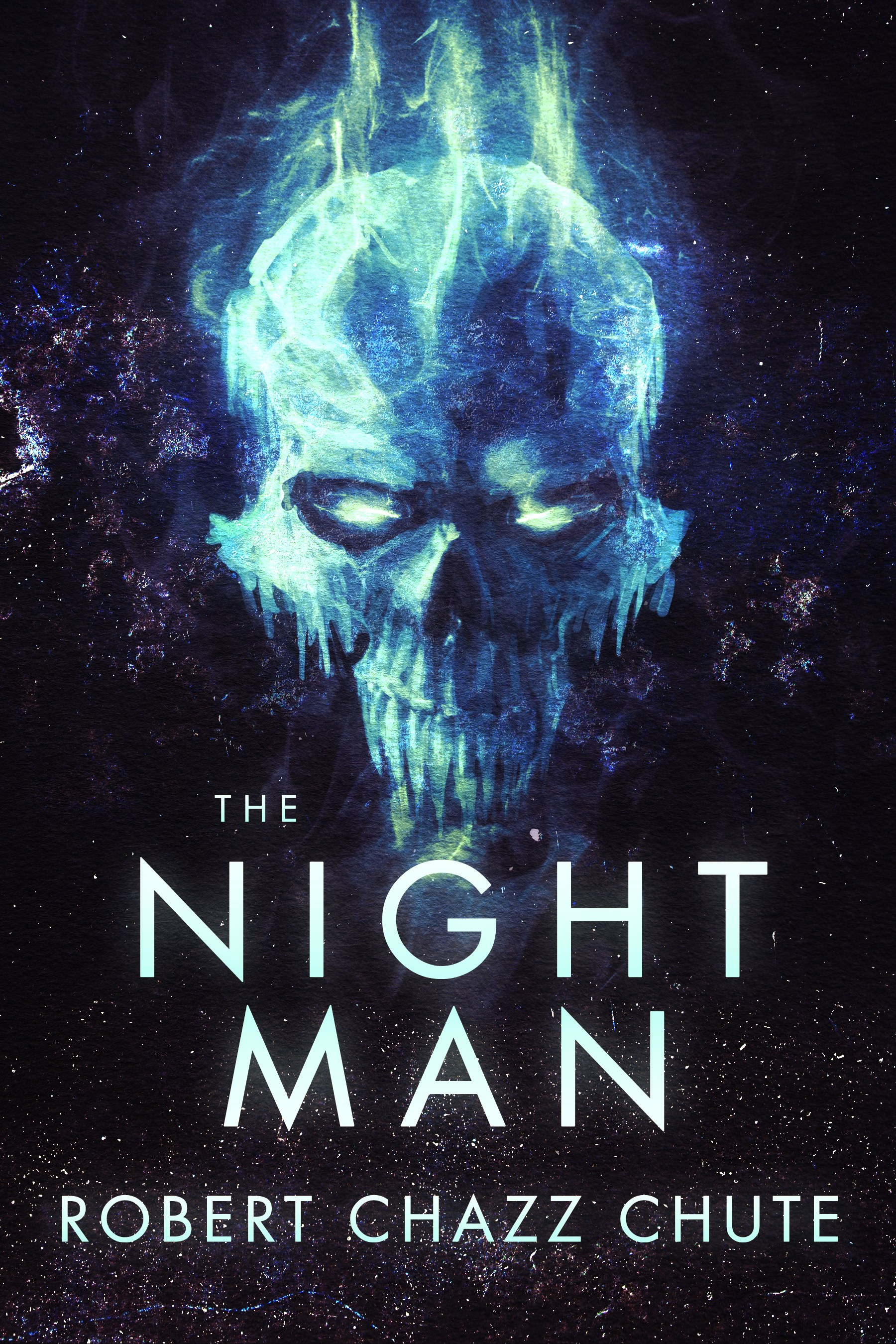
You can pick this ebook up for free today at this link: http://bit.ly/TheNightMan

Join my inner circle at AllThatChazz.com

See my books, blogs, links and podcasts.

Enter your email address to follow this blog and receive notifications of new posts by email.

Join 2,063 other subscribers