C h a z z W r i t e s . c o m

See all my books at AllThatChazz.com.

Scott Sigler’s Book Trailer for Ancestor

Scott Sigler tweeted me this link yesterday. Good trailer to promote his latest book. Production values in book trailers are really shooting up! Scott Sigler is not just a compelling writer. He used podcasting, web and viral promotion to fuel his success. Publishers didn’t recognize his potential. He proved them wrong. Through persistence and strategy, Mr. Sigler found his way to success by giving. 

I WANT TO LEARN MORE ABOUT SCOTT SIGLER’S SUCCESS STORY.

Filed under: Writers, , ,

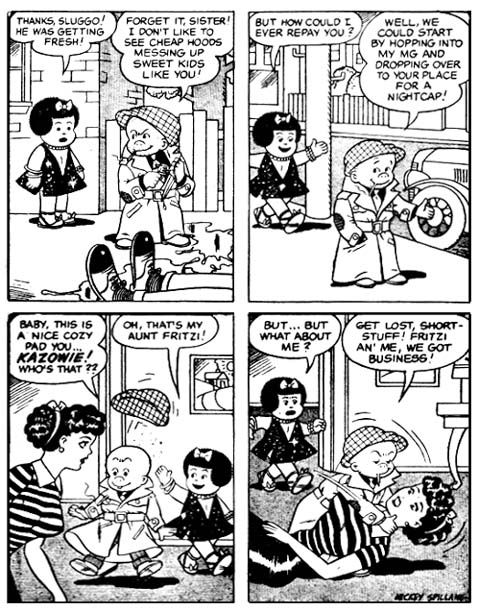
Mickey Spillane and Presidential Speeches

Whether you sniffed at Mickey Spillane’s prose or not, he was clearly a great guy who wrote a lot of books. (And I, the Jury is very readable stuff. Take a break from Atwood and read something with a plot for a change.)

A lot of people who don’t read, read Spillane. Yeah, I mean men. I do wish more men read. Male readers are becoming a weird minority subculture roughly equal in number to fart huffing fetishists (though I’m not suggesting there’s a set overlap in that example.)*

Spillane had a great life most authors could only dream about. Though prolific, he wasn’t always motivated. However, when his accountant called to tell him he was running out of money again, he suddenly found his muse.

BONUS

*Which reminds me: In a recent post I discussed coming publishing trends. Here’s another: more graphic novels and a new category, graphic short stories (comic books are graphic short stories, but I mean your literary efforts illustrated.)

My own editor confessed that she’s reading shorter and shorter mag articles due to the demands on her attention and her time. The reading shift is even evident in presidential speeches. In Abraham Lincoln’s time, sentences in speeches were 60 words long. In modern times, 20 words is average.

Filed under: Speeches, speechwriting, Writers, , ,

Breaking Bad & Surprise Twists

Last night Breaking Bad’s ending exemplified one of the best aspects of a well-crafted story: surprise.

William Goldman (author of The Princess Bride, Butch Cassidy and the Sundance Kid, Marathon Man, All the President’s Men among many others) is the master of the twisted plot. Just when you think you know what’s going to happen next, he suckerpunches you. In my favorite novel, The Color of Light, Goldman surprises the reader in the last few words, just when you thought you were safe from any more surprises. I love that.

And, for the same reasons, I love Breaking Bad, Sunday nights on AMC. Watch it.

BONUS: Read Ken Levine’s blog about the surprise ending of Newhart (and how they pulled it off.)

Filed under: Books, Writers, writing tips, , , , ,

Writing Critique Group Decoder

They say: That was interesting  and then add nothing else.

They mean: It wasn’t interesting.

They say: You made an interesting artistic choice there. At the turning point three quarters of the way through I would have done this…

They mean: If this was a totally different story, written by me, I’d like it.

They say: I found a bunch of typos here and you split an infinitive there and you like sentence fragments too much, cuz you know, that’s not a complete sentence…

They mean: I am a grammarian and hope to be an editor one day. Otherwise I am useless to you, but I can continue to be annoying. Later on I’ll be bewildered that no one ever sits near me or speaks to me at the break.

They say: Kaddoos to you!

They mean: I am an illiterate who doesn’t know the word kudos, so don’t take my praise so seriously.

They say: I absolutely love everything you write.

They mean: I want to sleep with you and hope you share my fetish.

They say: Where do you get your ideas?

They mean: Are you really the abused prostitute in the story and is it wrong that turns me on?

They say: There’s a few quibbles. Maybe you could engage more senses here and here and tell more than show in the last couple pages because it feel like you’re rushing the end.

They mean: I can make useful suggestions without trying to put you down to make myself feel good.

They say: I don’t care for fantasy stories so I really don’t have anything to say about that.

They mean: just what they said and that’s fair. If you hate a genre and can’t get past it, don’t comment on it.

They say: That wouldn’t happen.

They mean: That’s either outside my experience and I have no idea what I’m talking about or you have to write more to convince me that’s the ring of truth I’m hearing and not you working the smoke and mirrors.

You say: What do you mean, that wouldn’t happen? It did happen.

You mean: Sorry I didn’t hit the feel of verisimilitude for you. Yet. And sorry I sounded defensive.

They say: You sound defensive.

You say: Perhaps it’s because you’re being offensive.

They say: It’s just feedback. I don’t mean to be offensive.

You say: I guess I’m a delicate doily…or being offensive just comes really easy to you. Clod.

They say: Let me hit you over the head with the fact that I’m a teacher (or I’ve been published somewhere and you haven’t or as my good friend Norman Mailer used to say…)

They mean: Just do what I tell you to do and God, isn’t my voice a lovely basso profundo?

They say: Needs one more polish and you’re done. Have you thought about sending it to X magazine?

They mean: Good for you. Damn I wish I’d written that.

They say: I suck.

They mean: Somebody throw me a bone here and tell me one thing you liked about my story or I’m not coming back cuz I just can’t stand it anymore.

They say: You suck.

They mean: You shredded my favorite story last week. Payback, bitch!

They say: That’s the best story ev-er! Ev-er!

They mean: And you’re critiquing my story next! Mercy Master!

They say: I don’t understand the connection from here to there.

They mean: I wasn’t really listening.

They say: Your writing is very muscular and you know…workmanlike prose.

They mean: It’s too readable. I hate it.

They say: I hate epiphanies.

They mean: Your epiphany was banal or your story isn’t depressing enough to suit my worldview because no ending should ever connote trancendance because that would mean there is hope for the human race.

They say: It’s good but no agent or editor will ever touch that.

They mean: That’s really bad.

OR

They mean: It’s no good for agents or editors without vision who are constantly trying to catch up with the last publishing trend.

They say: Your writing is good but your subject/genre isn’t hot in market right now.

They mean: Once everybody else publishes it, then we’ll concede it had value but for now we’ll pee all over your efforts.

They say: Your writing is very accessible.

They mean: They could understand it and enjoyed it.

OR

They mean: They could understand it too easily which means you’re a commercial writer and therefore unworthy of their time.

They say: I don’t get it.

They mean: I don’t get it.

OR

I’m high.

They say: Far out! Man, that was like…I don’t know…you know…

They mean: I am incapable of expressing myself and I meant to sign up for the hemp macrame class but it was full. Also, I’m high.

They say: Nothing but once in awhile you catch more than one or two people rolling their eyes so hard it looks like they might strain something.

They mean: You’re the hobbyist in the class who is, in their opinion, truly hopeless. They’re right.

They say: Something consistently unhelpful .

They mean: Who cares? That’s all they’ve got. They’re negative clods who will not help you in your career. And if they’re so shit hot, what are they doing in a group with you? Shouldn’t they be off somewhere exotic turning down calls from the Nobel committee?

They say: Something constructive and consistently helpful.

They mean: I consistently say something helpful to you because you’re helping me. Why don’t we ditch a bunch of these opinionated bozos, go have a coffee after group and become each other’s readers? I get you. You get me. Let’s lose all these people who don’t get us and exchange stories and finally have a voice we know is worth our trust? Also, if you don’t give me 3,000 words a week I’ll really bitch you out. Please do the same for me.

(Keep an eye out for these Theys. They could be really useful to your career.)

They say: I didn’t write anything this week.

They mean: I’m just here to snipe at others and refuse to put myself out there.

They say: Your story had a compelling sense of place.

They mean: I couldn’t bring myself to read that shit but I have to say something.

They say: The twist ending (or revelation or change in character or the emotion) felt too easily achieved/melodramatic or cheap.

They mean: what they said.

They could have a point. Maybe they don’t. Maye you underwrote it or overwrote it. Whatever they say or mean, remember this:

YOU GET THE LAST SAY.

All art is subjective. Don’t take any critique too seriously. Listen and then do what makes sense to you. You must write for yourself first.

BONUS:

They say: Thank you for all your suggestions. I can’t wait to go home and implement all of them..even the ones that contradict each other.

They mean: I have no dignity and no judgement of my own.

Filed under: manuscript evaluation, Writers, writing tips, , , , , , ,

The Publishing Revolution will be televised, podcasted, tweeted and POD

Publishers want their authors to have these platforms, and with them an established following before they launch a book. They don’t have the skills, resources or inclination to go viral, but they do expect authors to shoulder that job. A good manuscript isn’t going to be enough for publishers, especially as the tech wave gathers strength. Publishers will be changing their expectations because non-English publishers are leading the charge to a revolutionized industry. They want you to have a website, a platform and a ready-made fan base (for the same reasons Hollywood keeps redoing old but familiar formulae, making movies out of old TV shows with varied success.)

This is not news, but it largely applied to non-fiction writers. Now many publishers are expecting the same electronically interactive wizardry from fiction writers as well. You still have to be a good writer, but your teeth should be straight and you should be comfortable in front of a live studio audience. It’s preferable that you be a gorgeous celebrity, so get to work on that if you haven’t already been interviewed by Regis Philbin.

The best case scenario for non-fiction writers is an area of expertise, a writing track record, a platform (preferably with a lot of speaking engagements to large groups.) The killer outline in their book proposal is a must, but so is a business plan and  a business case.

For fiction writers, publishers are going to be looking for many of these elements soon if they aren’t already. In other words, it’s more important than ever that you be ready to do the work of getting the book known. Advances used to be there so the author could eat while he finishes the book. More publishers will expect you to eat bark off trees and use that advance to hire a publicist and do your own tour of the Midwest, thanks very much, possibly in the actual Partridge Family bus.

The economic crunch will mean fewer books. It may also mean better books, but smaller promotional budgets. No matter. Those budgets were barely there unless it was for a book that didn’t need it anyway. (Read: King or Koontz.) As a result, more authors will flee to what smaller publishers who are left, or go DIY.

And what’s next beyond that? A writer friend of mine is writing literary travelogues on his Blackberry. The length of each epistle is determined by the limit of the text message file so it makes for nice uniform chapters. It turns out he’s ahead of his time. Cell phone novels are huge in Japan. They’re typically written on trains ( it’s a commuting culture) by urban young woman from age 15 to 24. Then they are uploaded to websites and followings grow. These romances (featuring lots of sex and violence in fairly simple language) have been picked up by eager publishers who get the cell novels to bookshelves, often at lengths of 300-400 pages. Many of the authors didn’t even consider themselves writers when they started out. Now they’re in bookstores all over Japan. Nobody’s doing something that innovative among the big publishers yet. Look for the phenomenon to catch on in a year or two, and expect it to be reviled by critics who’ll long for the dusty and respectable old days. Meanwhile the kids will eat ’em up.

Self-publishing houses getting more sophisticated. If they are smart–and they’re smaller so they’ll change quicker than the big guns–they’ll work harder to assist authors in promoting themselves. DIY is going huge. Much of publishing promotion has always been DIY since marketing budgets have always been miniscule. The person most interested in selling the author’s books is always the author, anyway. That may mean Do It Yourself marketing, or maybe it means you’ll go whole hog and form your own publishing company with the shipping department organized in your mom’s garage. Or maybe you’ll have no inventory and go Print on Demand in full.

More good news: the short story is coming back. Your audience has a shorter attention span and lots of distractions. They want to read something quick over lunch or on their commute. They’ll take short fiction with them on their MP3 and IPOD. You can serialize your fiction on your nifty new website to keep them coming back for more.

Big changes are coming and if you’re tech-savvy, you might have a good shot over the rest of the herd. If you aren’t tech-savvy, you’ll have to pay to get someone else to do it. Maybe you can teach yourself a bunch of website skills on YouTube.

Another fresh resource:  a book on establishing your platform before you send your manuscript is out by the woman behind Writer Mama. It’s called Get Known before the Book Deal by Christian Katz. I recommend you have a look. No sense letting everyone have another advantage over you. 

How will you survive the coming Publishing Apocalypse? It’s up to you. Literally.

Filed under: Publicity & Promotion, publishing, Rant, Writers, , ,

Writers: The Manifesto of Enough

The world is full of injustices and actions that make me rant and rave and curse. But things aren’t so bad today because I am focused on the things I can control. Others do not have the freedom to write. I do, so I should exercise that right to express myself and enjoy it, as others would if they had the opportunity. Others suffer, which I lament and protest, but they suffer no less when I fail to write. 

I have found the joy in writing and so finally I am writing copiously without straining and etching it out slowly with all the recrimination and self-loathing procrastination injects into the brain and marrow.

I was deceived and I deceived myself.

I thought it should come hard to be valuable, but writing is finally play. I must be incredibly stupid because I’ve written for so long, for a living, for myself, for others…and now I’ve finally got it. How did I fail to notice?

New thought (to me):

 To be valuable, on some level, writing has to be fun,

in execution and in reception.

I have experienced thrills and joys, but all with a wary and unwavering eye to how little time was left to enjoy them, how fleeting my smiles, how soon forgotten the awards, how soon spent the rewards.

Today I’m not doing that.

I write. I edit.

I have never been happier.

Filed under: Rant, Writers, writing tips, ,

Piracy and Copyright Worries

Here’s an interesting take on data piracy from thriller writer Joe Konrath at A Newbie’s Guide to Publishing. If you’re worried about somebody running off with your book and sharing it with their pirate friends, his piece might set your mind at ease.

Filed under: publishing, Rant, Writers, ,

You’re not a failed writer. Unless you quit.

The whole writing thing isn’t working out. You’re still sending out those sad ass queries, closing in on 100 now, and it’s just. Not. Working.

You could quit. Or you could write for the pure enjoyment of it without even thinking about publication. Crazy but there are lots of artistic precedents. For instance, I paint. I never expect to sell one (though, come to think of it, I just did, so the payoff was doubly sweet because I never expected that. Now I don’t expect to sell another.) If it isn’t at all fun, then yes, you should quit writing, anyway. If it’s no fun for you, it’s going to be torture for the reader.

If you aren’t having fun, you could read the post on writer’s block below and laugh. Or if, after you digest the lessons, you find yourself out on a ledge and the people look like ants, and the pavement beckons, well…free will, I say.

Or you could figure out what you need to do to change things up.

You could join a writers’ group or take a course–anything where they show you where you need to punch up your query. If you aren’t even getting nibbles for partials after 75 queries, it’s you. (Click here for the business site. I do vet manuscripts, you know.)

I’m not saying you need a self-publishing company yet. Maybe you need a website or just a printer. What you really need is a plan. There are a lot of books to help you with that. Many successful authors have been rejected more than 100 times (and that’s a symptom right there not to wait to be discovered, not to put all your testicles in one basket, and not to wait for annointment by people who sign bestselling authors, but apparently only accidentally.)

Author, cartoonist and my personal savior Scott Adams has observed that a really brilliant idea is, in its beginning stages where you’re looking for outside approval and funding, really hard to recognize as a brilliant idea. In fact, really brilliant ideas are indistinguishable from incredibly stupid ideas at first.

Man on the moon? Impossible.

Splitting atoms? Forget it.

Another vampire book? That’s so over.

A book about a boy wizard? Yawn.

Dean Koontz is still writing? Okay, that one is a recognizably bad idea, but you get my drift.

Now go out there and be the little engine that could! Okay, Sparky?

Go MAKE IT HAPPEN.

You’re a winning writer!

Filed under: publishing, rules of writing, Writers, ,

Make Your Life Literary

Books on writing abound and at a certain point, there’s a lot of overlap. I’ve bought so many that I’m beginning to recognize the reflex for what it is: procrastination disguised as education. My shelves are groaning for me to stop, but that’s just crazy talk. (As with all addicts, I say I can quit any time I want…just not now.)

However, Making a Literary Life by Carolyn See is different. This isn’t a day in the life of somebody camping out at the top of the New York Times bestseller list. This is somebody who teaches writing, applies for grants and has faced literary difficulty.She’s in the trenches. You’ll like her. You don’t have staff and neither does she.

There’s a lot of advice here you won’t see elsewhere. She’s a great advocate of building relationships with people in the business. You can protest and lament that it’s about who you know, or you can get out there with a campaign of “charming notes” to get to know people.

My favorite book on writing is Stephen King’s On Writing (if you haven’t got that already, you now have two books to go out and buy.) However, King’s a bit removed from the struggles of the mid-list from his perch up there in the stratosphere. See has a wry wit. She’s naked and vivisected on the buffet table so writers and would-be writers can learn from the exposed anatomy of her striving. She talks about mechanics and this insane and improbable business in an accessible way you’ll love. No wonder her charming notes worked.

The author makes an interesting argument for a non-query approach to editors. She’s also against authors buying their own books from their publisher at a discount to sell them. (That’s a pretty radical assertion in the current publishing climate where many authors are turning to their own resources to sell outside the box.)

Instead See suggests you buy your own books in bookstores, write off the expense and use the purchase to boost your tracked sales numbers while making the book a gift to bookstore staff. (I think she has a great point there. Authors doing a signing often make the mistake of thinking it’s about how many people show up to the event. It’s actually your chance to suck up to form an alliance with the bookstore staff so they’ll make an extra effort to sell for you into the future. Be nice to bookstore staff! Also, be nice generally.)

Sometimes I wasn’t sure if I agreed with her because it was brilliant advice or simply because she’s a bit of a contrarian and so am I. She lays out her publishing strategy and cheerfully acknowledges it hasn’t all been cherries and bouquets. It’s a realistic take on the literary life–several romantic moments and toasts with champagne flutes spread out amidst a lot of hard slogging.

And in what other writers’ guide are you going to find advice–and detailed advice at that–on the hows and whys of making the trip to New York to sell your work? Nowhere. Carolyn See balances the wry and practical in a book on writing unlike all the others.

I finished it the other night and I’m going to do something I never do. I’m going to read it again. The rest of the books on writing can wait.

Filed under: book reviews, Books, Writers,

WRITER’S BLOCK. EXPLODED.

Augusten Burroughs advises that when you’re stuck, write about the block itself and you’ll uncork. Or…

Maybe you need to take a break and recharge.

Maybe you need to go out drinking and start a fight and wake up on the floor of a bathroom covered in piss and puke and blood. It was good enough for Henry Miller.

Maybe you need to reevaluate if writing is really for you and if you gave it up, maybe you could, finally, be really happy.

Maybe you need to move to the desert for forty days and forty nights. Go naked but take extra socks and some weed. For more material, get there walking, from your front doorstep. At noon.

Maybe you need to walk down the road, Bill Bixby/Incredible Hulk-style with nothing but a backpack and dangerous gamma ray poisoning.

Maybe you should write something else. Anything. But not fan fiction. You toad.

Maybe you should write something short to build your confidence.

Shorter than that.

Maybe you need to stop being such a perfectionist. I mean, with your level of skill, perfect isn’t really achievable is it?

Maybe you need to channel an ancient God since the more current ones are so silent as you writhe in pain.

Maybe you should learn how to spell first. Or become a grammar fetishist so real working writers can come to your house at two in the morning and bludgeon you with ice axes. Then you shall be free. Dead. Whatever.

Maybe you should write like you don’t care who reads it. (Like I’m writing now. Just as an example.)

Maybe you should take a chance for once in your miserable life. You might finally write something fresh and unexpected.

Maybe you should write love poetry on bathroom stalls and make new friends in those stalls. Standing up and not getting caught add an exciting degree of difficulty and urgency to bad sex.

Maybe you should realize The New Yorker does not and will not give a shit about you until you don’t need them anymore. They publish people by soliciting their agents. Stop crying, strap on a pair and grow up.

Maybe you should realize you are not Stephen King. Sadly, you might be the next Dean Koontz, however.

Maybe you should get over yourself, College! Stop bagging on what’s popular. Your stuff is sensitive Oulipo MFA surreal writing exercise bullshit. Sure, your incestuous bunch of toadies loved it, but it’s only a writing exercise that’s so “inside” that, as for reading, it’s more than an exercise. It’s exhausting.

If you’re non-MFA –just one of the regular kinds–maybe you should go look up Oulipo. It’s fun, but please don’t send it anywhere. Please!

Maybe you should take up painting. When it sucks, call it abstract. Even if it’s good, call your representational art “ironic” to stave off batshit critics.

Maybe you should get an agent. Just stop saying you should get one.

Maybe you should garrote the agent you have.

Maybe you should give up for the good of society. At least give up on the great American novel and write something they’ll read. (Porn. Affidavits. Moronic websites about testicular torsion–for medical purposes or for fun and profit.)

Maybe you should get outside. You’re pasty and have forgotten the smell of roses.

Maybe you should stop breaking your parents’ hearts and get a real job.

Maybe if you worked on an oil rig you’d have something to write about.

Maybe if you had a brain in your head or were eight years older you’d have something to say.

Maybe if you were ten years younger–and prettier–you’d have a shot instead of a shit.

Maybe you should care less and write more. Maybe you should care about Swine Flu pandemics and write far less.

Maybe you should make a schedule and finally stick to it you whiny wannabe.

Maybe you should shoot up. A vein. A mall. Whatever. (You’d be much more marketable either way.)

Maybe you need to get the pipes cleared. Go have sex with somebody who you find vaguely detestable and then write about that. (Best if they’re a celebrity or a homeless person. In between? Less marketable.)

Maybe you should start a blog. Or a magazine. Or sleep with someone who does and then blackmail them so you can appear on same for far less money than you’d charge if you were a self-respecting whore.

Maybe you should have a baby and then complain it ruined your life and killed your ambition. Everybody will feel better when you’re on your deathbed. Next week.

Maybe you should have a baby and then live through them so they can do all the hard work of becoming a bestselling author someday and you’ll have a small smarmy piece of that, won’t you?

Maybe you should start a publishing house and give ’em what for.

Maybe you should look at your writing again, fall out of love with it and ask yourself honestly, what for?

Maybe you should procrastinate some more.

Maybe you should look again at character. There’s lots of action happening, but it’s clear you care about the characters about as much as you care about what happens to Mario on your Nintendo game.

Maybe you should get a plot. I’ve seen glaciers jump around with more frenetic energy.

Maybe you should read more of your genre. Don’t get me wrong! Steamships in different dimensions could sell…if you were much more talented.

Maybe you should call your mother and tell her how hard it is. If she’s a good mom who cares, she’ll tell you to shut the fuck up and get back to work cuz Mama’s ciggies don’t buy themselves. (On the other hand, a bad Mama will be so sympathetic, leaving you feeling better about yourself, simple and even more pathetic.)

Maybe you should call your Dad and tell him how hard writing really is. He can tell you (again!) how his leg was shot off in the war and today he was up on some prick’s roof, tarring it while the sun beat him senseless, getting skin cancer for minimum wage. You’re at Starbucks plotting out a really tough short story and he’s enjoying his golden years in so-called retirement plotting to kill your mom for the insurance money because she won’t shut the fuck up about what a genius you are despite the fact you dropped out of college and didn’t tell them for two years while you found yourself. (By the way, your great realization in the end? You’re half a smart as you thought you were, you’re a coward and weed sure helps you get really deep in the creative process. If only you could write it down. Also, you’re short.)

Maybe you should hang out with a friend. He’ll have lots of good ideas about the hilarious antics and paperwork snafus down at the Quantity Surveying Office that would make a great book. Sure.

Maybe you should compare yourself to JK Rowling again, except you still don’t even have a book to send out to be rejected. You are a single mom, so you have that in common…actually, any similarities pretty much stop right there. Yes, you both breath in oxygen, but she’s produced an industry worth billions and you’re still sitting there stupefied reading this shit and producing carbon dioxide.

Maybe you should feel sorry for yourself some more. That’s been very helpful so far.

Maybe you should join a writing group so you can get shredded by losers who aren’t published either.

Maybe you should trust the instincts of your acquaintance in publishing who’s very clear she hates everything and won’t tell you what on earth she might ever approve of. (And if she goes on for five more minutes about how you’ve captured “a sense of place” pull out your nickel-plated .38 with rubber-handled grips and the mercury-pointed bullets. Shoot her first, then you. Five bullets for her, one for you.)

Maybe you should reread something you wrote. Anything! Please! Do not put it in the envelope without doing this several times. Please! Please!

Maybe you should cut the five-page preamble and open the chapter in the middle of the action.

Maybe you should finish a chapter with a cliffhanger instead of boring us with your bullshit about “cheap tricks” and–God help us–your “integrity.”

Maybe you should whore yourself out to the greeting card industry. You’d have a better shot and, given the length, you could get a feeling of accomplishment every day! Imagine! (Agh, get over yourself. We’re all whores to somebody.)

Maybe you were meant to be a shoe salesperson. Admit to yourself that you’re really 90% foot fetishist and only 10% writer, not the other way around.

Maybe you should succumb to the lure of a regular paycheck. Your next high school reunion will come up fast. Saying you’re a writer is cool. Praying for an asteroid strike when your asshole high school buddy (who became a plastic surgeon) asks what you’ve published is distinctly uncool. Worse, he knows you haven’t published a thing and still live with your parents. Meanwhile he’s spending his days elbow-deep in tits, crotch-deep in sexy nurses and knee-deep in cash. You’ll be taking the bus home. He’ll be flying first class. “Poor Margaret/Josh/whatever. He/She is such a dreamer but never got it together. More tequila to lick off my nipples? Birgit? Heidi? Russel?”

Maybe you should finally get it that being a dreamer is great. In fact, before you’re expected to pay taxes, it’s fantastic.

Maybe you should stop thinking this list is too harsh. You’re too old for summer camp, too. Get serious and write your goddamn opus or stop pretending to try.

Maybe you should cut the last hundred pages. You know, the denouement. That part after all the action ends and the reader starts wishing you had left him wanting more.

Maybe you should become an editor. You’re already a frustrated writer so you’re halfway there.

Maybe you should forget about college and go to a library. Unless you want to major in being a conversationalist. That’s what a liberal arts degree and that expensive tuition is for, you know. After graduation you won’t be building bridges into publishing with your pissant thesis in Elizabethan poetry. You could build lattes, though.

Maybe you should go to a studio and get your author photos done now. You’re getting older and uglier and fatter by the week. If lightning strikes, you do want to be ready.

Maybe you should use that inheritance to splurge on a real author website. Your meteoric prose that could change the face of literature is useless since you don’t already have a platform. (Your child’s burst appendix can probably wait. Tell your adorable six-year-old to suck it up and walk it off. Daddy has to pay a web designer, not another doctor for every little boo-boo.)

Maybe you should do us all a favor and quit.

Maybe you need to begin again.

Maybe I should stop before I kill again.

You should definitely pick up a tangent from the above list of maybes, pick up a pen, and explode your writer’s block.

Oh, and gentle reader, leave a comment, please. I’d like your vote on your favorite of the Maybes…

Filed under: Rant, rules of writing, Writers, Writing exercise, , ,

Bestseller with over 1,000 reviews!
Winner of the North Street Book Prize, Reader's Favorite, the
Literary Titan Award, the Hollywood Book Festival, and the
New York Book Festival.

http://mybook.to/OurZombieHours
A NEW ZOMBIE ANTHOLOGY

Winner of Writer's Digest's 2014 Honorable Mention in Self-published Ebook Awards in Genre

The first 81 lessons to get your Buffy on

More lessons to help you survive Armageddon

"You will laugh your ass off!" ~ Maxwell Cynn, author of Cybergrrl

Available now!

Fast-paced terror, new threats, more twists.

An autistic boy versus our world in free fall

Suspense to melt your face and play with your brain.

Action like a Guy Ritchie film. Funny like Woody Allen when he was funny.

Jesus: Sexier and even more addicted to love.

You can pick this ebook up for free today at this link: http://bit.ly/TheNightMan

Join my inner circle at AllThatChazz.com

See my books, blogs, links and podcasts.

Enter your email address to follow this blog and receive notifications of new posts by email.

Join 2,063 other subscribers