C h a z z W r i t e s . c o m

See all my books at AllThatChazz.com.

Writers: Do you have time to get published? And can we dump the “self” from publishing?

P Harry Potter

Image via Wikipedia

Wow. I just noticed that an author profiled on this blog, the great JE Knowles*, was rejected 100 times before her book Arusha, was accepted by Spinster Press. I’ll say it again: Wow. That’s common. Many authors who later went on to great success were rejected many times before someone in traditional publishing saw their manuscript’s sales potential. One day, JK Rowling will announce who rejected Harry Potter before Bloomsbury picked up the deal of a lifetime. (Then the tears, excuses and recriminations can really begin. That promises to be quite delicious, but I digress.)

The reasons for such rejection are many (and many of those reasons have little or nothing to do with any particular author.) I’ve delved into that reasoning elsewhere, so let’s talk about time. It takes you a long time to write a book and get your editor and/or beta-readers lined up. You comb and comb the manuscript and until at last you don’t find any typos. (As soon as you send off the manuscript, inevitably you will find a new round of typos and errors but just do what you can because that’s all any of us can do.)

You do your research and you send it off to editors or agents. You format your submission to the individual requirements of each agency or publishing house. Most just want queries up front and some want an outline, too. Others will ask for partials but the length of a partial can vary. If it’s non-fiction, you’ll need a business plan for all the marketing you intend to do to sell the book and evidence of your vast platform. You send it all off to five agents or houses and you wait. In the meantime, you work on expanding your platform and thinking happy thoughts and get all caught up in that positive thinking bullshit of The Secret.

Many agents and houses don’t actually do rejection slips anymore. No answer is an answer. The trouble with that is, you don’t know when they’re done with you. Next, after some undetermined time, you feel like your stress headaches will squeeze your forehead so hard your brains pop out through your nose. So you decide it’s time to decide upon the next five agents and you begin your research again.

And so on. And you begin to question your mission on earth and the need for your existence. And you get more of those brains and blood in the Kleenex headaches. And then you get a nibble. An agent wants a partial from a query you’d assumed had been forgotten. This tentative bit of interest can go south so many ways so quickly, I’m not even going to belabor those ugly facets here. Let’s just say, it’s a long road to getting an agent, and that’s no guarantee you’ll be published.

Once you get over the initial ecstasy of someone validating your wretched writerly existence (and that little orgasm is disappointingly brief) you start to get itchy that your book isn’t up for sale and won’t be for a long time.  “Patience,” you’re told. You’ll be told that a lot. Eventually you may begin to wonder if it’s just you being impatient. Then that will pass and you’ll start to wonder if there really is a flaw in the argument of  “This is how it’s done and this is how we’ve always done it.” The point is, after you’re accepted by a traditional publishing house, it still an 18-month wait until you hold a book in your hand. In most cases, unless you’re Sarah Palin (and thank God you aren’t!) that time-frame is a minimum.

So, how old are you? Do you have years to wait before you’re in print? There are alternatives. Smaller presses and POD publishers might have a shorter time frame to get your work in print. Using Smashwords, you could have your book out very quickly.  E-books are fast. Often, too fast.

If you’re not prepared to wait for the traditional publishing model, the deeper question is: Are you prepared to start your own business and become an independent publisher? I see a lot of self-publishers, but I see far fewer independent publishers who are prepared to dive in and get really serious.  The difference between a self-publisher and an independent, I think, is one of seriousness and commitment. You can get anything out there quick and awful. Any half-considered manuscript full of errors and dropped threads can be pushed on an unsuspecting populace quickly. (Of course, it won’t sell well, the word of mouth will consist of warnings and readers you suckered the first time won’t come back for your next book.)
I’d like to see more independent publishers who are ready to hire an editor (said the editor) and swim in the deep end of the pool. The stink on self-publishing is that the quality is atrocious. Eventually, I’d love it if the independent publishers who committed to quality outnumbered the self-publishers. In many people’s minds, “self” will always signify “vanity.” Those objections aren’t all wrong.

As creators, we must demand more of ourselves for emerging models to fly. We’re at the end of the beginning. Now let’s knuckle down.

And yes, you’ll see my first book, independently published, up and out there, later this year.


*See the first link below for that interview and more information about JE Knowles.

Filed under: DIY, ebooks, Editing, Editors, publishing, self-publishing, Useful writing links, Writers, writing tips, , , , , , , ,

Writers: Your mistakes taunt you

The original Ruby slippers used in The Wizard ...

Image via Wikipedia

I saw the movie Limitless over the weekend. I loved it (and it helped the loser/hero starts out as a scrambled slacker writer who is hopelessly blocked . It’s a great time, but as I hit the parking lot I thought, (MINI-SPOILER! SPOILER! SPOILER!) how come they left the dangling thread of the unsolved murder? Was it lost on the editing room floor?

There are plenty of precedents for such mistakes. For instance, a truly great classic, Casablanca is brutally flawed if you think about the ending for a moment. The engine of the plot turns on there being only two travel passes so only two people can leave. Will Ilsa go with Rick or Victor? The resistance needs Victor so Rick must sacrifice his desires for Ilsa for the greater good. But there are no Nazis checking passports at the airport!

In fact, in the background at the end of Casablanca just a few little people (they were “dwarves” when the same extras were in The Wizard of Oz) pretend to fuel a cardboard cut-out plane. Rick could have escaped, as well. Instead he stays with Louie and they begin a beautiful friendship that, years later, would inspire the raw, hot homo-eroticism of Bert and Ernie of Sesame Street fame. (Okay, I made up that last bit.)

Sometimes people underestimate the importance of editing. When stuff is left out, it sticks out. Even if you enjoy a story, as you put it down, you think about that niggling deficit. I guess it’s just the way our brains are wired. You forget praise, but point out a screw up, that you remember forever.

I recently went through a writing sample for an author. I might have seemed harsh though I took great pains to be kind. The truth is, I found a lot to fix. The author wanted to send it off for traditional publication. Without those fixes, there was no way it was going to get past the first gatekeeper.

Publishing has changed. There are fewer editors doing more work and if they accept a new author at all, they do not want to have to do much editing at all.
With To Kill a Mockingbird, Harper Lee‘s acquisition editor took a year off to perfect the book. There is no way in hell that would happen today.

You want your text to be excellent. If you publish it yourself, good might do. Even “good enough” might pass. But is that really what you want? Mistakes in books stand out and stick, burning you at the thought of readers stumbling over a glaring error and questioning your ability, craft or intelligence.

Errata are in all books. They shouldn’t be dancing around in neon taunting you.


Filed under: authors, Books, Editing, Editors, movies, publishing, Writers, writing tips, , , , , , , , ,

Writers: “Amount of” versus “number of”

Syrniki. Syrniki, fried quark cheese pancakes,...

Image via Wikipedia

There are a number of cheese pancakes in this picture: six.

The amount of cheese is in the recipe. You wouldn’t say the number of cheese or the amount of pancakes.

A number of mistakes in a book I read recently kind of bugged me. Overall, there weren’t that many mistakes in the book, but one kept coming up. The problem was that, while the author tried to quote statistics and make a compelling argument, she repeatedly undermined herself by misusing the phrase “an  amount of.”

“A  number of” things can be counted.

“An amount of” refers to a measure of volume.

For instance, there are a large number of armies on earth. The amount of their combined firepower is uncertain. There is a certain amount of apple sauce in this recipe. There are a number of apples in that recipe.

Is it a big deal? Not really, but it’s a distraction and your job, as a writer, is to eliminate distractions from your thesis or your story. As a reader, you’ll notice mistakes and that’s often what you’ll remember rather than the writer’s point.

Filed under: Editing, Editors, grammar, publishing, Writers, writing tips, , , ,

Sell your books. For a long time.

Light and shadow on an Irex iLiad ebook reader...

Image via Wikipedia

Movies focus on the opening weekend. Books have a month to hit big or get returned. At least, that’s the way it was for all books. That’s changing in a big way.

Recently I read an agent talking about how digital books extend the life of sales of paper books. Essentially, the message was very much “the status quo is still the status quo” and “E-books are an add-on. Publishing hasn’t substantially changed.”

I don’t agree. First, the extent to which traditional publishing isn’t changing is part of its problem, not its solution. True, many people prefer paper books to e-books, but that’s changing, especially since there are far fewer places to shelve paper books. Bookstores are closing up. It’s not happening overnight. It won’t happen to all bookstores. But e-books are where to place your bets for the future and the future’s coming faster than any of the experts predicted. (Of course, it’s all so new, I’m not sure if anyone really is an “expert.” Maybe that’s a title for someone to claim years later, not in the middle of a history change.)

The agent asserted that most people by far don’t even own e-readers. Yes, and a lot of people still don’t own telephones. That doesn’t mean utility stocks, like Ma Bell, are a bad bet. A lot of people will never own e-readers, but that won’t matter to the book industry because most of those people aren’t big readers anyway. Power users (power readers) are responsible for buying a lot of books—power users, like me. For instance, I bought The 4 Hour Body electronically. Then I decided I wanted to own it in paper as well because it’s a reference book. Then I kept downloading.

The agent’s point about e-books extending sales really stuck with me. The game has changed with e-books. Distribution is cheap and easy. It’s so easy, authors can sell their books themselves through distributors and their own websites. Authors know that their books are not stale to new readers. Every book is new to anyone who hasn’t yet read it.

This is the “long tail” of sales. And now it’s for everybody. The game has changed. What’s weird is that not everybody sees it yet.

Filed under: publishing, Writers, writing tips, , , , , , , ,

Writers don’t get enough credit

Jim Parsons, Kaley Cuoco (The Big Bang Theory)

The kids asked us which celebrities we want to date. At first, in deference to my beautiful wife, I said no one. Then my daughter said, “Mom wants to go out with Johnny Depp.”

“What?” Time to reconsider. There are celebrities I’d like to meet, sit around and talk with over a big plate of nachos. I know Kevin Smith would be cool to hang out with because he’s funny off the cuff. Same with Joe Rogan. But mostly, celebrities would disappoint in that regard.

Just as winners on Survivor rarely credit luck for their win (though that’s an obvious component), actors often want their fans to think they are every bit as clever and witty as they appear on TV.

That’s why I appreciated Jim Parsons from The Big Bang Theory. In his Emmy acceptance speech, he took great pains to thank the writing staff for their work in getting him up on that stage. Jim Parsons makes Dr. Sheldon Cooper live. He’s a talented comedic actor who does a lot with body language and expression to make such a weird character work. But the words coming out are from a script and he knows it.

Thanks, Mr. Parsons, from writers everywhere.

And no, I’m not worried about losing my wife to Johnny Depp. But he doesn’t live next door , either.

Filed under: television, Writers, , , , , , , ,

What writers can learn from House

Chronology of Enderverse stories, showing wher...

Image via Wikipedia

Fans had an interesting response to last week’s episode of House. I’m not going to spoil anything for you. Let’s just say some people loved it and some people hated it. As far as I could tell, celebrants and detractors were pretty evenly split. Many agreed the episode was a heartbreaker but they drew different conclusions about the success of the story: people loved it and hated it for the same reasons.

This is why you don’t arrive at your story by committee.

The episode was, by any measure, a success because people cared. The web was full of passion about House and lots of amateur advice about what should and what should not have happened.

The worst response to your fiction is not a negative reaction. The worst response to your story is, “Who cares?” As you write your story, listen to your instincts. And know that if you try to please everyone, you will fail.

Take risks.

And if it plays, it plays.

Filed under: rules of writing, television, Writers, writing tips, , , , , , , ,

Publishing: How important is nationality anyway?

I can’t say I’m proud to be Canadian. Proud suggests I’ve achieved something by accident of birth. Pride of nationality is like being proud of being tall. I say instead that I’m lucky to be Canadian. It beats a lot of  other possibilities. (I think George Carlin had a bit about that, I’ll have to look for it. Ah. Obviously I found it.)

Since Americans have more e-readers than Canadians, a Canadian author recently wondered aloud if Canadians had a chance of making any money in e-books.

It has always seemed strange to me how parochial many readers can be. Instead of seeing a story set in the Arctic as exotic and interesting, they tend to see it as too Other. In books, the wisdom has long been that people want “the same thing only different.” Americans want to read about Americans and Canadians are the only ones who will put up with sodbusters set in historic Saskatchewan.

This is true and it’s not. We generalize with confidence to familiar settings. New Yorkers enjoy reading about New Yorkers. But what’s true generally is not true in the particular. When Yann Martel wrote Life of Pi, how many people could relate to lion-taming on a raft in the Pacific? For that matter, how many people can really relate to foreign spy thrillers and the intrigue of the Pentagon and State Department? Instead, they read to escape into the unfamiliar.

Can Lit is somewhat fetishized by many Canadians, especially if they are part of the publishing establishment or Canadian media. It’s not that I’m saying it’s all bad, but I would say it’s not the only game in town. I mostly read American authors and personally, I don’t have much patience for a lot of Can Lit. It’s a matter of taste. You can argue I have none, but the heart wants what it wants and I don’t think Chuck Palahniuk‘s artistic sensibility would have been nurtured as a hoser. In college I steered away from Robertson Davies and opted fro Mailer.

But e-books cross all borders. Publish an e-book and you can have english-speaking fans downloading your work in Sweden. Borders don’t mean much anymore. What’s more, come up with a good story—a really good story—and I don’t think it matters much where it’s set. And it doesn’t have to be high art conquering us all, either. Think of all those plot-oriented books English Majors are programmed to hate:  Angels and Demons, Da Vinci Code, The Girl Who Played with Fire etc.,… A bunch of unfamiliar names isn’t deterring anyone from enjoying the Stieg Larson books.

So write a good story. In my novel, the protagonist has identifiably American goals. He wants to be a movie star. He live in New York but wants to live in Hollywood. He idolizes movie stars you know. He has to be American.

I can’t take that story and artificially transplant it so he’s a kid from Moncton who wants to make it big in Toronto. Canadian stars typically head south anyway, make it big in the States and only then are they recognized as talents. We’re Canadian. It’s what we do. Canadian celebrities are the equivalent of D-list celebrities. We’re really proud of them once they prove themselves elsewhere. In fact, Canadians don’t have “celebrity” per se. We just say they are “known” or “recognizable” or “familiar but…” or “Who’s she?”

There are other issues for Canadian authors. If you write SF, chances are excellent you deal with an American publisher directly or have an agent based in the US. Yes, there are some SF Canadian agents and publishers, but relatively few. That’s unfortunate, especially since three major SF authors are Canadian: William Gibson, Robert J. Sawyer and Spider Robinson. (Of those three, Robinson, the man named heir-apparent to Heinlein, is under-appreciated these days because his work is funny SF.)

The main issue is about the numbers. The USA has a huge population and Canada has a small one. Focusing your work exclusively on the Canadian market while ignoring the potential south of the border takes a special kind of focus. To sell more of anything, you have to go where the people are. Bands and authors hit as many cities across the US as they can. For many, if they come to Canada at all, it’s Toronto and that’s it. That’s just how the math works. Canadian tour dates are an afterthought. Authors in the United States may think of Canada kindly, but they’re not getting rich off us.

Nationality isn’t important. Story and marketing is.


Filed under: Books, publishing, Writers, writing tips, , , , , , , , , ,

Writers: TOP 10 Objections to Self-Publishing

Amazon Kindle e-book reader being held by my g...

Image via Wikipedia

As I read the growing number of success stories about self-published authors, I’ve seen some of the same worries and objections pop up again and again. Let’s deal with some.

Objection 1: As self-publishing grows, who will be the gatekeepers to keep out all the self-published books that are gonna suck?

My answer: Who keeps all the awful books off your bookshelf now? You do. The people you trust help you curate your book collection. This is really a question of taste and quantity. Your taste is still yours. The variable is going to be quantity as we’re crushed under the weight of so much bad prose. Sure, as an indie author, it will be hard to be heard above the promotional din. It’s hard to stand out anyway. However, through social media, word about good books spreads faster. Readers curate. Sounds more democratic than a small faceless editorial and sales cabal determining your destiny from an office you’ll never see, doesn’t it?

Objection 2: Without traditional publishers, authors will have to promote their own books.

My answer: Most of them do that themselves now. In fact, Margaret Atwood recently suggested that, since authors are their own publicity department, they should get a cut. For instance, one solution would be: If you, the author, spends $10,000 on promotion, you don’t have to earn that $10,000 again before you start getting royalties. (Many savvy authors—if they can afford it—plow their advance right back into promotion.)

Objection 3: E-readers are selling much faster in the United States than they are in Canada. Can Canadian authors make any money from e-books?

My answer: When you upload to Amazon, or any other platform, there aren’t any flags on your book that say “This one’s from Canada and this one’s from Tunisia so ignore this shit.” The web makes us citizens of the world so you can sell to the vast US market. The British and Australian markets are pretty big, too. We live in an Age of Wonders. Borders? We don’t need no stinkin’ borders!

There’s a deeper and much more serious answer to Objection 3, but I’ll save that for tomorrow’s post because it will sound unpatriotic.

Objection 4: But self-publishing is expensive.

My answer: It used to be but that’s old data. You can start selling e-books for just about nothing down. And many e-publishers are now looking at the paper version of their product as a nice add-on, not a necessity. Also, beware of companies that call themselves indie, but they’re really working on the vanity press business model and are out to bleed you dry.

Objection 5: Self-publishing sucks because it’s not professionally edited.

My answer: That one’s mostly true (though you could argue a lot of traditionally published books also suffer this malady as agents edit more and big houses edit less.)

I’ll take the middle road: Unedited work gets savaged in the marketplace. Few people will buy, word will get around and even fewer will buy the next book. It’s such a losing strategy that it won’t survive. A lack of editing is really the main complaint I hear about self-publishing. I think people who are serious about it will get it. I’m optimistic that as we hammer away at that complaint, writers will see they need some professional objective input.

(And yes, I’m an editor, too, so take that into consideration as you weigh the validity of my uncharacteristic optimism on this point.)

Objection 6: You can only be a financial success with the Big  Six behind you.

My answer: Anyone, even if they have a steady-paying job, dreams of winning the lottery. (Me, too!) But getting recognized by an editor or agent and getting the full JK Rowling billion-dollar deal is like winning the lottery, but with lousier odds.

If you’re good at math, you see through this objection quickly. Most books—indie or trad—don’t sell. Most authors don’t live off their writing income. There are people who are making good passive income from selling books, short stories and novellas. They aren’t in the billionaire’s club though Amanda Hocking’s now a millionaire.

As a self-published author, you’re selling your books for prices which are the equivalent of couch cushion change, but you do get a much larger percentage of each sale. JA Konrath has done the math and proved you can hold on to your rights, work for yourself and make much more money than a traditionally published author. With time, the fallacy of this objection will sink into the consciousness.

Just like my daddy said, “You don’t get rich working for somebody else.” Just like my ma said, “The Man is out to get you. The only way to control your life is to seize the means of production.” Good old Black Panther Marxist Ma.

Objection 7: Self-publishing is for losers who wouldn’t get published traditionally.

My answer: Has been true. Less true as time passes. As more traditionally published authors jump to e-books (already happening) this impression will fade. (This ties into the curation worry in #1.) It also has to do with ego. As someone with a huge ego, I’ve struggled with this, too.

Objection 8: If I self-publish and wear all the hats, when will I have time to write?

My answer: When you find or make time, I guess. My rule is, I don’t indulge in social media when it interferes with writing time. Twitter is for winding down, breaks and commercials and when I feel like it. It’s not an obligation that cuts into otherwise productive time. I’m not unsympathetic to the problem, but it’s not a new one. As I said, most traditionally published authors are hustling their books on their own anyway, without assistance or input from their publishing house.

At least we have more leisure time than we’ve ever had in all of human history. You probably don’t have to chop wood, skin your own cow and make your own clothes and rope in addition to feeding yourself.

Maybe you need to stop making excuses and sit down to write. If you missed Tuesday’s kick-ass,  light-your-hair-on-fire, no-excuses, take-no-prisoners, no-apologies self-evaluation rant, you better read it here. You don’t like me now? Ha! You are going to hate me when you read that!

Objection 9: If  I go out into the world without an agent, who will plan my career?

My answer: Okay, I’ve phrased that objection facetiously and unfairly. A lot of agents do talk about planning their authors’ careers, though. Aside from encouraging you to write more books faster and write the best books you can, I’m dubious about advice that comes after those no-surprise generalities. (For more on that lunacy, read Dean Wesley Smith’s take on agents here.)

So what will you do when you’re looking for support? You’ll talk with your friends. You’ll reach out to your network of mentors and followers. You’ll get feedback from your beta readers. You’ll learn many of the things you need to know from fellow travelers, Google and YouTube.

Objection 10: But I hate reading on an e-reader!

My answer: You aren’t alone. Not everything is for everyone. But young consumers will take it for granted. That’s one of the reasons Young Adult e-reading is exploding. YA is also extremely popular because it’s the one genre where traditional publishing is open to cross-genre books; lots of adults read YA, too. Older people were the surprise e-reader buyers early on. As the price drops, more kids getting e-readers and the age ratio is shifting.

There is resistance to change. It’s not all bad and it’s not all good. Consider that, if you’re older, you remember someone who hated mandatory seat belts. Not an objection you hear much anymore. The New Normal is a dangerous concept, though I don’t think all the paranoia applies in this case.

Also, let’s get real: Many people who hate e-readers haven’t actually tried them yet. As I was reading mine, my 11-year-old stopped and touched the screen. “Oh!” she said. “I thought that was paper at first. I thought you had a piece of paper on top of your e-reader screen! Wow, that looks so real!”

Yup. I smiled.

These are my answers to objections to self-publishing.

Do you have some, too?

Filed under: authors, Books, DIY, Editing, publishing, Top Ten, Useful writing links, Writers, writing tips, , ,

George Carlin VIDEOS (plus Kick-ass Wake-up Call Questions for Writers on Getting It Done)

Giving up things that hurt you. Hm.

Pause for thought.

What are you keeping, as a writer, that’s hurting you? Are you addicted to distractions (Farmville, mindless surfing, TV, Sheen gossip, vegetating etc.,…)? Are you getting on with what you don’t want to do so you can accomplish what you do want? Are there people in your life who stand in the way of your dreams? I’ve been thinking about what to give up on. When I talk to that agent, is that really my ego and insecurity asking for validation? Do I need to be traditionally published anymore? Should I give up the magazine work  and focus on books exclusively? What am I willing to give and give up to get what I want?

If you don’t have time to write, are you making time to write?

But you know it goes deeper than simple time management issues.

To get to edit your manuscript, you have to edit your life.

There are always things or people who stand in the way of you getting where you want to be. Do you surround yourself with cool people who support you and your writing efforts? Are there people in your life you can do without? Are there energy and time vampires who drain you? The uncool people subtract from your time with the cool ones. And too much distraction is leaking time away from your productivity. Are you your last priority?

Are you calling your martyrdom selflessness or are you just being lazy in the You department? If you allowed yourself to look a little more selfish, could you be the person your loved ones would love and respect more? If your friends don’t like you if you say no, are they your friends? If you take care of everyone else first, who takes care of you? If you became the person you want to be, the one who gets the big things done, couldn’t you take care of others better? Can’t the laundry wait? Can’t you teach the kids to do it?

If you say, “But everyone needs me all the time!” your martyrdom is empty narcissism. If they can’t do without you long enough for you to write, you aren’t letting them grow up. You’re hurting their potential for independence by insisting you’re so important. You’re not being imaginative enough in the How to Deal Department. You’re injecting yourself into the center of their lives, living through them instead of living your life. You aren’t just the sun of your roles. When you became Mommy, Daddy, Wife or Husband, you didn’t give away the right to be you. If someone else is always your focus, you’re dressing up your procrastination in noble rags. And that’s pathetic and needy. You’re a person, not a role. You’re a human, not a god or a robot.

You’re drowning in busywork and busy-ness, not your business. Writing was supposed to be your business. Remember?

What are you doing to yourself? Do you really need more information? Is more research really required or is that procrastination masquerading as productivity? They say time is money. Time is much more important than that. Time is life. But time is spent like money and once it’s gone, it’s gone.

But it’s not too late if you ask yourself the right questions and listen for the real answer.

Not the reflexive answer. I mean the real answer you don’t want to hear.

Is it really encouragement and more education you need? Or is a kick in the ass needed? A wake-up call? A reminder that you are acting like you are immortal? You’re not. A reminder that not only do actions have consequences, inaction has dire consequences, too. (The kind you regret most when you’re lying on coarse white sheets watching another faceless nurse change your IV bag through a fog.)

What did you want to do with your life? Why isn’t it done by now? What can you change today to move you in the right direction? Are you even pointed in the right direction? Is the day ahead going to be filled with joy and potential and stimulation and writing? Is it just another Tuesday on a treadmill to nowhere?

Are you taking care of yourself and pushing your goals forward?

If not, why not?

When did you decide to settle for less?

What made you think that was okay?

What will you do now that you’ve read this?

Your mind can be a sharp tool. Use it now, because your heart is a bomb.

The clock is ticking.

EXERCISE:

READ THE RANT AGAIN. THIS TIME MAKE IT PERSONAL. WHERE YOU SEE YOU, READ I.

EXAMPLE: IF I DON’T HAVE TIME TO WRITE, AM I MAKING TIME TO WRITE?

NOW READ IT ALOUD. AGAIN. YOU’LL GET YOUR ANSWERS.

YOU WON’T LIKE ALL OF THEM.

THE ANSWERS YOU LIKE LEAST ARE MOST TRUE.

Filed under: authors, Books, DIY, ebooks, getting it done, links, publishing, Rant, Writers, writing tips, , , , , , , , ,

Stephen King: On Writing Under the Dome

It helps to be a fast typist. It helps to write fast and edit fast.

The reason is, you have to keep it all in your head. Maybe you’ve written out a plan or maybe you’re writing a day at a time without knowing how the story will twist to its end. Even if you don’t feel you have to know everything ahead of you, you still have to keep the details clear in what’s happening behind you. It’s a lot to track.

If you’re writing your first book, aim for the low end of the acceptable word count. If your first attempt is a vast sprawl of a trilogy, there’s an excellent chance it will suck. Finishing a book at all is an amazing accomplishment. Don’t try to write too long too quickly.

JK Rowling wrote a sprawling series with Harry Potter, but the first book is relatively short compared to the big bricks that came later.

Filed under: Author profiles, authors, getting it done, publishing, Writers, writing tips, , , , , ,

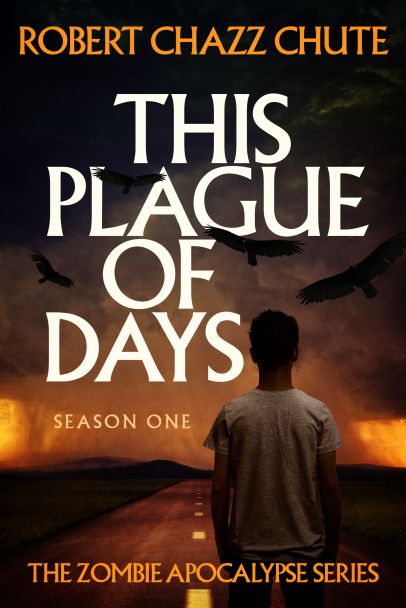
Bestseller with over 1,000 reviews!
Winner of the North Street Book Prize, Reader's Favorite, the
Literary Titan Award, the Hollywood Book Festival, and the
New York Book Festival.

http://mybook.to/OurZombieHours
A NEW ZOMBIE ANTHOLOGY

Winner of Writer's Digest's 2014 Honorable Mention in Self-published Ebook Awards in Genre

The first 81 lessons to get your Buffy on

More lessons to help you survive Armageddon

"You will laugh your ass off!" ~ Maxwell Cynn, author of Cybergrrl

Available now!

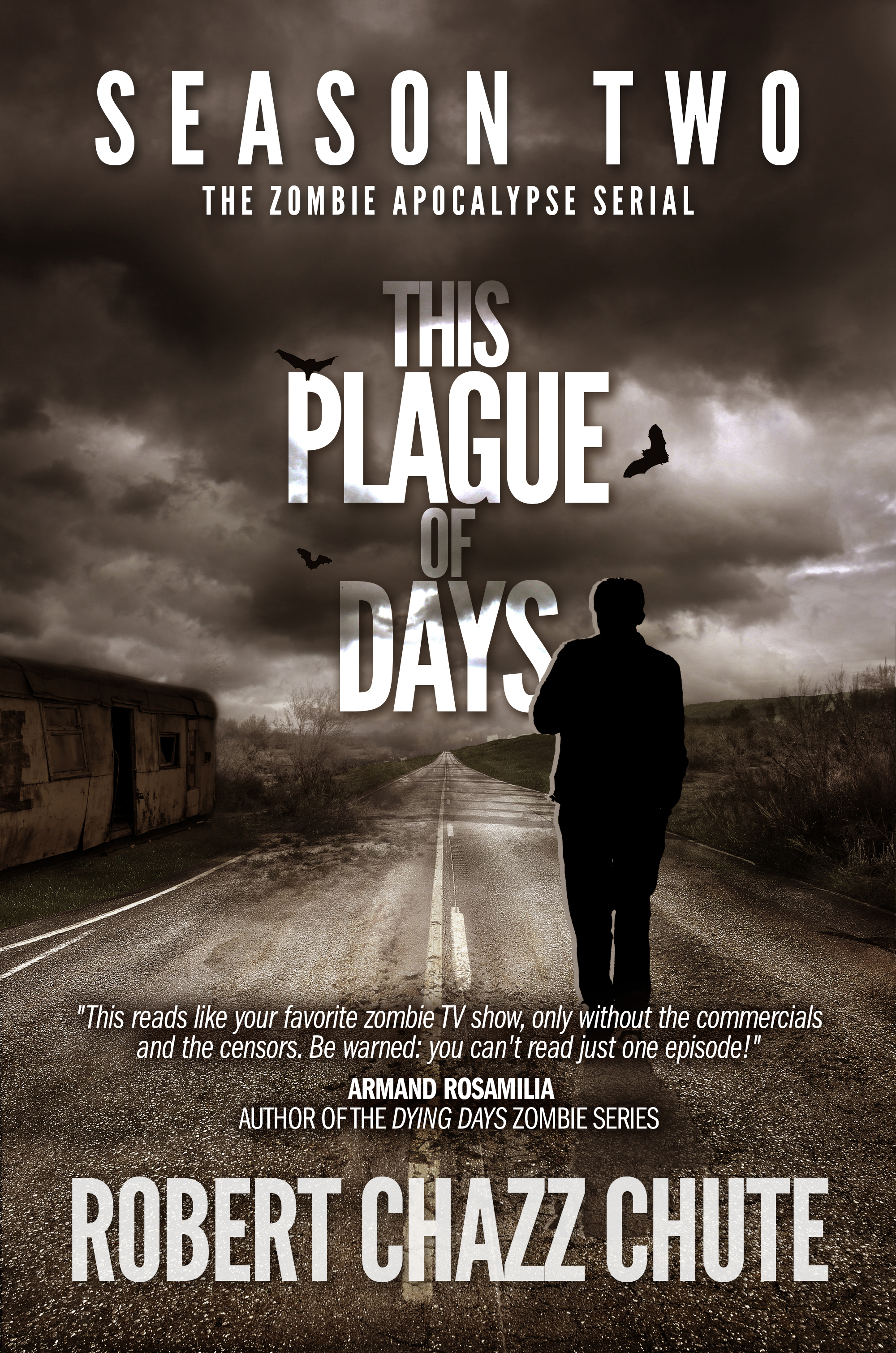
Fast-paced terror, new threats, more twists.

An autistic boy versus our world in free fall

Suspense to melt your face and play with your brain.

Action like a Guy Ritchie film. Funny like Woody Allen when he was funny.

Jesus: Sexier and even more addicted to love.

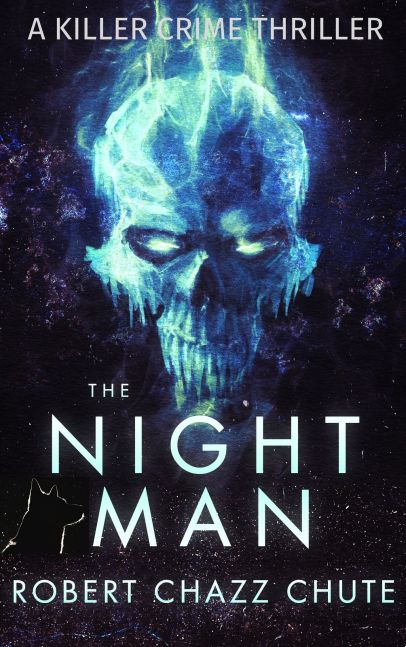
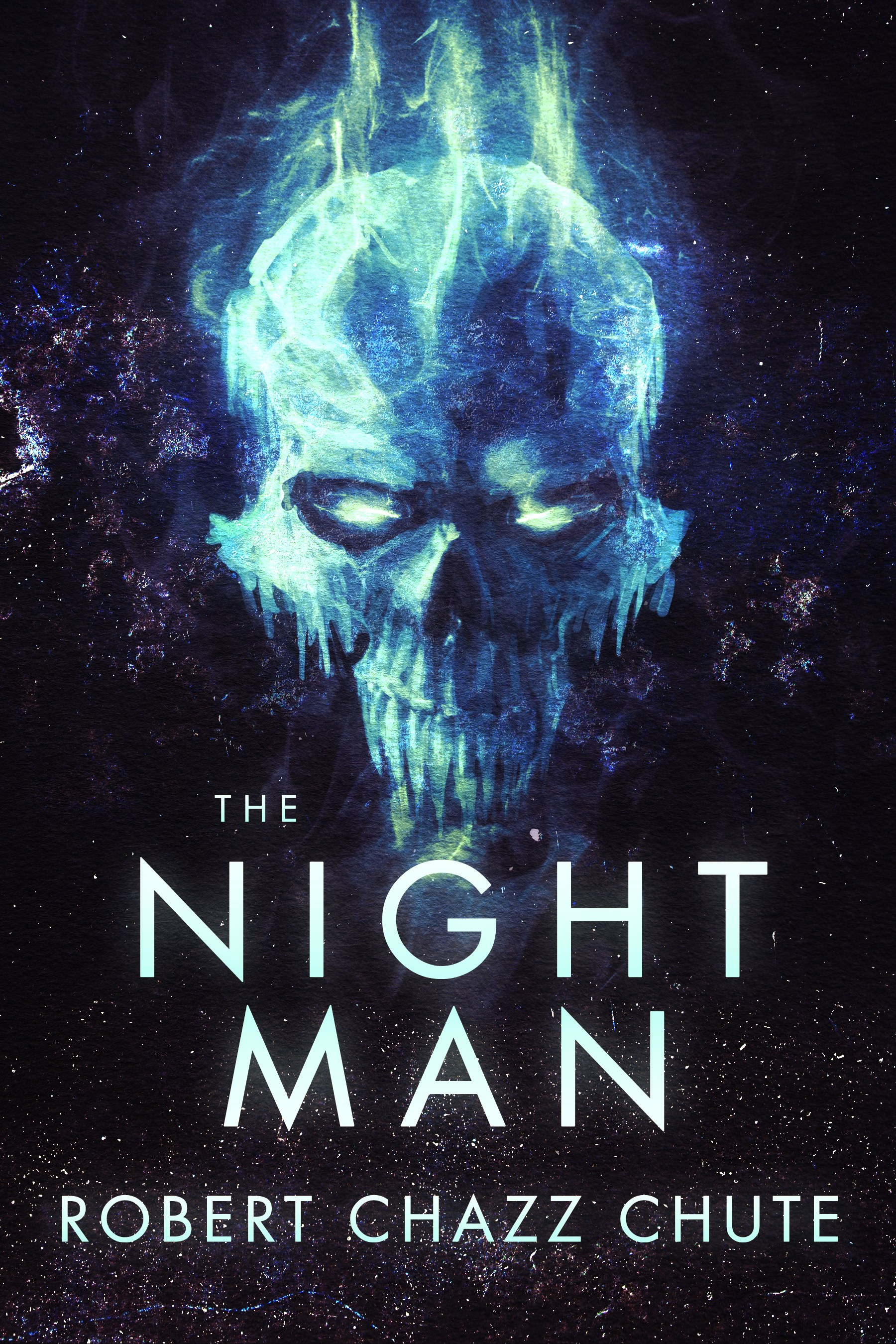
You can pick this ebook up for free today at this link: http://bit.ly/TheNightMan

Join my inner circle at AllThatChazz.com

See my books, blogs, links and podcasts.

Enter your email address to follow this blog and receive notifications of new posts by email.

Join 2,063 other subscribers