C h a z z W r i t e s . c o m

See all my books at AllThatChazz.com.

Writers: The Secret to Writing a Bestseller

bestseller_logo

Image via Wikipedia

The only thing you can do to ensure

you come at all close to writing a bestseller is:

Write your book!

After that? I hate to disappoint you, but there is no secret.

There is information you should consider, however, like acting on the things you can affect (factors) and refraining from making yourself crazy trying to change things that have a negative effect on you (variables.) 

Don’t focus on variables.

Focus on factors you can control:

1. Write the best book you can.

2. Build your audience (Teach, review, tweet, blog, network, learn, connect etc.,…)

3. Get your book to market (trad or indie publishing—that’s a different post.)

4. Do it again.

You’re going to want to come back to and act on 1 – 4 again and again.

The rest is explication.

I can already hear howls of protest about the title of this post. However, if you get an email from someone claiming they have insider secrets to making your book an instant bestseller, you can safely move on. There are some wacky claims out there, so let’s unpack and debunk.

First off, there are far too many variables that are out of your hands for any one person to direct you to bestsellerdom. In the publishing process there are a lot of variables. All of them have to fall into place for your book to be sold, but even if that were to happen, there are no guarantees your book will climb the charts…even if it’s good.

There are a lot of good books. Sadly, that doesn’t mean we’ve heard of them.

Consider Chuck Palahniuk‘s Fight Club and Choke. They both became movies, but just before it was announced Brad Pitt was going to do the Fight Club movie, I saw it in the remainder bin. They got whipped out of there when his book got the movie deal and the newest hire had to peel off all those stickers that read: Marked Down. The author wrote a great book in Fight Club, but he was headed back to anonymity before the lucky break. (He’s proved his worth since over and over, too; he’s prolific and, weirdly, I even saw a major review that didn’t even mention Fight Club.)

His case is a perfect example of something falling into place that was totally out of the author’s control. If Antonio Sabato Junior had played the role instead of Tyler Durden and Lindsay Lohan had played Marla instead of Helena Bonham-Carter, you would never have heard of Palahniuk’s books (because that’s a lot of stink to overcome.) Antonio was good in the few minutes he was in The Big Hit, but generally, if you see a movie poster with Lindsay and Antonio, you don’t think,  “Ooh, gotta see that!”

The most important reason you can’t just follow set rules and write a bestseller is that what William Goldman said about Hollywood also applies to publishing. “Nobody knows anything.”

That’s why there are sleeper hits. I wandered into Fargo and Highlander, didn’t know what to expect, and was blown away. Margaret Atwood snuck up and surprised me with The Year of the Flood—okay, maybe other people expected great things from Atwood every time, but that’s the book that turned me around on that author. (Can’t wait for the third in the series!)

When manuscripts go up for auction to big publishing houses, acquiring editors bid because they want a hit. Even when books go for big money, that’s no guarantee of great success. In fact, if the author doesn’t earn out that big advance, it’s a very public failure. That blemish on their record hurts authors when they try to sell their next book.

It’s a subjective business. If agents and acquiring editors really knew much beyond their own taste, then every book they bought would sell very well. Look at the bestseller lists. There are only so many spots in the top ten lists. Then look at the book store shelves packed with midlist titles. That’s a lot of books, and those are just the books the stores stock. There are many more books published than ever make it to bookshelves, yet somebody thought each book would earn out its advance.

Nobody’s betting on losers on purpose. The bestsellers are the frontlist. The books that aren’t expected to do as well are the midlist. Midlist authors are still generally expected to earn out their advance, however. Remember: it’s business, not charity.

Hm. Somebody’s going to object that there are exceptions (and, of course, there always are. Can we say much at all without some generalizing?) So I must admit I did know a publisher who bet on losers pretty much exclusively. Maybe he was noble and doing it only for the art (and government grants) or maybe his judgement was just galactically poor. He’s out of business now so no more art. (Last parenthetical, I promise: And if you publish poetry, nothing is frontlist or midlist because no one pubishes poetry expecting to make money.)

Back to the book store: See all those dogs in the remainder bin? Somewhere, someone bet a lot that each one of those books would sell really well.

Some books aren’t a surprise when they do well, but for those books, that’s not the game anymore. When a publisher buys a Sarah Palin book, they aren’t so concerned whether it will sell. Their concern with a book like that is, how much and how fast will it meet higher expectations and sell more? When a book succeeds, the publisher has to time the next printing right and gauge how much promotional money should go into the publicity campaign to push it as far as it can profitably burn.

Publishers concentrate their limited resources on the few books they think will have a shot at bestsellerdom because they will take a loss on most of their catalogue. Some don’t believe it and authors lament it, but publishing is a business. And it’s a business with very small margins.  

Even when publishers get books on the shelf, it’s not even over then. The sell-through is what’s important. Unlike any other business, publishing’s tradition—blame Simon & Schuster—is that books that don’t sell may be returned for credit. It’s a tradition that may eventually be dropped, especially when there are fewer book stores around.

I’m dying here! Give me some good news, Chazz!

Okay. The good news is that when you get rejected, you can take comfort in the knowledge that nobody knows anything. Maybe the guy who rejected you also rejected JK Rowling, so what do they really know anyway? Maybe you are destined to be a sleeper hit.

Do better than that, Chazz! I said I’m dying!

Sorry. How about this? Contests, bestseller lists, critics and reviews might help an unknown author, but it’s really word of mouth that makes a book popular. (Or a big movie deal.) The antidote to your angst is to keep writing and pitching. Find your audience and put yourself out there to be found.

How?

Go back to Factors 1 -4 at the top of this post.

Better? Now go write.

Filed under: authors, Books, Editors, getting it done, links, Poetry, publishing, Rant, Rejection, rules of writing, Writers, writing tips, , , , ,

Writers: Beware of Pen Names

This image is a reproduction of an original pa...

Image via Wikipedia

Good Christmas Eve afternoon to you!

Since you’re all out doing battle in malls, cutting your way through the crowds with a machete,

I’d like to make a quick point with this quick post:

Watch out for pen names. There’s a use for them, but there’s been some bad advice splashed around because of some weird over thinking about branding. I use my middle name and go by Robert Chazz Chute for this blog and my fiction submissions. I do this for the same reason Michael J. Fox has a J. There is a native American poet from Maine who goes by the name Robert Chute. He came first, so to avoid confusion and out of respect, I went with my middle name. I think that’s a good reason to use a nom de plume.

About the bad uses of pen names: In the past, agents, editors and publishers often advised writers to use pen names when writing for different genres. They feared brand confusion. That was silly. Consider the biggest book brand of them all: Stephen King. I’ve read all his horror. It turns out I have no interest in his Dark Tower series or the any of those graphic novels. But I did try them out because I like Stephen King books generally. If you like an author’s book, you might like their other books.

Too few people buy and read books to play games making it more difficult to find your work!

Consider James Patterson and his 157 or so books that are now out in different genres. One name provides cross-marketing and cross-pollination for his body of work. Isaac Asimov wrote what? 500 books? Much of it was non-fiction, too. (The most readable anatomy book I own is by Isaac Asimov.)

So if you’re going to use a nom de plume, do it for considered reasons. Don’t do it because you fear your romance audience won’t follow you to your fantasy epic.

People who read books get enthusiastic about particular authors, not just particular books.


Filed under: authors, Publicity & Promotion, publishing, Rant, rules of writing, What about Chazz?, Writers, writing tips, , , , , , , , , , , , , ,

#Editors: Experience is what you get through mistakes

The Associated Press Stylebook

Image via Wikipedia

Last week a friend of mine called looking for advice about becoming an editor. She was looking for a way out of the nine to five grind wherein she could control her time, make a little money and still manage to pick her kid up from school by mid-afternoon. She was doing things she didn’t desperately want to do. She didn’t like her options, even though some of those options could be more lucrative than editing. In short, she’s in a spot many of us have been in: passion versus practicality. She has a tough choice ahead. Let’s talk about her choices, and yours.

We can’t start this discussion off without mentioning that a lot of people don’t have any choice about their employment. They’re just happy to have any kind of employment. Either by circumstance or by a lack of education or preparation, many people in a recession take what they can get. Self-fulfillment in employment is actually a pretty new idea. In the Industrial Revolution (or any time before that) the idea that you have to love your work would be considered a silly idea. However, much of the soul-crushing ennui was made acceptable by the common practice of drinking yourself near-unconscious on the job.

This woman lives in this century and has options. Should she be an editor? She already had a useful teaching background. She played it down, but as we dug into her history, she did indeed have some relevant experiences to draw upon. She also took an editing course recently and explored membership in the Editors Association of Canada (EAC.)

I told her about the meat of the work. We discussed grammar and the common mistakes people make. We talked about the various levels of engagement editors bring to text. For instance, there’s a big difference between a proofreader, a copy editor and a developmental editor. We talked about flow, judicious cutting, client consultation and the merits of the AP Stylebook, the Chicago Manual of Style and The Elements of Style.

And I learned something. In coaching someone else, it forced me to evaluate how I’ve been going at the editing business. I’ve had various projects on the go, but I’ve been awfully passive about it. I haven’t stepped outside my comfort zone to go after new book and website projects. For instance, much of my editing work has come about because of my writing. There’s nothing wrong with that, but it’s been pretty much exclusive to that.

My speech writing arose from my magazine writing. My web page editing came about through my magazine writing. The memoir I’m editing came as an assignment from a friend in need. The e-books I’ve ghostwritten and edited? Same deal. The marketing materials I’ve worked up for another client came to be because I’d interviewed the president of the company for another magazine story.

There isn’t anything intrinsically wrong with these sources of work. Work is work, no matter how it finds me. But it’s a clue that I’ve been lackadaisical. I need to solicit work more actively instead of waiting for it to come to me.

I’m busy now, but independent editing is piece work. It can come fast, all at once or not at all, at least for a time. Sometimes, work falls through or gets put on hold for a long time.

And sometimes, only greater self-awareness comes through helping someone discover their own path. I’m pleased she’d thinking of joining the ranks of editors. She loves language and believes the proper use of words matter. I warned her it can be a hard journey if she’s not prepared to be a go-getter.

And now I know I need to take my own advice.

Filed under: Editing, Editors, getting it done, manuscript evaluation, rules of writing, Useful writing links, , , , , , , , ,

Writers: Choose Your tense

Cover of "Bright Lights, Big City (Blooms...

Cover via Amazon


In yesterday’s post I lamented some choices I made in an earlier draft of a story called The Dangerous Kind. In my latest revision I chose to change the tense. Let’s explore that. 

First off, let’s be clear: some people despise short stories and novels written in the present tense. They would prefer no writer ever did so again. Those people  are demagogues espousing that there’s only one way which just happens to be theirs. If present tense and a little risk aren’t your taste that’s fine, but to declare no one should dare to write in first-person, present-tense or second tense is a declaration against art. Art takes risk and if it plays it plays. 

I loved the novel Bright Lights, Big City. Before it was published I bet there were a lot of people who said, “A whole novel that’s second-person? You do this. You do that for a couple hundred pages? No way.” 

Answer: Way. 

 Jay McInerney wrote Bright Lights, Big City in second-person and made it  great. Don’t turn down a nontraditional way of telling a story because it’s unconventional. Cut it when it doesn’t work. Recently an entire novel which I scanned but can’t say I read was written in first-person plural. It was a brave choice that worked for a lot of critics. (I didn’t read it because of the subject matter, not because it was “We, we, we” for a couple of  hundred pages.) 

So back to my editing problem: In earlier versions of my story, I wrote the whole thing in first person, present tense. The advantage of present tense is that things are unfolding moment to moment before the reader’s eyes. Present tense makes the action immediate. The Dangerous Kind is about two brothers who do not get along. Soon after losing their father to an industrial accident, they go hunting for deer in the woods of Maine. Dire complication ensue. I chose past tense first because of the action involved in the deer hunt and also because the piece lent itself to an uncertain ending. Would the protagonist survive? 

Necessary side note: You can tell a story in first person and still kill off your first-person narrator. I won’t say don’t do it, of course. The only solid rule should be, if it plays, it plays. However, a caution: It has been done a lot so, for it to succeed, it must be done very well. That’s a trick that’s harder to pull off with longer fiction because it’s a downer to read a couple hundred pages and have your hero killed off. It worked in the movie Sunset Boulevard spectacularly well because you’re already disappointed in the narrator’s choices and end up entranced by Gloria Swanson

Back to editing The Dangerous Kind: After getting a rejection on the story from a magazine, I reread the piece with fresh eyes and realized I could shift it into the past tense. The story is ultimately about the choices we make and how even when things work out terribly, maybe that could work out for the best. (I realized recently that’s a theme in much of my fiction, but that’s another post for another day.) Once I decided that the climax of the story wasn’t a murder but an escape, it was okay for the reader to assume the protagonist survived. After that, I opened up to dumping present tense for the more traditional past tense. (I kept the first-person perspective.) 

However, in the final scene, there’s a subtle twist that I think works well. The bulk of the story basically unfolds over the course of a single November day. At the end, I gently switch to present tense so the reader realizes the protagonist is recounting this story, deciding where things went awry and what he’ll do next at the end of that day. He’s sorting out what the day’s events and choices mean to the rest of this life by retelling the story to himself. The conclusion is one-third bitterness, two-thirds hopeful. Because of the shift in tense back to the present, it makes the story more immediate as it closes. 

Tomorrow I’ll show you an excerpt from an earlier draft and how I edited it to make the plot’s engine work. 

Filed under: Books, Editing, manuscript evaluation, movies, My fiction, rules of writing, , , , , ,

Writers: On Editing Yourself


RULE #1: Writers must have a product to sell.

RULE#2: Writers must keep submitting their work until someone recognizes their genius.

I repeat these rules to remind myself to put them into practice. I wrote a (long) short story that has bugged me. I did submit this piece to One Story because the length was suitable for them. Unfortunately, they didn’t bite (no hard feelings.) As I reviewed the story, I began to figure out why it wasn’t fully baked yet. I realized I needed to do another revision. 

In editing myself, I hadn’t been as objective as I can be with others. I found some sentence constructions awkward. I reworked the opening paragraph to amp up the mystery and intrigue. I added some here and there where characters needed fleshing out. I cut some sentences down for economy and easier reading.

Editing yourself is difficult (Yes! Even for people who are also editors!) If you aren’t going to hire someone to help you with writing issues, the second-best option is time. Put it in a drawer and give yourself time to fall in love with the next project. That way, when you pull out the manuscript again, it’s kind of like being clear on the faults that plagued your ex-girlfriend or ex-boyfriend.

I have found new places to submit the piece and this time I’m submitting with more confidence, not with the giddy frisson of a drunk at a Vegas craps table.

Today’s book recommendation:

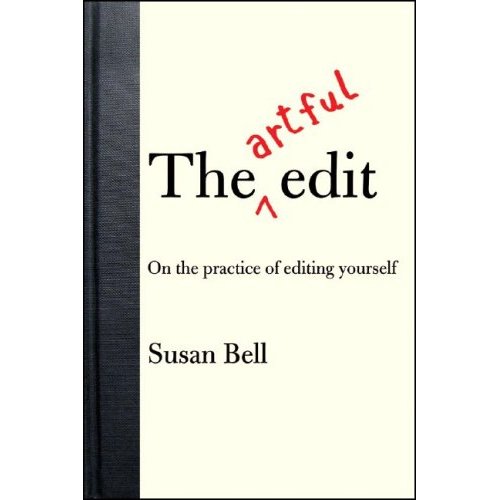
The Artful Edit by Susan Bell.

Filed under: Books, Editors, My fiction, rules of writing, short stories, , , , ,

I resolve to be a better supervillain, uh, no, I mean, writer.

Amidst a flurry of productivity pumping out short stories lately I was reminded of a book I read a long time ago. Had I heeded its message when I read it I would have several books behind me by now.

The book is The War of Art, Winning the Inner Creative Battle by Steven Pressfield. (Highly recommended!) One key is, treat it like it’s a job. You don’t wait for time to surface, you dive deep to get it. You don’t wait for inspiration to strike, you assume inspiration will appear once you start typing (sadly this never happened for the writers of Sex & the City, the story of three hookers and their transvestite dad, Kim Cattrail.)

Don’t be a dilettante. Establish a writing schedule and stick to it.

I’ve called this meeting because we must come up with a plan to kill Superman!

Whoops! Sorry, wrong speech.

Filed under: book reviews, publishing, Rant, rules of writing, writing tips, , ,

What can you leave out?

In a recent short story I wrote a bag lady asks a city social worker, “You trying to convert me to Buddha, Jesus, Allah or L. Ron Hubbard?”

My first reader went over the story and rightly pointed out what I’d missed in subsequent drafts. There was something more to omit. I was treating readers like idiots and spoon-feeding them. The quote in the final draft was the same, but I cut one word: “Hubbard.”

Scientology is plenty well-known thanks to Tom Cruise. There’s no need to hit the reader over the head. The tendency to over-explain betrays a lack of confidence in the writer-reader connection.

I won’t explicate further.

Filed under: rules of writing,

You’re not a failed writer. Unless you quit.

The whole writing thing isn’t working out. You’re still sending out those sad ass queries, closing in on 100 now, and it’s just. Not. Working.

You could quit. Or you could write for the pure enjoyment of it without even thinking about publication. Crazy but there are lots of artistic precedents. For instance, I paint. I never expect to sell one (though, come to think of it, I just did, so the payoff was doubly sweet because I never expected that. Now I don’t expect to sell another.) If it isn’t at all fun, then yes, you should quit writing, anyway. If it’s no fun for you, it’s going to be torture for the reader.

If you aren’t having fun, you could read the post on writer’s block below and laugh. Or if, after you digest the lessons, you find yourself out on a ledge and the people look like ants, and the pavement beckons, well…free will, I say.

Or you could figure out what you need to do to change things up.

You could join a writers’ group or take a course–anything where they show you where you need to punch up your query. If you aren’t even getting nibbles for partials after 75 queries, it’s you. (Click here for the business site. I do vet manuscripts, you know.)

I’m not saying you need a self-publishing company yet. Maybe you need a website or just a printer. What you really need is a plan. There are a lot of books to help you with that. Many successful authors have been rejected more than 100 times (and that’s a symptom right there not to wait to be discovered, not to put all your testicles in one basket, and not to wait for annointment by people who sign bestselling authors, but apparently only accidentally.)

Author, cartoonist and my personal savior Scott Adams has observed that a really brilliant idea is, in its beginning stages where you’re looking for outside approval and funding, really hard to recognize as a brilliant idea. In fact, really brilliant ideas are indistinguishable from incredibly stupid ideas at first.

Man on the moon? Impossible.

Splitting atoms? Forget it.

Another vampire book? That’s so over.

A book about a boy wizard? Yawn.

Dean Koontz is still writing? Okay, that one is a recognizably bad idea, but you get my drift.

Now go out there and be the little engine that could! Okay, Sparky?

Go MAKE IT HAPPEN.

You’re a winning writer!

Filed under: publishing, rules of writing, Writers, ,

WRITER’S BLOCK. EXPLODED.

Augusten Burroughs advises that when you’re stuck, write about the block itself and you’ll uncork. Or…

Maybe you need to take a break and recharge.

Maybe you need to go out drinking and start a fight and wake up on the floor of a bathroom covered in piss and puke and blood. It was good enough for Henry Miller.

Maybe you need to reevaluate if writing is really for you and if you gave it up, maybe you could, finally, be really happy.

Maybe you need to move to the desert for forty days and forty nights. Go naked but take extra socks and some weed. For more material, get there walking, from your front doorstep. At noon.

Maybe you need to walk down the road, Bill Bixby/Incredible Hulk-style with nothing but a backpack and dangerous gamma ray poisoning.

Maybe you should write something else. Anything. But not fan fiction. You toad.

Maybe you should write something short to build your confidence.

Shorter than that.

Maybe you need to stop being such a perfectionist. I mean, with your level of skill, perfect isn’t really achievable is it?

Maybe you need to channel an ancient God since the more current ones are so silent as you writhe in pain.

Maybe you should learn how to spell first. Or become a grammar fetishist so real working writers can come to your house at two in the morning and bludgeon you with ice axes. Then you shall be free. Dead. Whatever.

Maybe you should write like you don’t care who reads it. (Like I’m writing now. Just as an example.)

Maybe you should take a chance for once in your miserable life. You might finally write something fresh and unexpected.

Maybe you should write love poetry on bathroom stalls and make new friends in those stalls. Standing up and not getting caught add an exciting degree of difficulty and urgency to bad sex.

Maybe you should realize The New Yorker does not and will not give a shit about you until you don’t need them anymore. They publish people by soliciting their agents. Stop crying, strap on a pair and grow up.

Maybe you should realize you are not Stephen King. Sadly, you might be the next Dean Koontz, however.

Maybe you should get over yourself, College! Stop bagging on what’s popular. Your stuff is sensitive Oulipo MFA surreal writing exercise bullshit. Sure, your incestuous bunch of toadies loved it, but it’s only a writing exercise that’s so “inside” that, as for reading, it’s more than an exercise. It’s exhausting.

If you’re non-MFA –just one of the regular kinds–maybe you should go look up Oulipo. It’s fun, but please don’t send it anywhere. Please!

Maybe you should take up painting. When it sucks, call it abstract. Even if it’s good, call your representational art “ironic” to stave off batshit critics.

Maybe you should get an agent. Just stop saying you should get one.

Maybe you should garrote the agent you have.

Maybe you should give up for the good of society. At least give up on the great American novel and write something they’ll read. (Porn. Affidavits. Moronic websites about testicular torsion–for medical purposes or for fun and profit.)

Maybe you should get outside. You’re pasty and have forgotten the smell of roses.

Maybe you should stop breaking your parents’ hearts and get a real job.

Maybe if you worked on an oil rig you’d have something to write about.

Maybe if you had a brain in your head or were eight years older you’d have something to say.

Maybe if you were ten years younger–and prettier–you’d have a shot instead of a shit.

Maybe you should care less and write more. Maybe you should care about Swine Flu pandemics and write far less.

Maybe you should make a schedule and finally stick to it you whiny wannabe.

Maybe you should shoot up. A vein. A mall. Whatever. (You’d be much more marketable either way.)

Maybe you need to get the pipes cleared. Go have sex with somebody who you find vaguely detestable and then write about that. (Best if they’re a celebrity or a homeless person. In between? Less marketable.)

Maybe you should start a blog. Or a magazine. Or sleep with someone who does and then blackmail them so you can appear on same for far less money than you’d charge if you were a self-respecting whore.

Maybe you should have a baby and then complain it ruined your life and killed your ambition. Everybody will feel better when you’re on your deathbed. Next week.

Maybe you should have a baby and then live through them so they can do all the hard work of becoming a bestselling author someday and you’ll have a small smarmy piece of that, won’t you?

Maybe you should start a publishing house and give ’em what for.

Maybe you should look at your writing again, fall out of love with it and ask yourself honestly, what for?

Maybe you should procrastinate some more.

Maybe you should look again at character. There’s lots of action happening, but it’s clear you care about the characters about as much as you care about what happens to Mario on your Nintendo game.

Maybe you should get a plot. I’ve seen glaciers jump around with more frenetic energy.

Maybe you should read more of your genre. Don’t get me wrong! Steamships in different dimensions could sell…if you were much more talented.

Maybe you should call your mother and tell her how hard it is. If she’s a good mom who cares, she’ll tell you to shut the fuck up and get back to work cuz Mama’s ciggies don’t buy themselves. (On the other hand, a bad Mama will be so sympathetic, leaving you feeling better about yourself, simple and even more pathetic.)

Maybe you should call your Dad and tell him how hard writing really is. He can tell you (again!) how his leg was shot off in the war and today he was up on some prick’s roof, tarring it while the sun beat him senseless, getting skin cancer for minimum wage. You’re at Starbucks plotting out a really tough short story and he’s enjoying his golden years in so-called retirement plotting to kill your mom for the insurance money because she won’t shut the fuck up about what a genius you are despite the fact you dropped out of college and didn’t tell them for two years while you found yourself. (By the way, your great realization in the end? You’re half a smart as you thought you were, you’re a coward and weed sure helps you get really deep in the creative process. If only you could write it down. Also, you’re short.)

Maybe you should hang out with a friend. He’ll have lots of good ideas about the hilarious antics and paperwork snafus down at the Quantity Surveying Office that would make a great book. Sure.

Maybe you should compare yourself to JK Rowling again, except you still don’t even have a book to send out to be rejected. You are a single mom, so you have that in common…actually, any similarities pretty much stop right there. Yes, you both breath in oxygen, but she’s produced an industry worth billions and you’re still sitting there stupefied reading this shit and producing carbon dioxide.

Maybe you should feel sorry for yourself some more. That’s been very helpful so far.

Maybe you should join a writing group so you can get shredded by losers who aren’t published either.

Maybe you should trust the instincts of your acquaintance in publishing who’s very clear she hates everything and won’t tell you what on earth she might ever approve of. (And if she goes on for five more minutes about how you’ve captured “a sense of place” pull out your nickel-plated .38 with rubber-handled grips and the mercury-pointed bullets. Shoot her first, then you. Five bullets for her, one for you.)

Maybe you should reread something you wrote. Anything! Please! Do not put it in the envelope without doing this several times. Please! Please!

Maybe you should cut the five-page preamble and open the chapter in the middle of the action.

Maybe you should finish a chapter with a cliffhanger instead of boring us with your bullshit about “cheap tricks” and–God help us–your “integrity.”

Maybe you should whore yourself out to the greeting card industry. You’d have a better shot and, given the length, you could get a feeling of accomplishment every day! Imagine! (Agh, get over yourself. We’re all whores to somebody.)

Maybe you were meant to be a shoe salesperson. Admit to yourself that you’re really 90% foot fetishist and only 10% writer, not the other way around.

Maybe you should succumb to the lure of a regular paycheck. Your next high school reunion will come up fast. Saying you’re a writer is cool. Praying for an asteroid strike when your asshole high school buddy (who became a plastic surgeon) asks what you’ve published is distinctly uncool. Worse, he knows you haven’t published a thing and still live with your parents. Meanwhile he’s spending his days elbow-deep in tits, crotch-deep in sexy nurses and knee-deep in cash. You’ll be taking the bus home. He’ll be flying first class. “Poor Margaret/Josh/whatever. He/She is such a dreamer but never got it together. More tequila to lick off my nipples? Birgit? Heidi? Russel?”

Maybe you should finally get it that being a dreamer is great. In fact, before you’re expected to pay taxes, it’s fantastic.

Maybe you should stop thinking this list is too harsh. You’re too old for summer camp, too. Get serious and write your goddamn opus or stop pretending to try.

Maybe you should cut the last hundred pages. You know, the denouement. That part after all the action ends and the reader starts wishing you had left him wanting more.

Maybe you should become an editor. You’re already a frustrated writer so you’re halfway there.

Maybe you should forget about college and go to a library. Unless you want to major in being a conversationalist. That’s what a liberal arts degree and that expensive tuition is for, you know. After graduation you won’t be building bridges into publishing with your pissant thesis in Elizabethan poetry. You could build lattes, though.

Maybe you should go to a studio and get your author photos done now. You’re getting older and uglier and fatter by the week. If lightning strikes, you do want to be ready.

Maybe you should use that inheritance to splurge on a real author website. Your meteoric prose that could change the face of literature is useless since you don’t already have a platform. (Your child’s burst appendix can probably wait. Tell your adorable six-year-old to suck it up and walk it off. Daddy has to pay a web designer, not another doctor for every little boo-boo.)

Maybe you should do us all a favor and quit.

Maybe you need to begin again.

Maybe I should stop before I kill again.

You should definitely pick up a tangent from the above list of maybes, pick up a pen, and explode your writer’s block.

Oh, and gentle reader, leave a comment, please. I’d like your vote on your favorite of the Maybes…

Filed under: Rant, rules of writing, Writers, Writing exercise, , ,

Writerly is Out

If I write something beautiful, fine. However, if it sounds like I’m reaching and trying too hard to be writerly, it’s out.

That’s how I resolved the conflicting advice dilemma which gave me such an ache in the ass in a recent post. See? Aching ass. That’s some beautiful goddamn writing right there and I didn’t have to reach far to scratch that–uh–literary itch.

Filed under: rules of writing, ,

Bestseller with over 1,000 reviews!
Winner of the North Street Book Prize, Reader's Favorite, the
Literary Titan Award, the Hollywood Book Festival, and the
New York Book Festival.

http://mybook.to/OurZombieHours
A NEW ZOMBIE ANTHOLOGY

Winner of Writer's Digest's 2014 Honorable Mention in Self-published Ebook Awards in Genre

The first 81 lessons to get your Buffy on

More lessons to help you survive Armageddon

"You will laugh your ass off!" ~ Maxwell Cynn, author of Cybergrrl

Available now!

Fast-paced terror, new threats, more twists.

An autistic boy versus our world in free fall

Suspense to melt your face and play with your brain.

Action like a Guy Ritchie film. Funny like Woody Allen when he was funny.

Jesus: Sexier and even more addicted to love.

You can pick this ebook up for free today at this link: http://bit.ly/TheNightMan

Join my inner circle at AllThatChazz.com

See my books, blogs, links and podcasts.

Enter your email address to follow this blog and receive notifications of new posts by email.

Join 2,061 other subscribers