C h a z z W r i t e s . c o m

See all my books at AllThatChazz.com.

Writers: Chazz Law versus Masnick’s Law

A cropped photograph depicts singer Elvis Pres...

Image via Wikipedia

Thanks for all the nice feedback and e-mails about Monday’s blog post on Amanda Hocking. There was so much, in fact, that I need to do a follow-up about the mistakes we make when we compare our potential for success with another’s. Some people see another author’s success as a door slamming shut on their own noses. These are people who believe Masnick’s Law (which comes from the music industry.) The idea is that only a certain band at a certain time had certain advantages that can’t be replicated. They came along at the right time or had just the right choice of sound, or the moon was in alignment with the stars etc.,….

In other words, if they make it, you won’t.

Wussies.

You might make it in a different way (Elvis ≠The Beatles) but if you have a great book, success can be yours. Amanda Hocking isn’t stopping you from succeeding. Not writing your book is keeping you from succeeding. (Not revising or hiring an editor, too.) Hocking took a machete and cut a path into the jungle. JA Konrath, Barry Eisler and many other authors who went the self-published way are forging ahead. When you see others succeed, take it as inspiration. Masnick’s Law isn’t a law. It’s a self-defeating fallacy.

CHAZZ LAW:

Art inspires more art.

Read it.

Rock it.

Roll it out.

(And don’t be a wuss.)

Filed under: authors, Books, DIY, ebooks, Editing, Editors, getting it done, links, publishing, Rant, Rejection, self-publishing, Writers, writing tips, , , , , , , , , , , ,

George Carlin VIDEOS (plus Kick-ass Wake-up Call Questions for Writers on Getting It Done)

Giving up things that hurt you. Hm.

Pause for thought.

What are you keeping, as a writer, that’s hurting you? Are you addicted to distractions (Farmville, mindless surfing, TV, Sheen gossip, vegetating etc.,…)? Are you getting on with what you don’t want to do so you can accomplish what you do want? Are there people in your life who stand in the way of your dreams? I’ve been thinking about what to give up on. When I talk to that agent, is that really my ego and insecurity asking for validation? Do I need to be traditionally published anymore? Should I give up the magazine work  and focus on books exclusively? What am I willing to give and give up to get what I want?

If you don’t have time to write, are you making time to write?

But you know it goes deeper than simple time management issues.

To get to edit your manuscript, you have to edit your life.

There are always things or people who stand in the way of you getting where you want to be. Do you surround yourself with cool people who support you and your writing efforts? Are there people in your life you can do without? Are there energy and time vampires who drain you? The uncool people subtract from your time with the cool ones. And too much distraction is leaking time away from your productivity. Are you your last priority?

Are you calling your martyrdom selflessness or are you just being lazy in the You department? If you allowed yourself to look a little more selfish, could you be the person your loved ones would love and respect more? If your friends don’t like you if you say no, are they your friends? If you take care of everyone else first, who takes care of you? If you became the person you want to be, the one who gets the big things done, couldn’t you take care of others better? Can’t the laundry wait? Can’t you teach the kids to do it?

If you say, “But everyone needs me all the time!” your martyrdom is empty narcissism. If they can’t do without you long enough for you to write, you aren’t letting them grow up. You’re hurting their potential for independence by insisting you’re so important. You’re not being imaginative enough in the How to Deal Department. You’re injecting yourself into the center of their lives, living through them instead of living your life. You aren’t just the sun of your roles. When you became Mommy, Daddy, Wife or Husband, you didn’t give away the right to be you. If someone else is always your focus, you’re dressing up your procrastination in noble rags. And that’s pathetic and needy. You’re a person, not a role. You’re a human, not a god or a robot.

You’re drowning in busywork and busy-ness, not your business. Writing was supposed to be your business. Remember?

What are you doing to yourself? Do you really need more information? Is more research really required or is that procrastination masquerading as productivity? They say time is money. Time is much more important than that. Time is life. But time is spent like money and once it’s gone, it’s gone.

But it’s not too late if you ask yourself the right questions and listen for the real answer.

Not the reflexive answer. I mean the real answer you don’t want to hear.

Is it really encouragement and more education you need? Or is a kick in the ass needed? A wake-up call? A reminder that you are acting like you are immortal? You’re not. A reminder that not only do actions have consequences, inaction has dire consequences, too. (The kind you regret most when you’re lying on coarse white sheets watching another faceless nurse change your IV bag through a fog.)

What did you want to do with your life? Why isn’t it done by now? What can you change today to move you in the right direction? Are you even pointed in the right direction? Is the day ahead going to be filled with joy and potential and stimulation and writing? Is it just another Tuesday on a treadmill to nowhere?

Are you taking care of yourself and pushing your goals forward?

If not, why not?

When did you decide to settle for less?

What made you think that was okay?

What will you do now that you’ve read this?

Your mind can be a sharp tool. Use it now, because your heart is a bomb.

The clock is ticking.

EXERCISE:

READ THE RANT AGAIN. THIS TIME MAKE IT PERSONAL. WHERE YOU SEE YOU, READ I.

EXAMPLE: IF I DON’T HAVE TIME TO WRITE, AM I MAKING TIME TO WRITE?

NOW READ IT ALOUD. AGAIN. YOU’LL GET YOUR ANSWERS.

YOU WON’T LIKE ALL OF THEM.

THE ANSWERS YOU LIKE LEAST ARE MOST TRUE.

Filed under: authors, Books, DIY, ebooks, getting it done, links, publishing, Rant, Writers, writing tips, , , , , , , , ,

Editing Part V: The Dead Grammar Rules Freedom Manifesto

William Shatner photographed by Jerry Avenaim

Image via Wikipedia

Certain grammar guidelines have changed. The classic one everyone knows is the death of the split infinitive rule. When I was a kid, some teachers were still strict grammarians on this point. I call that generational inertia (wherein one espouses the rules of the previous generation even though old rules no longer apply. Generational inertia shows up everywhere but has been particularly egregious in the publishing industry on the subject of digital books. (Chazz now dismounts from the usual hobby-horse and goes on with dead grammar rules. Ahem.)

William Shatner singlehandedly killed the split infinitive rule in the late 60s. At the opening of the original Star Trek, it was he who spoke the immortal split infinitive: “To boldly go where no man has gone before!” Patrick Stewart updated the phrase over the opening credits of Star Trek: The Next Generation with “To boldly go where no one has gone before!” The captains of the Enterprise changed things up from the proper, traditional (and stiff): “To go boldly.” After Star Trek, everyone eased up and some grammarians will still tell you that was an early sign of the decline of civilization.

Heavy-handed grammarians amuse me. Sometimes it seems like they fetishize the rules without respecting the point: effective communication. Usually traditional rules serve us well. However, rules shouldn’t get in the way of creativity just as expression shouldn’t get in the way of communication.

When expression doesn’t respect the reader’s right to clarity, it better be doing so intentionally for a particular effect. For instance, Michael Ondaatje or Maya Angelou write in complex skeins that require double espresso and a very quiet room to appreciate. Chuck Palahniuk wrote Pygmy in a distinctly ungrammatical style so you see America through the odd mind of a tiny immigrant assassin who speaks English as a second language. (That worked great for me though, usually, if something isn’t clear it’s probably because it sucks.)

I once heard an ancient grammarian with a very plummy British accent (it was as if  Central Casting sent over The Stereotypical English Professor) complain about how fast and loose modern teenagers were with language. (He brought to mind Socrates whining about “these rotten kids today!”) Plummy Accent Guy spoke as if he wanted to freeze the language at about 1901. But languages are organic.  (Look! I just started a sentence with a conjunction! My eighth-grade teacher would rap my knuckles with a ruler right about now.) Conventions change and grow and a mid-eighteenth century grammarian would be appalled at Plummy Accent Guy’s use of language. (They’d also cringe at my overuse of the parenthetical in this paragraph but to make a stale subject even vaguely entertaining, I think it works. So there.)

Just last summer I watched an author wring his hands over texting. “Text abbreviations dumb kids down,” he said. Yeah? I don’t think there’s any real scientific support for that view and he came off sounding stuffy and quaint. Kids are reading more than they ever did, they’re just doing so on screens. It’s not that they are losing the English language. It’s that they are learning another text-based language.

True, our literacy rates are awful. But that doesn’t mean drumming old grammatical rules into kids is the cure. Things change. School programs used to spend a lot of time teaching beautiful handwriting. If you’ve ever seen letters from before mid-last century, much of the handwriting looks so precise in its swoops and curls you’d be forgiven for thinking it was produced by a machine. However, elegant calligraphy is out. I loved it and my calligraphic pens made note-taking on intolerable subjects more interesting but it’s gone with the art of letter writing. Even simple handwriting isn’t a high priority in the educational system, either. The way the world has gone, teachers want to move on quickly to teaching kids how to type and cursive writing is a low priority. Your kids will be able to write with a pen but they’ll probably write by hand in block letters.

Lots of old assumptions are out. In fact, studies show that, despite what your momma told you, spelling isn’t all that important. Try this: Can you raed tihs snetnce? You can probalbly raed tihs amlst as fsat as you wold nromally raed. Studeis sohw taht as lnog as teh fisrt letr and teh lsat letr are corect, yuo wll unerdstnd my maening prefctly.

And people mistype ‘teh’ for ‘the’ so often,

it’s been suggested ‘teh’ should be an accepted alternative to ‘the.’

Remember, for a very long time there was no universal standard for spelling so Old English spelling was all over the map. There were no dictionaries so our greatest philosophers spelled idiosyncratically and phonetically. I’m not proposing we spell poorly. I’m saying ease up on rules whose basis is somewhat arbitrary.

The key for grammar rules now is: Respect the writer’s voice and the reader’s mind. And time. That’s right. Time. Serial commas are out (unless you need to keep them in particular sentences for clarity.) Serial commas often introduce pauses and separation where none are needed. If I write “apples, oranges, and plums,” I’m not letting the conjunction ‘and’ do its work. The reader doesn’t need the comma before the ‘and’ because the reader gets it.

Same with the conjunction ‘but’: “He chose the oranges and apples, but not the plums,” contains a pause after apples that you don’t need. You can do it if you want, but that’s a different point I’ll slap down five paragraphs hence. (Also, unless you’re trying to strike a particularly arch tone, stop using hence, boon and behooves. Old words die and new ones are born every day. Stop keeping outmoded words on life support as if they’re a regular part of the lexicon. It annoys your reader if it’s apparent you’re using a thesaurus or if you expect them to run to a dictionary every few paragraphs.)

Stop throwing fits over verbed nouns. I’ve heard stick-up-the-butt English majors grouse about ‘Google’ as a verb (still! Really!) And some still haven’t gotten over impact as a verb. Let this impact you: Nouns become verbs because books shouldn’t use humans. It’s supposed to be the other way around as long as we’re at the top of the food chain and until our robot overlords rise to sentience.

Also, lose the double space after the period. That’s a holdover from typing class when people used typewriters. There are far fewer typing teachers now. Instead computer programs like Mavis Beacon Teaches Typing do that job. (And now they call it keyboarding class, by the way, presumably because it’s not just about the letter and number keys anymore. It’s about keyboarding shortcuts and formatting.) From a design perspective, the double space after the period leads to what are called rivers in the text, distracting routes of white space that  pull the eye down instead of across the text. (Okay, Elmore Leonard still uses a typewriter. If you’re Elmore Leonard, do what you want. If you’re Elmore Leonard, you can strangle a hobo on live TV and just about everyone would forgive you.)

Design questions sometimes factor into grammatical decisions. For instance, at Five Rivers — the publishing company for whom I’m Editor-at-large — we put spaces around em dashes (like I just did.) Lorina Stephens, the publisher, likes that look. It gives an airy look to the text on the page. For ’emphasis’ of a word, single quotes are used where I might otherwise switch to italic. As long as it’s consistent, makes sense and makes Lorina and her authors happy, it’s right. Internal consistency rules.

Have you read a book without quotation marks yet? I read Suckerpunch last year (a mostly excellent YA novel, nothing to do with the coming movie.) No quotation marks. I didn’t miss them a bit.

With the wave of more self-published books, you’re going to see more rules loosened. Grammar is supposed to be the servant, not the master. As the self-published author, you’ll set the rules you prefer for your book (hopefully with respect for the reader’s mind and time.) The Chicago Manual of Style is an excellent standard to fall back upon, as is AP Style. For language quirks and questions, you can’t go wrong with Eats, Shoots and Leaves and the Grammar Girl book and podcast.

Just remember that grammar rules are made by humans. They can and will change.

As long as your preferences are logical and consistent, you can get creative with your book in ways that would outrage strict grammarians.

BONUS:

Please don’t ask me to edit your book if all the dialogue is dialect. This is my personal preference and it has been done effectively, of course. However, it’s such a slow read, I have to say it just annoys the shit out of me and I am not up to that task!

Please do write a book in the second person. I loved Bright Lights, Big City and, with that notable exception (from the 80s!), traditional publishers have pretty much bricked ‘You’ away behind their arrogant Wall of Acceptability. If you’re indie, you can do it without asking for a gatekeeper’s permission.

Please do put your novellas and short stories up for sale. E-books are a perfect venue to do what paper can’t: bring back the power of short form fiction!

Take a risk. I recently edited a novel coming out from Five Rivers that combined a novel with a screenplay format. It works.

Suck on that, Mrs. Wilson!

And don’t be comin’ round heah wid no ruler or

Ah’ll rap y’knuckles so hard y’eyes’ll bleed.

Filed under: authors, Books, DIY, ebooks, Editing, Editors, getting it done, grammar, publishing, Rant, rules of writing, Writers, writing tips, , , , , , , , , ,

Bookstores: How sick are they?

Cover of "Glass Houses"

Cover of Glass Houses

Recently I’ve seen what I call “backlash” articles* about the health of bookstores. You’ve probably seen them, too. In the wake of the Borders chain closings, some media are hitting back with counter-programming (either out of nostalgia or as a way to stand out.)

Their message is simple:

“We love bookstores and they aren’t all dying. Look at this tiny independent where the defiant owners are making a brave stand.”

I love brave stands. I’m also fond of truth and this is an obvious case where the part is not the whole. It reminds me of all the people who object to the digital revolution with, “Look at all those e-books with all their different platforms. It’s a mess so it won’t survive.” I dislike stupid stands.

Perhaps the problem is confirmation bias. They’re looking for reasons why what will happen, is happening, won’t happen. Whatever bump in the road they find they take gleefully to be an insurmountable obstacle. Actually, multiple platforms for e-books are a sign of health (assuming competition is good in that it keeps prices down and choices up) and of growth (as in growing pains due to rapid, unexpected expansion.) The technology to make us all publishers is developing.

“Developing” implies transition from stupid to primitive to flawed to workable to better to a higher state (and eventually to a new tech.) Instant/indie publishing is not going to be perfect all at once. Nothing is, though not long ago I heard a Luddite say he wasn’t going to buy a computer until the tech wasn’t “perfected.” Hahahaha! He was calling from the corner of Unreasonable Expectations Boulevard and Are You High? Avenue.)

There is  a reductionist view with a subtext that categorizes anyone who predicts the demise of bookstores as a gloating goblin. I’m not gloating. I love bookstores. As (I’ve often pointed out, having milk delivered to the house was convenient, too.)

But I’m not saying bookstores will disappear completely. You’ll just pay more if you want the premium paper product. Heck, you already do that, but the price of old media will rise more. You can still buy turntables, for instance, but if you want to hear the scratches on Billy Joel‘s Glass Houses, you’re paying a very high price for a new needle to make that old pig spin.

Paper books are going to co-exist with e-books for some time…at least until consumers really get kicked in the teeth by manufacturing costs. Books get cheaper when produced in volume, but as digital sourcing rises, e-books don’t have to replace all paper books to make paper book production go from unattractive to cost-prohibitive.

There are too many variables and my brain is too small to say precisely when it will happen. I’m simply confident it will occur and one day, maybe even you will say, “Oh, look, darling! A bookstore! There isn’t a bookstore within 2 days’ drive of our house! Let’s go in and buy coffee and look at their tiny collection. How quaint!”

Yes, Virginia, 100 years from now there will still be paper books.

But you’ll be sewing and gluing the binding yourself.

*Chazz definition: A backlash article is an article written to assure the reader that the writer is the sane voice of wisdom when in fact they’re really just knee-jerk contrarians railing against all evidence. Like how the writers at Slate work from the premise, “We’ll hate on what everyone loves and make snide remarks at what everyone thought unassailable because we’re the sophisticated cool kids! Anything goes as long as it doesn’t agree with Salon.”

Filed under: Books, DIY, ebooks, Media, publishing, Rant, self-publishing, , , , , , , , , , ,

Writers: Two mavericks to follow (plus a surprising original)

Monkeys Blogging

Image via Wikipedia

Are you indie? Are you non-indie but want to increase your awareness of what goes on behind the scenes in the publishing industry? Here are two blogs to follow:

Dean Wesley Smith takes the publishing industry’s engine apart, looks through all the pipes and valves and gives you the goods on what you need to know.

And you need to know what Kristine Kathryn Rusch has to say about making your way as a writer.

BONUS:

There is a guy who got into blogging early. You know him. You’ve seen him. He’s cooler than you thought. And he’s showing others they can self-publish, too.

Click here to find out who I’m talking about.

Filed under: authors, blogs & blogging, Books, DIY, ebooks, links, publishing, Rant, rules of writing, self-publishing, Useful writing links, web reviews, Writers, writing tips, , , , , , , ,

Writers’ Union of Canada VIDEO (plus a cool NEW word! Yay!)

Yesterday I blogged about The Writers’ Union of Canada and that particular post wasn’t altogether complimentary. In fact, I proposed that if they didn’t open up their membership criteria to self-published authors, an indie union could be formed.

I hope that isn’t necessary since it could duplicate effort across platforms and dilute the voice of the writing profession. (However, if the self-published aren’t represented at all…hm. I won’t get sucked into a rehash. If you missed it, read, cogitate, plot and plan.)

But I’m all about the balance. For instance, I complained in a long ago post that TWUC’s judging of one year’s short story competition…well, it sucked. I’ve also been very complimentary with regard to their most recent symposium in Toronto (that also went on tour across Canada.)

This video on Canada’s proposed copyright law is an example of one of the good things unions can do to deal with The Man. The education provision does appear too broad and is a detriment to writers who are, as the legislation is written, voluntold to give up recompense for their work.

Voluntold

Chazz Definition: To have your services, product and/or time volunteered by someone other than you who has no business telling you what to do with your services, product and/or time.

(e.g. “I can’t order you on a suicide mission but I need five volunteers to storm that machine gun nest. You, you, you, you and you, go! You’ve been voluntold. A grateful nation honors your blah, blah, blah…”)

Filed under: authors, Books, Cool Word of the Day, publishing, Rant, self-publishing, Writers, Writing Conferences, , , , , , ,

Opportunity knocks? Self-published writers could unionize (plus association links for writers)

A map of Canada exhibiting its ten provinces a...

Image via Wikipedia

We started off The Writer’s Union of Canada symposium with the presenter announcing,Self-publishing is mainstream!” Dead on and right on, brother! Come to Jesus! Most of the day was dedicated to authors taking hold of their careers, navigating through the logistics of self-publishing and going indie. As I’ve mentioned in several posts since, it was a great event filled with exciting information that went deep. The kick in the nuts didn’t come until the end of the day.

As we wrapped things up with questions to the presenters, someone asked if she qualified to join The Writers’ Union of Canada. Nope. It looked by the show of hands that about half of the attendees (at least) were not TWUC members, but they couldn’t join to lend their voice to Canadian professional writers.  Publishers decide who is traditionally published and only if you are traditionally published does TWUC recognize you as a candidate for the union. (Yes, there’s an appeals process in which a committee could decide your worthiness on a case-by-case basis, but I didn’t get the feeling that opened a lot of doors for the great unwashed.*)

There are people within the union who want to change this, but there is resistance. Despite all the DIY enthusiasm and knowledge of self-publishing displayed at the symposium, so far it seems the only writers the union recognizes are — and will be for the foreseeable future — the traditionally published. The concern, they say, is about quality. I’ll grant you many self-published books suck. They often are not edited or are not edited well. (In fact, I wrote a blog post not long ago entitled Why self-publishing sucks (and what you can do about it.)

However, the larger point is, you don’t professionalize a group by shutting them out. You raise the standard by bringing them in. Amateurs often become professionals by mentoring and community interaction. Self-publishers can also bring a lot to the table. Many DIY authors will have a lot of information and support to share when many trad authors switch to independent publishing. (Gasp! We talk and share and know things, too! Imagine that!)

Here’s a secret: quality is a myth. You don’t use traditional publishers as gatekeepers. Not anymore. You already refuse to read much of what they publish. You have your unique tastes. You use curators you trust to let you know about a great book to read. Anyone reading this post could name several books traditionally published that, according to their lights, do not constitute “quality.” It’s all, trad or indie, subjective. Do I have to remind anyone that The Best Laid Plans by Terry Fallis was rejected by trad publishing? That book  only saw the light of day  (and won the Stephen Leacock Award and CBC’s Canada Reads contest) because Fallis self-published first.

The presenters were not necessarily against letting self-published writers in. They seemed to say that it was the system that was slow on the uptake. “It’s an evolution,” said one.

Yeah? Since we spent the day talking about the publishing revolution, maybe we should splice some DNA and catch up!

“Apply anyway,” another presenter advised. “If they (meaning the admissions committee) get enough applications, maybe they’ll be moved.”

Bewildered, one participant asked, “Why wouldn’t you be proactive and lead” by going ahead and accepting self-published authors? Good question. I asked him if he wanted to be president of a new self-published writers union. He grinned and said, “Sure!” The presenter looked at me with…was that disdain?

Opening up the TWUC membership means a larger, more powerful and better-financed union. Look at the Romance Writers of America. If you’re interested and actively pursuing a writing career, you’re in. That is a big tent that’s open to anyone interested in romance books. They’re big enough they could stand up to their biggest sponsor (Harlequin) when necessary.

A powerful union filled with fresh blood and entrepreneurial, proactive people makes a small union into a big (and relevant) union.

But why should you care? What’s the alternative? Well…I’m not trying to start anything here, but since TWUC isn’t being especially proactive, there is a huge opportunity to start up a union for self-published writers. If you’re DIY, you could join, hold events, help with disputes, etc.,… Oh, and get some fucking respect.

I’m not saying we should. I’m saying we could if TWUC continues at a glacial pace while the old media models implode around them. The crazy part is there are forces within TWUC that agree. Apparently there aren’t enough of those like-minded individuals on the admissions committee. We could unionize. Should we? There are benefits, though if TWUC loosens up we wouldn’t have to invent that wheel.

Maybe they better move before you take the idea of a Self-published Writers of Canada and run with it. (SWOC? Nah, that’s the Steel Workers.) Shutting out the self-published is a major tactical error considering the self-published are a determined group of people who don’t take kindly asking permission to do things. We are all about git ‘er done, DIY ASAP.

Brain food, comrade. If they aren’t as forward-thinking as their own symposium, they could go from The Writers’ Union of Canada to A Writers’ Union of Canada.

*Alternatives? Where you live, there’s some kind of association of varying applicability to your writing career, amiability and varying strength.

Here’s a list of links which is by no means comprehensive: The Canadian Authors Association, the Editors Association of Canada and the Periodical Writers Association of Canada, the Horror Writers Association, the Science Fiction & Fantasy Writers of America, SF Canada, Crime Writers Association (UK), Crime Writers of Canada, Mystery Writers of America and the aforementioned Romance Writers of America . Check each association’s membership criteria and see if their goals match your own. Another aspect to consider is how active each organization is in your area.

Tomorrow’s posts: If you’re up early, a style ruling on when to use “each other” instead of “one another” (well, never ‘use’ another human being) and at 11:45 EST, one of the good things The Writers’ Union of Canada is trying to do. You know me, I’m all about the yin/yang balance of the universe.

Filed under: authors, Books, DIY, ebooks, getting it done, publishing, Rant, Rejection, self-publishing, Writers, Writing Conferences, , , , , , , , , ,

Writers: Self-published book wins big on CBC’s Canada Reads

Cover of "The Best Laid Plans"

Cover of The Best Laid Plans

CBC’s Canada Reads winner is Terry Fallis,

author of The Best Laid Plans.

Congratulations to Mr. Fallis

for his well-deserved victory.

You know what’s really great about this story, right? Mr. Fallis submitted his manuscript to agents and publishers everywhere and was turned down flat.

Next, he podcasted his book.

Then he self-published his book.

That would have been the end of it, but when he won the Stephen Leacock award, finally McClelland & Stewart paid attention.

Now Best Laid Plans is celebrated.

(I wonder, are any of the publishers who passed up on the opportunity to publish the book questioning their judgment today? Of course not. That’s a rhetorical question.)

Shrill British paint guru Debbie Travis defended The Birth House (poorly). She might have fared better if she understood that (a) she should have read all of Best Laid Plans instead of dismissing it with such disdain, and (b) she might even have won if she wasn’t so damn cranky. When she dismissed other contestants’ objections as “ridiculous” I knew she already lost.

The Birth House might be a good book, but after Debbie Travis’s poor representation, I’m sure I’ll never give that one a chance. It’s kind of important to be likeable, even in debate. No, it’s not fair to the author, Ami McKay, (sorry Ms. McKay!) but it’s clear it’s more diatribe than novel.

Note to CBC Radio‘s Q host Jian Ghomeshi: Maybe she’s good for ratings but she’s no good for books. A judge who doesn’t read all of the books, and then has the temerity to condemn it without reading it all, shouldn’t be back on air.

Filed under: authors, Books, Contest announcement, podcasts, Publicity & Promotion, publishing, Rant, self-publishing, writing contests, , , , , , , , ,

Come for the flash mob VIDEO. Stay to think about why word choice matters.


The power of the pink shirt inspires me. When I was in high school, a guy would have definitely been harassed and probably been beaten if he wore a pink shirt. (Notice I didn’t say beaten up. For some reason, “up” trivializes what it really is.)

I don’t even care for the word “bullying.” I know schools everywhere have anti-bullying campaigns, but that trivializes the act, as well. If an adult tries to bully another adult, we don’t call it that. We call it assault and we call the police and a lawyer. Children are more vulnerable because we say “boys will be boys” and “girls are just like that sometimes.” Boys fight. Girls typically employ social shunning behaviors to manipulate their victims. Both sexes do damage that lasts.

What is the point of videos like this? I think it shows kids there are better ways to be cool than to be angry loners. The kids in this video are having fun doing something positive together. Kids who bully or are bullied are not having fun. These issues tear me up now more than ever because I worry for my son. Perhaps because he’s profoundly colorblind (or way cooler than his dad was at his age), social anxiety around the color of clothing is a mystery to him. He’s much more open to trying new things than I was. His life is richer because it’s not ruled by fear of criticism, failure, derision or violence.

Unlike me. I was an angry loner. I was bullied until I learned self-defense. That’s how I coped at the time, but it wasn’t the best way. I mistook fear and wariness for respect. You can’t have a sense of humor when you’re wound that tight. You don’t try new things or go out of your way to meet new people and make friends because everyone is a potential risk.

Bullies and victims come to share something: oversensitivity to any slight, real or imagined. (Maybe they’re that writer in your critique group that went home enraged and never came back.)

My training did give me some confidence, but it also made me suspicious and hyper-reactive.  I was still trapped in fear. I was afraid I’d have to fight. I was afraid of getting hurt. I was afraid my rage would boil over and I’d go too far. (And yes, sadism breeds sadism and victims can become victimizers.) I was afraid to be honest and connecting with others was a risk. Community is a threat when all you expect is violence and criticism. Violence in our words and our actions  breeds life’s bystanders.

Your words matter. Choose them carefully. Use them well and they can stimulate, educate and entertain. Choose them poorly and you may rob yourself and the victim of dignity for a day. Or the victim may live a smaller life forever after because of your influence.

Are people glad to see you coming? Think about that.

And this:

Adults shamed as children.

Related Articles

Filed under: getting it done, movies, Rant, Rejection, What about Chazz?, Writers, , , , , , , , , , , , , ,

Writers: Action Items and Mega-links!

Laptops were made for stickers

Image by ifindkarma via Flickr

Most to-do lists are torture devices that never stop. You make your list too long. You never get to the end of the list and, to assuage your guilt, you start adding things to said list that you were going to do anyway — and possibly couldn’t even have avoided—just so you can cross it off. Put on hat. Took off hat. Sit down. Cogitate. Sit on toilet. Cogitate more.

But, after my recent Writer’s Union of Canada symposium on the state of publishing (the movie poster tag line would read: Brace Yourselves! It’s the End of the Beginning!) it’s time to commit to a plan.

Out of the blue, I have been approached by an agent. Agents are useful for lots of things (more on that in another post) but since that’s all theoretical so far and may come to naught or be complementary…

I’m going ahead with these action items:

1. Switch my browser to Opera. (Already had Chrome and that’s recommended, too. Migrate away from Internet Explorer. IE is inferior. I also like the way Opera remembers my tabs for quicker zipping around.

2. Get Dropbox. Dropbox is a free tool that keeps your data safe across multiple servers (AKA The Cloud.) It uses the same security tech your bank and the military use and the system’s more stable than say, one server in California. I’m replacing my fee-for-service backup software with Dropbox and I’ll be able to access my files across multiple computers. I don’t plan to use it for file sharing with others, though that may prove useful in the future.

3. Learn more about HTML (Hypertext Markup Language) and CSS (Cascading Style Sheets, a formatting language.) Boo, scary.

4. Find a web developer capable of putting up an interactive, standards compliant website for me that looks good, works and can sell stuff. Also get said website hosted through one of these top three services: Rackspace, Dreamhost or Slicehost.

5. Most important: finish the polish on my WIP. By April 15th goddammit. I’ve been dawdling through perfectionistic tendencies. I have other books already written and more ideas for more books. As writers, we have all sorts of ideas but time is trouble. This is a time management, make short-term money working on other people’s long-term plans. I’m grateful for the work, but Ive got to find the balance and get it all done!

6. On completion of #5, simultaneously get new work (short stories, fiction, non-fiction) on website to sell using Smashwords. (I’ve heard one bad review of Smashwords and several good ones. Guest blogger, the fab Rebecca Senese, will be telling us about her Smashwords experience soon.)

7. Research blogging a book, using Create Space and podcasting a book. Blogging a book through a service like Blurb is a cool idea. I’ve heard about it but haven’t explored in detail. Basically, it’s a cheap and fast way to make a book out of the blog content you already have. I joined the Create Space community to hang out and see how it’s working for them. I will do the same with Kindle’s Writer’s Cafe (a good tip I picked up from Mike Plested’s podcast over at Irreverent Muse. Plus, Mike has asked me to join him on a podcast. Can’t wait to do that after I get the majority of this list done.) For podcasting — radio across the Internet for those of you who aren’t on board yet — I have a book and people I can consult about that.

8. Start using Posterous for blog posting. It’s described to me by writer and self-publishing guru Ross Laird as a “pre-built content management application” that posts everywhere you want in a single, elegant click.

9. Explore alternatives to word processors (like VIM). I posted about this a few days ago. What? You missed the bit about dumping your word processor?! (Don’t get annoyed. The link is just below this post.)

10. Live free and love hard, keep rockin’  the mic and the black fedora, keep connected and reach out to give to get, fight The Man, love what’s to love and transcend what’s to hate, make fun of the hopelessly powerful, pity the stupid as long as they aren’t in power, do: do not wish, bring comfort to the afflicted, chocolate every day (non-negotiable), help the poor by not being one of them, embrace the human zoo experience and stop to smell the coffee!

Well, I’ve got most of it covered…

And, yes, I have fancy plans and pants to match—

nod to Mr. James James, the man so nice they named him twice.

And if you get that reference, I love you, you big freaky nerd you!

Ahem. This is a good start.

Related Articles

Filed under: ebooks, getting it done, publishing, Rant, self-publishing, This Week's Missions, Writers, Writing Conferences, writing tips, , , , , , , , , ,

Bestseller with over 1,000 reviews!
Winner of the North Street Book Prize, Reader's Favorite, the
Literary Titan Award, the Hollywood Book Festival, and the
New York Book Festival.

http://mybook.to/OurZombieHours
A NEW ZOMBIE ANTHOLOGY

Winner of Writer's Digest's 2014 Honorable Mention in Self-published Ebook Awards in Genre

The first 81 lessons to get your Buffy on

More lessons to help you survive Armageddon

"You will laugh your ass off!" ~ Maxwell Cynn, author of Cybergrrl

Available now!

Fast-paced terror, new threats, more twists.

An autistic boy versus our world in free fall

Suspense to melt your face and play with your brain.

Action like a Guy Ritchie film. Funny like Woody Allen when he was funny.

Jesus: Sexier and even more addicted to love.

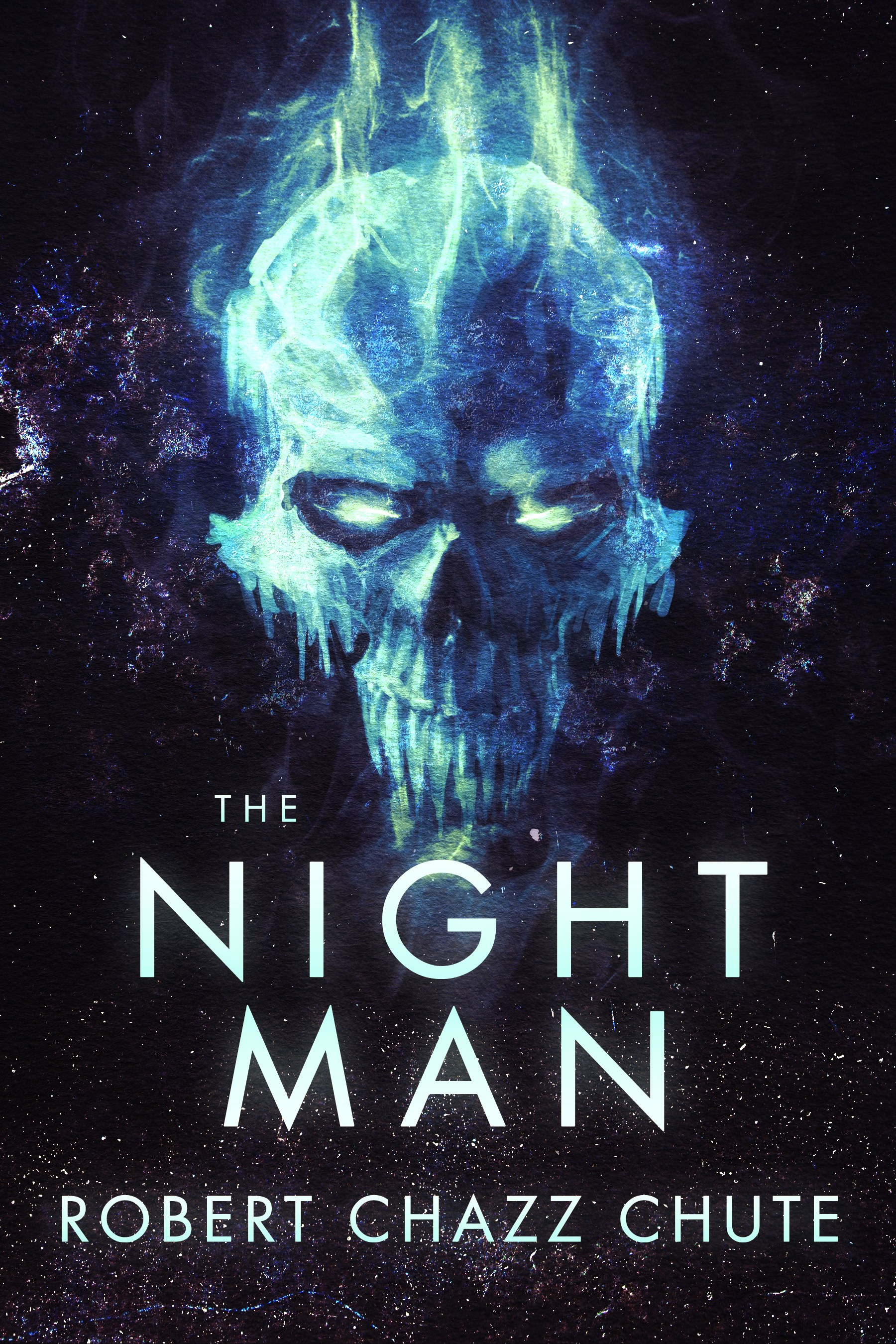
You can pick this ebook up for free today at this link: http://bit.ly/TheNightMan

Join my inner circle at AllThatChazz.com

See my books, blogs, links and podcasts.

Enter your email address to follow this blog and receive notifications of new posts by email.

Join 2,063 other subscribers