C h a z z W r i t e s . c o m

See all my books at AllThatChazz.com.

Writing Conference Cataclysm: Ebooks versus the Amish

The room was packed with authors who were traditionally published. When the bookseller was talking, they were clapping. She told them what they wanted to hear. She insulted lovers of ebooks, told them to unplug, told them they needed to “get a life.” Her world is divided between ebooks and “real” books, nostalgia for what was and contempt for what is and will be.

Her emotional appeal worked well on that crowd. No one was paying near as much attention to the other guy on the panel. Formerly of Booknet and now with Kobo, Mark Tamblyn knew the numbers. The reality he knew and could quantify didn’t get any applause there so here are some highlights from his trip on the Reality Train:

1. Ebook lovers do love books, they just love them on ereaders. They do not fetishize the package. They read for love, enjoyment, entertainment and ideas, just like traditional readers claim to do…except:

2. Ebook lovers buy more books. Twice as much as people who love so-called “real” books.

3. Ebook readers are not 20 and 30-somethings. They are typically 45-55.

4. Ebook readers are not easily distracted. They do engage in deep reading and are not flighty cyber-ADD sufferers, after all.

One author asked how many people in the room owned an ereader. Only a handful of us raised our hands and he looked quite pleased with himself for a moment. Then someone pointed out the demographic in the room: the crowd skewed old and were, after all, a bunch of traditionally published authors. (And by the way, a couple of those older authors expressed excitement at fleeing to publish their own books so they can get off the mid-list and get paid 70% instead of 25% from a legacy publisher. I’m sure there will be many more to follow.)

So here’s another break from the illusions of The Matrix: Last year Kobo had a party to celebrate their one-millionth customer. A week later they held a party for their two-millionth customer. The month was December and that, my friends, is one major and measurable difference made by Jesus’s birthday. Clearly Jesus wants you all to buy ereaders.

It’s gauche, but since I predicted the ever-increasing appetite for ereaders last year and since I’m in a foul mood I will point out: I informed you thusly! I so informed you thusly! (Inside joke for Sheldon Cooper fans.)

And by the way, since I’m so damnably cranky: Last week I noticed someone saying the indie revolution was a good thing for creators but wasn’t any good for readers. Hey! I’m indie but I was a reader first and will always be a reader. I read ten books at a time. I’m more voracious for reading material than I am fudge. I’ve got a stack of pbooks by my bed, a huge library we call a house and a whack of ebooks loaded in my ereader. I relish more choice, even the stuff that isn’t particularly close to grammatically pure. So knock off that BS, thanks very much.

And have a day. Make it real.

Filed under: e-reader, ebooks, Rant, self-publishing, Writers, Writing Conferences, , , , , , , , ,

21 Bold Predictions: The changing future of books

Sure, you need to write a good book to make it marketable. But what will be more marketable in the future? What will be different? Here are my sweeping predictions:

1. Non-fiction Shrink: Got a question? Got a problem? Ask.com or Wikipedia or any number of  quick searches will probably answer that question. What do I need you (and your book) for? In the future we still won’t have flying cars. There will also be less call for a lot of non-fiction. Instant, quick answers beat your treatise on bed bug infestations. I just want to know who to call and what to do to get rid of them.

Another instance: After faithfully reading the magazine for years, I don’t buy Writer’s Digest anymore. There is already more information than I can possibly read on writing blogs. For free. Um, like right here, three times a week, for instance.

2. Short form explosion: My horror and sci-fi writing friend Rebecca Senese articulated this for me first and it makes sense. People have less time and shorter attention spans as the web changes their brains away from the usual experience of deep reading. Cyber ADD aside, short stories are also 0.99 each, so people will download a little bouquet of short stories and take a chance on new authors that way.

Also, with ebooks, novellas and short novels are practical again from a manufacturing/pricing perspective. Think of the works of Albert Camus. 50,000 words for a novel was common. Then New York lost confidence in that formula and bigger books became the norm (so much so, in fact, that many authors now scoff at NaNoWriMo‘s 50,000-word winners.) Now, book length is less relevant. Ebooks don’t have page numbers.

3. Merchandise and books shall marry: Your platform and your content should optimally come together in a cult that wants more of your work. Witness all the Fight Club quotes, Youtube videos, tees and, well, actual fight clubs (years after the film phenomenon.) You’ll be spreading the awesome with passive income from whatever secondary sources you can manage. (I already started to plant my seeds here.)

4. Domination by Series: Having more ebooks available improves your marketability. Having more ebooks in a series improves your marketability even more. So, rather than sticking to a one off, consider how you can turn your masterpiece into the foundation for a series of books fans will clamor for. Your advantage as a self-published author is long tail merchandising. Your work shall be available until we embrace the Singularity and join ebooks in the cyberspace holodeck of our disembodied, fully-uploaded immortal minds.

5. Product integration: Slightly different from #3, here I’m talking about books as vehicles for products instead of the other way around.

You are a carpenter who specializes in bathroom renos. Order the book on how to renovate a bathroom in three days. The book pushes the advantage of your special caulking gun, available for immediate drop shipping before sledgehammering the bathtub.

6. First-person non-fiction: More authors who did something stupid and dangerous (tour Iraq for pleasure or go skiing off the approved slopes) will write their own first-person accounts. They’ll self-publish and the covers won’t say “as told to” some ghostwriter. The results will be horrific and ubiquitous.

7. Excellent journalists will find their place in analysis: The freelance market sucks for writers. However, if you’re a journalist with extensive financial expertise a la Too Big To Fail or can write like Matt Taibbi in Rolling Stone, you can provide the long tail analysis of WTF happened?

8. To be successful, freelance writers must own smaller niches: If you aren’t a genius like Matt Taibbi, there’s still hope, but you’ll have to think small. Maybe microscopic, like the asbestos beat in the tri-state area.

Generalist writing isn’t dead exactly. In fact, generalists are everywhere, but they are also free.  You may not think of it this way, but really, blogging is instant publishing. If I want a non-expert opinion, that’s the simplest thing in the world to get and the blogger probably isn’t seeing a dime from it. The writers who are making money now are either tech experts  or people who are plowing ahead to make way for the rest of us in the digital publishing revolution.

9. Cross-genre will be accepted: Cross-genre books (a la Scott Sigler, for instance) have long been a problem for publishers. Even if they loved it, if it was sci-fi and horror, they worried which bookshelf it should be placed on to sell. (For those of you who aren’t sure, go look up what a bookstore used to be. That worry used to be much more relevant.) Cross-genre’s stigma is fading. And self-publishers care not at all, though they will have to do a really good job with their promotion and publicity.

10. More humor: In order for a humor book to sell, traditionally it had to be penned by a celebrity or it had to have a Shit My Dad Says-worthy hook (in other words, a novelty book.)

Comedy writer Ken Levine has a long history of sit com hits, from Mash and Cheers to Frasier, among others. Despite his track record, he wasn’t famous in front of the camera so traditional publishing hasn’t given him a chance to screw it up. Who he was wasn’t enough for traditional publishing to invest.

However, Ken has an incredibly popular blog with a following. He could go back to trad publishing and ask them how they like him now. Or he could just publish himself and keep the profits.  He has a platform that heretofore went unrecognized. He’s a guy with a blog today. He could be the new Dave Barry tomorrow.

11. People will get better at platform: Not long ago a clueless agent told a baffled writer,”Go make a viral video.” Yeah, sure. But what makes a video go viral? As time has passed, we have a better idea of what elements make something go viral.

I’m not saying there’s a formula. However, I think we’re at the point where we recognize what won’t go viral. If your book trailer is going to catch fire on Youtube, it will have to be powerful or clever or charming or heartfelt yet funny or at least cute. If you don’t have any of those elements, you’ll know (and if you don’t know, I hope you have good friends who will warn you.) At least the tech has improved so if you’ve got GarageBand, you already have a shot at putting together a better book trailer. And if you screwed it up, you can take comfort in trying again since the costs of trying have come way down.

12. Curation will get worse, then improve: People are already learning to distrust Amazon reviews. Many reviews are by haters with nothing better to do but snark on others’ work. Other reviews are by friends of writers or even by the writers themselves. There are a lot of books coming down the pipe and you are going to need a filter. Goodreads, for instance, seems to be a place for real people to provide feedback on what they love. I’d trust that (or a friend with similar tastes) before depending on Amazon alone for a helpful review.

13. Eventually: Ebooks will boil down to one or two standard formats.

14. Eventually (after #13): Your device will get sophisticated enough to take the download and format your downloaded ebook however you like it, no matter what the Big Six decree. Proprietary defenses (DRM) will be cracked as fast or faster than they are now so prices will fall, many current publishers will be former publishers and if you want money to eat, you’ll have to make up the difference with volume.

15. And #14 won’t happen on an e-reader: I love my e-readers, but they are interim devices, like pagers and electronic planners were. When e-readers go, they’ll probably be replaced by tablets that can do everything. The screens will be expandable so you won’t be peering at books through the keyhole like on a smart phone. Also, we’ll be back to the two-page spread you’re used to with paper books.

Some say ereaders are already on the way out but they’re in a rush. Ereaders will be around for some time to come because lots of people want to read ebooks, but they can’t afford higher-end integrated devices. Ereader prices will fall so market saturation will soak much deeper and faster than previously thought.

16. Media integration: I tried to read an integrated ebook. The experience sucked.  It won’t suck forever. You’ll have that two-page spread, but you’ll be able to bop over to a cut scene of the story’s climactic event. Merch links will be embedded into the text so you can buy the t-shirt your hero is wearing and the villain’s yummy high heels. One click (only it will be a swipe and eventually, a voice command. Later, a grunt. Then, a thought.)

17. The future of reading is hearing: Audio will rise much higher in popularity. You don’t have time to read so you listen in your car, while you work out, while you walk the dog, while you do the dishes and/or have sex. Time management is more important than  money management (though they are often merely equated. that’s a different post for the glorious future.)

Audio will continue to be more expensive until voice tech improves. While we’re still paying actors to read (minimum $150 an hour and usually $300 an hour and up) audio will stay the indie authors last foray. No disrespect to actors. I know some. However, your computer’s voice inflection is improving so when that dramatic reading is up to snuff, this Jetson’s future will kick in. The voice of George Jetson will come from a computer, not a talented voice actor.

18. You’ll care less about grammar: Well, not you. But your kids probably, especially since in school they are already taught spelling (and handwriting) matter less. As an editor, I regret every grammatical and typographical error. But with the deluge of self-published books replete with typos, we’ll relax our standards. Instead of fetishizing a book’s typographic purity, we’ll freak out less when we spot a typo. Instead, high praise will be, “That one didn’t have that many typos.” Practical acceptance will ensue once today’s outrage becomes the new normal. Sure, you pride yourself on being a sharp word nerd, but anyone who can sustain the level of outrage required will be exhausted and have no friends.

On the plus side, a book that is well written and well edited will stick out more.

19. Instant will be prized more: Trad publishing works on long publication deadlines because of budgets and logistics. (Though it’s a factor for the editorial staff, contrary to what you’ve heard, quality is not actually Job One.) If they could pump books out faster than 16 to 18 months per book, they certainly would. That kind of agility would allow them to be more topical, hit trends and, most important, have more stuff for sale. Recently I read an ebook that mentioned the Japanese earthquake. Compare that to how long it took 9/11 to show up in traditionally-published novels out of New York.

There will be little to no delay in the future. An ebook on the ramifications of Bin Laden’s death was up for sale within a week of his death. You might think it was mostly prepared ahead of time, but actually it was a bunch of emails from socio-political experts contacted as soon as Seal Team Six did their job.

20. Romance will continue to dominate, but now it will be recognized: The love of the paranormal romance genre is not a new thing, but romance has never been recognized as the dominant force it really is. Amanda Hocking’s recent success is no accident, especially because she writes in a genre that dominates reader demand.

Look at bestseller lists. You’ll see “important literary works”  by big publishers. Good for them! Those are the sorts of books I like. However, those weekly bestseller lists are often based on booksellers reporting which books are sitting in front of them in the biggest cubes and stacks. Much of the math is suspicious, especially since bestseller lists don’t take into account sales from non-traditional book venues (Walmart, drugstores, the spinner rack at beach resorts or the vast call for romance books among ESL learners. Nope. Not kidding about that. If you’re learning english, simple stories of ribaldry and girl-next-door heroines are one way to do it.)

You won’t see Harlequin romances on bestseller lists. However, I used to work at Harlequin. I’ve seen the numbers. Romance sells huge. Romance sells much bigger than anything on bestseller lists. Why? Because english majors run Big Six editorial departments. They do not run the real world. Yann Martel writes great books. Nora Roberts writes fast, easy reads. Even snobby english majors read trashy, naughty novels for a break from lit that might be fresh and surprising. In the real word, the hare beats the tortoise.

21. Someday soon, everyone will make these changes in spelling: email, ereaders, ebooks. Of all these predictions, this is probably the one which will happen first.

And yes, #18 will probably happen last. As in, over your dead body.

Filed under: Books, DIY, e-reader, ebooks, Editing, publishing, Rant, self-publishing, , , , , , , , , ,

Controversial blog posts, hate mail & puppies on fire

I write a column for a trade magazine. I get a lot of fan mail (he said modestly). I have a folder stocked with happy reader feedback so if I ever need talking in off the ledge, many kind subscribers’ letters to the editor might stop me from the jump to pavement lasagna. But,  of course, it’s the negative reviews you remember.  

What’s surprising about negative feedback is how surprising it is. Let me explain that obnoxious tautology: I’ve written columns I was certain would stick in somebody’s craw. I’m reasoned, but sometimes provocative and I do poke the odd sacred cow through the skull with a nail gun.

But it’s often the posts

I consider more bland which spark  readers’ ire most!

For instance, I wrote a humorous feature that detailed the uses of therapeutic laughter. The tone was light, though I did stir in an interview with a neurobiologist and instructive tips. Most people didn’t just like it. They loved it. We got a lot of really nice letters. It’s a special thing when people take the time to say good things about you. The spur to action usually skews the other way. Angry people write more letters than happy people do.)

As great as the response to the article was, from that same feature there was one letter from the reader who did not just like it. In fact, she loathed the piece (and me.) She objected to the jokes. It was clear she didn’t get the jokes. There are, perhaps, billions of people who don’t share my sense of humor. Not only can I not change that, I wouldn’t want to appeal to the humorless.

People who get all angsty and vituperative about your writing share a common trait. They act like the one thing you write is the sum and totality of your writing. It kind of amuses me (okay, it amuses me after some time passes) when people get bent out of shape from one thing I wrote. I write lots of stuff. Read it all and get really pissed, or realize that if you don’t care for something, there’s always the next page. There’s always something else to read.

Don’t say something you don’t believe just to be provocative. Satire is fine. Parody’s good. Be fun and playful. Be as funny as you like, but make time to be sincere when you’re making a serious point. Don’t pander.

People sometimes accuse Bill Maher of saying outrageous stuff just to get a reaction. Not true. One survey showed that Maher’s die hard fans only agreed with him 14% of the time! He’s funny, insightful and can be cranky. But he’s not a crank easily dismissed. He’s thinking and doesn’t fall to one side of all issues all of the time.

This is counterintuitive to how many people act as they write their (unread) blog pasts. People often think that only people who agree with them will like them. If you’re funny and interesting and reasoned, thinking people will listen. Your blog’s grasp can go beyond the reach of your mom.

When I read blog posts I dislike, I rarely comment on something with which I disagree unless I know the people involved or think it will make a difference. I won’t be phoning Rush Limbaugh or Glenn Beck to try to disagree with him on air, for instance. People don’t listen to Rush to get ideas. They listen to confirm their own fears and prejudices. Echo chambers aren’t designed for more than one loud voice. Life’s too short to pursue debates with people who will never change their minds no matter what. (And I won’t change my mind on that.)

“Pearls before swine,” as Jesus said.

(Note to Mr. Beck: Jesus is an important guy in the bible whose words are written in red so they are easy to find. Like you, he talks about economics a lot, too. You appear unaware of the things Jesus said. Take a look.)

Real world example: Today a friend linked to a post so I checked it out. I found it utterly vile. The essay was an extreme so-serious-I-hope-it’s-parody, divisive, lying hit piece that underestimated both liberal and conservative thought. I didn’t comment on the post itself because I’m not giving that hateful essayist the satisfaction. Instead I left a comment on the original Facebook link to let my friend know I thought his link choice was disturbing.

To be fair to him, his intent puzzled me. I’m really not sure if he linked to it as an example of a good thing or a bad thing. Whatever his opinion on that issue, he’s still a great guy and a great friend and I’m not writing him off if he shares those (crazy) views. He no doubt has a lot of other views I agree with and I know he is an admirable, heroic fellow. (And no, I don’t know if he reads this blog or not since he’s not in publishing.)

Mental note:

Don’t provide links to hate-filled sites.  

Debate and dialogue of substance? Okay. 

Stupid shit? No time.

The take away? Don’t let negative feedback throw you. If what you write is so bland it never offends anyone, it often isn’t worth writing. There’s nothing new and interesting about your blog posts if every one of them is the equivalent of a basket of puppies. If you’re going to keep readers, you’re going to have to be compelling, informative or at least engaging. Don’t tell me about the weather. Say something you believe. Make me laugh. Make me spew my coffee over the screen. Set a basket of puppies on fire once in a while.

Case in point: You might expect conservative readers to object to me condescending to Glenn Beck. Perhaps defenders of the mentally unstable will chime in on that score, too. You might expect liberal readers to object to any mention of Rush or Beck since they already get too much attention everywhere. Maybe you think people will get angry about the notion of setting fire to a basket of puppies.

Personally? Since a basket of puppies set afire is an obvious joke in terrible taste, I’m betting someone will object to the reference to a nail gun through a cow’s skull. Vegans are fascists worse than Hitler. (Kidding! Kidding!)

As Bill Maher says, “I kid! I kid because I love!” 

Heh. 

Filed under: blogs & blogging, Intentionally Hilarious, Rant, Rejection, reviews, Writers, writing tips, , , , , , , ,

Publishing is sick. You should quit. Take up knitting.

I attended a lovely writing conference. The best value of these get-togethers is often not in the classes, but in the networking, either by finding an agent, getting  useful feedback or networking with writer allies who can hook you up with what you need (e.g. a graphic designer, beta readers, a photographer, an inexpensive website developer, software you didn’t know existed etc.,…)

A couple of instructors at this conference gave me some really great technical information. Much of the discussion was about stuff you’ll find on this very blog (Shameless plug. Subscribe and send love.) Much of the talk was yet another rehash of commonly known information (e.g. get yourself an editor for your self-published work). A bunch of it was stuff you see spread across the internet endlessly for free (e.g. a rehash of the Amanda Hocking/Barry Eisler unfoldment).

(Heh.Unfoldment. I like that.) 

There was also some bad advice. But today, let’s focus on the health of the publishing industry: It’s sick. Really sick. Especially for the ones upon whose brains and bones rest the cracked foundation: writers.

Of course, it has been thus for a long time. Even when it was healthy, publishers operated on thin margins and predicted imminent doom. Many of those publishing companies anticipating the end were right; I worked for several that are long closed. (I didn’t kill ’em, but I helped hold ’em down. Good times.)

We all know the common complaints today: fewer editors, the corporate profit-push squeezing the midlist, the crash of the bookstore (ask your parents, they’ll tell you what they were), the discount tyranny of the chains and the crush of all that self-publishing pressure and the ennui that sets in when you realize you’re a rusty cog in an old machine that needs a lot of parts replaced.

I’d like to  suggest a new measure of the health of the industry:

How many jobs do the major players have?

A short, relevant aside: I am currently a part-time massage therapist, columnist, feature writer, writer-writer, blogger and editor. Also, I’m a house husband and stay-at-home dad. That’s plenty of hats. Okay, I’m a freak, but not as much as I used to be it seems. And I’m cutting down my number of roles soon (Hint: keeping the sexy wife, brilliant kids and the horror writing that chills my victims’ readers’ blood.) 

Aside over. To business: 

Now watch what happens when we look at instructors at writing conferences:

People at the top of their game aren’t making their living from writing.

Of all the people I encountered at the writing conference, two were at it full-time. Andrew Pyper wrote a book I loved called The Killing Circle and gave a funny, charming and wise speech. Wayson Choi spoke briefly and he’s also plenty charming. (Just read Not Yet, liked it.)

Mr. Choi gave the same encouragement he did last year: You aren’t alone in this. We are all together in this. (As if writing and actually getting published is equal to a struggle with a terrible disease and all caregivers and support for the afflicted must be rallied.) As if the diagnosis is in and it’s not good. The doc is giving you that look that says you might make it, but the treatment is so horrible and there is so much pain to endure, refusing to undergo medical torture is a worthy consideration. Getting better (or published) is sort of like winning the lottery.

(Trivia bonus: Wayson Choi is not only published but once won $100,000 in a lottery. He also survived terrible lung and cardiac problems so he might be the sweetest, luckiest sumbitch you’ve ever heard of. Sure, lots of people win big prizes and survive heart attacks, but to be published? That’s rare!)

But are writing conferences really about getting published? There’s a lot of amateur desperation in that big hall. Nice people, but not all writers. Dilettantes and the terminally confused are also a large component from what I could tell.

I don’t count delusion against people, by the way. To be a writer at all, you must be deluded…well, for fiction writers,  it’s a job requirement.

Are writing conferences helping these people get published, or are they just  another income stream or promotional avenue for poverty-stricken writers? Several presenters used their seminar teaching position to flog their books and editorial services pretty hard (though I didn’t mind the guy who had the grace to be funny about being spammy.) The rest were so fed-up, sad or desperate they were perspiring audibly.

When the “stars” in an industry have to spend a lot of time doing non-writing activity to eat, that’s another indicator of an industry on life support.

If any other industry had this much necessary moonlighting (go ahead, name any one you like), you wouldn’t want your kid on that career path. Imagine if all the civil engineers also had to work as mail carriers and mimes to avoid starvation. Suppose all the doctors were also telemarketers/poets/screenwriters/dog walkers/financial advisors/supply teachers, just so they could cobble together one living income from all their part-time jobs. There’s nothing wrong with any of these jobs but…

But if you have to do it all…well, my point is, sorry…you should quit. 

If you think you can quit, then good. You’re free to move on to something that could give you the security of three squares, dignity, hope for the future and some level of satisfaction.

If you can’t quit, either….

Maybe my writing as a disease analogy wasn’t so inept after all. 

 Related Articles

Filed under: publishing, Rant, Rejection, Useful writing links, Writers, writing tips, , , , , , , ,

Drop the rose-colored glasses.Typewriters are gone.

The Underwood Touch-Master 5 was among the las...

Image via Wikipedia

The last typewriter manufacturer closed last week. Unless you’re Cormac McCarthy or Elmore Leonard, you’re not exactly at a loss. And yet…

Some people feel the pull of the past strongly. They are experiencing the past again, but this time without the White Out, carbon copies and numerous typos. It’s nostalgia for a time when newsrooms and typing class were full of the chatter of these wondrous machines. I miss that sound (although I’m sure you can download a program somewhere that will mimic that sound for your keyboard.)

But nostalgia is all it is. We fetishize the past, romanticizing earlier times and forgetting the problems and annoyances. The past wasn’t better because it was a better time. The past is better because you were younger and still had hope. (I kid! I kid! Your best times could still be ahead of you, but if that’s going to be true you better take your pace up from a walk to a jog.)

Typewriters were great. Are computers better? Yes. no. Maybe. Computers are different (and a different tool) and come with their own problems and advantages. But the medium is not the message. The device is beside the point. What matters is what is communicated, not how

I can communicate much more with my keyboard than I ever could with a typewriter. So for me, typewriters suck and computers rule. (Look it just got meta because it’s happening right now.) However, for all the bellyaching over computers, there are other writers who never gave up on the warm flow of ink on the page, calligraphic pens and parchment. (Then they type it on a computer so someone will see it.)

Technology is always destines to become outmoded at least until technology outmodes us in a fiery ball or the last plague. I love ebooks, but ( paper book  lovers brace yourselves) ebooks are transitional devices, too, and I’ll embrace the next wave of tech after they go. Tablets are next, better smart phones with expandable screens, contact lens screens and eventually chip implants as The Singularity makes us cyborgs.

I’m not looking back fondly at a past that never was.

I’m looking forward to an exciting future

that I hope won’t suck. 

Filed under: e-reader, ebooks, Rant, Writers, , , , , ,

Writers: Choose choice, not ideology

Bertrand Russell's views on philosophy

Image via Wikipedia

Talking politics with someone the other day, they said a particular candidate was so stupid they didn’t know when a reporter was rude to them. I doubt that. Assuming the politician dressed himself that morning, he did know and instead of reacting to the rudeness, he stayed on topic. He was polite—or even too polite.

The guy I was talking to already didn’t like the politician, so he chose not just to disagree with him, but to assume he was an idiot.

People choose sides. Sometimes they don’t even know why, but they get heavily invested in one outcome, often before we have any facts. Sure, people like to think they’re logical, but in fact they’re often intuitive. They jump to their conclusion and the logic that’s recruited only feels like logic. It’s actually rationalization.

We’re hardwired to make quick decisions. It’s in our genes to choose a tribe, too. We stick with that tribe, even when the tribe doesn’t serve us. Even when it’s a bunch of  millionaire basketball players, fans think they’re somehow on the team. It’s a religious fervor to join, to believe, to be one with a larger whole.

And it gets goofy. Nationalism, for instance, is tribalism write large. If you own a Mac and extol its virtues, a bunch of disproportionately angry people will call you a wuss in some web forum or other. We take ownership of things we don’t own. We choose up sides to divide us and them where there is no us and them. Gay teens get ostracized and bullied, many to suicide. Liberals are too quick to write off all conservatives. People can’t seem to make a distinction between “supporting the troops” and “disagreeing with the mission.”

Or, for writers, watch traditionally published authors shit on self-publishing. But this post isn’t about traditional versus indie. I’m not talking today about which way is best (as if any one way is best for everyone.) This is not another one of those posts debating the use of terms, indie versus self-published and who gets to claim what (as if words are owned or static.)

This is a post that simply says: compared to all the big problems we have, traditional publishing versus the new publishing? Pretty trivial. (And it doesn’t have to be all one thing or the other thing, anyway.)
Lighten up. Choose your own path. If you’re shitting on somebody or telling others what to do, ease up on tribal tendencies and focus on you.

Man in the Mirror and all that.

You be you. I’ll be me.

Filed under: Books, ebooks, links, publishing, Rant, self-publishing, Writers, , , , , ,

Pandigital Novel: The e-reader review

Do not buy this e-reader. I own a Sony e-reader (which I’m very happy with) but I was looking for another device for my wife. The Pandigital looked good, but I was soon disappointed.

Out of the box, it’s impressive. Not only is it an e-reader, it’s a tablet. That, and the price at $189, is what got my attention in the first place. The e-reader function was primary, but to pick up a cheap tablet with which She Who Must Be Obeyed could access Facebook, e-mail and the internet sounded great. And it has a color display! Hurray, I’d give it a go.

I learned a lesson I seem to have to learn over and over:

You get what you pay for.

The Pandigital Novel seemed to work fine as an e-reader and I liked the option of night reading (black field/white text) in addition to daytime reading (though I understand that’s an energy suck. We charged it up (using a wall outlet adapter.) It was already at 97% charge so it was soon ready to play with and we were anxious to experiment with our first Android tablet.

We were pretty chipper at first since it was so easy to set preferences. Then  things soon went south. The first and worst thing was that the touch screen was so bloody unresponsive. I’m used to the ease of working with my iPod Touch. I foolishly thought all touch screens were made equally. Uh-uh. I swiped with one finger, then two, then three. The response was hit and miss and always slow and frustrating.

We switched to the stylus and that didn’t make much difference. In fact, the stylus had to be precisely perpendicular to the screen and pressed just so to be at all effective. Even then the Pandigital Novel’s screen was often uncooperative.

Then things got worse. The e-mail wouldn’t configure. It wouldn’t play YouTube videos. Then it froze when we played the sample movie that came with it! And it stayed frozen until its battery ran down.

No, it wouldn’t turn off and reboot. No, there wasn’t even a reset button I could stab with a wire paper clip. There might have been a way to solve the problem, but tech support wasn’t answering at that time of day. (I’ve since learned from other reviews that the help center is often unresponsive anyway, perhaps overloaded with calls for help from disappointed customers.) The user manual was, of course, filed on the tablet, which as I mentioned, was already frozen. It would not thaw.

In a word, G-G-G-GAAAAAaaaaaaaaaagh!

Best Buy cheerfully refunded me for the tablet, its protective case and the warranty I got for it (about $220.) For the same amount of money, I’ve got the gold standard e-reader: A Kindle with extra adapter and case is on its way. 

Lesson learned.

 Related Articles

Filed under: e-reader, ebooks, Rant, reviews, ,

The Fatness

For a change of pace, here’s my column, Practitioner Parables, in Massage & Bodywork magazine on page 127. It’s called Therapists Through Thick and Thin. It’s about being heavy and getting thinner.

(CLICK HERE) 

Filed under: Horror, links, Media, Rant, , , , , , , , , , ,

Self-publishers are judged unfairly

I’ve been thinking about what makes things go viral. As per my last post, put twoanger babies together, let them babble, and you’ve got a ubiquitous video that’s hard to avoid. Cute animals go viral. When Sarah Palin said “squirmish” instead “skirmish” I thought that would go viral. It didn’t really, which is as telling a sign of her fifteen minutes being up as any deep analysis of her political future.

Then there was the author who lost her frigging mind.

If you somehow missed this story, here’s the ugly summary: She got a lukewarm review. The reviewer said the story was good but her self-published book was is dire need of a copy editor. The author unadvisedly went into the comments section of the book review blog and was anything but gracious. She blamed the book reviewer for downloading the wrong (substandard) copy. Then she railed some more. She was fighting uphill from the beginning, of course. You don’t pick a fight you can’t win in someone else’s house. Regular review readers rose to the reviewers defense. Things got even more heated when said author then resorted to profanity. The comments section blew up as people  piled on. I am not piling on. Plenty has been said about this and frankly, there’s nothing more for me to say about that. In fact, too much was said about that.

What I do want to talk about is the comment, made several times, about self-publishers. The point was that this author exemplified the lack of professionalism that reinforced the posters’ opinion that they would never, ever read a self-published book.

Wow. How unfair.

Traditionally published authors have made this same mistake.

Not all self-published authors let manuscripts go to press unedited.

Not all self-published authors would act so unprofessionally as to react so negatively to a book reviewer.

Clearly, the poster talking about “all self-publishers” has a bias and found an anecdote that confirmed that bias.

The phenomenon is called confirmation bias.

It’s lazy thinking that leads to prejudice.

Prejudice ≠ a good thing.

Filed under: authors, Books, DIY, ebooks, Editing, Editors, Rant, self-publishing, writing tips

The Big Authors Begin To Bolt – The Daily Dish | By Andrew Sullivan

A photo of author and political commentator An...

Image via Wikipedia

This will blow you away. $30,000 a year for a short story? And to think I have boxes of short stories around the house to hold the edges of carpets down.

The Big Authors Begin To Bolt – The Daily Dish | By Andrew Sullivan.

Love the delicious little dig at publishing at the end of Sullivan’s article. Hm. I’ll have to read more from Sullivan on this topic to see precisely what he’s on about.

Filed under: authors, blogs & blogging, DIY, ebooks, links, Media, publishing, Rant, writing tips, , , , ,

Bestseller with over 1,000 reviews!
Winner of the North Street Book Prize, Reader's Favorite, the
Literary Titan Award, the Hollywood Book Festival, and the
New York Book Festival.

http://mybook.to/OurZombieHours
A NEW ZOMBIE ANTHOLOGY

Winner of Writer's Digest's 2014 Honorable Mention in Self-published Ebook Awards in Genre

The first 81 lessons to get your Buffy on

More lessons to help you survive Armageddon

"You will laugh your ass off!" ~ Maxwell Cynn, author of Cybergrrl

Available now!

Fast-paced terror, new threats, more twists.

An autistic boy versus our world in free fall

Suspense to melt your face and play with your brain.

Action like a Guy Ritchie film. Funny like Woody Allen when he was funny.

Jesus: Sexier and even more addicted to love.

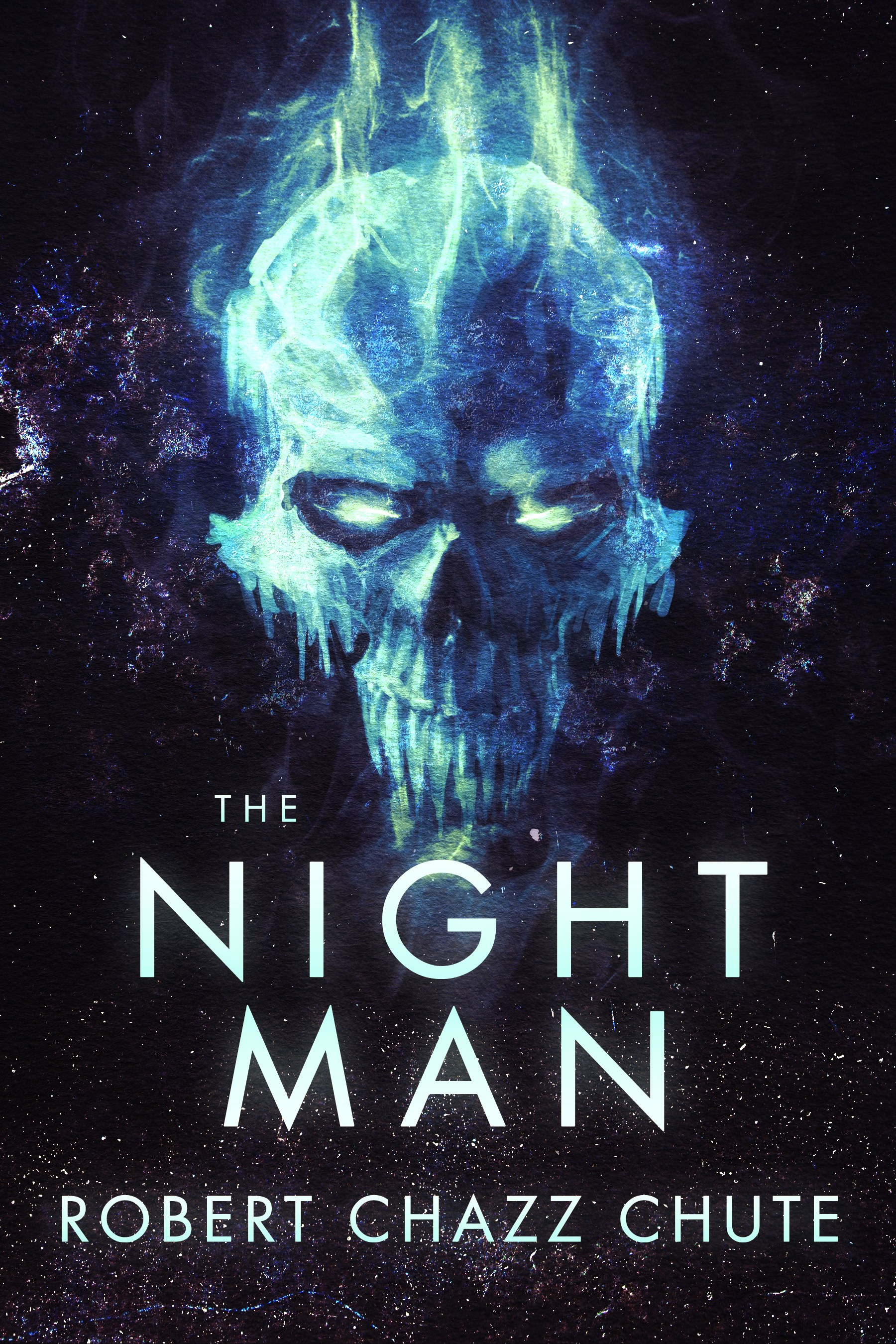
You can pick this ebook up for free today at this link: http://bit.ly/TheNightMan

Join my inner circle at AllThatChazz.com

See my books, blogs, links and podcasts.

Enter your email address to follow this blog and receive notifications of new posts by email.

Join 2,063 other subscribers