C h a z z W r i t e s . c o m

See all my books at AllThatChazz.com.

Touching the future of reading – ebooks on Kindle, Nook, iPad (via Steve Umstead: Writer, I think)

You know how you talk to people in your family and they deplore the e-book wave? Okay, I’m really talking about me and my family. And it’s not that they deplore the e-book wave. It’s that they don’t believe in it at all and think I’m “full of little green apples.” (They’re rural and condescending.)

Years of therapy ahead. (Heavy sigh.)

Anyway, I ran across this post that reports from the front of the e-book wave, right where it’s already washed up on shore. Check it out.

Touching the future of reading - ebooks on Kindle, Nook, iPad This past weekend, I promised myself I’d sit down, shut out all distractions, and put together a rough outline for Book 2 of the Evan Gabriel trilogy (yes, it’s nearly official – Gabriel’s Redemption will be the first book in a science fiction/space opera trilogy…no better way to get noticed and have validity as a new author than to have more than one novel for sale, or at least in the pipeline). I packed up the trusty MacBook Air, iPhone, note … Read More

via Steve Umstead: Writer, I think

Filed under: publishing

Eat Your Lima Beans: The Importance of Becoming the Writer You Aren’t (via Albert Berg’s Unsanity Files)

This is such an excellent post that cuts to the heart of achieving any kind of a success as a writer (or any other profession.)

It won’t all be roses, but to do the thing you dislike, to perform the task that bores you or even the thing you fear most: these are the ways to get where you want to be.

Eat Your Lima Beans: The Importance of Becoming the Writer You Aren't When I was a kid, my mom had a rule at the dinner table: "Eat everything on your plate." I was okay with it most of the time. Mom was a great cook who never failed to deliver a stunning meal even when she didn't have much to work with. But sometimes…sometimes that rule was a tough pill to swallow. Especially when Lima beans were involved. But what I didn't realize was that mom was teaching me an important principle way back then: it's just as i … Read More

via Albert Berg's Unsanity Files

Filed under: publishing

Editing Tips Part 1: Story bible

my eye

Image via Wikipedia

Since I’m in heavy edit mode this week, it’s going to be all about editing all week. You asked. I give. And so:

A story bible is a document beside your manuscript where you keep track of characters’ names, ages and details. It will keep you from screwing up too much and make your revision process go faster. It’s very frustrating, for instance, to go through a 450-page manuscript looking for the hero’s little sister’s eye color page by page. It’s the equivalent of losing a productive hour to search the house for a misplaced checkbook.

Keep your story bible close so you can add to it without interrupting your writing flow. I use a yellow legal pad though if you have the document on-screen you could search it, I suppose. (A bible that is too long goes unread but is an excellent device to keep you procrastinating instead of writing and revising.)

Even if you’re less of a planner (the seat-of-the-pants writer) it helps to have some minimal plan or a story bible so you can keep track of characters and key details. It’s better than losing a character along the way. It is embarrassing to write an entire novel and think you’re done only to have one of your beta readers ask, “What happened to Mrs. Haversham? Did she survive the fall to the bottom of the stairs on page 139? And what happened to the alien prostitute who got locked in the truck?”

It’s a huge problem in self-publishing because there aren’t teams of editors and proofreaders combing manuscripts. It happens with traditional publishers, too (and will increase becaus of cutbacks.) For instance, in Lucifer’s Hammer, an astronaut is described as short, but by the end of the book he’s standing tall and commanding in the bow of a boat. In Under the Dome,  Stephen King introduces a supernatural element on the good guy’s side that is never explained and seems forgotten, as if the angels whispered in the hero’s ear and then got distracted and wandered away. (When you write a book that big, it’s easy to lose threads and drop stitches.)

As you edit, things will crop up and it will help you to add edit points to your bible. Edit points are policy issues. It saves you a lot of time, and money, to have a clean manuscript. Decide up front, are you basically going with the Chicago Manual of Style? AP Style? Canadian or American spelling? Serial commas or no?

By keeping a list, you’ll discover some idiosyncrasies will crop up and it may grow to a long list. For one instance, you might type gray when you mean to write grey. In your bible under a heading that reads Editing Points, write in bold GReY NOT GRaY!

When you think you’re done your manuscript, drag out your list of troublesome words.

Use the Search and Replace tool.

You thought you got them all.

You didn’t.

Nobody does.

Related Articles

Filed under: Books, Editing, Editors, getting it done, publishing, Writers, writing tips, , , , , , , , ,

Writers: How to find an editor & should you be a joiner?

There isn’t much of a trick to finding an editor to help you prepare your book for marketing or publication. Ask around. Ask your friends and acquaintances and colleagues. The way to find a good editor is the same way you find a good plumber or chiropractor.

Ask your friends who they use. Then ask why they like them.editor

It may be a good fit or it may not, but when you ask, you have a place to start. Some editors belong to associations. That can lend credibility, but it’s not the only criterion. The editor you choose should also have experience with your type of project and you should get some sense of how they work so the relationship can work. For instance I use free edit samples so both author and editor get a sense of what needs to be done and how much it may cost.

Personally, I was a member of EAC (the Editor’s Association of Canada) way back when it was FEAC (the Freelance Editors Association of Canada.) I’m not currently a member. I don’t have anything against them, but I don’t feel they are active enough in my city to justify the membership fee. I had a lovely experience and I’m very proud of representing FEAC to the joint Freedom of Expression Committee. If I still lived in Toronto, I would definitely still be a member of EAC.

Here’s the thing about playing with others: I’ve been a member on the executive or on committees in various capacities in a couple of associations over the years. They say membership has its privileges. I’ve found that the more responsibility I took on, the less privileged I felt.

What I felt was the weight of obligation, time pressure and ultimately harangued by members. (For instance, as a chapter exec for the Ontario Massage Therapist Association, it was like trying to herd cats. When a few members were rude to me (after I did a lot of work on their behalf for free) that did it for me. As a volunteer, I wasn’t even being paid for the hassles that accrued. So I opted out.

I haven’t been much of a joiner ever since. So, the point of today’s post is, there are all kinds of associations for writers and editors out there. They are often run by a small board of volunteers who are a harried, unappreciated bunch. If you want to join, great. If you want to help, fantastic. But make sure you’re getting benefits and not just giving.

If you join a critique group, a writers’ union, an authors’ union, are you getting good information and useful connections and most important, is participation cutting into your writing time?

Filed under: authors, Books, Editing, Editors, publishing, Writers, writing tips, , , , , ,

Bookstores: How sick are they?

Cover of "Glass Houses"

Cover of Glass Houses

Recently I’ve seen what I call “backlash” articles* about the health of bookstores. You’ve probably seen them, too. In the wake of the Borders chain closings, some media are hitting back with counter-programming (either out of nostalgia or as a way to stand out.)

Their message is simple:

“We love bookstores and they aren’t all dying. Look at this tiny independent where the defiant owners are making a brave stand.”

I love brave stands. I’m also fond of truth and this is an obvious case where the part is not the whole. It reminds me of all the people who object to the digital revolution with, “Look at all those e-books with all their different platforms. It’s a mess so it won’t survive.” I dislike stupid stands.

Perhaps the problem is confirmation bias. They’re looking for reasons why what will happen, is happening, won’t happen. Whatever bump in the road they find they take gleefully to be an insurmountable obstacle. Actually, multiple platforms for e-books are a sign of health (assuming competition is good in that it keeps prices down and choices up) and of growth (as in growing pains due to rapid, unexpected expansion.) The technology to make us all publishers is developing.

“Developing” implies transition from stupid to primitive to flawed to workable to better to a higher state (and eventually to a new tech.) Instant/indie publishing is not going to be perfect all at once. Nothing is, though not long ago I heard a Luddite say he wasn’t going to buy a computer until the tech wasn’t “perfected.” Hahahaha! He was calling from the corner of Unreasonable Expectations Boulevard and Are You High? Avenue.)

There is  a reductionist view with a subtext that categorizes anyone who predicts the demise of bookstores as a gloating goblin. I’m not gloating. I love bookstores. As (I’ve often pointed out, having milk delivered to the house was convenient, too.)

But I’m not saying bookstores will disappear completely. You’ll just pay more if you want the premium paper product. Heck, you already do that, but the price of old media will rise more. You can still buy turntables, for instance, but if you want to hear the scratches on Billy Joel‘s Glass Houses, you’re paying a very high price for a new needle to make that old pig spin.

Paper books are going to co-exist with e-books for some time…at least until consumers really get kicked in the teeth by manufacturing costs. Books get cheaper when produced in volume, but as digital sourcing rises, e-books don’t have to replace all paper books to make paper book production go from unattractive to cost-prohibitive.

There are too many variables and my brain is too small to say precisely when it will happen. I’m simply confident it will occur and one day, maybe even you will say, “Oh, look, darling! A bookstore! There isn’t a bookstore within 2 days’ drive of our house! Let’s go in and buy coffee and look at their tiny collection. How quaint!”

Yes, Virginia, 100 years from now there will still be paper books.

But you’ll be sewing and gluing the binding yourself.

*Chazz definition: A backlash article is an article written to assure the reader that the writer is the sane voice of wisdom when in fact they’re really just knee-jerk contrarians railing against all evidence. Like how the writers at Slate work from the premise, “We’ll hate on what everyone loves and make snide remarks at what everyone thought unassailable because we’re the sophisticated cool kids! Anything goes as long as it doesn’t agree with Salon.”

Filed under: Books, DIY, ebooks, Media, publishing, Rant, self-publishing, , , , , , , , , , ,

Writers: Two mavericks to follow (plus a surprising original)

Monkeys Blogging

Image via Wikipedia

Are you indie? Are you non-indie but want to increase your awareness of what goes on behind the scenes in the publishing industry? Here are two blogs to follow:

Dean Wesley Smith takes the publishing industry’s engine apart, looks through all the pipes and valves and gives you the goods on what you need to know.

And you need to know what Kristine Kathryn Rusch has to say about making your way as a writer.

BONUS:

There is a guy who got into blogging early. You know him. You’ve seen him. He’s cooler than you thought. And he’s showing others they can self-publish, too.

Click here to find out who I’m talking about.

Filed under: authors, blogs & blogging, Books, DIY, ebooks, links, publishing, Rant, rules of writing, self-publishing, Useful writing links, web reviews, Writers, writing tips, , , , , , , ,

Writerly link roundup: word counts by genre (& send in the cavalry!)

I’m in the editing basilica today but I wanted to take a moment to lay out three little info-gifts for you, and then, something special.cover_front_soe_gol


Three interesting links:

An Author’s Perspective on Scribd versus Bookbuzzr

What word count fits your manuscript’s genre?

A writer and her hate mail

And finally, an author decides to give away his e-book. What makes this special? No gimmicks, no forms, no following, no email subscriptions, zero ordeal.

JS Chancellor’s book got pirated but he’s turning things around. It will be interesting to see how his strategy works to promote the book.

So let’s help. Pump up his blog. Pump up the volume. Go see if you like his writing and maybe a great experience and reader-writer relationship will begin.

He calls it “a shameless plea for help.” I say we help out because, hey, we’re writers! We can help out other writers! More important, we’re readers! And helping out feels good.

And the dude’s giving you a book! What’s to think about? If you like it, spread his word. Go there, bookmark it and pick it up March 1.

Check here for details:

Free Copy of Son of Ereubus

Filed under: authors, Books, ebooks, links, publishing, Useful writing links, writing tips, , , , , , , , ,

Publishing numbers & Atwood on us

Author Margaret Atwood attends a reading at Ed...

Image via Wikipedia

Want a freak out? Here are some US publishing numbers on top distribution channels, most important factors in book purchases, top five book formats etc.,….

And Margaret Atwood on the changes in publishing. (I don’t agree with everything she says here, but much of it’s on track.)

What don’t I agree with? I’m not an anchovy. I’m Dr. David Banner (geek test!)

Filed under: authors, Books, publishing, , , , ,

Top 13: My Favorite Writing Things (via Conjuring My Muse)

photo shot by me at request; see: http://www.f...

Image via Wikipedia

I love my AlphaSmart Neo! Here are a few other things for writers to love, thanks to Conjuring My Muse. Enjoy her list. I did.

Top 13: My Favorite Writing Things If you think ballplayers and crazed sports fans, with their amulets and gestures and habits all meant to bring about a win, are the only superstitious people in the world, think again. Writers can be just as quirky when engaging in their sport. And so I present a baker’s dozen of my favorite writing things, in no particular order.  1. Men’s cashmere sweater This is my go-to, get-in-the-mood wear when it’s time to write and the season is autumn, w … Read More

via Conjuring My Muse

Filed under: book reviews, Books, links, publishing, Writers, writing tips, , , ,

Writers: What I learned from Kevin Smith about AUDIENCE (they don’t own you)

Follow me on Twitter logo
@RChazzChute

The other day I was feeling feisty and I said something about DIY on Twitter (full of bravado):

Burned bridges with a blog I wrote tonight. Fuck the bridge. I’ll swim. Go indie. Live free or die hard.

Someone shot back with a sarcastic:

Proudly alienate those who are not your fans. Awesome.

Well…yeah. People who don’t get me are not my fans. Why should I chase people who don’t like me for me? I have a particular voice and point of view, in my fiction and non-fiction and my blog, that will appeal to you or it won’t. If it doesn’t, no hard feelings and I hope you find something you do enjoy. However, when I dilute my voice, I lose the little tribe I have and any hope of real fans in the future. I’ve heard the quote attributed to a couple of celebrities, but basically it goes like this:

I don’t know what the secret to success is,

but to guarantee failure, try to please everyone.

Which brings us to my personal icon for all things indie, director Kevin Smith. For years, he argued with people who didn’t love him. If you look at his old tweets, he had a serious anger (and sometimes still does) for media, critics and haters. He would do battle with them and, despite all his success and wealth, would still end up arguing with some loser living in his parents’ basement. People who complained about what he did in his career—sometimes about everything he attempted—really bothered him. (Think on that a second: Some people wouldn’t even give him credit for getting something right once in a while even by accident!) Mr. Smith engaged in flame wars while his lovely wife looked on perplexed saying, “You have a wonderful life and live in a mansion! Why do you care?”

Mr. Smith is more relaxed now. Part of his new attitude is the prodigious amount of weed he smokes, but it’s not just that. He’s been successful for so long that he recognizes the pattern: People who are haters don’t do much else. People who don’t write will tell you how to write. People who can’t do, don’t teach. They snipe and snark.

You don’t find your audience so much as your audience finds you. As you try to build your platform and reach out to express your art, you’re going to dredge up some people who are pissed you aren’t what they’re looking for. We don’t do this with things other than art. You don’t go to the pharmacy and get pissed off because they don’t have coconuts in stock. You go to the grocery store for coconuts instead.

Do what you do. Write what you write. Define your voice through your expression and remember that it is your voice. I think harsh critics think they own your art (even if they haven’t paid a dime for it) because, unlike those coconuts, they take what you write into themselves. That doesn’t mean they own it, though. And they certainly don’t own you. They can react to it. They can criticize it. They can argue with it. They can move on (which makes the most sense.)

People who do nothing but hate think hate is art.

They’re wrong.

Art is a creative force, not a destructive one.

What does matter is your core audience. Now if you write and write and produce and put your stuff out there and very few people are feeling any love for it, that’s a different problem. However, if your core audience can be built big enough, that’s all you need. You don’t have to go chasing after the people who are running away from you. No one gets universal acceptance. Don’t even try for it. Expect obstacles and naysayers and pay little or no attention to them if you can. For everything you love, for everything you think is the best, there are millions of people who sneer and call it shit.

Check the comments on any book you love on Amazon.com. See all those nasty reviews? Now, do you really love that book any less because some guy  you don’t know thinks it’s the worst thing on earth since the rise of Hitler and Pottery Barn?

Great people make you feel like you can be great, too.

Haters don’t do that. They don’t even know how to do that.

Now is the time for all good indies to stand up. You now have the technology in your hands to let your unique voice be heard. You can be read when, just a short time ago, gatekeepers could hold you back. There are no gatekeepers anymore. You don’t have to approach publishing or film or any other art as if you’re going to The Man for a job! You can employ yourself and deploy yourself. You can Crowd Source your financing or  convince a fan of your blogged fiction to spend a few bucks for an e-book that costs nothing to distribute. You can grow your fan base without old media’s distribution system and middle man percentages. You can be the boss if you want to be. Your art doesn’t have to wait and you don’t have to ask permission. Make your art and see who shows up. Whoever shows up and stays is your audience.

Remember Chili Palmer in Get Shorty? Some guy tells him how easy it is to write a screenplay. “We can do this…we can do that…” Chili lights a smoke and says, “It’s really that easy? Then I got one question. What do I need you for?”

Here’s today’s message for you if you’re my core audience:

Not sure how to proceed? Resolve to ask questions, learn and try.

When you mess up, resolve to begin again.

If you’re new here and like it, welcome. I’m Chazz.

If you don’t like it, via con dios, friend. I hope you find what you’re looking for.

If you don’t like it and you choose to stay, well, that’s your own damn fault

because you’re looking for coconuts at the drugstore, you idiot!

Oh, and the person who felt alienated by my Twitter post? I saved her some trouble. I agreed with her.

Then, in honor of Kevin Smith’s fine example, I didn’t just block that bitch. I KA-blocked her.

Filed under: publishing, self-publishing, Twitter, Writers, writing tips, , , , , , , , , , , , , , , ,

Bestseller with over 1,000 reviews!
Winner of the North Street Book Prize, Reader's Favorite, the
Literary Titan Award, the Hollywood Book Festival, and the
New York Book Festival.

http://mybook.to/OurZombieHours
A NEW ZOMBIE ANTHOLOGY

Winner of Writer's Digest's 2014 Honorable Mention in Self-published Ebook Awards in Genre

The first 81 lessons to get your Buffy on

More lessons to help you survive Armageddon

"You will laugh your ass off!" ~ Maxwell Cynn, author of Cybergrrl

Available now!

Fast-paced terror, new threats, more twists.

An autistic boy versus our world in free fall

Suspense to melt your face and play with your brain.

Action like a Guy Ritchie film. Funny like Woody Allen when he was funny.

Jesus: Sexier and even more addicted to love.

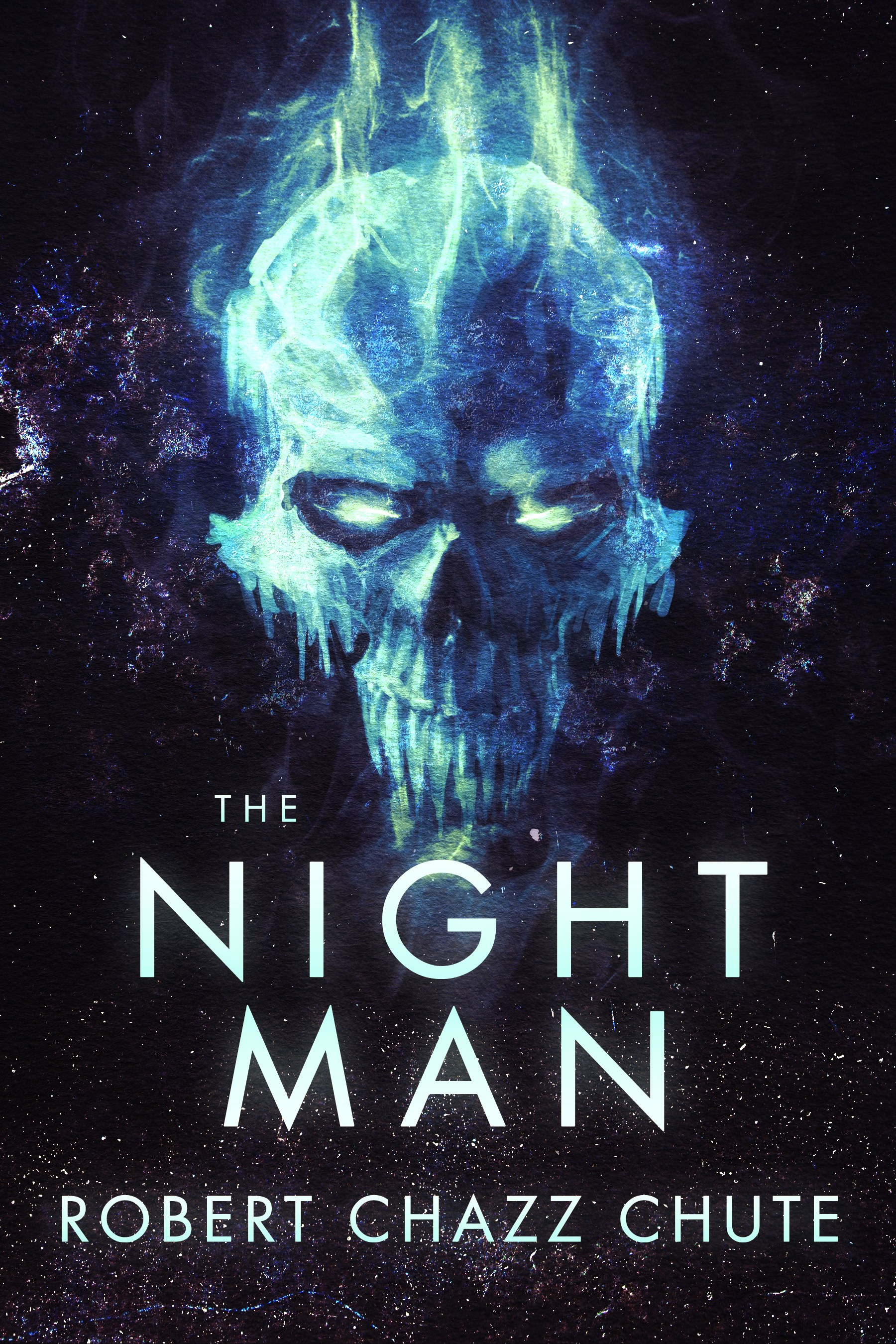
You can pick this ebook up for free today at this link: http://bit.ly/TheNightMan

Join my inner circle at AllThatChazz.com

See my books, blogs, links and podcasts.

Enter your email address to follow this blog and receive notifications of new posts by email.
Join 2,063 other subscribers