C h a z z W r i t e s . c o m

See all my books at AllThatChazz.com.

How to make your Facebook fan page

See on Scoop.itWriting and reading fiction

Good tips here from the author of Novel Blogging, A Writer’s Guide to Blogging. Facebook can be a bit frustrating and Liberty Montano drains your frowny face. Grab the info at the link. ~ Chazz

See on blog.libertysyarn.com

Filed under: publishing

Author Blog Challenge: The Writing Mistake You Might be Making

English: The main character in the comic serie...

English: The main character in the comic series “Lame Strips” (Photo credit: Wikipedia)

I sat at the front of the writing class, giving a reading from Self-help for Stoners. The story, “Another Day at the Office” is  about a guy with a skunk talking his way out of search, seizure, jail and worse at the hands of a policeman in Texas during a traffic stop.

When I finished, I looked up and asked, “How old is the main character?”

I pointed around the classroom. “22! 28! 35! 40!” they answered.

“What colour was his hair?”

“Red! Blonde! Bald! Black! Brown! Wispy Comb over!” (Good for you. I never would have thought of wispy combover for that character.)

There you go. Too much description limits your readers’ imaginations and puts their visions in little boxes that belong only to you. Be more generous and don’t assume your reader is an idiot. They’ve seen people in their lives. They’ll fill in the blanks. The readers want some ownership of the story in the theatre of their minds, too. Don’t describe too much. Was it Dashiell Hammet who said his hero was “knuckly” and left it at that? Too much description has  become a cliche that often opens a lot of books: the main character inspects himself in the mirror before heading off for work. They preen and describes themselves to the reader. Don’t. Instead, please let the action and dialogue carry me along. Let me insert my own vision of your characters. I’ll have a picture in my mind before long and I might even be annoyed if the author’s description differs with my own.

Even then, be sparing. My hit man in Bigger Than Jesus has a thing for expensive suits. It comes up as it pertains to the action and as it pertains to character. It is not there just to make up an arbitrary word count. In fact, it’s crucial to the character. No campfire story starts with a long description of what everyone is wearing unless there’s a point or a clue to character. Be just as judicious, whether you’re telling ghost stories to a bunch of kids around a campfire on their first trip into the woods or writing books for the masses.

BONUS:

Tuesdays and Fridays, I do a little podcast from my author site at AllThatChazz.com. A fresh episode (#29!) is up now in which I tackle letters from Republicans, creep out my twelve-year-old and worry, too late, about my blood pressure.

Filed under: publishing, , , , , , , , , , ,

How My Self-Published Book Became A Hot Movie Property

See on Scoop.itWriting and reading fiction

Ridley Scott. One of the few directors whose name alone can sell tickets. A legend in his own time. And now he’s negotiating for the rights to my self-published book…


(Just yesterday I linked to a post that stated with conviction that the self-published could just forget about their book getting made into a movie. The chances are slim, indie or trad, but grand proclamations are dangerous things. You’re going to be hearing a lot about Wool, a self-published book that may become a movie. It sprang from a story that started out as a humble novelette. The author, Hugh Howey, explains how the book got noticed and may become a movie. Cheery story at the magic link. ~ Chazz)

See on www.huffingtonpost.com

Filed under: publishing

Traditional vs. self publishing. Which would you choose?

See on Scoop.itWriting and reading fiction

You know what I love about this post? Mr. Ing doesn’t have an agenda. He’s asking an honest question and I love the cost-benefit analysis he’s offering us here. Given the variables, which would you choose? More at the Scoopit! link. ~ Chazz

See on www.graemeing.com

Filed under: publishing, , , , , , , , ,

Author Blog Challenge: Writing to Love
Wikipedia

Wikipedia (Photo credit: Octavio Rojas)

The latest prompt for the Author Blog Challenge asks what we love to read and how does that feed our writing? Good question. I read voraciously, and the resource that feeds my writing most these days is…wait for it…Wikipedia. How did writers write before Wikipedia? I think they actually had to go out the front door and into the  world and, let’s face it, no one wants that. At least I don’t and I don’t understand those who do. I’m cozy in my fortified writing bunker, thank you very much.

I’m one of those weirdos who gets lost in dictionaries and encyclopedias. (If you read this blog, you probably are, too.) I look up one thing and get distracted by all the other delicious stuff in there. As I was researching my crime novel, Bigger Than Jesus, I consulted The Mob Dictionary, documentaries, a friend who trains SWAT, an ex-military friend and various books on the mob. It was Wikipedia that yielded my main character’s background and contributed to the verisimilitude the story demanded.

I wanted Jesus to be an enforcer who wants out of  the mob.  I had to give him a back story that made the reader understand why he is the way he is. I needed him to be an outsider, so he’s a Cuban among native hispanic New Yorkers. His journey to Florida is sad and, once he arrives, his story becomes more tragic. The key to the character was his childhood and it was Wikipedia where I happened upon more information about the Cuban migration to the United States. Truth gave rise to more believable lies as Fate (um, I am Fate) dumped Jesus from the roaster into the (mostly) proverbial fire. He’s a smart ass, but not as smart as he thinks. He’s more funny, clever and desperate than he is tough. Wikipedia was the seed that led me to understand why the character worships the love of his life the way he does. Like dominoes, one idea leads to another idea which leads to another idea which reveals a pattern which gives rise to a plot. Powered by curiosity, simply traipsing through Wikipedia gave me a book that will be a series I’m really excited about. The last edits are arriving and the graphic designer is working on the cover as I write this. Hoo-bloody-ha!

If you’re stuck, blocked or just noodling, use non-fiction to amp up your fiction and go wander Wikipedia.

Filed under: publishing, , , , , , , , , , ,

Pubslush – The Good, the Bad, and the Ugly — Part I, The Good

See on Scoop.itWriting and reading fiction

A new entry has come to light in the publishing world called Pubslush (a play on words from the editor’s slush pile.) A Facebook friend called it to my attention, and—because I have many years experience with authors, publishing, and book…


(I just linked to a video about Pubslush. Here’s a new link to the first post in a more objective assessment. Look before leaping. ~ Chazz)

See on www.polkadotbanner.com

Filed under: publishing

Six Tough Truths About Self-Publishing (That The Advocates Never Seem To Talk About)

See on Scoop.itWriting and reading fiction

Self-publishing advocates like to sing about the advantages of putting out your own work, without going to a publisher. And there are advantages. But it’s not as easy as they make it sound.


I had several points to make about this article as I read it. Then those points cropped up in the comments thread. Good points are made on both sides and ultimately, that is the point: Whether you go for traditional publishing or self-publishing, you and I are in for a rough ride. In any case, act like a smart publisher. ~ Chazz

See on litreactor.com

Filed under: publishing

Author Blog Challenge: Writers to adore

The Princess Bride writer William Goldman His ...

The Princess Bride writer William Goldman His Q&A closed the Expo and included the largest audience of the Expo. (Photo credit: Wikipedia)

Another writing prompt for the Author Blog Challenge is: Which writers do you most admire? In a week or so I’ll release Bigger Than Jesus, my first crime novel in a series. In part, the book is dedicated to William Goldman. You know the movies he has written: The Princess Bride, Marathon Man, Butch Cassidy and the Sundance Kid. But you probably don’t know his many novels: Edged Weapons became the movie, Heat with Burt Reynolds; Brothers (a sequel to Marathon Man); and my beloved The Color of Light. What sets Goldman apart is his plotting, his humour and his enormous capacity to surprise the reader. Just when you think you know what happens next, he sucker punches you. I’m all about surprises, too, so I love that.

Who else? Stephen King gets a nod for telling a story straight and well and for sheer output. Chuck Palahniuk is another favorite because we share an interest in the weird but true. Also, Chuck does not rest on his laurels. He takes chances with his books. He’s not trying to do Fight Club over and over and he has even jumped boldly into experimental fiction here and there (like Pygmy and Rant.) What distinguishes his style is that he does not judge his characters. Things happen. Morals are for readers to come up with (or not). There are traits from Goldman, King and Palahniuk I either came by one my own or absorbed. I don’t really believe in emulation of other writers, but I recognize similarities in process.

Recently, someone on a podcast reported that fiction is dead. They said people don’t have time for novels anymore. They want it short and then? Make it shorter than that. The death of the novel has been predicted almost as many times and with as much certitude as “Vampires are so over, man.” I’d worry about the state of fiction, but then I read Run by Blake Crouch and I don’t think we have to worry. Write a great book and tell the story in such a way that the reader can’t put it down. Make them laugh. Make them cringe. Sucker punch them with surprise. The novel will survive. I hope so, anyway, because I am otherwise unemployable.

With each opening, with each beat, with every chapter that ends with a cliffhanger:

BOOM! BOOM! BOOM!

When Bigger Than Jesus comes out, you’ll see exactly what I mean.

Filed under: publishing, , , , , , , , , ,

The Author Blog Challenge: My Earliest Memory of Writing is the Typebrighter

The "QWERTY" layout of typewriter ke...

The “QWERTY” layout of typewriter keys became a de facto standard and continues to be used long after the reasons for its adoption (including reduction of key/lever entanglements) have ceased to apply. (Photo credit: Wikipedia)

I’ve accepted Marcie Brock’s Author Blog Challenge to write a fresh post from now until the end of June. The first writing prompt asked what my earliest memory of writing was. It started with my sister’s manual typewriter, an old Underwood. When my sister Cathy went off to college, she left her typewriter behind. As a loner, I’d found something I could do besides playing with little green plastic army men, drawing superheroes and army men and reading books about army men. (How’d I turn out to be such a peacenik, anyway?)

I don’t remember a time when I couldn’t read, but I do remember spelling typewriter the same way I pronounced it:

T-Y-P-E-B-R-I-G-H-T-E-R

(You just said that out loud to test it out, didn’t you?)

I also had a fondness for cliches that would give me hives now. Check out this from when I first spidered my fingers across the Underwood’s keys:

“Meanwhile, back on the ranch, while searching for a needle in a haystack…”

(At least my comma placement was correct.)

I came up with my own system for typing that isn’t nearly as good as working from the home keys on the QWERTY keyboard and typing properly. Typing class would have been the single most useful thing I could have gotten out of high school, but I couldn’t take it because it wasn’t considered an academic credit (Stupid! Stupid! Stupid!). However, my crappy typing method got me through journalism school and didn’t deter me from working in newspapers, mags and publishing. The (somewhat) great Canadian journalist Pierre Berton was a two-finger, hunt and peck guy who could type pretty fast. Yes, that’s how I rationalized being lame. Still do.

I have taken keyboarding courses (online and in person). When I practice, I do speed up and get more accurate. However, in the heat of composition, I fall back on the habits of that little kid who discovered his sister’s typebrighter. The thing she left behind was her greatest gift to me.

Filed under: publishing, , , , , , , , ,

Jon F Merz’s Advice for New Indie Authors

See on Scoop.itWriting and reading fiction

Several great tips here. I, too, love Scrivener, found a great artist and my series is launching soon. I’m feeling fairly good about how things are shaping up. (Translating your books is also an intriguing idea.) Read on at the link. ~ Chazz

See on jonfmerz.net

Filed under: publishing

Bestseller with over 1,000 reviews!
Winner of the North Street Book Prize, Reader's Favorite, the
Literary Titan Award, the Hollywood Book Festival, and the
New York Book Festival.

http://mybook.to/OurZombieHours
A NEW ZOMBIE ANTHOLOGY

Winner of Writer's Digest's 2014 Honorable Mention in Self-published Ebook Awards in Genre

The first 81 lessons to get your Buffy on

More lessons to help you survive Armageddon

"You will laugh your ass off!" ~ Maxwell Cynn, author of Cybergrrl

Available now!

Fast-paced terror, new threats, more twists.

An autistic boy versus our world in free fall

Suspense to melt your face and play with your brain.

Action like a Guy Ritchie film. Funny like Woody Allen when he was funny.

Jesus: Sexier and even more addicted to love.

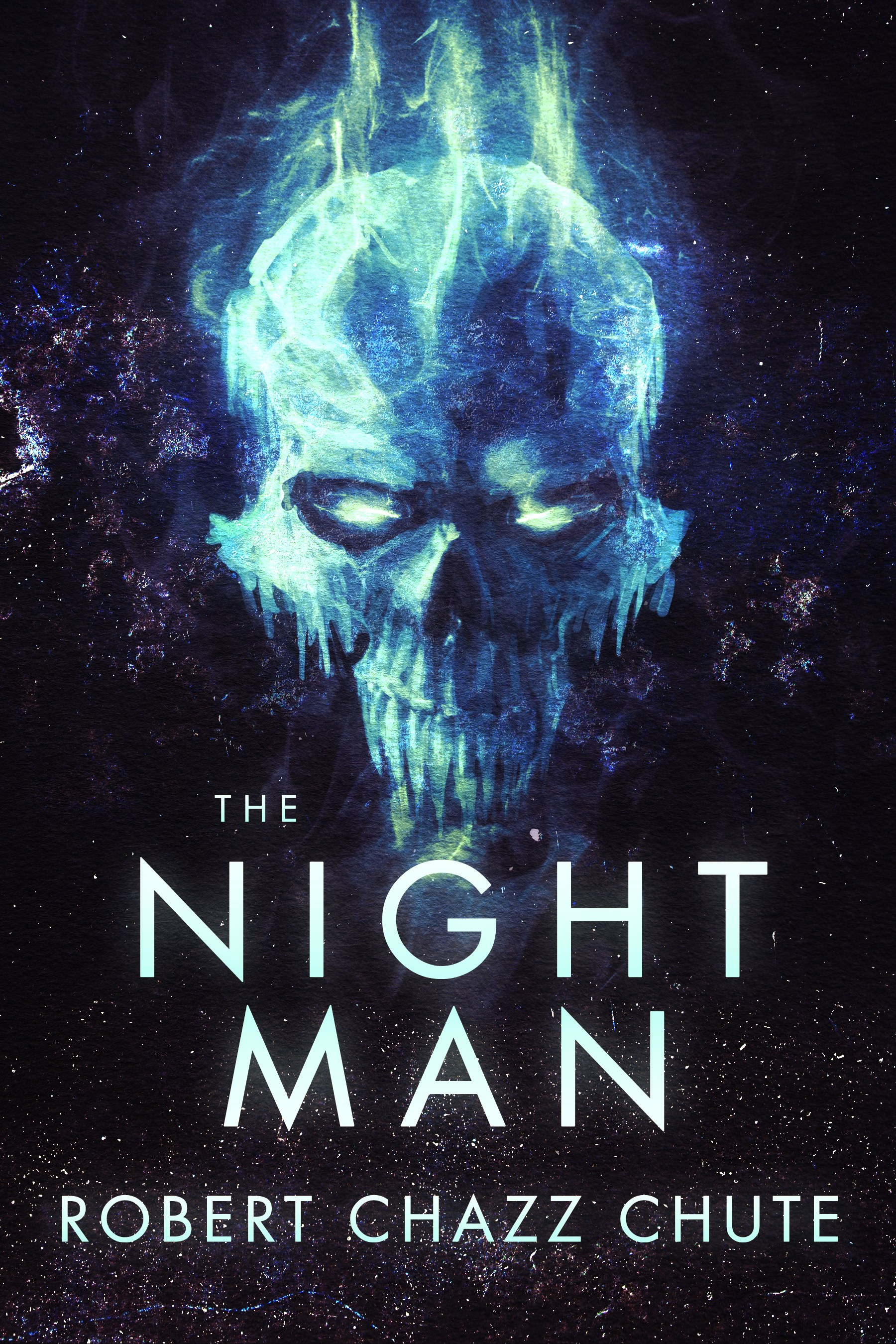
You can pick this ebook up for free today at this link: http://bit.ly/TheNightMan

Join my inner circle at AllThatChazz.com

See my books, blogs, links and podcasts.

Enter your email address to follow this blog and receive notifications of new posts by email.

Join 2,063 other subscribers