
Great. Um…what’s a typewriter?
Filed under: publishing, publishing, publishing process

05/30/2010 • 7:04 PM 0
Great. Um…what’s a typewriter?
Filed under: publishing, publishing, publishing process
05/28/2010 • 8:21 PM 0
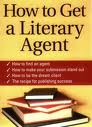 Here’s a great blog on those agent people:
www.guidetoliteraryagents.com/blog
Getting an agent is tough and if you’re a pessimist, you’re probably not writing for publication.
Accept that writers are generally screwed.
Now get back to writing.
Good news:
No matter how bad it is, there will still be new books published next year.
Bad news:
They’re all gonna be diet books by Tom Arnold and YA by Jay Leno.
Filed under: agents, publishing, agents, guide to literary agents
05/27/2010 • 6:48 PM 0
Recently I sent someone a piece of poetry. They liked it, then rewrote it (WTF?!) and then decided they’d edited it down too much and robbed it of its power. Ultimately they pretty much said “Eeeeh, stet it.”
A while back a friend of mine was an editor in educational publishing. She showed me some of her work and I was appalled. Yes, much of educational publishing is homogenized into a single tone but it was as if she made it her mission to water it down, make it worse and rewrite everything. In truth, I thought she was a terrible editor (too quick to cut) but she was a worse re-writer. Perhaps she was an editor who was a frustrated writer (the most dangerous kind.)
With my magazine work I’m very happy with my editors. They always preserve my voice and whatever they do seems reasonable (although I don’t care what The Chicago Manual of Style says, capitalizing Internet still looks dumb to me.) Mostly, I have a hard time finding their changes, so of course I think they’re brilliant editors.
When do you decide someone has crossed the line from critical (and helpful) to hypercritical and destructive? I’d be curious to hear your experiences.
Filed under: publishing, bad editing, editing
05/27/2010 • 12:22 AM 0
Garrison Keillor says in the Baltimore Sun that book publishing is about to slide into the sea. Shorter title? We’re screwed. Call him a pessimist.
Filed under: publishing, future of publishing, publishing
05/26/2010 • 1:26 PM 0
Okay, it’s time. Let’s rip it up and challenge some assumptions and piss off a few defenders of the faith…
Literary journals have traditionally been considered a proving ground. You get some stories published, establish a track record and develop a following. Agents and editors want you to have a platform as much as possible to push the sell-through. The wisdom was that lit journals gave you cred when as you developed your skills for longer works. Lit journals were where you paid your dues before you could hope to write the great American, Canadian, Jamaican or Serbian novel.
Well, goodbye to all that! Here’s why:
1. You can get pretty beat up in a long process where they take forever to get back to you, or never get back to you. No simultaneous or e-mail submissions and you take a year to say no with a snotty note? And all this for a journal with a tiny readership that pays in contributor’s copies? There are far less frustrating ways to find something to line the bottom of your birdcage. Lit journals, your time is up!
2. Some journals may have some weight with agents and editors. Many won’t. Many are still really zines that nobody’s ever heard of. You could make up a title and it would have as much credibility as many of these rags.
3. It’s arguable that short story writing and novel writing are different skill sets. (I’ll make that argument another time, but as a for instance, even now I prefer Hemingway’s short stories to his novels.) One thing won’t necessarily translate to the other thing. Everyone starts with short stories, but if you intend to be a novelist, start writing long soon. (Also, your sensitive little meditation/poem/short story on the return of the whippoorwills to Dead Grampa’s lake probably won’t help you sell your Masons-plot-to-destroy-universal-health-care conspiracy thriller.)
4. Who needs literary journals when you can build your brand on your own website? Write short stories and build your platform through instant self-publishing. Give out samples and teasers of your work. Keep people coming back and/or offering suggestions, praise, money, fame. Serialize. Monetize.
5. Lit journals publish a few stories here and there, mostly solicited (read: not you.) They don’t take their slush pile applicants near as seriously as they take themselves. (I also notice a trend in the journals where they’ll do a theme issue, or several. That puts slush entries even farther out of the loop, like amongst Saturn’s rings.)
BONUS:
If you were an agent, editor, sales rep or publicist, which author’s bio would you consider more helpful to your goals?
A: I was published in Northeastern Prairie Review* in 2005. Circulation 1200 people (most of whom are frustrated writers themselves who subscribe in the hope that it will help them get published. In fact, they hate most of what they read, they don’t read much of it anyway, hate the published, and the editor only publishes his four best friends and the rich cousin who funds their tiny enterprise.
or
B: I’ve built 40,000 regular readers of my blog and x number of unique hits on my author website. Look at my fan base! They loved the first chapters…blah, blah de blah I’m twelve kinds of sexy awesome etc.,…
If you answered B, congratulations. You’re sane.
You heard it here first, I say this internet thing?
It’s going to be big.
DOUBLE BONUS:
However…if you plan to start a lit journal and become a bitchy arbiter of good taste, aha! Now I think you may still have something in a dying industry. Publishing yourself and dressing it up in respectable clothes connotes more respect than being the schlub sending out your stories to an indifferent world. When you submit your novel, you’re an editor.
Save paper. Publish on-line. Be cool, and you too, could finally have enough cred to get your work actually read by an uncaring know-nothing no-everything MFA refugee summer intern.
TRIPLE BONUS:
The rule with lit journals is, the stranger the name (Three Monkeys and a Paperclip, Fish Stink of the Golden Future) the smaller the readership. In a world where even the “big” lit journals are really small, that’s rather snobby and irrelevant, however. (For some sense of scale, every couple of months 75,000+ people read my column and my features in a trade magazine you’ve never read.)
Filed under: publishing, writing tips, literary journals, publishing, queries
05/25/2010 • 2:57 PM 0
Years ago I evaluated a manuscript for a young man who dared to dream big. His manuscript was only a hundred pages long or so. His sci-fi that barely made sense.
However, there was one sentence and image so powerful and memorable. I told him he needed to channel more of that kind of craft to make the story more readable. Since the rest of the news was so bad, I focused on that cheery bit so the meeting wouldn’t be a horror. If you suck, that’s a sign you should write more. I told him to write much more. He took my critique and paid my fee without hesitation.
I gave him pages of notes so he could improve. He focused on the good news. His last words to me were, “Thanks! I knew this was really good!”
That was 20 years ago. If he managed to keep up his work ethic and optimism, he’s probably a sci-fi author who has met with some success by now. I tried to teach him something about story and structure. He taught me about blind optimism. To be a professional writer, you do need that. That’s why I’d never tell anyone not to write.
BONUS:
Your odds of success are low, but that’s true about everything.
Your chances of being paid much at all as a writer are next to nil, but you’re hardly making a living anyway.
Write!
Filed under: manuscript evaluation, publishing, writing tips, manuscript evaluation, vetting manuscipts, writing critique
05/24/2010 • 7:31 PM 0
Here’s an interesting take on data piracy from thriller writer Joe Konrath at A Newbie’s Guide to Publishing. If you’re worried about somebody running off with your book and sharing it with their pirate friends, his piece might set your mind at ease.
Filed under: publishing, Rant, Writers, piracy, publishing
05/22/2010 • 12:16 AM 0
The whole writing thing isn’t working out. You’re still sending out those sad ass queries, closing in on 100 now, and it’s just. Not. Working.
You could quit. Or you could write for the pure enjoyment of it without even thinking about publication. Crazy but there are lots of artistic precedents. For instance, I paint. I never expect to sell one (though, come to think of it, I just did, so the payoff was doubly sweet because I never expected that. Now I don’t expect to sell another.) If it isn’t at all fun, then yes, you should quit writing, anyway. If it’s no fun for you, it’s going to be torture for the reader.
If you aren’t having fun, you could read the post on writer’s block below and laugh. Or if, after you digest the lessons, you find yourself out on a ledge and the people look like ants, and the pavement beckons, well…free will, I say.
Or you could figure out what you need to do to change things up.
You could join a writers’ group or take a course–anything where they show you where you need to punch up your query. If you aren’t even getting nibbles for partials after 75 queries, it’s you. (Click here for the business site. I do vet manuscripts, you know.)
I’m not saying you need a self-publishing company yet. Maybe you need a website or just a printer. What you really need is a plan. There are a lot of books to help you with that. Many successful authors have been rejected more than 100 times (and that’s a symptom right there not to wait to be discovered, not to put all your testicles in one basket, and not to wait for annointment by people who sign bestselling authors, but apparently only accidentally.)
Author, cartoonist and my personal savior Scott Adams has observed that a really brilliant idea is, in its beginning stages where you’re looking for outside approval and funding, really hard to recognize as a brilliant idea. In fact, really brilliant ideas are indistinguishable from incredibly stupid ideas at first.
Man on the moon? Impossible.
Splitting atoms? Forget it.
Another vampire book? That’s so over.
A book about a boy wizard? Yawn.
Dean Koontz is still writing? Okay, that one is a recognizably bad idea, but you get my drift.
Now go out there and be the little engine that could! Okay, Sparky?
Go MAKE IT HAPPEN.
You’re a winning writer!
Filed under: publishing, rules of writing, Writers, writing rules, writing tips
05/19/2010 • 7:03 PM 0
Filed under: publishing, rules of writing, Writers, martin amis, writing advice
05/19/2010 • 12:29 AM 0
Sure, I don’t like you. In fact, sometimes I hate your guts. Sometimes I want to stab you in the eye with a Number 2 pencil and then slit you open with an Exacto knife, take a blow torch to your pancreas and, while you’re thinking about that, slowly strangle you with loops of your own intestines. Look up the word decerebrate. That’s what’s next. (Yes, I’m talking about your characters.)
The many reasons I despise you make you more interesting, so I’ll be glad to read about you or watch you on-screen. Gee whiz, I sure hope I get to watch you suffer! As somebody pithy said, “TV allows you to have people in your livingroom you’d never want in your livingroom.” Writers are often told that it’s important your protagonist is a likeable character. Ahem. Fiction is full of people, heroes and anti-heroes, who have traits that are unappealing. I want to read about people dealing with complications who are full of doubt–just like me. Their flaws make them believable. I prefer psychotic Batman to the perfect, impervious boy scout that is Superman. Superman’s too hard to kill. Shoot Batman in the face and he’s dead. (Why don’t they just shoot him in the face? He’s more vulnerable so he’s more interesting.)
I haven’t seen a better illustration of this than the anti-hero bound for quasi-redemption in District 9. Here’s a guy who is a nerdy bureaucrat who gleefully kills little alien babies. <SPOILER ALERT> You don’t actually make it all the way to liking him, but amid the action you begin to feel sorry for him as he literally becomes his victim.
But what do I know? All through Star Wars I was cheering for Darth Vader to cut that simpering Jedi school dropout Luke Skywalker into light saber-diced cheese. Or is it really Mark Hamill I loathe?
BONUS:
Is your book a happy story? Those tend to suck.
Filed under: publishing, Rant, rules of writing, characters, plots, writing
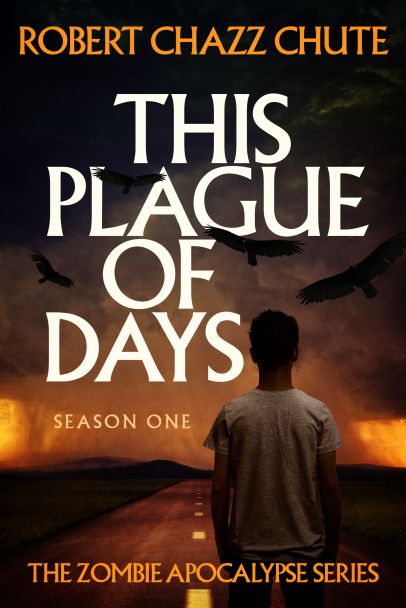




Winner of Writer's Digest's 2014 Honorable Mention in Self-published Ebook Awards in Genre


The first 81 lessons to get your Buffy on

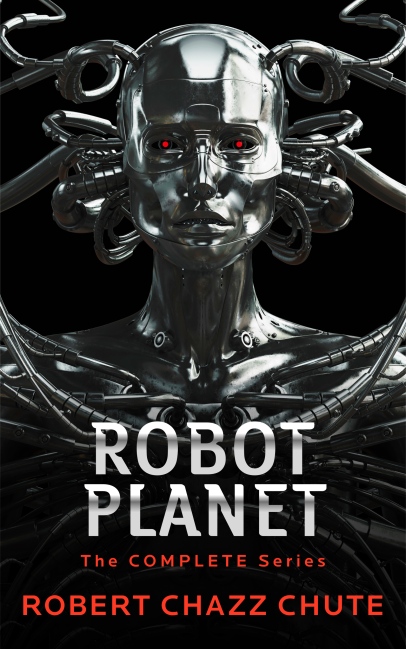
More lessons to help you survive Armageddon

"You will laugh your ass off!" ~ Maxwell Cynn, author of Cybergrrl


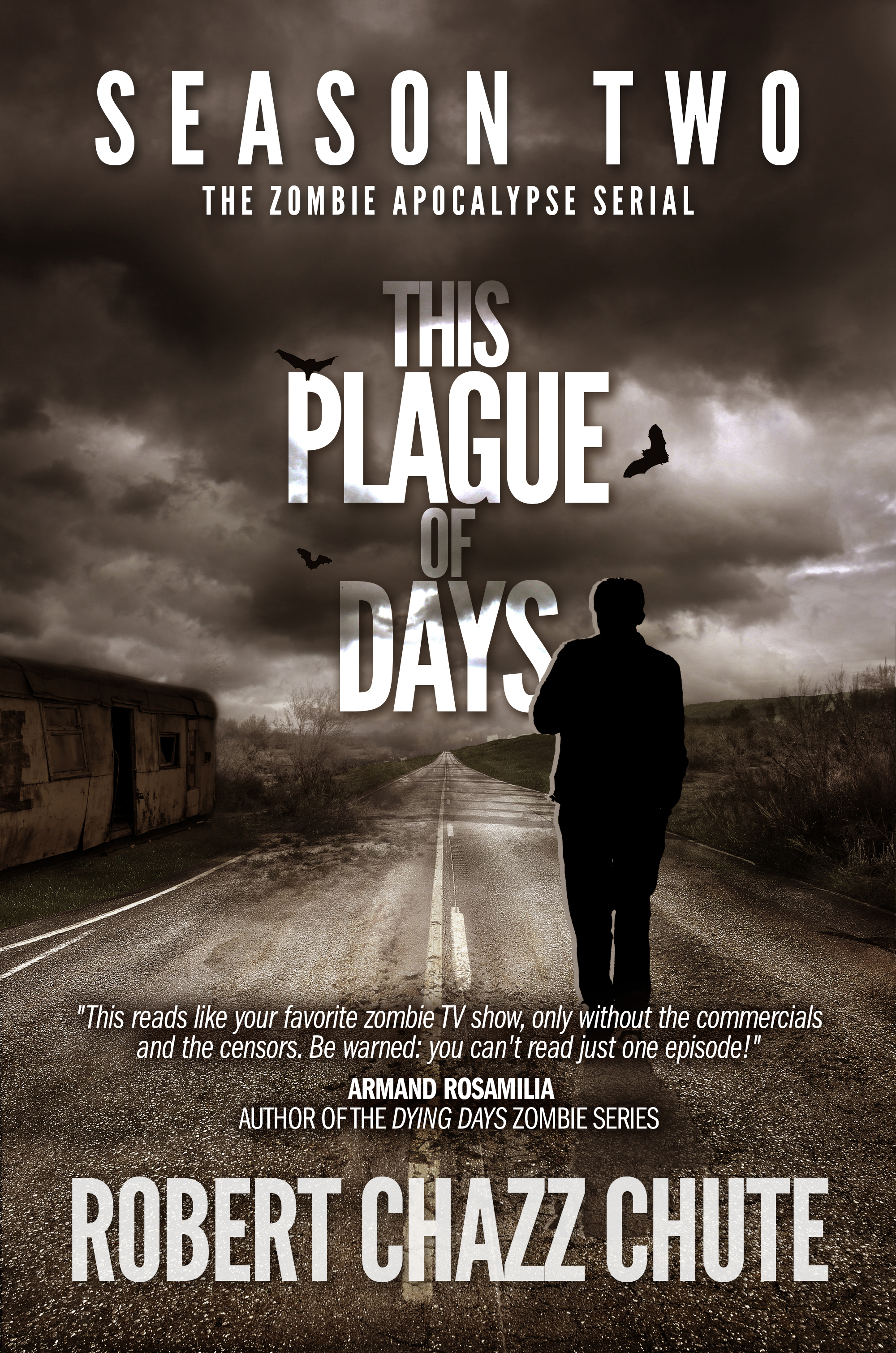
Fast-paced terror, new threats, more twists.

An autistic boy versus our world in free fall

Suspense to melt your face and play with your brain.

Action like a Guy Ritchie film. Funny like Woody Allen when he was funny.

Jesus: Sexier and even more addicted to love.
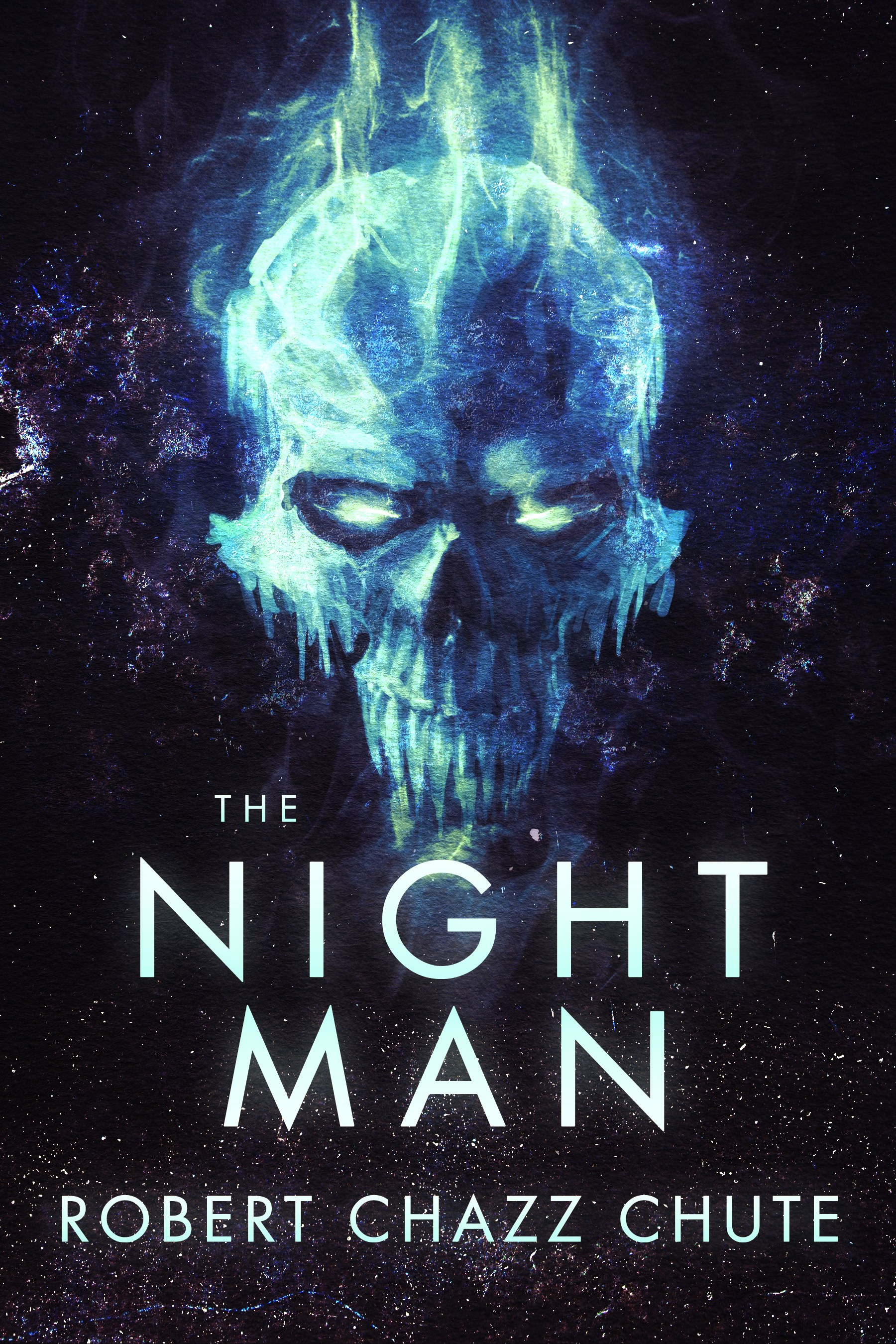
You can pick this ebook up for free today at this link: http://bit.ly/TheNightMan


See my books, blogs, links and podcasts.

 C h a z z W r i t e s . c o m