C h a z z W r i t e s . c o m

See all my books at AllThatChazz.com.

Publishing: Change or Die

Cover of "Change or Die: The Three Keys t...

Cover via Amazon

I read a fascinating book called Change or Die recently. It documents what makes us change and what makes us resist change. Quoting heart disease and lifestyle specialist Dr. Dean Ornish, “People don’t resist change. They resist being changed.” But change is coming and it’s happening faster than so-called experts predicted just a few months ago.

The premise is that for people to adapt, they must harness the power of community, process and engagement. Leaders must lead by example. Facts and fear don’t change people, even in dire circumstances. The author looks research showing how heart patients and career criminals made real positive change and adapted.  Real change is collaborative.

What’s interesting about the changes that are happening to publishing is that, despite a long history to draw on, the changes are still happening to publishers. Publishers are harnessing the awesome power of denial to affirm that they are still on top and will always be on top. We’ve heard this tune before and you know it ends with a swan song.

For instance, in Change or Die, we can see the same pattern with GM. GM insisted their cars were superior despite facts. GM execs even changed the scale of how they measured their success (i.e. number of car defects) to protect their illusions. Throughout, they would not acknowledge the superior reliability of foreign cars. GM had to lose a fortune before they began to see they sucked. Arrogance nearly killed them. Thanks to a huge reality check and huge government checks, they got saved from themselves. (Publishers aren’t too big to fail though, so we’ll see many big publishers disappear or become micro-publishers soon. Well, that’s really already happening.)

Traditional publishers have had market dominance so long, many still think it will last forever. They take the facts—self-publishing and ebooks are going through growing pains—and affirm their eternal dominance. Nevermind all those people buying e-readers! Nevermind the expansion of self-publishing and DIY due to technological changes. The e-book ad POD problems aren’t a sign of their demise. That’s growth. No technology emerges in its final form. There is no final form until we’re extinct.

The market is changing under publishers. They aren’t, on the whole, acting in a proactive way. And yet, we can’t scare them into believing the revolution is here. Facts don’t work, but fear doesn’t, either. (I’m not writing this to scare anybody, though inevitably it will scare some.) The publishers and agents of the traditional structure will survive long-term when they decide these aren’t problems but opportunities.

When they turn from despair for the old models to hope, then they can begin to adapt to new market conditions. Then they can change and thrive. There will be room for everybody. There are more readers reading more (but they are reading in new and fractured media.)

As a writer, I see the opportunity to promote my work. I might sell part of it myself and go the traditional route with other parts. (No, publishers can’t assume they get all the rights anymore. I’ll have to work harder and diversify and they’ll have to accept less or get nothing. Everybody gets to take part in the adaptation process and it won’t all be fun, but how much of business is all fun? Suck it up, writers and publishers.)

As an editor, I see more opportunities to work with diverse authors on their self-published books. I don’t have to live in Toronto anymore to work in Canadian publishing. In fact, where I am isn’t at all relevent. (Loved T.O, but I like raising my kids in a smaller city.)

As a reader in an electronic world, I can get easier access to books I never would have been aware of in my local bookstore. Yes, there’s more curation to do, but there’s always been curation to do. Now I can find out from friends and trusted blogs new stuff to read that isn’t on a top ten list.

Digital books are easier for me to access and eat. Digital books are easier for me to produce. E-books are easier to edit. Oh, look, I’m a curator, too! Look at all those links to check out!

And now you have another book to buy: Change or Die by Alan Deutschman.

Filed under: authors, book reviews, Books, ebooks, Editing, Editors, links, publishing, Rant, self-publishing, , , , , , , ,

Author Profile: Nairne Holtz

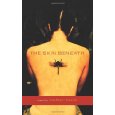
The Skin Beneath

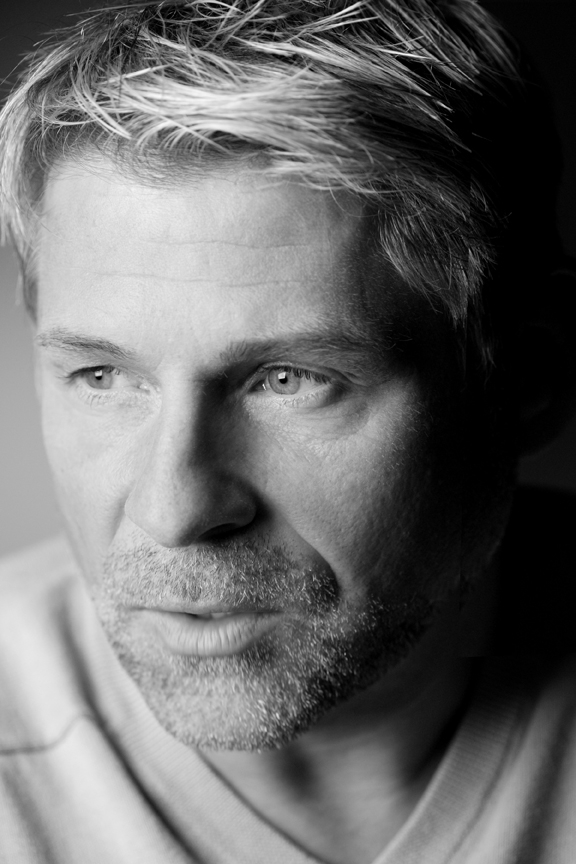
Nairne_Holtz
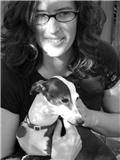
Nairne Holtz

Nairne Holtz was described by the Globe and Mail as a “writer to watch.” She is the author of This One’s Going to Last Forever (Insomniac, 2009), which was a finalist for a Lambda Literary Award, and The Skin Beneath (Insomniac, 2007), which won the Alice B. Award for Debut Lesbian Fiction and was shortlisted for Quebec’s McAuslan First Book Prize. She lives in Toronto with her lover and miniature dogs.

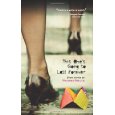
This One’s Going to Last Forever is about relationships that are, for the most part, destined to fail. From campus lovers to a middle-aged man who performs drive-through weddings dressed as Elvis, the characters in these darkly comic stories search for love in all the wrong places. They also find love in the most unexpected places. 

In The Skin Beneath, Sam O’Connor is a “yuffie,” a young urban failure who is covered in tattoos and preoccupied by picking up girls she quickly discards. But there’s one woman she can’t forget—her dead sister, Chloe, a conspiracy freak who may not have killed herself. Tracing Chloe’s final days in this noir coming-of-age tale of swapped, hidden, and altered identities, Sam discovers everyone has another layer and secrets they hide from themselves—including herself. 

This One's Going to Last Forever

 CW: When did you first know you wanted to be a writer?

NH: One of my fourth grade teachers assigned creative writing exercises for homework and that sparked my interest in writing. I decided I wanted to be a writer, a spy or a private detective. I’ve wound up working as a librarian and being an author. I can’t talk about the spy stuff. 

CW: How did you develop your book idea?

NH: My ideas come from my imagination, reality, and skewed reality. The reality isn’t necessarily mine. Sometimes I draw on the lives of friends or complete strangers. I’m always reluctant to say what is real and what isn’t in a specific story or book, but I will say I was amused when a reviewer of my first novel, The Skin Beneath, described the only character in the book inspired by a real person as “unlikely.”

CW: And what research was involved?

NH: Research involved trips to various libraries and searching the web. Being a librarian helped.  

CW: What’s your personal approach to the writing process?

NH: My writing process for longer work involves outlines, revised outlines, and endless drafts. The process is often tedious as is discussing it in my opinion. As to training, I have a graduate degree in English from McGill University. I also completed the Humber College creative writing program, where you are paired with a writer who edits chunks of your work for eight months.  

CW: How long did it take you to write your first book and find an agent?

NH: It took me a little over two years to write my first novel, but I was lucky at that time not to be doing much paid work. Humber College has an agent, and I sent my stuff to her when I finished the program, and she took me on. That process took about a year and a half.

CW: What were the surprises and challenges on your route to publication?

NH: My first attempts at publication were in Canadian literary journals. I received one acceptance and fifty rejections, which was quite discouraging. My girlfriend kept saying, “There is always more than one way,” and indeed, my stories eventually found print in American lgbt literary journals and anthologies. While my books have received glowing reviews in the mainstream, basically my audience is lesbian.    

The hardest part of the publishing process was realizing the extent to which manuscripts languish in slush piles. The mainstream presses look at books represented by agents whom they know and the indie presses tend to publish their friends and aren’t necessarily impressed by agents. What I enjoyed about the process was how much I learned about both writing and marketing. Also, of course, it was such a thrill the first time I walked into Chapters and saw my book on the shelf.

CW: What advice would you give unpublished writers?

NH: You have to decide what you want and make peace with it. If you want to write novels, this will likely mean periods of not working fulltime at a paid job, which has obvious economic consequences. If you tell a story with non-mainstream characters or you have an experimental style or you write poetry, you will likely limit your audience. You have to decide whether it is more important to have a wider audience or to tell your story in exactly the way you want.

CW: Have changes in the book industry forced you to change how you published or marketed your work?

The closing of so many gay and lesbian and women’s bookstores has meant fewer places to sell my books, but the web has offered more opportunities in terms of publicity. I think Amazon, not to mention all the second-hand booksellers online, will mean a longer life for my books, and I was quite happy to add my first book to Google’s free electronic library. For my second book, I focused more on the web in terms of publicity. For instance, I had my publicist give my book to a few bloggers and some places where I did readings used Facebook as their main publicity tool.

CW: What’s next?

NH: I’m working on a new novel set in Nova Scotia in the ’70s and ’80s about a Quaker hippie family.

For more information, Nairne’s website is www.nairneholtz.com.

Related Articles

Filed under: Author profiles, author Q&A, authors, Books, publishing, , , , , , , ,

Writers: Craft your pitch carefully.

DSC03939

Image by Nitin Parmar via Flickr

It’s very difficult to summarize your novel. When we pitch a story, we talk about broad strokes and the rest is about theme. The reason is that when we summarize in depth, the story often sounds dumb.

Let’s try it with a popular movie and you’ll see what I mean:

In the mostly great and totally watchable  A Few Good Men, a Gitmo soldier is killed and two Marines are charged with his killing. So far, so good.

The base commander goes to great lengths (all behind the scenes) to cover up his part in the crime. The rest is about how a young lawyer who has never stepped inside a courtroom goes against the military establishment to get the commanding officer to admit in court that it was he who ordered the Marines to attack the soldier as a training exercise. The commanding officer will admit his guilt proudly and then be surprised he’s under arrest. The two Marines don’t go to prison but do get discharged dishonorably. The young lawyer feels good about himself in the end. And no, he doesn’t get to sleep with Demi Moore.

Were you to pitch it like that (and if you aren’t actually Aaron Sorkin) it’s very hit-and-miss…uh, no, actually it’s all miss. The context and detail is necessarily missing in a summary. The person you’re pitching won’t know about the nuance that the young lawyer will try to live up to his father’s courtroom legend. The clever sarcasm won’t be much on display to sell the idea of the script.

You would pitch about visiting the base and the sinister base commander. However, the subplot about the deputy-commander who can disappear because he’s former Special Ops (and turns suicidal) stretches credibility. It’s a spot where you could easily lose your audience. The pitch won’t get into the nitty-gritty of the interplay among the defense team. Kevin Pollak is the glue, but his role’s power would be difficult to flesh out in a short meeting and could derail you. 

When you pitch a movie, play or book, the odds are stacked against you in a huge way. It is statistically very unlikely someone will invest in your art. Put a lot of time perfecting your query letter (or your pitch) so you cram in your art and style.

The inherent difficulties of the pitch reduce your work so you want to look for ways to show your competence and still stay within the parameters of the pitch (e.g. format, brevity and economy of communication must be balanced by characters whose motivations are compelling and narrative arcs that make people want to hear more.)

If you don’t pitch it well, they won’t get it. If you have no track record, the only evidence that they have that you can articulate and execute an idea is confined within the straitjacket of a pitch meeting or query letter.

That’s why so many unknown writers, directors and artists of all sorts stay unknown.*

*Or, as we’ve frequently discussed, you could reject the premise of The Man’s hierarchical paradigm and find a way to DIY. (See yesterday’s post for further thoughts on that.)

UPDATE: Here’s a great survey on the things that drive agents away from you.

Filed under: authors, DIY, Editors, manuscript evaluation, movies, queries, writing tips, , , , , , , , , ,

Writers: Time for some controversy

Book-shelf complete

Image by Medusa's Lover via Flickr

Since I’m still recovering from a Toronto weekend conference, Green Hornet and Black Swan, here are a couple of recent links you may have missed:

Dean Wesley Smith blows agents’ future aspirations out of the water (make sure you read through the pithy comment section, too!) and Anis Shivani tells you to forget everything you thought you knew about writing and publishing.

Much of it appeals to me because neither believes in sucking up and allowing yourself to be put down or kept down by The Man.

What do you think? 

Is Shivani’s rant satire or for real?

Will you dare to take this advice?

Filed under: agents, authors, DIY, ebooks, Editing, getting it done, Rant, self-publishing, Useful writing links, writing tips, , , , , , ,

Writers: The self-publishing/Massage Therapist Correlation

Massage in Tarifa, Spain taken on May, 6 2007 ...

Image via Wikipedia

I haven’t had what my father would call a real job since 1991. The factors that make that so are all tied up in being a writer and editor.

Years after training as a journalist, working in newspapers and working in the publishing industry, I went back to school again to become a massage therapist, too. The reasons why were varied, but the most important factor was that I wanted to work for myself. I have an independent streak and I hated working for The Man. I still hate working for The Man. Writing, editing, therapeutic massage: it’s all independent work. There is no hierarchy. The Chazz does not do hierarchy.

But a lot of people do. Most people have a boss. The fact is, I don’t understand how they stand it. I pull at authority’s leash so hard I have sometimes hurt myself in tiny acts of rebellion.

Despite the rebel yell, the truth is I have many bosses. Everyone I encounter in my practices as an editor, writer and massage therapist is my boss. I have chosen many bosses instead of one. I have chosen one-to-one interaction instead of dealing with a group. I deal with people for an hour at a time or for short projects, always with an eye to where the next project will come from. There’s no security in this. My income goes up and down unpredictably.

On the other hand, with all that I do, there is the security of knowing they can’t all fire me at one time. If you have one boss who wants to lose you on a whim, they can do that. That’s the smug solace of the lone wolf. 

But lots of people accept authority as the way of the world. That’s becoming less true as massive unemployment forces some to seek out their own solutions and form their own businesses. Entrepreneurship used to seem like it was for the few who chose the harder way. Now, when so many can’t find work, starting up a sole proprietorship and going for it is forced upon them.

Here’s what I notice: People are just wired one way and not the other. Most massage therapists and writers I know have an independent streak. We have to grit our teeth a bit to do something that is in many ways outside money’s eco-system.

But there are a bunch of therapists who do, in fact, want to work for somebody. They want someone else to take care of the laundry, the advertising, the tax paperwork and anything else that doesn’t directly relate to physically doing the work. They love that they can come into the office, do their thing and leave without another thought to the running of the business. I wouldn’t call it freedom, but they do.

In the past, the publishing industry has been built on the hierarchical model. Someone else will publish your book. Someone else will take care of the editing and (some) of the promoting and it will all be part of one complete package. Thanks to technology, authors are discovering they have more options than history has provided.

For authors deciding when to make the leap to independent publishing, there is a lot to consider: market factors, price points and leveraging your platform to sell enough books to make the enterprise profitable.

Beyond the practical and esoteric (which must be figured out, too) you have to start with the personal: you. Which way are you bent? Do you want someone else to take care of things (and give them a deeper cut of the profits and losses)? Are you up for the nitty-gritty of doing the work of many on your own? Can you hire an editor, find a publicist, do the research and build your audience? It won’t be easy. You’ll have to talk with a lot of people and the greater your network the more chance you’ll get your feelings hurt. When the mesh of your network tightens to a closer knit, there will be friction.

Only you can decide if you have enough of the anti-authoritarian, do-it-my-way, I’m-a-control-freak, entrepreneurial-bent. Once you’ve figured that out, here’s a great article that explores the location of the tipping point between traditional publishing and going indie.

No matter which way you are wired, if you’re a writer you’ve got a muse.

Next stop on the Reality Train:

Introspection Station.

Self-publishing has developed to a point where it is neither good nor bad. Depending on your temperament, it could be a solid choice or a horrible one.

Filed under: authors, Books, DIY, ebooks, Editing, getting it done, publishing, self-publishing, , , , , , , , , ,

Writers: The Power of Small (and why press releases don’t work)

A picture of author Carolyn See

Image via Wikipedia

When I worked in a city newsroom, one of my jobs was to go through press releases to find gems. There weren’t many of those clichéd diamonds in the rough. Reporters see so many press releases, they begin to look upon them with suspicion and even resentment.

What’s an author to do? You want an interview. You want your book reviewed. How do you make it happen? The traditional approach was to send out lots of press releases and books. It wasn’t very effective. In fact, sending out a lot of review copies is expensive.

There’s an alternative:

Go small. Go low-tech. Write a note.

This isn’t a practical approach for in-house publicists working for major publishers (but they usually work in short bursts for particular authors, anyway.) The low-tech, patient strategy is for indie authors looking for ways into the media. Unfortunately, publishers focus on very small windows of opportunity. They are looking to move a lot of books quickly (before the book stores send them all back for credit.) Marketing in book publishing has been long periods of silence interspersed with short frenzies. As an indie author selling e-books, you’re opting out of big, expensive and short-term strategies. This isn’t so much for Wiley (publishers since 1807!) authors. This is especially for wily indie authors.

As an independent author and publisher, you can play the long game instead. You can write a note or two a day. One author/guru Carolyn See made it her practice to write a “charming note” every day to an editor or publisher or agent.* Why not to reporters, too?

But there’s a trick to making it effective. You know how I’m always saying that if you want to hit up an agent, don’t look for the big, established names? Agents fresh from the factory who are up and coming in established agencies are better bets. They are still hungry and not as jaded. They don’t hate all queries yet. They still have hope and the scales have not yet developed over their eyes.

The same is true for reporters. The book editor of a large magazine already has lots of books lined up. The independent author has lots of indie-spirit, but most book editors still look down on them. So screw them.

Work on getting into smaller newspapers. Send a charming note to a general reporter who would love to do a cushy author interview instead of chasing some city council member who doesn’t want to speak to them. I’d rather talk to an author than cover a house fire any day.

You know why it will work?

It will work because you will be charming (“Loved that piece you wrote on the local scaled railroad hobbyists so I thought…”)

It will work because general reporters think entertainment reporters have a cushier job (and they’re right.)

It will work because all journalists also want to write a book some day.

And while we’re talking small, send off a friendly email to book bloggers. That counts as a charming note, too.

Ask to guest blog. Bloggers love a break and crave hits, connection, track backs, links and love.

Ask for an author profile. I profile an author on Chazz Writes almost every week. It’s not the New York Times Review of Books, but since they aren’t calling, how about alerting like-minded people to your creations? If you can’t go huge, you can still be ubiquitous.

Instead of just showing up at a bookstore and asking to see the manager, send a charming note ahead of you to break the ice and soften her up for a reading. Better, be even more charming and offer to organize readings for your local bookstore. (Later this year I’ll profile an author who did just that. Not only did he help many other authors, his own career got a boost from building community among colleagues.) 

Your book needs attention. I’m sure you’re already working on developing and maintaining your audience. Don’t forget that etching away at it a day at a time over the long haul can reap big rewards. With patience, you can build your empire. Don’t underestimate the power of a low-tech, targeted, personal and charming note.

These days, the mail is mostly for bills. This approach is more powerful than it ever was because you hate what’s in your mail box. But when you get a letter, you’re excited. It will work because it has worked.

*Read Carolyn See’s Making a Literary Life for details. Or, don’t fool around and head straight to Amazon to buy her book.

 Related Articles

Filed under: Author profiles, authors, book reviews, Books, DIY, getting it done, links, Publicity & Promotion, publishing, self-publishing, writing tips, , , , , , , ,

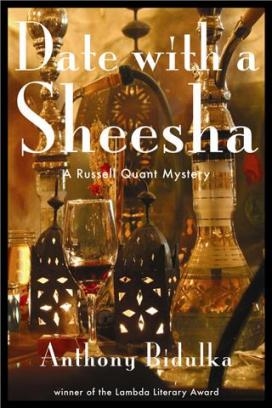
Author Profile: Anthony Bidulka’s Date with a Sheesha

Anthony_BidulkaAnthony Bidulka’s mystery series tells the story of a world-travelling, wine-swilling, wise-cracking, gay Canadian PI living a big life in a small city. The Russell Quant series is a multi-award nominee including for the CWC Arthur Ellis Award, and was awarded the Lambda Literary Award for Best Men’s Mystery. Anthony Bidulka has enjoyed time well-spent and misspent in the worlds of academia, accounting, footwear, food services, and farming. In 1999, Anthony Bidulka, BA, BEd, BComm, CA, left a decade-long career as a chartered accountant to pursue writing.

The Russell Quant books are: Amuse Bouche (2003), Flight of Aquavit (2004), Tapas on the Ramblas (2005), Stain of the Berry (2006), Sundowner Ubuntu (2007), Aloha, Candy Hearts (2009), Date With a Sheesha (2010.)

CW: When did you first know you wanted to be an author?

AB: Pretty much as soon as I could put pen to paper. As a youngster I was completely entranced by the power of storytelling and my greatest wish was to be someone who could do that. Instead of spending my allowance on candy or toys, I’d buy books and comics. As a teenager, I began writing and illustrating stories for my nieces and nephews. In truth, those were the first books I authored.

CW: Tell us a little about your books.

AB: I write a mystery series, which is not exactly what I set out to do. My first serious attempt at a book—as an adult—was a thriller. While I was waiting for the offers to pour in, I thought it might be a good idea to spend time on something just for the pure love and fun of writing. I created the world of Russell Quant, the first and only half-Ukrainian, half-Irish, wine-swilling, world-travelling, wise-cracking, ex-cop, ex-farm boy, gay, prairie-dwelling, Canadian private eye being written about today anywhere by anyone! (I dare anyone to contradict me.) That was ten years ago. Russell Quant has been my literary companion ever since.

The current release, Date With a Sheesha, deals with a young Canadian researcher travelling to the Middle East to buy antique carpets. Unfortunately, he’s found dead in a Dubai souk wrapped in a carpet. Russell is hired by the young man’s father to discover whether this was a simple tourist mugging gone bad as the authorities insist. (Of course, it is anything but). What follows is a magic carpet ride of an adventure from Saskatchewan to the frankincense fields of Oman and scorching sand dunes of Saudi Arabia.

CW: What research was involved in your book’s development?

AB: In each of the Russell Quant books, although much of the action takes place in Saskatchewan, Russell always finds himself embroiled in some sort of shenanigans in foreign locales. He’s been to the south of France, New York, Africa, Hawaii, and now, the Middle East. Each of the locations is chosen because of time I have spent there snooping about and wondering if this is a good place for murder and/or mayhem.

CW: What’s your writing process?

AB: I am very much an outliner. I like having at least a basic structure on which to build. I like knowing where I’m going. That said, I also think the most exciting—and sometimes nail biting aspect of writing fiction is the unknown. Although I create outlines, they are only the bare bones. The flesh is all the rest of the good stuff that comes out as you write the story, develop characters, create a world that only you control. Heady stuff, it is.

Once I have a first draft, I’ll go through a number of revisions until the piece gets to the point where I think it is the best it can be. Then I send it to my editor and she tells me why it isn’t.

CW: What’s the most surprising thing you discovered writing this book?

AB: I’ve sometimes wondered if writing a series would get boring or formulaic but I don’t findDate_with_a_Sheesha that to be true. I’m writing the eighth and I’ve attempted to give each of the books in the series a slightly different flavour. One is more romantic than the others. One is more of a caper. Another is more of a thriller and one is the scariest of the bunch. It’s a delicate balance because, to maintain the essence of what people liked about the series and characters, you don’t want to change things up too much. My hope is to keep the series fresh, the readers engaged and on their toes. That keeps me interested and excited to write more about Russell.

CW: What’s the hardest part of the publishing process?

AB: Today I think the most difficult part of the publishing process is keeping up with the speed-of-light changes in the industry. How we write, read, publish, and promote the written word is changing into something that was unrecognizable only five, ten years ago.

CW: How has that changed your book marketing?

AB: Extreme change had just begun to show its face as my first book was being published. Oddly enough, this has been a boon to me. I have only known upheaval in this industry. Just looking back over the past eight to nine years, one of the biggest changes is that the majority—the majority!—of small independent bookstores at which I gave readings in Canada and the US are now gone. They were the ones willing to give a new Canadian a chance. 

Oh yes, the world has changed and we must evolve with it. We used to give away electronic copies of the books for free, thinking that people would never read an entire book on screen, but perhaps it would entice them to buy the hard copy. Many of my colleagues now produce trailers for their books that rival those of blockbuster movies.

I have always seen the key to marketing a book as developing an ever-changing toolbox full of tricks. You try ten things and hope two of them work well. And even so, those two things will likely have to be tossed and replaced with something else before you blink. Daunting? Yes. Exciting? Yes. The essence is to be creative, be communicative, never give up trying.

CW: What do you most enjoy about being an author?

AB: There are so many enjoyable parts of the writing life. The firsts are top of the list. Getting that first signed contract. Seeing your book in galley format. Seeing it in a bookstore window. Getting emails from readers (who aren’t related to you!). Having your book reviewed in a major newspaper or magazine. Flying into a city you’ve never been to before and having people actually show up at a reading just to see you. It’s all so wonderful and fun and a truly unique experience.

CW:What advice would you give unpublished writers?

 AB: Get involved in the industry. Join writers groups, go to conferences, meet other writers, volunteer on boards and committees. As I’ve discovered in every part of my life, when you give back, you get back ten times more.

CW:What’s your next book project?

AB: A brand new edition of the first book in the Russell Quant series, Amuse Bouche, is being released soon. I’m currently working on a few different writing projects, one being the eighth Russell Quant mystery, tentatively titled Dos Equus.

CW: Thank you, Anthony! For more information, please visit www.anthonybidulka.com.  


Related Articles

Filed under: Author profiles, authors, , , , , , , , ,

Writers: Five editing tricks and tips (plus editing marks)


1. Editing onscreen is more difficult and less accurate than printing out your manuscript and attacking it with a pencil. Unless you’re well-practiced at editing pixels, print it out.

2. As you read your manuscript, read aloud. You will pick up more problems that way and if you run out of breath, it’s probably a run-on sentence.

3. Some experts tell you to read your manuscript backwards, one word at a time, to catch more typos. Though it is true this technique works, you must have a form of OCD to act on it. This is advice editors give, but never do themselves. If you don’t believe me, try it with any book-sized manuscript. (Wait! First make sure there are no sharp objects or firearms nearby!)

4. As you edit, read slowly. Your brain is wired to skip over mistakes when you read quickly.

5. Farm it out. You need someone else’s fresh eyes on your manuscript to see the thing you are missing. Hire editors. (Here’s one!)

Filed under: authors, Books, Editing, Editors, getting it done, publishing, rules of writing, Writers, writing tips, , , , , , , , , , , ,

Writers: Why self-publishing sucks (and what you can do about it)

Vanity

Image via Wikipedia

A couple of years ago I put together a chapbook of poetry. A few seconds after I handed a copy to a beta-reader he found a mistake. It was a glaring mistake on the first page he turned to. Alas. Embarrassment is an emotion that can run through you, both hot and cold.

Typos, grammatical errors, consistency problems and a host of other plagues suck the credibility and professionalism from your manuscript. At least for me it was a beta-reader and, contrary to first impressions, the rest of the manuscript emerged clean.

Some writers see self-publishing as a shortcut. When writers treat the medium as the quick and easy path to becoming an author, that’s still vanity publishing.

When you approach it seriously and make sure your manuscript has been combed for problems, that’s publishing (nevermind the “self” part.) When you choose to self-publish, publish. Form a company. Be a publisher. Hire editors (yes, I’m aware of the conflict of interest, but if you are, too—yes, I edit—we’re covered.) Get proofreaders lined up.

Take it seriously and you will be taken seriously.

Filed under: authors, ebooks, Editing, Editors, getting it done, grammar, publishing, Rant, self-publishing, writing tips, , , , , , ,

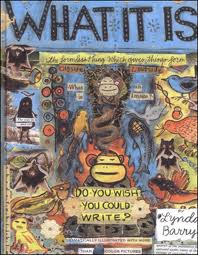
Lynda Barry tells What It Is

This is a book about writing like you’ve never seen:

What_It_Is

If you know Lynda Barry‘s work, you  know hers is an inimitable style. But I grok her. I had some reservations as I plucked the book from the shelf, but when somebody bares their soul in their art, you either look away embarrassed and confused or you look deeper, identify and get swallowed up, too.

Her ideas on writing prompts could get you going. Letting go to get going appeals to me. Most of all? I understand what she means by escaping into writing and getting “that floaty feeling.” If you write, you know what she means, too. If you don’t, buy What It Is, do the exercises and find your way into The Float. 

The immediate rewards of writing (slipping through “the escape hatch” as Stephen King puts it) are right now. Even as I write this, I feel a tickle in my brain. Some happy dopamine is spreading somewhere through my skull as I type this. I’m a junkie.

You may or not get published, but there’s more to it than that, isn’t there?

Some people don’t get that, so I ask them this: “Did you ever play tennis or run or swim? Did you keep doing it even though you knew you weren’t going to end up at Wimbledon, the Boston Marathon or the Olympics?”

Filed under: authors, book reviews, Books, publishing, Writers, Writing exercise, writing tips, , , , , ,

Bestseller with over 1,000 reviews!
Winner of the North Street Book Prize, Reader's Favorite, the
Literary Titan Award, the Hollywood Book Festival, and the
New York Book Festival.

http://mybook.to/OurZombieHours
A NEW ZOMBIE ANTHOLOGY

Winner of Writer's Digest's 2014 Honorable Mention in Self-published Ebook Awards in Genre

The first 81 lessons to get your Buffy on

More lessons to help you survive Armageddon

"You will laugh your ass off!" ~ Maxwell Cynn, author of Cybergrrl

Available now!

Fast-paced terror, new threats, more twists.

An autistic boy versus our world in free fall

Suspense to melt your face and play with your brain.

Action like a Guy Ritchie film. Funny like Woody Allen when he was funny.

Jesus: Sexier and even more addicted to love.

You can pick this ebook up for free today at this link: http://bit.ly/TheNightMan

Join my inner circle at AllThatChazz.com

See my books, blogs, links and podcasts.

Enter your email address to follow this blog and receive notifications of new posts by email.

Join 2,063 other subscribers