C h a z z W r i t e s . c o m

See all my books at AllThatChazz.com.

Work with an agent or go directly to the publisher?

Books Exhibition from the Publisher Global Pub...

Image via Wikipedia

Jennifer Represents… asks Do You Even NEED an Agent?

She lays out the conditions for when you should deal directly with a publisher.

My take is, if you’re going to deal with a publisher, you usually need an agent on your side.

If they’re good, agents pay for themselves. They get authors more money (and preferably the right editor, too.)

Do you need an agent? Maybe. Only you can answer and the Jennifer Represents… post can help. 

Next question: do you even need a publisher?

Filed under: agents, publishing, , ,

#E-books publishing, promotion and what’s given away

This is a photo of a computer lab on the Unive...

Image via Wikipedia

Call My Agent! has a great post on e-books and deciding what you’re ready to give away for free.

The digital revolution is coming, but what will it cost?

We’re still working out the details on that.

That’s what’s so cool about DIY. We get to figure this out for ourselves.

The article is called The author, the book and the new frontier.‏

Filed under: ebooks, Publicity & Promotion, self-publishing, , , ,

#Giller Prizewinner gets screwed: UPDATED

Scotiabank Giller Prize

Image via Wikipedia

Here’s the story from The Globe & Mail.

UPDATE: Gaspereau worked out a deal with one of my old publishers, Douglas & McIntyre.

And here’s my furious take:

Johanna Skibsrud won the Giller Prize and her publisher is holding her back. People pay attention to book prizes and make Christmas gift decisions based on that information. For any publisher and author, the Giller is an opportunity to sell more books and make more money for the author and for the publisher. Obvious stuff.

So, in the name of integrity, a small press that can’t handle a larger production run, isn’t working to put out more books to meet the demand. Are they trying to create more demand and get more publicity by enforcing scarcity? Maybe, although if that’s true, it won’t work.

First, it sends a message to your author and any future authors that they are expendable.

Second, if people can’t get the winning book, they won’t wait. They’ll just buy something else. There are plenty of books on the shelf.

Third, there’s Bobby Mcferrin. When Don’t Worry, Be Happy hit it big, it was a huge surprise and the record company only had 5,000 records out there. They worked furiously to get the record into store while it was still hot. Bobby did okay in the long ruin because that song went huge, but he still lost a truckload of money because of the long logistical lag in production. 

The publisher is “mulling.” And losing time and sales. Authors are paid pennies an hour as it is! How galling it must be to Skibsrud that her publisher isn’t capitalizing on the opportunity The Sentimentalists won. (And will this small press be her publisher next time? Doubtful.)

So far two large publishers have stepped up to help out the small Nova Scotian press. Instead, Gaspereau Press is worrying about the look of their medium. How quaint. And how utterly stodgy and old world in its thinking. No, the medium is not the message. The book is words on the page or words on a screen.

If they want to be a successful press that survives, they need to get the product out there before the market fades away. Successful books fund a list of less successful books (and the outright dogs, too.) Gaspereau prides itself on the look and feel of their books. Okay. If they want to be around long enough to make more precious books—birthing and blessing each one individually apparently—they need to step up for their author and for their own future. The story has it right. They have to decide whether they are printers or publishers.

If you’re thinking of submitting a manuscript to a small press, go ahead. They aren’t all this obtuse. After reading the Globe story, would you submit your baby to Gaspereau Press?

Related Articles

Filed under: Publicity & Promotion, publishing, Rant, , , ,

#Publishing Workshops: Do we really need them anymore?

An attraction of Banff National Park in the Ca...

Image via Wikipedia

Years ago, in an experience not unlike boot camp, I attended the Banff School of Fine Arts for a summer of The Banff Publishing Workshop. Each session was a grueling two weeks each, one for books and the other for magazines. I had the first of two panic attacks in my life there. And it changed my life in all sorts of ways.

Some nights, we didn’t sleep at all. The faculty flew in and while visiting hot shots were enjoying Banff National Park, we were slogging away making up book and magazine covers and planning publicity campaigns and pitches.

 If you want the pure knowledge gained, you don’t necessarily have to do a program like this (and people are fleeing traditional publishers. Publishers are not hiring.) You may want the knowledge to inform your DIY publishing operation. There are books that help in this regard. I’d begin with the AP Stylebook for the nitpicky stuff and read the Chicago Manual of Style cover to cover for a headstart. (A surprising amount of technical and editorial stuff I learned was cleverly concealed in the Chicago Manual of Style.)

Here are the three things Banff did for me (and how technology has changed everything):

1. Credibility. I was one of a few who went through the program and one of a very small number who graduated from both books and magazines. (They called us Lifers.) When I went back to Toronto with that on my resume, employers knew I was serious.

It’s much less important now to appeal to authority. Start asserting your authority through the power of your knowledge base and your actions. You can publish a cool book or a graphic novel or make a film without Daddy. You don’t have to ask anyone else’s permission now. (Just do it was a much better slogan for Nike than…whatever it is now.)

2. Contacts. Friends, professional and non-collegial, were really important at that time and a network of people are just as important as ever, but now for some different reasons. (And now you call many of them you tweeps.)

Then it was about getting a job. Now it’s about knowing people to reach out to who have information you need and who are willing to assist you. If you start up your own publishing company, you don’t have to work so hard at connecting with people. If you get out there, you’ll soon find they are coming to you. Technology makes for an entirely different narrative to your work.

3. Personal transformation. This one aspect made the entire experience of Banff worthwhile because somehow, in just four weeks, I got back something four years of journalism school pounded out of me: a sense of humour.

I used to be angry all the time. I preferred people to fear me because I mistook that for respect. I wasn’t friendly and open because I was too afraid of criticism. When you’re a hater, you think everyone else is, too. In Banff, I bounced back from the panic attack in spades with a magazine presentation and reading that blew everyone away. I learned to let go and, when I relaxed, I found I could make people laugh and I didn’t have to act like a tough guy anymore. (Testosterone poisoning is insulting, but maybe it’s appropriate in this case.) Maybe you don’t need to improve yourself like I did. Or you can achieve the same results in a yoga class or years of therapy. I don’t know. I can only say, whether you’re writing alone in a basement or out there in the cold slogging, seek out new experiences and maybe some of them will be transformative. (See post: 10 Lessons Learned from An Evening with Kevin Smith.)

Addendum: This year at a writing conference, the (now defunct) Banff Publishing Workshop came up over lunch. An old and well-respected editor who made her name at Penguin muttered that, in her day, she didn’t need to attend any such program. She achieved her status through just doing the work. Yeah. Kind of bitchy.

However, maybe the circle is now complete. Maybe you don’t need to go to some fancy publishing program and pay a whack of money for the privilege of sleepless nights and nasty remarks from visiting know-it-alls. It seems the old editor’s time has come again and, as I’ve described, the ticket to the show is simply to get up from your seat and climb on stage. In a world where we’re all authors, publishers, editors and poets, now you can.

Filed under: Books, DIY, Writing Conferences, , , , , , ,

#Editors, Readers and Critics

Painting The Writing Master by Thomas Eakins

Image via Wikipedia

Earlier this week in this space I contributed to the Internet shredding of a thieving editor (see below) so it’s time to balance things out with a happy story. 

About My EditorLast night someone asked me what my relationship with my magazine editor is like. 

The short answer is, “Terrific.” The long answer is that we joke around. A lot. We have a lot of fun and have rarely disagreed. We are reasonable people. We’ve never met in person though we plan to some day (and almost made that work this summer.) We talk about projects on the phone on occasion, but mostly we email back and forth. We’re both incredibly busy people, so emails allow me to say something funny without intruding too much on her crazy schedule.

Of course, we have disagreed. Most of the time (98 percent of the time, not 51 percent) I figure out immediately or soon after that she was right. She’s held me back from saying a few things that, on sober second thought, were kind of out there. When I’ve stuck to my guns and presented a cogent argument, she has capitulated. A good editor is always trying to make the writing better (and occasionally has to protect the writer from himself.) As with dealing with any great person, when we’re finished talking or writing back and forth, I feel valued.

About My Readers:

I have two beta readers. The first is my wife. She has graded so many students during her time in academia, she’s the one with a sharp eye for my typos (many) and my obfuscations (less of those, I hope. Maybe. I dunno…) She’ll notice a construction that seems awkward, but she’s gentle about it.

The second reader is my oldest friend. He used to work in publishing and has edited a literary journal. Best of all, he’s a writer at heart. He is invaluable for broader editorial suggestions when my idea is almost there but not quite at the destination at which it will finally arrive in the last draft. He can be my biggest fan and, depending on his mood and my subject, my harshest critic.

When I wrote a short story that included a gay protagonist in a military environment, he disagreed with my take vehemently. I ignored him on that one and I thought the story fell apart for other reasons so I never tried to publish it and it’s tucked away on a thumb drive. 

On another occasion I wrote a humour piece for a magazine. He’s funny. I’m funny. What could go wrong? He broke it down for me in detail and ended with this bon mot: “For a humour piece, it’s not all that funny.”

Thud!

I picked myself up off the floor and took another run at it, made the humour more relevant and hit the piece out of the park. I took his criticism to heart and the next draft was so very much better for it. He’s got a great perspective on publishing and I usually end up considering about 60 to 70 percent of his suggestions.

I do not send everything I write through my readers first. Most of my magazine writing is of a kind that I don’t feel I need the extra feedback and it’s all between my editor and me. (She also has a light touch on my copy and I like that she works with me and consults on every change.)

If it’s fiction—especially long fiction—it goes through my beta readers.

When I develop marketing materials or write speeches, only the principles are involved. With short pieces, it’s easier to keep a handle on what’s to be achieved, anyway. Occasionally, with proprietary information, it wouldn’t be appropriate to bring in an outside reader. Also, if you work in a variety of niches as I do, it’s not fair to your beta readers to expect them to have an opinion on something outside their interests.

About Critics:

There are the kind of critiques you ask for. You get those opinions from people you trust, the ones with whom you have a history.

There are the kind of critiques that come at you. Sometimes those criticisms are thoughtful, have substance and bring up a new angle or experience. I love it when I pose a question in a piece and people come forward with interesting ideas and possible solutions. (That’s happening now with a column I wrote. We’re getting a lot of kind letters from people anxious to share their view on a question I posed.)

Occasionally, you get somebody who seems cranky and has an axe to grind. I find this type of critic tends to have their say about what they want to say and if it seems they didn’t really read what was written…well, they didn’t. They just want to be heard and recognized. That’s okay. Everyone gets to have an opinion.

But you don’t have to take everyone’s opinion so seriously. You get to choose who matters to you most and who you’ll go back to the next time you need a fresh set of eyes on your draft.

And you as the author? You get the final say on what appears under your name.

Filed under: Editing, Editors, publishing, Writers, writing tips, , , , , , , ,

#Publishing Links: Bad News for Publishers

harry potter quote

I attended a writers’ conference where a keynote speaker criticized a former publisher. The publisher was small, and Canadian, and there had been a dispute over the author’s electronic rights (though the publisher wasn’t selling any digital versions of the author’s work anyway.) That’s when things got ugly. “Small publishers aren’t interested in selling books. They make their money with government grants.” He walked back from that statement and mentioned several small presses he revered, but he had reason for his venom. He bought the rights back at great expense so he could use them properly.

It is true that if you’re a small Canadian publisher, you’re eligible for grants. The big publishers have some margin for error in their budgets. The mid-sized publishers are walking a financial tightrope. That’s the general point of a recent Globe & Mail article on the dangers waters publishers sail. It’s worth reading when you’re trying to choose whom you should send your precious manuscript.

In other news, if you check yesterday’s comments, you’ll see Sue Kenney, author of My Camino, stopped by for a comment about how she wrote fast to fit her publisher’s schedule. (Thanks for commenting , Sue! Check out her site and her wonderful story at www.suekenney.ca.) I mentioned in my reply how many traditional publishers are losing book sales because they don’t have the electronic version available and people are looking for those titles. When you don’t find the titles you want, you buy a book that is available for your iPad.

How do I know this? Because I’ve visited this link: Lost Book Sales | Every day an author and a publisher lose a sale. These are the stories why.‏ Publishers? If you haven’t embarked on your e-book program yet, you don’t have much time left to make the switch before you are irrelevant. (Yes, JK Rowling is the exception. She’s refusing to allow Harry Potter to go digital. Good for her. However, her amazing success is atypical in the industry and shouldn’t be the basis for sales decisions about the rest of the market.)

As if that weren’t enough to make a publisher knock out a window and crawl out on a ledge, I ran across this post on the wave of piracy that’s coming to my favorite industry: Your time is up, publishers. Book piracy is about to arrive on a massive scale – Telegraph Blogs – The BFF‏.

Don’t worry though, friends!

This isn’t a wake.

It’s just a call to make the choice to adapt.

It’s a hope the industry is willing to change.

Happy Tuesday! I’m off to NanoWriMo.

Filed under: links, Media, publishing, self-publishing, , , , ,

CanWrite! 2011 Conference Announcement

A lighthouse and pier seen in Grand Bend, Onta...

Image via Wikipedia

In 2011, the Canadian Authors Association has announced CanWrite! 2011

will be held in Grand Bend, Ontario, May 2-8!

For more information on the conference/writer’s retreat, here’s the link.

If you’re a writer, please consider attending. I attended the CanWrite! Conference in Victoria, British Columbia last summer. I learned so much there. I took in workshops, had my eyes opened to the future of book publishing and best of all, met a lot of really cool writers. (I even got to do a live reading of one of my short stories.)

Writing is a lonely profession. It’s fun and useful to connect and recharge. This year, CanWrite will operate like a writers’ retreat so yes, you can get stuff done!

(Thanks to my friend Kim for the heads-up.)


Filed under: publishing, self-publishing, Useful writing links, Writing Conferences, , , , ,

Tuesday Publishing Links for You

Free twitter badge

Image via Wikipedia

5 Ways to Make Your Blog Posts Outstanding | Social Media Examiner‏

The Slush Pile: Enter at Your Own Risk | Steve Laube‏

Writer Unboxed » Blog Archive » What NOT to do at a Bookstore Signing‏

What does self-publishing cost?

How to Get an Agent for Your Book‏

InDigital | Twitter and the Publishing Industry‏

 Related Articles

Filed under: agents, ebooks, Publicity & Promotion, publishing, queries, self-publishing, Useful writing links, web reviews, writing tips, , , , , , ,

What blog content do you most value?

Filed under: poll, publishing, writing tips, , ,
The Paper Book Sustainability Question

At The Carousel

Image by SewPixie via Flickr


I was mulling over PA Melo’s post from yesterday. E-book or P-book? To be or not to be?

I do agree with him that paper books will continue to be available, though eventually you’ll have to pay through the nose to get those specialty items. (Oh, right, you already do!)

The conundrum is not just that ebooks are biting into the paper book market. It is that ebooks eventually make p-books impractical on the grand scale they now occupy (i.e. that scale which allows me to wander around bookstores as I love to do.) Part of what makes books affordable is volume. The more you produce, the less you pay per unit.

My question: How much of the industry—what percentage*—has to go electronic before mass production of paperbacks is unsustainable? Please let me know what you think.

*I have heard predictions as low as 35% and as high as 50% Either way, we’re well on our way to being bookstoreless. I’ll have to go back to hanging out in bars (okay) or coffeehouses that aren’t part of bookstores. Horrors!

Filed under: ebooks, publishing, , ,

Bestseller with over 1,000 reviews!
Winner of the North Street Book Prize, Reader's Favorite, the
Literary Titan Award, the Hollywood Book Festival, and the
New York Book Festival.

http://mybook.to/OurZombieHours
A NEW ZOMBIE ANTHOLOGY

Winner of Writer's Digest's 2014 Honorable Mention in Self-published Ebook Awards in Genre

The first 81 lessons to get your Buffy on

More lessons to help you survive Armageddon

"You will laugh your ass off!" ~ Maxwell Cynn, author of Cybergrrl

Available now!

Fast-paced terror, new threats, more twists.

An autistic boy versus our world in free fall

Suspense to melt your face and play with your brain.

Action like a Guy Ritchie film. Funny like Woody Allen when he was funny.

Jesus: Sexier and even more addicted to love.

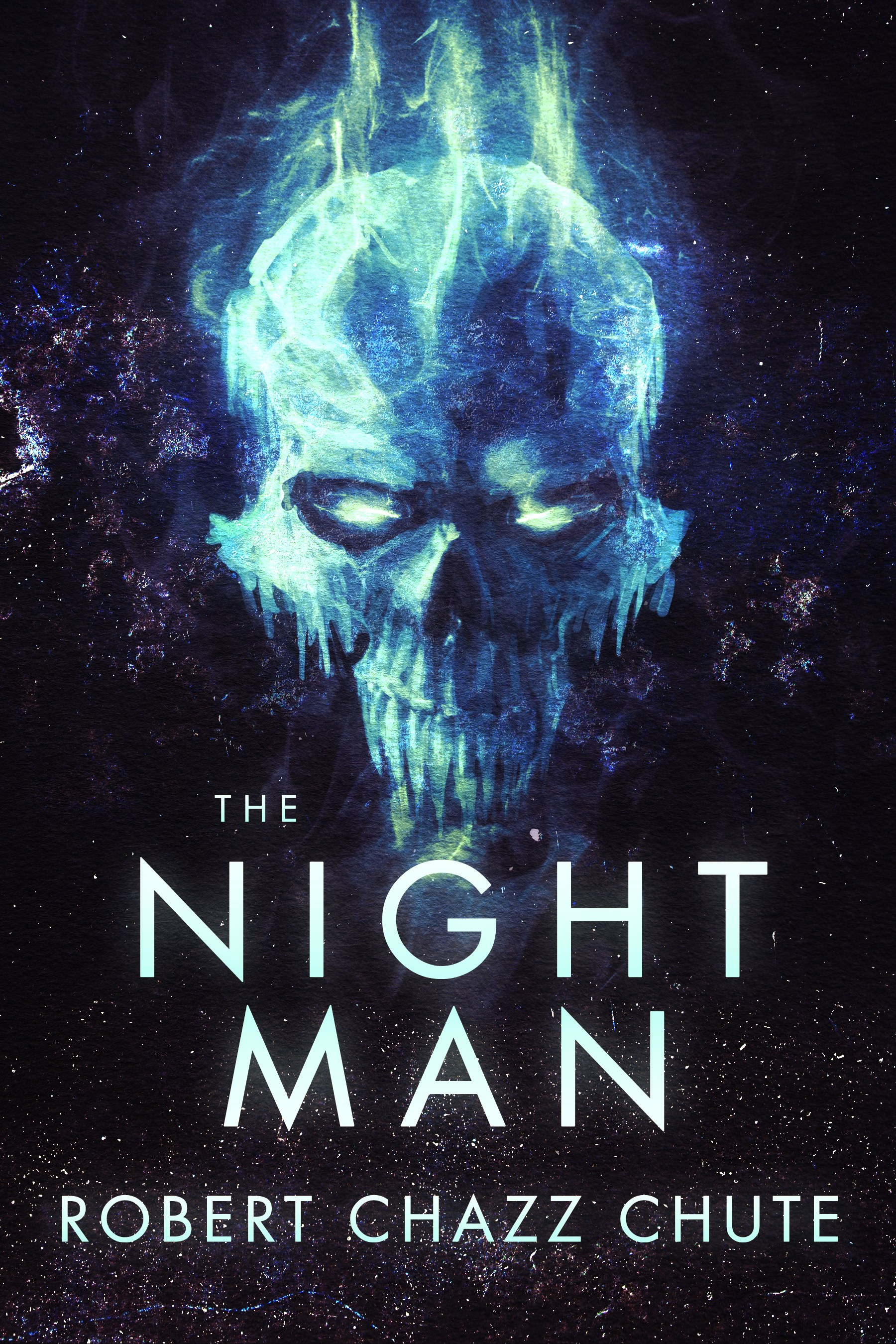
You can pick this ebook up for free today at this link: http://bit.ly/TheNightMan

Join my inner circle at AllThatChazz.com

See my books, blogs, links and podcasts.

Enter your email address to follow this blog and receive notifications of new posts by email.

Join 2,063 other subscribers