Someone has asked me how to break into freelancing.
A few ideas about breaking in–specifically to non-fiction markets since that’s an easier place to start for everyone:
Of course the Internet is the future, but there are many kinds of freelancing. The internet is bursting with a need for content though in many cases the pay is ridiculously, insultingly low. At guru.com, you’re competing with people willing to do outsourcing/freelancing/writing work for pennies an hour. There are ways to make money with the Internet, but I don’t think they fall under the assignment I was given here–what advice would I give to someone looking to begin freelancing?
My first suggestion would be to take inventory. What are your interests and what do you already know? If you’re a canoeist, I’d be looking at canoeing and backpacking mags. If you’re into walking, I know there were at one time three walking mags and if it’s a particular English family with no last name you’re wild about, there were five mags the last time I checked on the Royals. Really, I can’t imagine how much there is to say. The point is, whatever your interest, there’s a magazine about it.
Start small. Even if you have a perfect idea, if you have no experience, editors won’t trust that you’ll be able to deliver. Often very short pieces in the front of a magazine are a great way to start with an editor and get a track record and a relationship going. If I were approaching a cookbook I might pitch a query–or just write 150 words and send it in–on the topic of how long to boil an egg. (There’s a variance depending if you’re at sea level.)
You probably won’t plan your path. You’ll discover your path as you keep moving forward. My love is writing mostly psychological, often torturous and always existential horror (“If you’re skin doesn’t crawl, it’s on too tight” as an old movie tagline goes.)
My expertise is in alternative health care issues, but I had an advantage going in. I started with my local newspaper when I was 17. Later I had specific medical training to draw on so my non-fiction is often about that. My original training and work in journalism (dailies/weeklies/mags) gave me lots of clips to show a track record.
After I wrote a lot for one magazine in particular they gave me a column. Get out there and build your track record, whatever it’s going to be. My time reading was more important than any formal training.
You don’t need an MFA to be a freelancer of any kind, either. (Go ahead and do it if you want to, but it’s not necessarily the expressway to getting published.) You need to write a lot and keep sending stuff out.
Proof: I know a lot of PhDs through my wife, who’s also a doc. A lot of them–a startling number of them–are not as intelligent as you’d expect. (An expert, after all, is someone who knows so much about so little that eventually they know everything about practically nothing. Personality disorders are common. However, they completed a (usually) grueling course of study. They have something you need. It’s not their smarts. It’s their persistence.
 An aside about payment: If it’s going to get published, try to get paid something. They’re paying everyone else from the janitor to the printer so they should pay for the stuff people buy the magazine for! Too many writers sell themselves way too short. If they’re going to print it, it’s worth something. They aren’t printing anything to do you a favor. Don’t work for free or buy the crap about “paying your dues.” (It makes the transition to getting paid harder, makes getting paid harder for all of us, and when you do get paid it will be too little and long overdue.)
From the Ministry of the Bleeding Obvious:
Study the magazine you’re aiming at and pay attention to the ads. They’ll tell you what audience you’re writing for. If there are ads for Axe and electronic gadgets, it’s Gen X and Y and Z. If it’s Depends, it’s old boomers. Station wagons? The youngest boomers and the oldest Gen X. Gear your tone and subject accordingly.
EVEN MORE TIPS: Newspapers pay poorly but a guest editorial is sometimes an easy clip to get for a start and may pay $100. Ooh. You could fill a gas tank with that.
In your queries, highlight your interest and experience in a given topic. Freelancers with more experience often write about stuff they have zero prior knowledge of, but I don’t know anyone who started out that way and many stick close to their personal areas of expertise and interest. It’s efficient and efficiency means you’re making more money.
Brainstorm ideas and spend a lot of time on your first queries. Once you’ve established a relationship with an editor you can do breezy queries that get read before the unknown writers’ queries. Editors are busy–insanely busy and they don’t have enough staff. Understand that often editors are so busy that they do the reading part of the job on their so-called personal time. Their work time is spent haggling, buying, planning, editing and dying slowly in meetings.
Make sure your query is killer. Then query again. I started with writing on spec and often still do. I like it. If who I’m thinking of doesn’t go for it I’ll sell it somewhere else. When I write for myself first, there’s no pressure and I can write to my vision. This isn’t a formula for making a ton of money freelancing. It is an easier way to start, and since the product is already known–the editor is holding the whole thing in her hands already–it makes it more comfortable for editors to buy your early work. The bigger money is in getting assignments.
Where’s the real money in freelancing? Corporate work. I like advertising work and charge heavily for faxes to blast and flyers to mail. Business reports aren’t so much fun but freelancers who want to boost their bottom line easily eventually do PR work and brochures because the pay is far and away above what mags pay. An employee handbook isn’t a ton of fun but it is needed and maybe you can get some latitude to make it fun so someone will actually read it. I’ve been paid as much for a 100 word fax blast as I would for a column and all the original material was already there to massage. I just had to edit it, inject a new take, spruce it up, maybe add some hyperbole to make it work to make money for the company.
What about fiction? Not my main focus for this post but such a dear subject I can’t resist adding this perspective: In the 40s, 50s and 60s writers could make really good money selling short fiction. Wow. Those were the good old days. Kurt Vonnegut made more as a short story writer than he did as a PR flack for GE.
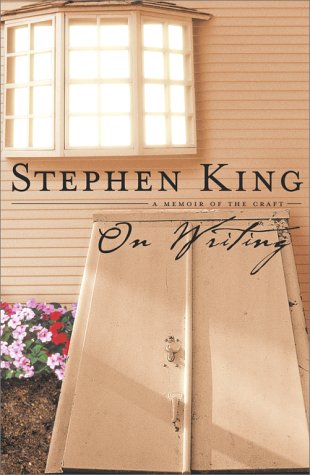
By the time young Steve King came along, his market was mostly the filler between the pictures of naked ladies in Screw. After a short while, there were fewer and fewer stories even there and the ratio went high for more pictures of naked ladies. That was also the division of the marketplace into dozens of venues that have all devalued writing–now called “content,” AKA the shit between the ads. Don’t worry about Mr. King, though. I understand things worked out for him despite the disadvantages.
Today we’re competing for time from a populace that doesn’t read much that’s not pixellated. So many choices leaves less room for you. It’s DVD versus Blue Ray vs. Wii vs. Play Station vs. porn vs. the gym and the lures of the outside world when the weather’s nice. Too often people read now when trapped on a subway or it’s something they save solely for a rainy afternoon at the cottage when there’s nothing else to do and the kids are down for a nap. And then it won’t be your fiction. It’ll be one of a dozen bestsellers–only bestsellers.
Still, there are people who read…soon to be wheeled out at the Smithsonian once a year for display and the awe of illiterate troglodytes. (If you can read but don’t, you have zero advantage over people who tragically can’t read.) For freelancers pursuing the non-fiction market, there are lots of venues out there and you’ll find them all online. Don’t bother with print editions filled with editors’ names and addresses. If they’re on paper, they are out of date.
What about book proposals? Isn’t non-fiction easier to sell? Yes. You’ll do better to be the brilliant (and hilarious) quantum theorist with a corner on a new take on reality or a freelancer with lots of clips before you approach a publisher. (In fact, it’s best if you’re a celebrity who is best friends with Oprah and you have an immense following already.
This isn’t meant as a comprehensive treatise on all the ways to get into all the markets, but it is meant as an overview for those of you interested in starting up a freelance enterprise and aren’t sure how to begin dipping a toe in the pool and testing the temperature.
Filed under: writing tips, freelance advice, freelance startup, freelance writers, freelancing














 C h a z z W r i t e s . c o m
