C h a z z W r i t e s . c o m

See all my books at AllThatChazz.com.

Friday Bonus: The Danger of Was

 Search your manuscript for the word was and look for opportunities to cut.

Instead of

He was thinking…

write

He thought…

Eliminate the passive voice wherever possible.

Even better? 

Demonstrate what the character must have thought by his or her actions.  

Filed under: Editing, writing tips, , ,

Writers: Choose Your tense

Cover of "Bright Lights, Big City (Blooms...

Cover via Amazon


In yesterday’s post I lamented some choices I made in an earlier draft of a story called The Dangerous Kind. In my latest revision I chose to change the tense. Let’s explore that. 

First off, let’s be clear: some people despise short stories and novels written in the present tense. They would prefer no writer ever did so again. Those people  are demagogues espousing that there’s only one way which just happens to be theirs. If present tense and a little risk aren’t your taste that’s fine, but to declare no one should dare to write in first-person, present-tense or second tense is a declaration against art. Art takes risk and if it plays it plays. 

I loved the novel Bright Lights, Big City. Before it was published I bet there were a lot of people who said, “A whole novel that’s second-person? You do this. You do that for a couple hundred pages? No way.” 

Answer: Way. 

 Jay McInerney wrote Bright Lights, Big City in second-person and made it  great. Don’t turn down a nontraditional way of telling a story because it’s unconventional. Cut it when it doesn’t work. Recently an entire novel which I scanned but can’t say I read was written in first-person plural. It was a brave choice that worked for a lot of critics. (I didn’t read it because of the subject matter, not because it was “We, we, we” for a couple of  hundred pages.) 

So back to my editing problem: In earlier versions of my story, I wrote the whole thing in first person, present tense. The advantage of present tense is that things are unfolding moment to moment before the reader’s eyes. Present tense makes the action immediate. The Dangerous Kind is about two brothers who do not get along. Soon after losing their father to an industrial accident, they go hunting for deer in the woods of Maine. Dire complication ensue. I chose past tense first because of the action involved in the deer hunt and also because the piece lent itself to an uncertain ending. Would the protagonist survive? 

Necessary side note: You can tell a story in first person and still kill off your first-person narrator. I won’t say don’t do it, of course. The only solid rule should be, if it plays, it plays. However, a caution: It has been done a lot so, for it to succeed, it must be done very well. That’s a trick that’s harder to pull off with longer fiction because it’s a downer to read a couple hundred pages and have your hero killed off. It worked in the movie Sunset Boulevard spectacularly well because you’re already disappointed in the narrator’s choices and end up entranced by Gloria Swanson

Back to editing The Dangerous Kind: After getting a rejection on the story from a magazine, I reread the piece with fresh eyes and realized I could shift it into the past tense. The story is ultimately about the choices we make and how even when things work out terribly, maybe that could work out for the best. (I realized recently that’s a theme in much of my fiction, but that’s another post for another day.) Once I decided that the climax of the story wasn’t a murder but an escape, it was okay for the reader to assume the protagonist survived. After that, I opened up to dumping present tense for the more traditional past tense. (I kept the first-person perspective.) 

However, in the final scene, there’s a subtle twist that I think works well. The bulk of the story basically unfolds over the course of a single November day. At the end, I gently switch to present tense so the reader realizes the protagonist is recounting this story, deciding where things went awry and what he’ll do next at the end of that day. He’s sorting out what the day’s events and choices mean to the rest of this life by retelling the story to himself. The conclusion is one-third bitterness, two-thirds hopeful. Because of the shift in tense back to the present, it makes the story more immediate as it closes. 

Tomorrow I’ll show you an excerpt from an earlier draft and how I edited it to make the plot’s engine work. 

Filed under: Books, Editing, manuscript evaluation, movies, My fiction, rules of writing, , , , , ,

Writers: Rejection does not build character

manuscript by Saint Andrzej Bobola, Polish Jes...

Image via Wikipedia


Some say rejection is part of “paying your dues” in the writing business. That’s over-analysis. Rejection is just someone saying no. When your query is rejected, do not read too much into it. 

Rejection is not useful on its own. It doesn’t thicken your skin for when you become a “real” writer. After you are published, you will get angry with critical reviews just as you are angry with rejections now. And why not? Your book is your child and an extension of you. If you are bent toward getting pissed off, you still will be. Rejection is not part of your training. Writing is your training. Learning your craft is a different proposition from receiving a form rejection slip. 

Rejection can be useful if you get specific feedback on why your story was rejected. Standard reply forms that say “not for us” tell you nothing except you must resubmit elsewhere. A manuscript evaluation (whether done by an editor you pay–ahem, like me) or by the people you submit to, can be useful. However, even then, it may be a question of taste in some regard. Agents and editors do sometimes take the time to tell you what they found wrong with a near miss. (Even if you disagree with their feedback, send a thank you note.) 

Understand this:

1. An agent or editor may give you a critique, but after you “fix” it, they are under no obligation to accept the manuscript. Many writers report great frustration over doing what they were told (perhaps even compromising their vision for the faint hope of publication) and still find themselves on the wrong side of the gate. No with details is still no. Doing everything you are told without running it through the filter of your own sensibility is no guarantee you’re on the right track. It also leaves you spineless and soulless. 

2. Publishers, editors and agents are extremely busy people. (Sometimes they wear that like a badge that they feel makes them special. However, I don’t know anybody who is at all cool who isn’t extremely busy, do you?) The point is, no one owes you a critique unless you paid them for said critique (ahem–like me.) Agents and editors typically say yes or no (mostly no.) They aren’t in the business of teaching you the craft. If they do send you a personal rejection and not a form rejection, it does mean you’re making progress. Handwritten notes of encouragement can make your day even though it’s a rejection doused with a little sweet perfume. 

3. If you send out a bunch of manuscripts and you receive no personal rejections, it means you have to tweak your manuscript or revisit your target selection process or both. Only you can decide how many rejections you suffer before you undertake further revision. Some say don’t tweak after you’re dome with revisions because by the time you’re finsally finsihed with revisions, you should be a little sick of it and ready to send your baby off to college. Fresh enthusiasm is what the new baby is for. Even as you edit the last book, your fickle nature should be pulling you toward the next book’s greatness.  

4. The rejection might not be about you. There are many variables that go into editorial decisions. Maybe the subject matter or execution is too foreign to the publisher or too much like one of the books they already have which failed. Maybe the editor loved it but it got shot down for budgetary reasons. Don’t get hung up on each rejection. Resubmit and move on to people who get you as quickly as possible. 

5. Don’t worry about rejection. It will occur. Expect it. It’s more important to do the writing and trust that good things are coming. Optimists are the only ones who succeed in this business. Pessimists, realists and the meek have the good sense not to try. They never succeed at much, but they’re cozy. Writers aren’t cozy with their place in the world. If they were, they wouldn’t be writers. 

6. Once you are published, you’ll realize the journey was more important than the destination. It’s the writing that matters, which is good because you’ll spend much more time writing than you will receiving prizes and getting drunk on fancy publicity junkets.  

BONUS:

When I was a kid, seeing my name in the paper was a big deal. By the time I was seventeen I had a regular byline in my local newspaper. By the time I was twenty, there was still a small thrill to see my byline on the front page of a provincial and city newspaper. My back page column in a magazine tickles. Recognition is still cool, but it’s not the same thrill and if a byline is all you write for, that’s not enough gas for the trip.  

The thrill is in the writing. The fun was finding just the right turn of phrase. It was always really about the writing. It always should be. 

Filed under: agents, Editors, manuscript evaluation, Rant, Rejection, writing tips, , , , , , , ,

What got done this week

Hey folks! For a change, a little about me, me, me.

In addition to editing my novel (Romeo, Juliet & Jerome) I completed an editing/ghostwriting job for a client. The fellow wanted his content punched up for a magazine article which will publicize his business and connect him to new customers. His allotted word count limit was 3,000 words. He submitted 1,000 words to me. This could have been a problem, but I came up with another 500 words after the edit/ghost job. We solved the rest of the shortfall with photos so everybody’s happy.

I also finished a preliminary edit on a memoir this week. Great life stories are so humbling.

I joined Goodlife Fitness and now I’m exercising every day. If you’re a writer, please do the same. Nobody talks about this much, but as a writer, you’re sedentary. You spend hours sitting still. This wasn’t healthy when it was TV and it’s not any more healthy now. Writers need to get out the door, hit a gym, go for a run or at least a brisk walk. Counteract the damage to your body that writing demands. We are human. We aren’t supposed to stay still as long as we do. In the near future, I expect to be in great shape. (Okay, really good shape.)

Happy Friday! More links are coming later today as I scan the publishing blogs for you, you , you.

Filed under: Editors, getting it done, This Week's Missions, What about Chazz?, , , ,

How Editing Works

Many publishing companies (as recently discussed) are suffering from a shortage of editing. The vast majority of Print on Demand (POD) books just look awful. It matters. If a book looks bad, you won’t be taken seriously.

I once met an enterprising author selling his books at the mall. He had the right idea in many ways, but as I scanned the page, things went off the rails. The layout was crammed. The print job was spotty. The cover was sub-par. He had become his own publisher, but the product looked shabby. He needed an advisor and an editor to bring the manuscript up past the status of “hobby.”

Manuscripts are full of mistakes. You’re human. It’s normal. When you send your manuscript to a professional editor, there are things we look for. Grammar and spelling? Sure. But it goes beyond spellcheck. What about pacing? Are you writing too little here? Are you overwriting there? Are you explaining too much? Does the sequence of events make sense to anyone but you? Do you have three characters who could be one? Sometimes dialogue needs to be punched up and bad habits of passive voice identified. Niggles emerge through the editing process that need solving.

So what does this mean to you, the writer? Perhaps, most important, know that your best writing is your rewriting. When you type “The End” on your first draft, go ahead and pop your champagne cork. Then get back to work and look for problems. Revise. Get it as clean as you can.

Consider sending it to a professional editor first. It’s hard enough getting your work published. Give your manuscript its best chance.

Next: nope! You’re not done. Your editor will give you a lot of suggestions. You may or may not take all the suggestions, but you will have to go through them. Now you rewrite, correct, juggle, stomp your feet and revise some more.

Done? Not yet. Now you share the manuscript with your chosen readers. I’d suggest three to five proofreaders to catch the last of the typos. You don’t want haters. You want someone who knows that this street doesn’t hook up with that street. You want someone who reads slowly and notices things, like your heroine started out three inches shorter or the villain’s eye color changed to blue and then back to brown. You want helpful, book-loving people.

Get their comments and corrections. Do your final polish as quickly as you can because you’re aging and this process takes a long time. You’ve got to ship it out there in the world.  Submit, get rejected and resubmit. Submit simultaneously, five manuscripts at a time at least.

Then, if you’re very lucky, an agent or editor will pick it up and be captivated by your story. If you’re very lucky indeed, they’ll make you an offer for publication* and you’ll get to go through the editing process again (though we hope it will be far less traumatic this time!)

*BONUS TIP:

Don’t get too excited about your advance. For a first novel, the advance is best described as “piddling.”

That cash should all go to the promotion of your book, anyway.

Filed under: Editors, writing tips, , ,

Why You Need an Editor

I recently attended a publishing conference where someone spoke at length about how bookstore staff identify self-published books by ISBN quirks. I can tell you with certainty, when there is prejudice against self-published books, it’s not because anybody’s eyeing the ISBN. It’s because many—okay, I’ll say it—most self-published books look unprofessional. (And by unprofessional, I mean they look like crap.)

freelance editorThe common complaint about self-published books and ebooks is that they are poorly edited. Characters change names. Spelling and grammar go awry. Narrative threads get lost permanently. Every manuscript has its problems. These problems bother readers. Errors take the reader out of the story and hurt your professional credibility. 

But hiring your own editor is not just mandatory for self-published authors burning to get their ebook out. When the economy went crazy, publishing houses fired much of their editing staff. For instance, I worked for a publisher with several lines of defence: acquiring editors, line editors, copy editors, and three walls of proofreaders. Now? Publishers still have acquiring editors, but they’ve cut back on the rest of the staff drastically. Yes, traditional houses still have editors, but they have far fewer of them. How much time and attention do you think your book will really get? There’s a math question easily solved.

Every publishing outlet, from newspapers to books, has less defence against typos and errors in execution. You see it every day. That’s why more authors—both traditional and non, ebook and pbook, published and non—are hiring editors to help with the heavy lifting. Editors make any book or manuscript better.

Whether yours is a manuscript or any finished book, it needs editing or no one will take you seriously. Consider hiring an editor for your project. A freelance editor’s work will enhance your chances of becoming published and reduce errors in the final product. Once your manuscript is out there to be submitted (or once the book is on the shelves) you can’t pull those errors out.

Your Aunt Betsy will delight in pointing out your every error. And she’ll be pretty damn smug about it.

Filed under: Editors, publishing, self-publishing, writing tips, ,

What can you leave out?

In a recent short story I wrote a bag lady asks a city social worker, “You trying to convert me to Buddha, Jesus, Allah or L. Ron Hubbard?”

My first reader went over the story and rightly pointed out what I’d missed in subsequent drafts. There was something more to omit. I was treating readers like idiots and spoon-feeding them. The quote in the final draft was the same, but I cut one word: “Hubbard.”

Scientology is plenty well-known thanks to Tom Cruise. There’s no need to hit the reader over the head. The tendency to over-explain betrays a lack of confidence in the writer-reader connection.

I won’t explicate further.

Filed under: rules of writing,

About Editing

Recently I sent someone a piece of poetry. They liked it, then rewrote it (WTF?!) and then decided they’d edited it down too much and robbed it of its power. Ultimately they pretty much said “Eeeeh, stet it.”

A while back a friend of mine was an editor in educational publishing. She showed me some of her work and I was appalled. Yes, much of educational publishing is homogenized into a single tone but it was as if she made it her mission to water it down, make it worse and rewrite everything. In truth, I thought she was a terrible editor (too quick to cut) but she was a worse re-writer. Perhaps she was an editor who was a frustrated writer (the most dangerous kind.)

With my magazine work I’m very happy with my editors. They always preserve my voice and whatever they do seems reasonable (although I don’t care what The Chicago Manual of Style says, capitalizing Internet still looks dumb to me.) Mostly, I have a hard time finding their changes, so of course I think they’re brilliant editors.

When do you decide someone has crossed the line from critical (and helpful) to hypercritical and destructive? I’d be curious to hear your experiences.

Filed under: publishing, ,

Proofing a manuscript

My local newspaper fired its copy editors as a cost-saving measure. Now typos and grammatical errors abound. It’s a detail that particularly bothers older readers and fired copy editors. It’s happened in publishing as well. Fewer bodies mean fewer lines of defence against the dark arts errors in manuscripts.

When I was a proofreader for a publisher, the manuscripts had already gone through the author-editor-copy editor-first proofreader stages. I’d put the books together on computer and probably find up to thirty-five errors on average. The last proofer might find two to eight formatting errors or problems that I missed if it was an especially long book. By the end of all that, the text would be pretty clean. (I’m not counting the errors readers think are errors but aren’t. Usually this rears up when people misunderstand the differences between affect, effect, comprise and American vs. English english.)

If you catch a lot of problems in a published book, that may mean the book is self-published and an editor didn’t look at it at all. It may also indicate the publisher cut back on the expense of multiple lines of defence (proofers and editors.) Another possibility is that the manuscript was packed with errors to begin with and lots of errors were caught, but the sheer number of typos overwhelmed the worker drones.

When next you notice a short guy has turned into a tall guy or someone’s eye color has changed or you see a flock of geese instead of a gaggle, you’ll know why. I’ve just finished reading a Writer’s Digest book and noticed ten or so errors. I don’t get too self-righteous about it, but I’d be lying if I said it didn’t irk me, especially when you think of all those people who are now out of work. With the idiosyncrasies of text messaging, the new generation of readership are much more tolerant of textual errors than their parents and grandparents.

Curmudeonly grammarians are a pain, but too many errors are distracting and can detract from reader’s confidence in the work.

Filed under: Books, publishing, , ,

Reading Raymond Carver (and making changes)

As Raymond Carver once wrote:

It’s August.

My life is about to change.

I can feel it.

Of course, Carver’s character is fooling himself and the reader knows it. I’m saying it, too, but not ironically.  What change are you making today?

Over the weekend I edited two more short stories for contest submission. These are old stories reworked so I’m really feeling them now:

Past, Present, Over & Out is about a has-been actor whose wife leaves him to raise two young kids at home. He struggles mightily and learns how to deal with the loss. Then she wants to come back. What will he do?

Sidewalkers is about a social worker for the homeless in Toronto. She thinks she’s really good at her job. Then she meets a crazy woman who holds a mirror up to the social worker’s character. She’s actually a sick voyeur who records other people’s misery for fun and profit. Then she has to decide if she’s willing to change. If she does change, what will she be next?

Both stories are about daring to make changes in our lives and how scary that is. The difference between the original versions and the edited stories are two-fold. The old stories were just clever. Now they have emotional impact.

The second change to the stories that makes them so much better? That’s what the next blog post is about.

Meanwhile, are you looking for more on making empowering changes in your life (TODAY! TODAY! TODAY!)  Follow this link to a Huffington Post story on self-empowerment.

Filed under: Writers, writing contests, ,

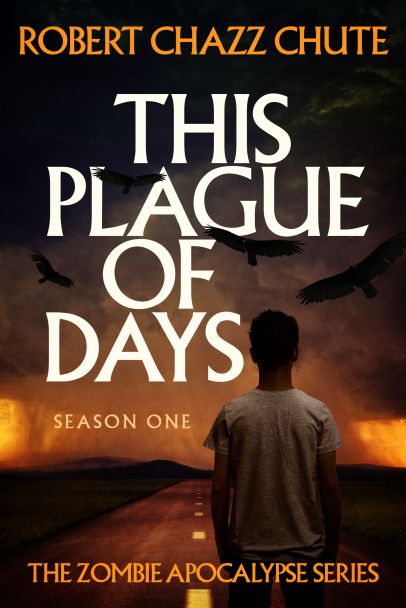
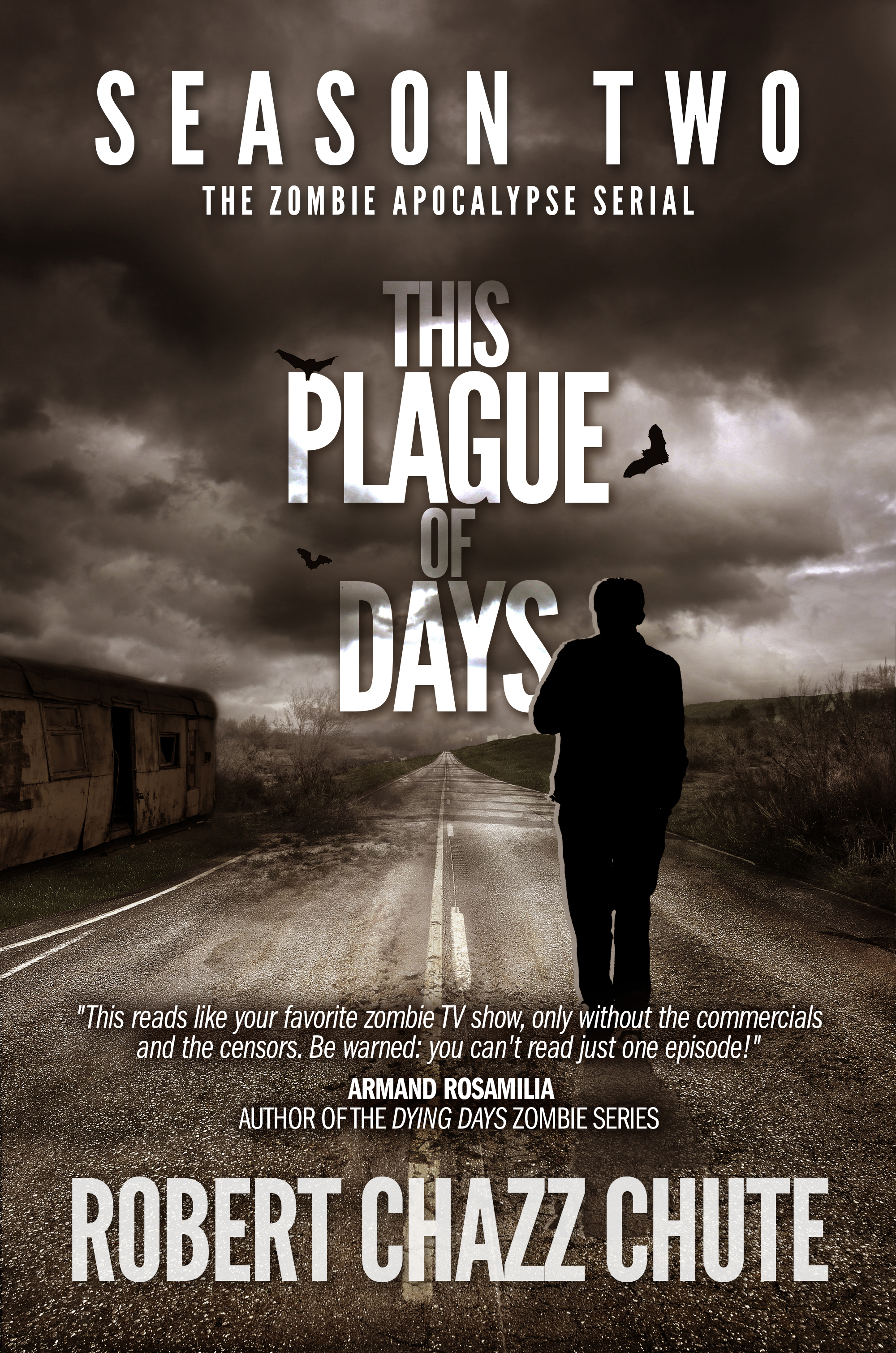
Bestseller with over 1,000 reviews!
Winner of the North Street Book Prize, Reader's Favorite, the
Literary Titan Award, the Hollywood Book Festival, and the
New York Book Festival.

http://mybook.to/OurZombieHours
A NEW ZOMBIE ANTHOLOGY

Winner of Writer's Digest's 2014 Honorable Mention in Self-published Ebook Awards in Genre

The first 81 lessons to get your Buffy on

More lessons to help you survive Armageddon

"You will laugh your ass off!" ~ Maxwell Cynn, author of Cybergrrl

Available now!

Fast-paced terror, new threats, more twists.

An autistic boy versus our world in free fall

Suspense to melt your face and play with your brain.

Action like a Guy Ritchie film. Funny like Woody Allen when he was funny.

Jesus: Sexier and even more addicted to love.

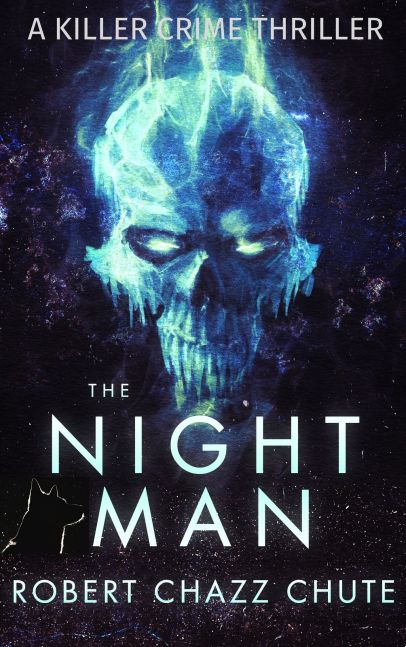
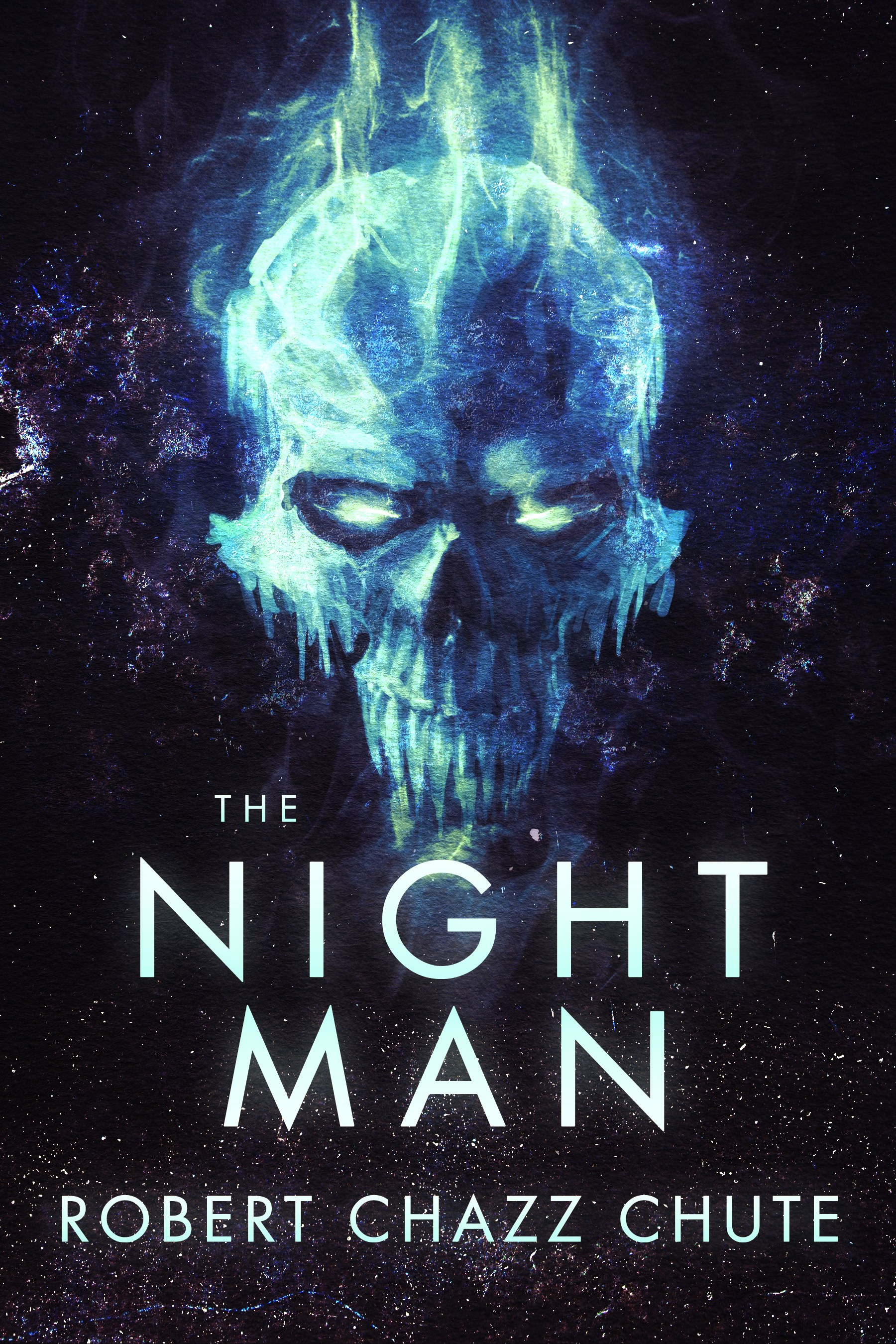
You can pick this ebook up for free today at this link: http://bit.ly/TheNightMan

Join my inner circle at AllThatChazz.com

See my books, blogs, links and podcasts.

Enter your email address to follow this blog and receive notifications of new posts by email.

Join 2,063 other subscribers