C h a z z W r i t e s . c o m

See all my books at AllThatChazz.com.

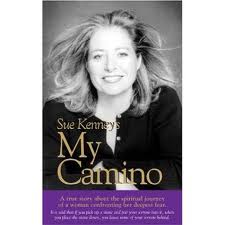
Check out Sue Kenney’s My Camino

In case you missed this morning’s nice comment from the post below, here it is again! Woo-hoo, Sue! That sure made me feel good.Sue_Kenney
Chazz. Glad you got your very own copy of My Camino. Hiring you to do an edit/polish, I felt confident and relieved to have another chance to clean up the grammar, tenses and spelling mistakes before the next printing. Your expertise and attitude made this editing process exciting for me. My Camino came out in 2004 with a small publishing house and I was told it had ‘long legs’ (just like me) and might survive 3 years on the shelf . Who would have thought that 7 years later the book is a national best seller, there is a feature film adaptation in development (I co-wrote the script with Bruce Pirrie) and in the next couple of weeks it will be available on Podiobooks as an audio book. What a journey and now you are a part of it. Thank you so much. It was truly an honour to work with you. See you at the movie première in 2013! (fingers crossed)
Sue

Go to her website here: Sue Kenney

Filed under: Author profiles, authors, Books, Editing, Editors, publishing, Useful writing links, , , , , , ,

Editing Part II: Writerly idiosyncrasies

40 killer phrases

Image via Wikipedia

There are words you can lose without losing meaning. For example, writers who repeatedly precede statements with “I think” generate in their readers a suspicion of insecurity or uncertainty. Make your assertions, state your arguments, declare your narrative.

Writers have idiosyncrasies. Repeated phrases crop up. As you revise your manuscript, look for them and make a note.

Take the example “my own.” That can — and should — be shortened to “my.” That’s my own business. See? You lose nothing by losing “own.” What you gain is economy with this small edit and your reader will appreciate it (though they won’t know why.) I’m an editor. It’s my own business to know.

When you identify your own idiosycrasies, use the search and replace feature and you’ll find the number of instances of the phrase. You may not want to replace them all. Idiosyncratic phrases can be fine in dialogue.

I think that’s right.

No.

That’s right.

Filed under: Editing, Editors, publishing, Writers, writing tips, , , , , , , , ,

Edit Point: One another versus each other

Book cover (Dust jacket) for the 15th edition ...

Image via Wikipedia

“The pair looked at one another.”

No, they didn’t.

Editing is often intuitive. I could tell you, for instance, which usage is correct, but I couldn’t tell you why. It came up with a project and I got curious. Then I went to the Chicago Manual of Style. Here’s why for this one:

When two people are involved, the best way to write it is, “They looked at each other.” When it’s more than two people (or things, for that matter) use “one another.”

The distinction becomes clearer with things: “His eyesight was so poor that when he looked to the bowling pins standing at the end of the lane, they were just a soft white mass. Dave  couldn’t distinguish one  from another.” (That’s right.)

“Each other” in a group hits the reader’s eyes and ears wrong and they may not know why. (This is one reason reading aloud as you edit can be such a powerful trick of the trade.)

It’s not a big deal unless you’re a word nerd or getting paid to edit something. However, usually, if you write a passage that hits the reader wrong or makes them go back, there’s something quirky there that needs another look.

Filed under: Books, Editing, Editors, manuscript evaluation, publishing, rules of writing, Writers, writing tips, , , , , , ,

Writers: Use a spill file as you edit

Puzzle Krypt

Image via Wikipedia

As you revise your writing, it can be difficult to let some passages go. Maybe a scene or chapter is just too long. Maybe one part of the narrative jigsaw puzzle sounds good but just isn’t working with everything else that works.

Editing yourself (before you hire an editor or send it on to beta readers) is difficult. You don’t want to lose gems, even when they aren’t working.
A spill file makes editing decisions easier. Open a blank document. As you go through your work, cut and paste passages that aren’t working into your spill file. It’s not just deleted and gone. It’s still there if you decide you want it back. Chances are that when you’re done, you won’t want it back.

The spill file is the writer’s wedding album: you make a big deal out of it and then hardly, if ever, look at it again.

But you’ll feel better, be more efficient and, if there is something to treasure in the spill file, you can easily bring it back into your story or start a new story from that nugget.

Filed under: authors, Books, Editing, Editors, getting it done, manuscript evaluation, publishing, writing tips, , , ,

Writers: Take a penny, leave a penny

New York City Serenade

Image by joiseyshowaa via Flickr

The agent talked about her latest sales: This fabulous author and that little debut. She called them her authors, her books. It sounded like such a glamorous world. The writer hadn’t seen any of it for herself, but she had a writer’s mind so she could imagine every tantalizing detail.

“Good for you,” the writer said.

“Well, it’s not all cocktail parties, you know. In fact, it’s not nearly enough cocktails. Sometimes I hate it. You should see our slush pile. Long nights. No down time. I’d love to read the latest good books, but I have so much to read, I end up reading more bad stuff than good. You know how it is.”

The writer nodded and smiled, but she didn’t know how it was. She only read the good stuff. She aspired to be one of those writers who get a book launch and get to gripe about not getting paid enough as they examine royalty statements.

She glanced down at her own manuscript in the middle of the desk between them. She had changed the title five times over the course of as many drafts. Now she thought the words on the cover sheet should read: THE ELEPHANT IN THE ROOM.

The writer thought of the bills that had been piling up as she wrote and rewrote multiple drafts of her book. She wanted to ask, “What do you think we can get for it? Any chance of an auction?” The writer didn’t have dollar signs blinding her vision. Her family had been supporting her efforts to get published for a long time. She wanted to finally have some money to show for it. She thought of all those nights she said, “Mommy’s working.” Everyone else she knew who worked got a paycheck.

But the writer knew those questions would sound impertinent. Unprofessional. Instead, she acted cool and casual and nodded at her manuscript. “Is it any good?”

Is it benign? is what she meant.

Sure, it’s good,” the agent replied. Then, a deep breath and a furrowed brow. “A lot of people might even think it’s great.”

The writer’s shoulders relaxed.

“But it’s not just a question of it being good.”

The writer’s shoulders tensed again. “It’s not?” Uh-oh…

The agent picked up the manuscript, felt its weight a moment and then placed it back on her desk. Then she slowly slid it back toward the writer. “The landscape has changed a bit since we last spoke.”

The writer sat up straight in her chair. She didn’t want to pick up her manuscript. Not yet. If she took it back, it would signify something she didn’t want to see.

“There are a lot fewer bookstores. The economy isn’t recovering as fast as we’d hoped. E-books are really screwing things up, I can tell you. There’s a lot of flux in the industry,” the agent said.

“Flux.”

“Yes.” The agent pushed back from the desk and stood. “I tell you what,” she said. “The market just isn’t ready for this sort of thing right now. I could have sold this a year ago, maybe even a few months ago.”

A few months ago you told me to take another swing at it, the writer thought.

“But it’s just not hot enough with my editors—”

There it was again. My authors, my books, my editors. It was if her agent held the keys to the whole world.

“…and I’m not as enthusiastic as I’d hoped. If I take something to them which isn’t really double-plus ready for prime time, they’ll never let me in the door again. I have to love it to sell it. You understand.”

The writer thought of all those years her father sold Fords. He didn’t love every model, but he had sold a lot of cars. The writer refused to rise from her chair. And she would not touch her manuscript. Promises hadn’t been made, no. But the agent had always sounded so positive. It had taken her two years to find this agent. Everyone said two years was lucky.

“Can I…? What could I do to fix the draft?” She hated the desperate tone that crept into her voice then.

The agent shook her head, but she was smiling in a way the writer guessed was supposed to be reassuring. “I wouldn’t worry,” the agent said. “Eventually, with a stick-to-it attitude, you’ll be published soon enough.”

Soon enough? What did that mean? The writer winced.

The agent put up her hands in a soothing gesture. “Relax and persevere. Your writing shows so much promise.”

The writer had heard this phrase many times. She thought if she heard it again, she might just throw a very embarrassing, very childish tantrum.

“So what should I do?” the writer asked.

“Oh, I think you should start fresh, of course,” the agent said. She was still smiling that infuriating smile.

Fresh? The writer had begun this manuscript (her third unsold manuscript) four years ago! The weight across her shoulders felt like an ox yoke.

“Don’t be discouraged,” the agent added breezily. “This is how this business works.”

“This business doesn’t seem to be working for me,” the writer said. I’m not even sure you’re working for me. She thought it but she didn’t dare say it.

The writer took a breath, held it a moment and then let it escape between her teeth in a slow hiss. “I don’t want to hear about flux. Give me something I can chew,” the writer said. “What’s wrong with it? You were so enthusiastic about the pitch.”

The agent came around the desk and took her elbow, ushering the writer toward the door as she spoke. “It’s a combination of elements. Not loving it enough is the main thing. If you’re looking for something more concrete to work on, I’d say this draft turned into a bit too much of a cross-genre issue. We have to be sure which shelf the book will be on so we can market it effectively. Is it a thriller or is it a sci-fi? I’m not sure. I bet you don’t know. It’s not…” the agent searched for the right word, “definitive.”

No, the writer thought. She’s appearing to search for the right word, but she’s acting. She’d said this many times before. She said it the way human resources people spit out, “…and we thank you for your years of service.”

“Wait. I do know. It’s a thriller, but if they aren’t sure—whoever they are—they can put it on both shelves,” the writer said. “And if bookstores are disappearing and people are buying books online so much, bookshelves aren’t really such an issue anymore are they? Shouldn’t we at least give some editors the chance to say no?”

The agent’s mouth was a line now. “You have to trust me,” she said. “I know this business. I’ve worked in it for almost twenty years.”

The writer said nothing. She was angry, but she wasn’t sure she should be angry with her agent. She wished she knew who to blame. The agent’s answer seemed to be that she should blame market conditions. Or herself. She didn’t know, but she wasn’t so far gone she didn’t wonder if the agent’s twenty years of experience meant she was now twenty-years stale.

The agent’s hand was on the doorknob. “I have a piece of advice for you,” she said. “I have to share it with all my clients at one time or another. Are you listening?”

The writer nodded. She could hold back the big fat baby tears until later, but she cursed herself still. She knew her eyes were wet and shiny. She wasn’t looking like a professional writer just now.

“Pick up the pennies,” the agent said.

“Wha…whut?”

Pick up the pennies! My mentor always told me that and now I’m telling you. When you see a penny or a dime in the street, pick it up. It’s your message to the universe that you’re open to receive your fortune. You’ll get good things eventually if you let the universe know you’re open to whatever it will give. When you pick up a penny, you’re telling the universe, God, Fate, whatever…you’re saying, ‘I’m patient and worthy of your grace. I’ll wait for my time and my turn.'”

With that, the agent grabbed her hand and pumped it firmly twice. “Good luck!” She seemed almost cheerful. “Pitch me again some day when you’re really really ready.”

Outside on a bench the writer searched her purse for tissues that didn’t look too well-used. Somehow she had the manuscript in her hands again. The agent had slipped it into her grasp so smoothly. She looked at the cover again. She felt the weight of it. It had seemed so valuable.

And what would she tell her family? Worse, what would her writing group say? They hadn’t been fans of the story at first but she’d honed it and they had come around. The people she had trusted most had loved the story, but now, obviously, their opinions had been wrong. All wrong. Not even close to right by accident.

This, she thought, had been needlessly humiliating. She should have just waited for an impersonal email instead of making an appointment. What had she been thinking when she picked up the phone? When she had spoken to the agent’s snotty assistant, the writer had said, “I’m in the city and I thought, hey, I can finally meet my agent in person!” As if she ever just happened to find herself in New York. As if she didn’t live three states away.

She’d felt so good about that move. It seemed so bold then. She had pictured the agent taking her to lunch where they could plot strategy over gourmet coffee with cinnamon swizzle sticks. The agent, she knew from her blog, was big on planning her stable’s careers. She felt like such a rube now that she hadn’t even stayed long enough for a stale cup of office coffee with lousy powdered creamer in a paper cup.

The city street bustled on around her. Hundreds walked past and they all ignored the woman snuffling on the bench. How much older would she be before it was her turn to get noticed? How much patience was reasonable? Maybe it was time to quit.

She had always dreamed of being a published author, but it was a dream with no known origin. She didn’t have to do it. It wasn’t beyond the dictates of her own will. Would she always be held hostage to the whim of her eight-year-old self? This was like running a marathon with no known finish line. Why not stop? No one was making her do this. She couldn’t call this a profession after this. Now it was just a hobby.

She could do something else, too. She had talents. She loved to cook. It wasn’t too late for culinary school. Maybe she would write a cookbook one day. She didn’t like the hours and the time it would mean away from the kids, but she could go for that real estate license. If she saved enough, there was still time to go back to university, she supposed. But what, besides english lit, would interest her? And wouldn’t all those books be a terrible, daily reminder of the beautiful dream she’d abandoned?

The writer looked down. At her feet she spotted a penny on the sidewalk. It was so soiled it was almost black. This, she thought, was one of those plot twists that would make an editor with a MFA scoff. She smiled and, without thinking, reached for it. Before her hand touched it, she froze.

What message was she sending the universe? Patience and openness and receptivity? Like her place could only be a gift? Like the universe was deciding whether she was worth a favor?

No.

That’s when she knew what picking up pennies really meant: If she stooped for a penny she was really telling the universe she’d settle for anything.

No.

She would not settle for a grudging gift. She would choose the dignity of earning her place instead. She would go get it herself.

The writer marched down the street with renewed purpose as she shoved the manuscript into her bag. She’d print off a new one as soon as she got home. She held her head high. Her step was fast and her shoulders light. A plan was forming. There was so much to do. She had to research ebooks and POD and formatting. She had to figure out self-distribution. She had to hire an editor and recruit proofreaders. When she got back to the hotel she’d call her husband and announce the great news. She wasn’t just an author anymore. She was a publisher now, too.

She knew she wasn’t supposed to smile at New Yorkers. You were supposed to look straight ahead, avoid everyone’s eyes and blend in. Instead, the writer beamed at everyone she saw. “Bright lights, big deal.”

Filed under: agents, authors, Books, ebooks, getting it done, manuscript evaluation, publishing, Rant, Rejection, Writers, , , , , , , , ,

Writers: The self-publishing/Massage Therapist Correlation

Massage in Tarifa, Spain taken on May, 6 2007 ...

Image via Wikipedia

I haven’t had what my father would call a real job since 1991. The factors that make that so are all tied up in being a writer and editor.

Years after training as a journalist, working in newspapers and working in the publishing industry, I went back to school again to become a massage therapist, too. The reasons why were varied, but the most important factor was that I wanted to work for myself. I have an independent streak and I hated working for The Man. I still hate working for The Man. Writing, editing, therapeutic massage: it’s all independent work. There is no hierarchy. The Chazz does not do hierarchy.

But a lot of people do. Most people have a boss. The fact is, I don’t understand how they stand it. I pull at authority’s leash so hard I have sometimes hurt myself in tiny acts of rebellion.

Despite the rebel yell, the truth is I have many bosses. Everyone I encounter in my practices as an editor, writer and massage therapist is my boss. I have chosen many bosses instead of one. I have chosen one-to-one interaction instead of dealing with a group. I deal with people for an hour at a time or for short projects, always with an eye to where the next project will come from. There’s no security in this. My income goes up and down unpredictably.

On the other hand, with all that I do, there is the security of knowing they can’t all fire me at one time. If you have one boss who wants to lose you on a whim, they can do that. That’s the smug solace of the lone wolf. 

But lots of people accept authority as the way of the world. That’s becoming less true as massive unemployment forces some to seek out their own solutions and form their own businesses. Entrepreneurship used to seem like it was for the few who chose the harder way. Now, when so many can’t find work, starting up a sole proprietorship and going for it is forced upon them.

Here’s what I notice: People are just wired one way and not the other. Most massage therapists and writers I know have an independent streak. We have to grit our teeth a bit to do something that is in many ways outside money’s eco-system.

But there are a bunch of therapists who do, in fact, want to work for somebody. They want someone else to take care of the laundry, the advertising, the tax paperwork and anything else that doesn’t directly relate to physically doing the work. They love that they can come into the office, do their thing and leave without another thought to the running of the business. I wouldn’t call it freedom, but they do.

In the past, the publishing industry has been built on the hierarchical model. Someone else will publish your book. Someone else will take care of the editing and (some) of the promoting and it will all be part of one complete package. Thanks to technology, authors are discovering they have more options than history has provided.

For authors deciding when to make the leap to independent publishing, there is a lot to consider: market factors, price points and leveraging your platform to sell enough books to make the enterprise profitable.

Beyond the practical and esoteric (which must be figured out, too) you have to start with the personal: you. Which way are you bent? Do you want someone else to take care of things (and give them a deeper cut of the profits and losses)? Are you up for the nitty-gritty of doing the work of many on your own? Can you hire an editor, find a publicist, do the research and build your audience? It won’t be easy. You’ll have to talk with a lot of people and the greater your network the more chance you’ll get your feelings hurt. When the mesh of your network tightens to a closer knit, there will be friction.

Only you can decide if you have enough of the anti-authoritarian, do-it-my-way, I’m-a-control-freak, entrepreneurial-bent. Once you’ve figured that out, here’s a great article that explores the location of the tipping point between traditional publishing and going indie.

No matter which way you are wired, if you’re a writer you’ve got a muse.

Next stop on the Reality Train:

Introspection Station.

Self-publishing has developed to a point where it is neither good nor bad. Depending on your temperament, it could be a solid choice or a horrible one.

Filed under: authors, Books, DIY, ebooks, Editing, getting it done, publishing, self-publishing, , , , , , , , , ,

Writers: The Power of Small (and why press releases don’t work)

A picture of author Carolyn See

Image via Wikipedia

When I worked in a city newsroom, one of my jobs was to go through press releases to find gems. There weren’t many of those clichéd diamonds in the rough. Reporters see so many press releases, they begin to look upon them with suspicion and even resentment.

What’s an author to do? You want an interview. You want your book reviewed. How do you make it happen? The traditional approach was to send out lots of press releases and books. It wasn’t very effective. In fact, sending out a lot of review copies is expensive.

There’s an alternative:

Go small. Go low-tech. Write a note.

This isn’t a practical approach for in-house publicists working for major publishers (but they usually work in short bursts for particular authors, anyway.) The low-tech, patient strategy is for indie authors looking for ways into the media. Unfortunately, publishers focus on very small windows of opportunity. They are looking to move a lot of books quickly (before the book stores send them all back for credit.) Marketing in book publishing has been long periods of silence interspersed with short frenzies. As an indie author selling e-books, you’re opting out of big, expensive and short-term strategies. This isn’t so much for Wiley (publishers since 1807!) authors. This is especially for wily indie authors.

As an independent author and publisher, you can play the long game instead. You can write a note or two a day. One author/guru Carolyn See made it her practice to write a “charming note” every day to an editor or publisher or agent.* Why not to reporters, too?

But there’s a trick to making it effective. You know how I’m always saying that if you want to hit up an agent, don’t look for the big, established names? Agents fresh from the factory who are up and coming in established agencies are better bets. They are still hungry and not as jaded. They don’t hate all queries yet. They still have hope and the scales have not yet developed over their eyes.

The same is true for reporters. The book editor of a large magazine already has lots of books lined up. The independent author has lots of indie-spirit, but most book editors still look down on them. So screw them.

Work on getting into smaller newspapers. Send a charming note to a general reporter who would love to do a cushy author interview instead of chasing some city council member who doesn’t want to speak to them. I’d rather talk to an author than cover a house fire any day.

You know why it will work?

It will work because you will be charming (“Loved that piece you wrote on the local scaled railroad hobbyists so I thought…”)

It will work because general reporters think entertainment reporters have a cushier job (and they’re right.)

It will work because all journalists also want to write a book some day.

And while we’re talking small, send off a friendly email to book bloggers. That counts as a charming note, too.

Ask to guest blog. Bloggers love a break and crave hits, connection, track backs, links and love.

Ask for an author profile. I profile an author on Chazz Writes almost every week. It’s not the New York Times Review of Books, but since they aren’t calling, how about alerting like-minded people to your creations? If you can’t go huge, you can still be ubiquitous.

Instead of just showing up at a bookstore and asking to see the manager, send a charming note ahead of you to break the ice and soften her up for a reading. Better, be even more charming and offer to organize readings for your local bookstore. (Later this year I’ll profile an author who did just that. Not only did he help many other authors, his own career got a boost from building community among colleagues.) 

Your book needs attention. I’m sure you’re already working on developing and maintaining your audience. Don’t forget that etching away at it a day at a time over the long haul can reap big rewards. With patience, you can build your empire. Don’t underestimate the power of a low-tech, targeted, personal and charming note.

These days, the mail is mostly for bills. This approach is more powerful than it ever was because you hate what’s in your mail box. But when you get a letter, you’re excited. It will work because it has worked.

*Read Carolyn See’s Making a Literary Life for details. Or, don’t fool around and head straight to Amazon to buy her book.

 Related Articles

Filed under: Author profiles, authors, book reviews, Books, DIY, getting it done, links, Publicity & Promotion, publishing, self-publishing, writing tips, , , , , , , ,

Writers: Five editing tricks and tips (plus editing marks)


1. Editing onscreen is more difficult and less accurate than printing out your manuscript and attacking it with a pencil. Unless you’re well-practiced at editing pixels, print it out.

2. As you read your manuscript, read aloud. You will pick up more problems that way and if you run out of breath, it’s probably a run-on sentence.

3. Some experts tell you to read your manuscript backwards, one word at a time, to catch more typos. Though it is true this technique works, you must have a form of OCD to act on it. This is advice editors give, but never do themselves. If you don’t believe me, try it with any book-sized manuscript. (Wait! First make sure there are no sharp objects or firearms nearby!)

4. As you edit, read slowly. Your brain is wired to skip over mistakes when you read quickly.

5. Farm it out. You need someone else’s fresh eyes on your manuscript to see the thing you are missing. Hire editors. (Here’s one!)

Filed under: authors, Books, Editing, Editors, getting it done, publishing, rules of writing, Writers, writing tips, , , , , , , , , , , ,

Writers: How to tell when your manuscript is ready

Freytag's Pyramid, which illustrates dramatic ...

Image via Wikipedia

Writing takes time and is often the most fun part of the journey. Then you rewrite and revise and revise again. Before you send your manuscript to an editor, make sure you’ve done as much as you can to clean it up.

Be aware of:

Formatting, hooking the reader, character development, story arcs, consistency of narrative, consistency of voice, differentiation of characters’ voices, typos, grammatical errors, plot logic, plot holes, pacing, three-act structure, rising action, scene length, passive voice, telling instead of showing

(gasp!)

…the list goes on and on, but you get the idea.

Make it as good as you are capable.

Once you’ve gone through however many revisions  you must endure (maybe two, maybe dozens) to write your story, go through one more time.

How will you know when you’re ready to send it off to an editor for new input?

You’ll be sick of your manuscript. (And if you have been holding on to a manuscript too long, let go of your perfectionism and the manuscript. It’s a torturous form of self-hatred.)

A manuscript is never truly finished. You could polish forever. However, when your editing goes sideways, meaning it’s not better but merely different, it’s time to send it off.


Filed under: Editing, Editors, getting it done, publishing, Writers, writing tips, , , , , , ,

Writers: On sending your stuff

J. K. Rowling, after receiving an honorary deg...

Image via Wikipedia


To the right is a picture of JK Rowling. Notice that she is not me. As with Highlander, “There can be only one!” I’m sorry this has become necessary to point out.

One of the posts here is a neat spreadsheet that shows how JK Rowling plotted out Harry Potter. Recently I got an email with several errors addressing me as JK Rowling that asked me to email the writer so I could read some of her work. Billionaire authors don’t do that much. In fact, as presented, I wouldn’t do it, either.

I’d feel bad about pointing out this error so publicly, but it’s apparent the writer is not someone who reads this blog. Please read the blog (and also www.chazzwrites.vpweb.ca). When someone jumps from my bio page to ask about my bio, it just feels like spam and carelessness. Writers are detail-oriented and email, no matter how casual you want to appear, should reflect that. (In fact, I’ve sometimes gone through several drafts on queries to make them appear breezy and casual.) Whether you’re sending a manuscript, a query or a short email, you must pay attention to the details.

I know what you’re thinking. You already know this. Okay, but obviously many people still don’t. One writer told me she had already written several books. That’s a good sign. However, in one short paragraph, she made seven errors. That went into my evaluation of how much I could help her right away. I decided editing her book would be time and cost-prohibitive for me and for her.

When I take on a project, I have to take into account how much time I will have to invest in the book. From that short paragraph, I had to conclude that, were I to take her on, the job would be rewriting, not editing and proofing. When it starts out that bad, it doesn’t make me confident about larger issues like attention to detail, story arcs, characterizations and narrative logic and consistency. I have ghosted a couple texts. Writing and rewriting are not out of the question, but I have to know the scale of what the job requires going in (or I may as well be working behind a counter wearing a paper hat and slinging fries.)

Does your project have to be perfect for me to work on it? Of course not. If it were perfect you wouldn’t need anyone (and you’d be god.) I’m not being nitpicky or cranky. It’s just that when I get a query, I’m looking for signs the author is serious. If you’re asking me to take your work more seriously than you do, that’s a bad sign.

Queries and sample chapters give you an idea of how I work and they tell me how much time your book will take up. That’s one of the main variables in determining my rate, so please, don’t shoot off an email—to me or any other editor—before reading what you wrote at least once.

I’m trying to end on a positive note, so I’ll add that I just took on an editing project that excites me. The author’s serious, nice and I can’t wait to dig into her book and take it from great to fantastic. In fact, the antidote to amateurish folks is waiting on my desk. I’m off to work on the manuscript.

Filed under: authors, blogs & blogging, Editing, Editors, getting it done, links, Rant, Rejection, What about Chazz?, Writers, writing tips, , , , , , , , , ,

Bestseller with over 1,000 reviews!
Winner of the North Street Book Prize, Reader's Favorite, the
Literary Titan Award, the Hollywood Book Festival, and the
New York Book Festival.

http://mybook.to/OurZombieHours
A NEW ZOMBIE ANTHOLOGY

Winner of Writer's Digest's 2014 Honorable Mention in Self-published Ebook Awards in Genre

The first 81 lessons to get your Buffy on

More lessons to help you survive Armageddon

"You will laugh your ass off!" ~ Maxwell Cynn, author of Cybergrrl

Available now!

Fast-paced terror, new threats, more twists.

An autistic boy versus our world in free fall

Suspense to melt your face and play with your brain.

Action like a Guy Ritchie film. Funny like Woody Allen when he was funny.

Jesus: Sexier and even more addicted to love.

You can pick this ebook up for free today at this link: http://bit.ly/TheNightMan

Join my inner circle at AllThatChazz.com

See my books, blogs, links and podcasts.

Enter your email address to follow this blog and receive notifications of new posts by email.

Join 2,063 other subscribers