C h a z z W r i t e s . c o m

See all my books at AllThatChazz.com.

Where does the Darkness Come From?

Short Answer:

The darkness comes from everywhere.

Longer Answer:

Tales of horror arrive in the newspaper every day. This week a toddler was stuck in a high chair for six days while her dead mother lay on the floor in front of her. The child managed to survive because she could reach food from where she sat. The mother had suffered a chronic illness. When a child services worker rang the bell, no one answered but she could hear the child crying, she called police. They broke down the door to find a body beginning to decay and a terrified child. 

When asked by an interviewer, “Where does the darkness come from?” these were my answers. Of course, we all have terrible childhoods and can draw on the thousand arrows flesh is heir to, but when done right, fiction can be the valve that lets off pressure. Fiction can make sense in a world that is plotless (though all stories that end with “happily ever after” are conveniently ended before the going gets nasty.)

I said to my wife (it’s funny but I’m dead serious, too): This is our happily ever after now. But make no mistake, this will all end horribly…unless a carbon monoxide leak kills us all in our sleep, of course.

Fiction is the lie that tells the truth. Humour can do that, too. There’s an element in the question that’s subtle and insulting, also. I wrote a short story that would convince you I’ve drowned at least one person in a bathtub. When people reacted to me with alarm, I smiled and pointed out, “It is fiction.” Perhaps they’re disturbed that I give these matters so much thought.

~Mr. Sunshine strikes again

Filed under: Rant, short stories, writing tips, , ,

Writing Advice for Anti-authoritarians

Recently I read a YA novel that omitted all quotation marks. It didn’t hurt a bit because it was so well done. It may have even sped up the read. It’s the sort of thing some grammarians hate. I say tough cookies to some grammarians.

When the rules of proper usage get in the way

between your story and your reader

–and sometimes they will–

dump ’em.

Elmore Leonard says so, too, so it’s not just lil ol’ me. Pedants will say, “Know the rules before you fracture them.” Fine. Then crack ’em open and don’t be so goddamn apologetic about it.

Ooh, and about exclamation points: one in 100,000 words is quite enough, thanks according to Mr. Leonard. (My journalistic mentor referred to the exclamation point in colourful terms. “They’re called dogs’ pricks,” he said.)

Brevity is good, too. It gives you more room for story and story is what your readers sign up for when they open a book.

Filed under: grammar, writing tips, , ,

After All

Stephen King has this little tic that pops up in both his speech and his writing. I’m reading the third in the Dexter series and noticed it there as well. If you have a sentence with the words “after all” in it, you can take that out.

You don’t need it after all.

Filed under: writing tips,

Three tips about writing characters.

1. Don’t let all your characters sound the same. If two characters are indistinguishable, they may as well be one character.

2. Don’t let one character bang the same note all the time.  Characters that have the same range as a triangle in a brass band soon get tiresome, and worse, unbelievable. You aren’t betraying the character’s traits if they are angry yet occasionally sombre. Even wackos in the psych ward take a nap from time to time. Your characters need to act like people, not cartoons.

3. And please, don’t let smart people do dumb things to make a plot work. When you find yourself doing that, you need to step back and think about the plot problem so you can write around it convincingly.

BONUS:

A conclusion is where somebody got tired of thinking.

Filed under: writing tips, ,

Writing Tip

Don’t use the word “epiphany.”

Bolts from the blue should be big enough on their own without the announcement: “Hey, Ted had an epiphany!” It’s the show, don’t tell rule applied to the e-word.

And that’s my epiphany, coming straight at you from the wonderful (if snarky little book) How Not to Write a Novel by Howard Mittelmark & Sandra Newman.

Pick it up and read read read.

Filed under: Books, writing tips, ,

Breaking Bad & Surprise Twists

Last night Breaking Bad’s ending exemplified one of the best aspects of a well-crafted story: surprise.

William Goldman (author of The Princess Bride, Butch Cassidy and the Sundance Kid, Marathon Man, All the President’s Men among many others) is the master of the twisted plot. Just when you think you know what’s going to happen next, he suckerpunches you. In my favorite novel, The Color of Light, Goldman surprises the reader in the last few words, just when you thought you were safe from any more surprises. I love that.

And, for the same reasons, I love Breaking Bad, Sunday nights on AMC. Watch it.

BONUS: Read Ken Levine’s blog about the surprise ending of Newhart (and how they pulled it off.)

Filed under: Books, Writers, writing tips, , , , ,

Help your readers read quickly (no speed bumps)

Last night I stayed up late to finish an excellent book of British crime fiction called How to be Bad. It was often funny and surprising. Loved it.

However, it’s amazing how fragile a narrative is. I was speeding along having a good time when I hit this speed bump: “…she kind of shrugged with her eyes.” That bounced me right out of the author’s world for a bit. I actually had to put down the book to go look in a mirror to see if I could shrug with my eyes.With a tic and an arch I can sort of convey that with my eyebrows I guess.

When you’re writing, make sure you don’t hit a sour note or ask the impossible from your characters. Stay clear of that minefield and you have a better shot at sucking the reader into your story.

BONUS:

“Said” is the best tag. because the tag allows readers to skip along. (e.g. “Put down the bloody bologna,” she said.)

Don’t say he or she “hissed”, especially if there are no “s” sounds in the dialogue.

Filed under: writing tips, , ,

Writing Critique Group Decoder

They say: That was interesting  and then add nothing else.

They mean: It wasn’t interesting.

They say: You made an interesting artistic choice there. At the turning point three quarters of the way through I would have done this…

They mean: If this was a totally different story, written by me, I’d like it.

They say: I found a bunch of typos here and you split an infinitive there and you like sentence fragments too much, cuz you know, that’s not a complete sentence…

They mean: I am a grammarian and hope to be an editor one day. Otherwise I am useless to you, but I can continue to be annoying. Later on I’ll be bewildered that no one ever sits near me or speaks to me at the break.

They say: Kaddoos to you!

They mean: I am an illiterate who doesn’t know the word kudos, so don’t take my praise so seriously.

They say: I absolutely love everything you write.

They mean: I want to sleep with you and hope you share my fetish.

They say: Where do you get your ideas?

They mean: Are you really the abused prostitute in the story and is it wrong that turns me on?

They say: There’s a few quibbles. Maybe you could engage more senses here and here and tell more than show in the last couple pages because it feel like you’re rushing the end.

They mean: I can make useful suggestions without trying to put you down to make myself feel good.

They say: I don’t care for fantasy stories so I really don’t have anything to say about that.

They mean: just what they said and that’s fair. If you hate a genre and can’t get past it, don’t comment on it.

They say: That wouldn’t happen.

They mean: That’s either outside my experience and I have no idea what I’m talking about or you have to write more to convince me that’s the ring of truth I’m hearing and not you working the smoke and mirrors.

You say: What do you mean, that wouldn’t happen? It did happen.

You mean: Sorry I didn’t hit the feel of verisimilitude for you. Yet. And sorry I sounded defensive.

They say: You sound defensive.

You say: Perhaps it’s because you’re being offensive.

They say: It’s just feedback. I don’t mean to be offensive.

You say: I guess I’m a delicate doily…or being offensive just comes really easy to you. Clod.

They say: Let me hit you over the head with the fact that I’m a teacher (or I’ve been published somewhere and you haven’t or as my good friend Norman Mailer used to say…)

They mean: Just do what I tell you to do and God, isn’t my voice a lovely basso profundo?

They say: Needs one more polish and you’re done. Have you thought about sending it to X magazine?

They mean: Good for you. Damn I wish I’d written that.

They say: I suck.

They mean: Somebody throw me a bone here and tell me one thing you liked about my story or I’m not coming back cuz I just can’t stand it anymore.

They say: You suck.

They mean: You shredded my favorite story last week. Payback, bitch!

They say: That’s the best story ev-er! Ev-er!

They mean: And you’re critiquing my story next! Mercy Master!

They say: I don’t understand the connection from here to there.

They mean: I wasn’t really listening.

They say: Your writing is very muscular and you know…workmanlike prose.

They mean: It’s too readable. I hate it.

They say: I hate epiphanies.

They mean: Your epiphany was banal or your story isn’t depressing enough to suit my worldview because no ending should ever connote trancendance because that would mean there is hope for the human race.

They say: It’s good but no agent or editor will ever touch that.

They mean: That’s really bad.

OR

They mean: It’s no good for agents or editors without vision who are constantly trying to catch up with the last publishing trend.

They say: Your writing is good but your subject/genre isn’t hot in market right now.

They mean: Once everybody else publishes it, then we’ll concede it had value but for now we’ll pee all over your efforts.

They say: Your writing is very accessible.

They mean: They could understand it and enjoyed it.

OR

They mean: They could understand it too easily which means you’re a commercial writer and therefore unworthy of their time.

They say: I don’t get it.

They mean: I don’t get it.

OR

I’m high.

They say: Far out! Man, that was like…I don’t know…you know…

They mean: I am incapable of expressing myself and I meant to sign up for the hemp macrame class but it was full. Also, I’m high.

They say: Nothing but once in awhile you catch more than one or two people rolling their eyes so hard it looks like they might strain something.

They mean: You’re the hobbyist in the class who is, in their opinion, truly hopeless. They’re right.

They say: Something consistently unhelpful .

They mean: Who cares? That’s all they’ve got. They’re negative clods who will not help you in your career. And if they’re so shit hot, what are they doing in a group with you? Shouldn’t they be off somewhere exotic turning down calls from the Nobel committee?

They say: Something constructive and consistently helpful.

They mean: I consistently say something helpful to you because you’re helping me. Why don’t we ditch a bunch of these opinionated bozos, go have a coffee after group and become each other’s readers? I get you. You get me. Let’s lose all these people who don’t get us and exchange stories and finally have a voice we know is worth our trust? Also, if you don’t give me 3,000 words a week I’ll really bitch you out. Please do the same for me.

(Keep an eye out for these Theys. They could be really useful to your career.)

They say: I didn’t write anything this week.

They mean: I’m just here to snipe at others and refuse to put myself out there.

They say: Your story had a compelling sense of place.

They mean: I couldn’t bring myself to read that shit but I have to say something.

They say: The twist ending (or revelation or change in character or the emotion) felt too easily achieved/melodramatic or cheap.

They mean: what they said.

They could have a point. Maybe they don’t. Maye you underwrote it or overwrote it. Whatever they say or mean, remember this:

YOU GET THE LAST SAY.

All art is subjective. Don’t take any critique too seriously. Listen and then do what makes sense to you. You must write for yourself first.

BONUS:

They say: Thank you for all your suggestions. I can’t wait to go home and implement all of them..even the ones that contradict each other.

They mean: I have no dignity and no judgement of my own.

Filed under: manuscript evaluation, Writers, writing tips, , , , , , ,

Publishing Marketability Conundrum

It just occurred to me that I’d be much more successful as a writer if I was more likeable, more stress-resistant, less angry, less paranoid and 26% sexier. Publishers want marketability. From now on, I’m not wearing a slip.

Alternative: forget all of the above and just be less lazy. However, without brain transplant technology, what’s a slacker to do? 

KHAAAAAAAAAAAAAAAN!

Sorry. Lost it in a Shatnerian way.

Go be prolific.

Filed under: Publicity & Promotion, publishing, writing tips, , , ,

Ouch, baby. Very ouch.

Once you’ve entered the world of writing you have two annoying choices. Either you write and have the fear of failure dog you, or you don’t work on your opus and are doomed to regret what might have been.  The good thing about getting started with writing–instead of carrying around a bag of stinking regret–is the fear melts away with each word.

I can putter with so many distractions, or I can dive into the inevitable and write immediately. Rip off that Band-Aid and get to work. Don’t have rituals (well…okay maybe coffee is necessary.) Otherwise pre-writing rituals slow you down. Just go.

How many books have been written and published since you vowed to get something on a bookstore shelf?

Filed under: publishing, writing tips,

Bestseller with over 1,000 reviews!
Winner of the North Street Book Prize, Reader's Favorite, the
Literary Titan Award, the Hollywood Book Festival, and the
New York Book Festival.

http://mybook.to/OurZombieHours
A NEW ZOMBIE ANTHOLOGY

Winner of Writer's Digest's 2014 Honorable Mention in Self-published Ebook Awards in Genre

The first 81 lessons to get your Buffy on

More lessons to help you survive Armageddon

"You will laugh your ass off!" ~ Maxwell Cynn, author of Cybergrrl

Available now!

Fast-paced terror, new threats, more twists.

An autistic boy versus our world in free fall

Suspense to melt your face and play with your brain.

Action like a Guy Ritchie film. Funny like Woody Allen when he was funny.

Jesus: Sexier and even more addicted to love.

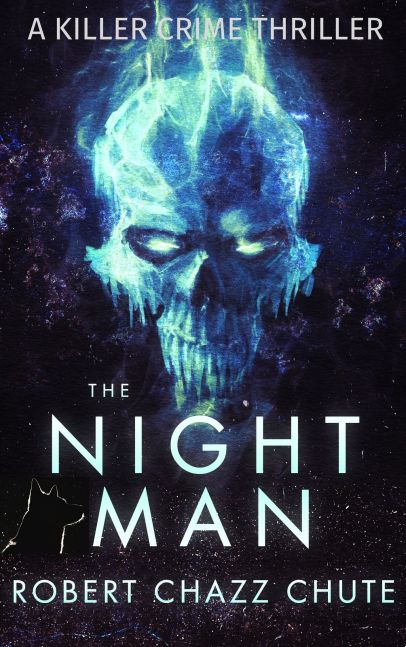
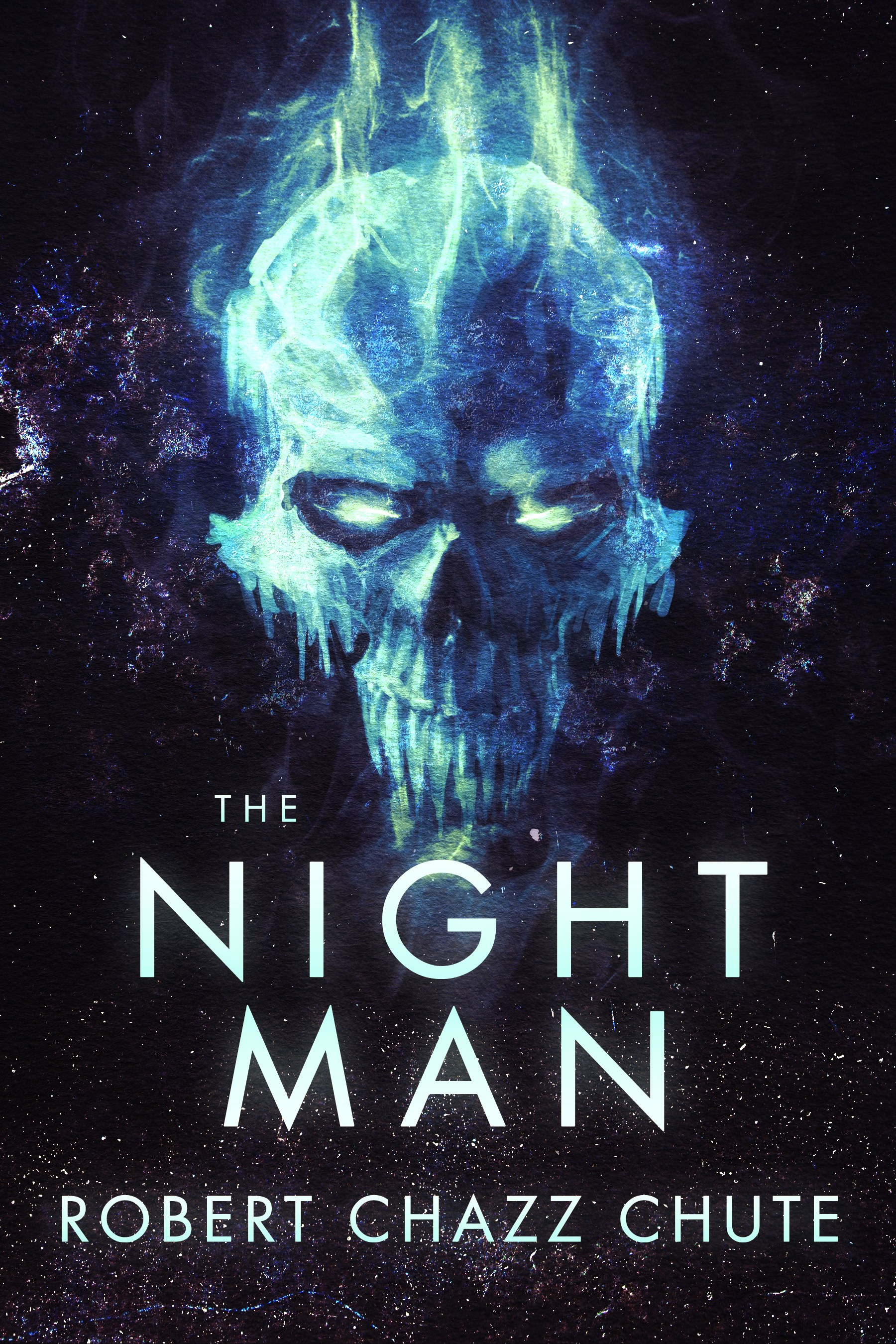
You can pick this ebook up for free today at this link: http://bit.ly/TheNightMan

Join my inner circle at AllThatChazz.com

See my books, blogs, links and podcasts.

Enter your email address to follow this blog and receive notifications of new posts by email.

Join 2,063 other subscribers