C h a z z W r i t e s . c o m

See all my books at AllThatChazz.com.

The most important writing lesson via Christopher Hitchens


Christopher Hitchens

Image via Wikipedia

By now, you’ve heard the news: Christopher Hitchens is dead at 62. He was witty and tough in debate and so eloquent in his writing. I disagreed with him thoroughly on Iraq and nodded in agreement often as I read God is Not Great. I recommend Letters to a Young Contrarian and his autobiography, Hitch-22. Of all his writing, I found his biography most compelling. He has heroic moments, but I think it’s his bare honesty about the challenges of his childhood — especially the casual brutality of  English boarding schools — that I’ll remember most. He had a superior education that contributed greatly to his career, but I believe it was his childhood that made him the man he was. Hitch could be arrogant, sure, but  also see his passion for truth and justice. Compassion for the abused drove his so much of his life and his work.

As writers, there’s something of Hitchen’s work we should take with us to our keyboards: We lay ourselves bare to make our stories better. For instance, my friend Christopher Richardson is a documentary film director whose next film is titled Regret. He will revisit the site of his greatest regret this spring at his college reunion and he’s taking a film crew with him. He will explore the nature of regret, but not from the remote perspective of an outsider. He’ll make the universal extremely personal. He’s brave to tackle the subject in the way he’s doing it. It promises to be gripping.

In my podcast, I tell funny stories and read from my books. Last week I went into detail about being on the receiving end of a colonoscopy (which really reinforces the edict of the season: It’s better to give than to receive.) I’ve talked about several personal subjects and will continue to do so. I’m not saying writers should start a meth lab so they can reach for the brilliance of Breaking Bad. I am saying our shared experiences achieve resonance with readers. On Breaking Bad, it’s not the details of cooking meth that keep you watching. It’s Walt’s failures and his struggle to save his family from himself. We can all identify with his fears and his needs to succeed and provide.

This exhortation for honesty isn’t just for journalists, documentarians and jokemeisters on silly podcasts. I’m writing a suspense novel. It takes place in a fictional town in Maine. There’s some screwy family dynamics and odd characters and small-town claustrophobia and it’s all fiction. Except it’s not. The town is a conglomeration of the small town I grew up in and another town where I spent a lot of time. The roots of conflicts, like the need for escape and the heat that rises from the friction of close proximity are all real. Even in fiction, the tone and subtext can be brutally honest.

To achieve greater impact in your readers’ brain pan, your writing must be honest, even when you’re lying. When you’re really honest, they’ll feel it in their guts that you’re telling lies that tell the truth. Their guts may roil or you’ll give them a belly laugh, but through honesty you will connect. Reach farther than mere verisimilitude. Strive for authenticity in whatever you write.

Honesty is the carrier wave to the destination where we meet our readers’  minds and emotions.

We want them to recognize themselves on the page.

We must achieve resonance.


Filed under: writing tips, , , , , , , ,

Book Marketing: What I didn’t know about resistance to ebooks

I’ve been thinking about how to promote my books quite a bit. There was a lot I wasn’t sure about as I embarked on getting the word out. In the beginning, I didn’t know for sure if I even wanted hard copies of my book. I do want a printed book for Self-help for Stoners now (for various promotional experiments to be announced.) I didn’t know how hard it would be to ask friends to help spread the word. I didn’t know how difficult it would be to get friends to take the time to read and review the books and listen to my podcast. Even the people who care about me don’t necessarily care about my tales of suspense, comedy and magic realism.

I underestimated how loyal people are to the media they are used to. For instance, I know several people who want to support my work, but for one it has to be print only (I’m sure he’s not alone) and for another, she’ll have nothing to do with Amazon. She’s waiting for the Kobo version (so she’ll be waiting a long time unless she orders the print version straight from me.) I was getting a little down about that, but then Andrew, another kind fellow, said that though he’d prefer paper, failing that, he’d be ordering the ebooks anyway. Change happens, but not on my schedule.

And then there is traditional publishing’s inertia. It’s slowing, like a big ship that’s lost power but still has momentum in the Zeitgeist Sea. This afternoon I listened to the annual book recommendation show on CBC’s Cross Country Checkup. Dozens of callers recommended which books to buy for Christmas. Not a single ebook was in the mix. The CBC demographic either skews toward a generation that hasn’t bought its Kindles or iPads yet, or the resistance to the ebook revolution is so entrenched that we won’t see the CBC recommendations change until a cataclysmic shift, like Chapters closing its brick and mortar outlets. (For reasons I’ve already covered on this blog, that’s in the works, but it’s a process and won’t happen overnight. The change is as easy to predict as the contraction of HMV and the fall of Blockbuster, however.)

Another prejudice for us to overcome is the giggle factor. “Self-published?” (I covered that subject a week ago so I’ll not delve further into that.) But I face another giggle factor: my title is Self-help for Stoners, Stuff to Read When You’re High. An acquaintance saw my business card and said, “Stoner? You?” I replied that I had indulged. I also told him that many of my stories of suspense have elements of violence and murder. “The research for that…” I grinned, “well, let’s just say you’re worrying about the wrong thing, pal.”

I added that you didn’t have to be a stoner to enjoy my stories (though my standard joke is that anyone who is high is automatically a better audience…for anything.) Still, no sale there. He walked away worrying about my immortal soul and questioning what he thought he knew about me. (Answer: I’m complex. Like Batman. Okay?!)

In part, I chose Self-help for Stoners for cold and calculated strategic marketing reasons. It wasn’t just that it fit the book. Many titles might have fit the book. However, I had a short fiction collection (a difficult sell) that was a weird hybrid. I knew going in this would be a self-help book in the form of fiction. The fact that the book was inspired by two celebrity stoners to whom I dedicated the book also played a major role in my choice. For that collection I reached back to a non-MFA approved format: Amid the short stories and brain tickles, it’s kind of preachy. On purpose, it’s fiction that packs a point as well as a gut punch. Kind of like Vonnegut, it’s plot driven and yet there are forays into stories that invite the reader to introspection. It’s preachy in the same way The War of Art* is preachy: consciously and on purpose and without apology.

To the surprise of some, the book has nuance in that I do not advocate throughout for marijuana use for everyone. It’s not for everyone, but free speech and free thought and control over one’s own consciousness are things I do advocate throughout the book. This is a book that will have to find its audience or its audience will find it. However, I don’t regret the title. Collections of short fiction, and the weird hybrid this is, are a tough sell no matter how wonderful I think short stories are. They’re so tough, in fact, that I’m done with short fiction for a long time. The next books will all be novels. However, since stoners are a reading, identifiable market, I tailored many of the stories from Self-help for their enjoyment. (Yes, stoners are readers and are often an intellectual bunch. Don’t believe the hyped stereotype of a bunch of dumbasses blitzed on a beach. That’s alcohol.) My people will find me, either through my friends, my networks, social media or through my podcast of the same name. For any book to be successful, ultimately it will have to found through good reviews, excited readers and Google.

Here’s what I’ve learned so far:

1. Choose your title carefully. In the long term, targeting an identifiable niche will help me. In the short term, it’s uphill slogging.

2. Get a good cover. We’re told we’re not supposed to judge books by their covers, but of course we do. I did my cover for a novelette (The Dangerous Kind). I liked the cover well enough because it was for a 10,000 word story I’d sell as a loss leader for 99 cents. In retrospect, I’d ask Kit Foster, my graphic designer, to do that cover now. I recognize the elements that go into a great cover but I can’t create one. I have no idea how Kit does his magic. I just know that I get a lot of compliments about how good the covers are for Self-help for Stoners and Sex, Death & Mind Control.

3. Have a strategy. I named the book strategically, but perhaps more important, I named the podcast strategically, too: It has the same name. In the long run, I’ll probably find more people through the Self-help for Stoners podcast (delivered free and weekly through iTunes) than any other strategy I plan to use (except one.)

4. Don’t be a jerk, but don’t be too shy, either. Keep asking for help spreading the word. Just be sure you give lots of positive content beside the occasional request for reviews, shares and assistance. It’s not begging when you’re giving more than you’re receiving. It’s quid pro quo, the basis of all civilization.

5. You noticed the end of point three and you wondered, “What’s that about?” What’s the ‘except one?’ The best strategy is to keep on writing the next book and the next and the next. Revise and edit the hell out of them. After about book five, you have a better shot at getting noticed.

It’s a process. It doesn’t tend to happen quickly until a critical mass of forays— failing, learning and winning— are traveled through. I’m on my journey and these are exciting times at Ex Parte Press. Last week, I finally got the print formatting done for Self-help for Stoners by calling in the cavalry (thanks to Jeff Bennington). This weekend my graphic designer (the inimitable Kit of KitFosterDesign.com) and I finalized the cover for the paper book. Kit even put a new logo together for me (pictured above right). Some things are coming together, but a lot more is not. It’s a learning experience. Some day I’ll look back and say these scary times were the most exciting.


*And by Thor and all that’s holy, if you’re a writer and you haven’t read The War of Art yet, do!

Filed under: Books, ebooks, Publicity & Promotion, Rejection, What about Chazz?, What about you?, Writers, writing tips, , , , , , , ,

How to deal with the stigma of self-publishing

In the last week, the self-publishing stigma has reared up for me twice. An e-newsletter publicized one of my books (hurray!), but there was something in the text I hadn’t expected. The guy behind the newsletter added “(self-published)” to the news that my book was out. As grateful as I am for any publicity, I stared at that for some time and I wondered what the term meant to him. I suspect  that either he, or his readers, will jump to conclusions about my books based on that little parenthetical. It struck me as odd that Newsletter Guy added that detail. Was that a conscious wink and a nod to his readers? A warning? Or am I being overly sensitive and paranoid? Possibly, but then I ran into someone at a party whose first question about my book—his only question, come to think of it—was whether I’d self-published. In that case, the guy was in front of me. I can read body language just fine so I know his estimation of my books went down with the news that my books are not traditionally published.

I didn’t get into all the great reasons to be a self-publisher. I just moved on. I’m not begging anyone to read my books, especially when I sense I’ve already been dismissed. That way madness lies. Always move on quickly to the people who get what you’re doing. The 80/20 rule is crucial to your sanity as well as your success in whatever you do.

But the term “self-publishing” makes it sound like I do it all on my own, without checks and balances. It’s not like I’m a fresh-faced noob at this. I’ve worked for several publishers in various positions. I trained in traditional publishing, worked in it and have written and edited profitably for years. I hired a graphic artist, a formatter and proofreaders. I have beta-readers. Yes, I’ve found two minor typos since the publication of one of my books. But I can probably find typos in most any traditionally published book you throw my way. If a couple of typos cranks you up that much, don’t read anything. I don’t begrudge traditional publishers a few mistakes. They can extend me the same grace (especially since their books are much more expensive) and I’ll put my ebooks’ quality up against anything similar sold in any bookstore. That’s not knocking the traditionally published, by the way. I read and love many authors, indie and non. I’m just saying traditional publishers don’t have a magic potion to achieve good books. Their special (and rapidly diminishing) value is in a legacy of distribution, not a monopoly on quality.

It irritates me when people make judgments about my books (my babies!) sight unseen. Publishers generally don’t have brands. One of my previous employers, Harlequin, is a noted exception. With them, you know what you get every time across all their lines. They are incredibly consistent in their offerings to a devoted fan base. However, most publishers’ lists, even within genres, are unique. People don’t buy books based on which publisher put out the books. No one goes into a bookstore and says, “I want a book by Harper Collins.” They do ask for specific authors.

But I’ve been here before. I know what to do. It’s time to gird my loins and get tough and ignore any jibes or perceived jibes. Occasional rudeness shouldn’t be tolerated but, if you live in this world, you can pretty much expect it occasionally. When I started in massage therapy, I heard a lot of inappropriate jokes that pissed me off. An uneducated public made assumptions about me and what I did as a therapist that offended  me. In my first year or so working as a massage therapist, I often thought about quitting because I pictured an entire career of defending my reputation against every idiotic stranger ready with a quick and uninformed opinion.

While naysayers and doubters questioned my work, I started reaching my public. I began to help people with serious injuries and diseases. I rehabilitated difficult health problems that had stymied other practitioners, sometimes with even miraculous results. With time, I found I rarely had to defend myself against remarks by ignorant people. I grew my fan base and those became the people with whom I spent my time. (There’s that useful 80/20 rule again.) I went on to work as a therapist for almost twenty years.

I’ve battled prejudice before.

I’ll do it again.

Just watch me.

I’m coming.

Self-publishers need confidence bordering on arrogance to do what we do. The decision to believe in our art will carry us through the work ahead. We don’t have time for negativity. We’re too busy making our dreams happen. Maybe one day we won’t call ourselves self-publishers at all. Maybe “independent publisher” is a better term (just as I and my fellow therapists once debated whether we should abandon the word “massage” because of its past negative connotations.) Self-publishing has a bad rep for a reason, but I’m not part of the problem. Eventually, the market, not gatekeepers in New York, will vindicate me. With time and patience, word about my words will spread. The people who like my work will share the good news with others.

If you’ve already helped me by buying my books, telling a friend, writing a review or retweeting my tiny presence on the literary scene, thank you very much!

I’m focussed on you, the believers.

Filed under: Books, getting it done, grammar, My fiction, Publicity & Promotion, What about Chazz?, writing tips

Why Your Publishing Dreams Don’t Matter: Jabs & Counterpunches

A comedian once said, “You know who cares about your problems more than you do? Nobody.”

I’ve opened and closed two alternative medicine practices. The first time I shut it down because I moved far away. The second time was November 1, to write and publish full-time (and here we are!) With each experience I learned this: It is stupefying how unimportant I am. When a business is over, it’s over. People with whom I’d developed long relationships moved on, disappeared and, for them, I no longer exist. They came for a service and they have no interest in checking out what I’m doing now. For most, you have one role that fulfills their needs and just because you’re interested in something new means nothing. I’m not bitter. (Really!) But I was…inexplicably…surprised. On my last day of work, there were no fireworks. Just a little second-guessing: What have I done?! And rum. I toasted my wall certificates and twenty years of service now behind me.

I had a similar surprise with the birth of our first child. I thought the universe should stop, leave us alone and just send in the checks, thank you very much. And shouldn’t every child born in a hospital receive a plaque that stays up forever? (True story: as I stood by She Who Must Be Obeyed while she was in scary labour, a client walked into my office and complained to my secretary that I wasn’t available. And she was really angry about it. As an accomplished massage therapist, even I couldn’t pull said client’s head out of an ass that deep.)

Diagnosis?

Silly Narcissism and Advanced Entitlement Syndrome.

The disease is a pandemic, a silent killer of your hopes and dreams of literary legacy.

And so we come to your dreams in publishing. I have dreams, too. And they don’t matter, either. No one owes us a chance. The only way to develop an audience is to give people a reason to pay for your book with your unique voice, your twisted plot, your different take, your soaring prose, your quirky charm and wit. Or at least have a sexy cover and write a book blurb that makes them suspect you might be capable of these talents. People pay for books because they read your amazing blurb or someone they trust recommended it or you got a good review or a great intro from a celebrity or won a major contest or they received a free excerpt and (this is critical) you entranced and engaged them. 

Jab:

Your friends and family? They’re already tired of you going on about your book.

(Don’t feel bad. It happens to everyone. I’ve already exhausted my friends, too. And I have so few.)

Counterpunch:

Extend your reach somehow.

Get into Goodreads, do a podcast, hold a contest, do a give away, do press, make an event.

In short, do something that engages strangers with your work. That’s right. Scary strangers who may hate you. Your mom can only buy so many copies.

There’s a parallel in stand up comedy. It’s really hard to get a start in stand up. First, you have to be funny and you need to write a lot. The hard part is the on the job training where you get onstage at open mics and start impressing people or humiliating yourself horribly in ways you never really forget and hardly ever live down without therapy.

Some comedians start out with “Bringers.” A Bringer is where a club manager will let you on his stage to do your act as long as you bring a bunch of friends to fill seats and pay for the two-drink minimum on a Monday night at 11:30 PM. It’s scuzzy. You perform (a bad act) for free, the club gets paid on an otherwise off night and, you hope, your friends laugh. They’re your buddies so they probably will laugh. And that’s the problem. It’s safe and you won’t know what’s really working and worse? You probably paid for half their drinks and their tickets. Instead, perform in front of dangerous strangers.

Artists must write and paint and dance and sculpt and perform for strangers. It’s not really working unless people—who could hate your work—love your work.* Your publishing dream is a nightmare until people you don’t know start a buzz about your books.

This is not to say that friends can’t help you in your publishing journey. I am saying friends can’t carry you all the way around the track. You must somehow figure out how to expand your network beyond the people you know and the immediate few contacts of the people you know. We must all write for strangers. After they decide they like what you write, maybe you could be Facebook friends.

Don’t give up on your dreams. Do wake up to make them happen. 

Yes, that sounds like the platitude pasted under a sunset in one of those inspirational posters people routinely ignore.

*”It’s not really working unless people—who could hate your work—love your work.” Please note: Many of your critics make no distinction between you and your work and you certainly won’t, either. I was being coy. Art, especially now, is a business of personality. This business couldn’t be more personal. Those strangers who hate your work will actually hate you and they all want to cut you with rusty spoons.**

**This point is only mildly overstated for full effect. Have a nice, productive day.

Filed under: ebooks, getting it done, Publicity & Promotion, self-publishing, writing tips, , , , , , , , , , , ,

In writing dialogue, what sounds real?

This week, as I listened to some NPR folks talk about writing on a podcast called Culturetopia, I found myself getting agitated. They were coming down hard on Diablo Cody for her dialogue in Juno. The

Diablo Cody, writer of the film Juno

Image via Wikipedia

complaints were variations on a theme: teens don’t talk like that. They grudgingly admitted that some of the dialogue was funny, but added it was the actors’ charm that sold dialogue that wasn’t “real.” (Whatever this reality thing is…but that’s another post in which I discuss quantum physics, multiple earths and Twinkies.)

How charming do these critics imagine actors can be if they’re mute? Do they really believe the charm oozes off the screen just because actors walk onscreen? (In my experience, that only happens in porn where dialogue is tertiary. Primary? Looks. Secondary? Action (and, equally, the presence of umbrellas open indoors…but that’s my fetish.) In so-called real life and on film, actors have to speak the lines in the script (and possibly throw in some improv) to sell a performance. JK Simmons is a great actor. But if he played the dad in Juno as a mime bereft of Cody’s dialogue, I would have to kill him. (As is my mission with all mimes.) What I’m saying is, Juno as a silent movie wouldn’t work nearly so well for me.

There are so many lines from that comedy I loved:

“It’s a pilates machine.” 

“Great! What’s it make?”

And the teenage mother played by the wonderful Ellen Page tossing off the reaction of her peers to her advancing pregnancy:

“They call me the cautionary whale.”

Cody’s critics were even cheering her “failure” with her second movie, Jennifer’s Body, to teach her humility (presumably so she can write another, more banal movie that’s not so threatening to their self-image and worldview.)

There are three answers to this line of attack on Diablo Cody:

1. It was a comedy. Lighten the fuck up.

2. “Teens don’t talk that way”: Really? All teens? Everywhere? Ever? Every teen and every adult must conform to one sound, one point of view, one CLICHE?! Ellen Pages’ character was a smart, glib kid who spoke in one-liners. Sometimes I speak in one-liners and the only writer working for me is me. Maybe the critics don’t know any smart people who are funny at the same time. They need to meet more comics because that’s what some of them can sound like on and offstage. Maybe after giving up her baby to Jennifer Garner, Juno went off to work the Comedy Store. Or she took up particle physics. Funny and smart at the same time is possible, at least in the form of Juno.

3. Critics: Don’t be so damn churlish. I’m thinking of two words. The second word is “you.” The first word is not “thank.”

Filed under: publishing, Rant, Rejection, reviews, scriptwriting, Writers, writing tips, , , , , , , , , ,

One way to write more


Writing is an arty business that requires a lot of patience, persistence and waiting. Many people give up too soon because they aren’t getting a dopamine release. Like your Mom told you as you lay on the living room couch in front of the XBOX for the eighteenth hour, you’ll do better in business if you master the knack for delayed gratification. (Somehow. I don’t know how.) The problem is your body is programmed to hit the short-term happy button like a chicken pounding the pellet lever for a crazed psychologist’s cocaine experiment. Long-term thinkers have manuscripts to publish. Short-term thinkers will ditch work to hit a Transformers movie.

Other professions get a personal payoff faster. Watch any chiropractor at work and you can see the dopamine release hit them in the brain pan with each spinal crack. Some professions never get a happy brain chemical payoff (e.g. any retail food industry job. The hit comes from abusing customers and stealing fries straight from the fry-o-later.)

People who write  a lot do so for varied reasons: NaNoWriMo hopes, fear, desperation, spite, being otherwise unemployable, ambition, compulsion or perhaps, as George Orwell admitted, a rather pathetic need “to be thought clever.” (Bingo!) Underneath most of our brain tickles is dopamine, the drug of choice in the pharmacy that is your brain.

This may sound a little bit silly, but it’s working for me. Last night I was at my keyboard reworking the morning’s writing (the fountain pen’s comes first) and my nine-year-old son popped into the office and said, “What is that sound?”

A chimpanzee brain at the Science Museum London

Image via Wikipedia

“That, my tiny friend, is an ancient sound I’ve brought back through the magic of the interwebs.” (Google “Typewriter sounds” for your device and you’ll find another tool for your personal reward system.)

He gave me the quirky eyebrow, annoyed plus perplexed look. (Try that. It’s a tough combination.)

“That’s the sound of a typewriter, son.” When I hit the keys on my Mac’s keyboard, click, click, click-click, clickety click. Fun, yes? Well, it is for me. And I don’t think it’s just nostalgia for my first year of journalism school. I’m getting aural feedback on my typing so I find I’m typing a little faster and a little more accurately. And dopamine. That, plus the floaty feeling of slipping into a story and making the world go away.

Aaaaah! Give me another hit, Mr. Candyman! Clickety-clack, clickety-click, Barba trick…click…clickety…

How do you reward yourself for missions accomplished to keep the plates spinning and the fun coming faster?

Filed under: getting it done, NanNoWriMo, Writers, writing tips, , , , , , ,

The unorthodox ebook license note:

Don’t worry about book piracy. If someone wants to pirate your book, they will and there’s nothing you can do about that. Worry about obscurity, not piracy. It’s much better to put your time into writing a good book and marketing it well than to slam your head against hard things you can’t control. (That got sexier than I intended.)

Anyway, instead of the usual pleading license notes about all my hard work on my books (releasing very soon now, I swear!) I opted for this as my license page:

License Notes

This ebook is licensed to you for your personal entertainment. Please do not resell this ebook or give it away to others. If you would like to share this ebook with another person, please purchase an additional copy for each recipient.

Ebooks are an inexpensive pleasure — couch change and impulse buys! — that can be enjoyed for hours, so c’mon! Don’t be a douche.

Thank you for respecting art (and starving writers, too!)

Filed under: Books, ebooks, getting it done, Intentionally Hilarious, self-publishing, Writers, writing tips, , , , , , , , ,

How to tell when criticism is unreasonable

"Do not feed the Trolls" sign. Photo...

Image via Wikipedia

Recently I read a blog post that angered me and broke my heart a little. When we dare to express ourselves, there’s always going to be someone who disagrees, doesn’t like it and thinks you’re stupid. Some people aren’t shy about letting you know how they feel and are pretty blunt about it. Constructive criticism is helpful criticism, administered gently. Awhile back I got a nice note about an edit that needed to be done on my other blog. The guy pointed out the problem and couldn’t have been sweeter about it. As a result, I went out of my way to help him in turn. Then there are those other people.

How to tell when criticism is unreasonable:

1. They focus on you instead of the issue. People who start out by insulting you aren’t helping. They want to feel good about themselves by putting you down. Call them a name in turn: Troll!

2. They go on at length and overstate your grammatical sins. That’s someone who has too much time on their hands. (See #1)

3. They talk about their work and its relative superiority. Some people actually take this tac to ask for business. They want to sell their editing or consulting service and their approach is a frontal assault on why you suck.Don’t encourage bad behavior by rewarding it.

4. They treat finding fault as a moral victory. If they wanted to be helpful, they’d just point out the problem and move on.

5. They’re wrong. An english teacher once tried to convince me that the you effect the affect instead of the other way around. She wasn’t going to be convinced otherwise, either. After all, she was a teacher, not a learner.

6. If this is someone you know, instead if an acquaintance or an anonymous internet troll, have you noticed that person is hypercritical about everything? Consider the source.

7. They quibble over stylistic stuff that could go either way. When I worked at Harlequin, we often got letters from readers applying for jobs. A common tactic was to criticize books for perceived failings in proofing. The approach never worked for two reasons: It was insulting to the staff and the complainer/job applicant was annoyed with all the British spelling in lines that were meant for British markets. (See #5)

8. They tell you publicly what they could have told you privately. Instead of setting out to embarrass you publicly on Facebook, they could have just sent you a kind private message to let you know you screwed up. That tells you where they’re coming from. They’re out to show off how clever they are at your expense. Not a friend.

Writers produce. A lot.

(And yes, I know that’s a sentence fragment. Actually, I’m quite fond of sentence fragments, so there.)

We write so much that, inevitably, problems will emerge.

Typos and missing words and miscellaneous issues will appear. We’re writers, but also human, I’m afraid. Follow anyone around all day with a tape recorder and eventually, they’ll say something dumb. Stuff gets missed and mixed up in speech and in writing. Recently, President Obama got the number of states in the union wrong. Does anybody really believe Obama doesn’t know there are fifty states in the United States?*

Well…some people would believe that. That’s someone else you should ignore.

*There are 50, right? Gee, I hope I got that right! Otherwise, I’ll deserve hot pokers under my eyelids and a solid whipping and I’ll never, ever write anything again and I’ll be ever-so-grateful to the person who saved me from myself and my horrible, horrible mistakes! I’m not worthy! I am worm sweat and trolls are all oh-so-very-smart! How do these demigods bear breathing the same air as the rest of us mere mortals?

Okay. That might have been a bit over-the-top, unreasonable criticism in the form of unnecessary sarcasm.

Filed under: DIY, getting it done, grammar, publishing, Rejection, reviews, Writers, writing tips,

Quick links to the most popular posts on Chazz Writes:

All That Chazz     How Editing Works (Plus Editing Symbols)     Five Editing Tricks & Tips      6 Effective Ways to Promote Your Book     First & Third-Person Viewpoint Problems   Ten Lessons Learned from an Evening with Kevin Smith

Sneak Peek at Self-Help for Stoners     TOP TEN: The Divide between the Published and the Self-published    Where does the Darkness Come From?    CreateSpace versus Lightning Source: Pros and Cons Breakdown   What Used to be Cool

 Take me to the Shop Happy Store

Filed under: All That Chazz, DIY, ebooks, Editing, Editors, My fiction, self-publishing, Shop Happy, writing tips

Common Errors in Fiction Manuacripts

Lorina Stephens breaks it down for you with a concise list of what to look out for. (By the way, did you catch the error in the title above? Wink!)

Via Scoop.itWriting and reading fiction
Common Errors in Fiction Manuscripts In varying degrees I’ve previously written how to prepare a manuscript for submission to Five Rivers.
Show original

Filed under: publishing, writing tips, , , , ,

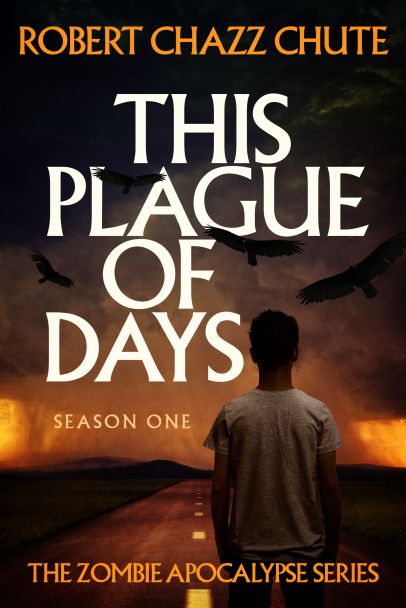
Bestseller with over 1,000 reviews!
Winner of the North Street Book Prize, Reader's Favorite, the
Literary Titan Award, the Hollywood Book Festival, and the
New York Book Festival.

http://mybook.to/OurZombieHours
A NEW ZOMBIE ANTHOLOGY

Winner of Writer's Digest's 2014 Honorable Mention in Self-published Ebook Awards in Genre

The first 81 lessons to get your Buffy on

More lessons to help you survive Armageddon

"You will laugh your ass off!" ~ Maxwell Cynn, author of Cybergrrl

Available now!

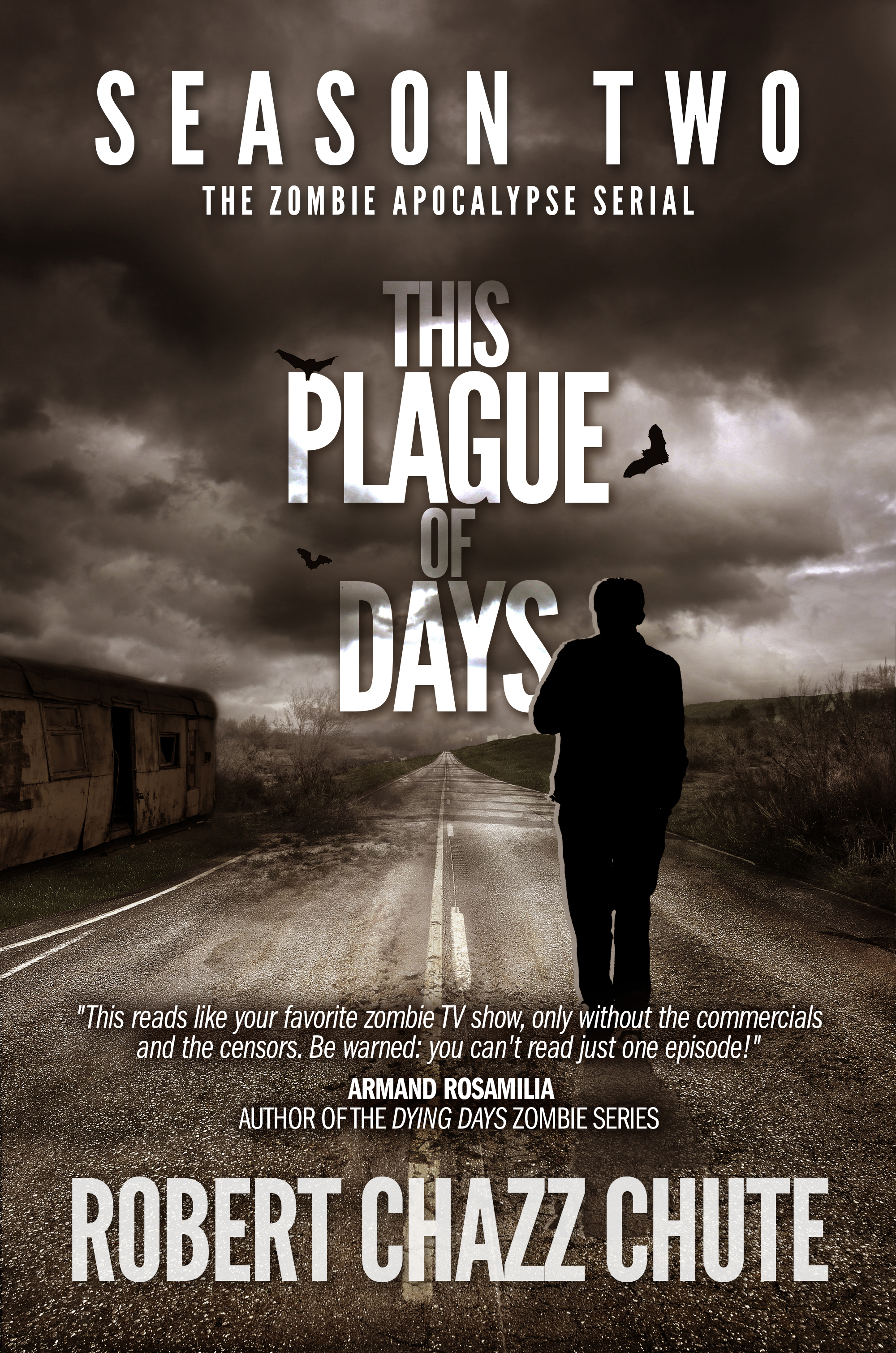
Fast-paced terror, new threats, more twists.

An autistic boy versus our world in free fall

Suspense to melt your face and play with your brain.

Action like a Guy Ritchie film. Funny like Woody Allen when he was funny.

Jesus: Sexier and even more addicted to love.

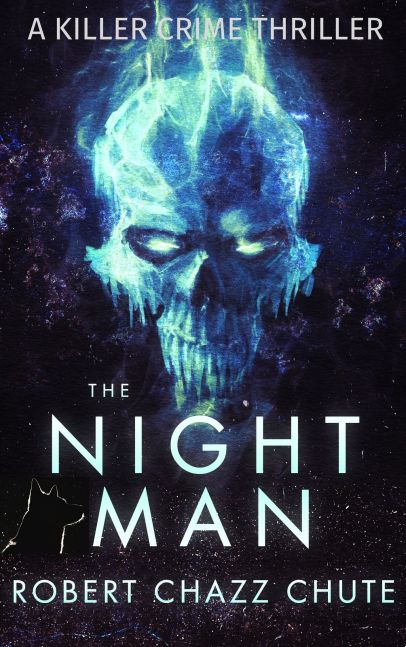
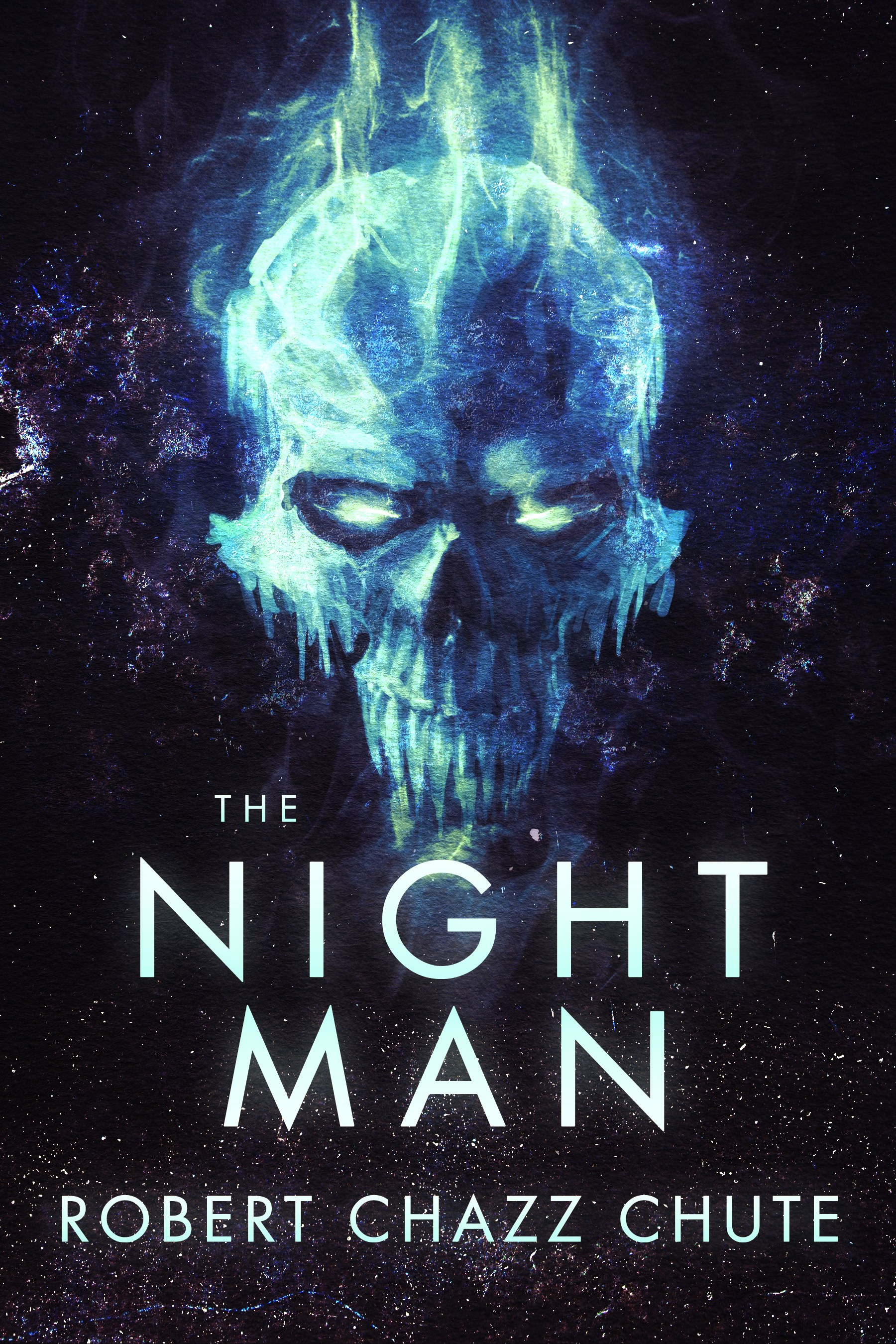
You can pick this ebook up for free today at this link: http://bit.ly/TheNightMan

Join my inner circle at AllThatChazz.com

See my books, blogs, links and podcasts.

Enter your email address to follow this blog and receive notifications of new posts by email.

Join 2,063 other subscribers