C h a z z W r i t e s . c o m

See all my books at AllThatChazz.com.

News Flash: Allan Stratton’s sales are about to go way up (even more)

Cover of "Chanda's Secrets"

Cover of Chanda's Secrets

This e-mail just in from my friend Peter:

The film Life Above All based on the lovely book Chanda’s Secrets by the
lovely Allan Stratton is on the Oscar nom short list. Fingers crossed!

Go see the movie and better yet go buy the book and see if you don’t blat before you finish!

I’ve met Allan Stratton and can confirm that he is indeed lovely. We had dinner at Garlic’s and then went to the Grand to see one of his plays. Lots of lovely all around. Yes, indeed, read the book! See the film!

For more information, follow the link from the press nugget below:

LIFE ABOVE ALL (CHANDA’S SECRETS) has made it into the Oscar finalist
pool of nine films from which the five nominees will be selected for
Best Foreign Film. Nominees announced tomorrow.
http://www.allanstratton.com
http://allanstratton.blogspot.com

Filed under: authors, links, Media, movies, Publicity & Promotion, publishing, Writers, , , , , , ,

Kevin Smith strikes out…on his own (explicit video)

Kevin Smith introduces Indie Film 2.0:

Self-distribution

“True independence isn’t making a film and selling it to some jackass.”

Kevin Smith is rejecting The System.

Writers:

What can we learn from thinking sideways?

People tell you shouldn’t go indie.

Think about what their motivations might be.

Filed under: DIY, getting it done, Media, movies, publishing, Rant, self-publishing, Writers, , , , , , , ,

Writers: Get your book done! Hack your life and crush your enemies.

Screenshot from Linux software KTouch. An imag...

Image via Wikipedia

Zip over here as quick as you can to check your keyboarding velocity.

You can write.

Are you also a fast typist?

Next question:

Does it matter?

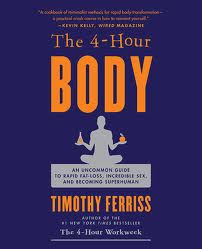
I’m currently sucking down a great book: Timothy Ferriss‘s 4-Hour Body.* In it, he mentions how short-term goals, tiny achievable targets, can help you get huge projects done. Don’t have time to write a weighty tome? That’s okay. How about committing to a page a day? Half a page? A few sentences?

4_Hour_BodyIf you can do that much, you can get your book written this year. You know why?

Because most days you won’t just write a few sentences. Once you’re over that intimidating hump of “WRITING A WHOLE BOOK” (DUH-duh-DUUUUH!) you’ll sit down. You type a few sentences. Then you’ll already be over the worst of the procrastination speed bump. Chances are, you’ll get to writing much more most of the time.

And you’ll be on your way.

How fast you type won’t matter all that much really.

What matters is that you consistently write.

Consistency is what crushes. 

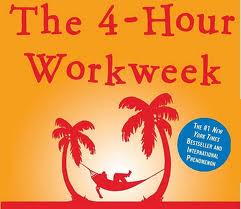
 4-Hour_Work_Week

*Once you have your body in shape with Timothy Ferriss’s health hacks, read The 4-Hour Work Week. It is doubly awesome in giving you strategies to make your work life rule (without ruling you.) Read 4-Hour Body and you’ll live longer. Do 4-Hour Work Week and you’ll live so much better.

 Related Articles

Filed under: book reviews, Books, getting it done, publishing, Writers, Writing exercise, writing tips, , , , , , , , ,

Writers: Five editing tricks and tips (plus editing marks)


1. Editing onscreen is more difficult and less accurate than printing out your manuscript and attacking it with a pencil. Unless you’re well-practiced at editing pixels, print it out.

2. As you read your manuscript, read aloud. You will pick up more problems that way and if you run out of breath, it’s probably a run-on sentence.

3. Some experts tell you to read your manuscript backwards, one word at a time, to catch more typos. Though it is true this technique works, you must have a form of OCD to act on it. This is advice editors give, but never do themselves. If you don’t believe me, try it with any book-sized manuscript. (Wait! First make sure there are no sharp objects or firearms nearby!)

4. As you edit, read slowly. Your brain is wired to skip over mistakes when you read quickly.

5. Farm it out. You need someone else’s fresh eyes on your manuscript to see the thing you are missing. Hire editors. (Here’s one!)

Filed under: authors, Books, Editing, Editors, getting it done, publishing, rules of writing, Writers, writing tips, , , , , , , , , , , ,

Writers: How to tell when your manuscript is ready

Freytag's Pyramid, which illustrates dramatic ...

Image via Wikipedia

Writing takes time and is often the most fun part of the journey. Then you rewrite and revise and revise again. Before you send your manuscript to an editor, make sure you’ve done as much as you can to clean it up.

Be aware of:

Formatting, hooking the reader, character development, story arcs, consistency of narrative, consistency of voice, differentiation of characters’ voices, typos, grammatical errors, plot logic, plot holes, pacing, three-act structure, rising action, scene length, passive voice, telling instead of showing

(gasp!)

…the list goes on and on, but you get the idea.

Make it as good as you are capable.

Once you’ve gone through however many revisions  you must endure (maybe two, maybe dozens) to write your story, go through one more time.

How will you know when you’re ready to send it off to an editor for new input?

You’ll be sick of your manuscript. (And if you have been holding on to a manuscript too long, let go of your perfectionism and the manuscript. It’s a torturous form of self-hatred.)

A manuscript is never truly finished. You could polish forever. However, when your editing goes sideways, meaning it’s not better but merely different, it’s time to send it off.


Filed under: Editing, Editors, getting it done, publishing, Writers, writing tips, , , , , , ,

Lynda Barry tells What It Is

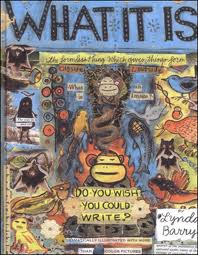
This is a book about writing like you’ve never seen:

What_It_Is

If you know Lynda Barry‘s work, you  know hers is an inimitable style. But I grok her. I had some reservations as I plucked the book from the shelf, but when somebody bares their soul in their art, you either look away embarrassed and confused or you look deeper, identify and get swallowed up, too.

Her ideas on writing prompts could get you going. Letting go to get going appeals to me. Most of all? I understand what she means by escaping into writing and getting “that floaty feeling.” If you write, you know what she means, too. If you don’t, buy What It Is, do the exercises and find your way into The Float. 

The immediate rewards of writing (slipping through “the escape hatch” as Stephen King puts it) are right now. Even as I write this, I feel a tickle in my brain. Some happy dopamine is spreading somewhere through my skull as I type this. I’m a junkie.

You may or not get published, but there’s more to it than that, isn’t there?

Some people don’t get that, so I ask them this: “Did you ever play tennis or run or swim? Did you keep doing it even though you knew you weren’t going to end up at Wimbledon, the Boston Marathon or the Olympics?”

Filed under: authors, book reviews, Books, publishing, Writers, Writing exercise, writing tips, , , , , ,

Writers: The Secret to Writing a Bestseller

bestseller_logo

Image via Wikipedia

The only thing you can do to ensure

you come at all close to writing a bestseller is:

Write your book!

After that? I hate to disappoint you, but there is no secret.

There is information you should consider, however, like acting on the things you can affect (factors) and refraining from making yourself crazy trying to change things that have a negative effect on you (variables.) 

Don’t focus on variables.

Focus on factors you can control:

1. Write the best book you can.

2. Build your audience (Teach, review, tweet, blog, network, learn, connect etc.,…)

3. Get your book to market (trad or indie publishing—that’s a different post.)

4. Do it again.

You’re going to want to come back to and act on 1 – 4 again and again.

The rest is explication.

I can already hear howls of protest about the title of this post. However, if you get an email from someone claiming they have insider secrets to making your book an instant bestseller, you can safely move on. There are some wacky claims out there, so let’s unpack and debunk.

First off, there are far too many variables that are out of your hands for any one person to direct you to bestsellerdom. In the publishing process there are a lot of variables. All of them have to fall into place for your book to be sold, but even if that were to happen, there are no guarantees your book will climb the charts…even if it’s good.

There are a lot of good books. Sadly, that doesn’t mean we’ve heard of them.

Consider Chuck Palahniuk‘s Fight Club and Choke. They both became movies, but just before it was announced Brad Pitt was going to do the Fight Club movie, I saw it in the remainder bin. They got whipped out of there when his book got the movie deal and the newest hire had to peel off all those stickers that read: Marked Down. The author wrote a great book in Fight Club, but he was headed back to anonymity before the lucky break. (He’s proved his worth since over and over, too; he’s prolific and, weirdly, I even saw a major review that didn’t even mention Fight Club.)

His case is a perfect example of something falling into place that was totally out of the author’s control. If Antonio Sabato Junior had played the role instead of Tyler Durden and Lindsay Lohan had played Marla instead of Helena Bonham-Carter, you would never have heard of Palahniuk’s books (because that’s a lot of stink to overcome.) Antonio was good in the few minutes he was in The Big Hit, but generally, if you see a movie poster with Lindsay and Antonio, you don’t think,  “Ooh, gotta see that!”

The most important reason you can’t just follow set rules and write a bestseller is that what William Goldman said about Hollywood also applies to publishing. “Nobody knows anything.”
That’s why there are sleeper hits. I wandered into Fargo and Highlander, didn’t know what to expect, and was blown away. Margaret Atwood snuck up and surprised me with The Year of the Flood—okay, maybe other people expected great things from Atwood every time, but that’s the book that turned me around on that author. (Can’t wait for the third in the series!)

When manuscripts go up for auction to big publishing houses, acquiring editors bid because they want a hit. Even when books go for big money, that’s no guarantee of great success. In fact, if the author doesn’t earn out that big advance, it’s a very public failure. That blemish on their record hurts authors when they try to sell their next book.

It’s a subjective business. If agents and acquiring editors really knew much beyond their own taste, then every book they bought would sell very well. Look at the bestseller lists. There are only so many spots in the top ten lists. Then look at the book store shelves packed with midlist titles. That’s a lot of books, and those are just the books the stores stock. There are many more books published than ever make it to bookshelves, yet somebody thought each book would earn out its advance.

Nobody’s betting on losers on purpose. The bestsellers are the frontlist. The books that aren’t expected to do as well are the midlist. Midlist authors are still generally expected to earn out their advance, however. Remember: it’s business, not charity.

Hm. Somebody’s going to object that there are exceptions (and, of course, there always are. Can we say much at all without some generalizing?) So I must admit I did know a publisher who bet on losers pretty much exclusively. Maybe he was noble and doing it only for the art (and government grants) or maybe his judgement was just galactically poor. He’s out of business now so no more art. (Last parenthetical, I promise: And if you publish poetry, nothing is frontlist or midlist because no one pubishes poetry expecting to make money.)

Back to the book store: See all those dogs in the remainder bin? Somewhere, someone bet a lot that each one of those books would sell really well.

Some books aren’t a surprise when they do well, but for those books, that’s not the game anymore. When a publisher buys a Sarah Palin book, they aren’t so concerned whether it will sell. Their concern with a book like that is, how much and how fast will it meet higher expectations and sell more? When a book succeeds, the publisher has to time the next printing right and gauge how much promotional money should go into the publicity campaign to push it as far as it can profitably burn.

Publishers concentrate their limited resources on the few books they think will have a shot at bestsellerdom because they will take a loss on most of their catalogue. Some don’t believe it and authors lament it, but publishing is a business. And it’s a business with very small margins.  

Even when publishers get books on the shelf, it’s not even over then. The sell-through is what’s important. Unlike any other business, publishing’s tradition—blame Simon & Schuster—is that books that don’t sell may be returned for credit. It’s a tradition that may eventually be dropped, especially when there are fewer book stores around.

I’m dying here! Give me some good news, Chazz!

Okay. The good news is that when you get rejected, you can take comfort in the knowledge that nobody knows anything. Maybe the guy who rejected you also rejected JK Rowling, so what do they really know anyway? Maybe you are destined to be a sleeper hit.

Do better than that, Chazz! I said I’m dying!

Sorry. How about this? Contests, bestseller lists, critics and reviews might help an unknown author, but it’s really word of mouth that makes a book popular. (Or a big movie deal.) The antidote to your angst is to keep writing and pitching. Find your audience and put yourself out there to be found.

How?

Go back to Factors 1 -4 at the top of this post.

Better? Now go write.

Filed under: authors, Books, Editors, getting it done, links, Poetry, publishing, Rant, Rejection, rules of writing, Writers, writing tips, , , , ,

Writers: Mickey Spillane’s Rule for Selling Books

本の構造

Image via Wikipedia

Mickey Spillane sold a lot of books. Here’s how:

“The first page sells the book,” he said. “The last page sells the next book.”

I was reminded of Spillane’s axiom as I finished the last page of Mr. Monster by Dan Wells. I’m not going to spoil it for you. You’re just going to have to go read it. That book, and his first in the series, I Am Not a Serial Killer, are sometimes harrowing reads. These are books where the author takes risks. John Cleaver is a protagonist you won’t like, but you feel for him, too.

Dan Wells has turned his protagonist, a young sociopath with a dangerous mind, into somebody I’ll follow. I’ll follow the series. Dan Wells is going to sell a lot of books off a character who will make you very uncomfortable.

It was the last line that got me. The really good ones stick with you. The end of Fight Club is a great scene with a neat twist. And William Goldman? He’s the master of the last line that stick a knife between your ribs and gives the blade a half-twist. Goldman’s trick is to make readers comfortable, letting them think they know what will happen next, and then sucker punching them. At the end of Goldman’s The Color of Light I actually threw the book across the room because just when I thought I was safely in the dénouement, he hit me again. 

Lots of writing advice is about baiting the hook on the first page. On the last page, make sure you get the barbs in deep for the next one, too.

Filed under: authors, book reviews, Horror, publishing, Writers, writing tips, , , , , , , , ,

Writers: The trick to keeping your resolution

Goal

Image via Wikipedia

We make resolutions to diet when we are full. I resolved to diet many times before I got into the right mindset to lose 40 pounds. We depend on excitement, instant gratification and short-term thinking, which is why we got fat in the first place. Much the same is true with that resolution of yours to write your book this year.

You don’t need short-term thinking, but you do need short-term focus. You need long-term planning and short-term action. Each day you work toward your goal is a little course correction. Just as you drive and make tiny movements of the steering wheel along the way, each time you don’t get distracted and write another 500 words instead is a step toward finishing your book.

Sure, we can make big announcements. “This, I swear by all that is holy, is the year I will…” But it’s the little things you do, the day-to-day commitments to your goal, to yourself, that will make the difference. 

Why did your past resolutions fail? Think about it. What happened? Was your goal clear? Did you write your goal down? Did you tell somebody you trust to help you remain accountable? Did you track your progress? Did you make a game of it? Did you set up small rewards along the way? Did you set up a bet or a competition with a colleague to spur you on? Are you feeding your goals with information that helps you? Are you cautious to protect your time from short-term rewards that are really sabotaging you? (And if so, spend some time working out why you’re okay with settling for less.)

These are all useful strategies, but it comes back to the reaching your goal one day at a time, sometimes one minute at a time. Keep your resolution. Resolution means focus.

Too often we suffer from JOM Syndrome. JOM means Just One More.

Just one more cupcake. Just one more day off the diet. Just one more day without writing. Just one more day before I really start. I deserve a break. I deserve something less than my ultimate goal.

Translation:

I deserve to earn the reward without putting in the work.

Real-life answer:

No, you don’t.

Forget your grand pronouncements while your energy is high and your belly’s full. Instead, do what you can today to reach your goal (whatever it is.) Forget your entitlements. Do the work and no whining is allowed. If whining worked, you’d be done by now.

That sounds tough, but it will get better. You know why? Because the toughest part about writing is simply to begin. After you get started, you’ll be okay. You just have to keep on starting. Again and again and again, every day.

When you fail, begin again.

When you give up, begin again.

People will criticize your writing. So what? Don’t let them say you don’t write. Writers write. If you weren’t a writer, you wouldn’t have come to the end of this post.

Filed under: Books, getting it done, publishing, Rant, Writers, writing tips, , , , , , , ,

Writers: On sending your stuff

J. K. Rowling, after receiving an honorary deg...

Image via Wikipedia


To the right is a picture of JK Rowling. Notice that she is not me. As with Highlander, “There can be only one!” I’m sorry this has become necessary to point out.

One of the posts here is a neat spreadsheet that shows how JK Rowling plotted out Harry Potter. Recently I got an email with several errors addressing me as JK Rowling that asked me to email the writer so I could read some of her work. Billionaire authors don’t do that much. In fact, as presented, I wouldn’t do it, either.

I’d feel bad about pointing out this error so publicly, but it’s apparent the writer is not someone who reads this blog. Please read the blog (and also www.chazzwrites.vpweb.ca). When someone jumps from my bio page to ask about my bio, it just feels like spam and carelessness. Writers are detail-oriented and email, no matter how casual you want to appear, should reflect that. (In fact, I’ve sometimes gone through several drafts on queries to make them appear breezy and casual.) Whether you’re sending a manuscript, a query or a short email, you must pay attention to the details.

I know what you’re thinking. You already know this. Okay, but obviously many people still don’t. One writer told me she had already written several books. That’s a good sign. However, in one short paragraph, she made seven errors. That went into my evaluation of how much I could help her right away. I decided editing her book would be time and cost-prohibitive for me and for her.

When I take on a project, I have to take into account how much time I will have to invest in the book. From that short paragraph, I had to conclude that, were I to take her on, the job would be rewriting, not editing and proofing. When it starts out that bad, it doesn’t make me confident about larger issues like attention to detail, story arcs, characterizations and narrative logic and consistency. I have ghosted a couple texts. Writing and rewriting are not out of the question, but I have to know the scale of what the job requires going in (or I may as well be working behind a counter wearing a paper hat and slinging fries.)

Does your project have to be perfect for me to work on it? Of course not. If it were perfect you wouldn’t need anyone (and you’d be god.) I’m not being nitpicky or cranky. It’s just that when I get a query, I’m looking for signs the author is serious. If you’re asking me to take your work more seriously than you do, that’s a bad sign.

Queries and sample chapters give you an idea of how I work and they tell me how much time your book will take up. That’s one of the main variables in determining my rate, so please, don’t shoot off an email—to me or any other editor—before reading what you wrote at least once.

I’m trying to end on a positive note, so I’ll add that I just took on an editing project that excites me. The author’s serious, nice and I can’t wait to dig into her book and take it from great to fantastic. In fact, the antidote to amateurish folks is waiting on my desk. I’m off to work on the manuscript.

Filed under: authors, blogs & blogging, Editing, Editors, getting it done, links, Rant, Rejection, What about Chazz?, Writers, writing tips, , , , , , , , , ,

Bestseller with over 1,000 reviews!
Winner of the North Street Book Prize, Reader's Favorite, the
Literary Titan Award, the Hollywood Book Festival, and the
New York Book Festival.

http://mybook.to/OurZombieHours
A NEW ZOMBIE ANTHOLOGY

Winner of Writer's Digest's 2014 Honorable Mention in Self-published Ebook Awards in Genre

The first 81 lessons to get your Buffy on

More lessons to help you survive Armageddon

"You will laugh your ass off!" ~ Maxwell Cynn, author of Cybergrrl

Available now!

Fast-paced terror, new threats, more twists.

An autistic boy versus our world in free fall

Suspense to melt your face and play with your brain.

Action like a Guy Ritchie film. Funny like Woody Allen when he was funny.

Jesus: Sexier and even more addicted to love.

You can pick this ebook up for free today at this link: http://bit.ly/TheNightMan

Join my inner circle at AllThatChazz.com

See my books, blogs, links and podcasts.

Enter your email address to follow this blog and receive notifications of new posts by email.

Join 2,063 other subscribers