C h a z z W r i t e s . c o m

See all my books at AllThatChazz.com.

Kurt Vonnegut’s Short Story Advice

Filed under: short stories, writing tips,

The Short Story: Find the Right Ending

Freytag's Pyramid, which illustrates dramatic ...

Image via Wikipedia

A novel is a long journey with many plot developments. In short stories, the major change is in character. It’s up to you to make the ending a satisfying, surprising and yet inevitable revelation.

But sometimes we get stuck. The story unfolds, but we aren’t sure how to end it correctly. When you get stuck for a last paragraph, I suggest you look to your first paragraph. Your ending’s seed often grows from the opening.

The right opening is intriguing, informative, gives a sense of place and introduces the problem. You may think of your closing as a callback (as comedians label a bit, perhaps a finisher, that recalls an earlier premise.) After the last word, ask yourself how your reader will interpret the story. How did the character change? What was learned (without being too obvious or moralistic)?

Short stories shouldn’t be too obvious in their endings, of course, but you have to find a balance between showing a situation and telling your reader what to think. Too often, in an effort to be subtle, writers veer off into the obscure. Sometimes people write arty endings. Some teachers  even seem to encourage that. I don’t.

As a writer, a mysterious ending makes me think the short story author is trying to distract me from their muddled thinking. I am not distracted by flowery words that say nothing. I’m irritated by that. As a readers, unclear conclusions feel like camouflage for a place where the writer stopped the story rather than ending it.

Opaque writing is unsatisfying. You can be subtle without leaving the reader stunned into incomprehension. Good short stories, with a proper beginning, have a clear ending. Give it an interesting middle and you have a story.

Tall orders, I know. But that’s what it takes. I’m struggling with a short story ending now. However, I’m confident the solution to that tricky last paragraph will be found in the first.

Filed under: My fiction, short stories, writing tips, , , , , ,

Writers & Editors: Top 10 Editorial Considerations

 Here’s the follow-up from yesterday’s post on appropriate use of tense:

Editing considerations (as I revised my short story, The Dangerous Kind)Chicago-Manual-of-Style

1. One component I took care to delete were instances where the narrator says things like “I was surprised,” or when he made blatant judgements about his brother. This is overwriting and it’s easy to fall into. You want to give the readers enough to paint a picture but not so much that they can’t draw their own conclusions.

2. Try to avoid clichéd caricature. Don’t tell. Show character’s traits through their actions and dialogue.

3. Give your villains depth, so though the narrator of this story is the protagonist, he’s capable of evil and his mean big brother isn’t all bad, either.

4. This is a long short story at 8,500 words. The details are what’s going to draw readers into the slow build as the narrator discovers the evil of which he is capable. Show special knowledge along the way the reader might not know or detail that deepens the experience.  (For instance, on the hunting trip, the reader learns or experiences details about the feel of moss underfoot, the sound of a rifle bolt slamming home, buck fever and what it feels like to be carried in your mother’s arms.)

 5. Dialogue should advance plot, deepen character and, preferably, do so memorably. If the dialogue is neither of these things, it can often be summarized in narrative without quotes around it.

 6. Revising means “seeing anew.” Evaluate what the story is really about. At first I kept present tense because I wanted to maintain mystery as to whether the narrator would survive the story (See yesterday’s post below.) As I unearthed the story, the plot took a turn away from that storyline. Instead, the stakes are not whether the narrator will survive, but will he allow his brother to die, get the inheritance and escape rural Maine for the bright lights of New York? Once the core of the story changed, past tense opened up to me so I could achieve a more subtle and nuanced story than I had originally intended. That’s okay for a short story. For a longer piece of fiction I’d do more planning, plotting and outlining ahead of time so as not to lose too much time backing and filling.

7. Vary sentence length and sentence construction.

 8. Cut where you can without becoming terse or overwriting.

 9. The most common failure of overwriting is to describe character features in detail. Don’t tell me in detail what anybody’s wearing and definitely avoid the trope of getting a character to describe him or herself in a mirror.

 10. Dialogue should sound real, but without the ums and ahs of a transcript. Avoid dialect where possible as accents slow(and annoy readers.) Read your dialogue aloud to determine if you can believe someone saying your dialogue believably.

 Below is the first-person present-tense excerpt from The Dangerous Kind and then the revision.

Compare these excerpts…and please ignore the formatting. That’s a text to screen issue 🙂

 …I ask Jason if he cleaned the barrel. He shrugs and says he can still smell the gun oil so it is probably okay. He slings the rifle into the crook of his elbow and walks off toward the woods. I carry the pack, heavy with Jason’s beer. He does not have a hunting license. “Shouldn’t need one when you can get to the woods from your own back step.”

Halloween was the warmest I have ever known in Poeticule Bay, but this morning’s November chill cuts at my lungs. The forest goes quiet as we step into the tree line, as if the birds hear Jason coming and know they should be afraid. A squirrel rattles an alarm and skitters away as we push through a weave of dogwood.

 The glass bottles give muffled clinks as I walk. We hike to the old logging road where trees bow and touch overhead. Grass fills the middle so high, the trail looks like two narrow paths, as if parallel by coincidence.

Jason puts a finger to his lips. Staying quiet is all Jason knows about hunting. I try to tread carefully so the bottles don’t knock against each other. When I start to fall behind, my brother curses me for falling behind.

The sun burns off the gray cloud cover. The trees cast another forest of shadows, adding another thickness and plane to the landscape. The pack’s straps pull at my shoulders. Despite the sun and the cold air’s green taste, my footsteps become heavier as we push on. The sweat trapped under the backpack sucks my shirt to my skin.

We walk another half hour and salt sweat burns my eyes before I ramp up the courage to complain. My breathing is heavy. “We’re going too far, Jason.”

Revision:

…I asked Jason if he cleaned the barrel. He shrugged and said he could still smell the gun oil so it’s  probably okay. He slung the rifle into the crook of his elbow and stalked off toward the woods. I carried the pack, heavy with Jason’s beer. He doesn’t have a hunting license. “Shouldn’t need one when you can get to the woods from your own back step.”

            That Halloween had been the warmest I have ever known in Poeticule Bay, but this morning’s November chill cut at my lungs. The forest went  quiet as we stepped into the tree line, as if the birds heard  Jason coming and knew they should be afraid. A squirrel rattled an alarm and skittered away as we pushed through a weave of dogwood.

 The glass bottles gave  muffled clinks as I walked. We hiked to the old logging road where trees bowed to touch overhead. Grass filled the middle so high, the trail looked  like two narrow paths, as if parallel by coincidence.

 Jason put  a finger to his lips. Staying quiet is all Jason knew  about hunting. I tried  to tread carefully so the bottles wouldn’t knock against each other. When I started  to fall behind, my brother cursed  me for falling behind.

The sun burned  off the gray cloud cover. The trees cast another forest of shadows, adding another thickness and plane to the landscape. The pack’s straps pulled  at my shoulders. Despite the sun and the cold air’s green taste, my footsteps became  heavier. The sweat trapped under the backpack sucked  my shirt to my skin.

 We walk another half hour and salt sweat burns my eyes before I ramp up the courage to complain. My breathing heavy, I said,“We’re going too far, Jason.”

There are a lot of small changes here. Aside from changing the tense, there are a few other tactical changes worth noting. There’s a lot of walking through the woods in this story, so where appropriate I looked for more engaging verbs than “walking.” Instead I used “hiking” and “stalked.” Don’t touch your thesaurus , though. That’s a sign you’ve reached too far.

Careful use of uncommon verbs (like “skitters”) can be used to light the reader’s imagination as long as you don’t go over the top. If you overuse uncommon verbs, it’s usually for comedic effect. In the larger document I found other economies which I condensed into today’s Top 10 list.


 Related Articles

Filed under: Editing, manuscript evaluation, My fiction, short stories, writing tips, , , , ,

Writers: On Editing Yourself


RULE #1: Writers must have a product to sell.

RULE#2: Writers must keep submitting their work until someone recognizes their genius.

I repeat these rules to remind myself to put them into practice. I wrote a (long) short story that has bugged me. I did submit this piece to One Story because the length was suitable for them. Unfortunately, they didn’t bite (no hard feelings.) As I reviewed the story, I began to figure out why it wasn’t fully baked yet. I realized I needed to do another revision. 

In editing myself, I hadn’t been as objective as I can be with others. I found some sentence constructions awkward. I reworked the opening paragraph to amp up the mystery and intrigue. I added some here and there where characters needed fleshing out. I cut some sentences down for economy and easier reading.

Editing yourself is difficult (Yes! Even for people who are also editors!) If you aren’t going to hire someone to help you with writing issues, the second-best option is time. Put it in a drawer and give yourself time to fall in love with the next project. That way, when you pull out the manuscript again, it’s kind of like being clear on the faults that plagued your ex-girlfriend or ex-boyfriend.

I have found new places to submit the piece and this time I’m submitting with more confidence, not with the giddy frisson of a drunk at a Vegas craps table.

Today’s book recommendation:

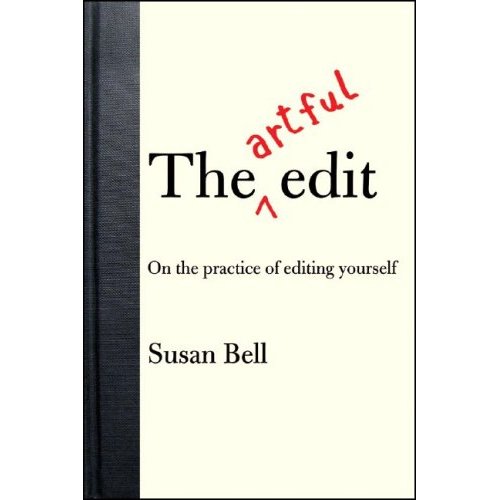
The Artful Edit by Susan Bell.

Filed under: Books, Editors, My fiction, rules of writing, short stories, , , , ,

End of the Line

End of the Line won 3rd place in The Toronto Star Annual Short Story Contest and was published in August 2008. For your entertainment, a tale of torture and redemption… 

            “You must listen very carefully,” she said.

            “Uh-huh,” I said as I flipped through her file. Every call from a collection agent is meant to accomplish two things: squeeze blood from coconuts and gather more information to squeeze more blood from coconuts. The rule is we can’t call more than once a week and we stick to that rule as long as we’re getting somewhere. We rotate agents so the deadbeats have to tell their sad stories to a new caller every time. Talking about outstanding debt over and over compounds the target’s humiliation. I wanted to be an actor but I’ve been paying my bills by talking to people who don’t pay their bills. My horror, shock and surprise at their failure to pay sounds equally fresh with each call so I guess I act for a living after all.

“You are not listening,” Dr. Papua said.

I tuned in. “Oh? Have you said anything that changes the fact that you owe $382.51?” Never say “about $380” or “about $400.” Always be specific about their debt. It squeezes.

“I do not owe it. I told your colleagues to send me a copy of the original receipt. All you sent me was a letter saying I owed the money but no proof, not even what the purchase was supposed to be. I could make a lot of money too if I just sent out random bills.”

 “It was a Taunton’s account.”

“Those stores have been out of business for years and you have no actual record. All you have is my name and the time to harass me.”

“You need to at least send us a goodwill payment to keep this from going to court and so I can help you keep your credit rating.” Always say “you need to” not “I need you to.” Everyone is terrified of being sued and paying a lawyer, especially for such a relatively small debt. A lawyer would charge her more per hour than it costs to pay me to go away. “We need to clear this up today.” Always say “today” not “soon.” “Soon” means never. “Today” means now.

“This fictional debt is almost ten years old. The statute of limitations on debt in Ontario is six years. You have no case.”

I let my heavy practiced sigh drop on her and gave her a moment of silence. Lay a pregnant pause on most people and they’ll rush to fill the empty space. The longer they stay on the line, the closer you are to getting the money. She didn’t take the bait though. “Even if you don’t have a legal obligation to pay your debt, you do have a moral obligation,” I say finally.

I heard—or felt—something change then. I don’t remember there being static on the line but she suddenly came through so clearly I fought the stupid urge to glance over my shoulder. It was as if she was standing over me.

“A moral obligation?” she said. “You have made a tactical error.”

I smiled. In a moment she would be screaming into the phone and telling me she’d get me fired. The screamers were the reason we didn’t use headsets. It’s quicker to hold a phone receiver away from your ear than to snatch off a headset. She would hang up and stew for a week and one of us would call her again. Soon she’d send us the money. In a moment I would be skipping on to my next call and the next and the next.

But she didn’t scream and my smile dropped away. “Now you need to listen to me very carefully. Listen to me as if your life depends on everything I say.” Her tone was cool and I noticed for the first time that her accent sounded vaguely European, but not Zsa Zsa identifiable. She pronounced words in a way that said she formed each one with great care, as if each had to be dealt out letter by letter, syllable by syllable in a Morse Code of spoken language. “Are you ready?”

I held the receiver away from my ear. I thought she was going to blow a whistle into the phone or something. An old collection agent told me the worst is getting hit through the phone with one of those air horns fans use at football games. It damages your hearing it’s so bad. Then I realized she really was waiting for me to tell her I was ready.

 “What?”

“No matter what happens in the next few minutes, you will not hang up.”

“I’m not going anywhere.”

“You are correct. You are not going anywhere in life, either.” She spoke slowly and clearly as if I was a dull child. “No matter what I say, you will not let go of the phone.” She hit the word “not” hard and I thought of the sharp blade of a shovel striking bone.

My hand tightened around the receiver. I shoved the handset to the side of my head, squashing my ear. I took a sharp breath in but she headed me off. “You will not interrupt me and you will not yell or ask anyone for help. Do you understand?”

“Sure,” I tried to sound casual but didn’t make it. “Where is this going? This doesn’t help you solve your problem.”

“Your feet and legs cannot move.”

 I almost laughed at her but all I had was a gasp. Somebody tells you your legs don’t work and without even thinking about it you move your legs to show them they are ridiculous. My feet were cemented to the floor. I couldn’t even wiggle my legs the least bit sideways.

My head suddenly felt hot. I could hear the buzz of the other call center workers but I couldn’t see anyone without shoving my chair way back. I craned for a glimpse of my shift supervisor stalking by. No one.

“You will not try to get anyone’s attention or assistance, Mr. Gayed.” Had I told her my last name? No, I never tell the deadbeats my real last name. She was worming into my brain. “You will answer my questions truthfully and without obfuscation. For your benefit you will comply.”

“Yes,” I said. What did she mean, for my benefit?

“You don’t care for people very much, do you?” she said.

“No.” I said, a little surprised.

“That is unfortunate. There is an axiom. If everyone you meet is an idiot, it is you!” Her laughter was glass breaking.

 “I don’t have to take this,” I said.

“Yes, you do. You want to hang up, I forbid it. You want to move your legs but the nerves and muscles aren’t speaking with each other right now. You want to call out, but I forbid it.”

All she said was true. I was surrounded by people making their calls but there was no one to rip the thin gray wire out of the wall and free me. “You witch you—!“

“I do not approve of name-calling, Mr. Gayed.”

“Why not just ‘forbid’ me? You’re deeply into that. I notice you never use contractions. Does that make you feel like you’re a higher class of deadbeat?”

“Mr. Gayed. You sound articulate and functionally intelligent. I have already paralyzed your feet and legs. I wonder why you think it would be difficult for me to shut down your diaphragm?” My jaw moved more but no sound came out. My hand cramped around the receiver.

She made a tsk sound of impatience. “Stop breathing.”

With my free hand I grabbed at my throat. Useless. I looked down and saw that my torso was not rising and falling. The realization seemed to ignite fire in my lungs. I looked at my desk clock and watched the second hand sweep around half the face. I had not taken a deep breath before my breathing stopped and the air hunger was beyond a burning need. Need is not a big enough word. Black spots appeared at the edge of my vision and then they began to grow larger. Would the paramedics be able to move me when they arrived? Would firefighters have to saw me off at the ankles? Would they take my body to the morgue and leave my feet in my shoes forever glued to the Berber carpet? I pitched forward from the waist and my head slammed into the desk.

“Start breathing,” she said.

My first gasp was a great heave and it was several minutes before my breathing slowed. The bridge of my nose was bloody. It stung like bees. I decided not to call Dr. Papua any more names. The air tasted cold and sweet.

“Please let me hang up. I won’t bother you again.”

“I am fascinated with the workings of the body. When I studied anatomy I was awed by its complexity. I thought its design was proof that there is a god.”

Please don’t do anything.”

“Then I studied pathology. When you see all that can go wrong with this incredible organic machine it makes one think there must surely be a devil. Do you know what the Circle of Willis is?”

“No.”

“It is a little circle of blood vessels at the top of your brain. It is a very common site for strokes…your heart is starting to pound much faster now.”

I could feel the gallop in my chest instantly and I was breathing harder.

“The hand that is not holding the phone to your ear is going numb.”

It was. “I’m just doing my job. Look, I’m sorry!”

 “Your job compounds misery. You harass people. How many files do you have on your desk which are dead cases like mine?”

“I-I’m sorry…what do you mean by dead cases?”

“Those which are more than six years old.”

“I have all the old Taunton’s files.”

 “Ah, yes, of course. You are the ‘go to guy’ of the office, are you not?” She used  the expression as if the words had a strange taste.

“Yes.” The numb feeling was creeping up my forearm. I gave it a tentative whack on the edge of the desk. It felt like my arm was asleep, only the near border of emptiness was crawling up my arm toward my shoulder.

“A stroke can be terribly disabling and disfiguring. It can twist one side of your face or just kill you.” I wet my pants then, not in a spasmodic squirt I could try to hold back but a long hot coursing stream down my immobile legs. “If you were to live but could not take care of yourself, who would help you?”

The numbness was still spreading and tears began to slide down my cheeks. “My mother would help.”

There was a long terrible pause. The minute hand swept around twice before she spoke again. I couldn’t hear her breath or any ambient sounds. It was as if her end of the line was in some underground space lined with cotton. I couldn’t feel the right side of my face. “Hello?”

 “Are you a disappointment to your mother?”

 “Of course I am, Dr. Papua. No kid wants to grow up to be a bill collector. No parent dreams that.”

“So, you are disappointed in yourself, as well?”

“You know you are a sadist, right?”

Her laughter trilled again and a chill went through me that started with the cooling urine down my legs and crawled with spidery feet up my spine. Spine-tingling is not an empty cliché. It’s real. I know that now.

“You dare to offend me. You still have some dignity. You may be redeemable.”

A little flame of hope sparked that she would, just and finally, let me go. Dr. Papua was quick to douse my little fire. “I let your predecessors live. That strategy does not seem to be enough to stop these calls from your firm. You know I can do more than simply stop your heart. I could instruct you to put a baby in an oven and broil it for your dinner if I was so inclined. If you fail me, you fail yourself. The world is full of phones.”

“Y-yes.” I would have grimaced but my face wasn’t under my control anymore. Were straining blood vessels in my brain about to burst? Had they already? She talked and all I could do was make urgent agreeing sounds from deep in my throat. When she was done she told me to close my eyes and count backwards from ten. I did so, though from ten to five I couldn’t speak and the numbers were only in my head like the opening of an eight millimeter film counting down. At one the line went dead. No click. No dial tone.

I lurched backwards and yanked the phone away from my burning ear. A long vowel sound burst from me as I shot out of the chair. People were suddenly all around me asking questions and telling me to sit down but it was all a meaningless buzz. I swept up the files and hugged them as I strode to the door.

Engells, my supervisor, appeared in front of me. At first he was perplexed and then he tried to hold me back and grab the files. I pushed him away. He leapt at me and I pushed him down. I had to get out. As the door closed behind me I glanced back to see Engells still on the floor staring after me with bug eyes.

I burned Dr. Papua’s file in a steel drum behind my apartment building. Then I burned the rest of the files. I watched the paper curl in the heat and turn to ashes. My cell phone went in next. I stood back from the drum and watched. I don’t know for how long. The cell phone battery exploded with a tinny bang which woke me to the night and the cold that was gathering its strength around me. “It’s time to come in out of the dark,” I said aloud to no one. I climbed the stairs to my apartment, feeling lighter with each step. Tomorrow I would begin again, I decided. I’d get my acting career going. This time for sure.

After I ripped it off the kitchen wall, I shattered the phone on the floor. I kept kicking until all the phone’s components skittered across the linoleum in small jagged pieces. I put on clean pants, sat on the couch and listened to my heartbeat. The pounding in my temples finally began to slow. I took a deep breath and the air was new. A hot tear slipped down my cheek. I was so grateful for my breath, as if I had finally surfaced after being underwater a long, long time.

I am still grateful. Dr. Circe Papua, wherever you are, thank you.

Robert Chute is a freelance writer, editor and existential horrorist with a background in newspapers and book publishing. End of the Line is from his short story collection Despair is a Vowel Sound. Copyright © Robert Chute, 2008. All rights reserved.
Filed under: My fiction, short stories, , , ,

Where does the Darkness Come From?

Short Answer:

The darkness comes from everywhere.

Longer Answer:

Tales of horror arrive in the newspaper every day. This week a toddler was stuck in a high chair for six days while her dead mother lay on the floor in front of her. The child managed to survive because she could reach food from where she sat. The mother had suffered a chronic illness. When a child services worker rang the bell, no one answered but she could hear the child crying, she called police. They broke down the door to find a body beginning to decay and a terrified child. 

When asked by an interviewer, “Where does the darkness come from?” these were my answers. Of course, we all have terrible childhoods and can draw on the thousand arrows flesh is heir to, but when done right, fiction can be the valve that lets off pressure. Fiction can make sense in a world that is plotless (though all stories that end with “happily ever after” are conveniently ended before the going gets nasty.)

I said to my wife (it’s funny but I’m dead serious, too): This is our happily ever after now. But make no mistake, this will all end horribly…unless a carbon monoxide leak kills us all in our sleep, of course.

Fiction is the lie that tells the truth. Humour can do that, too. There’s an element in the question that’s subtle and insulting, also. I wrote a short story that would convince you I’ve drowned at least one person in a bathtub. When people reacted to me with alarm, I smiled and pointed out, “It is fiction.” Perhaps they’re disturbed that I give these matters so much thought.

~Mr. Sunshine strikes again

Filed under: Rant, short stories, writing tips, , ,

Slap (on) a happy face

I just read some advice for short story writers (from The Writer’s Handbook) where a rather harsh critic slams stories where the protagonist is an unlikeable character and bad things happen to him or her.

Uh-oh. In my stories, that’s my thing. I think just about anyone will disappoint you if you get to know them well enough. That’s my worldview. To be successful by this critic’s estimation, I’m going to need a brain transplant. But I gotta be me.

When a short story of mine won an award, lots of people focussed on the torture. However, the reason it won was that in the last sentence there was a twist of transcendence. It wasn’t about torture. It was about the second chance. Read it here.

 I got a reply from another judge (different contest, same story) who was very dismissive. He seemed not to have read it very carefully, perhaps deciding early on it wasn’t something he would care for so he wrote it off quickly. For instance he said, “This doesn’t make sense. Why would a collection agency pursue dead files?” Because I made it clear the bill collector is a bad guy. If I spelled it out more, they’d call me pedantic. Sometimes you can’t win.

I’ll have to ignore that particular advice from The Writer’s Handbook I guess. I’ll keep on writing about flawed people and I’ll keep doing bad things to them. (Flawed characters make some of the best characters. Examples? Plenty, but off the top of my head, Breaking Bad, Dexter and Battlestar Galactica and Portnoy’s Complaint.)

Filed under: manuscript evaluation, short stories, writing contests, , ,

Bestseller with over 1,000 reviews!
Winner of the North Street Book Prize, Reader's Favorite, the
Literary Titan Award, the Hollywood Book Festival, and the
New York Book Festival.

http://mybook.to/OurZombieHours
A NEW ZOMBIE ANTHOLOGY

Winner of Writer's Digest's 2014 Honorable Mention in Self-published Ebook Awards in Genre

The first 81 lessons to get your Buffy on

More lessons to help you survive Armageddon

"You will laugh your ass off!" ~ Maxwell Cynn, author of Cybergrrl

Available now!

Fast-paced terror, new threats, more twists.

An autistic boy versus our world in free fall

Suspense to melt your face and play with your brain.

Action like a Guy Ritchie film. Funny like Woody Allen when he was funny.

Jesus: Sexier and even more addicted to love.

You can pick this ebook up for free today at this link: http://bit.ly/TheNightMan

Join my inner circle at AllThatChazz.com

See my books, blogs, links and podcasts.

Enter your email address to follow this blog and receive notifications of new posts by email.

Join 2,061 other subscribers