C h a z z W r i t e s . c o m

See all my books at AllThatChazz.com.

(Top 10 Things +1) Writers Love:

1. libraries and bookstores. Look at all those dead trees! Look at all those rotten books! Your book will be so much better. Look at all those shelves for your great books. Your books will one day share shelf space with your literary heroes and you will all enter the pantheon. Libraries and bookstores are harbingers of potential, omens of destiny, and, not incidentally, where you get #2.

2. books. Your shelves creak as you add even more books. Your iPod is full. Your heaven is a place filled with books and time to enjoy them, to savor them, to devour them. You prefer books to people, though people do have their place (i.e. they can give you a good book.) A good book is sex that lasts longer.

3. life. It’s where you get your ideas. Life is the thing you absorb so you can process it, chew and hold your ideas up against it to make your fantasy seem all the more real. Life and the limited world it comes from—that’s what you’re going to change with your writing. (Yes, life is number 3 down the list. That isn’t an error. Why? Because when you write you are god. When you don’t write, you’re…well…you.)

4. good first readers. A good reader will proofread your manuscript and find the errors you didn’t and not make you feel like an idiot about it. Good readers are very hard to find. Not unicorn hard. Good readers are platypus hard.

5. an excellent agent who’s a bitch or a bastard when they’re bargaining for you but never that way in their dealings with you. Search for agents with multiple-personality disorder. Try mental hospitals. (Or decide that in any venture you will encounter individuals who are human. You may even come to like some of them. The rest will make great gossipy stories at your book launch.)

6. an editor who’s careful and considerate. There are many. No, really! They want to help you make your work the best it can be to earn a larger readership.

7. a motivated sales force. The crop is of uneven quality. If you can, give them more motivation by offering a trip to your Florida condo for the highest seller. Failing that, make a great impression at the sales conference, smile and shake every hand. I loved Amy Tan as a person, so I sold more of her books. It wasn’t a conspiracy. It was just natural when I was selling to bookstore owners. “Yeah, I met her at the conference and wow was she great etc.,…)

8. a great book cover. Publishers may “consult” you, but if you hate it and they love it, they’ll go with the cover as is. If someone else is publishing your work, that’s a factor that is out of your hands. It will gnaw at you. You will curse them. Eventually you will accept it so you might as well start accepting it now. (Also, when your book tanks you’ll have something to blame that wasn’t your story and someone to blame who isn’t you.)

9. fans. Duh. (Yes, some superstars grow to hate their fans. In the social media/TMZ-environment, they are soon called “Uh…that guy. The obnoxious prick…what was his name again? Oh yeah. Has Been.”)

10. time to write. There’s never enough time. If you don’t have an official publisher-set deadline now (read: you’re still a wannabe writing on spec) it’s a blessing not to have that hanging over your head. Just write. Sip the coffee. Recline and give that revision sober and careful thought. You have more time now than you’ll ever have. After you sign some contracts and people are clambering for your next book, you’ll feel like you never have enough time. Ev-er.

BONUS:

11. ourselves. Inside every writer is an insecure, wounded child who started worrying about death and how they don’t matter way too early. Over top of that is a thick layer of pomposity and that is the egotist we love. How else to explain our deep need to share our thoughts with strangers? We love ourselves as we see ourselves. We want to share so others will see, hear and understand our genius, agree with us and love the broken child one layer down. We write to reach out. We write to connect. We write so others will share our visions and forgive us our sins. We write to hear our voices talk and prove we matter. We write to make worlds because they who make worlds must be gods (not spineless schmoes worrying about paying the rent.) We love ourselves so much we betray family secrets and confided stories. We love ourselves beyond reason because the world is beyond reason and we think so highly of ourselves, we have such hubris, we think that through words we can impose order. We love ourselves so much we glorify our self-hatred. We write for love because the love we have for ourselves is large, but it will never be enough to fill our hearts. We write for your love. And most of you won’t give a damn.

Filed under: publishing, Rant, Writers, , , ,

(Top 10 Things) Writers Fear:

1. the blank page. And yet, ideas for stories are all around us. Look in newspapers, magazines, real life, fantasy, the net, your dreams and in the back of your sock drawer. Everywhere. Augusten Burroughs says if you experience writer’s block, then write about that. That will prime your pump.

2. that someone, somehow, will steal their ideas. You can’t copyright an idea, and that’s a good thing. Ideas are cheap because (see #1) ideas are everywhere. Execution and completion is what counts. Lots of people have book ideas but never type long enough to even get to the starting line. You’re the best one to take your idea through to fruition. Also, come up with an idea and pitch it to 100 people. One hundred different stories will shoot out from pulling that one trigger. (Note: I won’t steal your ideas. I’ve got plenty of ideas! I’ve got more ideas than I have life left to execute them all! …gulp.)

3. failure. Yeah? Who doesn’t? Failure is in not even trying. Nobody likes a whiner. Shut up and type.

4. success. Just kidding. Nobody really fears success. Change, sometimes, but never success. Fear of success is something somebody made up in  80s to sell self-help books. Who still believes that now?

5. criticism. You won’t join a critique group so you won’t learn (or will learn very slowly.) That’s how I learned very slowly. The truth is, not everybody is going to like you or what you write. That won’t change, so accept that and look for people who give you caring yet constructive criticism. Flush all others. As Walt Disney said, “I’m not gay.” No, no. He said, “Always move forward.”

6. rejection. People very rarely get a book deal from the first agent they approach. (See #5) Not everybody is going to like what you write. If it’s any good, eventually someone will. Then you can crow all you want about all the publishers, editors and agents who said no before you found the one genius who agrees with you. Your definition of a genius is anyone who loves your manuscript and is in a position to market it to the world.

CHAZZ DEFINITION OF GENIUS:

Anyone who agrees with Chazz.

7. revision. But your best writing is your rewriting. You know that. So go do it. Yeah, it really is that simple. That’s the same way everybody else who hates revision bulled their way through.

8. that our best friends will achieve astonishing literary success and we won’t. I guess you should start typing faster if you want to even have a horse in that race then, huh?

9. poverty. So make sure you get paid for what you write. Send out more queries. Suffer the day job until you achieve escape velocity. Keep the day job and enjoy both with a little less sleep. Be so adorable someone else will support you while you write (I am!). Launch a successful business you can escape to write. Make writing your successful business. Reality check: if you choose writing over riches, are you really going to end up in the street? Would the people who care for you really let that happen? (If so, you’re a right and proper bastard, aren’t you? You deserve homelessness. Maybe you should work on your social skills and bathe, hm?) Poverty isn’t so bad. Not writing would be worse. (If you don’t understand that equation, you aren’t a writer.)

10. anonymity. This is the worst. You fear anonymity because if no one reads your words, there goes your only shot at immortality. If you don’t achieve some success with your writing, soon it will be as if you never existed. You might as well have never existed if you can’t leave some kind of stamp of your personality, your brain and your thoughts on the careless, fickle future you’ll never see. The abyss is yawning beneath you. We are only a brief crack of light between two black infinities. If you don’t write, you can’t be published and if you aren’t published, you are forgotten. You are a helpless speck disappearing down the raging current of time. There is no return. Death waits for us all.

ANONYMITY = DEATH

Feel that fear? It’s not just real. It’s good.

You need some fear in your life to keep you motivated.

Back to the keyboard, friends!

Filed under: getting it done, Rant, writing tips, , , , ,

Bad Form Macmillan!

Agent Kristin from Pub Rants* warns authors about some bad behavior over at Macmillan. It;s not just that they sent out amendments to authors saying, “Those electronic rights we didn’t get in your contract? Yeah. We get those, too. Sign here.” (I’m paraphrasing. I’m sure it’s all in deep lawyer-speak.)

The bad form, as Agent Kristin warns, is that it looks like they were sending the amendments straight to the authors instead of to their agents (who presumably would say, “Whoa, there and hold your horses. You want that, you gotta pay. You gotta negotiate!”)

*Don’t miss the comments on that post, either. There’s more juicy goodness there, too.

Filed under: agents, ebooks, publishing, Rant

Read Jeff Jarvis on Net Neutrality

I don’t understand this Net Neutrality agreement in full, but I’ve read enough to be sure it’s bad news. A two-tiered, fast and slow internet is an internet that lacks the freedom it has now. Jeff Jarvis over at BuzzMachine has a cute article that explains the problem with erudition.

Filed under: Rant, , ,

What I believe about FICTION

I believe:

1.  in the word, the power and the glory of its creation.

2. in the free expression of the word in all its forms.

3. free expression does the service of exposing bigots and liars. 

4. censorship is for children who can’t handle all the adult input at once.

5. censors would infantilize us all if they could.

6. we speak truth to power through the power of the word so we must preserve that power.

7. words can transport us and help us transcend the ill winds of circumstance.

8. sometimes fiction is our only escape and our only hope.

9. dreamers write so that one day they can make their dreams true.

10. fiction is the lie that tells the truth.

11. books, in whatever form they take, are our chance to better ourselves because we can sift through others’ experience without suffering their lives.

12. novels measure what we believe, poetry measures what we believe about ourselves and rock and roll allows us to escape who we suspect we are. (Rock out and rock on!)

13. Fiction is pretend, but it lets us open a crack of light in the darkness so we gain an opportunity to see ourselves as characters in the story of our lives.

14. through this device of fiction, we can safely explore who we pretend to be.

15. through fiction’s device, we can get past the lies we all tell about ourselves to reach authenticity.

 16. when we put pretending in its place, finally we can reach for the heroes we could be.

17. good reading can fill an afternoon.

18. great reading can fill your brain.

19. excellent reading can fill your heart and spur you to change yourself and others.

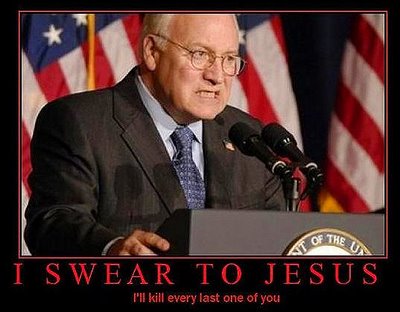
20. if I did not have words, I would paint and if I had no paints, I would sing. If I had none of these things to soothe my racing mind, I would be an  evil zombie combination of Darth Vader and Dick Cheney on PCP in a Sunday school, naked and raging with automatic weapons and a Joker smile that would chill your heart.

Filed under: Rant, What about Chazz?, , ,

Freelancing doesn’t mean free. Get paid!

Too many writers are working for free, or nearly free.

First, let’s talk about lit journals. My Chapters doesn’t even carry any of them anymore. They have tiny readership. You could dedicate yourself to putting your work up on your own website and you could have more readers in a day than many lit journals have in a year. You could argue that wouldn’t be easy (but anything that’s worth doing isn’t easy.)  In the end, you’d have more exposure through your own site (assuming your work is any good) and your readers would be your readers.

Many lit journals pay in subscription copies AKA bird cage liners. You’re supposed to be so bowled over by the fact that you’re published in a tiny journal that you don’t mind a payment of zero. Prestige is illusory and or fleeting. Publication in a journal that so few people read can make you feel great. It doesn’t make the achievement important to your career. Writing credits are nice, but they aren’t the most important component of a query letter. Like the AMC commercial says, “Story matters here.”)*

Or they’ll say you have to “pay your dues.” No. You don’t. You have to work on your skill, but getting rejected by literary mags doesn’t improve your skill. Writing and editing do that. You learn nothing from rejection letters other than the fact that you’ve been rejected.

Once upon a time, writers could actually make some decent money out of writing for magazines. Kurt Vonnegut did. Stephen King bought beer with his stories in Screw. Back then, writers saw any magazine that would publish (and pay) for fiction as a gateway to the big leagues: writing longer works, like the Great American Novel. Then the world changed and no one was reading Screw for the stories, anymore.

Journals aren’t a gateway to publication in a larger venue anymore. If an agent is trolling the lit journals for talent, you have to wonder why when they should have a stack of queries on their desks to sift through. Agents don’t need lit journals to act as screeners for new talent, so neither do you.

Next target: freelancing does not mean free. When someone asks you to write for free, they’re devaluing your work (and worse, mine!) You can be sure everyone else in the process will be paid. They’ll pay for their computers, the electric company, the printer and everything else. Why not you, who is providing the content? (You know? The reason anyone picks up the publication? You write the stuff in the hole between the ads!)

When you write for someone, it’s a responsibility. Certain requirements must be met. For instance, you can’t libel anyone or plagiarise someone else’s work. You may not be guilty, but that doesn’t necessarily mean no one will complain (or sue.) In other words, writing entails risk, usually just to your ego at the hands of someone writing a letter to the editor to complain about your take on reality. Don’t assume a risk you won’t even be compensated for minimally!

Charging for your work means you value your work and know that others should do so, as well. Failing to charge means they won’t take you seriously. Someone might say they are letting you “try out.” How will that work? You sweat out a piece for them, charge nothing and they’ll maybe pay you next time? How well do you think you’ll be compensated when you’ve already set your base price at zero?

You get the idea. But I hear someone crying out, “What about the exceptions? Am I an exception?” Yes, there are exceptions. If you’ve never written anything and need a clip file, okay. Choose something small and gain some experience. Don’t wallow in that pit too long.

What about gifting? Scott Siglar built his current success on giving away his books on the internet as podcasts. He was smart about it, though. He not only built a fan base, he gave out his fiction a little at a time. A lot of readers became fans of his fiction and proceeded to buy the book because they just couldn’t wait for next week’s installment. (Seth Godin talks a lot about gifting and being smart about it. Read his stuff before you try that path so you can be smart about it, too.)

Insisting on getting paid doesn’t mean you aren’t flexible. Here’s a story from the trenches that happened to me recently. A client wanted me to ghost  an advertorial piece (3,000 words) for a magazine. He hopes to get a lot of people signing up for his courses and the magazine will give him a free full-page advertising page in return for the article. This isn’t an uncommon arrangement. He asked if I would write it for him. I gave him a consult so I knew the parameters of the job. I thought about it and named my price. $850 + HST.

That wasn’t the budget the client had in mind, so he had some sticker shock.

I understand that sometimes a fee can seem like it comes out of the blue, but I gave him my reasons:

1. Ghosting always costs more. His name would be on it. I’d be the invisible guy who did the work. No publication credit bumps up the scale.

2. As with the credit, he’d also retain the rights in perpetuity. He could use my work however he wanted for the rest of his life. (Ad excerpts, emailing, flyers, brochures, web copy etc.,…

3. Part of pricing is to identify what the work is to accomplish. In other words, what’s the client’s ROI (Return on Investment)? I command high fees for a speech for an association because my work will drive up membership numbers for said association. Likewise in this case, it wouldn’t take very many people signing up for the clients’ courses to pay my fee (which is starting to sound paltry, isn’t it?)

4. I checked. The ad page the client is getting in exchange for the 3,000 word story sells for $600. If one page of advertising (where the copy is sparse), shouldn’t my multi-page rate reflect that fact?

So the client balked at the full fee. What to do?

I negotiated. I said, no problem. I’ll cut my fee in half if he writes it and all I have to do is edit it. That will take less of my time, so that’s fair to me and okay with the client.

FUNNY ADDENDUM: The client found that writing the 3,000 word magazine piece is not easy. I talked to him on the phone and sent him a rough outline to structure his thoughts. I’m making sure that the editing job won’t end up taking up too much time that way. This client is a good guy who respects my work. He let me know that he’s going to try to plow ahead, but if I have to take over, he’ll get me my full fee, after all. Either way it shakes out, I will feel good about the project because I gave away a little, but got a lot. And so will the client. 

If you get your cheque and think, “That’s it?!” or you’re grumbling about the time lost while you work, it’s definitely time to take up animal husbandry…or raise your rates. I hope you aren’t raising your rates up from zero!

*BONUS: If they have to pay you in bird cage liners, they are undercapitalized. Most of these journals don’t pay until publication. If they’re that underfunded, there’s an excellent chance they won’t even be around by the time they get to publishing your story. It’s happened before. Lots.

Filed under: agents, publishing, Rant, writing tips, ,

Art is a Call to Action

Yesterday I watched a great movie: The Age of Stupid. It’s about global warming and how we aren’t doing diddly about it. It also puts a human face on the one ideological system that has won over our hearts and minds. It’s not any particular religion precisely. It is consumerism. Consumerism has won.

It got me thinking about the international, social and political landscape. Many things look grim. A friend says we must stay in Afghanistan. On Penn & Teller’s Bullshit, a dying man pleads to die with dignity. The man’s doctor feels his personal ethics preclude him from exercising that act of compassion (or letting anyone else exercise compassion and personal choice.) In my city a police officer will be demoted today for smoking marijuana off-duty (and I wonder how many officers are drinking alcohol on duty today?) There’s a lot of silly stuff going on out there and I think we can’t afford to be silly anymore.

There are a lot of problems in the world. We can’t solve them all. Remember approximately 100 days ago the Gulf of Mexico was poisoned (and shall be for decades)? Everyone was saying, “Plug it! Plug it! Why don’t they just plug it?” My answer? Because it’s a mile under ground and water. Because it’s really hard to do. If it were easy, they would have done it quickly.

News flash! Nobody’s going to Mars, either. It’s too hard. The problems are insurmountable.

This isn’t just an unpopular idea. It’s a new idea. For instance, people who believe that we can squeeze all the oil out of the ground and just when we run out of that, a new energy source will appear to replace it (and act just like it and be just as convenient.) Why do they think that? Because they’ve been seduced by the idea that technology can solve all problems. Strides have been made and things have gotten better in many ways. But we still have all kinds of cancer.

Big problems? We’re not good at big problems. Our record is spotty. Insulin was a big one, but not a cure, and how many decades ago was that? Smallpox vaccine? Great. Millions saved. But what have you done for me lately? Medical development and invention from here on out is baby steps. I’d much rather see the military budget for stealth bombers pump up educational budgets and medical research. (Maybe then we can run again instead of taking baby steps.)

Dismaying nugget: Your chances of being killed by a terrorist are always close to zero. Your chances of dying from cancer or heart disease are excellent. We need to rethink how we allocate out resources.

Naysayers who have swallowed the line they’ve been sold forever (“anything is possible”) will say I’m hooked up to an IV of Can’t Do Spirit. Where would we be blah blah blah? I’m not saying progress hasn’t been made. Progress is made up of a lot of little steps. I’m saying we’re not up to the things we think we are.

Examples: Changing Afghanistan’s culture? Nope. (Thought experiment: Imagine the Taliban coming here and trying to change our culture with the same tools? Would drone aircraft change your mind to Allah?) Curing cancer? Not in my lifetime, or sadly, in my children’s lifetime. (The cure for all diseases is just around the corner, according to fundraisers. Actual research scientists? Not so much.)

It’s not all bad. Science has made life pretty great. For us, anyway.

And I have a solution. We focus on the small things. We change what we can change. We change ourselves and hope to transform the world through small, effective actions instead of costly monumental hopeless projects. Resources are limited. We can’t afford to go to Mars, and why would we want to when people are starving and struggling right here, right now?

We donate goats to African families so those families won’t starve. I can’t solve all of Africa’s problems. (Africa will have to do that.) But I can buy a goat. A friend of mine made a documentary that has convinced me I must do so, in fact. This is the highest form of art—art that moves you emotionally, and to action. The documentary will be coming out soon. It’s called Where’s My Goat?

You have limited resources, but you are a writer. Who will you change today through your art?

Filed under: movies, Rant, Writers, ,

Top 10 (plus one) Publishing Conference Lessons

1. The publishing panel was a cautionary tale. Three publishers said agented vs. unagented manuscripts didn’t matter, though they were not universally believed.

2. They said they expect all submissions to be simultaneous submissions. (Duh! Let’s move on from that!)

3. Re: Electronic rights? They want them. (Rare moment of candor.)

4. Caution to authors: Don’t give it all up so easily. If they’re going to retain electronic rights, they better have a plan how they are going to use them.

5. Whether you have an agent going into the deal or not, get an agent. They will earn their commission and get you a better deal. Standard contracts and retail is for suckers, baby!

6. Emerging publishing models diminish traditional publishers. If you’re doing everything else (publicity, platform, marketing, hiring an editor etc.,…) all the publishers have left is old credibility and a distribution network.

7. Traditional publishers will be dragged kicking and screaming into new delivery models, but they will be dragged. Resistance is futile.

8. The power differential among author, agent and editor is a changing dynamic, no matter how much some may pretend such is not the case.

9. Author Patrick Taylor: (Some) small Canadian book publishers are not concerned about selling books. They make their profit from arts council grants and sales are secondary. (Talk about blunt! Hurrah for Patrick Taylor! You’ll never hear that again!)

10. Sell a lot of self-published books? If you’re a regional author, Ms. Major Publisher will expect you’ve saturated the market. Sell a few hundred in a week and they might want to pick up that profitable book (or your next.)

11. My question: if your self-published book is doing that well, what do you need a traditional publisher for?

Filed under: publishing, Rant, , , ,

Writing at Starbucks and the AlphaSmart Neo

Family Guy spoofed it. I’ve read lots of snarky bits over the years and I say it’s time to end the discrimination. I have a dream! I’m sick of your facile condemnation so I’m coming out and I’m not ashamed. So here goes…I write at (choke) Starbucks. Don’t judge me! It’s the only coffee shop I know where I can sit for hours at a time and nobody’s going to give me a dirty look for loitering. I get away from the kids a bit (love ’em, can’t get much done with them wanting to play on Wii) and I get stuff written so come down from your throne you %!!&! snobs!

Here’s a couple of things to consider: I write with an Alphasmart Neo and I really love it. You’ve seen it advertised in Writer’s Digest etc.,… It’s a tough little keyboard so you can just stuff it in a backpack; it runs for 700 hours on three AA batteries; you can download to it and from it; it doesn’t heat up like regular laptops do and it’s cheap.

Best of all, it has the same virtue that Starbucks has: no distractions. In my home office I can get sucked into all the wonderful distractions that home offers. There are games and internet surfing to do on the home computer. The Neo is just a keyboard. No games, no e-mail, no net. It’s just a glorified typewriter. Yes, I wish it had a mouse sometimes, but for just raw sitting down and burning through, the Neo is your baby. 

*The Second Cup is okay, too.

Filed under: Rant, writing tips, ,

Dreaming of Bill Maher (and Soccer is Bullshit.)

The promo: I love Real Time with Bill Maher and will miss Bill until September when new episodes are on HBO, Friday nights.

The caveat: I frequently dream of Bill. It’s not sexual…although if you’re Freudian you’re sure everything is sexual. Get over it. I watch past episodes of Real Time on YouTube so much he’s intertwined and entangled in my neurons. I invite you to read, but don’t read anything into it. And put some clothes on, you perve!

The dream: I was standing by a stage door and Bill Maher passed by after his show. “I love your show!” I said, self-conscious and a bit googly-eyed.

“Thanks,” he said, and shook my hand. “It was nice meeting me,” he said. He motored and as he walked away yelled back over his shoulder, “…which you really haven’t!”

It was so in character I woke up laughing. You wouldn’t guess it looking at my station in life, but my subconscious is a genius.

Filed under: Rant, , ,

Bestseller with over 1,000 reviews!
Winner of the North Street Book Prize, Reader's Favorite, the
Literary Titan Award, the Hollywood Book Festival, and the
New York Book Festival.

http://mybook.to/OurZombieHours
A NEW ZOMBIE ANTHOLOGY

Winner of Writer's Digest's 2014 Honorable Mention in Self-published Ebook Awards in Genre

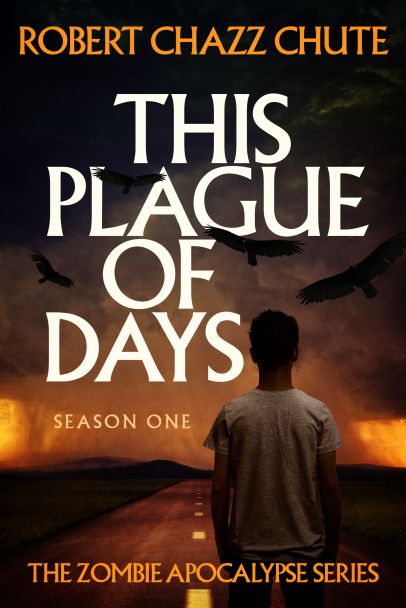
The first 81 lessons to get your Buffy on

More lessons to help you survive Armageddon

"You will laugh your ass off!" ~ Maxwell Cynn, author of Cybergrrl

Available now!

Fast-paced terror, new threats, more twists.

An autistic boy versus our world in free fall

Suspense to melt your face and play with your brain.

Action like a Guy Ritchie film. Funny like Woody Allen when he was funny.

Jesus: Sexier and even more addicted to love.

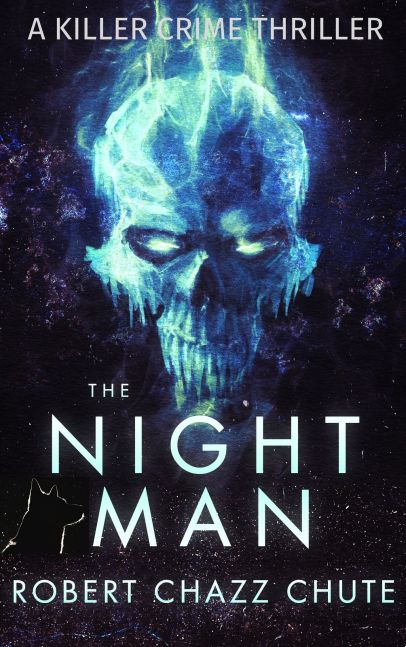
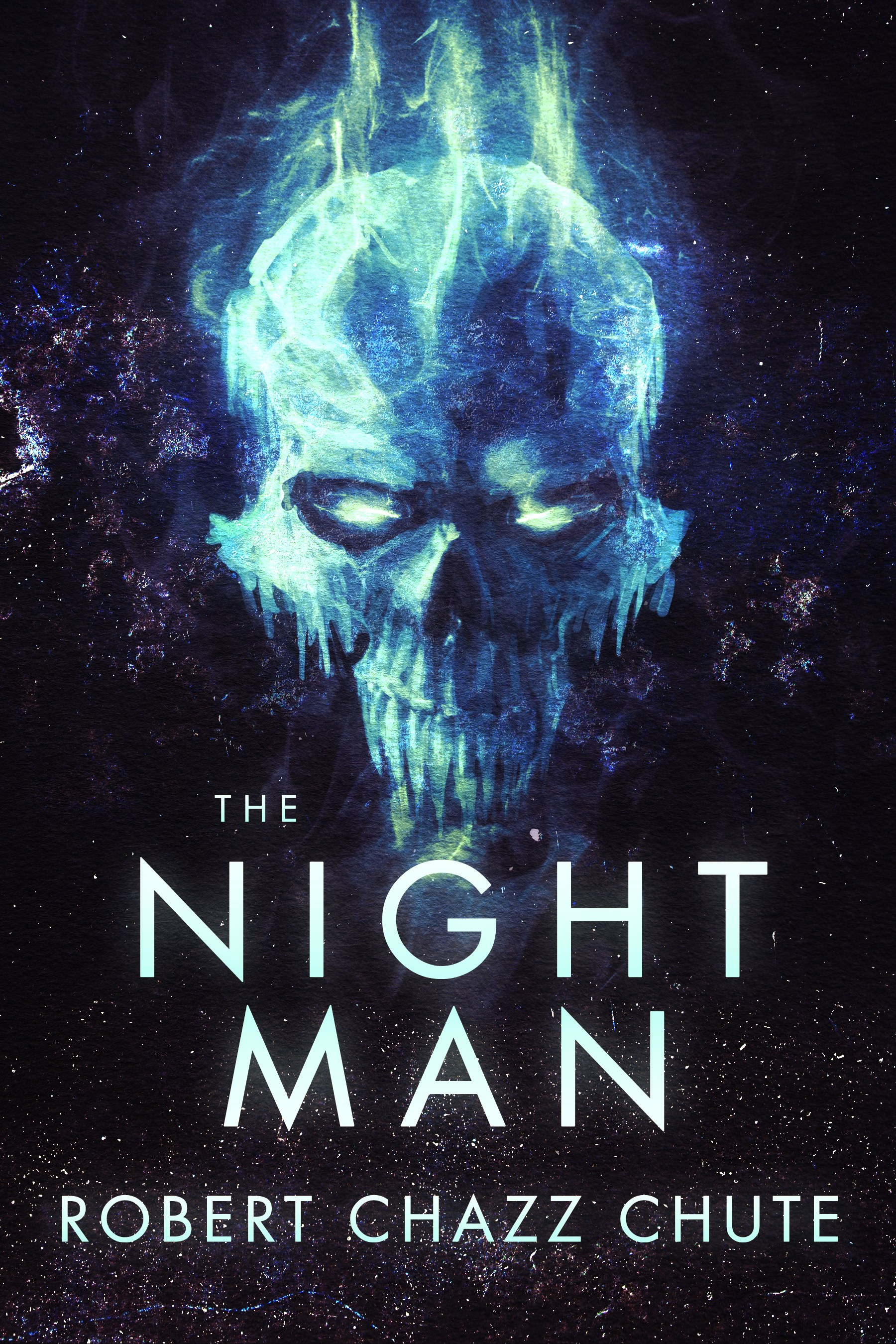
You can pick this ebook up for free today at this link: http://bit.ly/TheNightMan

Join my inner circle at AllThatChazz.com

See my books, blogs, links and podcasts.

Enter your email address to follow this blog and receive notifications of new posts by email.

Join 2,063 other subscribers