C h a z z W r i t e s . c o m

See all my books at AllThatChazz.com.

Writers: Choose Your tense

Cover of "Bright Lights, Big City (Blooms...

Cover via Amazon


In yesterday’s post I lamented some choices I made in an earlier draft of a story called The Dangerous Kind. In my latest revision I chose to change the tense. Let’s explore that. 

First off, let’s be clear: some people despise short stories and novels written in the present tense. They would prefer no writer ever did so again. Those people  are demagogues espousing that there’s only one way which just happens to be theirs. If present tense and a little risk aren’t your taste that’s fine, but to declare no one should dare to write in first-person, present-tense or second tense is a declaration against art. Art takes risk and if it plays it plays. 

I loved the novel Bright Lights, Big City. Before it was published I bet there were a lot of people who said, “A whole novel that’s second-person? You do this. You do that for a couple hundred pages? No way.” 

Answer: Way. 

 Jay McInerney wrote Bright Lights, Big City in second-person and made it  great. Don’t turn down a nontraditional way of telling a story because it’s unconventional. Cut it when it doesn’t work. Recently an entire novel which I scanned but can’t say I read was written in first-person plural. It was a brave choice that worked for a lot of critics. (I didn’t read it because of the subject matter, not because it was “We, we, we” for a couple of  hundred pages.) 

So back to my editing problem: In earlier versions of my story, I wrote the whole thing in first person, present tense. The advantage of present tense is that things are unfolding moment to moment before the reader’s eyes. Present tense makes the action immediate. The Dangerous Kind is about two brothers who do not get along. Soon after losing their father to an industrial accident, they go hunting for deer in the woods of Maine. Dire complication ensue. I chose past tense first because of the action involved in the deer hunt and also because the piece lent itself to an uncertain ending. Would the protagonist survive? 

Necessary side note: You can tell a story in first person and still kill off your first-person narrator. I won’t say don’t do it, of course. The only solid rule should be, if it plays, it plays. However, a caution: It has been done a lot so, for it to succeed, it must be done very well. That’s a trick that’s harder to pull off with longer fiction because it’s a downer to read a couple hundred pages and have your hero killed off. It worked in the movie Sunset Boulevard spectacularly well because you’re already disappointed in the narrator’s choices and end up entranced by Gloria Swanson

Back to editing The Dangerous Kind: After getting a rejection on the story from a magazine, I reread the piece with fresh eyes and realized I could shift it into the past tense. The story is ultimately about the choices we make and how even when things work out terribly, maybe that could work out for the best. (I realized recently that’s a theme in much of my fiction, but that’s another post for another day.) Once I decided that the climax of the story wasn’t a murder but an escape, it was okay for the reader to assume the protagonist survived. After that, I opened up to dumping present tense for the more traditional past tense. (I kept the first-person perspective.) 

However, in the final scene, there’s a subtle twist that I think works well. The bulk of the story basically unfolds over the course of a single November day. At the end, I gently switch to present tense so the reader realizes the protagonist is recounting this story, deciding where things went awry and what he’ll do next at the end of that day. He’s sorting out what the day’s events and choices mean to the rest of this life by retelling the story to himself. The conclusion is one-third bitterness, two-thirds hopeful. Because of the shift in tense back to the present, it makes the story more immediate as it closes. 

Tomorrow I’ll show you an excerpt from an earlier draft and how I edited it to make the plot’s engine work. 

Filed under: Books, Editing, manuscript evaluation, movies, My fiction, rules of writing, , , , , ,

Writers: On Editing Yourself


RULE #1: Writers must have a product to sell.

RULE#2: Writers must keep submitting their work until someone recognizes their genius.

I repeat these rules to remind myself to put them into practice. I wrote a (long) short story that has bugged me. I did submit this piece to One Story because the length was suitable for them. Unfortunately, they didn’t bite (no hard feelings.) As I reviewed the story, I began to figure out why it wasn’t fully baked yet. I realized I needed to do another revision. 

In editing myself, I hadn’t been as objective as I can be with others. I found some sentence constructions awkward. I reworked the opening paragraph to amp up the mystery and intrigue. I added some here and there where characters needed fleshing out. I cut some sentences down for economy and easier reading.

Editing yourself is difficult (Yes! Even for people who are also editors!) If you aren’t going to hire someone to help you with writing issues, the second-best option is time. Put it in a drawer and give yourself time to fall in love with the next project. That way, when you pull out the manuscript again, it’s kind of like being clear on the faults that plagued your ex-girlfriend or ex-boyfriend.

I have found new places to submit the piece and this time I’m submitting with more confidence, not with the giddy frisson of a drunk at a Vegas craps table.

Today’s book recommendation:

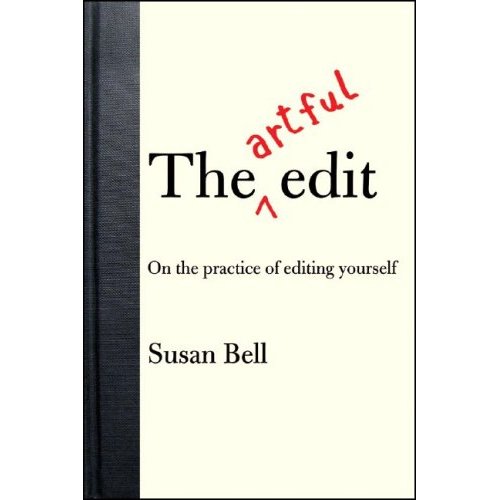
The Artful Edit by Susan Bell.

Filed under: Books, Editors, My fiction, rules of writing, short stories, , , , ,

Problogger: The Key to Starting Your Author Platform

Cover of "ProBlogger: Secrets for Bloggin...

Cover via Amazon

Yesterday I told you that, as a writer who hopes to be an author, you need to start a blog now.

Here’s a tool to get you started: Problogger.net and Darren Rowse and Chris Garrett’s excellent book Problogger: Secrets for Blogging Your Way to a Six-Figure Income. 

Rowse is a smart fellow from Australia who teaches people how to start up blogs, optimize them and eventually make money from them. I’m not an affiliate or anything. I just think that this is a very useful book for you to read because he discusses in detail  how to make smart choices about developing your web presence. For instance, should you host it yourself? What are the pros and cons of paying someone else to host your blog? Then he guides you step by step on how to actually make it happen. He talks about Search Engine Optimization (SEO), content, and every other detail you’ll need to achieve lift off.

I’m listening to the audiobook now and I’m enjoying it very much. However, I don’t recommend that you buy the audiobook. There is excellent information available here, but you need to buy the paperback from Amazon because you’ll get lost in the technical aspects of his instruction. Listening to the reader slog through saying, http://etc.,…  is just too much to absorb. It’s not that the book isn’t interesting and engaging. It’s just that the nitty-gritty of the helpful bits is too nitty-gritty if you just listen to it. 

As soon as I’m finished listening to the book, I’m going to buy the hard copy so I can better put his advice into action.

Filed under: blogs & blogging, book reviews, Books, Writers, , ,

Lurking in bookstores

india calcutta bookstore

I’m on a diet. Yeah, I know I’m supposed to call it a “lifestyle” for long-term success. But no, this is a diet. Short-term and urgent. Grueling even. Low calorie, no processed foods etc.,… The other day I knew that if I stayed in the house, I would eat and I might not stop.  I found out that if I leave the house and it’s not to go get some food, my choices as to what to do are narrowed precipitously. Since eating raw and clean, I’ve noticed something about my spending habits. My mind is clearer and I see now that I’ve been a big consumer, figuratively and literally. With so much food off the table, I’m focused on buying knowledge and experience.

Naturally, I sought refuge in a bookstore. Among books I feel calm. There’s so much to browse that the experience is different each time. If you don’t know what you’re looking for, it’s a treasure hunt. I was distracted from my hunger pangs and felt my shoulders loosen as I disappeared among the shelves. I breathed deeper and took my time. I contemplated all the books there are to read and all the books I have to write.

And I was inspired. Despite all the bad news about the publishing industry (often detailed on this very blog by your trusty reporter) there are still so many ideas to explore in fiction and non-fiction. As I perused the how-tos, I thought about what I could write to help people. As I ran my hand along the spines of  paperbacks, I thought, “Soon.”

I admit bookstores and libraries make me happy in a way that browsing online does not. Shopping for books is a deeper experience when you hold the weight of it in your hand and flip through at random trying to get a sense if this is the book that will grant you a kind of glorious insomnia. I do hope bookstores will be around for a long time. The independents will have to be very creative and very knowledgeable to stay alive in the ebook environment. I do believe there will always be paper books, but they will be  a more expensive specialty item in the future. Some people say that won’t happen. Their (fallacious) argument often seems to be that it won’t happen because it hasn’t happened yet. It’s early days. Ebooks will get the bugs worked out. Then our consumer society’s spending habits will change again. We’ll get even less sunlight than we do now.

Bt for now, I have a safe place to run to as long as I stay away from Starbucks (conveniently located in the bookstore.) Otherwise, I’ll have to run to the gym looking for a place to hide from hunger pangs.

I so love books in all their forms. Also, I could be high on book glue.

Filed under: Books, ebooks, publishing, , , ,

Harry Potter Inspiration

P Harry Potter

Image via Wikipedia

Last weekend we took the kids to the Ontario Science Centre to learn some science and, of course, see the Harry Potter exhibit. It was fun to see the artifacts from JK Rowling‘s world as imagined through the movies. There are a number of lessons to be learned from the Harry Potter phenomenon. Here’s what I take from it:

1. Write a great book and it will find its way to the marketplace, no matter the naysayers.

2. A book that’s categorized as Young Adult (YA) can be enjoyed by many age groups. People who read Harry Potter are of varying ages. Some people, like the agents and editors who turned down the opportunity to publish the series, thought that was a problem. (Ha! Ha! Ha!) The Twilight series is proving books don’t have to be so shelf-specific, too. It’s an obstacle by way of rule of thumb that all cross-genre books face. Scott Sigler had a hard time getting his books published until he provedthe publishing industry was acting in a way so narrow-minded they might have bowling alleys for brains.

3. A good book, or a good bunch of books, is only helped by controversy. Censors have never learned that the more they worry about young minds being corrupted–and complain about it in the media–the more books they will sell for the author.

4. When you have a great success, haters will emerge. Worse, someone may even come out from under a rock to try to sue you for copyright infringement. Wipe the tears away with fifty dollar bills.

5. JK Rowling’s success is an inspiration to all of us who toil alone at keyboards (as yet unheralded.) When the last Harry Potter book sold, I was at the midnight sale at my local Chapters. I didn’t come to buy that night, though it was fun to see all the wizard and witches dressing up for the event. I came to sit at a table at Starbucks, sip a coffee and watch and feel the genuine excitement over the release of a book.

We don’t often get excited about books and I know there are many distractions. But that–okay, I’ll say it–that magical night was a reminder that there are still plenty of us who love the written word. We love it so much. We really do.

Filed under: Books, publishing, Rejection, Writers, , , ,

Seth Godin Quits Traditional Publishing; Readers Respond

Seth Godin Quits Traditional Publishing; Readers Respond.

Filed under: blogs & blogging, Books, ebooks, publishing, Writers

Publishing Links

Just added Jane Friedman and The Millions to the blog roll. Read them and you’ll see why.

Filed under: blogs & blogging, book reviews, Books, publishing, web reviews, , ,

Top 100 Books for Freelance Writers

Wow. I just stumbled upon Inkthinker, a website dedicated to helping freelance writers. What a great resource. Freelancers! Please peruse. The Top 100 Books for freelancers is just the beginning. We have a lot more reading to do now, don’t we?

Filed under: book reviews, Books, publishing, web reviews, , ,

Book Covers that Sell: 10 Crucial Elements

Your book’s cover needs:

1. A designer (99% likely.)

2. Color (usually. The Road was all black with white lettering). Not green. Green covers never sell unless the book is about golf or lawn care. (Royal blue sells better than other colors.)

3. A known author’s name. (If you’re not at all known, it would really help if you got that way. Go rob a bank or save the president or something. Get a life, and, as Zola said, “Live out loud.”

4. Failing #3, a great quote recommending the book by a known name.

5. A compelling picture. What “compelling” is, is subjective (though we do know sex sells.)

6. If not sex, violence.

7. If not violence, awe me or lure me with a (relevent) image that makes me curious.

8. A great title. A short title. (Something I can remember from the local radio interview to the bewildered bookstore clerk: Fight Club, Portnoy’s Complaint, The Dome, Calculating God, God is Not Great, The 4-Hour Work Week, White Teeth, Another Bullshit Night in Suck City.)*

9. Repeat #8 again. Kick me in the teeth with that title. (Rather than a long title to explain more, let the subtitle do that work if you must.)

10. The back cover is a cover, too. Sometimes I pick up a (usually self-published) book whose back cover is blank (and put it right back on the bookstore shelf.) That’s not clever, eye-catching or minimalist. It’s wasted advertising space. Your story blurb must be killer. Happy quotes by big reviewers/authors help if you have them.

*This is tends to be more so with fiction titles. Non-fiction titles have more latitude and tend to explicate more. Still, give me pith (as in The 4-hour Work Week example above, there’s little doubt what’s it’s about. It also happens to be a great and useful book which I just read and certainly recommend for those looking for freedom.)

Filed under: Books, publishing, writing tips, , , ,

How Not to Write a Novel: The Bookfomercial

Filed under: Books, publishing, web reviews, writing tips, , ,

Bestseller with over 1,000 reviews!
Winner of the North Street Book Prize, Reader's Favorite, the
Literary Titan Award, the Hollywood Book Festival, and the
New York Book Festival.

http://mybook.to/OurZombieHours
A NEW ZOMBIE ANTHOLOGY

Winner of Writer's Digest's 2014 Honorable Mention in Self-published Ebook Awards in Genre

The first 81 lessons to get your Buffy on

More lessons to help you survive Armageddon

"You will laugh your ass off!" ~ Maxwell Cynn, author of Cybergrrl

Available now!

Fast-paced terror, new threats, more twists.

An autistic boy versus our world in free fall

Suspense to melt your face and play with your brain.

Action like a Guy Ritchie film. Funny like Woody Allen when he was funny.

Jesus: Sexier and even more addicted to love.

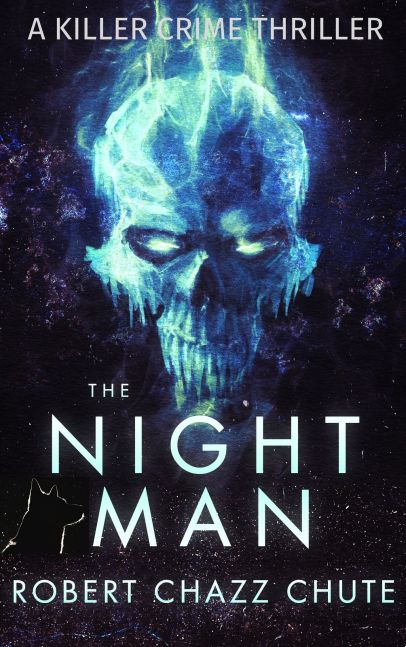
You can pick this ebook up for free today at this link: http://bit.ly/TheNightMan

Join my inner circle at AllThatChazz.com

See my books, blogs, links and podcasts.

Enter your email address to follow this blog and receive notifications of new posts by email.

Join 2,063 other subscribers