C h a z z W r i t e s . c o m

See all my books at AllThatChazz.com.

Friday Bonus: The Danger of Was

 Search your manuscript for the word was and look for opportunities to cut.

Instead of

He was thinking…

write

He thought…

Eliminate the passive voice wherever possible.

Even better? 

Demonstrate what the character must have thought by his or her actions.  

Filed under: Editing, writing tips, , ,

Writers: Choose Your tense

Cover of "Bright Lights, Big City (Blooms...

Cover via Amazon


In yesterday’s post I lamented some choices I made in an earlier draft of a story called The Dangerous Kind. In my latest revision I chose to change the tense. Let’s explore that. 

First off, let’s be clear: some people despise short stories and novels written in the present tense. They would prefer no writer ever did so again. Those people  are demagogues espousing that there’s only one way which just happens to be theirs. If present tense and a little risk aren’t your taste that’s fine, but to declare no one should dare to write in first-person, present-tense or second tense is a declaration against art. Art takes risk and if it plays it plays. 

I loved the novel Bright Lights, Big City. Before it was published I bet there were a lot of people who said, “A whole novel that’s second-person? You do this. You do that for a couple hundred pages? No way.” 

Answer: Way. 

 Jay McInerney wrote Bright Lights, Big City in second-person and made it  great. Don’t turn down a nontraditional way of telling a story because it’s unconventional. Cut it when it doesn’t work. Recently an entire novel which I scanned but can’t say I read was written in first-person plural. It was a brave choice that worked for a lot of critics. (I didn’t read it because of the subject matter, not because it was “We, we, we” for a couple of  hundred pages.) 

So back to my editing problem: In earlier versions of my story, I wrote the whole thing in first person, present tense. The advantage of present tense is that things are unfolding moment to moment before the reader’s eyes. Present tense makes the action immediate. The Dangerous Kind is about two brothers who do not get along. Soon after losing their father to an industrial accident, they go hunting for deer in the woods of Maine. Dire complication ensue. I chose past tense first because of the action involved in the deer hunt and also because the piece lent itself to an uncertain ending. Would the protagonist survive? 

Necessary side note: You can tell a story in first person and still kill off your first-person narrator. I won’t say don’t do it, of course. The only solid rule should be, if it plays, it plays. However, a caution: It has been done a lot so, for it to succeed, it must be done very well. That’s a trick that’s harder to pull off with longer fiction because it’s a downer to read a couple hundred pages and have your hero killed off. It worked in the movie Sunset Boulevard spectacularly well because you’re already disappointed in the narrator’s choices and end up entranced by Gloria Swanson

Back to editing The Dangerous Kind: After getting a rejection on the story from a magazine, I reread the piece with fresh eyes and realized I could shift it into the past tense. The story is ultimately about the choices we make and how even when things work out terribly, maybe that could work out for the best. (I realized recently that’s a theme in much of my fiction, but that’s another post for another day.) Once I decided that the climax of the story wasn’t a murder but an escape, it was okay for the reader to assume the protagonist survived. After that, I opened up to dumping present tense for the more traditional past tense. (I kept the first-person perspective.) 

However, in the final scene, there’s a subtle twist that I think works well. The bulk of the story basically unfolds over the course of a single November day. At the end, I gently switch to present tense so the reader realizes the protagonist is recounting this story, deciding where things went awry and what he’ll do next at the end of that day. He’s sorting out what the day’s events and choices mean to the rest of this life by retelling the story to himself. The conclusion is one-third bitterness, two-thirds hopeful. Because of the shift in tense back to the present, it makes the story more immediate as it closes. 

Tomorrow I’ll show you an excerpt from an earlier draft and how I edited it to make the plot’s engine work. 

Filed under: Books, Editing, manuscript evaluation, movies, My fiction, rules of writing, , , , , ,

10 Questions & Missions for Writers

Short Story

Image via Wikipedia

What are you doing today that will advance your writing career? Not yesterday. Not tomorrow. Today.

Choose #1 plus one other:

1. Have you written today?

2. Have you read a writing blog (besides this one)?

3. Have you researched an agent’s blog?

4. Have you proofread your poetry or short story?

5. Have you sent out one of your stories to a contest, magazine or journal?

6. Have you come up with at least five queries today?

7. Have you checked where your queries or stories are and if it’s been more than three months, do you need to write a reminder?

8. Have you read at least some pages of a good book today?

9. Have you set a word count or page count for your writing or editing project so you know the end date of the current stage of your project? If so, have you worked out a ship date?

10. Have you taken a half hour for yourself where you go for a walk, get some exercise, meditate or otherwise flush out your head so you have a fresh and healthy perspective on your work?

Please tell me you at least completed #1. You know why? Because your writing is #1!


Filed under: getting it done, Writers, writing tips, , ,

Dare to Suck.

She’s got it right. Lots of writers expect to be fantastic as soon as they start. That’s unrealistic. You are not a genius, but with practice, you could be. Also, don’t think about the money you will or won’t get. For now, just write for its own sake. The rest? That’s for later.

Filed under: web reviews, Writers, writing tips, , ,

Ken Levine on TV Script Don’ts

Avoid dream sequences, don’t shop around your script for an old show, keep the budget and logistics in mind and many more tips and observations from The Great Levine. (Sounds like a 70s hypnotist, doesn’t it?) Actually, Ken Levine knows TV as a writer and director. He wrote for MASH, Frasier, Cheers and many others. In this post, he tells you what not to do if you’re trying to break in as a TV writer. Lots of sage advice here (although the advice about the fly made me think of the most critically acclaimed episode of Breaking Bad this season. Well, the fly’s perspective didn’t take up the whole episode.)

Bookmark his blog. There’s always some chewy goodness for scriptwriters and comedy lovers of all heights and glycemic indexes.

Filed under: scriptwriting, Writers, writing tips, , , , ,

Ten Steps to be a Writer

1. Write. Most people want to write. Most don’t. Don’t be that guy.
2. Head down. Hands on keyboard.
3. Do not worry about rejection. (If you figure out how to do this, help me understand.)
4. Set a deadline. Don’t make it too far off and take it seriously.
5. Keep your work circulating. Repeat until you succeed.
6. Seek support. Eschew those who don’t support your dreams.
7. Be original. Don’t try to be the next anybody but you.
8. Read. It’s how you connect with experience beyond your own and it helps you improve your writing.
9. Don’t be a schmuck. Learn about the publishing industry so you can navigate it.
10. Don’t be a fraidy cat. Normal is for the mediocre. Dare a stab at immortality. (Did I mention you should write? I mean now!)

Filed under: publishing, Writers, writing tips, , , ,

Copyblogger: 73 Ways to Become a Better Writer

This is a great list from Copyblogger. Implement just a handful of these suggestions and you’ll be a better writer.

Filed under: writing tips,

Five Tips for Better Blog Posts

In my last post I wrote about the time it takes to write a blog post. (More accurately: I wrote about the time it shouldn’t take.) There’s a faster way to add content to your blog and keep your readership happy. Here’s how:

1. You don’t have to spill your guts with every blog post. Save some expertise for the work your clients pay you for and make sure you don’t spend more time marketing than doing your actual writing (i.e. the writing that is your legacy.)

2. Every post doesn’t have to be deadly serious. Blog posts can be a (short) rant and funny stuff. too. Make sure you provide value and information to your readers, but vary the tone so you don’t come off as relentless.

3. Link to other blogs, videos, and information you find useful, funny or helpful. You do not have to write something fresh for your blog every day. Yes, establish yourself in your web presence. When your readers scan your blog, the voice in their heads should be yours. However, your readers will appreciate your use of your blog as more than a soap box. You are also a filter for information you think would tickle their brains. Link freely when you run across someone else’s brilliance. (And help your search engine optimization in the process, too.)

4. Link your Twitter posts to your blog. This blog has something fresh on it throughout the day as I find things on the feed that makes me laugh or think. Show your appreciation to your fellow birds with friendly tweets. Twitter is a conversation. Let your blog readers in on it and hope they’ll follow you there, too. (Look to the right for a taste. Find me on Twitter @RChazzChute, please.) And no, it doesn’t take long. I scan Twitter during commercials or at night when I struggle with my racing insomniac brain.

5. That’s four to-dos. Here’s a to-don’t. When you don’t have anything to say, don’t. Resist the urge to fill your blog with drivel. Because the word “blog” comes from web log, some people still think of it as a diary. If you’re Kevin Smith, you can do that, but, like Highlander, “there can be only one!” Don’t think of your blog as a diary. Think of it as a magazine.

BONUS:

In the words of one epublisher I met recently, “As soon as anybody tells me what they’re having on their bagel, they’re gone!”

It’s true. Not even Kevin Smith could get away with that. Probably.

Filed under: writing tips, ,

What’s Your Writing Schedule?

The best type of exercise is the one you will do. And so it is with your writing schedule. Here are a few options.

Write when you get up, when the kids are asleep, when you’re at work, on lunch breaks, during commercials, at parties, in log cabins, in hotels, alone, with others, during NanoWriMo, any time you get a few minutes, when you make big blocks of time, when you get a babysitter, when you could be watching TV, on the bus and subway, in a hammock…

1. Just write when you can.

2. Write consistently.

3. Write now.

4. Revise.

5. Circulate your work.

6. Repeat.  

Filed under: writing tips, ,

Premises, Promises and the Payoff

When someone says, “I have a good idea for a story,” they better not just stop at one. It’s not enough for a novel to have a good premise. More good ideas must follow the first. A good book is not just one good idea, but many, strung together in a way that builds and builds to keep the reader reading.

I’ve been trying to enjoy Three Bags Full, a detective story where the detectives are sheep and the victim is their shepherd, who died with a spade through his guts. Ooh, a spade through the guts! Delicious! I must read more, I thought. I wanted to like the book, but it didn’t work out that way.

The comer on the cover was that it’s like Agatha Christie wrote a Wind in the Willows murder mystery. I loved Wind in the Willows and I’ve read some Christie 20 years ago so hey, a match made in heaven. Not baaaaaa-ad! (Get it? Sheep? Not baaaaa-ad? Never mind.)

Alas, experimental fiction can be trying when it belabors the conceit. It’s a good idea that could work well in a short story, but at novel length I’m fading fast…and I’m getting it the easy way on MP3! Save the change. Three bags Full is a good idea…but just one. Halfway through I’m thinking, “Isn’t it time for the little Irish village to have a big Greek feast with lots of lamb chops with mint jelly?”

Good books, like The Wind in the Willows, for instance, have good ideas at every turn and keep you turning those pages. What happens next? And then what? Keep that narrative train moving moving moving. Will Mole and Rat finally run over Mr. Toad with his own car? They never did…which I guess I’m glad of. I remember reading Wind in the Willows late into the night and my mom finally coming in to tell me to go to sleep. “Just five more minutes Mom! I want to find out what happens to Mr. Toad!”

BONUS:

 Keep the good ideas coming. There should be tension on every page, or a very good reaason why there’s not.

Filed under: Books, writing tips, ,

Bestseller with over 1,000 reviews!
Winner of the North Street Book Prize, Reader's Favorite, the
Literary Titan Award, the Hollywood Book Festival, and the
New York Book Festival.

http://mybook.to/OurZombieHours
A NEW ZOMBIE ANTHOLOGY

Winner of Writer's Digest's 2014 Honorable Mention in Self-published Ebook Awards in Genre

The first 81 lessons to get your Buffy on

More lessons to help you survive Armageddon

"You will laugh your ass off!" ~ Maxwell Cynn, author of Cybergrrl

Available now!

Fast-paced terror, new threats, more twists.

An autistic boy versus our world in free fall

Suspense to melt your face and play with your brain.

Action like a Guy Ritchie film. Funny like Woody Allen when he was funny.

Jesus: Sexier and even more addicted to love.

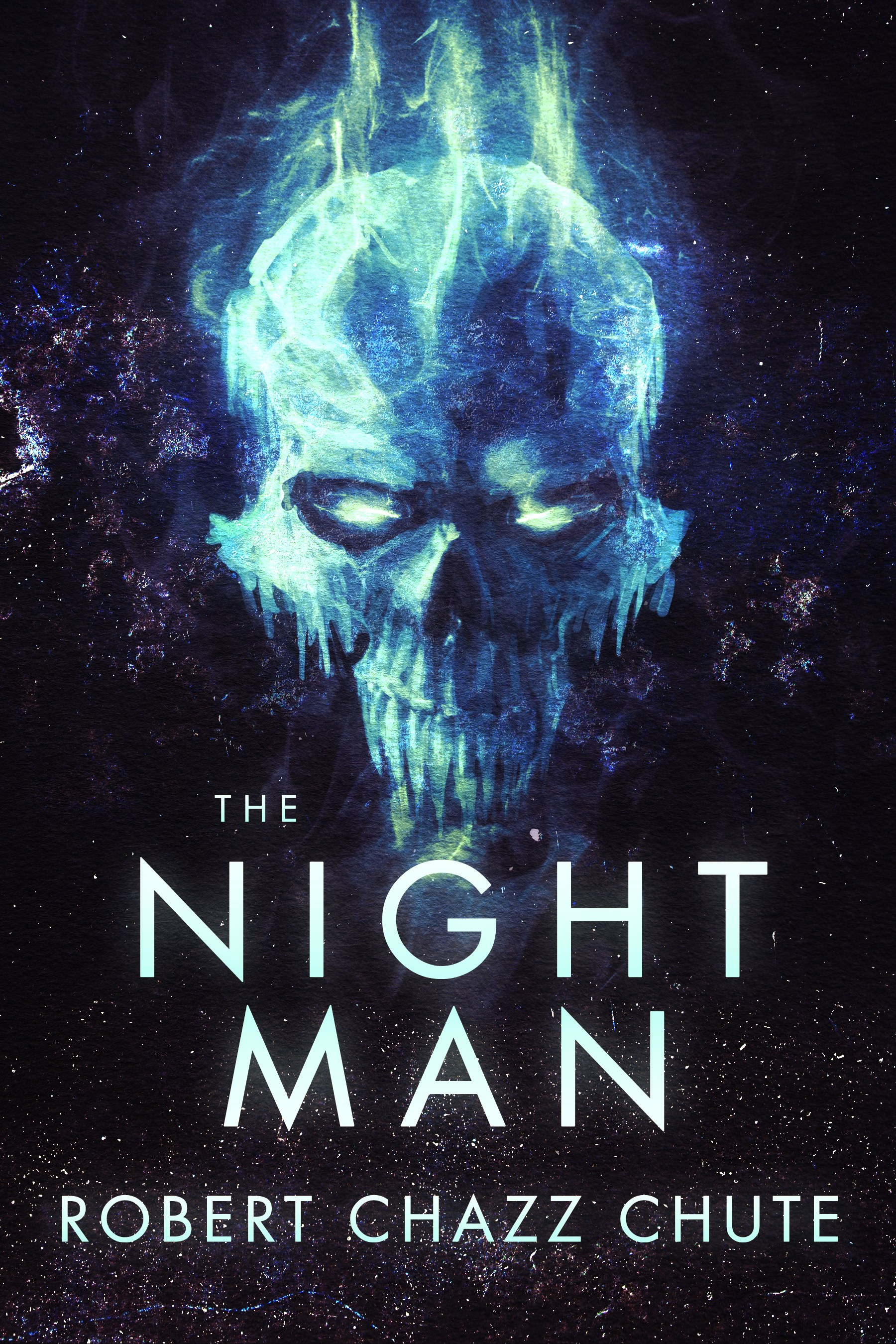
You can pick this ebook up for free today at this link: http://bit.ly/TheNightMan

Join my inner circle at AllThatChazz.com

See my books, blogs, links and podcasts.

Enter your email address to follow this blog and receive notifications of new posts by email.

Join 2,063 other subscribers