C h a z z W r i t e s . c o m

See all my books at AllThatChazz.com.

Writers: The Manifesto of Enough

The world is full of injustices and actions that make me rant and rave and curse. But things aren’t so bad today because I am focused on the things I can control. Others do not have the freedom to write. I do, so I should exercise that right to express myself and enjoy it, as others would if they had the opportunity. Others suffer, which I lament and protest, but they suffer no less when I fail to write. 

I have found the joy in writing and so finally I am writing copiously without straining and etching it out slowly with all the recrimination and self-loathing procrastination injects into the brain and marrow.

I was deceived and I deceived myself.

I thought it should come hard to be valuable, but writing is finally play. I must be incredibly stupid because I’ve written for so long, for a living, for myself, for others…and now I’ve finally got it. How did I fail to notice?

New thought (to me):

 To be valuable, on some level, writing has to be fun,

in execution and in reception.

I have experienced thrills and joys, but all with a wary and unwavering eye to how little time was left to enjoy them, how fleeting my smiles, how soon forgotten the awards, how soon spent the rewards.

Today I’m not doing that.

I write. I edit.

I have never been happier.

Filed under: Rant, Writers, writing tips, ,

The Death of Lit Journals (and query advice)

Okay, it’s time. Let’s rip it up and challenge some assumptions and piss off a few defenders of the faith…

Literary journals have traditionally been considered a proving ground. You get some stories published, establish a track record and develop a following. Agents and editors want you to have a platform as much as possible to push the sell-through. The wisdom was that lit journals gave you cred when as you developed your skills for longer works. Lit journals were where you paid your dues before you could hope to write the great American, Canadian, Jamaican or Serbian novel.

Well, goodbye to all that! Here’s why:

1. You can get pretty beat up in a long process where they take forever to get back to you, or never get back to you.  No simultaneous or e-mail submissions and you take a year to say no with a snotty note? And all this for a journal with a tiny readership that pays in contributor’s copies? There are far less frustrating ways to find something to line the bottom of your birdcage. Lit journals, your time is up!  

2. Some journals may have some weight with agents and editors. Many won’t. Many are still really zines that nobody’s ever heard of. You could make up a title and it would have as much credibility as many of these rags.

3. It’s arguable that short story writing and novel writing are different skill sets. (I’ll make that argument another time, but as a for instance, even now I prefer Hemingway’s short stories to his novels.) One thing won’t necessarily translate to the other thing. Everyone starts with short stories, but if you intend to be a novelist, start writing long soon. (Also, your sensitive little meditation/poem/short story on the return of the whippoorwills to Dead Grampa’s lake probably won’t help you sell your Masons-plot-to-destroy-universal-health-care conspiracy thriller.)

4. Who needs literary journals when you can build your brand on your own website? Write short stories and build your platform through instant self-publishing. Give out samples and teasers of your work. Keep people coming back and/or offering suggestions, praise, money, fame. Serialize. Monetize.

5. Lit journals publish a few stories here and there, mostly solicited (read: not you.) They don’t take their slush pile applicants near as seriously as they take themselves. (I also notice a trend in the journals where they’ll do a theme issue, or several. That puts slush entries even farther out of the loop, like amongst Saturn’s rings.)

BONUS:

If you were an agent, editor, sales rep or publicist, which author’s bio would you consider more helpful to your goals?

A: I was published in Northeastern Prairie Review* in 2005. Circulation 1200 people (most of whom are frustrated writers themselves who subscribe in the hope that it will help them get published. In fact, they hate most of what they read, they don’t read much of it anyway, hate the published, and the editor only publishes his four best friends and the rich cousin who funds their tiny enterprise.

or

B: I’ve built 40,000 regular readers of my blog and x number of unique hits on my author website. Look at my fan base! They loved the first chapters…blah, blah de blah I’m twelve kinds of sexy awesome etc.,…

If you answered B, congratulations. You’re sane.

You heard it here first, I say this internet thing?

It’s going to be big.

DOUBLE BONUS:

 However…if you plan to start a lit journal and become a bitchy arbiter of good taste, aha! Now I think you may still have something in a dying industry. Publishing yourself and dressing it up in respectable clothes connotes more respect than being the schlub sending out your stories to an indifferent world. When you submit your novel, you’re an editor.

Save paper. Publish on-line. Be cool, and you too, could finally have enough cred to get your work actually read by an uncaring know-nothing no-everything MFA refugee summer intern.

TRIPLE BONUS:

The rule with lit journals is, the stranger the name (Three Monkeys and a Paperclip, Fish Stink of the Golden Future)  the smaller the readership. In a world where even the “big” lit journals are really small, that’s rather snobby and irrelevant, however. (For some sense of scale, every couple of months 75,000+ people read my column and my features in a trade magazine you’ve never read.)

Filed under: publishing, writing tips, , ,

Years ago  I evaluated a manuscript for a young man who dared to dream big. His manuscript was only a hundred pages long or so. His sci-fi that barely made sense. 

However, there was one sentence and image so powerful and memorable. I told him he needed to channel more of that kind of craft to make the story more readable. Since the rest of the news was so bad, I focused on that cheery bit so the meeting wouldn’t be a horror. If you suck, that’s a sign you should write more. I told him to write much more. He took my critique and paid my fee without hesitation.

I gave him pages of notes so he could improve. He focused on the good news. His last words to me were, “Thanks! I knew this was really good!”

That was 20 years ago. If he managed to keep up his work ethic and optimism, he’s probably a sci-fi author who has met with some success by now. I tried to teach him something about story and structure. He taught me about blind optimism. To be a professional writer, you do need that. That’s why I’d never tell anyone not to write.

BONUS:

Your odds of success are low, but that’s true about everything.

Your chances of being paid much at all as a writer are next to nil, but you’re hardly making a living anyway.

Write!

Filed under: manuscript evaluation, publishing, writing tips, , ,

Poor Writing Critique

Here’s an unhelpful answer when you ask for feedback: “That’s derivative.” Derivative is “it’s been done” dressed up in fancy clothes. That’s not useful information because everything has been done.

There are books that try to reduce everything to thirty plots or only ten. I can edit that down to two: Boy gets girl (with multiple variations) and good versus evil. It’s up to the writer to make it different enough within the familiar.

When someone says what you’ve written is derivative, what they really mean–and they might not know this–is that it’s boring. Maybe you’d prefer the encrypted signal after all, huh?

Recently some wag complained that Scrubs is derivative of Parker Lewis Can’t Lose. If you don’t remember Parker Lewis you aren’t alone, but yes, it was a funny show that featured lots of quick fantasy sequences and non sequiturs. It’s ironic that the critic was saying Scrubs was derivative when it’s so clear that Parker was heavily influenced by Ferris Bueller’s Day Off.

 (Family Guy uses the same devices but nobody’s calling Family Guy derivative except some really bitter Simpsons fanatics.)

Scrubs isn’t derivative because (a) it has lasted longer and will be in syndication forever and (b) while both are comedies, Scrubs occasionally has more emotional depth. Parker Lewis Can’t Lose was a safe show to watch. It was right in the title! He couldn’t lose! In Scrubs, patients you like sometimes die and more than once the writers made me cry while I was laughing. That’s really hard to do in twenty-two minutes of what’s often a silly show.

Both shows use some of the same devices, but the stories and characters are plenty different. That’s not derivative. (Of course, Scrubs has moved around so much in broadcast times and even networks that I haven’t seen it for several seasons now. They lost me when they went to the January to June format to accommodate Zach Braff’s movie career.)

There are no new plots but there are plenty of characters and plot permutations and combinations to last us until the sun explodes. If someone tells you you’ve written something derivative, you can say:

“Tell me more.”

“Anything else?”

or

“You’re an ass hat.”

BONUS:

*Did you catch the subtext here? To talk about writing, we always use examples from popular TV shows and movies as a shortcut to mutual understanding. Yes, that’s writing, too, but isn’t it a bit sad that we don’t have enough common examples to draw from in books? I could blog for days on Fight Club, but since a bunch of you haven’t read it (still!) it’s not a common enough example to use as a currency on a writing site. Maybe you’ve all seen the movie. There are so many books and far fewer popular shows and movies, but in our culture what we watch interprets our world. We don’t have enough text in common, so go read something.

Filed under: Rant, Rejection, writing tips, ,

Writing Critique Groups

I picked up some great advice from the Writing Excuses podcast (find the podcast feeds on their website.) If you are in a writing group and someone is giving you feedback:

1. It’s your job to not leap to defend your work. Listen and use their reaction or don’t, but keep your mouth shut.

2. If someone critiques your writing, they aren’t attacking you personally.

3. If they do attack you personally, you then have the pleasure of ignoring them. Forever.

4. If someone is successful in making you feel bad about your work, go to Amazon and find a so-called “great work of literature” you admire, even cherish. Then go to the comments section and read the critiques from the people who hated, hated, hated it. This is art. This is subjective. There is no work with universal appeal.

The Writing Excuses authors broadcast weekly. Listen for real gems on the techniques, frustrations and challenges of writing fiction. It’s fifteen minutes long, and despite their tagline, they’re pretty smart.

Filed under: writing tips, ,

Bestseller with over 1,000 reviews!
Winner of the North Street Book Prize, Reader's Favorite, the
Literary Titan Award, the Hollywood Book Festival, and the
New York Book Festival.

http://mybook.to/OurZombieHours
A NEW ZOMBIE ANTHOLOGY

Winner of Writer's Digest's 2014 Honorable Mention in Self-published Ebook Awards in Genre

The first 81 lessons to get your Buffy on

More lessons to help you survive Armageddon

"You will laugh your ass off!" ~ Maxwell Cynn, author of Cybergrrl

Available now!

Fast-paced terror, new threats, more twists.

An autistic boy versus our world in free fall

Suspense to melt your face and play with your brain.

Action like a Guy Ritchie film. Funny like Woody Allen when he was funny.

Jesus: Sexier and even more addicted to love.

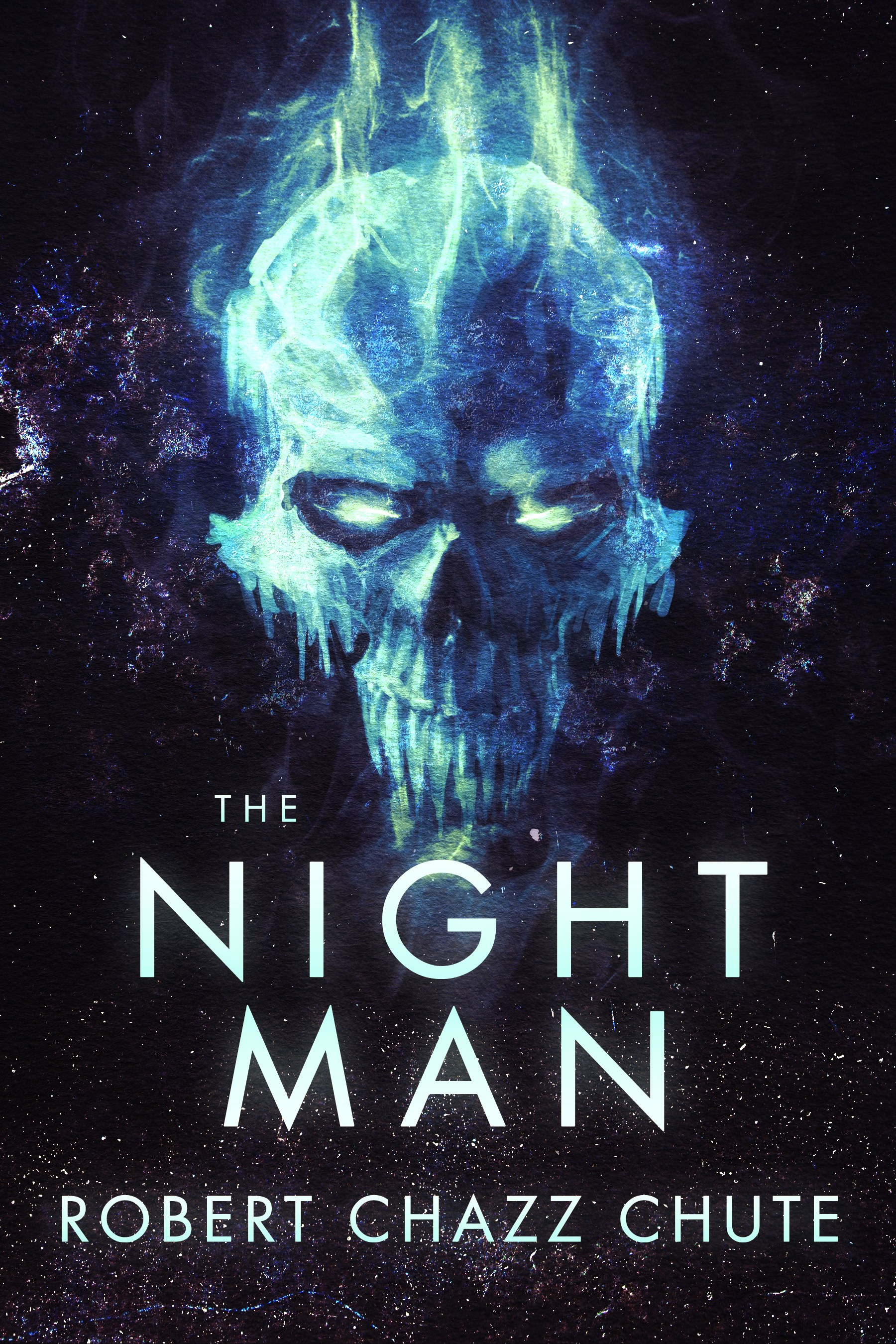
You can pick this ebook up for free today at this link: http://bit.ly/TheNightMan

Join my inner circle at AllThatChazz.com

See my books, blogs, links and podcasts.

Enter your email address to follow this blog and receive notifications of new posts by email.

Join 2,063 other subscribers