C h a z z W r i t e s . c o m

See all my books at AllThatChazz.com.

Dr. Phil Mistreats Wannabe Writer, Then Bathes in Cash & Cackles

Dr. Phil counselled some poor slob and his desperate wife since said slob was writing a book and refused to get a job and support the family. Of course Philacious told him to get off his duff and get a job. I was supposed to feel sorry for the wife and the family. Instead I thought “Wow. Way to stand up for the brand, Dr. Dreamkiller.” He’ll trudge back to work and maybe the book will die and maybe it won’t, but despite the doc’s assurances, the dude’s chances of publication just went down. You could see it in his eyes. The wannabe (as best-selling Phil so graciously labelled him) just didn’t have a lot more energy to spare. Your other job can feed your passion or suck the creative life out of you. Be careful what you choose.*

BONUS:

Phil made some fallacious comparison of fiction to non-fiction. He told the guy he needed to submit a proposal rather than a full manuscript. Not in fiction you ain’t! When submitting fiction, you must have the full manuscript polished and prepared. Proposals are for non-fiction only, no exceptions.

DOUBLE BONUS:

Dean Koontz’s wife went to work and gave him five years to make write. If he didn’t make it in five years, she reasoned, he wasn’t going to make it. He did make it, of course, and his books are a testimony not so much to his hacking talent as his persistence. If you have enough time and persistence, talent counts less than we’d like to think. Make the time to write.


*Yes, I’m saying, if necessary, divorce your wife, leave the kids in a ditch and run away. They’ll understand eventually that you did it for Art. Yeah. That’ll go over well.

Filed under: Writers, writing tips, ,

Premises, Promises and the Payoff

When someone says, “I have a good idea for a story,” they better not just stop at one. It’s not enough for a novel to have a good premise. More good ideas must follow the first. A good book is not just one good idea, but many, strung together in a way that builds and builds to keep the reader reading.

I’ve been trying to enjoy Three Bags Full, a detective story where the detectives are sheep and the victim is their shepherd, who died with a spade through his guts. Ooh, a spade through the guts! Delicious! I must read more, I thought. I wanted to like the book, but it didn’t work out that way.

The comer on the cover was that it’s like Agatha Christie wrote a Wind in the Willows murder mystery. I loved Wind in the Willows and I’ve read some Christie 20 years ago so hey, a match made in heaven. Not baaaaaa-ad! (Get it? Sheep? Not baaaaa-ad? Never mind.)

Alas, experimental fiction can be trying when it belabors the conceit. It’s a good idea that could work well in a short story, but at novel length I’m fading fast…and I’m getting it the easy way on MP3! Save the change. Three bags Full is a good idea…but just one. Halfway through I’m thinking, “Isn’t it time for the little Irish village to have a big Greek feast with lots of lamb chops with mint jelly?”

Good books, like The Wind in the Willows, for instance, have good ideas at every turn and keep you turning those pages. What happens next? And then what? Keep that narrative train moving moving moving. Will Mole and Rat finally run over Mr. Toad with his own car? They never did…which I guess I’m glad of. I remember reading Wind in the Willows late into the night and my mom finally coming in to tell me to go to sleep. “Just five more minutes Mom! I want to find out what happens to Mr. Toad!”

BONUS:

 Keep the good ideas coming. There should be tension on every page, or a very good reaason why there’s not.

Filed under: Books, writing tips, ,

I resolve to be a better supervillain, uh, no, I mean, writer.

Amidst a flurry of productivity pumping out short stories lately I was reminded of a book I read a long time ago. Had I heeded its message when I read it I would have several books behind me by now.

The book is The War of Art, Winning the Inner Creative Battle by Steven Pressfield. (Highly recommended!) One key is, treat it like it’s a job. You don’t wait for time to surface, you dive deep to get it. You don’t wait for inspiration to strike, you assume inspiration will appear once you start typing (sadly this never happened for the writers of Sex & the City, the story of three hookers and their transvestite dad, Kim Cattrail.)

Don’t be a dilettante. Establish a writing schedule and stick to it.

I’ve called this meeting because we must come up with a plan to kill Superman!

Whoops! Sorry, wrong speech.

Filed under: book reviews, publishing, Rant, rules of writing, writing tips, , ,

Most Depressing Writing Tip Ever

Get a Merck’s Manual or just peruse medical databases or watch House. However you get the information, I find that delving into the perverse ways God screws us over can really take your writing to another level.

I had a plot problem in a story because I wanted something interesting to keep a man from getting on a plane to attend his brother’s funeral. I found something exotic and X-files wierd for him to suffer and voila, interesting things ensued.

It’s a ghastly world. Babies are born with two heads and people have strange perceptions of the world, like that it’s a happy place, for instance.

Filed under: writing tips, , ,

Death to Adverbs

An editor sent me a pdf today so I could check my column for an upcoming mag issue.* I made a small change and then, startled, stared hard at the first paragraph again. Had I really written, “She asked me demandingly, “BLAHBLAHBLAH…”?!

I sent the editor a note that I really needed that to change to “she demanded…” whiningly.

He came back with, “Can you demand a question?” (inquisitively)

I e-mailed back, “Sure. Demanded catches her demeanor but you can demand an answer in the form of a question.” (breezily)

And even if you can’t do that grammatically I don’t care. I trust my ear over grammatic semantics and there’s a time to use an adverb like “demandingly.” That time is never or two weeks after the sun explodes. (he said defiantly)

Not sure. I’ll go look it up. (assiduously)

 BONUS:

Folks in the magazine business always call it “the book” not the “issue.” I always suspiciously thought that betrayed insecurity on their part.

Filed under: grammar, writing tips, , , ,

Writing Tip: Can you say it?

I just finished listening to a CBC Radio interview with Clive James. He’s one of those fascinating writers who also speak in complete sentences and paragraphs, off the top of his head as if from a prepared text that’s informative, entertaining and engaging.  He’s led a wonderful life and he’s been paying attention, it seems, to everything.

He said something that will stick with me: “Sayability.” In everything he writes, one of his tests for whether it’s worthy is whether he can say it, perform it, speak it to an audience and be easily understood.

Nice. It’s a solid standard and makes me want to check out his book Cultural Amnesia.

I can say that.

Filed under: Writers, writing tips, ,

How to talk to an Editor (pleasantly)

Rule #1: Most important in this or any business: Be the pleasant solution, not the grumpy problem.

Scenario:

You write a piece for a magazine. They edit it (gently I hope) and before they send it off to the printer, they send you a dummy in the form of a pdf file. Depending on the mag, they may also require a fact check and copies of all your notes etc.,…

Though the editor has gone over the story and it looks like the magazine page, go over it carefully. Ultimately, my name’s on the piece, so I have to be happy with it. However, this is not the time for you to make major changes. It was supposed to be close to perfect when you sent it in. There will be a few notes here and there, sometimes so many you’d think the copy editor went at their keyboard with oven mitts. Usually it’ll be details.

Correct the mistakes. How you talk to the editor is based on what relationship you’ve built up over time. I have an editor I’ve worked with for a few years now and, like many jobs I’ve had, I sometimes suspect I don’t get fired because I amuse them. Be yourself, only better. Don’t assume familiarity too quickly, but build the relationship so you get assignments. Do a great job so you earn the next job, too, of course.

I just got a pdf tonight for a health mag I write for. One of my precious/funny  anecdotes had been deleted from the story. I don’t decry the loss because that’s an editorial choice I can live with. The length often gets cut not because of the content but because magazine and newspaper content is just the stuff they’re trying to fit between the ads. (In newspapers, they crassly call it “The News Hole” which also gives you an insight into the perceived value of reporters’ hard work.)

Below is a copy of what I’d consider typical of a reply to an editor (I know really well) with a few things I want changed in the pdf. Sometimes it’s a lot more but this editor edits clean so my suggestions are minor.

See? Freelancing can be fun.

EXAMPLE:

My Queen,

Looks good. Just a couple of quibbles:

1. If you have the space, MSG is another migraine trigger that would be good to mention. Alert the populace!

2. Under For the joy of it, the phrase “hanging around” is used too close together. How about: “As long as we’ve been on the planet…”

3. The paragraph starting “Poke an animal with a stick” appears to have a double indent making it non-uniform and so it is deviant and must be crushed…sorry, my upbringing in a Catholic girl’s school is showing.

Okay, that’s three quibbles, but that’ll do. Any other objection I have is microscopic and really revolves around my sublimated resentments about not yet winning the lottery, not controlling my world and…I’ve said too much…back to writing about the existential horror of it all. Did I mention that we’re all just genetically programmed meat machines awaiting the heat death of the universe? Probably. I put it on outgoing my voice mail message, too.*

Chazz

The Impossible

BONUS:

*I know this editor well and joking around a lot opened the door to writing a couple of humor pieces for the mag, as well. Early on? Much more formal, short, to the point and business-like…because, hey man, whether you like it or not, this is a business.

Filed under: Editors, writing tips, ,

Freelancing for Beginners

 Someone has asked me how to break into freelancing.

 A few ideas about breaking in–specifically to non-fiction markets since that’s an easier place to start for everyone:

Of course the Internet is the future, but there are many kinds of freelancing. The internet is bursting with a need for content though in many cases the pay is ridiculously, insultingly low. At guru.com, you’re competing with people willing to do outsourcing/freelancing/writing work for pennies an hour. There are ways to make money with the Internet, but I don’t think they fall under the assignment I was given here–what advice would I give to someone looking to begin freelancing?

My first suggestion would be to take inventory. What are your interests and what do you already know? If you’re a canoeist, I’d be looking at canoeing and backpacking mags. If you’re into walking, I know there were at one time three walking mags and if it’s a particular English family with no last name you’re wild about, there were five mags the last time I checked on the Royals. Really, I can’t imagine how much there is to say. The point is, whatever your interest, there’s a magazine about it.

Start small. Even if you have a perfect idea, if you have no experience, editors won’t trust that you’ll be able to deliver. Often very short pieces in the front of a magazine are a great way to start with an editor and get a track record and a relationship going. If I were approaching a cookbook I might pitch a query–or just write 150 words and send it in–on the topic of how long to boil an egg. (There’s a variance depending if you’re at sea level.)

You probably won’t plan your path. You’ll discover your path as you keep moving forward. My love is writing mostly psychological, often torturous and always existential horror (“If you’re skin doesn’t crawl, it’s on too tight” as an old movie tagline goes.)

My expertise is in alternative health care issues, but I had an advantage going in. I started with my local newspaper when I was 17. Later I had specific medical training to draw on so my non-fiction is often about that. My original training and work in journalism (dailies/weeklies/mags) gave me lots of clips to show a track record.

After I wrote  a lot for one magazine in particular they gave me a column. Get out there and build your track record, whatever it’s going to be. My time reading was more important than any formal training.

You don’t need an MFA to be a freelancer of any kind, either. (Go ahead and do it if you want to, but it’s not necessarily the expressway to getting published.) You need to write a lot and keep sending stuff out.

Proof: I know a lot of PhDs through my wife, who’s also a doc. A lot of them–a startling number of them–are not as intelligent as you’d expect. (An expert, after all, is someone who knows so much about so little that eventually they know everything about practically nothing. Personality disorders are common. However, they completed a (usually) grueling course of study. They have something you need. It’s not their smarts. It’s their persistence.

An aside about payment: If it’s going to get published, try to get paid something. They’re paying everyone else from the janitor to the printer so they should pay for the stuff people buy the magazine for! Too many writers sell themselves way too short. If they’re going to print it, it’s worth something. They aren’t printing anything to do you a favor. Don’t work for free or buy the crap about “paying your dues.” (It makes the transition to getting paid harder, makes getting paid harder for all of us, and when you do get paid it will be too little and long overdue.)

From the Ministry of the Bleeding Obvious:

Study the magazine you’re aiming at and pay attention to the ads. They’ll tell you what audience you’re writing for. If there are ads for Axe and electronic gadgets, it’s Gen  X and Y and Z. If it’s Depends, it’s old boomers. Station wagons? The youngest boomers and the oldest Gen X. Gear your tone and subject accordingly.

EVEN MORE TIPS: Newspapers pay poorly but a guest editorial is sometimes an easy clip to get for a start and may pay $100. Ooh. You could fill a gas tank with that.

In your queries, highlight your interest and experience in a given topic. Freelancers with more experience often write about stuff they have zero prior knowledge of, but I don’t know anyone who started out that way and many stick close to their personal areas of expertise and interest. It’s efficient and efficiency means you’re making more money.

Brainstorm ideas and spend a lot of time on your first queries. Once you’ve established a relationship with an editor you can do breezy queries that get read before the unknown writers’ queries. Editors are busy–insanely busy and they don’t have enough staff. Understand that often editors are so busy that they do the reading part of the job on their so-called personal time. Their work time is spent haggling, buying, planning, editing and dying slowly in meetings.

Make sure your query is killer. Then query again. I started with writing on spec and often still do. I like it. If who I’m thinking of doesn’t go for it I’ll sell it somewhere else. When I write for myself first, there’s no pressure and I can write to my vision. This isn’t a formula for making a ton of money freelancing. It is an easier way to start, and since the product is already known–the editor is holding the whole thing in her hands already–it makes it more comfortable for editors to buy your early work. The bigger money is in getting assignments.

Where’s the real money in freelancing? Corporate work. I like advertising work and charge heavily for faxes to blast and flyers to mail. Business reports aren’t so much fun but freelancers who want to boost their bottom line easily eventually do PR work and brochures because the pay is far and away above what mags pay. An employee handbook isn’t a ton of fun but it is needed and maybe you can get some latitude to make it fun so someone will actually read it. I’ve been paid as much for a 100 word fax blast as I would for a column and all the original material was already there to massage. I just had to edit it, inject a new take, spruce it up, maybe add some hyperbole to make it work to make money for the company. 

What about fiction? Not my main focus for this post but such a dear subject I can’t resist adding this perspective: In the 40s, 50s and 60s writers could make really good money selling short fiction. Wow. Those were the good old days. Kurt Vonnegut made more as a short story writer than he did as a PR flack for GE.

By the time young Steve King came along, his market was mostly the filler between the pictures of naked ladies in Screw. After a short while, there were fewer and fewer stories even there and the ratio went high for more pictures of naked ladies. That was also the division of the marketplace into dozens of venues that have all devalued writing–now called “content,” AKA the shit between the ads. Don’t worry about Mr. King, though. I understand things worked out for him despite the disadvantages.

Today we’re competing for time from a populace that doesn’t read much that’s not pixellated.  So many choices leaves less room for you. It’s DVD versus Blue Ray vs. Wii vs. Play Station vs. porn vs. the gym and the lures of the outside world when the weather’s nice. Too often people read now when trapped on a subway or it’s something they save solely for a rainy afternoon at the cottage when there’s nothing else to do and the kids are down for a nap. And then it won’t be your fiction. It’ll be one of a dozen bestsellers–only bestsellers.

Still, there are people who read…soon to be wheeled out at the Smithsonian once a year for display and the awe of illiterate troglodytes. (If you can read but don’t, you have zero advantage over people who tragically can’t read.) For freelancers pursuing the non-fiction market, there are lots of venues out there and you’ll find them all online. Don’t bother with print editions filled with editors’ names and addresses. If they’re on paper, they are out of date.

What about book proposals? Isn’t non-fiction easier to sell? Yes. You’ll do better to be the brilliant (and hilarious) quantum theorist with a corner on a new take on reality or a freelancer with lots of clips before you approach a publisher. (In fact, it’s best if you’re a celebrity who is best friends with Oprah and you have an immense following already.

This isn’t meant as a comprehensive treatise on all the ways to get into all the markets, but it is meant as an overview for those of you interested in starting up a freelance enterprise and aren’t sure how to begin dipping a toe in the pool and testing the temperature.

Filed under: writing tips, , , ,

It’s about the work

I’ve been a bit of a crank on here for several posts (and my whole life) so I should mention that it’s not always like that. This evening I got an e-mail. I had sent in a spec feature to a health mag and the editor bought it. The contract is on the way.

When they tell you they are sending cash, it does tend to feel good. The thrill of  seeing your stuff in print wains a bit (though I remember being quite high when I had articles in two mags that sat side by side on a news stand at one time.)

But the fun has to be in the writing itself. If it’s not fun, there are plenty of other things to do that pay more and probably hurt less, since you’re only as good as your next piece.

Filed under: writing tips, ,

What Happens Next?

If you’re telling a compelling story well, you keep your reader wondering what happens next. 

When I don’t know, here’s what I do. I sleep on it. (Wait, it gets better.) Each night before I go to sleep I ask myself what problem (plot problem, character issue, niggling story detail) I want answered when I wake up. When I wake the next morning into that special hypnagogic state between sleep and full wakefulness,  I find my answer. The hypnagogic state is a very powerful state of mind where you can be most creative. It allows the subconscious to supply the answer you’re looking for. It really works.

BONUS:

I’ve had several requests from potential freelancers. If you want to be a freelancer, read Jenna Glatzer’s How to Make a Real Living as a Freelance Writer. It’s solid advice. There are a ton of these books out there but it’s certainly one of the better ones.

WORD of the DAY UPDATE:

Hagiographic:

A study of the lives of saints or idealizing biographical books.

To paraphrase Steve Martin:

Latin. They’ve got a word for everything.


Filed under: Books, writing tips

Bestseller with over 1,000 reviews!
Winner of the North Street Book Prize, Reader's Favorite, the
Literary Titan Award, the Hollywood Book Festival, and the
New York Book Festival.

http://mybook.to/OurZombieHours
A NEW ZOMBIE ANTHOLOGY

Winner of Writer's Digest's 2014 Honorable Mention in Self-published Ebook Awards in Genre

The first 81 lessons to get your Buffy on

More lessons to help you survive Armageddon

"You will laugh your ass off!" ~ Maxwell Cynn, author of Cybergrrl

Available now!

Fast-paced terror, new threats, more twists.

An autistic boy versus our world in free fall

Suspense to melt your face and play with your brain.

Action like a Guy Ritchie film. Funny like Woody Allen when he was funny.

Jesus: Sexier and even more addicted to love.

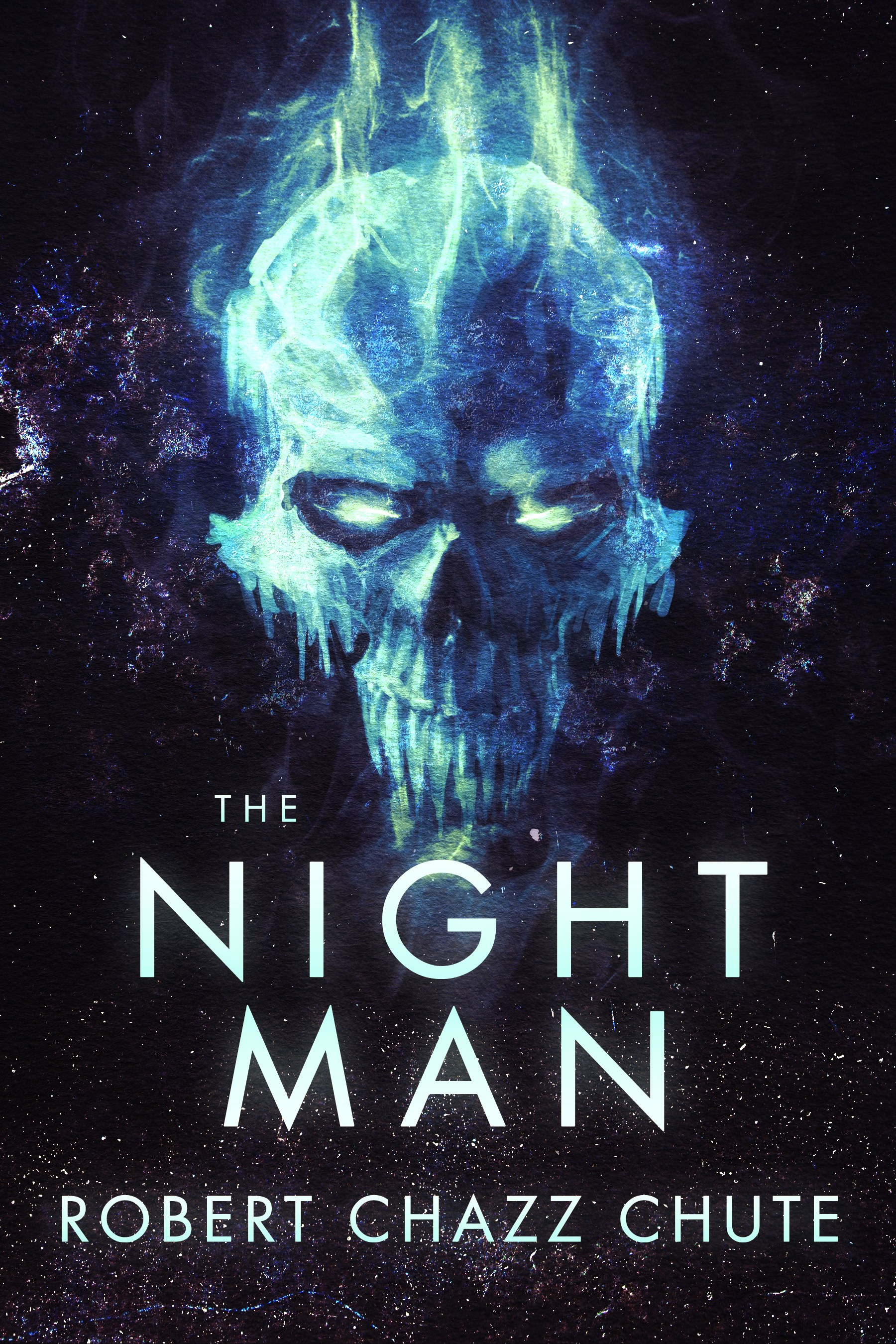
You can pick this ebook up for free today at this link: http://bit.ly/TheNightMan

Join my inner circle at AllThatChazz.com

See my books, blogs, links and podcasts.

Enter your email address to follow this blog and receive notifications of new posts by email.

Join 2,063 other subscribers