This sweet post explains why over at The Why of Fiction. It is a most excellent post which should spur you to action…rather than reaching for the orange juice and vodka.
Filed under: Rejection, rejection, the why of fiction

07/17/2010 • 7:08 PM 1
This sweet post explains why over at The Why of Fiction. It is a most excellent post which should spur you to action…rather than reaching for the orange juice and vodka.
Filed under: Rejection, rejection, the why of fiction
06/12/2010 • 9:18 PM 0
The SET UP: Three executives at a conference table.
The ACTORS: X, a young man and Y, a middle-aged woman (both in sharp power suits) sit on either side of Z, an older man in hideous golf attire, all day-glow plaid.
Z listens as X and Y discuss a new advertising campaign.
X: Let’s get the old business out of the way first. The copywriter from the last push is still calling about getting paid for those brochures.
Y: Keep stalling.
X: He threatened to firebomb the building.
Y: Where’s he live?
X: The west coast.
Y: At his rate he can’t afford to travel. He won’t bomb the building.
X: He sounded pretty…motivated.
Z (piping up for the first time): Tell senior staff to bring a sweater just in case. I’ve got a tee time to make. Can we hurry this along?
Y: Only senior staff, sir?
Z: No need to get the minions excited. If that kook does show up it’ll probably be a single molotov cocktail. How much can that do? I don’t know anyone who works below the 28th floor so let’s keep our eyes on the big picture, okay? (He taps his watch.)
X: Right. New business. I’ve been thinking about the new ad campaign–
Y (self-assured and interrupting breezily): What’s the webmaster saying?
X: What he always says. “More white space.”
Y: I don’t speak HTML but from what you’ve told me, that’s all he ever says.
X: Then he must be right.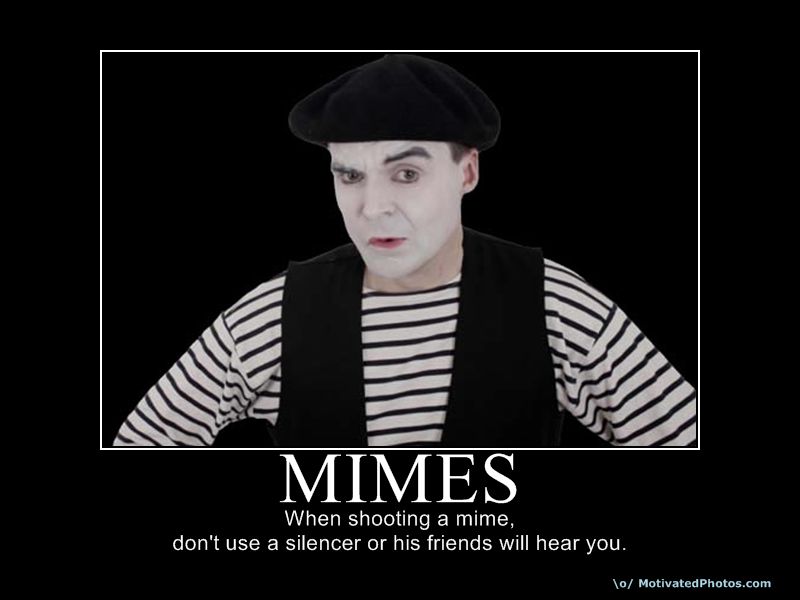
Y: Yes. Nobody can be that arrogant all the time and ever be wrong.
X: We’ve gone over this. He won an award from Wired for his designs.
Y: I know. I know. It was a brown black smudge with six-point type in yellow. To read the content you’d need a microscope.
X: The article must have been about microscopes.
Y: Ah. Now I get it. That makes sense.
X: Well, I’m just guessing. Maybe not. Maybe it’s a comment on our superficiality in a post-literate society.
Z and Y look at each other blankly.
Y (to Z): I did warn you about hiring a goddamn English major, sir. How’s the ad campaign costing out, Professor?
X: We have several applications. I put it out for a bid on the web.
Y (glancing at Z): And? And?
X: Uh, well, this one from Angola looked promising but he wants to be paid with a goat.
Y: I told you, this is just content. We don’t have to pay a whole goat’s worth.
X: Do you think we can get it done for a couple of chickens?
Y (to Z): That’s the problem with these young guys. They want to spray money everywhere like that fixes the problem. I tell them all, do more with less. It makes them creative.
X (jumping in defensively): I’ve got a guy from Idaho who’ll do it for a single kind word from another human being.
Z grins and throws a knowing wink at Y.
Y (shaking her head and pleased to be destroying X with a condescending smile): We don’t do that.
X: Oh.
Z: I’d be on the tee right now if you just went with the lowest bid.
Y: Yes. Exactly. You’re exactly right, sir. What about it, X?
X (putting the sheaf of applications down, steeling himself): That’s just it, sir. I have a revolutionary proposal that will save the company–
Y: Oh, lordy! Sir, I had no idea he was going to waste your valuable golf work time.
X: I was talking.
Y: You haven’t discussed anything about this with me so it’s inappropriate–
X: I didn’t discuss it with you because I wasn’t interested in having you take credit for my ideas again.
Z’s mouth drops open. He looks back and forth between the two as Y stands up, furious.
Y: Pack up your personal things from your desk. Bruno will see you out.
X (talking just to Z now): Sir, it was me who came up with the idea for third world galley slaves to row your yacht.
Y: Sir! This is outrageous!
X: …and you can hear me out or I can take my brilliant idea for an ad campaign over to the competition and be in a VP suite by this afternoon.
Y is still standing, trembling with murderous rage. Z stares in X’s eyes for a full minute and X does not waiver. Finally, Z nods for Y to take a seat and turns back to X.
Z: Ballsy move, son.
X: Thanks, Dad.
Z: Not here. Go ahead. Let’s hear it. It better be good. And quick.
X: Well, I was thinking.
Y (rolling her eyes): Oh, God!
Z silences her with a look.
X: I was at this party and somebody was telling me about an old hamburger campaign that was really successful. I don’t know which one. It was long before I was born but (sweating but pressing forward, his eyes boring into Z’s) the point is, it was an old lady just saying “Where’s the beef?” The thing was, the line was improvised.
Z: So you’re saying improvise the content, not pay some schmoe a chicken to write it?
Y (reaching for a phone): Shall I call Bruno to escort him out, sir?
X: I’m not finished.
Z (putting out a hand to restrain Y from the phone): What else you got?
X: The problem is that whenever anyone speaks the content on TV the damn actors union insists the people talking get paid. But, if they don’t talk, they don’t get paid!
Y: What are you suggesting? We get the deaf to market our products with sign language? Some civil rights group would still insist we pay them. You can’t screw with the handicapped in this country. You have to outsource to Korea and China for that. (Beat) Idiot!
X: Oh yeah? Well, you didn’t think of this. I figured out who has less self-esteem and less power than writers and actors.
Z: What species is that?
X (triumphantly): Mimes! We get improvising mimes to do their performance art thing to get our message out. They’ll do anything and get paid nothing.
Y: Do you really think putting out TV commercials with mimes can communicate the intricacies we need consumers of complicated financial services products to swallow?
X (sitting back, self-satisfied and throwing it in Y’s face): Big picture, big picture, big picture! You’ve missed the big picture. We’ll get them to do radio commercials, too.
Z sits back, obviously stunned. Then, to Y: Call Bruno. Somebody needs to clear out a desk around here.
Y (snatching up the phone receiver): Finally!
Z: Clear out your desk, Y. I want my new VP here to have that corner office of yours.
(To X) You’ll love it. It’s got a view of the city, you can watch the wage apes all day and it’s got the only windows in the whole tower–besides mine–where you can toss out water balloons on the hapless throngs below.
X (brightly): Or acid balloons!
Z (delighted) : You are on a roll, boy!
Y (ashen) improvises a gutteral vowel sound for which she will not be paid.
Z: Don’t worry. I’m not sending you to the curb, Y. You’ve given me too many long years of loyal service not to keep you under my thumb to ensure your continued indentured misery. (He utters a terrifying baby-eater’s maniacal laugh.)
A single bitter tear makes its way down Y’s cheek.
Y: But sir–
Z (getting up): I’m sure we can find you something on the first floor by a window. You can keep a look out for angry writers with bombs.
Y: S-s-sir!
Z: Come with me, m’boy. It’s time I taught you the sweet science of the putter. Tomorrow you can drive downtown and start rounding up mimes. Stack ’em in the back of a truck and we’ll put some lipstick on the ol’ advertising pig, eh?
X: Thanks, Da–um, sir.
And…scene.
Filed under: Rejection, advertising, copywriting, rejection
06/08/2010 • 8:49 PM 0
 At the end of a play universally regarded as a fiasco, Oscar Wilde quipped that the show was a grand success but “the audience was a disaster.” Much on my mind as I work on my performance of the short story The Sum of Me for the Canwrite writer’s conference. We, who are about to rock the mic, salute you!
Filed under: Rejection
05/26/2010 • 2:21 PM 0
05/23/2010 • 2:57 PM 0
Here’s an unhelpful answer when you ask for feedback: “That’s derivative.” Derivative is “it’s been done” dressed up in fancy clothes. That’s not useful information because everything has been done.
There are books that try to reduce everything to thirty plots or only ten. I can edit that down to two: Boy gets girl (with multiple variations) and good versus evil. It’s up to the writer to make it different enough within the familiar.
When someone says what you’ve written is derivative, what they really mean–and they might not know this–is that it’s boring. Maybe you’d prefer the encrypted signal after all, huh?
Recently some wag complained that Scrubs is derivative of Parker Lewis Can’t Lose. If you don’t remember Parker Lewis you aren’t alone, but yes, it was a funny show that featured lots of quick fantasy sequences and non sequiturs. It’s ironic that the critic was saying Scrubs was derivative when it’s so clear that Parker was heavily influenced by Ferris Bueller’s Day Off.
(Family Guy uses the same devices but nobody’s calling Family Guy derivative except some really bitter Simpsons fanatics.)
Scrubs isn’t derivative because (a) it has lasted longer and will be in syndication forever and (b) while both are comedies, Scrubs occasionally has more emotional depth. Parker Lewis Can’t Lose was a safe show to watch. It was right in the title! He couldn’t lose! In Scrubs, patients you like sometimes die and more than once the writers made me cry while I was laughing. That’s really hard to do in twenty-two minutes of what’s often a silly show.
Both shows use some of the same devices, but the stories and characters are plenty different. That’s not derivative. (Of course, Scrubs has moved around so much in broadcast times and even networks that I haven’t seen it for several seasons now. They lost me when they went to the January to June format to accommodate Zach Braff’s movie career.)
There are no new plots but there are plenty of characters and plot permutations and combinations to last us until the sun explodes. If someone tells you you’ve written something derivative, you can say:
“Tell me more.”
“Anything else?”
or
“You’re an ass hat.”
BONUS:
*Did you catch the subtext here? To talk about writing, we always use examples from popular TV shows and movies as a shortcut to mutual understanding. Yes, that’s writing, too, but isn’t it a bit sad that we don’t have enough common examples to draw from in books? I could blog for days on Fight Club, but since a bunch of you haven’t read it (still!) it’s not a common enough example to use as a currency on a writing site. Maybe you’ve all seen the movie. There are so many books and far fewer popular shows and movies, but in our culture what we watch interprets our world. We don’t have enough text in common, so go read something.
Filed under: Rant, Rejection, writing tips, critique groups, derivative
05/21/2010 • 3:14 PM 0
Editor and agent submission guidelines can sometimes be silly and hyperbolic. “Blow me away! I want to be transported!” Then you actually read their lit journal or the books they published and you think, “Really? That blew you away? I’d rather read a cereal box.”
Agents will tell you what they don’t want, which is reasonable. If editors who handle fantasy aren’t in their network, that’s fine, they don’t handle that. That’s a business decision that says nothing about your work.
Editors and agents want something that appeals to them and they’ll call whatever appeals to them “good.” Bookstores and libraries have lots of books that don’t appeal to me. I don’t assume that means they’re bad books, however. I just think, somebody must love that stuff and I don’t. I have no interest in birdwatching or golf. Still lots of people are into that.
The best rejection slips simply say, “Not for us.” That’s most accurate. Everything else is just an opinion. Don’t take your rejection slips personally.
Now go mail your manuscript again.
Want to commiserate with somebody about rejection? Meet Writer Rejected at Literary Rejections on Display.
Filed under: agents, queries, Rejection, getting published, queries. agent requirements, rejections






Winner of Writer's Digest's 2014 Honorable Mention in Self-published Ebook Awards in Genre


The first 81 lessons to get your Buffy on

More lessons to help you survive Armageddon

"You will laugh your ass off!" ~ Maxwell Cynn, author of Cybergrrl



Fast-paced terror, new threats, more twists.

An autistic boy versus our world in free fall

Suspense to melt your face and play with your brain.

Action like a Guy Ritchie film. Funny like Woody Allen when he was funny.

Jesus: Sexier and even more addicted to love.

You can pick this ebook up for free today at this link: http://bit.ly/TheNightMan


See my books, blogs, links and podcasts.

 C h a z z W r i t e s . c o m