C h a z z W r i t e s . c o m

See all my books at AllThatChazz.com.

Christopher Hitchens yelled at me (and rightly so)

Christopher Hitchens1

Image via Wikipedia

Imagine my dismay. I sat at the front of the room in the middle of an editorial meeting when the crowd parted. There was Christopher Hitchens sitting alone in the middle of the room. He was angry with me.

“You need a lifestyle editor!” he said. Not that he was applying for the job. He was talking only to me and the group I had been speaking to became a faceless mob. My job was managing editor for a magazine. And here was someone I admire proclaiming that I was screwing it up.

“You have to take responsibility!’ he said. “How do you expect to succeed without a lifestyle editor?

His last words to me were, “The clock is ticking, you know. How much time do you think you have?”

Wow. I was confused for a couple of reasons. Though I’m a big fan, I couldn’t picture a situation where I’d be in an editorial meeting with Mr. Hitchens. More to the point, I played managing editor on my college newspaper. I’m not a managing editor at the moment.

I was dreaming.

But dreaming with a point.

I woke up startled. I pulled back the sheets and sat on the edge of the bed. “My unconscious is telling me to work on my lifestyle, to chase my dreams with more awareness that life is an opportunity that does not last forever.” I exited the dream vehicle, not just reminded, but committed to continuing my lifestyle changes as well as alterations to my professional life.

The message was made all the more stark considering the challenges the real-life Christopher Hitchens is now facing. Esophageal cancer is a bitch.

It’s one of those weird little life fictions from the dreamscape that, even if it’s wrong, it’s right. The experience affected me deeply.

So it was like all good fiction.

Filed under: authors, Horror, What about Chazz?, , , ,

How to be a Bad Editor

The phrase that pays.

Image by pirateyjoe via Flickr

Most editors are pretty good to great. Then there are the others. Here’s how to be one of those bad editors:

1. Edit without being asked. A copy editor I knew came up with a detailed critique of small advertisement I had for one of my businesses. I hadn’t asked and his manner was that he had caught me out at something. He hadn’t, actually. He didn’t like the paragraph’s wording but everyone else was okay with it. At best, his editorial suggestion was a lateral move. Worse, when I gently brushed him off, he didn’t have the grace to shut up. Then I had to brush him off with force.

2. Treat catches like a moral victory. A newspaper editor descended on me because, on my first day, I wrote Sidney instead of Sydney, Nova Scotia. I thanked her for catching my error. “This is not a minor error!” she said. “I said thanks,” I replied. “Were you looking for? Blood? I’m fresh out.” Mistakes happen. It was her job to catch my errors. I owed her my gratitude, not an apology.

3. Be very sure, and pissy about it, even when you’re wrong. A teacher, who was presumably responsible for helping generations of students, circled a word in a business document. She used her red pen as if I were one of her unfortunate, young charges (though I was about 30 at the time.) “You got this wrong!” she said with delight. (See #2) By that time I’d already edited and/or proofread hundreds of books. I knew what I was talking about and here’s the rule: You affect the effect. This is a common mistake. She stayed sure I was wrong. It was just too delightful to think she was right, I guess. That’s another common mistake.

4. Treat your writers like crap. (And refer to them as “your” writers, as if we’re owned.) Working in a big daily’s newsroom was an intense environment, sometimes unnecessarily so. For some reason, the air was also very dry. You’d think all those tears would be humidifying. Anyway, I had a nosebleed and some assignment editor (who was all of a year or two my senior) walked up and dropped an assignment on the keyboard upon which I was trying not to bleed. He didn’t say a word about my hemorrhage and went on about his work. A year later I was working in publishing with someone who had worked at the Toronto Star and she told me she’d experienced the exact same story with a person who was just as uncaring about her welfare. Weird.

5. Be a strict grammarian. Insist on obsolete rules. Insist the legendary “to boldly go where no one has gone before” was a mistake in two Star Trek series, a crime worthy of beheading. And never allow anyone to start a sentence with “And.” Also, grow visibly nauseous when anyone dares to end a sentence with a preposition. That’s something up with which you will not put.

6. Insist that new word usage is the cause of all our economic, political and moral woes. Insist we should freeze the language at some arbitrary point that makes you comfortable. Verbing nouns particularly irks you. Exclaim your objections and try not to faint with the vapours when someone says, “I’ll google that.” Civilization began to end when we started using “impact” as a verb and texting abbreviations are not analogous to a new language. Texting is a sign of End Times.

7. Be a tyrant. Change your mind. A lot. This is particularly fun for assignment editors. Expect writers to read your mind about how you want the story to go. Don’t tell them what you want. That would ruin your fun. Instead, get angry when they guess wrong. For extra bonus douche points, decree that you loathe simultaneous submissions and take forever to answer queries (or don’t answer them at all.) Pay a pittance on publication. Better, pay in bird-cage liners and tell seasoned writers they should be grateful you’re allowing them to “pay their dues.”

8. Be cruel in your rejections. When work you’ve turned down succeeds elsewhere, never doubt your judgment. Sniff at the plebian tastes of the masses instead. Better, put up examples of queries you find execrable and hilarious on your website. Mock it mercilessly. Sure, you’re a ball breaker and a soul crusher, but if you call what you do helping, it’s okay.

9. When you edit, don’t focus on making the text better. Focus on making yourself feel better. It’s that kind of prioritizing that can make you a famous infamous editor. Be sure to crow to everyone how x,y, and z author owes everything to you because you gave them their big break. Act as if you did them a favour (instead of the business decision it really was.) When your fledgling authors come to their senses and flee to work with someone sane, declare them a bunch of ingrates and try to have them banned from ever making a living or even having lunch in your town again. (Yes, these legends aren’t just in New York. I’ve met a couple of these demons in Toronto’s publishing houses,too. They’re people who never figured out that it’s not how you treat your superiors and your supposed equals that defines you. How people see you is determined by how you treat your assistant and those lowly writers.)

10. Be a frustrated writer. I once knew an editor who worked in educational publishing. She was a nice person, or at least I thought so until I saw an example of her work. While it’s true, particularly of educational publishing, that there is a style to follow, her changes to copy were gratuitous. She wanted to write, not edit. It showed. 

Follow these ten examples and you will soon be recognized as an editor to fear, loathe and avoid. Congratulations!

Filed under: Editing, Editors, grammar, Horror, publishing, Rant, Top Ten, , , , , , ,

Book Review: I Am Not a Serial Killer

Stephen King's House in Bangor, Maine

Image via Wikipedia

Even when an author makes a choice that doesn’t sit well with the individual reader, when a book is written well, perceived flaws are easily forgiven. Dan Well’s debut novel, I Am Not a Serial Killer is a solid writer. From the first chapter, I knew I was going to like this book and I could see why his agent and publisher were grabbed immediately.

Wells has done his research so well, you’re convinced he’s been hanging out in mortuaries a long time. He details the embalming process is grisly, convincing detail. He’s acquainted himself well with how a sociopath thinks. I wish Jeff Lindsay, author of the Dexter books, understood serial killers so well. (While the Showtime series, Dexter, is superb, the books are get progressively worse.)

When Wells’s tale threatened to go off the rails for me, he kept me riveted with realistic detail. I’m not going to spoil the story for you. I will say that Wells makes a daring choice by sliding a gritty portrayal of a young sociopath into a supernatural story. Had he kept his horror altogether in reality, it would be In Cold Blood for the juvenile set. I got antsy about the supernatural turn the story took, but Wells controlled his story by going back to the realistic context.

Reality is what makes horror so effective. It’s viruses escaping from government labs. It’s the threats that lurk behind every corner which end at a police station, a hospital or a morgue. Think of Stephen King’s portrayal of big bad things happening in tiny, ordinary towns in Maine. What makes effective horror so effective is that it occurs in such ordinary contexts. That’s why Wells’s choice to opt for the supernatural is daring. Each time he went out to the edge of reality, he compensated by getting right back to a realistic context.

The flaws I mentioned? Near the end, vague explanations are made to police that are skimmed over. I’m not even clear what explanations were offered so alibis seemed underwritten. (If Wells had omitted that scene, the denouement would have been shorter, as well.) I didn’t buy that part and would have preferred that the police not be brought in at all. Unless you’re writing a police procedural, I find bringing police into thrillers is problematic. Generally, when the forces for order show up, they either chase the bad guys away and order comes closer to being restored. That’s why so many effective horror stories occur in remote places where the outside world is cut off, the bridge is out and civilian protagonists have to rely on their own wits and tendons. (In my own stories, cops are never a factor. Their role is to show up after all the real action is over. The people they tend to catch are standing over their spouse holding a butcher knife and covered in blood. In reality, there’s a lot less drama after the authorities get involved.) 

However, despite these quibbles, Wells ends his story perfectly. It could be the beginning of a series. The protagonist’s voice is so authentic, dangerous and vulnerable at the same time, I’m looking forward to reading more of Mr. Wells’s work.

Want to know more about the Dan Wells? Go to http://www.fearfulsymmetry.net/.

Filed under: book reviews, Horror, writing tips, , , ,

Top 10 Reasons We Write Horror

Stephen King signature.

Image via Wikipedia

1. Childhood.

2. Anticipating old age.

3. 9 to 5 isn’t as exciting as zombies breaking down the door.

4. The existential horror of it all goes down better with the sugar of a plot.

5. Halloween fetish.

6. We heard it was easier to break into horror.

7. Mom and Dad and that thing they did that we weren’t supposed to see.

8. Mom and Dad gave us Stephen King books instead of a babysitter.

9. Vengeance fantasy on siblings…and all those other stupid kids who laughed at us at the academy.

10. Horror is closest to the truth of our existence and best expresses our worldview (when we aren’t entertaining at children’s birthday parties.)

Filed under: Horror, publishing, Top Ten, , ,

Bestseller with over 1,000 reviews!
Winner of the North Street Book Prize, Reader's Favorite, the
Literary Titan Award, the Hollywood Book Festival, and the
New York Book Festival.

http://mybook.to/OurZombieHours
A NEW ZOMBIE ANTHOLOGY

Winner of Writer's Digest's 2014 Honorable Mention in Self-published Ebook Awards in Genre

The first 81 lessons to get your Buffy on

More lessons to help you survive Armageddon

"You will laugh your ass off!" ~ Maxwell Cynn, author of Cybergrrl

Available now!

Fast-paced terror, new threats, more twists.

An autistic boy versus our world in free fall

Suspense to melt your face and play with your brain.

Action like a Guy Ritchie film. Funny like Woody Allen when he was funny.

Jesus: Sexier and even more addicted to love.

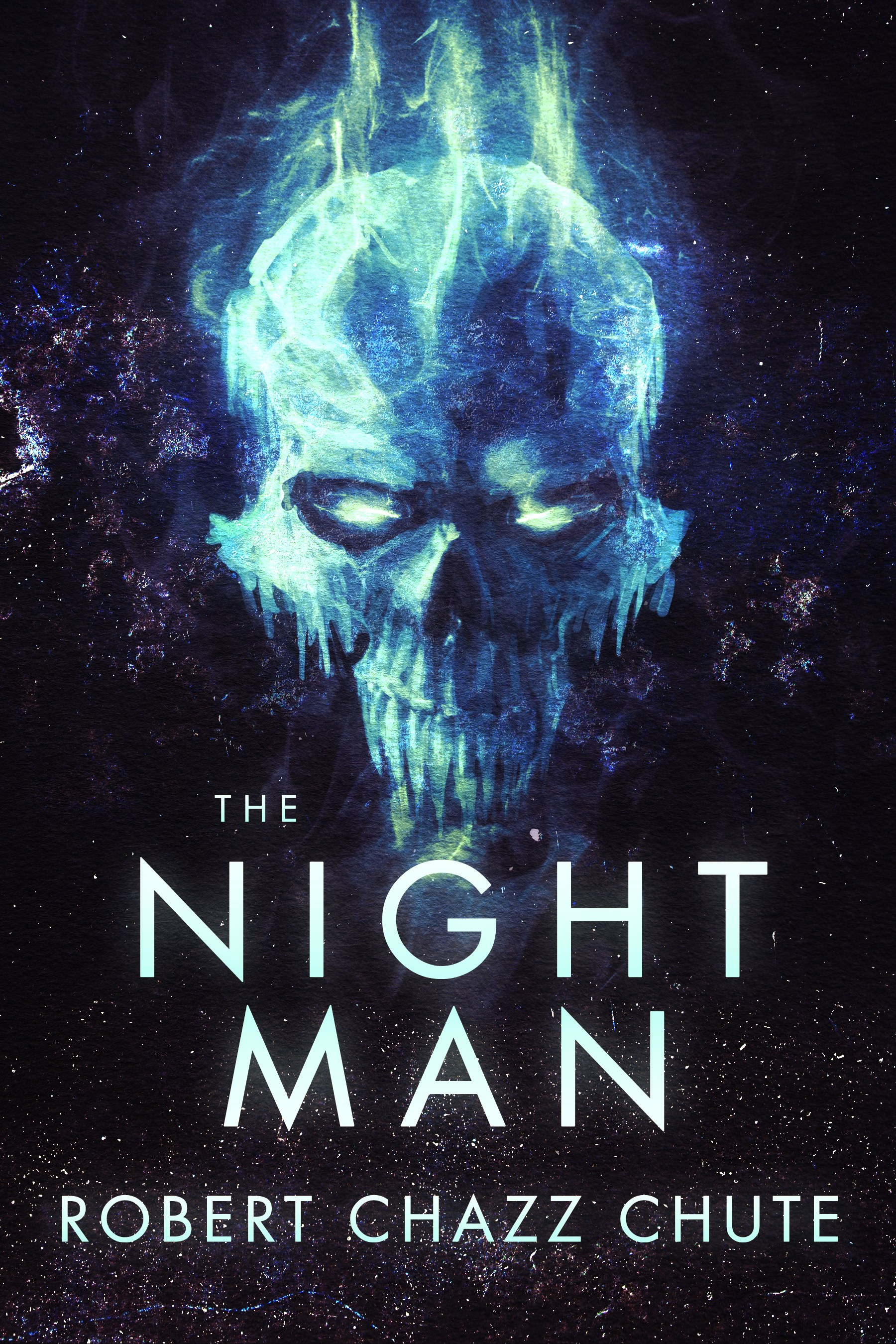
You can pick this ebook up for free today at this link: http://bit.ly/TheNightMan

Join my inner circle at AllThatChazz.com

See my books, blogs, links and podcasts.

Enter your email address to follow this blog and receive notifications of new posts by email.

Join 2,061 other subscribers