C h a z z W r i t e s . c o m

See all my books at AllThatChazz.com.

Writers: Choose Your tense

Cover of "Bright Lights, Big City (Blooms...

Cover via Amazon


In yesterday’s post I lamented some choices I made in an earlier draft of a story called The Dangerous Kind. In my latest revision I chose to change the tense. Let’s explore that. 

First off, let’s be clear: some people despise short stories and novels written in the present tense. They would prefer no writer ever did so again. Those people  are demagogues espousing that there’s only one way which just happens to be theirs. If present tense and a little risk aren’t your taste that’s fine, but to declare no one should dare to write in first-person, present-tense or second tense is a declaration against art. Art takes risk and if it plays it plays. 

I loved the novel Bright Lights, Big City. Before it was published I bet there were a lot of people who said, “A whole novel that’s second-person? You do this. You do that for a couple hundred pages? No way.” 

Answer: Way. 

 Jay McInerney wrote Bright Lights, Big City in second-person and made it  great. Don’t turn down a nontraditional way of telling a story because it’s unconventional. Cut it when it doesn’t work. Recently an entire novel which I scanned but can’t say I read was written in first-person plural. It was a brave choice that worked for a lot of critics. (I didn’t read it because of the subject matter, not because it was “We, we, we” for a couple of  hundred pages.) 

So back to my editing problem: In earlier versions of my story, I wrote the whole thing in first person, present tense. The advantage of present tense is that things are unfolding moment to moment before the reader’s eyes. Present tense makes the action immediate. The Dangerous Kind is about two brothers who do not get along. Soon after losing their father to an industrial accident, they go hunting for deer in the woods of Maine. Dire complication ensue. I chose past tense first because of the action involved in the deer hunt and also because the piece lent itself to an uncertain ending. Would the protagonist survive? 

Necessary side note: You can tell a story in first person and still kill off your first-person narrator. I won’t say don’t do it, of course. The only solid rule should be, if it plays, it plays. However, a caution: It has been done a lot so, for it to succeed, it must be done very well. That’s a trick that’s harder to pull off with longer fiction because it’s a downer to read a couple hundred pages and have your hero killed off. It worked in the movie Sunset Boulevard spectacularly well because you’re already disappointed in the narrator’s choices and end up entranced by Gloria Swanson

Back to editing The Dangerous Kind: After getting a rejection on the story from a magazine, I reread the piece with fresh eyes and realized I could shift it into the past tense. The story is ultimately about the choices we make and how even when things work out terribly, maybe that could work out for the best. (I realized recently that’s a theme in much of my fiction, but that’s another post for another day.) Once I decided that the climax of the story wasn’t a murder but an escape, it was okay for the reader to assume the protagonist survived. After that, I opened up to dumping present tense for the more traditional past tense. (I kept the first-person perspective.) 

However, in the final scene, there’s a subtle twist that I think works well. The bulk of the story basically unfolds over the course of a single November day. At the end, I gently switch to present tense so the reader realizes the protagonist is recounting this story, deciding where things went awry and what he’ll do next at the end of that day. He’s sorting out what the day’s events and choices mean to the rest of this life by retelling the story to himself. The conclusion is one-third bitterness, two-thirds hopeful. Because of the shift in tense back to the present, it makes the story more immediate as it closes. 

Tomorrow I’ll show you an excerpt from an earlier draft and how I edited it to make the plot’s engine work. 

Filed under: Books, Editing, manuscript evaluation, movies, My fiction, rules of writing, , , , , ,

Art is a Call to Action

Yesterday I watched a great movie: The Age of Stupid. It’s about global warming and how we aren’t doing diddly about it. It also puts a human face on the one ideological system that has won over our hearts and minds. It’s not any particular religion precisely. It is consumerism. Consumerism has won.

It got me thinking about the international, social and political landscape. Many things look grim. A friend says we must stay in Afghanistan. On Penn & Teller’s Bullshit, a dying man pleads to die with dignity. The man’s doctor feels his personal ethics preclude him from exercising that act of compassion (or letting anyone else exercise compassion and personal choice.) In my city a police officer will be demoted today for smoking marijuana off-duty (and I wonder how many officers are drinking alcohol on duty today?) There’s a lot of silly stuff going on out there and I think we can’t afford to be silly anymore.

There are a lot of problems in the world. We can’t solve them all. Remember approximately 100 days ago the Gulf of Mexico was poisoned (and shall be for decades)? Everyone was saying, “Plug it! Plug it! Why don’t they just plug it?” My answer? Because it’s a mile under ground and water. Because it’s really hard to do. If it were easy, they would have done it quickly.

News flash! Nobody’s going to Mars, either. It’s too hard. The problems are insurmountable.

This isn’t just an unpopular idea. It’s a new idea. For instance, people who believe that we can squeeze all the oil out of the ground and just when we run out of that, a new energy source will appear to replace it (and act just like it and be just as convenient.) Why do they think that? Because they’ve been seduced by the idea that technology can solve all problems. Strides have been made and things have gotten better in many ways. But we still have all kinds of cancer.

Big problems? We’re not good at big problems. Our record is spotty. Insulin was a big one, but not a cure, and how many decades ago was that? Smallpox vaccine? Great. Millions saved. But what have you done for me lately? Medical development and invention from here on out is baby steps. I’d much rather see the military budget for stealth bombers pump up educational budgets and medical research. (Maybe then we can run again instead of taking baby steps.)

Dismaying nugget: Your chances of being killed by a terrorist are always close to zero. Your chances of dying from cancer or heart disease are excellent. We need to rethink how we allocate out resources.

Naysayers who have swallowed the line they’ve been sold forever (“anything is possible”) will say I’m hooked up to an IV of Can’t Do Spirit. Where would we be blah blah blah? I’m not saying progress hasn’t been made. Progress is made up of a lot of little steps. I’m saying we’re not up to the things we think we are.

Examples: Changing Afghanistan’s culture? Nope. (Thought experiment: Imagine the Taliban coming here and trying to change our culture with the same tools? Would drone aircraft change your mind to Allah?) Curing cancer? Not in my lifetime, or sadly, in my children’s lifetime. (The cure for all diseases is just around the corner, according to fundraisers. Actual research scientists? Not so much.)

It’s not all bad. Science has made life pretty great. For us, anyway.

And I have a solution. We focus on the small things. We change what we can change. We change ourselves and hope to transform the world through small, effective actions instead of costly monumental hopeless projects. Resources are limited. We can’t afford to go to Mars, and why would we want to when people are starving and struggling right here, right now?

We donate goats to African families so those families won’t starve. I can’t solve all of Africa’s problems. (Africa will have to do that.) But I can buy a goat. A friend of mine made a documentary that has convinced me I must do so, in fact. This is the highest form of art—art that moves you emotionally, and to action. The documentary will be coming out soon. It’s called Where’s My Goat?

You have limited resources, but you are a writer. Who will you change today through your art?

Filed under: movies, Rant, Writers, ,

Finding Forrester On Writing

Filed under: movies, writing tips

Chuck Norris

I grew up watching Chuck Norris and Bruce Lee movies. (All other movies, too since I worked at a video store.)freefromchaos.com myspace graphic comments
freefromchaos.com

My favorite Chuck Norris movie has to be An Eye for An Eye in which Chuck and Mako beat the crap out of 35 guys who attack them in Mako’s home (with Uzis.) Chuck takes out only 25 (wimp!) and Mako kills the rest. They massacre the bad guys with their bare hands, a throwing knife, lots of kicking and the base of a telephone (which were heavier and more lethal then. Don’t try to knock anybody out with your cell phone these days.)  

At the end of this scene of carnage, the livingroom is littered with bodies. Then Chuck says, “Well, I better get going. Got a dental appointment” or something lame and leaves Mako to deal with the copious corpses. Chuck is a nice guy overall, but not the kind of friend you call on to help you move apparently. San Francisco must have an awesome recycling program.

The funniest Chuck movie has to be The Octagon. Lee Van Cleef shows up here and there, no doubt thinking he had been in better movies. The thing that makes me giggle is that throughout the movie Chuck does a voice over of many of his ninja thoughts as he wanders around. The device is so over-used that I end up filling in the next whispered thought. For instance:

Can I beat him?

Takura, where are you? I sense you are here…

If not for me, Takura would never have met her and she’d still be alive…

I feel guilty…

Did I turn off the stove?

Do I need to buy more eggs?


Filed under: movies, Unintentionally hilarious, ,

The Existential Horrorist

Two movie moments hurt me in deep dark places:

In Run, Fatboy, Run Simon Pegg’s character tells his young son that you can’t run away from problems and must push through. The little boy looks up at him and says, “Is that what you do, Dad?” The look on Simon’s face is the same you make when you’re slapped across the face with a stop sign.

Then in Night at the Museum, Ben Stiller’s character tells his son that something good will soon happen with his career. His big moment is coming. He can just feel it. His boy gives him a worried look and says, “But what if you’re wrong? What is you’re an ordinary guy who just needs to get a job?”

Shit. Back to the keyboard! Back! BACK!

Filed under: movies, , , ,

Bestseller with over 1,000 reviews!
Winner of the North Street Book Prize, Reader's Favorite, the
Literary Titan Award, the Hollywood Book Festival, and the
New York Book Festival.

http://mybook.to/OurZombieHours
A NEW ZOMBIE ANTHOLOGY

Winner of Writer's Digest's 2014 Honorable Mention in Self-published Ebook Awards in Genre

The first 81 lessons to get your Buffy on

More lessons to help you survive Armageddon

"You will laugh your ass off!" ~ Maxwell Cynn, author of Cybergrrl

Available now!

Fast-paced terror, new threats, more twists.

An autistic boy versus our world in free fall

Suspense to melt your face and play with your brain.

Action like a Guy Ritchie film. Funny like Woody Allen when he was funny.

Jesus: Sexier and even more addicted to love.

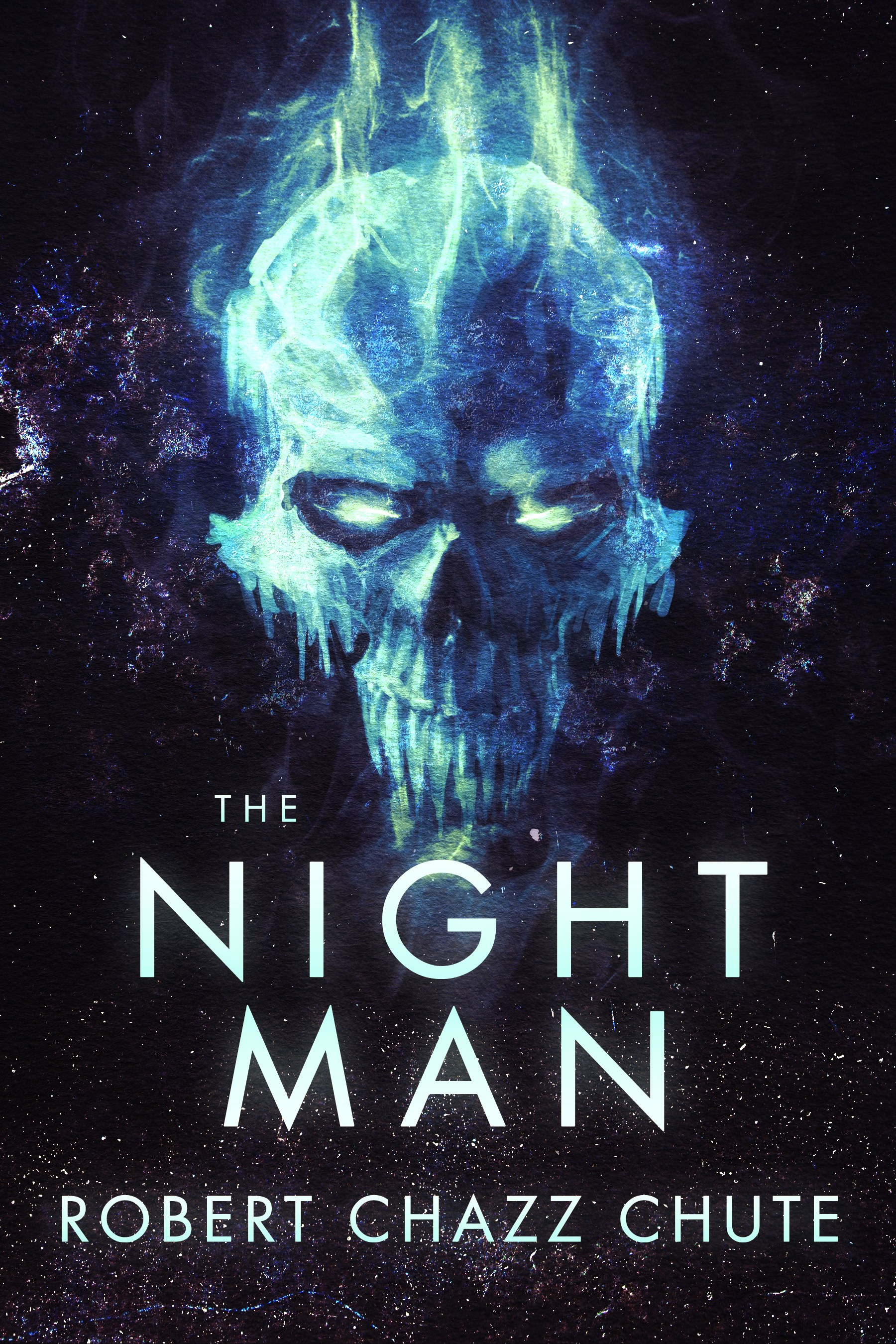
You can pick this ebook up for free today at this link: http://bit.ly/TheNightMan

Join my inner circle at AllThatChazz.com

See my books, blogs, links and podcasts.

Enter your email address to follow this blog and receive notifications of new posts by email.

Join 2,063 other subscribers