C h a z z W r i t e s . c o m

See all my books at AllThatChazz.com.

TOP TEN: What used to be cool

I used to think people don’t change, but we do, around the edges.

Here’s my list of what used to impress me…overly.

1. Movie memory: My wife remembers where we were on vacations. She recalls the restaurants, the sights and the good times. I can’t remember any of that. My memory box is stuffed with movie dialogue. In fact, that’s my super power. My parents owned a video store and I watched at least two movies a day for years. If you’re watching a movie with me and I feel the urge to show off —a sad, dependable occurrence — I’ll jump in and tell you the next line before the  actor can deliver it. It doesn’t have to be a great movie like The Karate Kid. It could even be The Karate Kid 3.

I’m briefly, ridiculously, proud when this happens and She Who Must Be Obeyed smiles tolerantly. But it’s not a super power that saves babies from house fires. I can’t monetize it. Any memory that’s at all useful, and much that isn’t, can be found on the web. Every time I hear a podcast where the host and guest speculate about what happened, which movie was what and who was Miss October 1993, I think: Look it up! We don’t need our pitiful brains anymore for trivia!We’ve got Wikipedia and the hive mind! Google it!

If our experience makes us what we are and all I’ve got is movie dialogue?

I. Am. Screwed.

2. Unguarded moment memory: Yesterday I chatted with a college buddy on Facebook. We have a strange friendship because: on the political spectrum, I’m Lefty Lefterson, he’s to the right; he loves debate and I love people who agree with me too easily; and we weren’t that tight in college. We even came close to getting into fisticuffs once. And what’s more? He doesn’t remember it. I have joked with him, somewhat passive aggressively, that I remember all his unguarded moments. We spent very little time together at school, but for some reason, as soon as I was around him, my brain box was wired in to his every utterance as if he were on film. (See #1)

One incident in particular became a source of hilarity: In the journalism school newsroom, he looked at me and then he ogled my girlfriend (who years later became my wife.) “How could a guy like you get a girl like that?” he asked, genuinely dumbfounded. I was a tad sandpapered by that at the time. Now, as I write this, I’m suppressing a giggle. He’s a supportive, funny guy who manages to think and smile, often at the same time. I don’t have that capacity and I admire it. But my wife’s still hot.

When I bring up unguarded moments from the past, my buddy has a certain lopsided smile of chagrin. I confessed to him yesterday that I have an eidetic memory for everything he said or did in college whenever I was within ten feet of him. (No, Marvel Studios won’t be making a superhero movie about this mutant power, either.) I told him that if I were him, I’d kill me.

But we’ve found transcendence. We laugh a lot. And I’d rather laugh than remember #2 sandpaper moments from the dead past.

(I’m an asshole for carnivoring yesterday’s conversation and bringing this up at all, so this was the last time.)

3. Domination: I used to watch Bruce Lee, Chuck Norris, Jackie Chan and a host of Hong Kong martial arts movies obsessively. The idea that one man could dominate others with precise kicking skills was attractive. Now it strikes me as silly, simplistic and repetitive. Back then, I aspired to — this is really embarrassing — a whole whack of macho bullshit. As I edit my books, the theme that macho doesn’t mean mucho comes up a lot. Many of my stories explore how men relate to men, how men relate to women and how to be a man without devolving into a bully or a pussy.

I’ve figured out that my need for domination wasn’t rooted in strength.

That bullshit was all about fear.

4. Being a loner: I grew up in the ’70s and ’80s, so I wasn’t brought up by parents, but by movies. And what do all cool movie gods have in common? They’re alone.

Dirty Harry didn’t have to pick up the kids from daycare. Except for Casablanca, even bulldog-faced Bogey got the girl. The movie was about the getting, never about enjoying the having. Bachelors are available and open to romantic and adventurous opportunity. They don’t have to arrange a babysitter before they go on safari or take up a mission. Martin Sheen wasn’t on screen debating about who left a ring in the tub after the crazy caper to tunnel into the bank vault in Loophole. Heroes were alone and liked it until they chose, at the end of the story, to start a new, more mundane, domestic story. The few female heroes of that era were largely  indistinguishable from men. The glamorous life was not a life that included children. All movie heroes (who aren’t superheroes) were, and are, marvellously egocentric.

Since I’m not-so-marvellously egocentric, emulating The Loner with a Mysterious Past or The Last Honest Man seemed a good thing. I need space and a buffer zone and time to myself, too! I’m a writer. Of course being a loner was the key to happiness!

But I was confusing fiction and reality. 

Being a loner in real life isn’t glamorous. It’s lonely. 

5. My library: I’ve been getting rid of a lot of books, but I still have a lot of books. My collection not only conveys to visitors that I’m bookish. It says, I’ve found an alternative way to further insulate my home. Look at all those books! See? I must be smart. Please love me! Respect me even though I prefer books to interacting with people!

SAT question:

A doughy guy in a midlife crisis is to an expensive red sports car

as you are to…?

Choose one:

A. The hypotenuse of the square

B. John Adams

C. the Bill of Rights

or D. books.

Yes, D was the correct answer.

As my e-readers fill up, the walls of books look less like a personal statement of integrity and more like (Krom forgive me) clutter.

My new policy with paper books is to sell them or give them away once I’m done with them.

If all that macho bullshit was about fear,

my hoarding is about low self-esteem.

6. Anger: I mistake self-righteousness for being right. Often.

I always loved that line from Dr. Bruce Banner just before he turned into the Hulk: “Don’t make me angry. You wouldn’t like me when I’m angry.”

You know what I’ve figured out about readership with all the blogging I do?

People don’t like me when I’m angry.

People like me when I’m honest and authentic.

Well…most people. Fuck those trolls.

(See what I mean?)

7. Heroes: My daughter asked me who my heroes are. Her first guess was, “Kevin Smith, right?” A few glib, funny answers sprang to mind, but she had that earnest look on her face, so I went serious and gave her the true, complicated answer.

I like Kevin Smith a lot for his independent spirit, wit and smarts. We agree on a lot. He’s definitely Top 10 material, though I get the feeling he’s also a mercurial god who can be moody. Maybe that’s why I relate to him. But I’m lucky because I know my top heroes personally. They aren’t nationally known, but they should be.

My heroes are celebrities in small circles who lead by example:

Anne is the bravest woman I’ve ever known. She suffered greatly from a terrible disease, nearly died several times, and overcame it all to rise again from her electric wheelchair and walk again. She remade her life long after most of us would have given up.

The late, great Reverend Johnny T. Collins was the single best Christian I’ve ever known. My love and respect for him hasn’t changed a bit though I became an atheist after his death. It would grieve him enormously to discover that I became an atheist largely because of his death.

One of my best friends (I’ve mentioned several times in this blog) is Peter. He has a super power that’s much more useful than mine: Peter makes friends easily and unselfconsciously. Few people have so deep a capacity for joie de vivre. He’s forever the Big Man on Campus no one can hate. (As opposed to the other Big Man on Campus, the smug bastard who led the football team and everyone secretly hoped would get leprosy.) Everyone is richer who has Pete in their lives.

And number one? I’m a very lucky man because my wife is hero number one. She’s the single most kind and generous person I know. (Also, as previously, pervilly mentioned, hot. Really can’t go without mentioning that.) It makes sense that the woman I’m married to must be a paragon of patience.

The heroes I know as individuals are beyond cool. But heroes as a class of people to look up to? No. Heroes as a group are overrated. Kevin Smith, for instance, idolized Brice Willis until he worked with him. I’ll never forget Kevin’s look of regret and disappointment when he stared at the floor and said, “Never meet your heroes, man.”

My heroes are stellar people who are my friends and family. They are people I can rise to be among and still belong. Any hero worth the title empowers you, assuring you that you can be a hero, too.

Don’t just watch heroes. Be one. 


8. Greatness: Perfectionism is self-hatred or, as writer Mur Lafferty says, “It’s okay to suck.” I write books. I’ll begin making them available to the universe this fall. The universe may or may not notice. That’s okay because this is what I do now, whether it goes big or stays small. Of course I want all my books to be made into movies and checks in the mail, but that sort of all-or-nothing thinking will hurt and hold me back. Last night I was up until two finishing a draft of my third book. I had stamina because I was excited about what I was creating. I wasn’t living in the future, thinking about accolades from strangers from whom I desperately want love, respect and money. I do want those things. But writing is about how to make the story more clever, more funny and more surprising. I get brain tickles from the dopamine kick of doing my thing.

Enjoying the journey is the only way to get to the destination.

BONUS:

We learned in The Matrix “There is no spoon.” There’s also no destination. It’s all a journey.

CHAZZ PARADOX:

Knowing there is no destination allows you the chance to get to the destination

(Yup, I have a minor in philosophy, studied Zen and yes, that was annoying!)

9. Ego: When I started out as a therapist, I put on my ID badge and my shoulders went up and my chest went out, much the same way Erik Estrada always substituted posing for acting on CHIPS. I walked into my clinic, “The Expert.” I didn’t know it at the time, but this was self-aggrandizing bullshit I used to meet challenges I wasn’t sure I equal to.

Ego can make you do stupid things. Longer. Everybody needs self-esteem, but too much ego pushes people away and makes you a prick. As a prick in rehab, I know.

Ego leads to stupid shit, like planking. All over the web you can see pictures of people doing the latest thing: Somebody had the balls to stand up and call it planking. Or, as we used to call it, “Lying down.”

Too much ego betrays the truth about ourselves:

NOT. ENOUGH. SUBSTANCE.

10. Certainty: I used to want to know exactly how things will turn out. That’s part of the whole, living-in-the-future disease. I thought that if I could just get this one thing right, everything else would fall into place and success would be mine. Certainty is poison, though. Success comes from doing a lot of little things right along the way, not from sweeping mission statements (like this.) A need for certainty can lead you to avoid tackling those little things.

For instance, I don’t know how to format my manuscripts for ebook formats. Yet. If I had to know it all before I could start, I’d never get it done. Instead I’m learning as I go and nibbling away at it. I’ll never know it all and get it “perfect”, but eventually I’ll be able to digest enough to get my ebooks done and out there.

Recently I listened to a podcast about how to podcast. There is a staggering amount of trivia to know about podcasting. But you don’t have to know it all to begin. You just have to begin. A need for certainty can give you paralysis by analysis (a confident, oft-spouted aphorisms which must be true because it rhymes.)

George Bush elevated certainty as a virtue over intelligence. (Obama doesn’t convey any certainty, so the culture may have over-corrected on that one. Oops.)

Certainty is a conceptual synonym to dangerous things like patriotism and zero tolerance. When someone comes at me with too much certainty, my bullshit detector rings an alarm. Absolute certainty tells me there’s a loss of nuance, somebody’s a quart low on compassion and probably suffering a dearth of thinking.

And I’m sure of that.

Filed under: Books, ebooks, self-publishing, What about Chazz?, , , , , , , , , , , , ,

Sparkfest: The Blogfest Opportunity

Hello, ladies! How about some new spice in your life?

Look at your man.

Now look at me.

Look at your man.

Now back to me.

Me! Me! Me! Me! Me! Me!

Aren’t you just sick of me?

So here’s something cool that’s not me: Christine Tyler over at Writer Coaster is sponsoring a blogfest called Sparkfest.

Sparkfest sounds like a great way to express the Magic That is You and perhaps increase your blog following.

So let’s do it, shall we?

Have a great day. Or make it one.

Filed under: blogs & blogging, Publicity & Promotion, Writers, , , , , ,

Stats on literacy & the literary: Books aren’t that important

42% of university graduates never read another book after they graduate.

Whoa! Wh-wh-what now?!

Yes, you read that correctly. When it comes down to it, books aren’t all that important to a staggering number of people. 

I’ve found several scary statistics for this post, but that 42% bugs me most. Those are people who can read, but choose not to.

I used to think that once you made someone a reader, you had them for life. Not so!

Like you, I’m a big fan of books, of course. But this post is about perspective and where we stand in the flood of things to do.

1. Market fragmentation: There’s a lot going on. Literally. I don’t watch TV much anymore. I used to schedule my life around television programming. I could read more books in a week, but I don’t because I also make time to listen to a lot of podcasts. So many websites call my name. Plus, I have a lot to do. With so many demands on my time, a lot gets curated. I use the word curation here as a synonym for “flushed.” I filter out a lot of things I don’t have time to read, watch and listen to. (Also, I’m on Team Coco, so Leno’s banished and cursed.) There are only so many waking hours in a day, and, frankly? I’ve got more free time than most people do.

2. Market skew: You only think you love all books. But you really love a small fraction of books, no matter how much you read. How many readers do you meet who say, “I read everything”? (Sarah Palin who was lying and has officially “authored” more books than she’s read.) My point is, niches are narrow. For instance, I love Chuck Palahniuk’s work and have read all of his books. I wouldn’t have to look very far to find someone who has read Fight Club. But I’d have to travel far to find someone else who has read them all. Chuck’s very successful, but he’ll just never have the market penetration of Hemingway because Hemingway is taught in schools. (In other words, a lot of high school and college kids are forced to read Hemingway. Snuff, a book about a porn shoot,  won’t make it into many curricula.)

As an author, you’re going to meet a lot of readers, but sadly, they won’t be your market because you’re into A, B, and C and they’re into X, Y, Z.

Worse? They’ll sneer at you for it because people don’t make any distinction between what’s to their taste and what’s good.

3. We say we’re a society that values reading and education. But we don’t. Here’s a few illiteracy statistics to blow your brain around: About three in five of America’s prison inmates are illiterate. The cost of illiteracy to business and the US taxpayer is $20 billion per year. More than 20 percent of adults read at or below a fifth-grade level – far below the level needed to earn a living wage. 44 million adults in the U.S. can’t read well enough to read a simple story to a child. Nearly half of America’s adults are poor readers, or “functionally illiterate.” They can’t carry out simple tasks like balancing check books, reading drug labels or writing essays for a job. 21 million Americans can’t read at all. 45 million are marginally illiterate and one-fifth of high school graduates can’t read their diplomas.

4. Number 3? That’s about people who can’t read. But many people just don’t: The average reader spends about 1/6th of the time they spend reading actually rereading words.* One-third of high school graduates never read another book for the rest of their lives. 80 percent of U.S. families did not buy or read a book last year. 70 percent of U.S. adults have not been in a bookstore in the last five years. 57 percent of new books are not read to completion. 70 percent of books published do not earn back their advance. 70 percent of the books published do not make a profit. (Source: http://www.JenkinsGroupInc.com)

5. If you’re self-published, a lot of people won’t read your stuff, perhaps because of prejudice fueled by bad experiences with the previous generation of self-publishing. Traditional publishers aren’t generally that much further ahead anymore, either. (See #3 and #4.) Bookstores (remember them?) are reluctant to stock the self-published. They don’t even have space for traditionally published midlist authors anymore, let alone the indie unwashed masses. And newspapers? (They used to be on paper and very profitable. Ask your parents.) Newspapers still don’t review the self-published. We’re also shut out of many literary awards so there’s not much notoriety gained there. That situation will change, but not soon. We may have to wait for a bunch of old school book critics to die.

Great, now your depressed. So what do we do about it? Well, first, think about these stats and honestly evaluate your chances as an author. This post is essentially a test. If you think about your chances (for realsies!) and are still undeterred, congratulations! There is no hope for you. You’re doomed to take your shot at a life in letters. This choice is, for most writers, really no choice at all. Many of us will fail. A few of us would have been great at something else. Some are a great loss to the fields of animal husbandry and the manufacture of novelty chattering teeth toys.

We choose to write books despite the scary stats. Somewhat perversely, we may choose to write books because of those scary stats! If we can write books people want to read, maybe we can save humanity and turn things around. (I think JK Rowling got not a few kids reading who otherwise might not have.)

Kurt Vonnegut wrote in A Man Without a Country:

“If you really want to hurt your parents, and you don’t have the nerve to be gay, the least you can do is go into the arts.

I’m not kidding. The arts are not a way to make a living. They are a very human way to make life more bearable.”

(Kurt was the kind of wise-ass I love.)


I’ll leave you with something else positive to think about. I heard Red State director Kevin Smith say this on a podcast recently:

“Surround yourself with Why Not? people.”

Too often you try to do your art and people say why? Forget them and go do your thing. 

I mean…why not? 

*All the stats above the asterisk can be found at readfaster.com.

Filed under: Books, publishing, self-publishing, , , , , , , ,

Self-publishing: The Couch Change Economy vs. The Great Personality Argument

How does a guy go from getting paid $85 an hour to taking the risk of self-publishing? It’s not such a big leap.

Last night, on impulse, I bought a little tub of Heavenly Hash ice cream for $1.99. 

That explains everything, huh? Okay. Let’s go deeper:

When a new tax hike hit my province last July, my business changed. I’ve been a massage therapist for 18 years. I have great clients I care about and not just a few who care about me. To accommodate the new tax, my hourly rate went up to $85 per hour. A bunch of my clients took it in stride, but several just couldn’t afford to come in for treatment as often. I live in a lovely, but economically depressed area. Since I work as a part-time therapist and that fee is before tax, $85 an hour isn’t quite as great as it sounds. When I did my taxes, the numbers confirmed what I suspected: I like my work, but it wasn’t paying. I needed to change something if I was going to have anything left over at the end of the month. I could go back to working out of clinics full-bore and full-time and make “real” money or I could explore other options.

Then I thought, “You know, I don’t have that much to lose now.”

That’s the “A-ha” moment. I believe in my writing and marketing savvy. It was time to bet on that and switch to writing full-time. This wasn’t coming out of nowhere. I’d held several positions in traditional book publishing and trained and worked as  a journalist. As a freelance editor, columnist, features and speech writer, my writing income rose to become a healthy chunk of my overall income. Last year I spent more time working on writing and editing than I did in health care.

Also—and this is crucial—I had five novels in my drawer ready to edit and bring to fruition.

Many authors propose books and only start to write them after they get someone to ask them to do so. (That’s a smart way to do it, by the way, but it’s not the only way.) I had opportunities to go that route. However, I had  no interest in doing so. I have a strong streak of I-want-to-do-it-my-way (which doesn’t always serve me best but, for me, that’s the only way it’s going to happen and sustain.) I hadn’t sent out any manuscripts at all! As soon as I completed one book, I rushed on to the next, giddy and getting high off the writing. Writing is always way more fun than chasing agents and editors. It’s an odd kind of procrastination, staying busy kneading dough but never actually finishing a loaf of bread so you can eat it.  I helped several authors get their books published, but was in no hurry to bring my own out into the world. I was waiting for something and that something was me.

This week, I finally caught up to me. I finished the last manuscript I needed to get written before I could move forward with my grand plans to go full-time as a writer. (More on my complex marketing plans in another post, another time.)

Soon I will jump into what I call the Couch Change Economy.  You could call it the iTunes Purchasing Model or more simply, impulse buying.

That Heavenly Hash ice cream I bought? It was a stab of nostalgia that did it. I grew up in Nova Scotia. In the summer my parents would sometimes take me to the shore in the evening to cool off and watch the sunset. An old clapboard ice cream shop with poor posture  leaned into stiff Atlantic winds just 100 feet from relentless ocean waves. That was the only place I ever ate a waffle cone with two scoops of Heavenly Hash. If the tub had been priced higher, I wouldn’t have picked it up and put it in my shopping basket. I haven’t tasted it yet. I may not even finish it all. But for $1.99, it’s a cheap indulgence that reminds me of a good time with a dead mom.

When a book is cheap, no one minds taking a chance on an author they don’t know if the book sounds like it might interest them. If you don’t like a cheap ebook, you aren’t going to lose sleep over the equivalent of the sum of coins you can find in your couch.

How low that ebook price must be is the subject of many passionate discussions. 

John Locke says 99 cents (and a marketing strategy) made him a million-book seller. 

Joe Konrath has run the numbers and says $2.99 is the “sweet spot.” 

Others object that these prices devalue the work and no author who believes in their writing should charge so little. While I understand where they’re coming from, that sounds suspiciously like The Great Personality Argument. You can have a great personality, but if you don’t arrive at the party smiling, freshly scrubbed, with your hair combed, few people will approach you to discover how smart and funny you are. In short, couch change pricing sells more books than pricing on arbitrary values the author holds for his work. An author can believe in their work all they want (and they should) but for the sale, what matters is how much the buyer values the work. Your ideal readers may never discover how great your book is unless you make the package very attractive at low to no risk. Pricing at couch change levels is the No-pressure, Get-to-know-you price.

As debt ceiling negotiations rage in the United States and nervous stock market investors watch in horror as economies go off the rails, this is an excellent time to be working in a non-premium market. Low-priced items are low risk. Low-priced items sell at higher volume. (And a massage therapist doesn’t ever work in high volume.) I’m optimistic—which doesn’t come easy for me—that this is the year to make the jump if I ever will. And so I’ve begun informing my patients that I’m wrapping up my practice. Self-publishing suits the kind of hairpin I am and the math makes sense to me, if not to everyone.

Most important, writing full-time is my unfulfilled dream. I don’t believe in heaven or reincarnation, so I get one shot at making my heaven here and now.

A client (who isn’t mean but does have sarcastic streak) asked, “So when do the millions start rolling in?”

“I may never make millions,” I said. “It’s quite a loss compared to the billions I make as a massage therapist.”

We both laughed because the working poor are, considering all the challenges we face, surprisingly good-natured.

But I think things will work out. I believe in my books. I’m willing to price my work low enough that readers will find me, take a chance on something fun and quirky, new and different. Over time, I believe they will believe in me, too.

And last, consider this:

I’ve written books for years, very happily, giving no thought to getting paid at all.

Filed under: authors, Publicity & Promotion, publishing, Rant, self-publishing, , , , ,

TOP TEN: The divide between the published and the self-published

At a recent writers’ conference, I was in grand company. I met a lot of cool people. Almost all of them were traditionally published authors. I watched them ask questions of panels of publishers, agents and editors.

Here’s what I noticed:

1. They don’t want to change along with the rest of the publishing landscape.
Inertia is powerful, even in broken systems. And why should they want to change? Things haven’t actually been good, but they didn’t have to worry about things they have to worry about now with the DIY route. It used to be that they were expected to write, mostly to the exclusion of all else. That was job #1 and everything else was supposed to be, in theory, someone else’s job. However, many authors have already felt this pressure change because more and more book promotion and publicity duties have been unloaded on them by publishers.

2. Some of them are excited to self-publish. Either they had bad experiences with agents and traditional publishers or they simply want more control of their books. Their out-of-print books and their unpublished books may have new life as self-published works. The digital revolution, to these authors, is an opportunity. (Also, some DIY authors see self-publishing as their way into legacy publishing.)

3. Some are still wringing their hands, aggressively…as if that will turn back time. Like the music industry, Blockbuster, milk men, buggy whips and enjoyable air travel, there was a lot of nostalgia in that room. But nostalgia isn’t an argument against the proliferation of ebooks. It’s sadness at loss and change. They mourn the loss of some of the perks. Though many authors complained about the six city book tour and hanging out in bookstores ignored and unnoticed, admit it: all those bookstore signings had cachet. Book signings were part of the dream of being published and it was nice to rely on the publisher to pay for the trip.

4. Some traditionally published authors denigrate indie authors.
That’s understandable. I admit, many self-published books are, at the very least, utter crap. Not just to my taste! Crap! If careless authors call themselves authors, their old world club is no longer quite as special in the new world. However, blanket condemnations are pretty silly. Writers on either side of the divide are amorphous and as unified as a herd of cats. That’s part of our charm.

5. I found many authors I listened to weren’t angry at indies. They weren’t pointing fingers with nonsense “pay your dues like I did” rhetoric. Instead, they were worried that they themselves couldn’t adapt. Look at the demands on the self-published: write, revise, edit, review, format, upload, distribute, promote, market, repeat, improve and next time so it all faster. So much for self-publishing being the lazy way to get published. The mantra is, “When will I have time to write in this environment?” Indies worry about this, too. Though more books will be published digitally, somewhat fewer may be produced per author. As my self-published author friend Jeff Bennington observed recently, half of his time is spent writing and the other half is spent marketing. Somewhere in there, Jeff mixes in a job and probably eats and sleeps a little, too. There’s simply so much authors have to do to have a chance at getting noticed (and perhaps even getting their books bought.)

6. Some view digital publishing as part of the decline of literature. Hm. That’s an interesting one. The digital revolution propagates more books conveniently therefore there are many more books out there. If you are very concerned about the difference between low brow fiction and vaunted literature (say “literature” with a royal British accent), then go write some literature, you big baby. If it can’t be found amid the din, that doesn’t mean it’s not available. It’s means you can’t sell it. If the argument is that you don’t like the taste of the hoi polloi, that’s not digital publishing’s fault. That’s your fault. Or maybe it’s the educational system’s fault. Or the human brain isn’t as good as you’d like. You can blame readers, I suppose, but that’s a rather unprofessional stance. Most people who claim their stuff is good but out of step with their fellow humans are really just writing stuff that can’t connect. On the other hand, lots of people (well…English majors) will love you high-lit writers after you’re dead. So there’s that.

7. Some traditional authors are very concerned about the change in gatekeepers.
It’s not a small group of editors anymore. The market is the gatekeeper. Democracy can be scary because the group may go where you don’t want it to go. There’s still a very strong market for vampire books and bodice-ripper romances and yes, even the Jersey Shore, for instance. If actual readers don’t want your fiction, there might still be a market for it with traditional publishing (which, by the way, isn’t disappearing completely) but traditional publishing is less adventurous the bigger the press. You’ll have better luck with a small press or DIY. It’s as if the kids who ran the chess club suddenly had to contend with a bunch of dumb jocks getting a voting membership…and the lunkheads want a kegger.

8. Authors want reassurance that bookstores will survive. What am I? A freaking miracle worker? You want a combination of Harry Potter and Merlin to fix it so more bookstores won’t die? Magicians are on film, TV and in books. Hey! I love bookstores, too! But that’s more nostalgia. (See point #3.)

9. Many authors will carry on with their traditional publishers. They got in early and they got in good and they’re going to ride that train right to the end of the line and hope the fuel doesn’t run out. Yes, they wonder about the pittance publishers are throwing them with regards to ebook royalties (or wonder how well those sales are recorded.) Yes, they’ve had spats with their agents. But a broken system isn’t a dead system and there is…eh, has been…much to recommend it.

10. Indies and the traditionally published agree: its about the writing.
We all love good books. We may be dubious about how it’s delivered, but the core product is no less valued on either side of the divide. The concerns about the delivery and quality may vary, but we’re all writers and readers.

It used to take a powerful store of hope to be a self-published author. Now more faith is demanded of my traditionally published friends.

Filed under: authors, DIY, e-reader, ebooks, Publicity & Promotion, publishing, Rant, self-publishing, Top Ten, Writing Conferences, , , , , ,

I heard this on Best of the Left! Check out: Charlene Strong: It Wasn’t Enough story from The Moth

I heard this on Best of the Left! Check out: Charlene Strong: It Wasn’t Enough story from The Moth.

Usually I write about writing, but sometimes I’m moved to reach beyond that boundary, especially when I run across something that moves me so much. This made me cry.

Spread the message. Share the message. It’s so much more than an equal rights message. It’s about love.

Filed under: podcasts

New Feature: Scoop it!

Scoop it! allows me to grab a bunch of articles to quickly curate an on-line magazine for your pleasure. My focus, of course, is writing and reading and publishing news, particularly indie publishing. It’s more great stuffing for my juicy and delicious info-turkey that will complement the Chazz Writes potatoes, mashed, potatoes and gravy you’ll find on this blog.

In other news, I think I need to go get some lunch.

Shoot on over to check it out.

Filed under: authors, blogs & blogging, Books, publishing, self-publishing, web reviews, Writers, , , , , , , ,

Writers: Balance out the sedentary life

You have to take care of yourself. I certainly haven’t been for the last week. It’s been a monster week for writing since that’s pretty much all I’ve been doing. Late last year I was writing in such a frenzy (to the exclusion of all else) that I actually hurt my shoulder and back and it was painful for weeks. As I move to writing full-time, I’ve realized that I have to get the cardio and strength training to balance out sitting and sitting and sitting. Hemingway boxed and hunted and fished. The least I can do is get my ass off the chair.

Filed under: publishing, What about Chazz?, Writers, Writing exercise, writing tips, , , , , ,

Who disgusts me VIDEO (plus Walking Dead discussion)

Filed under: book reviews, Books, movies, ,

Shocked yet not surprised: Indigo halves its bookshelf space

Here’s the link to Five Rivers publisher Lorina Stephens’ excellent post on how Indigo is changing its returns policy (45 days and you’re out!) and cutting its space for books in half. So much for anybody whose name isn’t Rowling, King, Meyer and whoever the guy is who came up with Go the F**k to Sleep. This stirs up a lot of questions for people whose names are not those names. For instance, how many scented candles does anyone really need to buy in one lifetime? And how will traditional publishing cope?

For me personally, this is not a big deal because I am not in the least surprised. As I’ve been saying, this is not an if. It’s just about when. Blockbuster is battered senseless and HMVs are shrunk to nubs. I am so the opposite of an early adopter of new tech I’m nearly Amish and I don’t go near the Busted Block nor do I buy CDs anymore (though I understand some people still make them, everybody’s just picking the songs they want off iTunes.) I anticipated this boostore shift and consider it to be The Half-Measure of Doom on the Road to Bookstore Apocalypse.

Ahem. Pardon the hyperbole, but I’ve encountered a bunch of resistance from people who are convinced that my sole focus on ebooks was career suicide. No matter what I said, the doubters were sure a book had to be in a bookstore to be “real” and “worthy” and “made of paper and stuff.”

And I said, “What’s a bookstore?” Now I’m doing my “Told you so” dance and though I should be ashamed of myself, to be honest, I’m not feeling it.

But seriously, bookstores are literally farther and fewer between. As they cut down on shelf space to make room for doodads to dust, yo-yos and novelty pens, there will be no shelf for indies. You want choice, variety and a taste of the new? Go look online because you won’t find it in a bricks and mortar chain store.

But enough from me and my reactionary delusions of grandeur. Lorina says it all in detail in her usual reasonable, convincing tone, so do go read what she has to say. 

Filed under: authors, Books, ebooks, Useful writing links, , , , , , , , ,

Bestseller with over 1,000 reviews!
Winner of the North Street Book Prize, Reader's Favorite, the
Literary Titan Award, the Hollywood Book Festival, and the
New York Book Festival.

http://mybook.to/OurZombieHours
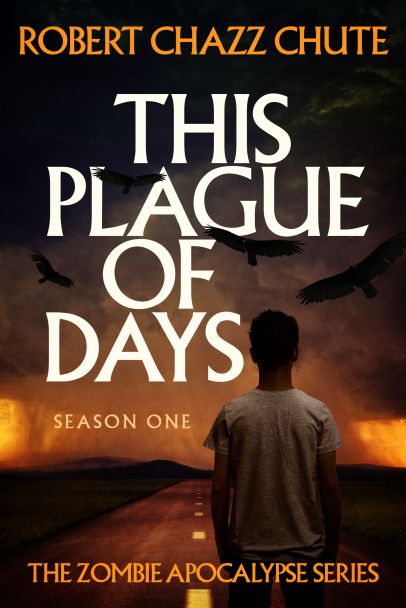
A NEW ZOMBIE ANTHOLOGY

Winner of Writer's Digest's 2014 Honorable Mention in Self-published Ebook Awards in Genre

The first 81 lessons to get your Buffy on

More lessons to help you survive Armageddon

"You will laugh your ass off!" ~ Maxwell Cynn, author of Cybergrrl

Available now!

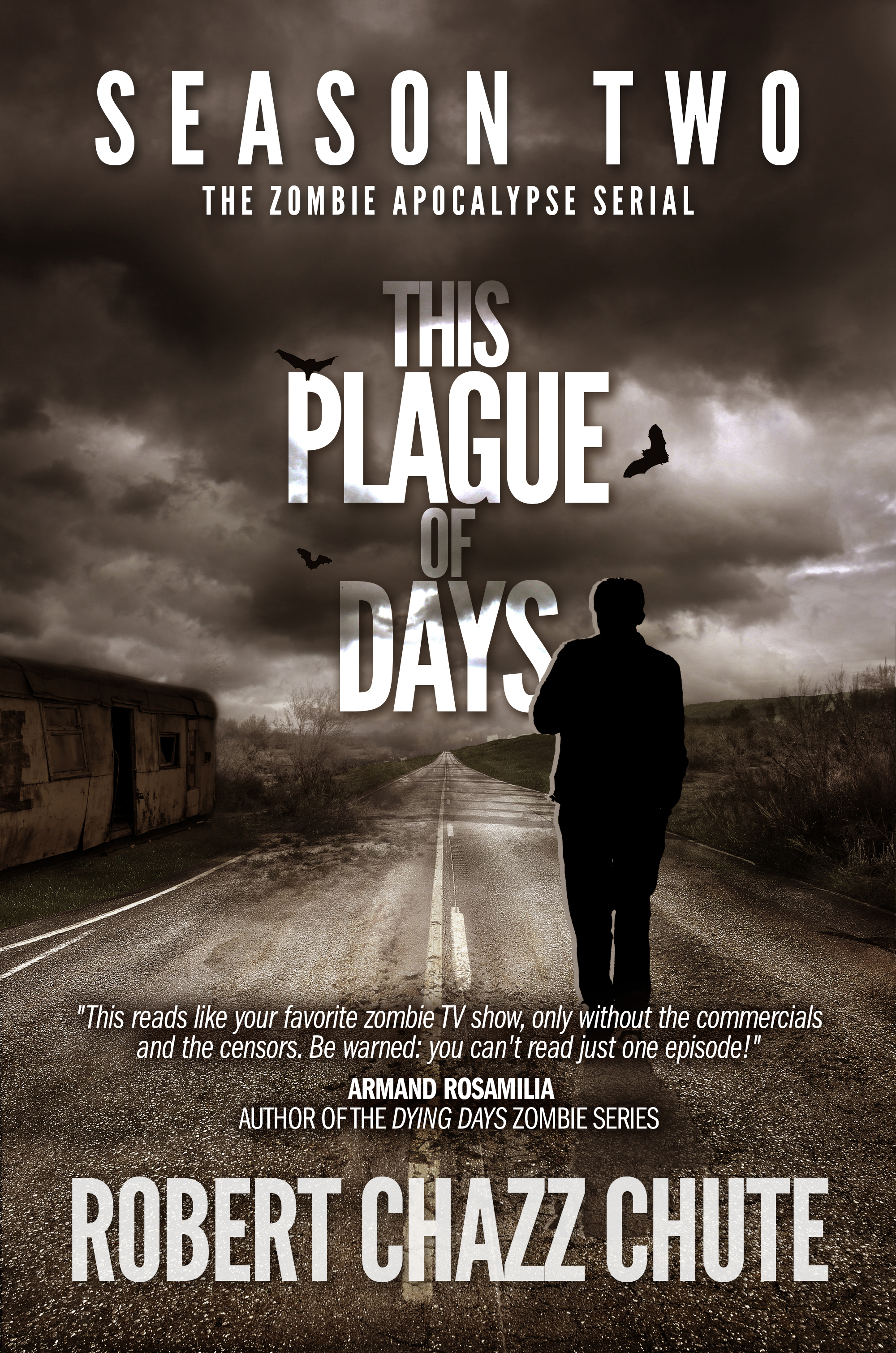
Fast-paced terror, new threats, more twists.

An autistic boy versus our world in free fall

Suspense to melt your face and play with your brain.

Action like a Guy Ritchie film. Funny like Woody Allen when he was funny.

Jesus: Sexier and even more addicted to love.

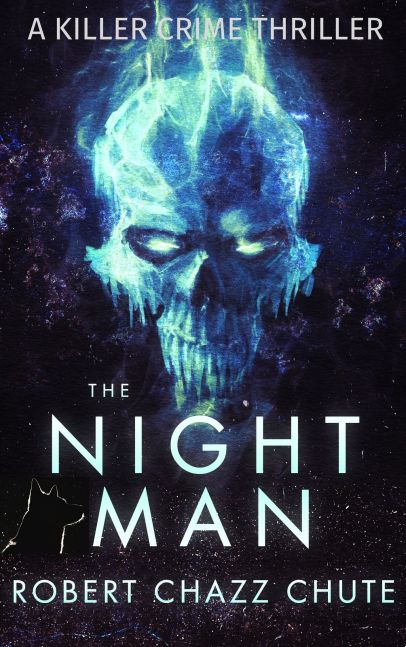
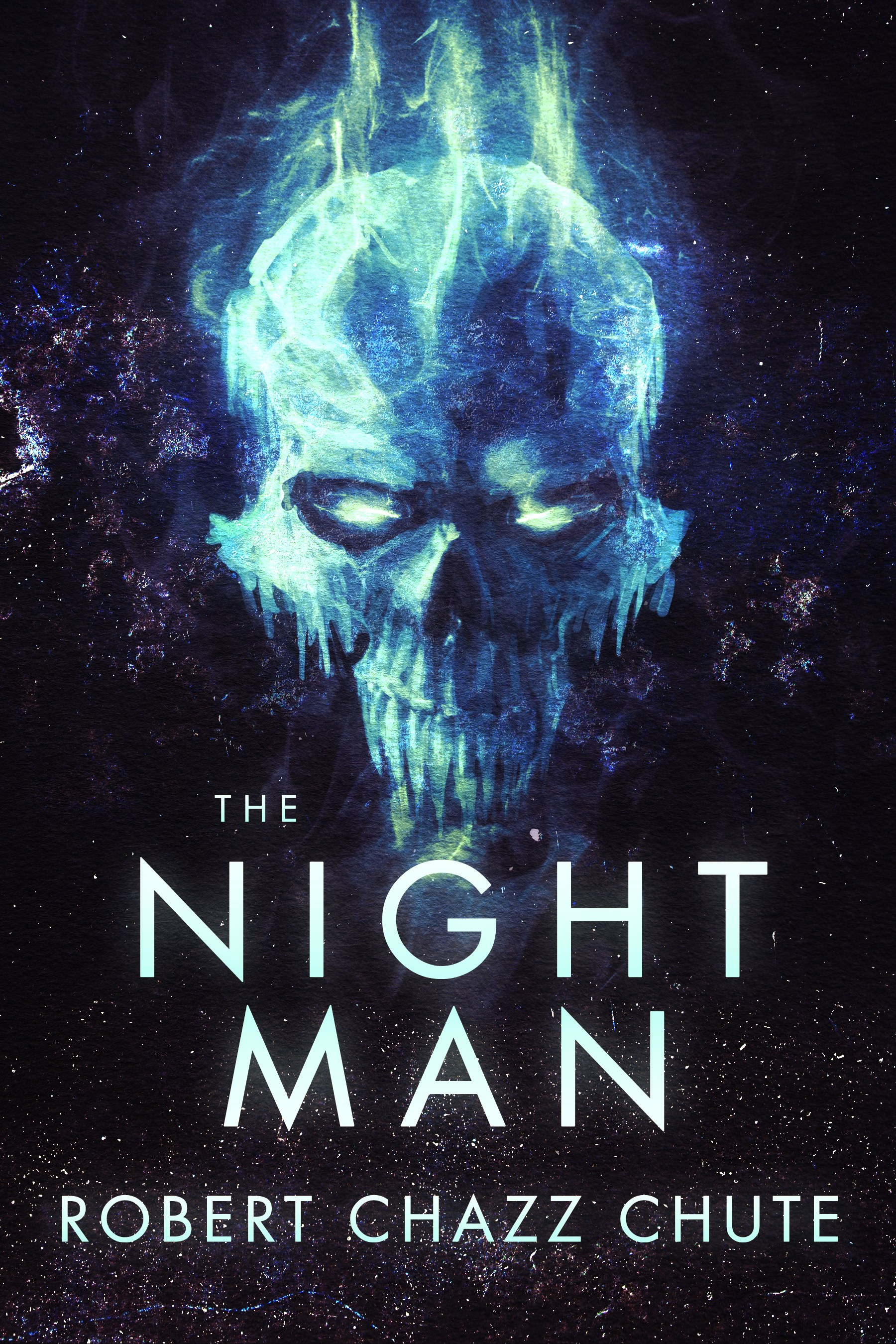
You can pick this ebook up for free today at this link: http://bit.ly/TheNightMan

Join my inner circle at AllThatChazz.com

See my books, blogs, links and podcasts.

Enter your email address to follow this blog and receive notifications of new posts by email.

Join 2,063 other subscribers