C h a z z W r i t e s . c o m

See all my books at AllThatChazz.com.

The problem with writing … (via Out of My Mind)

I so grok this post from Out of My Mind. I feel like I’m about to be drawn and quartered by the four horses of the Magic-Electro-Data Age:

1. Reading books.
2. Writing books.
3. Editing books.
4. The charms of the internet.

Always a struggle to find the creative balance and still actually accomplish something.

The problem with writing ... Are you a writer? Are you a reader? Do you divide your time equally between the two? When I started writing with the goal of publication, my reading time declined—particularly my fiction reading. And my non-fiction reading changed to consist almost exclusively of how-to write books. During my years of devouring novels, I often thought how wonderful it would be to write my own. It never occurred to me that the authors of those books might not have … Read More

via Out of My Mind

Filed under: publishing

Writers: Chazz Law versus Masnick’s Law

A cropped photograph depicts singer Elvis Pres...

Image via Wikipedia

Thanks for all the nice feedback and e-mails about Monday’s blog post on Amanda Hocking. There was so much, in fact, that I need to do a follow-up about the mistakes we make when we compare our potential for success with another’s. Some people see another author’s success as a door slamming shut on their own noses. These are people who believe Masnick’s Law (which comes from the music industry.) The idea is that only a certain band at a certain time had certain advantages that can’t be replicated. They came along at the right time or had just the right choice of sound, or the moon was in alignment with the stars etc.,….

In other words, if they make it, you won’t.

Wussies.

You might make it in a different way (Elvis ≠The Beatles) but if you have a great book, success can be yours. Amanda Hocking isn’t stopping you from succeeding. Not writing your book is keeping you from succeeding. (Not revising or hiring an editor, too.) Hocking took a machete and cut a path into the jungle. JA Konrath, Barry Eisler and many other authors who went the self-published way are forging ahead. When you see others succeed, take it as inspiration. Masnick’s Law isn’t a law. It’s a self-defeating fallacy.

CHAZZ LAW:

Art inspires more art.

Read it.

Rock it.

Roll it out.

(And don’t be a wuss.)

Filed under: authors, Books, DIY, ebooks, Editing, Editors, getting it done, links, publishing, Rant, Rejection, self-publishing, Writers, writing tips, , , , , , , , , , , ,

The Amanda Hocking Effect: She didn’t sell out. Trad publishing bought in.

Amazon Kindle e-book reader being held by my g...

Image via Wikipedia

Successful e-book author Amanda Hocking has signed a six-figure deal with a traditional publisher, St. Martin’s Press. No sooner was it announced,  some haters emerged in website comments sections. I’m pleased to say that most people were happy for Ms. Hocking—as they should be—but of course there were some trolls, one of whom said she was a sell-out and a traitor to the digital revolution’s cause.

The haters are wrong about that and here’s why: Ms. Hocking got to be a big-time author because of e-books, but she never signed up to lead a revolution. She just signed up to get readers for her books. Good for her! The traditional publishing model is useful to big-time authors and due to her solitary efforts, she is a big-time author. The larger issue is that publishing often falls down when the author’s success does not qualify as stellar.

I don’t see that this deal speaks to the limits of self-publishing at all. The deal must have been sweet because, as I pointed out not more than a week or so ago, with her 70% cut through Amazon, publishers would have to back up a truck full of money and provide an army of logistical support to justify any deal with that author. St. Martin’s is one of the few publishers big enough to provide that scale of mucho macho mojo. Hocking tried to get published the traditional way first and mainstream publishing turned her down. She proved herself worthy doing it her way. Now she can focus more on writing and less on the business side of publishing. Writers love to write first, and most of us only become entrepreneurs by necessity and circumstance.

Look deeper into the implications of this deal. Amanda Hocking didn’t sell out. Traditional publishing did. Hemorrhaging money fuel due to Wall Street’s global economic destruction spree, publishers cut back on editors and squeezed the mid-list authors. They failed to adapt to the changing digital environment to preserve the old media model as long as possible.  Many of those mid-list authors got squeezed right into self-publishing. For those with some experience and an entrepreneurial bent, the water over in digital publishing can be nice and warm.
Another author, Barry Eisler, recently walked away from a $500,000 deal because he decided he could make more on his own. Also, good for him. One of the joys of self-publishing is maintaining control and choice. Whether you choose to stay outside trad publishing or sign a contract, you’re making the best choices for you.

Amanda Hocking didn’t sell out. She made traditional publishing buy in.

(And she’s consistently more gracious about it than I would be. )


Filed under: authors, Books, DIY, ebooks, publishing, Rejection, Useful writing links, Writers, , , , , , , , , , ,

FYI: English language continues to evolve – OMG! (via Slouching towards Thatcham)

Love this. Can it really be true that Shakespeare invented the word “road”? What did the Romans call them?

FYI: English language continues to evolve - OMG! The folks over at the Oxford English Dictionary published their latest updates to the OED today, revising and adding to a language which already contains more than 600,000 recorded words. Among the new inductees are some real corkers. Several modern day initialisms – abbreviations consisting of the initial letters of a name or expression – such as OMG (oh my God), LOL (laughing out loud), FYI (for your information), TMI (too much information), IM … Read More

via Slouching towards Thatcham

Filed under: publishing

Writers: Do you have time to get published? And can we dump the “self” from publishing?

P Harry Potter

Image via Wikipedia

Wow. I just noticed that an author profiled on this blog, the great JE Knowles*, was rejected 100 times before her book Arusha, was accepted by Spinster Press. I’ll say it again: Wow. That’s common. Many authors who later went on to great success were rejected many times before someone in traditional publishing saw their manuscript’s sales potential. One day, JK Rowling will announce who rejected Harry Potter before Bloomsbury picked up the deal of a lifetime. (Then the tears, excuses and recriminations can really begin. That promises to be quite delicious, but I digress.)

The reasons for such rejection are many (and many of those reasons have little or nothing to do with any particular author.) I’ve delved into that reasoning elsewhere, so let’s talk about time. It takes you a long time to write a book and get your editor and/or beta-readers lined up. You comb and comb the manuscript and until at last you don’t find any typos. (As soon as you send off the manuscript, inevitably you will find a new round of typos and errors but just do what you can because that’s all any of us can do.)

You do your research and you send it off to editors or agents. You format your submission to the individual requirements of each agency or publishing house. Most just want queries up front and some want an outline, too. Others will ask for partials but the length of a partial can vary. If it’s non-fiction, you’ll need a business plan for all the marketing you intend to do to sell the book and evidence of your vast platform. You send it all off to five agents or houses and you wait. In the meantime, you work on expanding your platform and thinking happy thoughts and get all caught up in that positive thinking bullshit of The Secret.

Many agents and houses don’t actually do rejection slips anymore. No answer is an answer. The trouble with that is, you don’t know when they’re done with you. Next, after some undetermined time, you feel like your stress headaches will squeeze your forehead so hard your brains pop out through your nose. So you decide it’s time to decide upon the next five agents and you begin your research again.

And so on. And you begin to question your mission on earth and the need for your existence. And you get more of those brains and blood in the Kleenex headaches. And then you get a nibble. An agent wants a partial from a query you’d assumed had been forgotten. This tentative bit of interest can go south so many ways so quickly, I’m not even going to belabor those ugly facets here. Let’s just say, it’s a long road to getting an agent, and that’s no guarantee you’ll be published.

Once you get over the initial ecstasy of someone validating your wretched writerly existence (and that little orgasm is disappointingly brief) you start to get itchy that your book isn’t up for sale and won’t be for a long time.  “Patience,” you’re told. You’ll be told that a lot. Eventually you may begin to wonder if it’s just you being impatient. Then that will pass and you’ll start to wonder if there really is a flaw in the argument of  “This is how it’s done and this is how we’ve always done it.” The point is, after you’re accepted by a traditional publishing house, it still an 18-month wait until you hold a book in your hand. In most cases, unless you’re Sarah Palin (and thank God you aren’t!) that time-frame is a minimum.

So, how old are you? Do you have years to wait before you’re in print? There are alternatives. Smaller presses and POD publishers might have a shorter time frame to get your work in print. Using Smashwords, you could have your book out very quickly.  E-books are fast. Often, too fast.

If you’re not prepared to wait for the traditional publishing model, the deeper question is: Are you prepared to start your own business and become an independent publisher? I see a lot of self-publishers, but I see far fewer independent publishers who are prepared to dive in and get really serious.  The difference between a self-publisher and an independent, I think, is one of seriousness and commitment. You can get anything out there quick and awful. Any half-considered manuscript full of errors and dropped threads can be pushed on an unsuspecting populace quickly. (Of course, it won’t sell well, the word of mouth will consist of warnings and readers you suckered the first time won’t come back for your next book.)

I’d like to see more independent publishers who are ready to hire an editor (said the editor) and swim in the deep end of the pool. The stink on self-publishing is that the quality is atrocious. Eventually, I’d love it if the independent publishers who committed to quality outnumbered the self-publishers. In many people’s minds, “self” will always signify “vanity.” Those objections aren’t all wrong.

As creators, we must demand more of ourselves for emerging models to fly. We’re at the end of the beginning. Now let’s knuckle down.

And yes, you’ll see my first book, independently published, up and out there, later this year.


*See the first link below for that interview and more information about JE Knowles.

Filed under: DIY, ebooks, Editing, Editors, publishing, self-publishing, Useful writing links, Writers, writing tips, , , , , , , ,

Writers: Your mistakes taunt you

The original Ruby slippers used in The Wizard ...

Image via Wikipedia

I saw the movie Limitless over the weekend. I loved it (and it helped the loser/hero starts out as a scrambled slacker writer who is hopelessly blocked . It’s a great time, but as I hit the parking lot I thought, (MINI-SPOILER! SPOILER! SPOILER!) how come they left the dangling thread of the unsolved murder? Was it lost on the editing room floor?

There are plenty of precedents for such mistakes. For instance, a truly great classic, Casablanca is brutally flawed if you think about the ending for a moment. The engine of the plot turns on there being only two travel passes so only two people can leave. Will Ilsa go with Rick or Victor? The resistance needs Victor so Rick must sacrifice his desires for Ilsa for the greater good. But there are no Nazis checking passports at the airport!

In fact, in the background at the end of Casablanca just a few little people (they were “dwarves” when the same extras were in The Wizard of Oz) pretend to fuel a cardboard cut-out plane. Rick could have escaped, as well. Instead he stays with Louie and they begin a beautiful friendship that, years later, would inspire the raw, hot homo-eroticism of Bert and Ernie of Sesame Street fame. (Okay, I made up that last bit.)

Sometimes people underestimate the importance of editing. When stuff is left out, it sticks out. Even if you enjoy a story, as you put it down, you think about that niggling deficit. I guess it’s just the way our brains are wired. You forget praise, but point out a screw up, that you remember forever.

I recently went through a writing sample for an author. I might have seemed harsh though I took great pains to be kind. The truth is, I found a lot to fix. The author wanted to send it off for traditional publication. Without those fixes, there was no way it was going to get past the first gatekeeper.
Publishing has changed. There are fewer editors doing more work and if they accept a new author at all, they do not want to have to do much editing at all.
With To Kill a Mockingbird, Harper Lee‘s acquisition editor took a year off to perfect the book. There is no way in hell that would happen today.

You want your text to be excellent. If you publish it yourself, good might do. Even “good enough” might pass. But is that really what you want? Mistakes in books stand out and stick, burning you at the thought of readers stumbling over a glaring error and questioning your ability, craft or intelligence.

Errata are in all books. They shouldn’t be dancing around in neon taunting you.


Filed under: authors, Books, Editing, Editors, movies, publishing, Writers, writing tips, , , , , , , , ,

Writers: “Amount of” versus “number of”

Syrniki. Syrniki, fried quark cheese pancakes,...

Image via Wikipedia

There are a number of cheese pancakes in this picture: six.

The amount of cheese is in the recipe. You wouldn’t say the number of cheese or the amount of pancakes.

A number of mistakes in a book I read recently kind of bugged me. Overall, there weren’t that many mistakes in the book, but one kept coming up. The problem was that, while the author tried to quote statistics and make a compelling argument, she repeatedly undermined herself by misusing the phrase “an  amount of.”

“A  number of” things can be counted.

“An amount of” refers to a measure of volume.

For instance, there are a large number of armies on earth. The amount of their combined firepower is uncertain. There is a certain amount of apple sauce in this recipe. There are a number of apples in that recipe.

Is it a big deal? Not really, but it’s a distraction and your job, as a writer, is to eliminate distractions from your thesis or your story. As a reader, you’ll notice mistakes and that’s often what you’ll remember rather than the writer’s point.

Filed under: Editing, Editors, grammar, publishing, Writers, writing tips, , , ,

Sell your books. For a long time.

Light and shadow on an Irex iLiad ebook reader...

Image via Wikipedia

Movies focus on the opening weekend. Books have a month to hit big or get returned. At least, that’s the way it was for all books. That’s changing in a big way.

Recently I read an agent talking about how digital books extend the life of sales of paper books. Essentially, the message was very much “the status quo is still the status quo” and “E-books are an add-on. Publishing hasn’t substantially changed.”

I don’t agree. First, the extent to which traditional publishing isn’t changing is part of its problem, not its solution. True, many people prefer paper books to e-books, but that’s changing, especially since there are far fewer places to shelve paper books. Bookstores are closing up. It’s not happening overnight. It won’t happen to all bookstores. But e-books are where to place your bets for the future and the future’s coming faster than any of the experts predicted. (Of course, it’s all so new, I’m not sure if anyone really is an “expert.” Maybe that’s a title for someone to claim years later, not in the middle of a history change.)

The agent asserted that most people by far don’t even own e-readers. Yes, and a lot of people still don’t own telephones. That doesn’t mean utility stocks, like Ma Bell, are a bad bet. A lot of people will never own e-readers, but that won’t matter to the book industry because most of those people aren’t big readers anyway. Power users (power readers) are responsible for buying a lot of books—power users, like me. For instance, I bought The 4 Hour Body electronically. Then I decided I wanted to own it in paper as well because it’s a reference book. Then I kept downloading.

The agent’s point about e-books extending sales really stuck with me. The game has changed with e-books. Distribution is cheap and easy. It’s so easy, authors can sell their books themselves through distributors and their own websites. Authors know that their books are not stale to new readers. Every book is new to anyone who hasn’t yet read it.

This is the “long tail” of sales. And now it’s for everybody. The game has changed. What’s weird is that not everybody sees it yet.

Filed under: publishing, Writers, writing tips, , , , , , , ,

How do you increase blog traffic?

Traffic control in Rome, Italy. This traffic c...

Image via Wikipedia

Today, I’m listening. For a change, I’m going to ask that you tell me something.

There are lots of sites that strategize about increasing blog readership. Beside providing interesting content—because that’s a given and a subjective variable—what’s the most effective thing you’ve done that has increased your blog traffic?

Please tell me, what works for you?

Email me at chazz@chazzwrites.vpweb.ca or share with the class in the comments below.

Thanks!


Filed under: blogs & blogging, ,

Writers don’t get enough credit

Jim Parsons, Kaley Cuoco (The Big Bang Theory)

The kids asked us which celebrities we want to date. At first, in deference to my beautiful wife, I said no one. Then my daughter said, “Mom wants to go out with Johnny Depp.”

“What?” Time to reconsider. There are celebrities I’d like to meet, sit around and talk with over a big plate of nachos. I know Kevin Smith would be cool to hang out with because he’s funny off the cuff. Same with Joe Rogan. But mostly, celebrities would disappoint in that regard.

Just as winners on Survivor rarely credit luck for their win (though that’s an obvious component), actors often want their fans to think they are every bit as clever and witty as they appear on TV.

That’s why I appreciated Jim Parsons from The Big Bang Theory. In his Emmy acceptance speech, he took great pains to thank the writing staff for their work in getting him up on that stage. Jim Parsons makes Dr. Sheldon Cooper live. He’s a talented comedic actor who does a lot with body language and expression to make such a weird character work. But the words coming out are from a script and he knows it.

Thanks, Mr. Parsons, from writers everywhere.

And no, I’m not worried about losing my wife to Johnny Depp. But he doesn’t live next door , either.

Filed under: television, Writers, , , , , , , ,

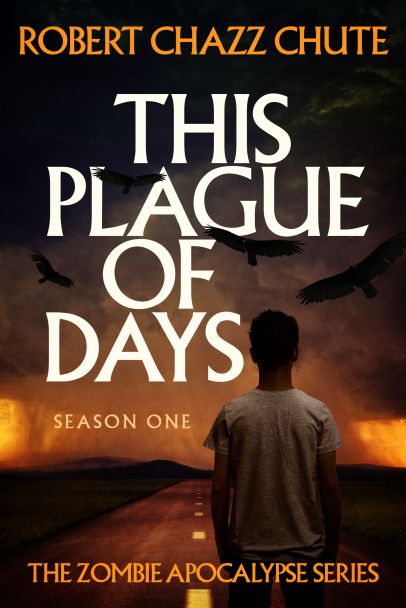
Bestseller with over 1,000 reviews!
Winner of the North Street Book Prize, Reader's Favorite, the
Literary Titan Award, the Hollywood Book Festival, and the
New York Book Festival.

http://mybook.to/OurZombieHours
A NEW ZOMBIE ANTHOLOGY

Winner of Writer's Digest's 2014 Honorable Mention in Self-published Ebook Awards in Genre

The first 81 lessons to get your Buffy on

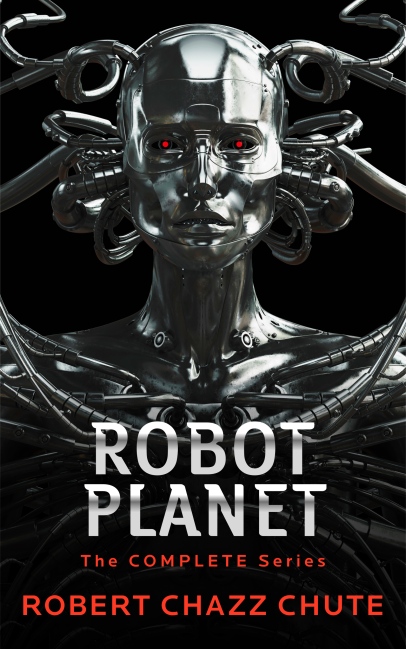
More lessons to help you survive Armageddon

"You will laugh your ass off!" ~ Maxwell Cynn, author of Cybergrrl

Available now!

Fast-paced terror, new threats, more twists.

An autistic boy versus our world in free fall

Suspense to melt your face and play with your brain.

Action like a Guy Ritchie film. Funny like Woody Allen when he was funny.

Jesus: Sexier and even more addicted to love.

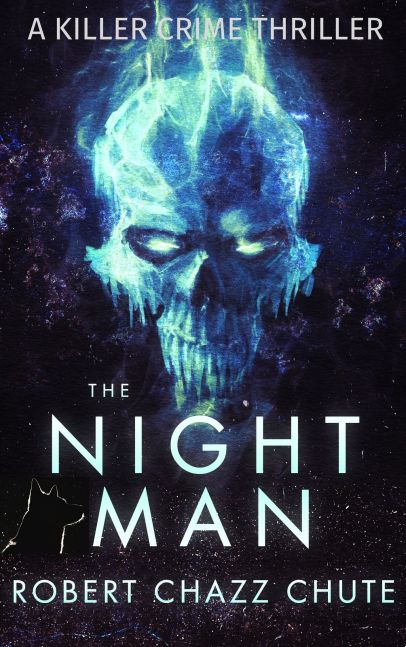
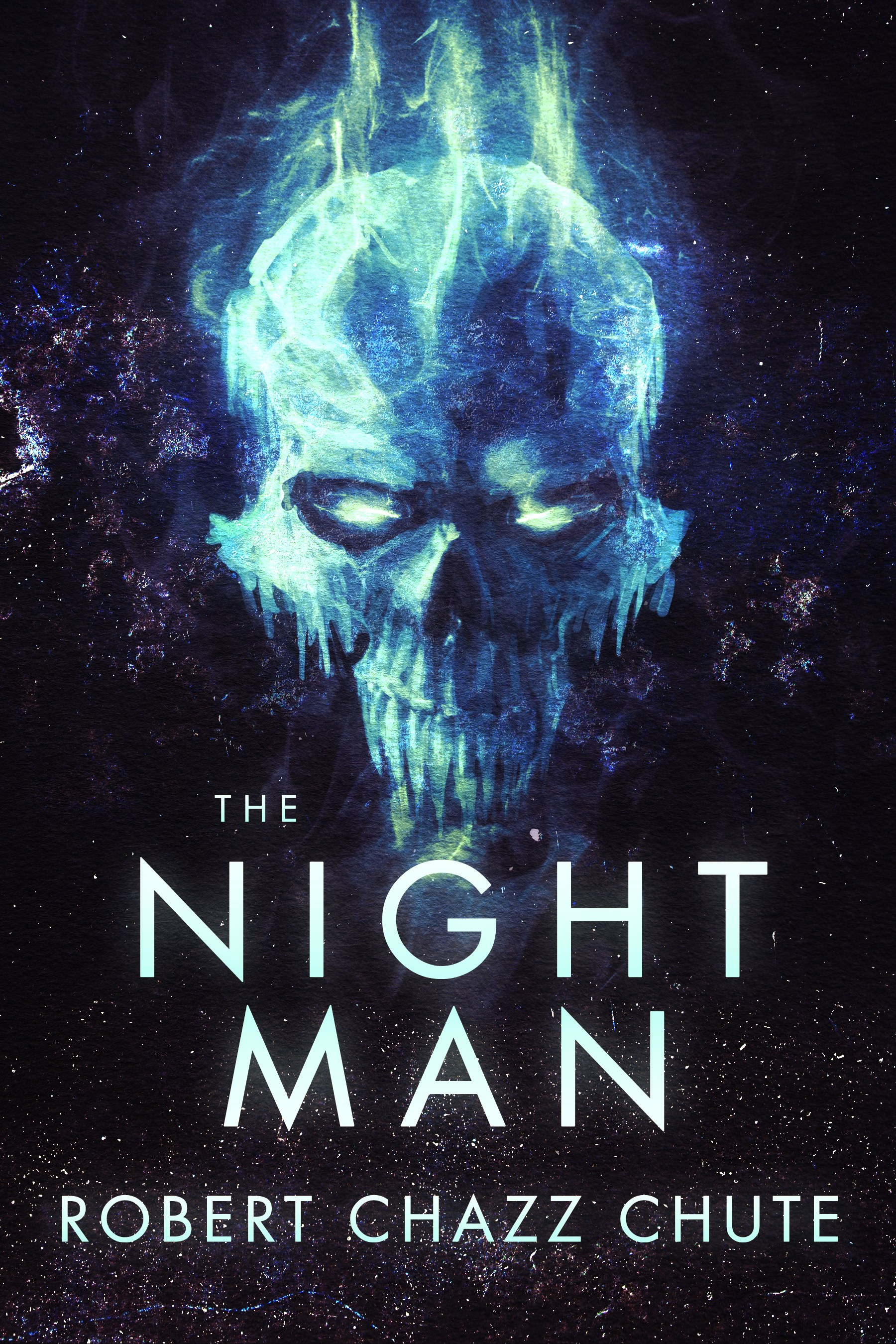
You can pick this ebook up for free today at this link: http://bit.ly/TheNightMan

Join my inner circle at AllThatChazz.com

See my books, blogs, links and podcasts.

Enter your email address to follow this blog and receive notifications of new posts by email.

Join 2,063 other subscribers